
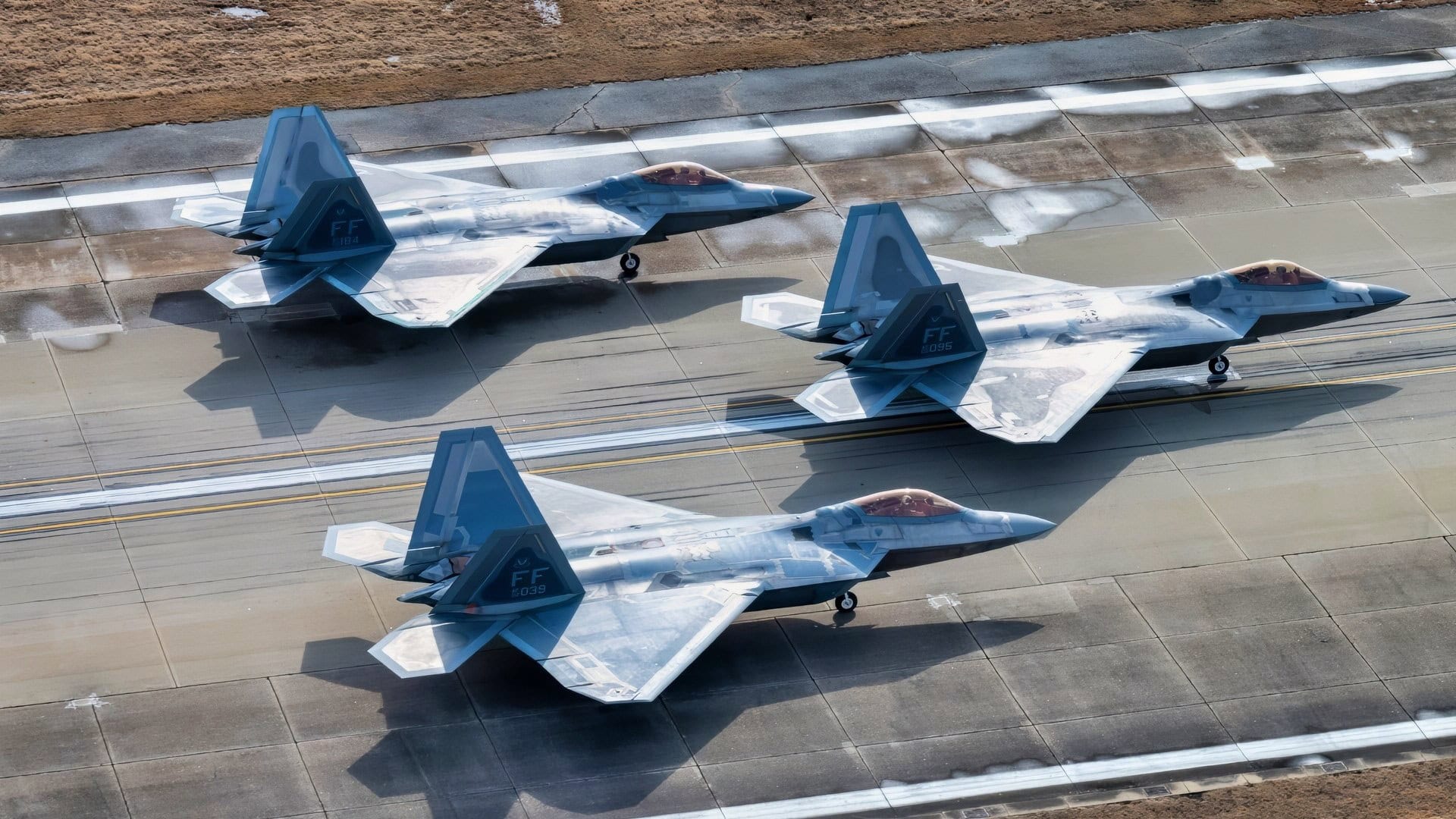
The F-22 Raptor’s stealth advantage does not end when the aircraft leaves the factory. Every time the jet flies, deploys, opens panels for maintenance, or ages in harsh weather, the Air Force has to protect the low-observable surface that helps make the aircraft so hard to track.
That is one reason the F-22 remains both extraordinary and demanding. The Air Force describes the Raptor as a combination of stealth, supercruise, maneuverability, and integrated avionics, with low-observable technologies that improve survivability against air-to-air and surface-to-air threats. In a basic air-to-air configuration, the official fact sheet lists six AIM-120 AMRAAMs and two AIM-9 Sidewinders carried internally, keeping the jet’s radar profile down while preserving its main air-dominance role.
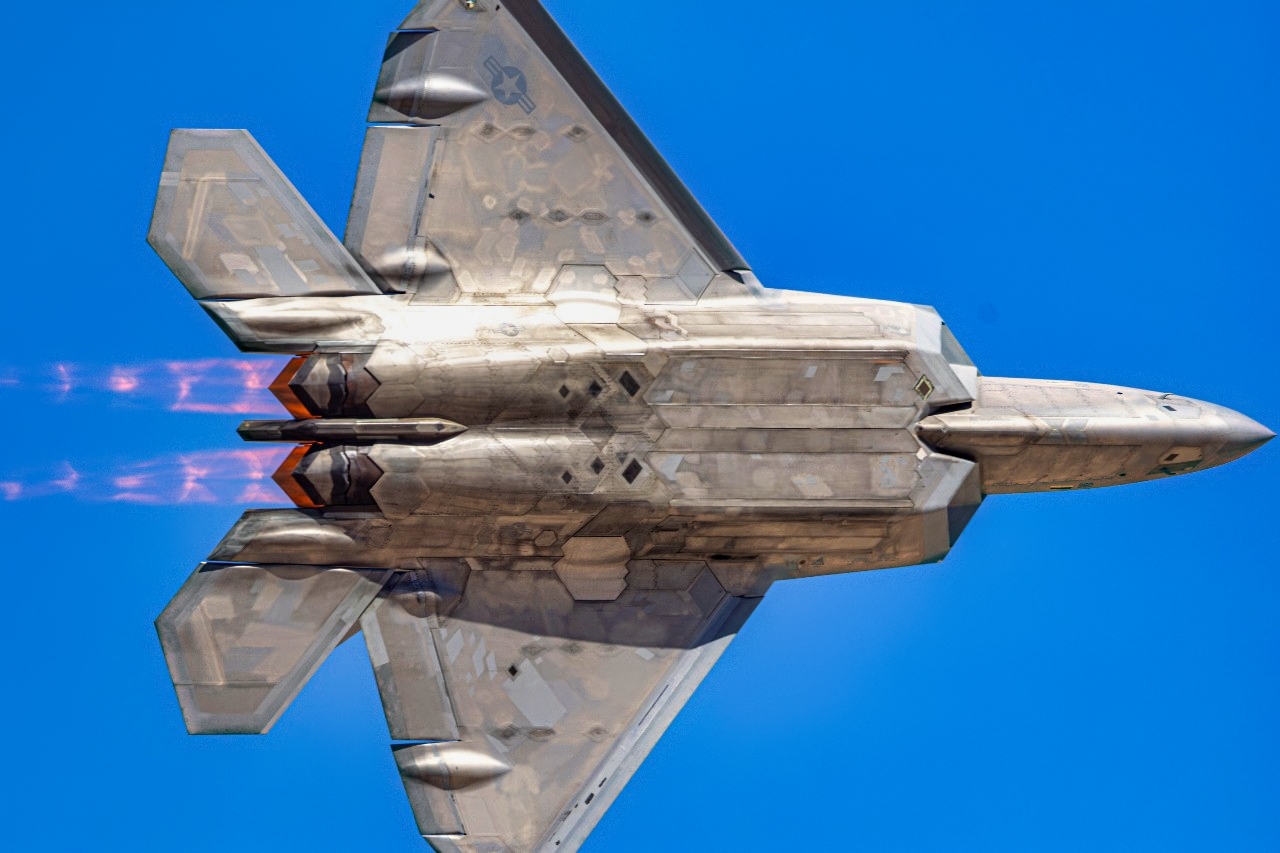
A U.S. Air Force F-22 Raptor performs an aerial demonstration during Aviation Nation 2025 at Nellis Air Force Base, Nevada, April 6, 2025. Aviation Nation is an airshow held at Nellis Air Force Base, showcasing the pride, precision and capabilities of the U.S. Air Force through aerial demonstrations and static displays. The F-22 Raptor performed there to highlight its unmatched agility and air dominance as part of the Air Force’s efforts to inspire, recruit and connect with the public. (U.S. Air Force photo by Staff Sgt. Lauren Cobin)

F-22 Raptor Fighter. Image Credit: Creative Commons.
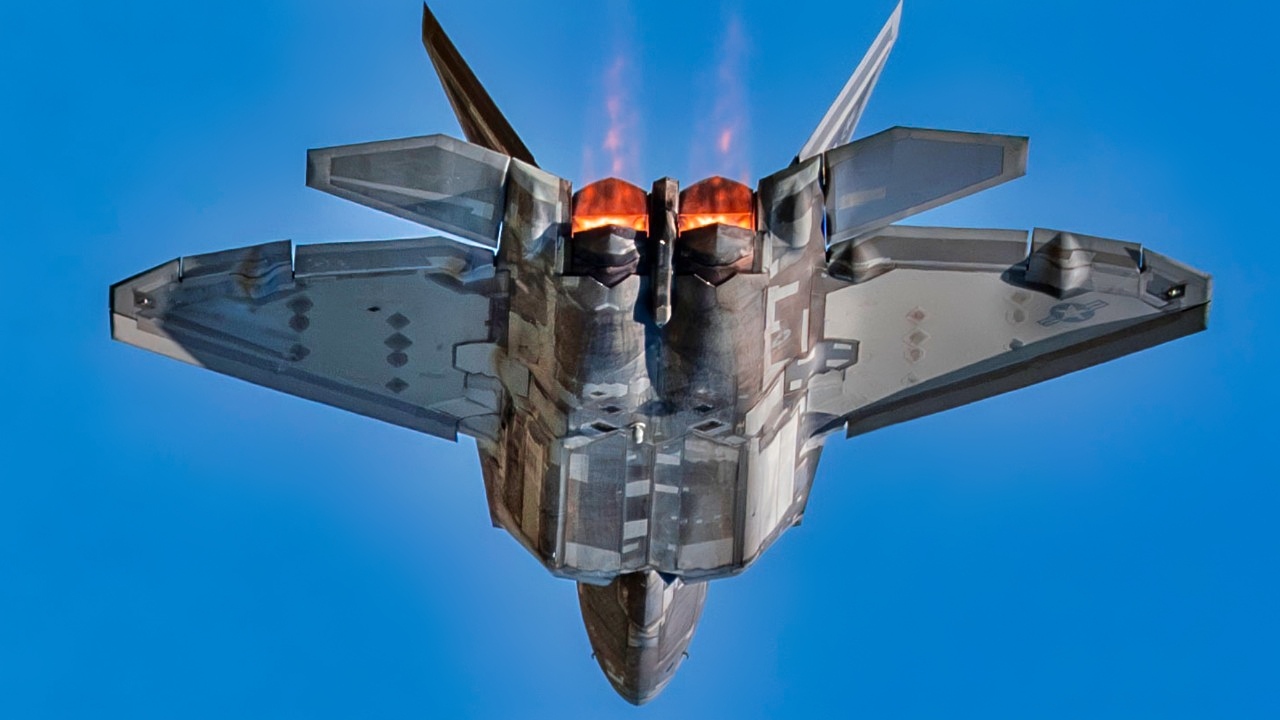
A U.S. Air Force F-22 Raptor performs an aerial demonstration during Altus airshow at Altus Air Force Base, Nevada, April 12, 2025. Aviation Nation is an airshow held at Nellis Air Force Base, showcasing the pride, precision and capabilities of the U.S. Air Force through aerial demonstrations and static displays. The F-22 Raptor performed there to highlight its unmatched agility and air dominance as part of the Air Force’s efforts to inspire, recruit and connect with the public. (U.S. Air Force photo by Staff Sgt. Lauren Cobin)
The public often talks about “stealth tiles,” but the more accurate F-22 maintenance story involves low-observable coatings, radar-absorbent material, panels, seams, fasteners, inlets, and surface treatments. Those details matter because stealth on the F-22 is not a permanent condition. It has to be sustained.
F-22 Raptor Stealth Coatings Drive A Huge Maintenance Load
Lockheed Martin, the F-22’s prime contractor, states that about 50 percent of maintenance performed on the F-22 is related to repairing low-observable stealth coatings damaged when the aircraft is opened during routine maintenance. That single figure, on Lockheed’s F-22 sustainment page, explains why the Raptor’s stealth is also a readiness issue.
This is not a minor cosmetic concern. Low observability is part of the aircraft’s combat design. The F-22 was built to find, track, and engage threats before being detected, and the aircraft’s surface condition is part of that equation. A chipped, degraded, improperly restored, or aging coating area must be inspected and repaired because the aircraft’s overall signature depends on details throughout the jet.
That maintenance burden becomes more important as the fleet ages. GAO reported in 2024 that the Air Force had 185 F-22s as of September 2023, including 32 Block 20 aircraft and 150 Block 30/35 aircraft. The same GAO report said the Air Force has had difficulty meeting the maintenance demands of the F-22’s unique low-observable coating, and that the issue contributed to the service’s failure to meet F-22 mission-capable or aircraft-availability goals in every fiscal year from 2011 through 2021.
An F-22A Raptor aircraft assigned to the 154th Fighter Wing, Hawaii Air National Guard, completes flight operations during Sentry Aloha 26-1, Jan. 22, 2026. Sentry Aloha 26-1 is a recurring, large-scale training exercise designed to enhance readiness, interoperability and integration across U.S. and partner air forces. (U.S. Air National Guard photo by Senior Airman Michael Swingen)
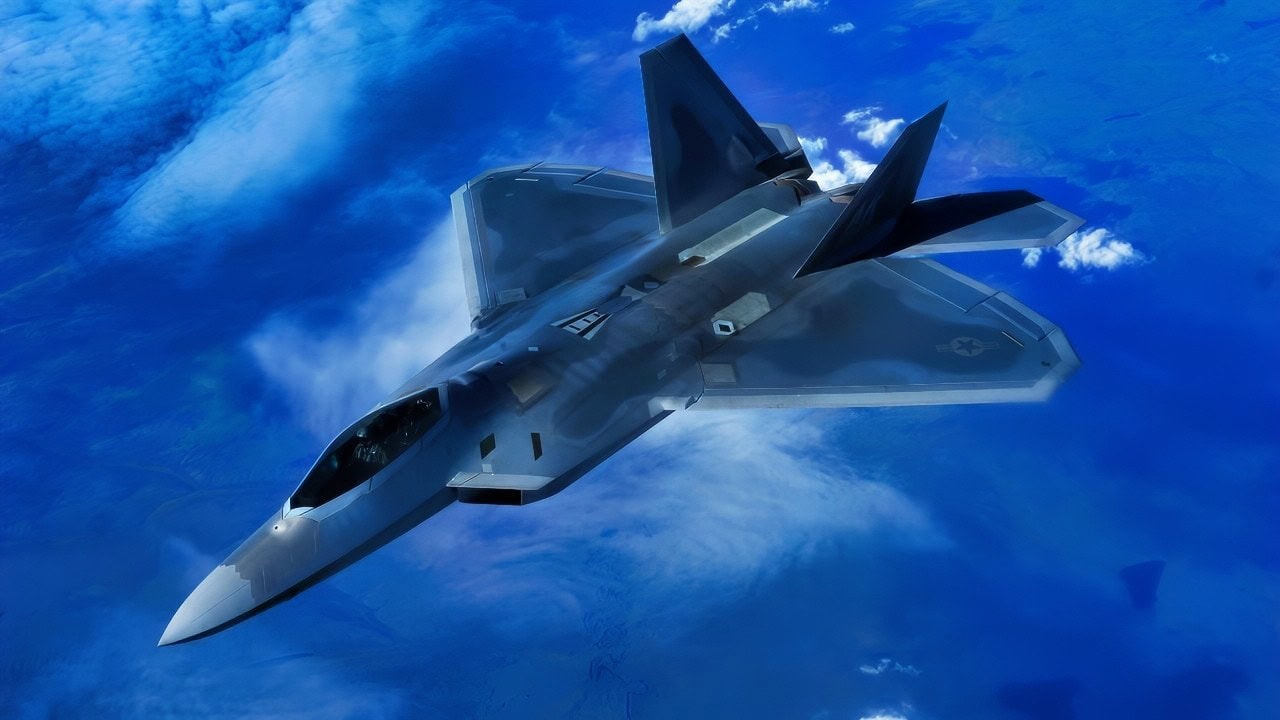
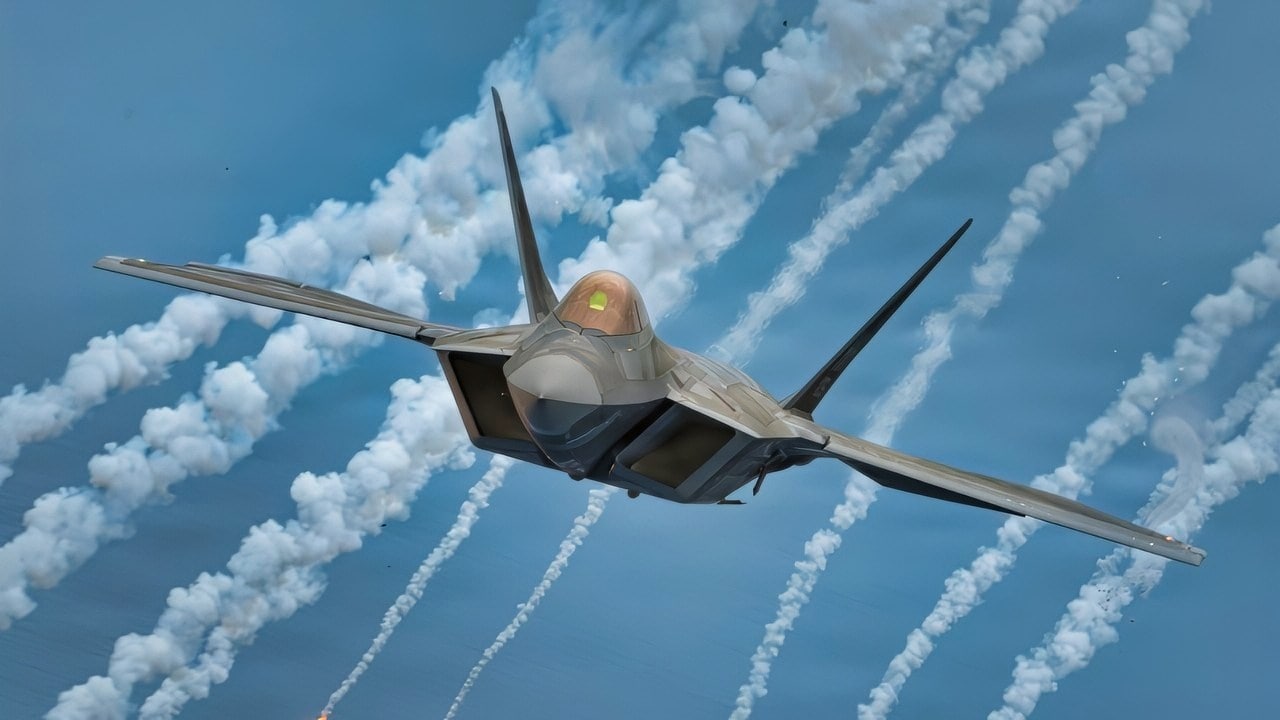
A U.S. Air Force F-22 Raptor assigned to the 90th Fighter Squadron, Joint Base Elmendorf-Richardson, Alaska, flies over clouds during RED FLAG-Alaska 14-3 Aug. 20, 2014, Eielson Air Force Base, Alaska. A combination of sensor capability, integrated avionics, situational awareness and weapons provides first-kill opportunity against threats. (U.S. Air Force photo by Staff Sgt. Jim Araos/Released)
The cost is high as well. GAO said F-22 maintenance costs totaled more than $1.6 billion in fiscal 2020. That does not make the F-22 a failed aircraft. It shows the cost of maintaining a small, specialized fifth-generation fleet combat-ready long after production ended.
GAO Warned That The F-22 Low-Observable Coating Hurts Availability
GAO’s 2018 force-structure review gives the clearest public explanation of the availability problem. The watchdog said maintenance demands from the F-22’s low-observable coating reduced aircraft availability, and Air Force officials told GAO that without those low-observable maintenance issues, availability would have been significantly closer to meeting the annual standard. The report also said the coating required careful application and curing, leaving aircraft unavailable for extended periods during repair work. GAO’s public version is available here.
The same report added an aging concern. The low-observable coating was nearing the end of its service life, necessitating more maintenance. Environmental exposure made the problem worse, especially heat, humidity, and salinity at some F-22 locations. The Air Force was already trying to address the issue by developing more durable coatings and expanding repair facilities.
That point matters for any serious discussion of stealth aircraft. Stealth has a sustainment cost after the aircraft is designed, bought, and delivered. A fighter with a low radar signature still has to operate from real bases, through real weather, under real maintenance schedules. The F-22’s performance depends on an industrial and maintenance system that can keep the aircraft’s surface within required tolerances over years of service.
A Small F-22 Repair Can Become A Days-Long Job
GAO explained the maintenance trap in plain terms in a 2014 modernization report. After repairs or modifications that require removing a panel with stealth coatings, those coatings must be restored. GAO said minor repairs or modifications that might take a few hours on a non-stealth aircraft can require days of maintenance on an F-22 because of the coating work before and after access to the component. The report is publicly available.
Air Force features give the same points at the shop level. During Red Flag 17-1, Air Combat Command showed low-observable technicians removing radar-absorbent material from an F-22 so other maintainers could repair a light panel. The Air Force story described technicians repairing radar-absorbent materials and panels that support the aircraft’s stealth capability.
An older Joint Base Langley-Eustis feature put the work in direct terms. Low-observable maintenance involves removing coatings to access other parts of the aircraft, then applying or replacing coatings as they deteriorate. The 1st Equipment Maintenance Squadron airmen spent 50 to 60 hours a week on the process, according to that base article.
That helps explain why the F-22 cannot be judged only by speed, radar, missiles, or maneuverability. Availability is part of combat power. A jet sitting in maintenance for low-observable restoration cannot generate sorties.
F-22 Engine Inlets Became A Depot-Level Sustainment Issue
The F-22’s inlet coatings became a major focus of sustainment. In 2021, the 574th Aircraft Maintenance Squadron moved to a 10-year reversion workload for the Raptor. That work refurbishes low-observable coatings on the engine inlets and inspects and overhauls flight controls, according to a Wright-Patterson Air Force Base report.
Industry also built a dedicated repair path. Lockheed Martin announced in 2017 that it had delivered the first F-22 from its Inlet Coating Repair Speedline in Marietta, Georgia, following the Air Force’s contract with the company to establish the facility. Lockheed said it was under contract to perform that work on 12 aircraft, with a follow-on contract anticipated. The company’s Speedline announcement shows how specialized the problem had become.
The Air Force also looked at automation. In 2017, the service reported that robotic technology developed through the Small Business Innovation Research program would make restoring specialized coatings on F-22 engine inlets more efficient during depot maintenance at Ogden Air Logistics Complex. The Air Force article said the robotic system used a long carbon-fiber arm designed to reach deep into the engine inlet ducts.
Those efforts point to a practical lesson. The Air Force did not simply accept low-observable maintenance delays as unavoidable. It created repair lines, coating upgrades, depot processes, and robotic tools to reduce the burden. Nonetheless, the need for those efforts shows how much sustainment work sits behind the F-22’s combat reputation.
The F-22 Stealth Lesson For NGAD And Future Fighters
The F-22 remains one of the most capable air-dominance fighters ever built. Its mix of stealth, speed, altitude, supercruise, maneuverability, sensors, and weapons still makes it a central aircraft in any discussion of high-end air combat. However, the Raptor also shows the long-term cost of fielding a small fleet of highly specialized stealth jets.
Future aircraft cannot treat maintainability as an afterthought. The Air Force’s Next Generation Air Dominance family of systems will have to preserve or improve stealth while reducing the workload needed to keep aircraft available. Better coatings, modular panels, easier access points, more durable materials, and faster depot processes will matter because stealth fighters have to fight as part of fleets, not as museum-piece prototypes.
The F-22’s low-observable maintenance record does not weaken the case for stealth. It strengthens the case for designing stealth that squadrons can sustain under deployment pressure. Radar signature matters in combat, but aircraft availability decides how many sorties a commander can generate when the mission begins.
The Raptor’s lesson is direct: an aircraft can have world-class stealth and still depend on thousands of maintenance hours to keep that advantage ready for war.
About the Author: Harry J. Kazianis
Harry J. Kazianis (@Grecianformula) was the former Senior Director of National Security Affairs at the Center for the National Interest (CFTNI), a foreign policy think tank founded by Richard Nixon based in Washington, DC. Harry has over a decade of experience in think tanks and national security publishing. His ideas have been published in the NY Times, The Washington Post, The Wall Street Journal, CNN, and many other outlets worldwide. He has held positions at CSIS, the Heritage Foundation, the University of Nottingham, and several other institutions related to national security research and studies. He is the former Executive Editor of the National Interest and the Diplomat. He holds a Master’s degree focusing on international affairs from Harvard University.

