
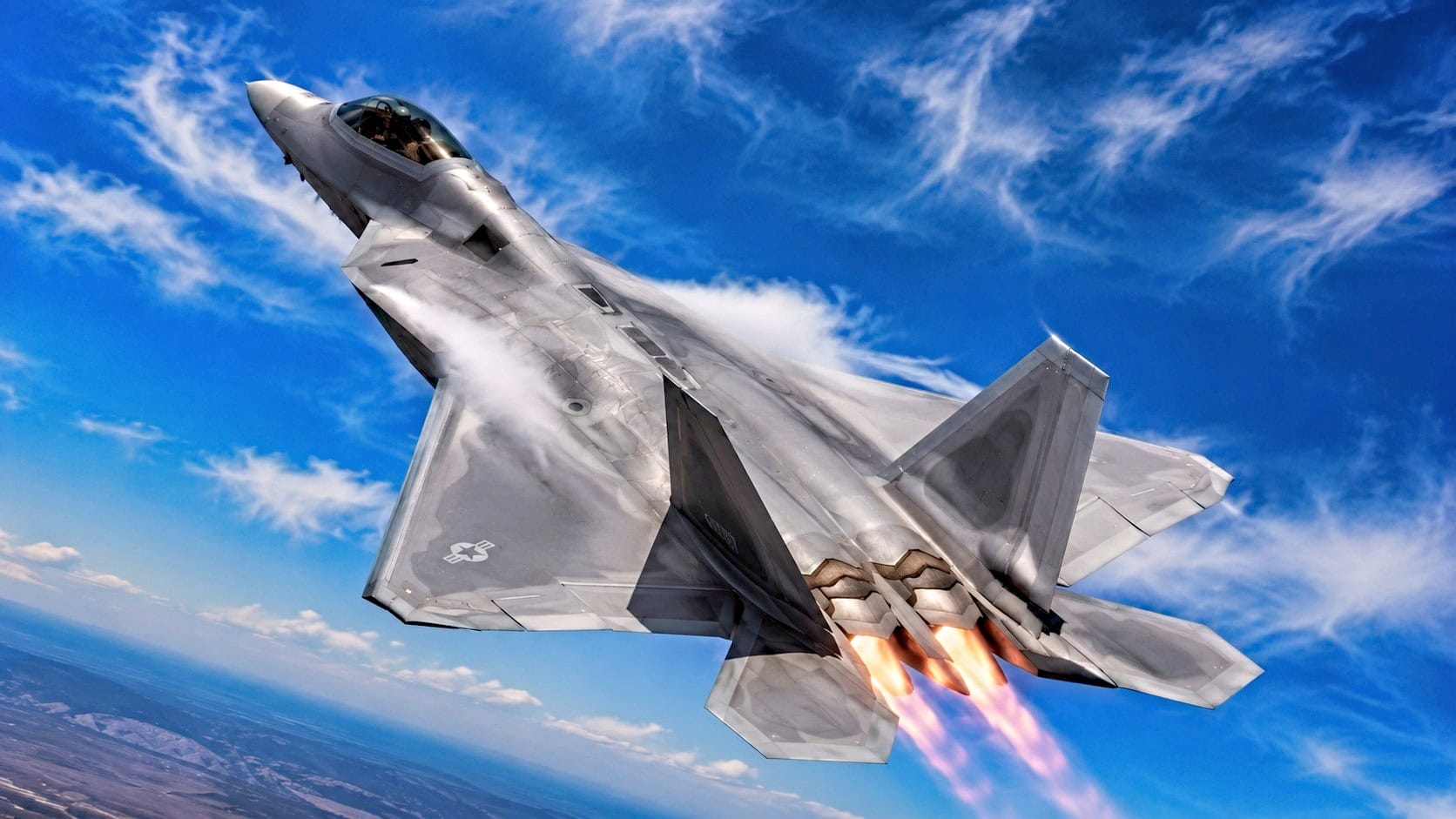
You love the F-22 Raptor for its outstanding stealth. And, in fact, back in April, we got up close to the legendary stealth fighter at an air show out in Lakeland, Florida. We saw it perform some amazing tricks and stunts, and have photos in this article to give you some context. You could literally feel the power of the engines hitting their stride.
This fighter jet maxes out radar evasion and gives pilots confidence that it can sneak into multi-threat environments, fight it out successfully against enemy airplanes, drop massive amounts of ordnance, and return home safely.
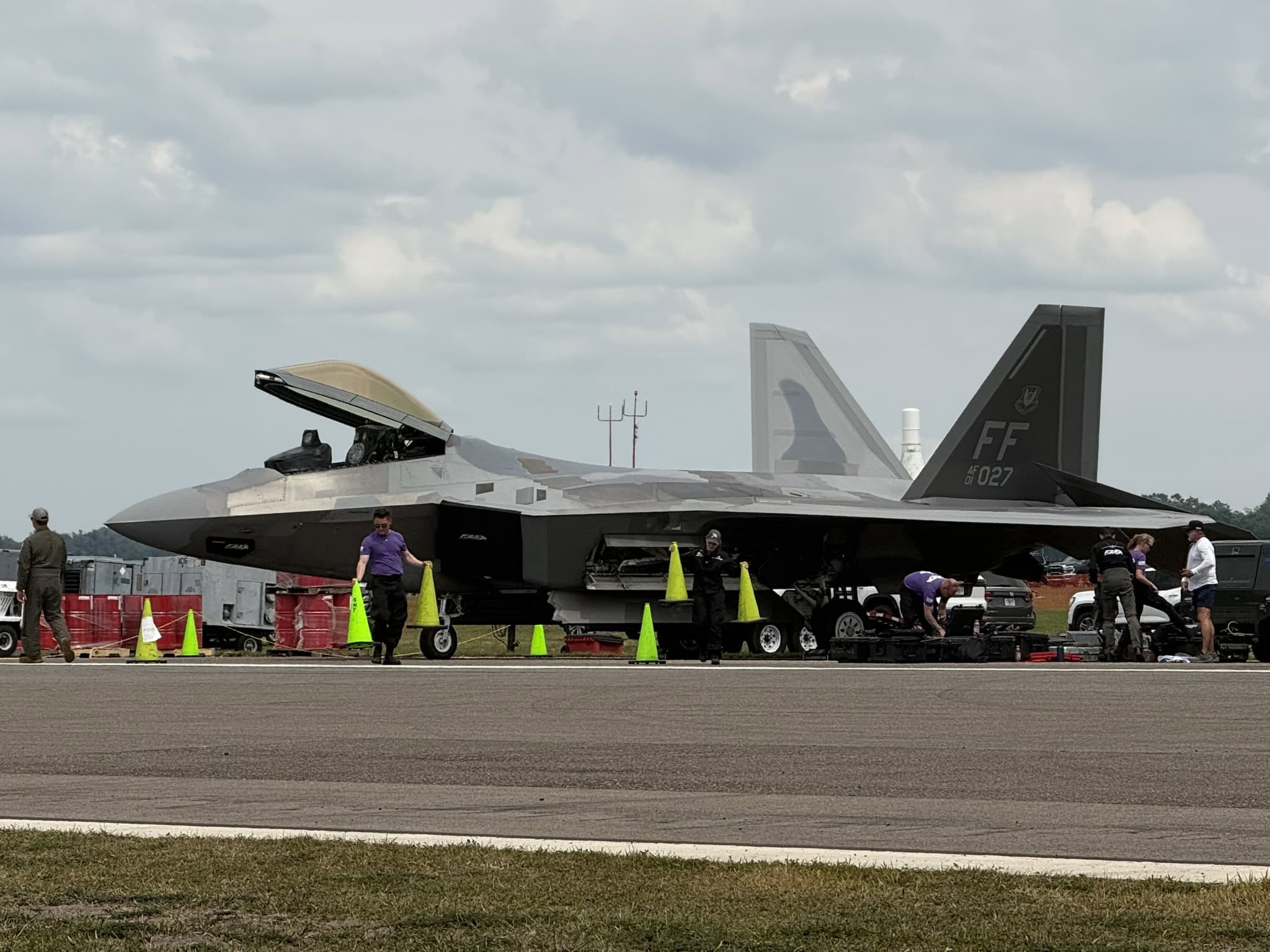
F-22 Raptor Lakeland Florida Airshow. Image Credit: 19FortyFive.com
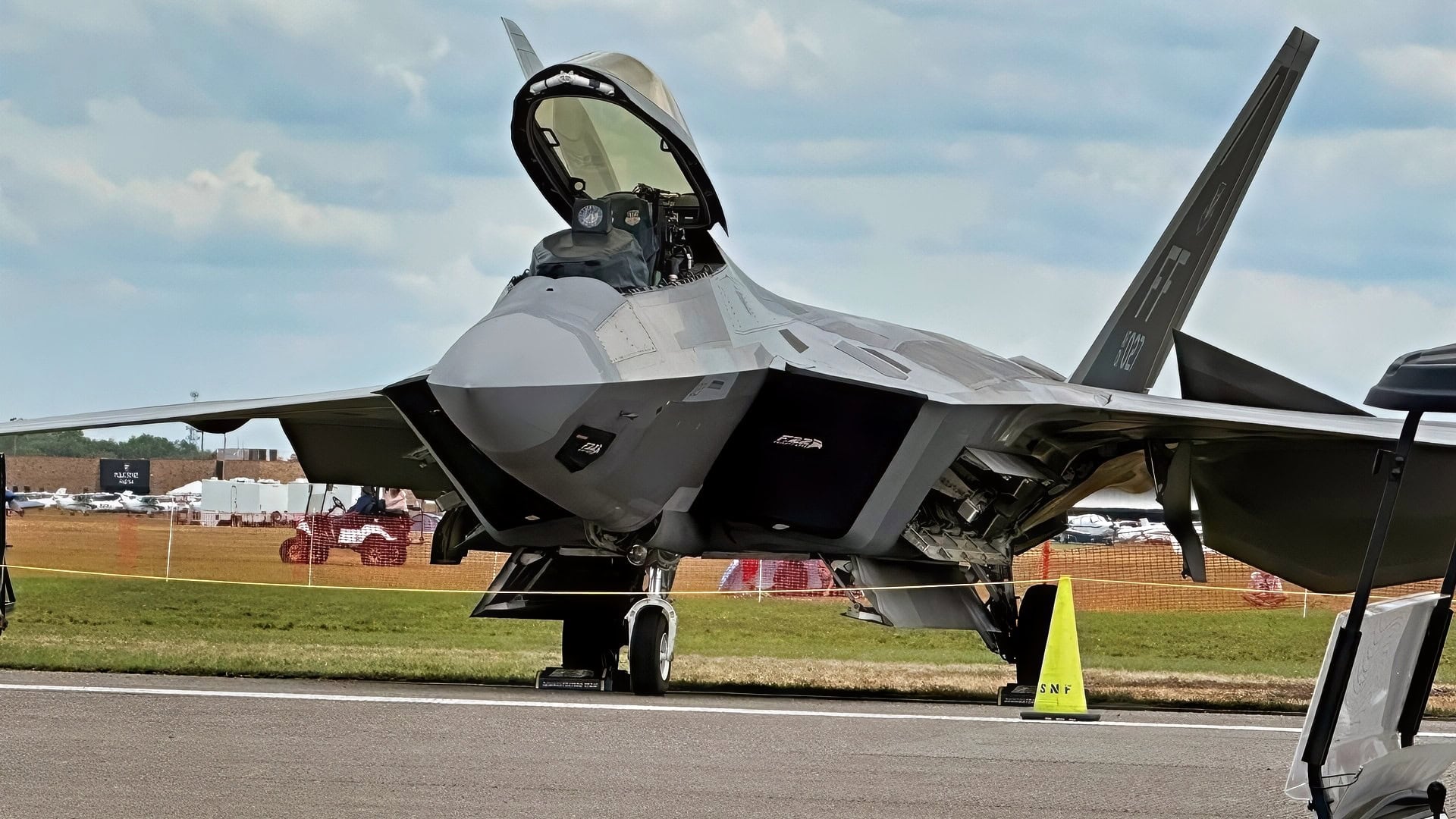
F-22 Raptor Lakeland Florida Airshow. Taken by Harry J. Kazianis on 4/19/2026.
But you may not know that the F-22 is one lightning-quick hot rod. It can reach plus-MACH-2 speeds and create “air explosions” at air shows that we at 19FortyFive and National Security Journal have witnessed firsthand.
F-22: What Is This Awe-Inspiring Powerplant?
Two Pratt & Whitney F119-PW-100 afterburning turbofan engines are onboard to deliver the massive thrust and climbing performance. This makes the F-22 a quality dog fighter when you consider that it can sneak past enemy air defenses on Day One of warfare.
Ground Strike Success Against Iran
This gives Air Force battle planners many options for a massive attack like those seen during Operation Epic Fury against Iran. Raptors can eliminate enemy radar installations and air defense sites with air-to-ground ordnance. This is a relatively new capability. The F-22 can now drop two 1,000-pound GBU-32 Joint Direct Attack Munitions (JDAMs) or eight GBU-39 Small Diameter Bombs (SDBs).
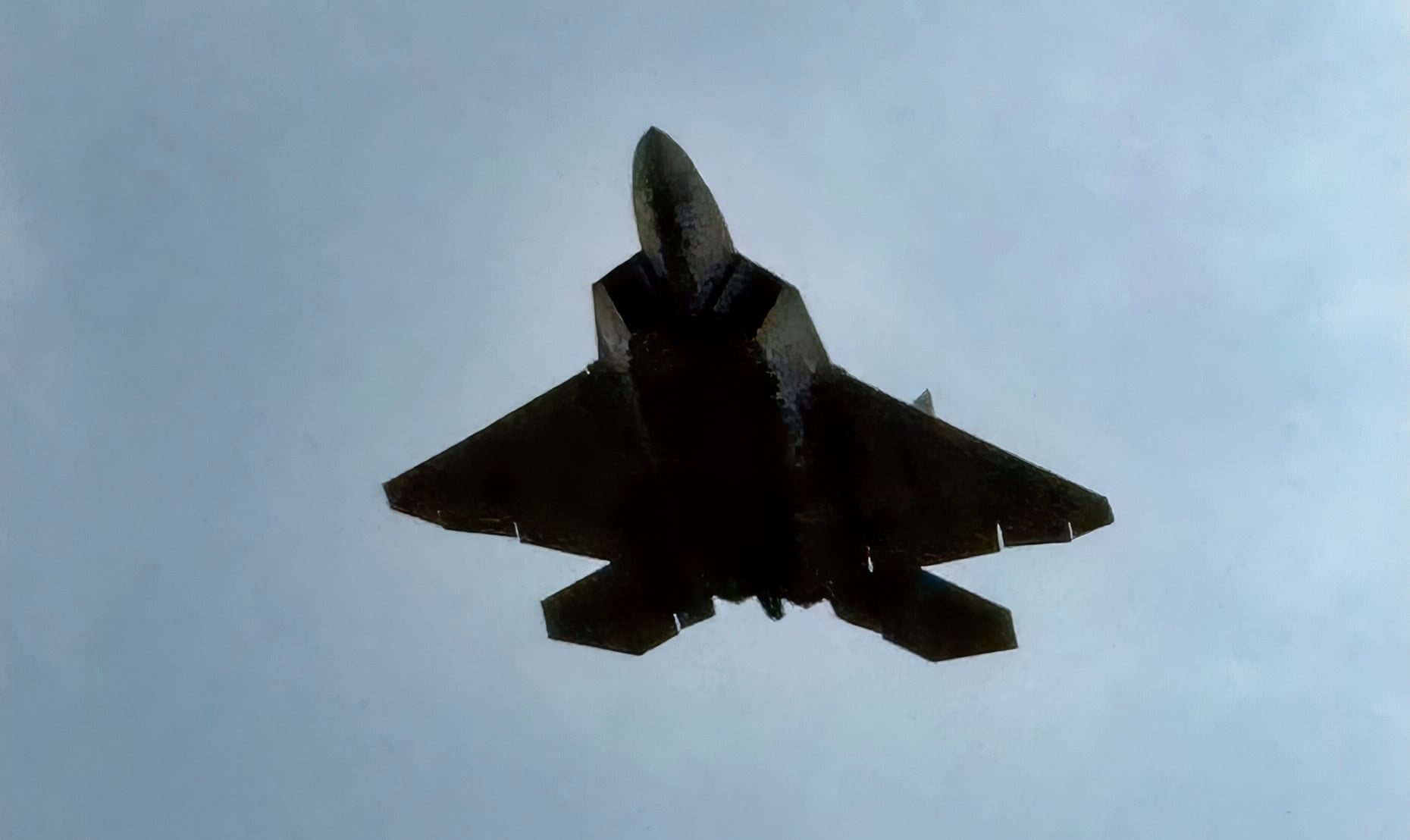
F-22 at Lakeland Air Show 2026. Taken on March 19, 2026 by 19FortyFive.com
Outrun and Have Fun
Those Pratt & Whitney engines give pilots confidence that they can outrun any intercepting missiles and then turn the tables on enemy fighter jets in aerial combat. The engines provide valuable thrust vectoring, enabling irresistible maneuverability and agility. The aviators smile when engaging this system, and they show off this feature in combat and in derring-do at air shows.
“The F119 engine delivers unparalleled aircraft maneuverability with its unique two-dimensional pitch vectoring exhaust nozzle. This convergent/divergent nozzle vectors thrust as much as 20 degrees up or down. Nozzle position management is integrated with the F-22 flight control system and is automatically regulated by the Full-Authority Digital Electronic Control (FADEC),” according to RTX.
Is This a Fifth-Generation ‘+’ Fighter Now?
FADEC allows the kind of performance one would expect from a fifth-generation airplane. In fact, with this kind of pitch vectoring, some might consider the F-22 a fifth-generation “+” fighter, as further updates to the airplane could make it a “Super” 2.0 F-22.
Supercruise Is Indeed Super
The propulsion system also features supercruise or MACH 1.5 speed without engaging afterburners. This saves fuel on long missions, extends the warbird’s range, and reduces the need for more aerial refueling. This gives the Air Force more options for long journeys to attack enemy targets.
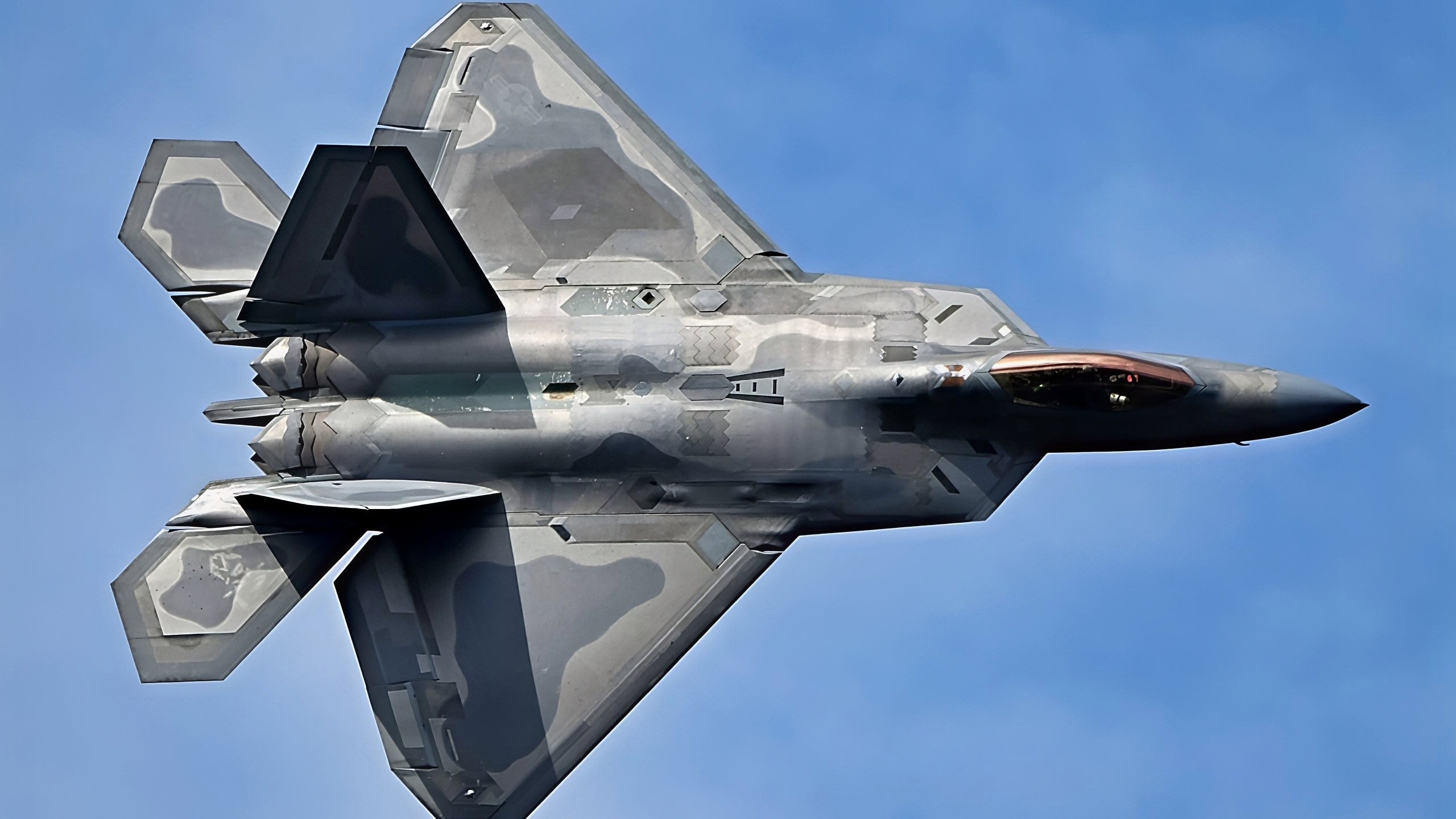
U.S. Air Force Maj. Josh ‘Cabo’ Gunderson, F-22 Raptor Demonstration Team pilot, flies during the Lockheed Martin Sace and Air Show in Sanford, Florida, Nov. 1, 2020. The F-22 possesses a sophisticated sensor suite allowing the pilot to track, identify, shoot and kill air-to-air threats before being detected. (U.S. Air Force photo by Staff Sgt. Sergio A. Gamboa)
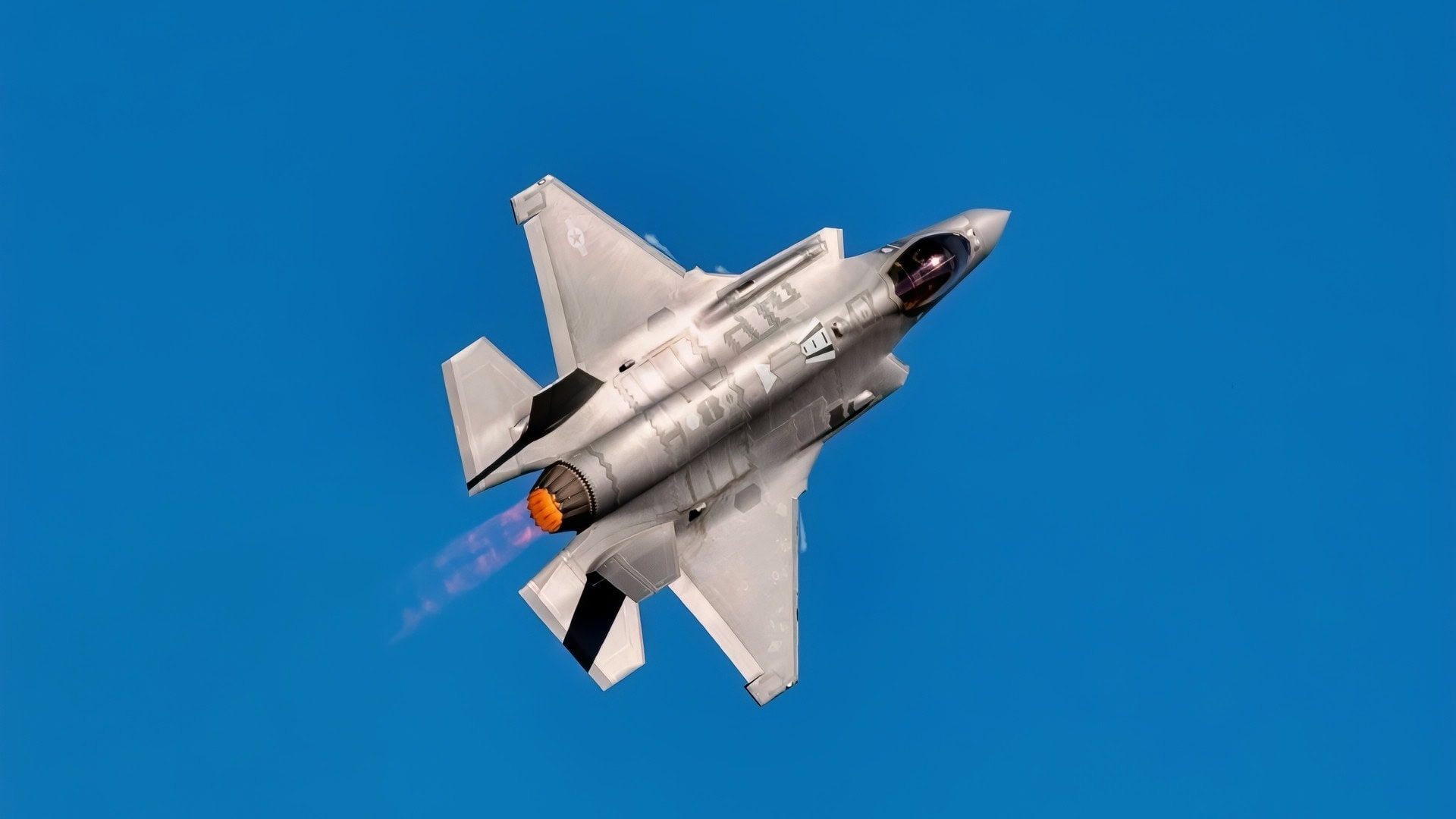
The F-22 Raptor performs a demonstration at the Mather Airshow in Sacramento, California, Sept. 23, 2018. The P-38 is a World War I-era fighter aircraft that was developed for the Army Air Corps. (U.S. Air Force photo by Senior Airman Lauren Parsons/Released)
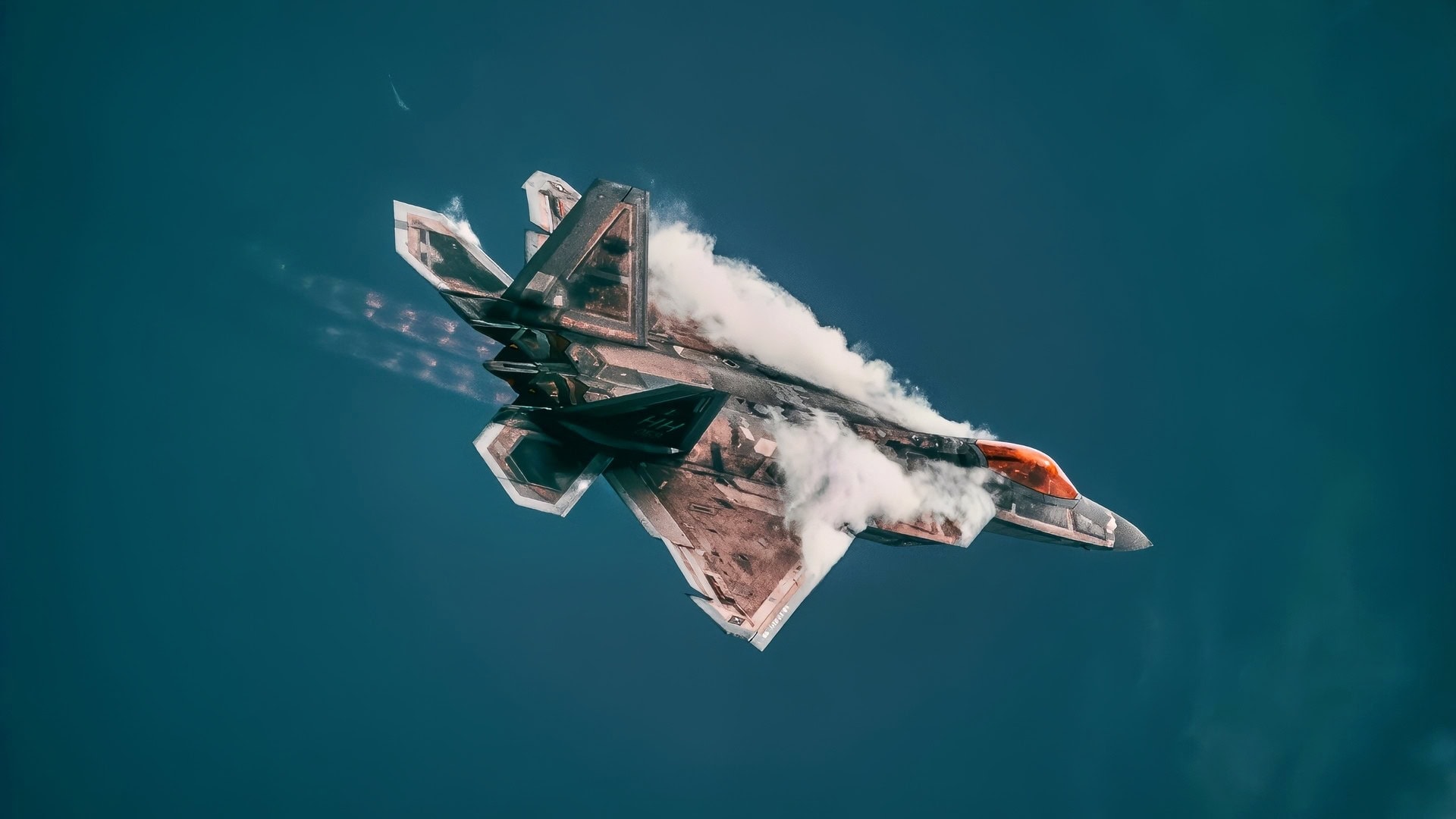
F-22. Image Credit: Creative Commons.
The engines also have high thrust-to-weight performance. This allows for amazing climbing ability to get the jet out of dangerous situations safely.
Details About the Engines
“The engines’ three-stage integrally bladed fan is powered by a single-stage low-pressure turbine. The engine’s counterrotating core has an aerodynamically efficient six-stage compressor driven by a single-stage high-pressure turbine featuring the latest single-crystal superalloy blades and advanced cooling technologies,” RTX wrote.
Take a Pilot’s Word For It
The Air Force has an F-22 demo team, and Key Aero interviewed Captain Nick ‘Laz’ Le Tourneau about how this airplane can get up and boogie.
“Most of the maneuvers you are going to see are in afterburner. One of the unique things about the F-22 is the power of the F119 engines, which produce 35,000 pounds of wet thrust per engine, so with 70,000 pounds of thrust in afterburner, we are going to fly those maneuvers, which allows us to increase our performance and to really turn tight and execute those high angles of attack maneuvers that we talk about,” Laz said.
Wowing the Crowd at Air Shows
Laz loves flying the F-22 at air shows, and the engines are pushed to maximum stress, allowing the crowd to drool over the Raptor’s performance.
“It allows me to highlight that high-angle-of-attack maneuvering of the F-22 where we are approaching zero airspeed in the J-turn in relation to the crowd line of sight, and enable us to flip the nose around in a very tight turn radius, which we really like to highlight. We are basically turning the big F-22 into a barn door in relation to the wind, stopping it in space, then flipping the nose back around toward the show site,” the hotshot pilot said.
Give It a Better Combat Radius
The Air Force is always trying to improve the F-22. One measure that keeps the battle planners happy is the range extension, which improves the airplane’s combat performance.
There is an $11 billion upgrade that features conformal, stealthy new fuel tanks and infrared search-and-track pods under the wings. This allows the Raptor to increase its combat range without sacrificing its excellent radar-evading profile.
It Would Be a Shame to See This Warbird Retired
There is still some trepidation about the F-22 being over 30 years old. The Air Force did not produce as many as originally planned, and the airplane may be replaced by the F-47 NGAD in the 2030s.
But those engines delivering high performance and speed are something engineers and designers can be proud of. New and old pilots are impressed at how the Raptor can push out speed and maneuvers like the best fighters on the planet. The thrust vectoring and supercruise are top-notch.
Its ability to evade enemy air defenses helped Operation Epic Fury succeed, and its extended range is something the Air Force can use in future missions to get the best of the enemy.
About the Author: Dr. Brent M. Eastwood
Author of now over 3,500 articles on defense issues, Brent M. Eastwood, PhD, is the author of Don’t Turn Your Back On the World: A Conservative Foreign Policy and Humans, Machines, and Data: Future Trends in Warfare, plus two other books. Brent was the founder and CEO of a tech firm that predicted world events using artificial intelligence. He served as a legislative fellow for US Senator Tim Scott and advised the senator on defense and foreign policy issues. He has taught at American University, George Washington University, and George Mason University. Brent is a former US Army Infantry officer. He can be followed on X @BMEastwood.