
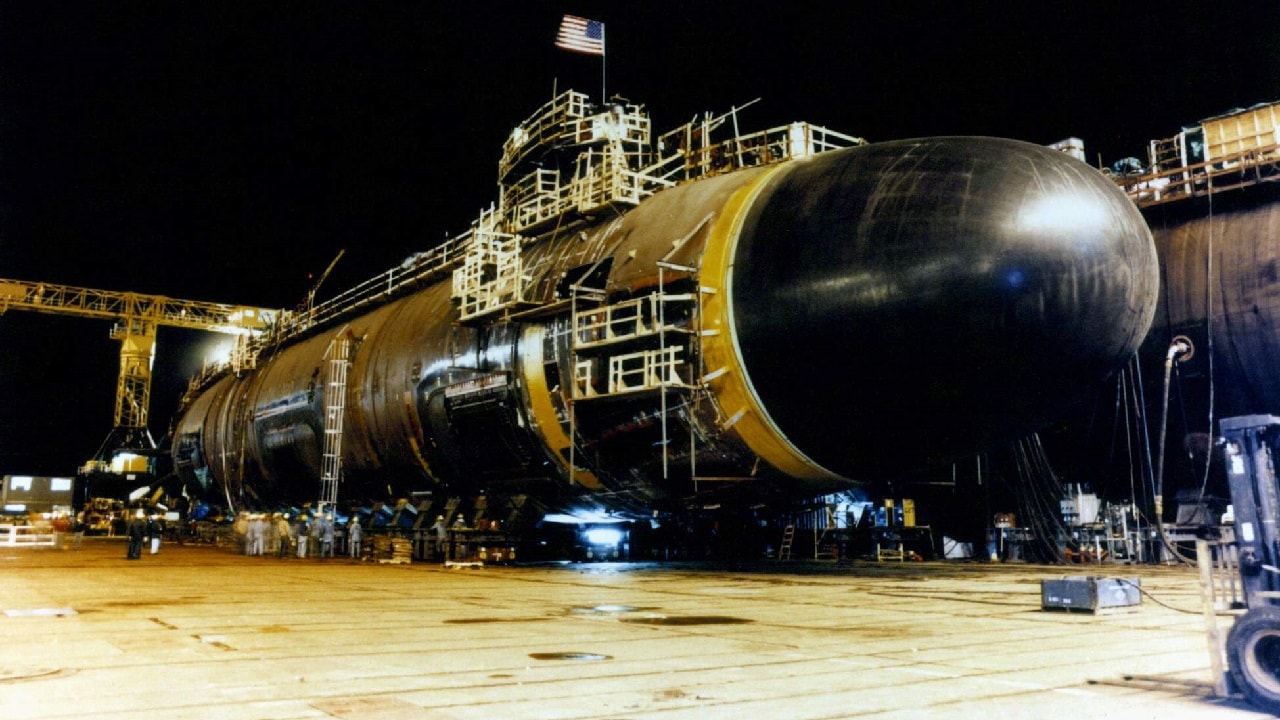
Electric Boat’s 27,000 Workers Are Building America’s Next Nuclear Submarine Fleet: General Dynamics Electric Boat received the largest construction award in its 127-year history on July 29, 2026. The $76.6 billion Navy package includes $42.1 billion for nine Virginia-class attack submarines, $29.5 billion for five Columbia-class ballistic-missile submarines, and additional money for the industrial base behind them. Electric Boat said it now employs more than 27,000 people.
The company plans to hire 8,000 workers in 2026. The expansion includes thousands of tradespeople in Groton, Connecticut, and Quonset Point, Rhode Island, as well as engineers and designers in New London and Waterford.
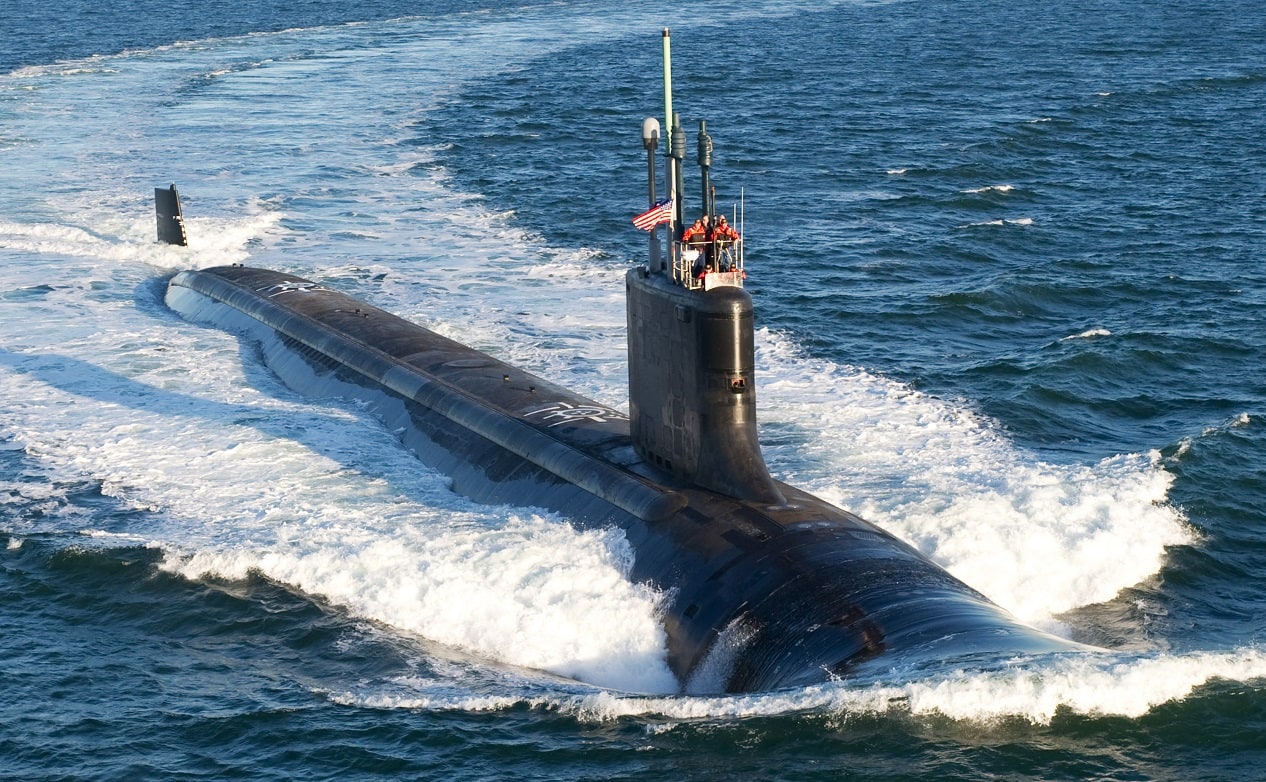
The Virginia-class attack submarine Pre-Commissioning Unit Mississippi (SSN 782) conducts alpha trials in the Atlantic Ocean. (U.S. Navy photo courtesy of General Dynamics Electric Boat)
Those numbers make Electric Boat one of New England’s most important industrial employers. Its work also carries unusual strategic weight. Virginia-class boats perform intelligence, strike, anti-submarine, and special-operations missions. Columbia will replace the Ohio-class submarines that form the most survivable part of the American nuclear deterrent.
The expansion is occurring during a difficult production buildup. Electric Boat and HII’s Newport News Shipbuilding currently deliver about 1.3 Virginia-class submarines per year, below the Navy’s goal of two, while moving toward one much larger Columbia each year.
American undersea power now depends as much on welders, suppliers, and shipyard space as it does on submarine design.
Fun fact: I have visited Electric Boat as a guest a few times. My favorite visit was in October of 2024 when the Seawolf-class submarine USS Connecticut was in dry dock. I literally stared at her from the top of an observation platform for over an hour. It was amazing, to say the least.
Electric Boat Started With USS Holland in 1899
Electric Boat was formed in 1899 to bring John Philip Holland’s practical submarine design into production. The Navy purchased the Holland VI in April 1900 and commissioned it as USS Holland later that year, marking the beginning of the modern American submarine force.
The company established its enduring presence on the Thames River before World War I. During World War II, Electric Boat produced 74 submarines and 398 patrol torpedo boats. It then built USS Nautilus, commissioned in 1954 as the first nuclear-powered submarine, and USS George Washington, commissioned in 1959 as the first nuclear-powered ballistic-missile submarine.
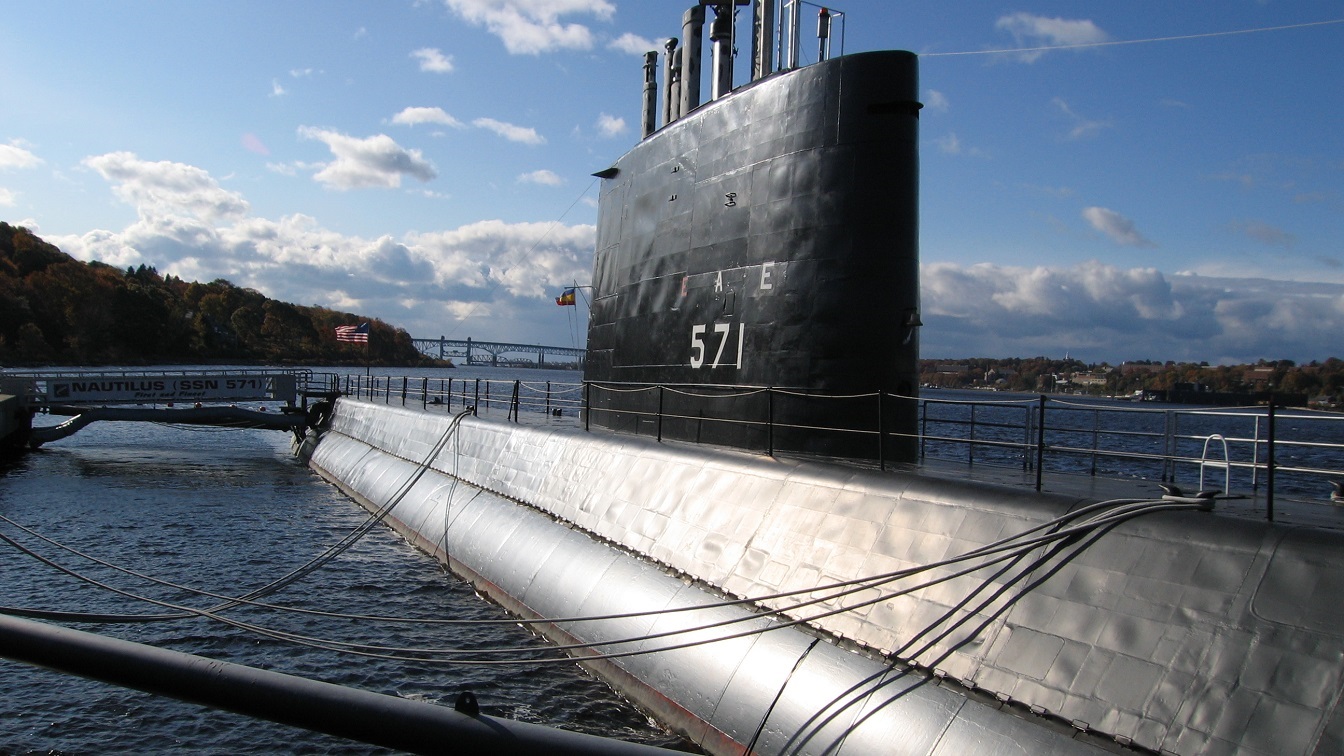
The USS Nautilus permanently docked at the US Submarine Force Museum and Library, Groton, CT.
Los Angeles-, Ohio-, Seawolf-, and Virginia-class boats followed. The lineage behind today’s Virginia-class construction program remains active because design knowledge, nuclear certification, and skilled trades pass from one generation of workers to the next.
Quonset Builds the Modules, and Groton Builds the Boat
Modern construction begins at Electric Boat’s 125-acre-plus Quonset Point operation, where workers cut, shape, and weld steel into pressure-hull cylinders. The sections initially stand vertically so crews and cranes have better access while installing tanks, piping and equipment.
Each weld is documented and inspected. The cylinders are rotated horizontally, joined with deck packages, and outfitted into larger modules. Electric Boat trains between 700 and 1,000 welders in-house each year, according to a 2025 tour of Quonset.
The largest sections become supermodules. Electric Boat’s 400-by-100-foot barge Holland moves them among Quonset, Groton, and Newport News. HII supplies the bow, stern, and other major sections for Columbia, while Electric Boat builds central portions and performs final integration in Groton. The two yards divide Virginia-class work and alternate final delivery responsibilities.
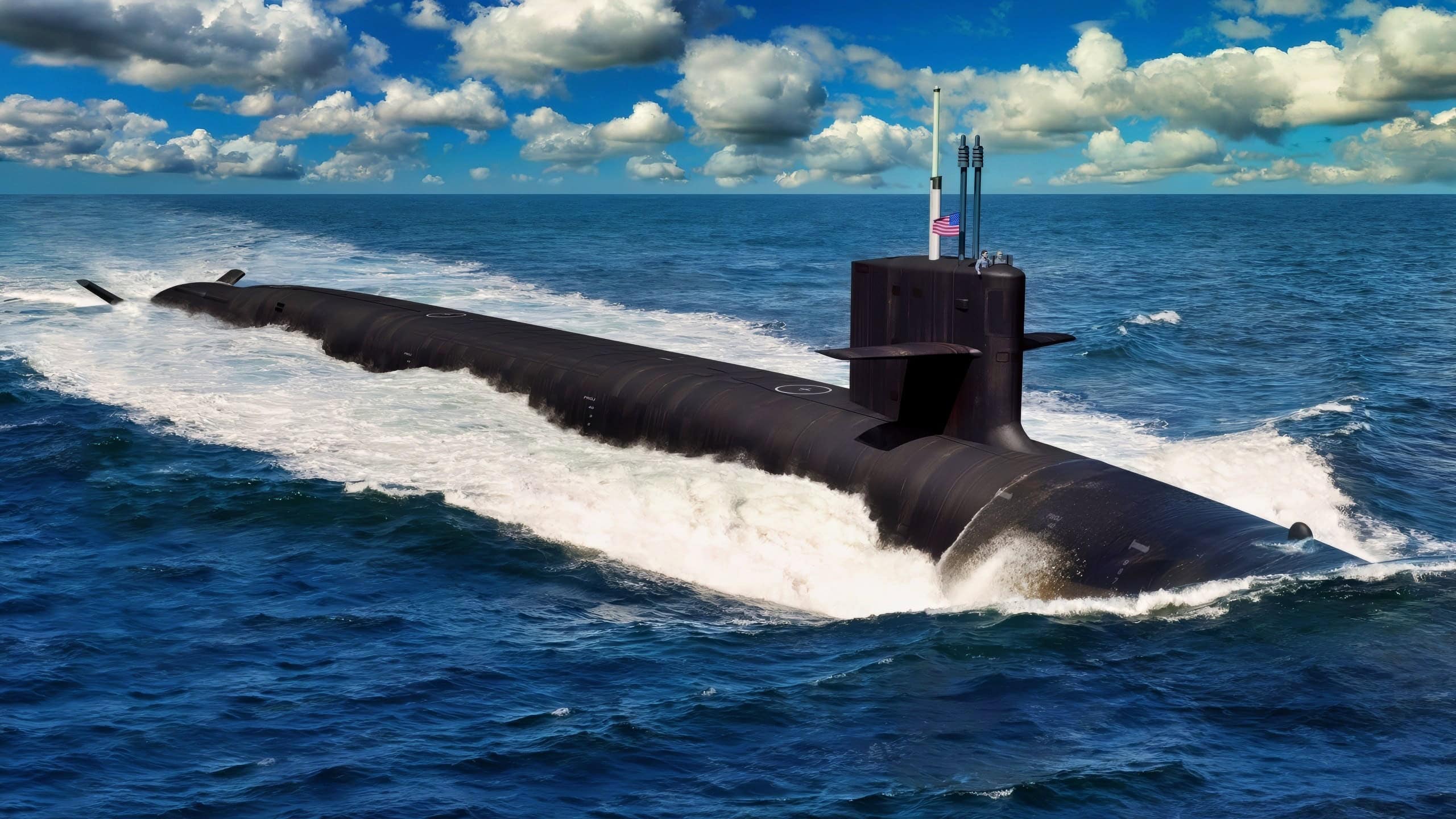
Columbia-Class Submarine SSBN Rendering U.S. Navy Photo
Columbia measures 560 feet long and 43 feet across, making it the largest submarine the Navy has built. Block V Virginias add an 84-foot payload module to the earlier 377-foot hull. The Government Accountability Office found that producing one Columbia and two Virginias requires annual work equivalent to roughly five earlier Block IV attack submarines.
Virginia and Columbia Demand Different Forms of Excellence
Virginia is built to hunt submarines, collect intelligence, support special operations and launch long-range weapons. The payload module gives newer boats more missile capacity as the Navy retires converted Ohio-class guided-missile submarines. The struggle to reach two Virginia-class deliveries each year matters because the operational fleet is already smaller than commanders say they need.
Columbia has a narrower mission and a longer horizon. Each boat is designed for a 42-year service life without a midlife reactor refueling, reducing the number needed to keep ballistic missiles continuously at sea. Electric Boat is the prime contractor for a program the Pentagon ranks as its top acquisition priority.
The acoustic performance, sensors and propulsion details needed to settle public claims about the “finest” submarine remain classified. The visible standard is exacting enough. Every hull must survive deep-ocean pressure, operate around a nuclear reactor and remain quiet while carrying sailors for months. Electric Boat has added collaborative robots for cutting and welding, but a human worker still oversees every robotic weld.
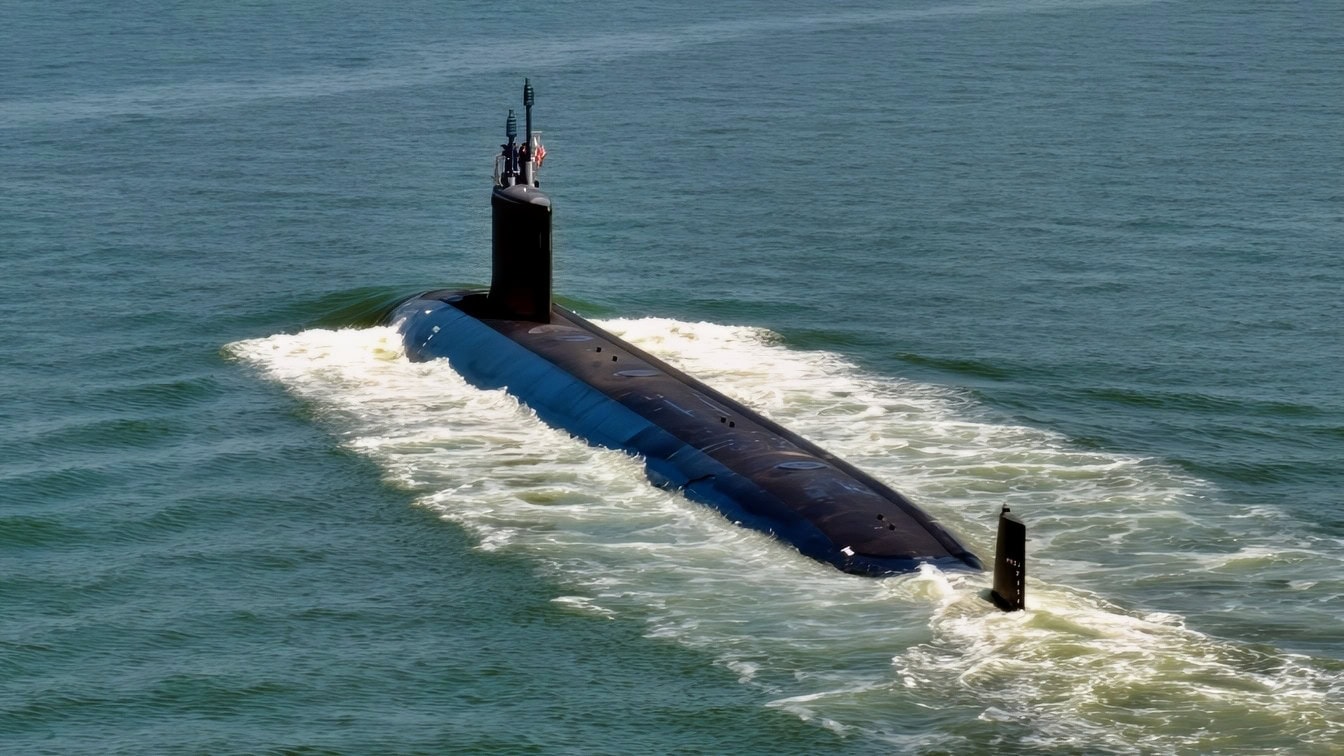
Virginia-Class Submarine USN Photo
More Than 27,000 Jobs Anchor the New England Economy
Electric Boat expects roughly 2,250 new positions in Groton, 3,250 at Quonset Point, 1,000 in engineering and design around New London and Waterford, and 1,500 support jobs across its locations. These include welders, pipefitters, electricians, machinists, planners, designers, engineers and inspectors. Many do not require a four-year degree, although they demand extensive training.
Rhode Island’s role is no longer a satellite operation. Quonset fabricates the large modules that determine whether Groton’s assembly schedule holds. Senator Jack Reed said the 2026 plan would add about 3,500 Rhode Island jobs, placing a national defense program directly inside the state’s manufacturing economy.
The local effect extends into the supply chain. Electric Boat reported spending $1.56 billion with 342 Connecticut suppliers over five years and close to $100 million annually on training. Paychecks from Groton, New London, and Quonset support housing, restaurants, retailers, and services across Connecticut and Rhode Island.
General Dynamics has also invested billions in buildings, equipment, and waterfront capacity. Recent work includes expanded Quonset manufacturing, a new floating dry dock in Groton and plans to convert the former Crystal Mall in Waterford into training, laboratory and office space.
The Biggest Challenge Is Experience, Not Recruiting Alone
Hiring thousands does not produce fully proficient nuclear shipbuilders on their first day. GAO found that skilled trades generally require three to five years to reach proficiency. New employees need experienced supervision, while late materials or poor-quality work create rework within tightly sequenced construction plans.
The supplier network presents another constraint. Foundries, turbine producers, and specialized manufacturers serve both submarine classes. Delays involving steam turbines and the lead Columbia’s bow and stern moved its original schedule, although General Dynamics reported improved supplier performance during 2026.
The First Columbia Is the Next Industrial Deadline
The new contracts give Electric Boat, Newport News, and thousands of suppliers predictable work into the 2030s. They also preserve the design and construction base needed for later Virginia-class blocks and the eventual SSN(X) attack submarine. The Columbia schedule receives priority because the oldest Ohio-class boats have fixed retirement dates.
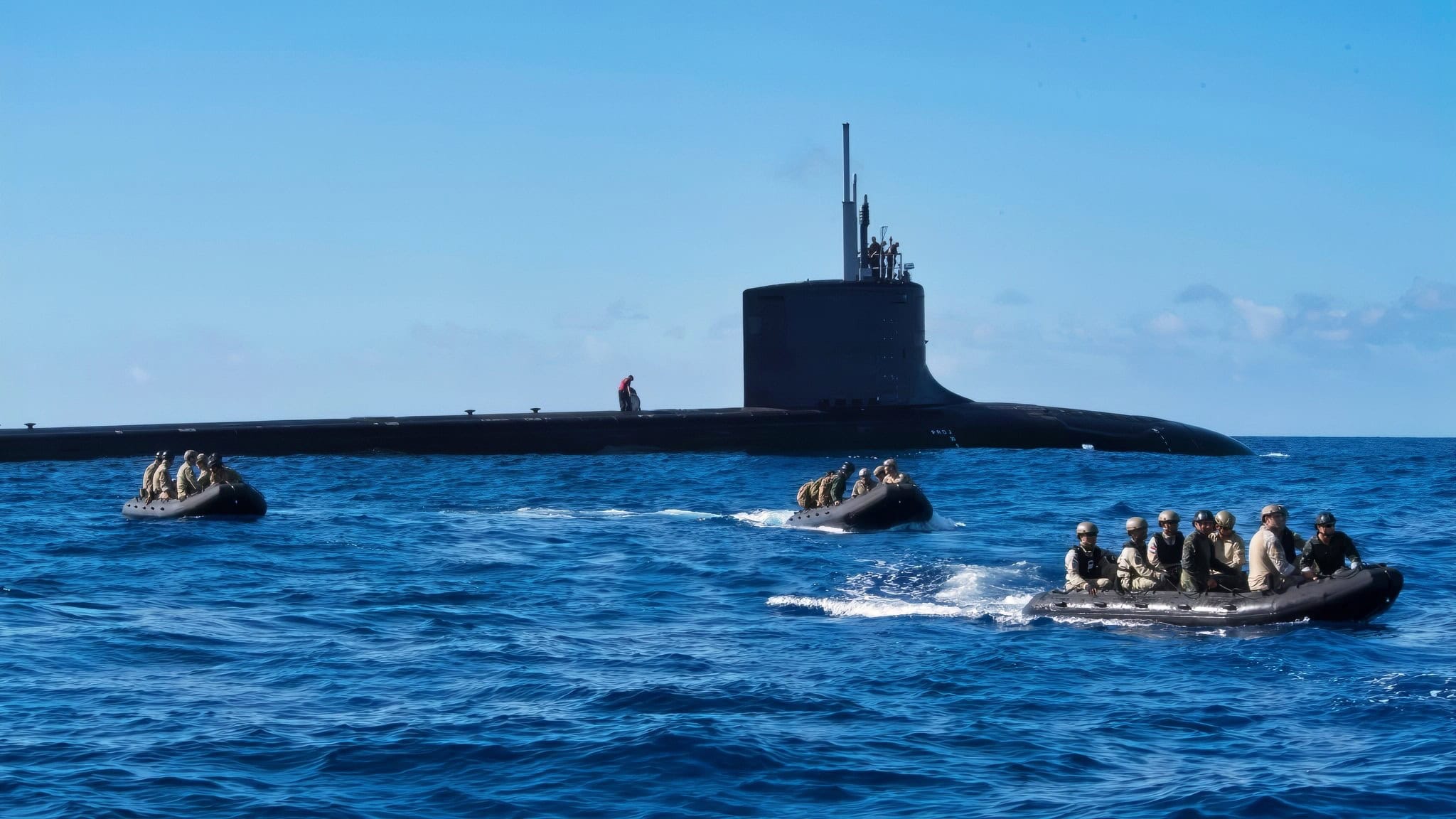
PEARL HARBOR (July 9, 2018) – Multi-national Special Operations Forces (SOF) participate in a submarine insertion exercise with the fast-attack submarine USS Hawaii (SSN 776) and combat rubber raiding craft off the coast of Oahu, Hawaii during Rim of the Pacific (RIMPAC) exercise, July 9. Twenty-five nations, 46 ships and five submarines, about 200 aircraft, and 25,000 personnel are participating in RIMPAC from June 27 to Aug. 2 in and around the Hawaiian Islands and Southern California. The world’s largest international maritime exercise, RIMPAC provides a unique training opportunity while fostering and sustaining cooperative relationships among participants critical to ensuring the safety of sea lanes and security of the world’s oceans. RIMPAC 2018 is the 26th exercise in the series that began in 1971. (U.S. Navy photo by Lt. j.g. Michelle Pelissero)
General Dynamics says improved supplier performance has placed USS District of Columbia on a path toward delivery by the end of 2028. The Navy’s fiscal 2027 schedule still lists March 2029.
About the Author: Harry J. Kazianis
Harry J. Kazianis (@Grecianformula) was the former Senior Director of National Security Affairs at the Center for the National Interest (CFTNI), a foreign policy think tank founded by Richard Nixon based in Washington, DC. Harry has over a decade of experience in think tanks and national security publishing. His ideas have been published in the NY Times, The Washington Post, The Wall Street Journal, CNN, and many other outlets worldwide. He has held positions at CSIS, the Heritage Foundation, the University of Nottingham, and several other institutions related to national security research and studies. He is the former Executive Editor of the National Interest and the Diplomat. He holds a Master’s degree focusing on international affairs from Harvard University.

