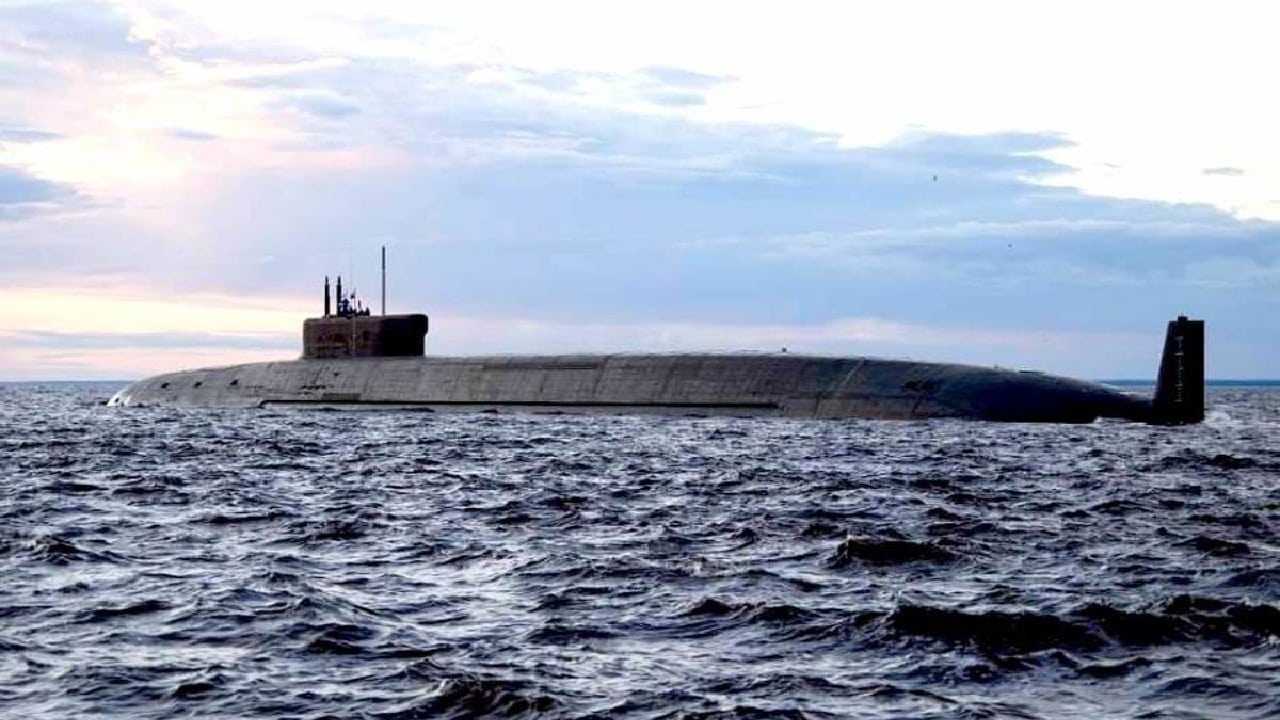
Summary and Key Points: Russia’s Borei-class submarines are the Kremlin’s sea-based nuclear deterrent, built to hide beneath the Arctic and Pacific and strike back if Russia’s other nuclear forces are hit. Each carries 16 RSM-56 Bulava missiles with a range near 5,000 miles, and a pump-jet drive, isolated machinery, and a contoured hull keep the boats quiet.
Russia’s Borei-Class Submarine: A Powerhouse?
Russia’s Borei-class submarines are the Kremlin’s modern sea-based nuclear deterrence platform.
To that end, the ballistic missile submarine is built to hide away underneath the Arctic and Pacific Oceans, able to retaliate against an adversary’s nuclear attack with intercontinental nuclear missiles of its own.
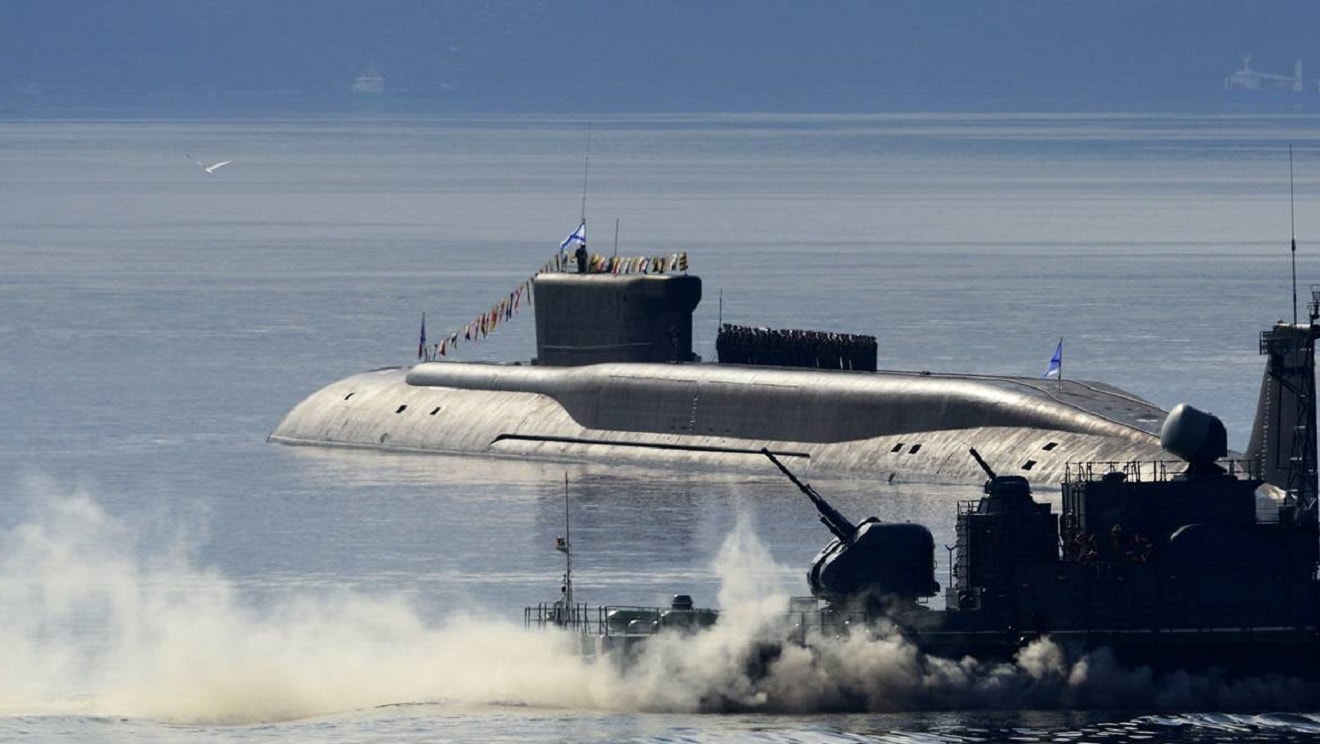
Russia’s Borei-class Ballistic Missile Submarine. Image Credit: Creative Commons.
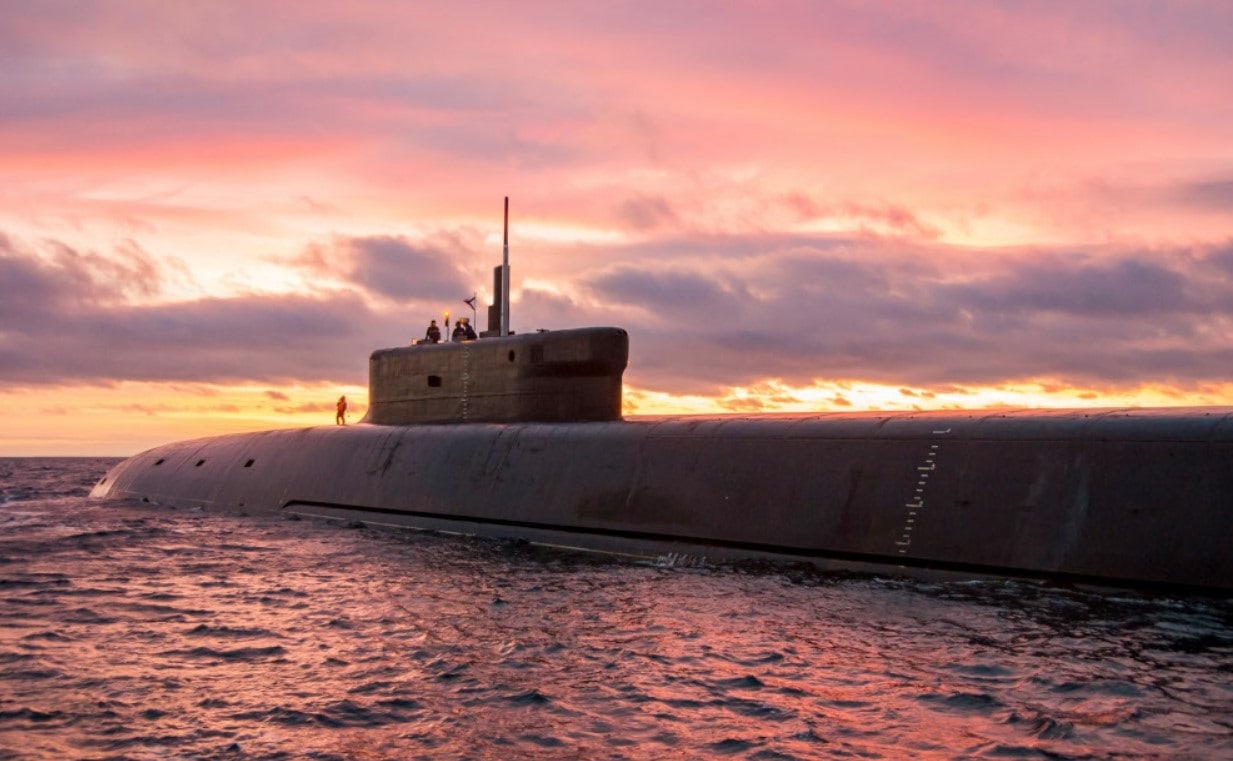
Borei-class Submarine. Image Credit: Russian Government.
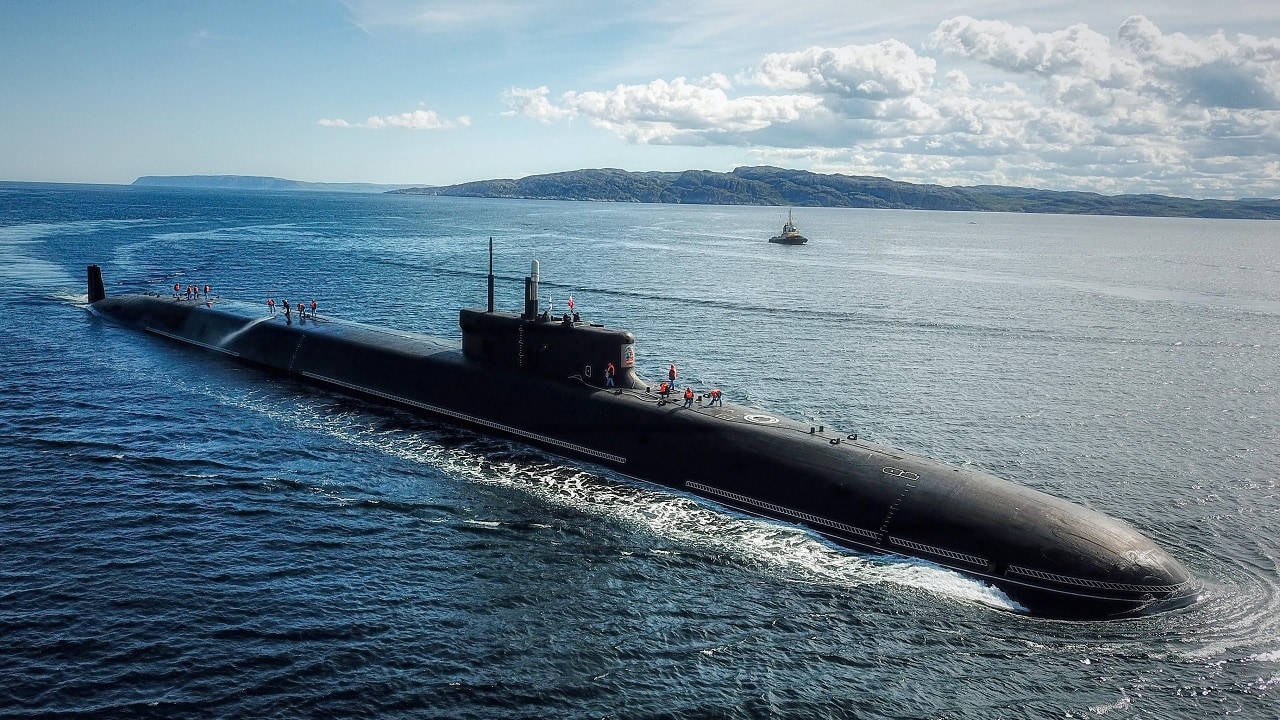
Russia’s Borei-class ballistic missile submarine.
It is not so much a departure from the role SSBNs played in earlier years for the Soviet Navy, but it does replace several submarine classes that have become long in the tooth with a much quieter—and therefore more survivable — nuclear-powered submarine strike platform.
The Borei’s role is to, when tasked by the Kremlin, launch its 16 RSM-56 Bulava missiles if Russia’s other nuclear forces have been struck.
The role picks up what the previous Delta III, Delta IV, and Typhoon submarines performed.
The decision opts for moving toward a single submarine class rather than maintaining Soviet-era boats.
Its solid-fuel missiles have an estimated range of around 8,000 kilometers, or nearly 5,000 miles, and each carries multiple independently targetable nuclear warheads.
Without needing to stand off a coastline, the class can hold large portions of the contents at risk.
The class, therefore, is not intended to engage enemy naval forces, but rather remain undetected at all times.
It is, essentially, a strategic weapon.
Quiet Design
One of the Borei-class’s most remarkable characteristics is its acoustics — or lack thereof.
A submarine’s survivability is almost entirely dependent on how difficult it is to detect and track while underway.
The Borei-class incorporates several design features to reduce its acoustic signature as much as possible.
One of its most important features is its pump-jet propulsion systems.
Unlike a conventional propeller, a pump-jet encapsulates the propulsor within a duct.
This helps reduce cavitation and the noise associated with it, especially at high speeds.
Additionally, the Borei-class’ acoustic signature benefits from advanced machinery isolation and careful hull contouring, helping to eliminate onboard vibrations from traveling through the submarine’s hull and into the water. As a result, the submarine is quieter and harder to detect.
Surviving the 1990s
The submarine class’ origins can be traced back to design work that began during the Soviet era in the 1980s.
The first of the class, however, was laid down in 1996, five years after the dissolution of the Soviet Union.
At the time, Russia faced a collapsing defense budget, a loss of suppliers, and a significantly atrophied workforce.
But this program survived.
Its resilience largely stemmed from the role it played for Moscow—a role the Kremlin was loath to abandon: strategic nuclear deterrence.
The lead ship of the class reflected the lack of available rubles at the time and incorporated components from several incomplete Akula-class hulls to reduce costs.
But despite the cost-saving measure and the importance of the project, initial work stalled and nearly collapsed.
The original Bark missile intended for the class was canceled, which forced a redesign around the Bulava missile instead. Several funding interruptions delayed the project, and several testing failures delayed the lead Borei submarine’s commissioning to 2013 — a whopping 17 years late.
Following Russia’s oil-revenue revival and subsequent rearmament program, the class became a kind of flagship of Russia’s military rivalry.
Russia and the Full-scale Invasion of Ukraine
Russia’s full-scale invasion of its neighbor Ukraine in February 2022 did not alter the Borei-class’ role.
Instead, it may have heightened it.
Russia’s conventional naval losses, particularly to its Black Sea Fleet, have made a protected, nuclear-armed submarine fleet even more valuable to a Kremlin that is facing steep losses on the battlefield.
Its deterrent value is therefore perhaps higher than it had been before 2022.
Production of the class has continued, though not on schedule.
The Knyaz Pozharsky was delivered in 2025, about a year late, and two other Borei-class submarines remain under construction, though Russia still nominally plans to field a force of around 12 submarines.
As recently as last summer, Russian President Vladimir Putin described the role of strategic missile submarines as a priority and indicated that four more of the submarines are intended to rejoin the fleet.
But, like the end of the Soviet era, the class must compete for funding against other priorities.
In 1 Word for the Borei-Class: Money?
With the Kremlin seemingly hell-bent on prosecuting its grinding war in Ukraine — primarily a land and air campaign — the current defense spending emphasis is on personnel, drones, and other materiel that would be of use against Ukrainian forces, goals that would appear to come at the expense of defense projects.
Several Borei-class submarines are still under construction.
But when they are ultimately delivered to the Russian Navy remains to be seen.
About the Author: Caleb Larson
Caleb Larson is an American multiformat journalist based in Berlin, Germany. His work covers the intersection of conflict and society, focusing on American foreign policy and European security. He has reported from Germany, Russia, and the United States. Most recently, he covered the war in Ukraine, reporting extensively on the war’s shifting battle lines in Donbas and writing about its civilian and humanitarian toll. Previously, he worked as a Defense Reporter for POLITICO Europe. You can follow his latest work on X.