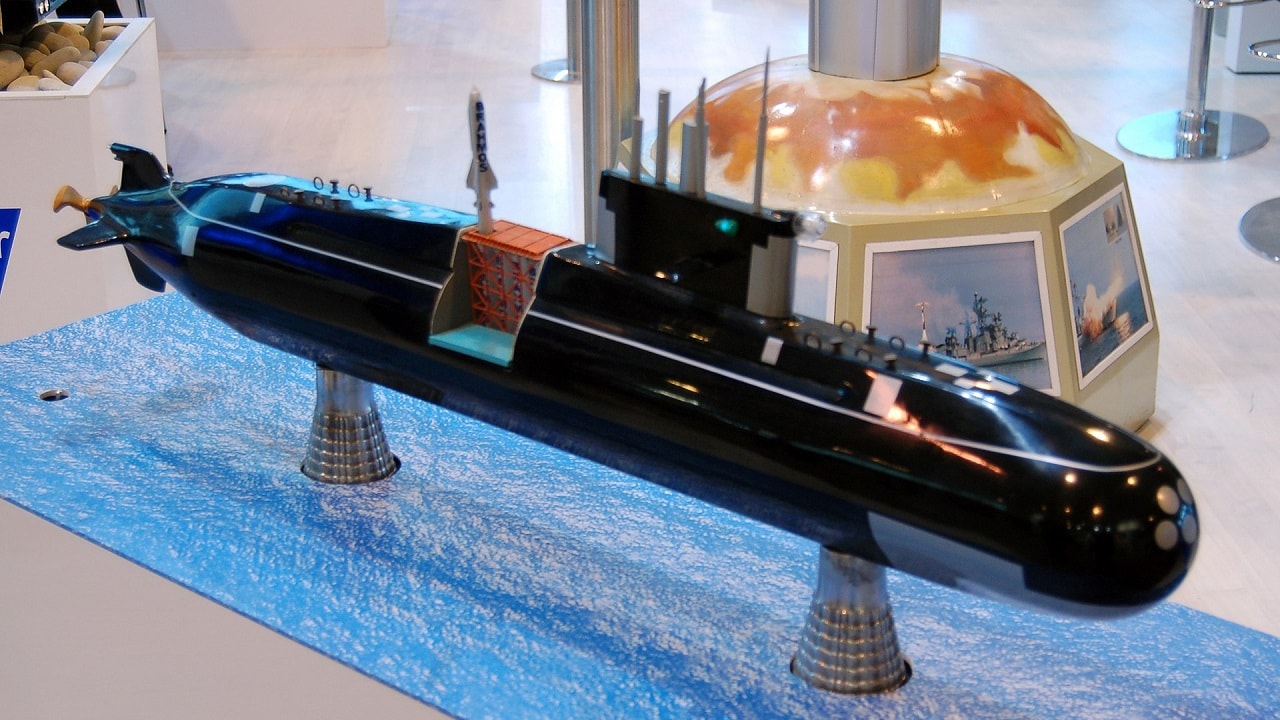
In 1997, Russia set out to design a smaller, conventionally powered submarine to replace the Kilo-class boats they had been building since the 1970s. For show, Russia would retain some of these new subs and use them in the Baltic and Black Sea near its ports. Their real purpose was to be a new export submarine class for countries looking to replace their existing export submarines, the Kilos. This was the new Project 677 Lada-class.
The Lada-Class, Explained
The design called for a single hull with advanced sound-deadening materials and coatings.
It would displace less than 1800 tons on the surface and 2,700 tons submerged.
It would be 236 feet long, run at 10 knots on the surface and 21 knots submerged, and reach a depth just under 1,000 feet.
The Lada could fire Kalibr cruise missiles and carry 6 torpedo tubes capable of deploying mines.
As an improvement over the Kilo’s diesel-electric propulsion, the Lada would feature an Air-Independent Propulsion drive using hydrogen and oxygen as fuel.
The lead boat in the class, the Sankt Peterberg, was laid down in 1997 and, because of funding delays, was not completed until 2004.
It then spent another six years in sea trials, repairs, and retrofits before the Russian Navy finally took delivery in April 2010, thirteen years after it began.
The Russian Navy Ditched the Lada-class As Fast As They Could
It took the Russian Navy a little more than 18 months of operating this submarine to decide they wanted nothing to do with it, and they relegated it to a test bed for systems that might work on another submarine besides the Sankt Peterberg.
The Lada-class Submarine Was A Mess From The Start
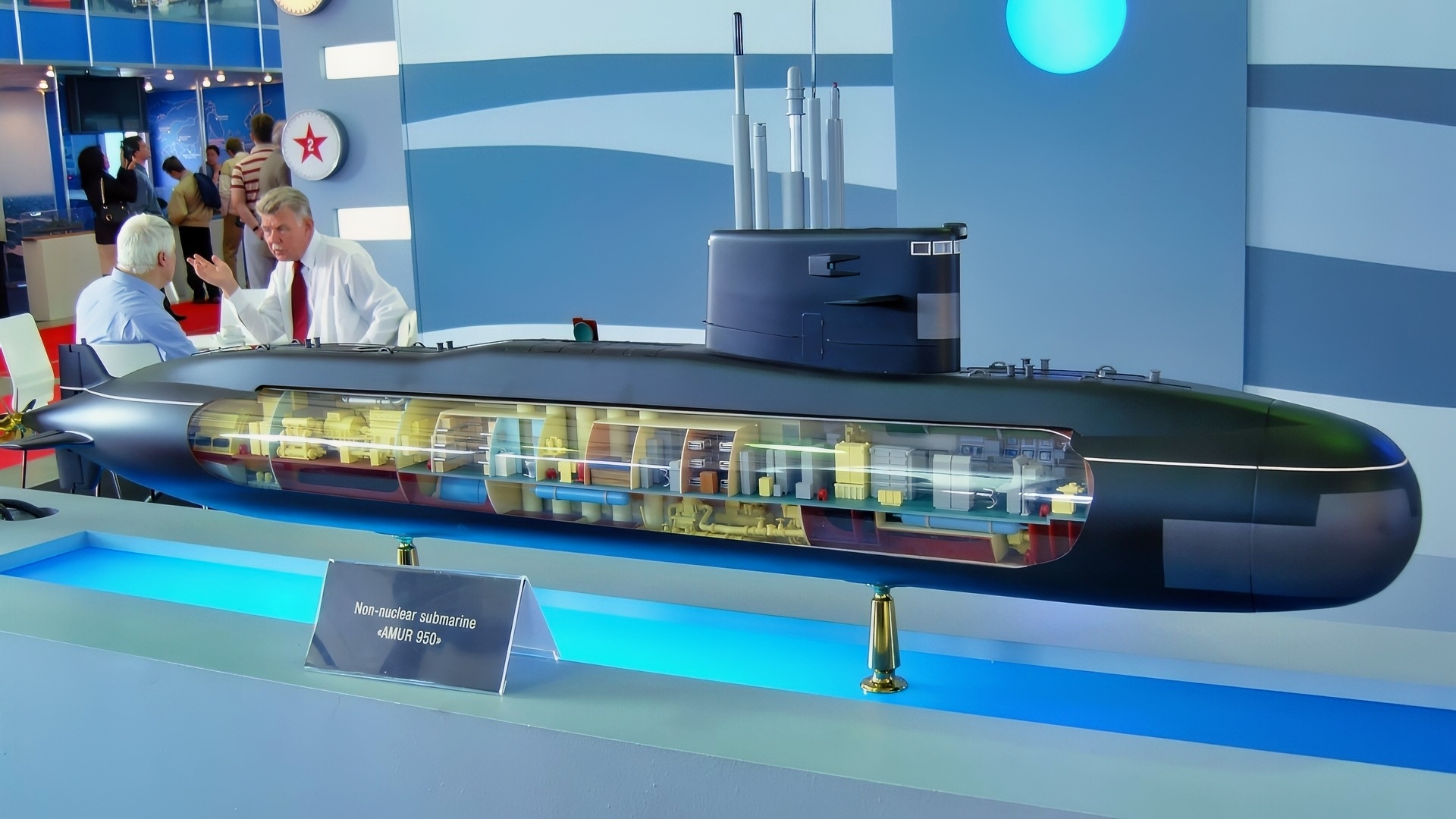
Amur-class Submarine this is the export version of the Lada-class. Creative Commons Image.
The problems were serious and systemic to the design.
The AIP drive just didn’t work.
So, they kept it in place to operate at reduced speed and range, planning for future builds to use the same diesel/electric system as the old Kilos.
The backup diesel generators also broke down constantly, probably because they didn’t match the main propulsion motors.
They found that the sonar suite and combat systems were jammed into a hull that was too small, and the sonar array couldn’t be made to work.
Word quickly got out to foreign countries that the Russians had a turkey in the Lada-class, and buyers ran from it like it was whooping cough.
As crazy as it may sound, Russia pouring so much money into a failure like the Lada helps to remember a few things.
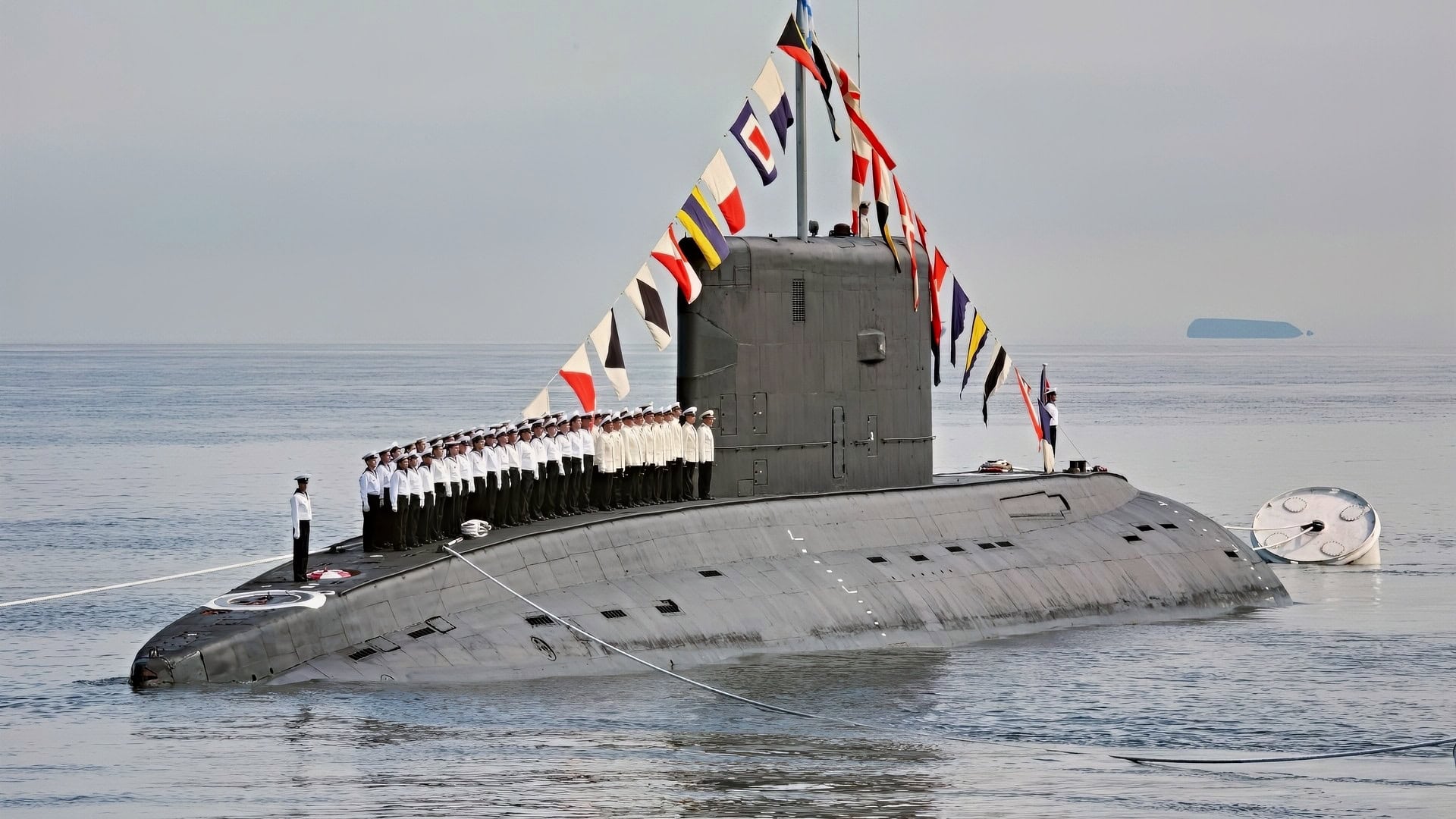
Kilo-Class Submarine on Display
Russia’s Power Comes From The Perception Of It, Not The Reality
Russia tends to overpromise and underdeliver on the capabilities of its various weapons systems.
From ships to planes to missiles, Russia makes extravagant claims about their capabilities that seldom live up to the hype.
When the Mig-25 Foxbat was revealed, the Soviet Union hyped it as an aircraft capable of shooting down the SR-71 Blackbird.
After a defector flew a Foxbat to Japan in 1976, we learned the truth. The Foxbat was a turd. Its speed was a third of what Russia claimed, its max altitude was about half of what it claimed, its engines would need replacing after a single high-speed flight, its radar wouldn’t pick up the Blackbird, and the missile it fired had no chance of chasing it down.
We took the plane apart piece by piece, examined it, and mailed it back to the Soviets. We then resumed flying the Blackbird close to the USSR’s borders.
Experts long proclaimed that Russian tanks were the best in the world, with excellent speed, durability, and toughness. Our own M1Abrams tanks would have a hard time punching through their armor.
Then, the war in Ukraine broke out, and we saw hundreds of Russian tanks, many of their latest type, launch their turrets 100 feet into the air after being hit by the nearly 40-year-old Javelin (FGM-184) missiles, which the US was retiring as obsolete.
Russia is Corruption Robbing Vice With A Gun
Russia is awash in corruption. Everybody cheats everybody in Russia. Design bureaus spend lavish sums promising weapons systems that don’t deliver; manufacturers then build them by cutting every corner they can to maximize profit.
The Russian military then receives them, and generals and admirals steal money set aside to maintain or repair them.
Russian Equipment Never Works As Promised. This Is The Russian Way
Unlike weapons systems by US Manufacturers that try to deliver their products in perfect working order (Don’t come at me in the comments, please; I wrote “try”), the Russians expect things to break down.
They expect them not to work and need repair and rework after delivery. During Moscow’s Victory Parade in 2005, the Russian army debuted its T-90 Armata tank for the first time in public.
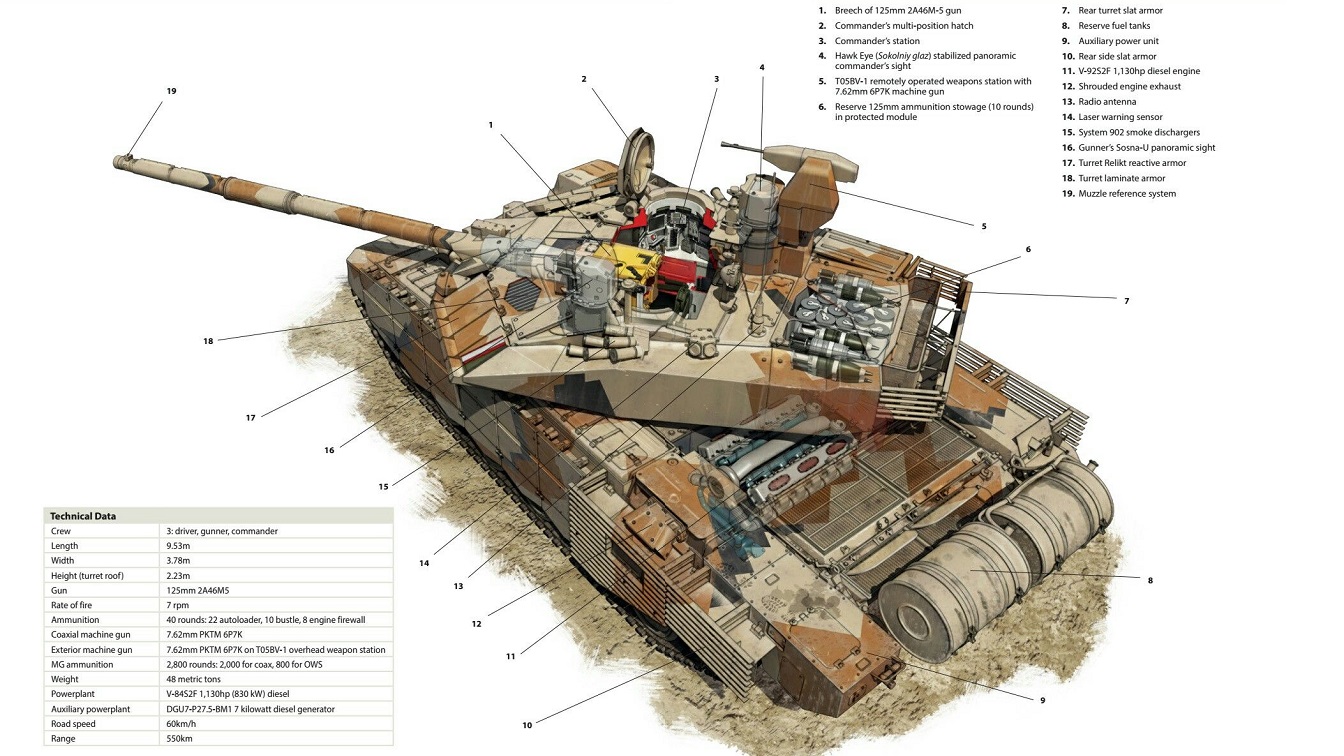
T-90 Tank. Image Credit: Creative Commons.
It promptly broke down right in the middle of the street during the dress rehearsal.
As if this were to be expected, another tank backed up, hooked up a tow cable, and dragged it back into the rehearsal as if nothing had happened.
This is because that is expected in Russia. You get overpromised and underdelivered.
When you get what you ordered, it immediately breaks, and you get it running again. It’s the same with new tanks like the T-90 as it is with new subs like the Lada.
That’s just the Russian way.
About the Author: Sean Spoonts
Sean Spoonts is the former Editor-In-Chief of SOFREP.com. He is a military analyst, writer, and commentator whose work has appeared in Newsweek, CNS News, Ukrinform, and various 30military/veteran media networks and professional publications, including the Military Intelligence Professional Bulletin. He is a U.S. Navy veteran, having served as an Aviation Anti-Submarine Warfare Operator and Search and Rescue Helicopter Aircrewman.