
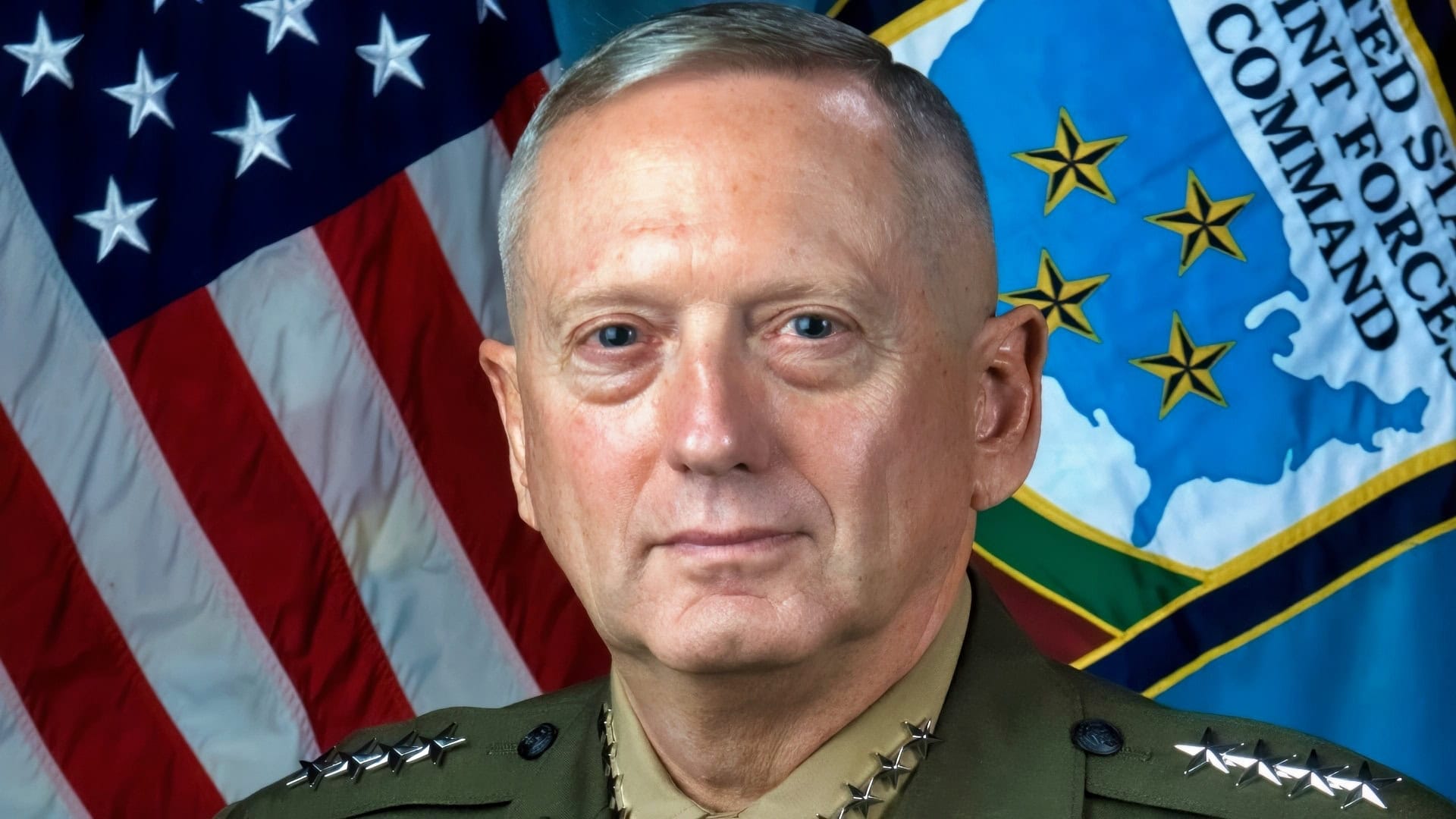
“By doing self-controlled acts, we come to be self-controlled, and by doing brave acts, we become brave.” Aristotle’s observation speaks to a central theme in the military career of General James N. Mattis, who became one of the most recognizable American military leaders of the 21st century.
Known for intellectual seriousness, personal discipline, blunt language, and battlefield leadership, Mattis earned the nicknames “Mad Dog” and “Warrior Monk.”
His career spanned more than four decades, including command during the Afghanistan and Iraq wars, where his reputation rested not only on combat experience but also on an unusually deliberate approach to leadership.
Early Life of James Mattis: Military History and More
Born September 8, 1950, in Pullman, Washington, Mattis was primarily raised in Richland, Washington, near the Hanford nuclear reservation.
He grew up in a family with strong military ties, as his father served in the Merchant Marine during World War II and worked at Hanford.
Mattis attended Central Washington University, where he earned a bachelor’s degree in history in 1971, then was commissioned as a second lieutenant in the Marine Corps in 1972 after participating in Naval ROTC.
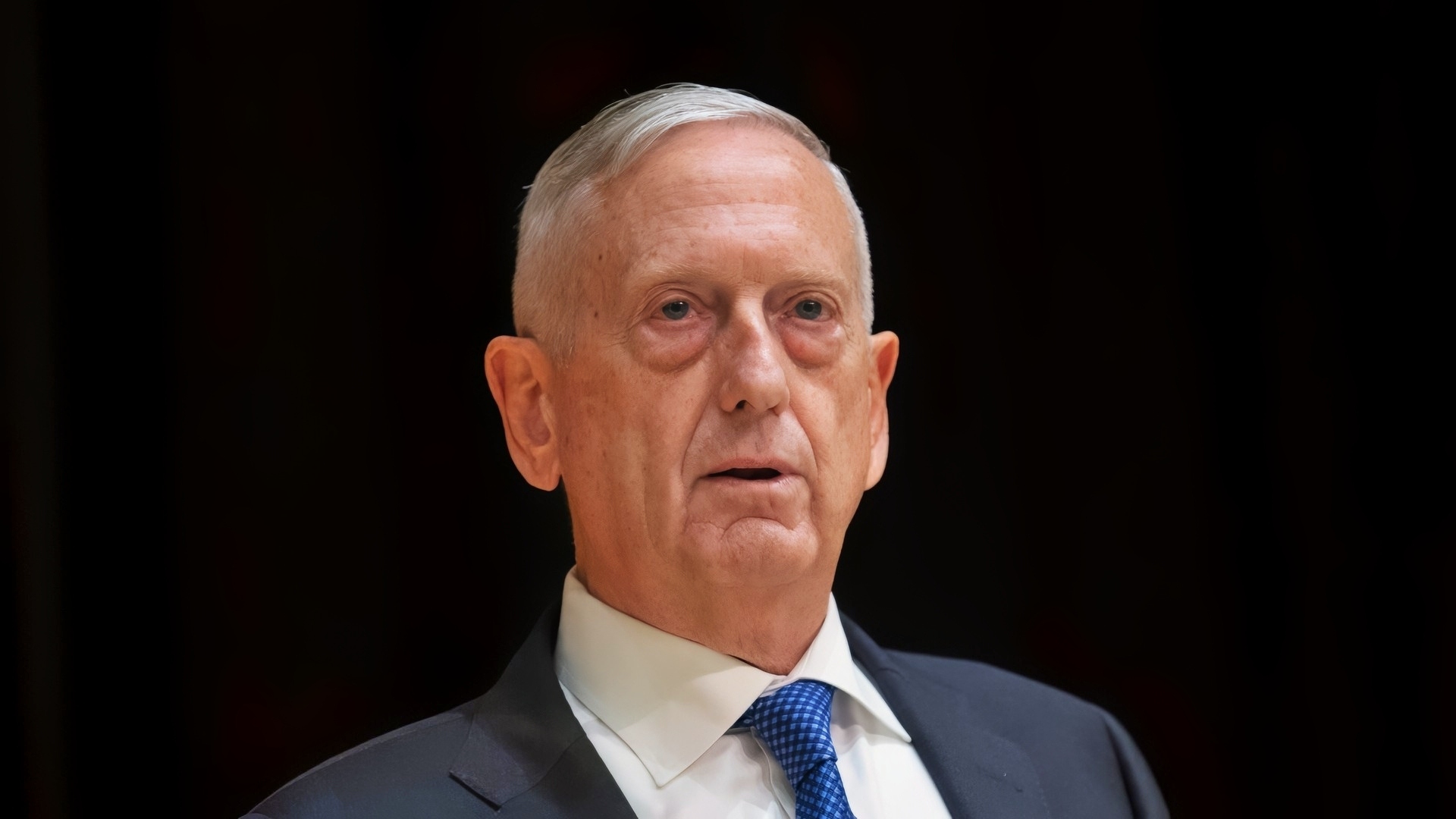
Retired Gen. and former Secretary of Defense, James Mattis, talks about his book tour at Little Hall on Marine Corps Base Quantico, Sept. 25, 2019. Mattis talks about how to improve leadership skills to the audience by making his message personal through bringing up stories about his past Marine Corps career. (U.S. Marine Corps photo by Lance Cpl. Piper A. Ballantine)
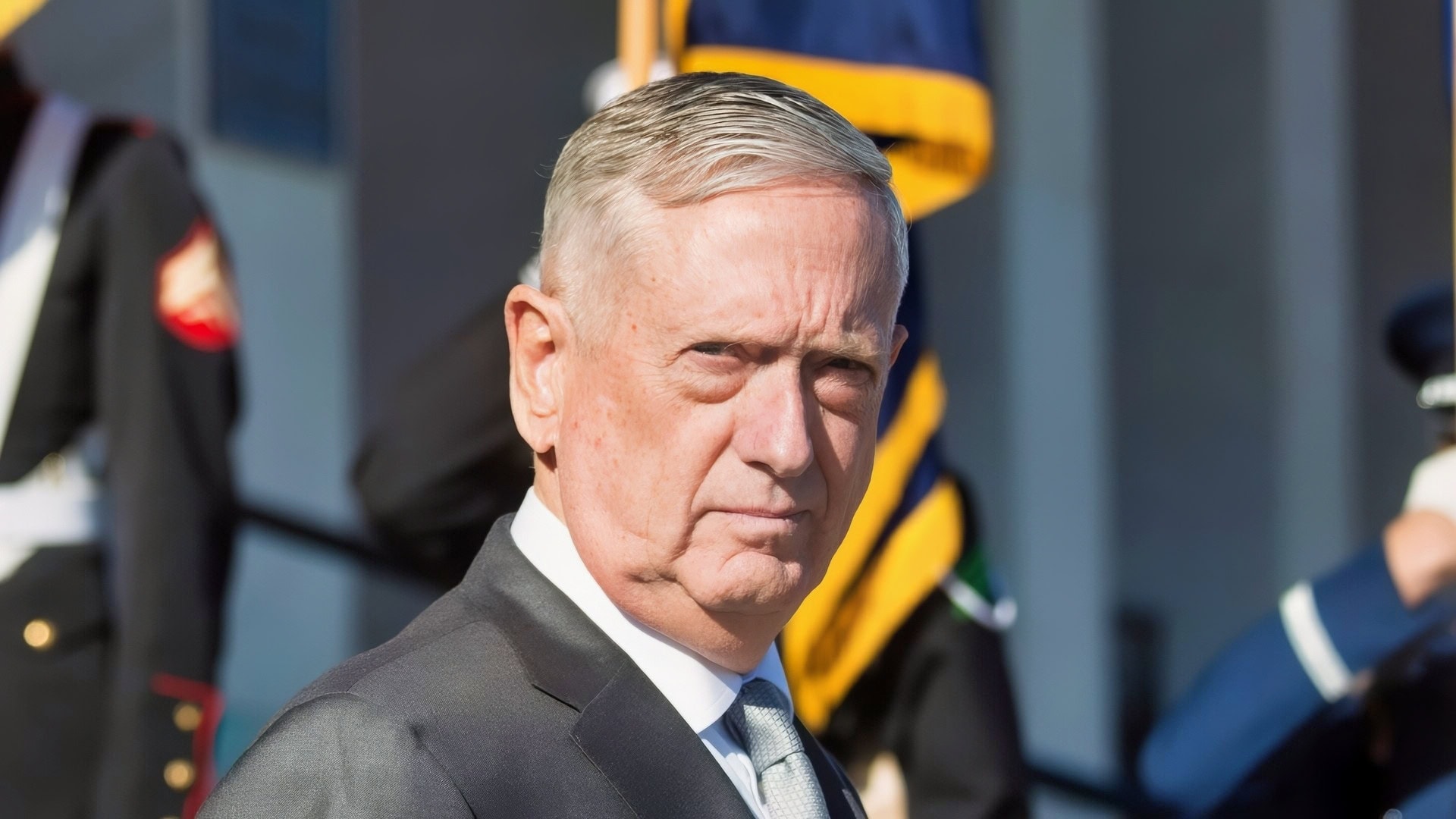
Secretary of Defense Jim Mattis waits for the arrival of President Donald Trump and Vice President Mike Pence Jan. 18, 2018, at the Pentagon in Washington, D.C. (DOD photo by U.S. Navy Petty Officer 1st Class Dominique A. Pineiro)
Mattis entered service during the final years of the Vietnam War, though he did not serve in the conflict.
His early Marine assignments were formative, and throughout his career, Mattis remained closely identified with the culture of the infantry.
Leadership Philosophy
Mattis became known as a voracious reader of military history; he believed commanders should study earlier wars rather than assume every conflict was unprecedented.
He is known for his extensive personal library and for drawing lessons from military thinkers, historical campaigns, and past commanders.
His philosophy emphasized personal discipline, initiative, and independent judgment; realistic training; preparation for uncertainty; responsibility toward subordinates; and intellectual humility.
For Mattis, reading was a practical tool for understanding battlefield decisions and sidestepping historical mistakes.
While aggressive on the battlefield, Mattis prepared deliberately and carefully.
Climbing the Ranks
Mattis climbed the ranks through the 1970s and 1980s, commanding 1st Battalion, 7th Marines during the 1991 Gulf War, an American-led campaign to expel Iraqi forces from Kuwait.
The Gulf War gave Mattis valuable experience commanding Marines in a large conventional military operation. Later, Mattis would command the 7th Marines Regiment before being promoted to brigadier general in the late 1990s.
Mattis would assume command of the 1st Marine Expeditionary Brigade and later Task Force 58.
After 9/11, Mattis helped lead Marine operations in Afghanistan, where, notably, Task Force 58 conducted long-range expeditionary operations, establishing Forward Operating Base Rhino in southern Afghanistan.
The Iraq War
Mattis commanded the 1st Marine Division during the American invasion of Iraq in March 2003.
The division advanced north from Kuwait as part of the US-led offensive against Saddam Hussein’s regime, with Marines fighting through southern Iraq and advancing towards Baghdad.
Mattis emphasized speed and initiative while maintaining pressure on Iraqi forces.
His leadership attracted attention for its boldness and willingness to accept operational risk.
After the invasion, Iraq descended into a prolonged insurgency.
So Mattis returned to Iraq in 2004 as commander of the 1st Marine Division, operating in Al Anbar province, a center of Sunni insurgent activity.
In Al Anbar, Marines faced roadside bombs, ambushes, urban combat, and an increasingly complicated political environment.
Mattis advocated for a combination of aggressive combat operations with efforts to understand and influence the local population.
This approach reflected the challenges of pivoting from war to counterinsurgency in Iraq. Mattis also led Marines during the First Battle of Fallujah, an offensive that was halted.
Later Career
Mattis served as commander of US Joint Forces Command and later CENTCOM, overseeing US military operations across the Middle East. In 2013, after more than 40 years of service, Mattis retired.
He served as US Secretary of Defense from 2017 to 2019 under President Trump but resigned amid disagreements over American foreign policy, especially Trump’s approach to Syria and US alliances.
The resignation, in December 2018, came after Trump announced the withdrawal of US troops from Syria.
Mattis opposed abandoning Kurdish partners and questioned Trump’s commitment to NATO and longstanding alliances. Mattis believed the US needed to respect alliances to confront adversaries like Russia and China.
About the Author: Harrison Kass
Harrison Kass is a writer and attorney focused on national security, technology, and political culture. His work has appeared in Tablet, City Journal, The Hill, The Spectator, and The Cipher Brief. He holds a JD from the University of Oregon and a master’s in Global & Joint Program Studies from NYU—more at harrisonkass.com.