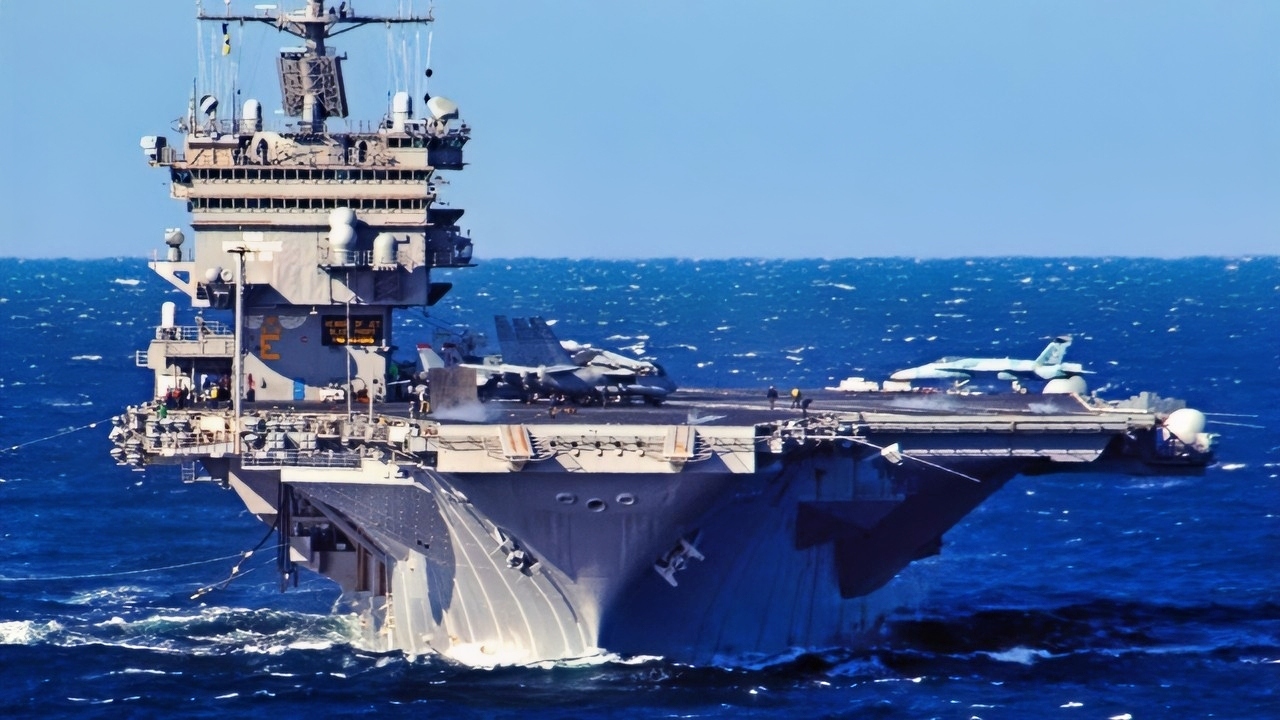
The USS Enterprise was the world’s first nuclear-powered aircraft carrier. Although the United States Navy removed one of its most famous flattops from active service over ten years ago, the warship that heralded a new generation of naval aviation remains notable and newsworthy thanks to its nuclear reactors—but not for the reasons one might think.
The United States Navy operates more nuclear-powered vessels, submarines, and aircraft carriers than any other country.
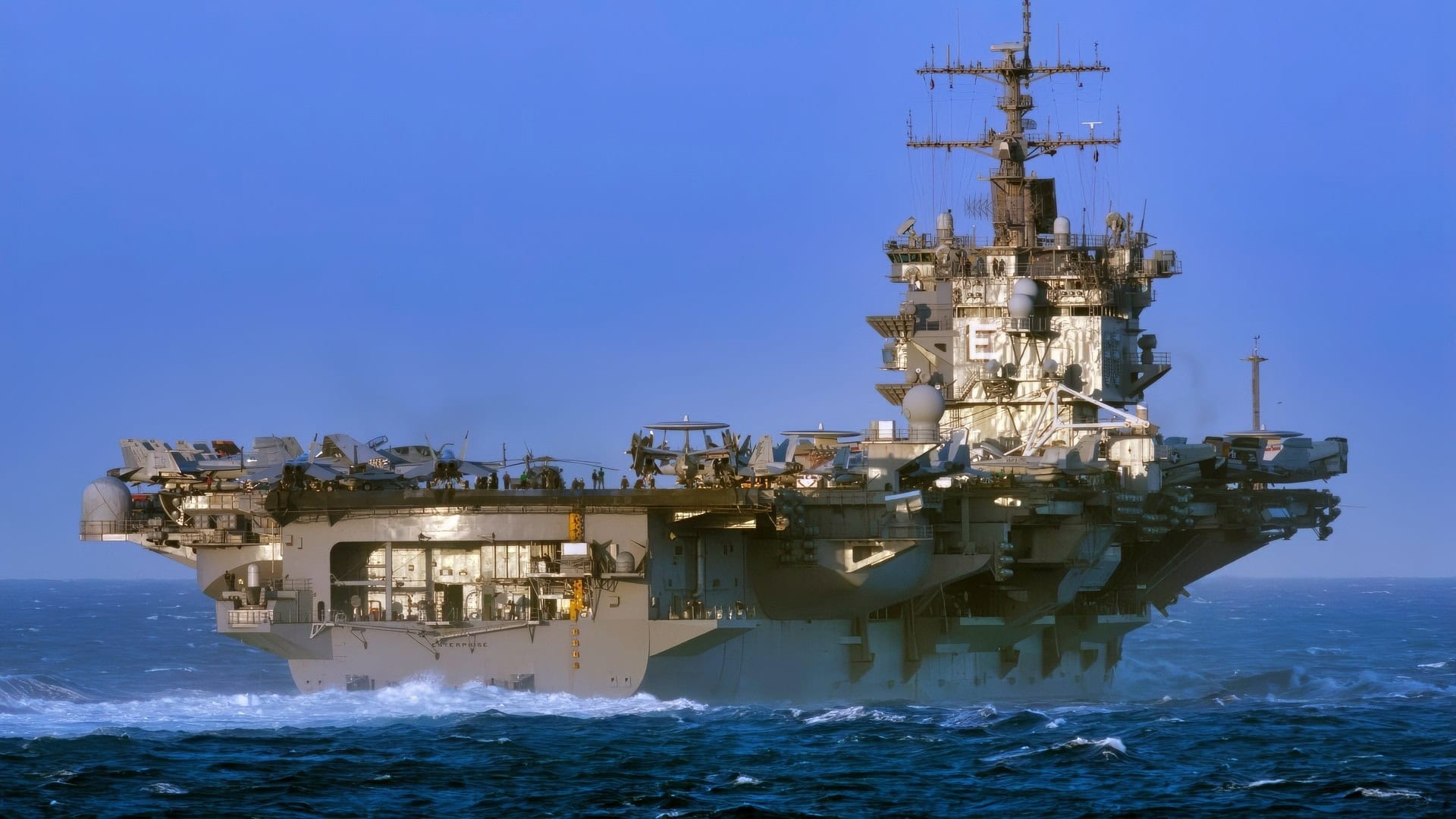
STRAIT OF GIBRALTAR (Oct. 23, 2012) Aircraft carrier USS Enterprise (CVN 65) transits the Strait of Gibraltar. Enterprise is completing a regularly scheduled deployment to the U.S. 5th and 6th Fleet areas of responsibility in support of maritime security operations and theater security cooperation efforts.(U.S. Navy photo by Mass Communication Specialist 3rd Class Daniel Meshel/Released)
With virtually unlimited power generation capacity, these technologies let aircraft carriers operate independently of fuel logistics, aside from mid-life refueling, and let submarines remain submerged until onboard food stores run out.
But what is done when those nuclear-powered submarines and aircraft carriers retire?
What becomes of their nuclear reactors, their nuclear waste?
Even the U.S. Navy is not entirely sure.
“The Navy has really had a tough time figuring out… what’s the process we’d go about dismantling this thing,” Bryan Clark, formerly a submarine officer with the United States Navy and now a fellow at the Hudson Institute, told Breaking Defense, a security and defense-focused website. “That’s why the Enterprise in particular has been sitting around waiting to be dismantled. And we’re going to have the same problem with the Nimitz.”
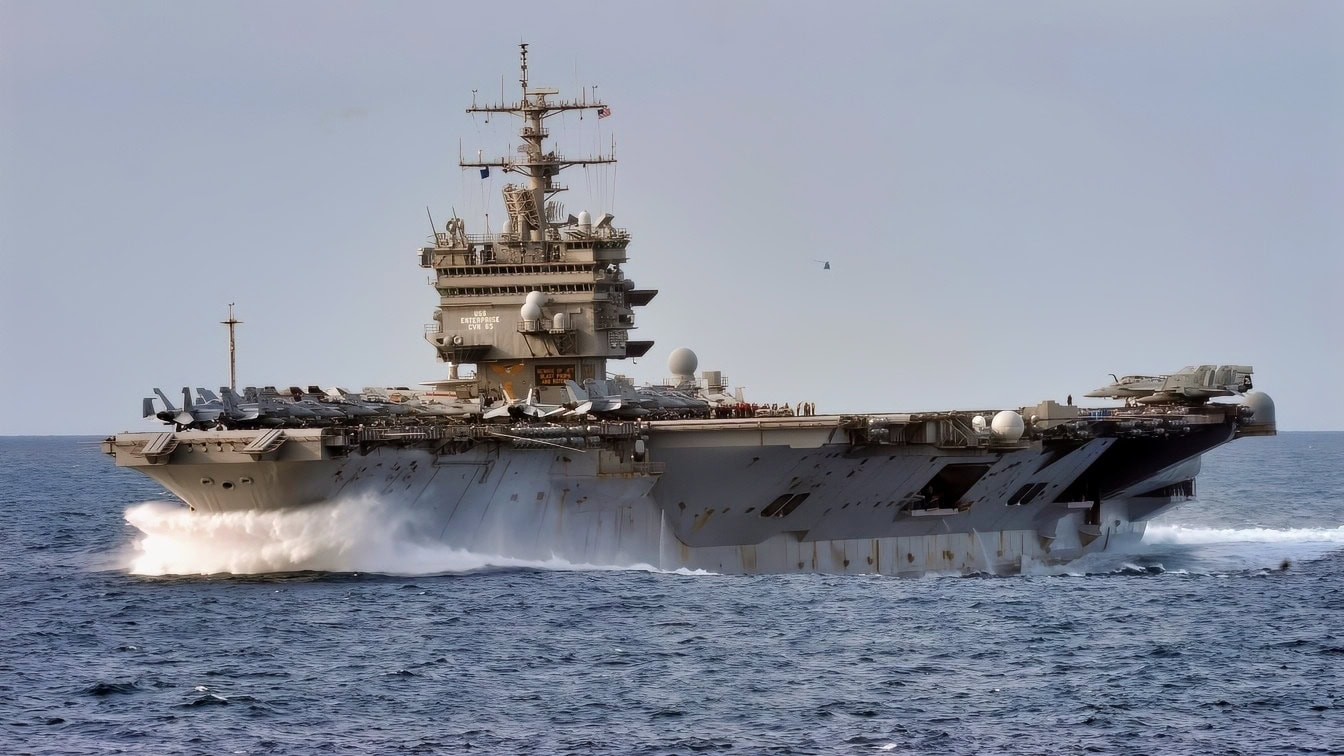
ATLANTIC OCEAN (Feb 04, 2012) Aircraft carrier USS Enterprise (CVN 65). Enterprise is underway participating in exercise Bold Alligator 2012. Bold Alligator 2012, the largest naval amphibious exercise in the past 10 years, represents the Navy and Marine Corps’ revitalization of the full range of amphibious operations. The exercise focuses on today’s fight with today’s forces, while showcasing the advantages of seabasing. This exercise will take place 30 Jan – 12 Feb, 2012 afloat and ashore in and around Virginia and North Carolina. (US Navy photo by Mass Communication Specialist 3rd Class Nick C. Scott)
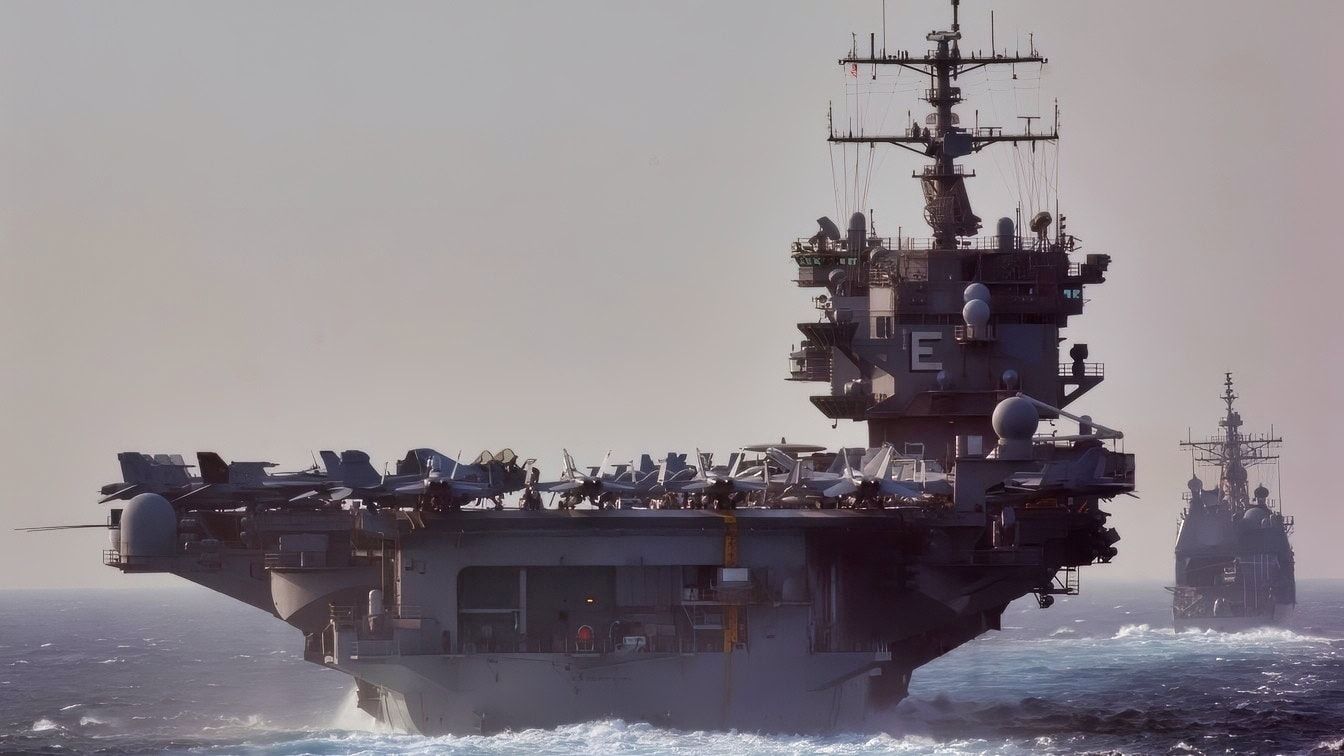
USS Enterprise At Sea US Navy Creative Commons Photo
Once they retire, nuclear submarines are relatively easy to dispose of.
Specialist disposal crews carve out parts of the submarine that came into contact with nuclear materials, like the reactor or coolant piping.
The United States Department of Energy then securely disposes of those systems and subcomponents after proper processing.
For the USS Enterprise, however, the process is far more complex—that first-of-its-kind aircraft carrier is unique in its class. It had not one nuclear reactor, nor two, but a whopping eight.
Four Pairs, Full Power
The USS Enterprise and its eight reactors were a one-off design choice, the product of the then-nascent naval nuclear reactor technology.
Construction of the USS Enterprise began in 1958 and incorporated the era’s reactor designs.
Subsequent nuclear-powered aircraft carriers in the United States Navy favored fewer, higher-output reactors instead of the USS Enterprise’s eight, a trend seen today in the Gerald R. Ford-class of nuclear-powered supercarriers, which sport just a pair of nuclear reactors each.
Squalls on the Horizon
Despite operating the world’s largest nuclear fleet, the United States Navy has had surprisingly few nuclear mishaps, largely thanks to Admiral Hyman Rickover’s intense focus on exactitude and safety in nuclear propulsion, often called the “Father of the Nuclear Navy.”
Unfortunately for the U.S. Navy, however, it appears it has paid far less attention to what happens to nuclear-powered vessels after their service lives end.
Typically, the U.S. Navy disposes of nuclear vessels at Puget Sound facilities.
But in the case of the USS Enterprise, commercial disposal was deemed faster and more economical.
But there would ultimately be a kerfuffle with the Navy and the Nuclear Regulatory Commission over who should take charge of the disposal project.
The Government Accountability Office, a federal oversight body, tabulated the costs of the disposal disagreement and ultimately concluded it added $1 billion to disposal costs.
Wind in its Sails
The story of the USS Enterprise sails on—though not in the original USS Enterprise.
Still, the newer USS Enterprise is part of the Navy’s upcoming Gerald R. Ford-class.
Like the original Enterprise, it will also be nuclear-powered.
Still, like the rest of the Ford-class carriers, it will use just a pair of nuclear reactors rather than two pairs of four.
Unfortunately for the newest ship to carry that famous name, construction has been delayed.
The Ford-class writ large has experienced not-insignificant teething issues in construction.
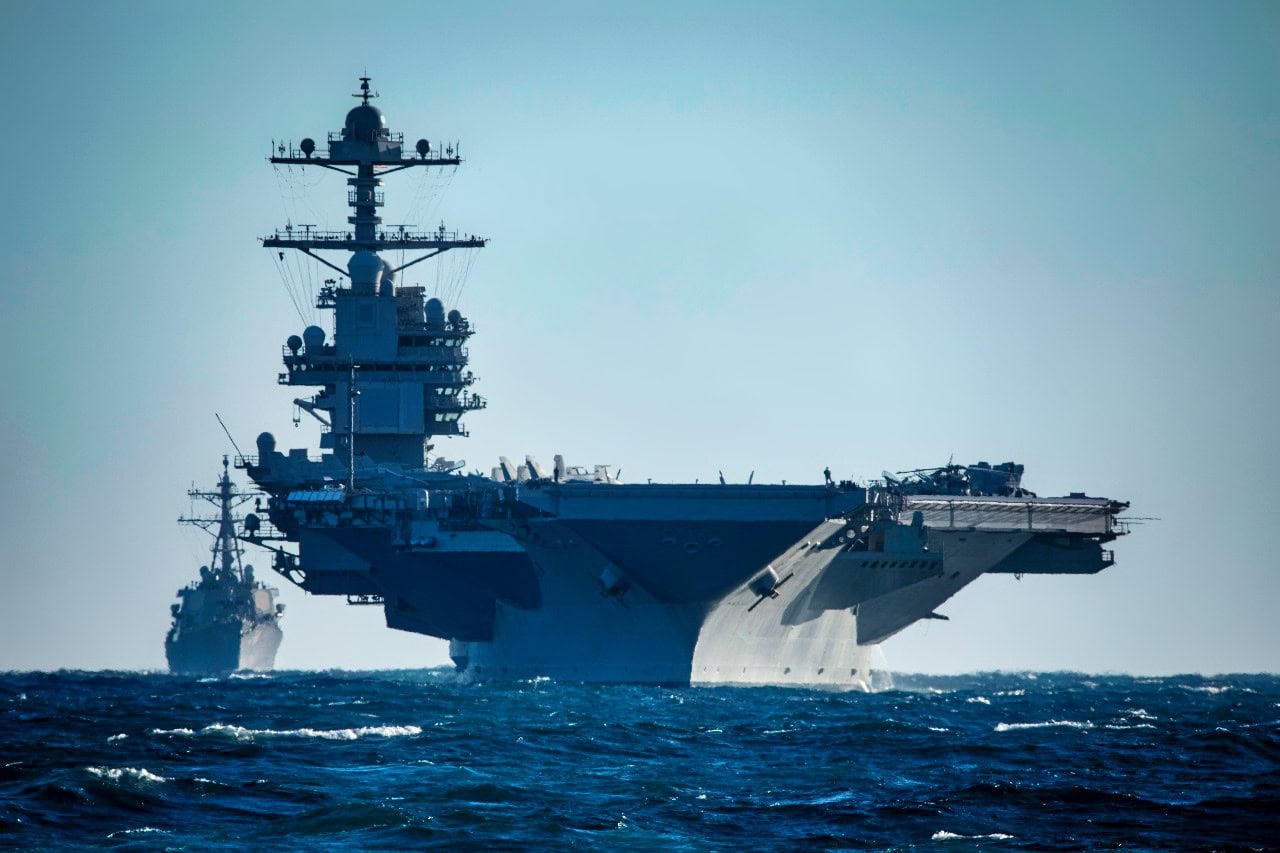
A view from the Ticonderoga-class guided missile cruiser USS Normandy (CG 60) of the first-in-class aircraft carrier USS Gerald R. Ford (CVN 78) and the Arleigh Burke-class guided missile destroyers USS Thomas Hudner (DDG 116), USS Ramage (DDG 61) and USS McFaul (DDG 74) as the ships steam in formation during a drill while underway as part of the Gerald R. Ford Carrier Strike Group March 5, 2023. Ford Carrier Strike Group is underway in the Atlantic Ocean executing its Composite Training Unit Exercise (COMPTUEX), an intense, multi-week exercise designed to fully integrate a carrier strike group as a cohesive, multi-mission fighting force and to test their ability to carry out sustained combat operations from the sea. As the first-in-class ship of Ford-class aircraft carriers, CVN 78 represents a generational leap in the U.S. Navy’s capacity to project power on a global scale. (U.S. Navy photo by Mass Communication Specialist 2nd Class Malachi Lakey)
The ship incorporates several new technologies not seen on prior warships, including advanced weapons elevators, electronically controlled aircraft launch and recovery systems, and new, more powerful radars and other technologies aimed at boosting sortie rates and increasing automation.
But delays in constructing the Ford-class ships slated to enter service before the new USS Enterprise mean its delivery date has been pushed back to early 2031, a three-year delay.
At around $14.2 billion, it will be one of the most costly ships ever built.
Hopefully, when the USS Enterprise returns sometime in the early 2080s, the United States Navy can dispose of the ship quickly and economically.
About the Author: Caleb Larson
Caleb Larson is an American multiformat journalist based in Berlin, Germany. His work covers the intersection of conflict and society, focusing on American foreign policy and European security. He has reported from Germany, Russia, and the United States. Most recently, he covered the war in Ukraine, reporting extensively on the shifting battle lines in Donbas and the war’s civilian and humanitarian toll. Previously, he worked as a Defense Reporter for POLITICO Europe. You can follow his latest work on X.