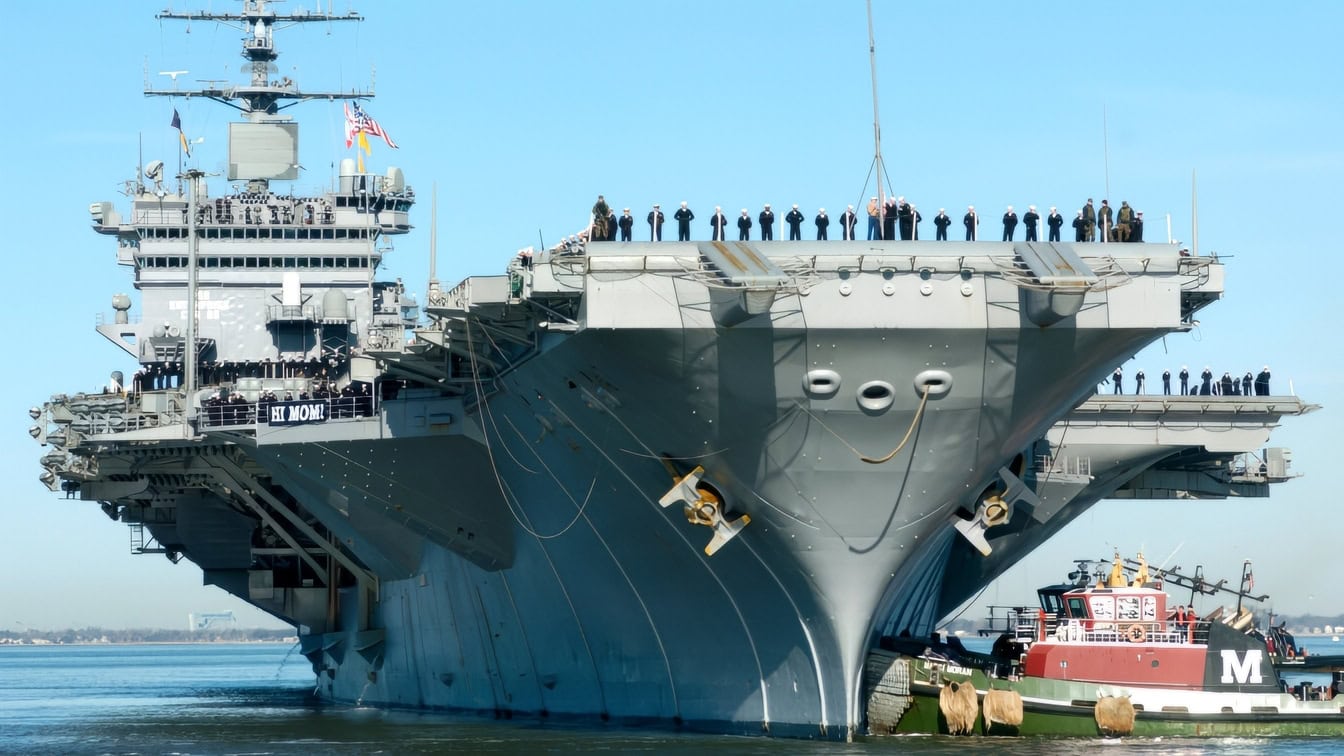
The world’s first nuclear-powered aircraft carrier, the USS Enterprise, has been out of service for over a decade.
However, it has still managed to garner media attention—not for the warship’s prowess in battle, but because nobody can seem to figure out how to get rid of the aircraft carrier and its nuclear reactors—all eight of them.
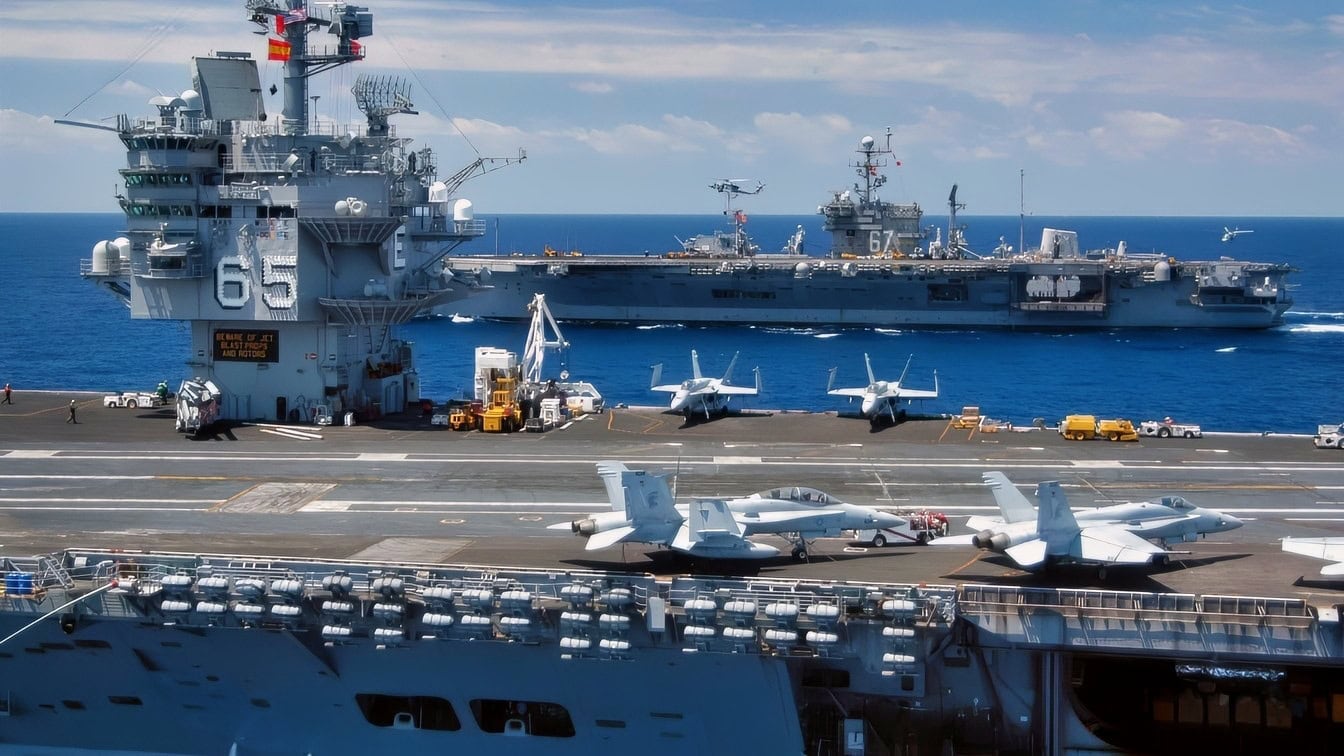
040423-N-8704K-011 Atlantic Ocean April 23, 2004 The USS Enterprise (CVN65) and the USS John F. Kennedy (CV67) steam along side each other while transferring ammunitionin in the Atlantic Ocean on April 23,2004. The Kennedy received ordnance from from the USS Enterprise (CVN65) and the USS Seattle (AOE3) in preperation of an upcoming deployment.
US Navy photo by: Photographers Mate Third Class (AW/SW) Joshua Karsten
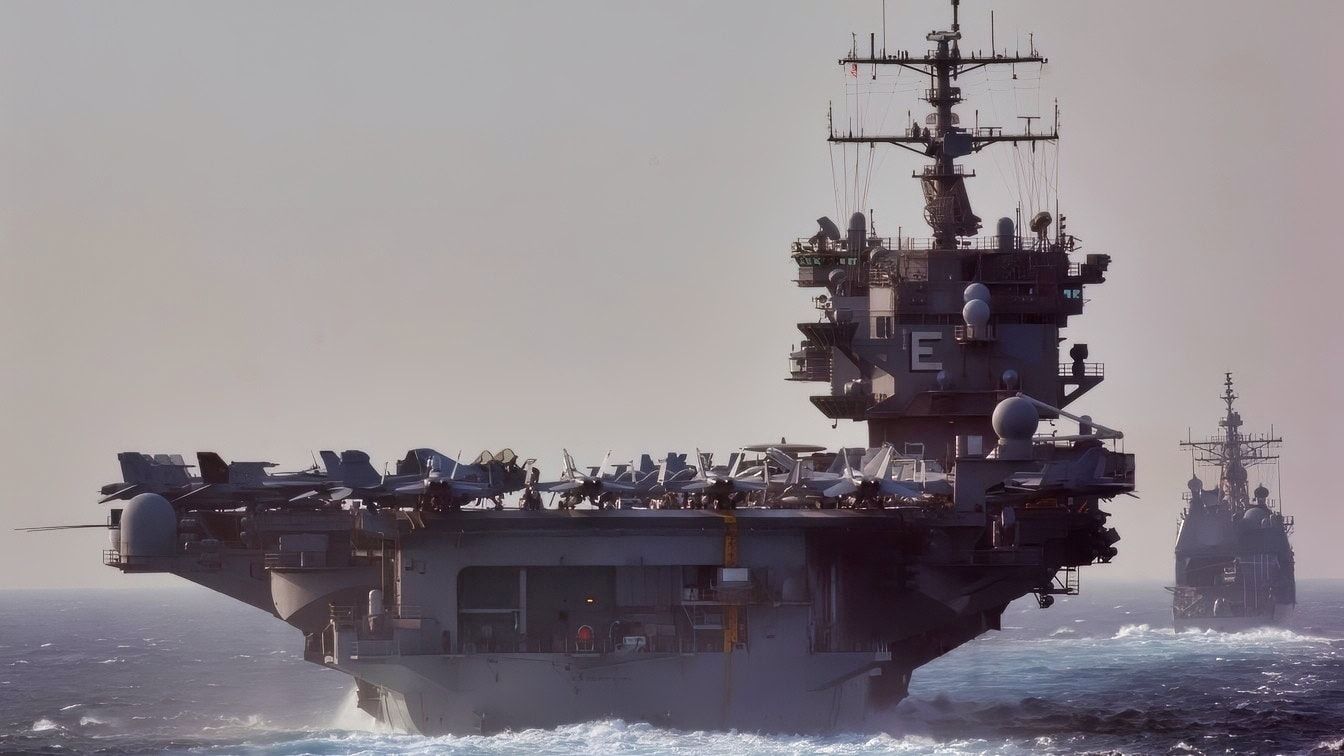
USS Enterprise At Sea US Navy Creative Commons Photo
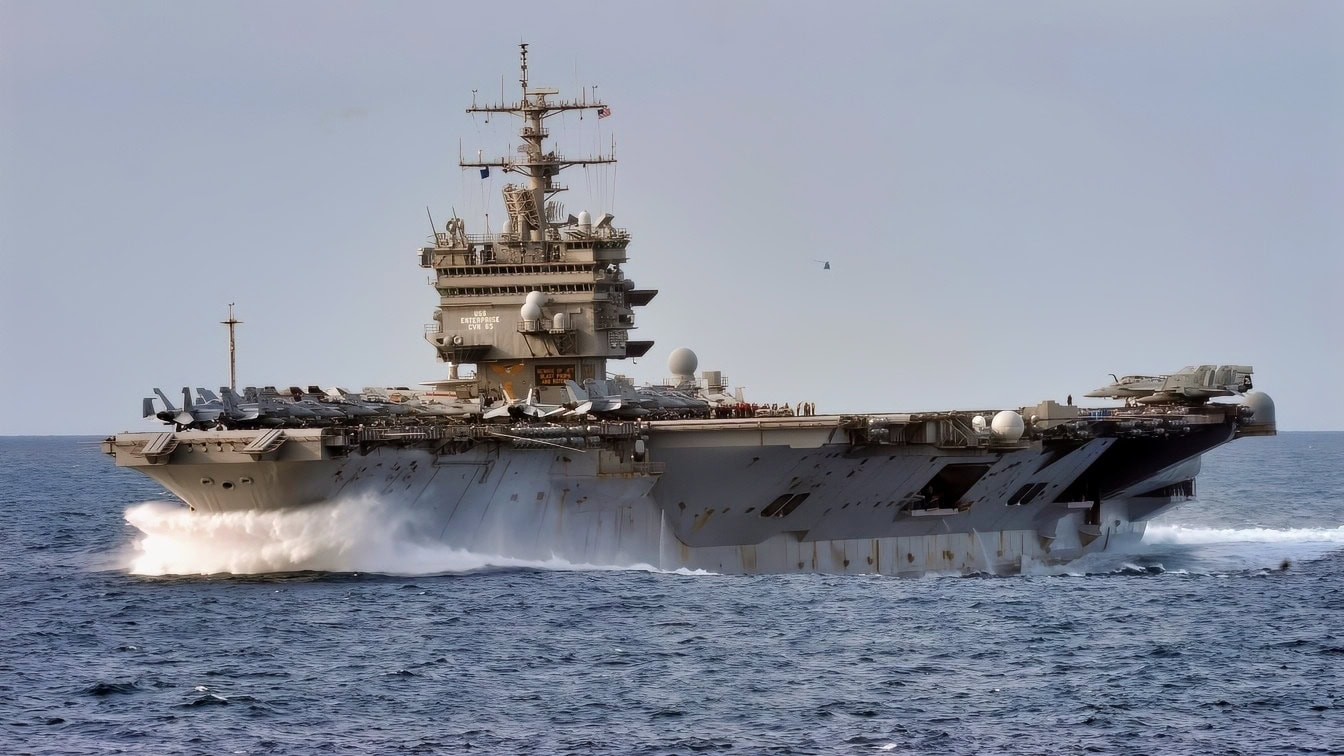
ATLANTIC OCEAN (Feb 04, 2012) Aircraft carrier USS Enterprise (CVN 65). Enterprise is underway participating in exercise Bold Alligator 2012. Bold Alligator 2012, the largest naval amphibious exercise in the past 10 years, represents the Navy and Marine Corps’ revitalization of the full range of amphibious operations. The exercise focuses on today’s fight with today’s forces, while showcasing the advantages of seabasing. This exercise will take place 30 Jan – 12 Feb, 2012 afloat and ashore in and around Virginia and North Carolina. (US Navy photo by Mass Communication Specialist 3rd Class Nick C. Scott)
Though the U.S. Navy operates more nuclear-powered surface ships and submarines than any other navy on the planet, it seemingly put as much thought into nuclear-powered aircraft carrier disposal as it did into nuclear-powered operations. And it is costing the U.S. Navy dearly.
“The Navy has really had a tough time figuring out… what’s the process we’d go about dismantling this thing,” Bryan Clark, a fellow at the Hudson Institute as well as a retired submariner, explained to Breaking Defense, a website. “That’s why the Enterprise in particular has been sitting around waiting to be dismantled.
And we’re going to have the same problem with the Nimitz.”
The disposal process for nuclear-powered submarines is fairly straightforward.
Workers typically cut out the sections of the submarine that contained or came into contact with the submarine’s nuclear reactor or other radioactive material, and those components and sections are given to the Department of Energy for proper processing and disposal.
But the disposal and waste management process for disposing of a decommissioned submarine is relatively simple: it has a single nuclear reactor, not the eight reactors outfitted to the USS Enterprise.
Eight Nuclear Reactors
While the subsequent Nimitz-class aircraft carriers sport just two nuclear reactors each, a testament to the vast improvements in nuclear reactor technology during the 1960s, the USS Enterprise’s eight reactors are a reflection of the limitations to nuclear reactor technology at the time of its construction, which began in 1958.
Today’s much more modern Ford-class carriers also sport just two nuclear reactors, though of a significantly newer, higher-output design.
But dismantling a nuclear-powered aircraft carrier — even one with a pair of nuclear reactors — is significantly more complex than disposing of a decommissioned nuclear-powered submarine, let alone eight reactors.
Troubled Waters Ahead
The USS Enterprise’s disposal is perhaps reflective of the unpreparedness of the U.S. Navy to dispose of some of its biggest, most prized warships, despite a stellar nuclear safety service record while in service.
While the U.S. Navy originally planned to dismantle the carrier at its Puget Sound facilities, it eventually chose commercial disposal as the cheaper, quicker option.
However, the Nuclear Regulatory Commission and the U.S. Navy clashed over the regulatory regime governing the USS Enterprise’s disposal, and the Government Accountability Office, a federal oversight body, said the disagreement, along with other costs, could amount to around $1 billion.
Ultimately, the U.S. Navy opted for the commercial disposal option and awarded a $535 million scrapping contract to a single commercial firm.
However, a competitor for the government disposal contract protested the outcome, insisting that a computer issue caused the Procurement Integrated Enterprise Environment website used to submit bids to malfunction. Earlier this year, the Court of Federal Claims upheld that claim, and the award process was reopened.
Sailing into the Future
The newest USS Enterprise, a member of the U.S. Navy’s new Ford-class carriers, will be the third of its class and the ninth American warship to bear that famous name.
Like its predecessor, it will be nuclear-powered and serve as the shining centerpiece of a carrier strike group.
The ship will incorporate lessons learned from the troubled development of the first Ford-class ship, with a larger pre-outfitted section intended to make its construction both faster and cheaper.
But progress has been far from as swift as anticipated.
Delays in the ship’s critical equipment and shipyard constraints have pushed its anticipated delivery to March 2031, about three years later than planned. It will also cost about $14.2 billion.
About the Author: Caleb Larson
Caleb Larson is an American multiformat journalist based in Berlin, Germany. His work covers the intersection of conflict and society, with a focus on American foreign policy and European security. He has reported from Germany, Russia, and the United States. Most recently, he covered the war in Ukraine, reporting extensively on the war’s shifting battle lines from Donbas and writing on the war’s civilian and humanitarian toll. Previously, he worked as a Defense Reporter for POLITICO Europe. You can follow his latest work on X.