
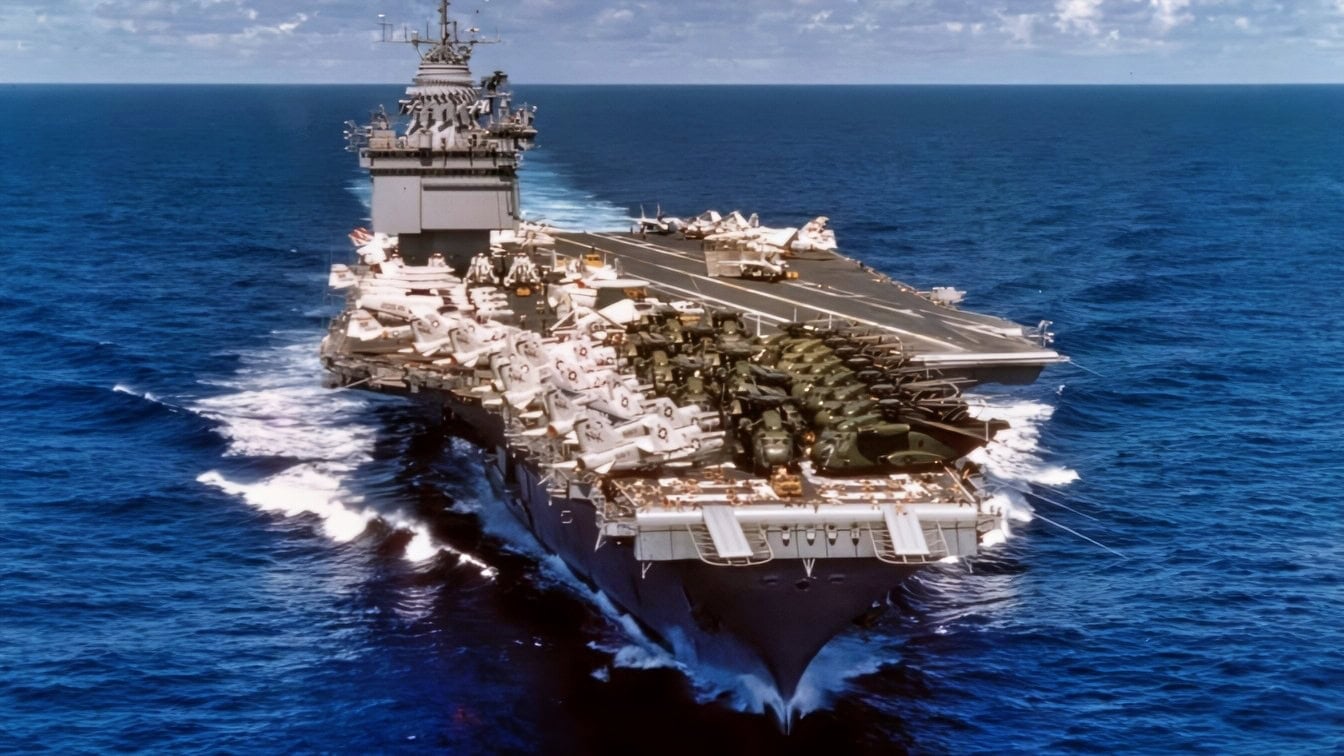
The most complete public accounting for retiring USS Enterprise (CVN-65) now totals $1,431,497,668. The figure combines $902 million for inactivation, $111 million for storage, and the $418,497,668 firm-fixed-price dismantling contract awarded on July 15, 2026. Enterprise was the first nuclear-powered aircraft carrier and the only carrier built with eight reactors. She left active service in December 2012 and was formally decommissioned in February 2017.
That accounting exposes a problem with the widely repeated $1.3 billion figure. USNI News listed the same three line items, but $902 million plus $111 million plus $418,497,668 equals $1,431,497,668. The $1.3 billion headline is reproducible only by omitting the $111 million storage line or treating it as part of the $902 million. The article described storage as a separate cost. The defensible rounded figure is therefore $ 1.4 billion.
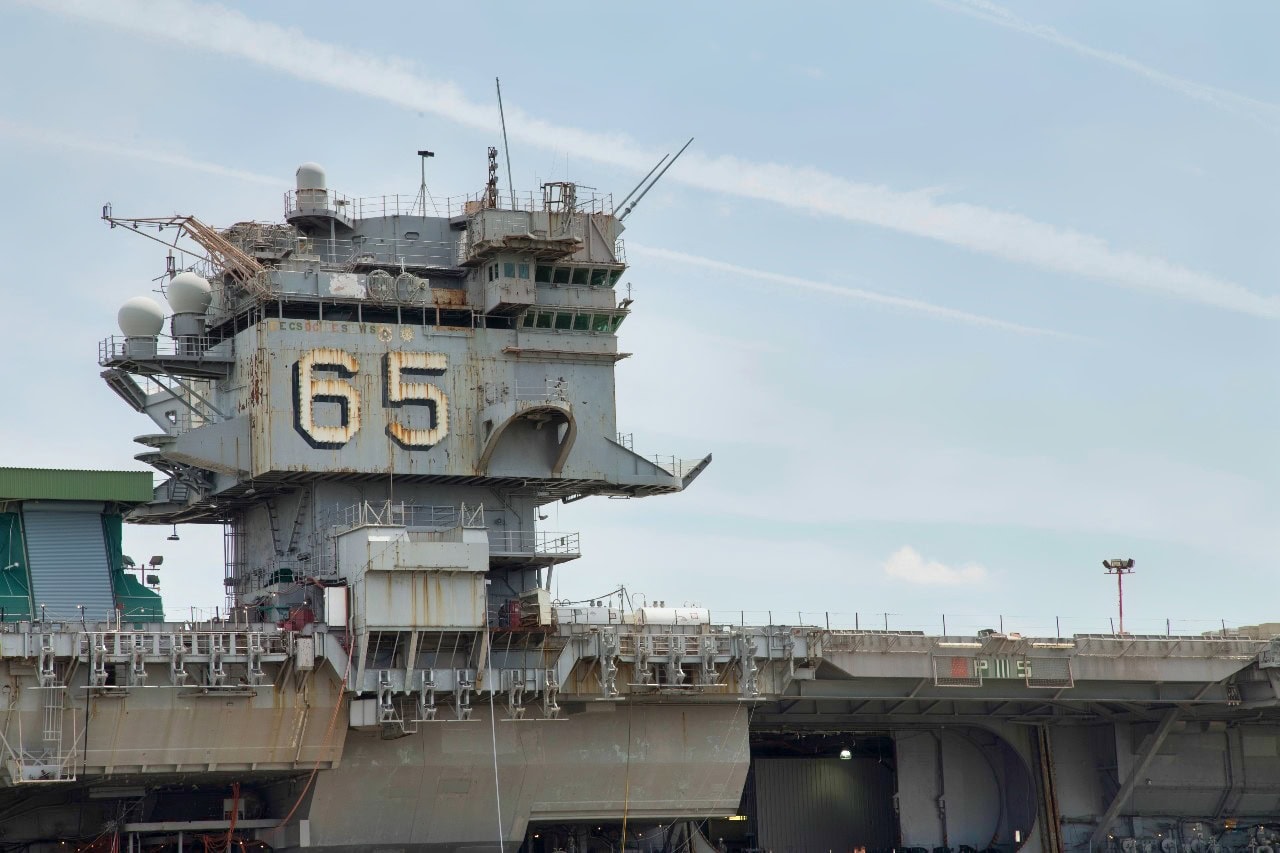
NEWPORT NEWS, Va. (July 15, 2018) — USS Enterprise (CVN 65) sits pierside at Newport News Shipbuilding following its decommissioning in February 2017. (U.S. Navy photo by Mass Communication Specialist 2nd Class Cat Campbell/RELEASED)
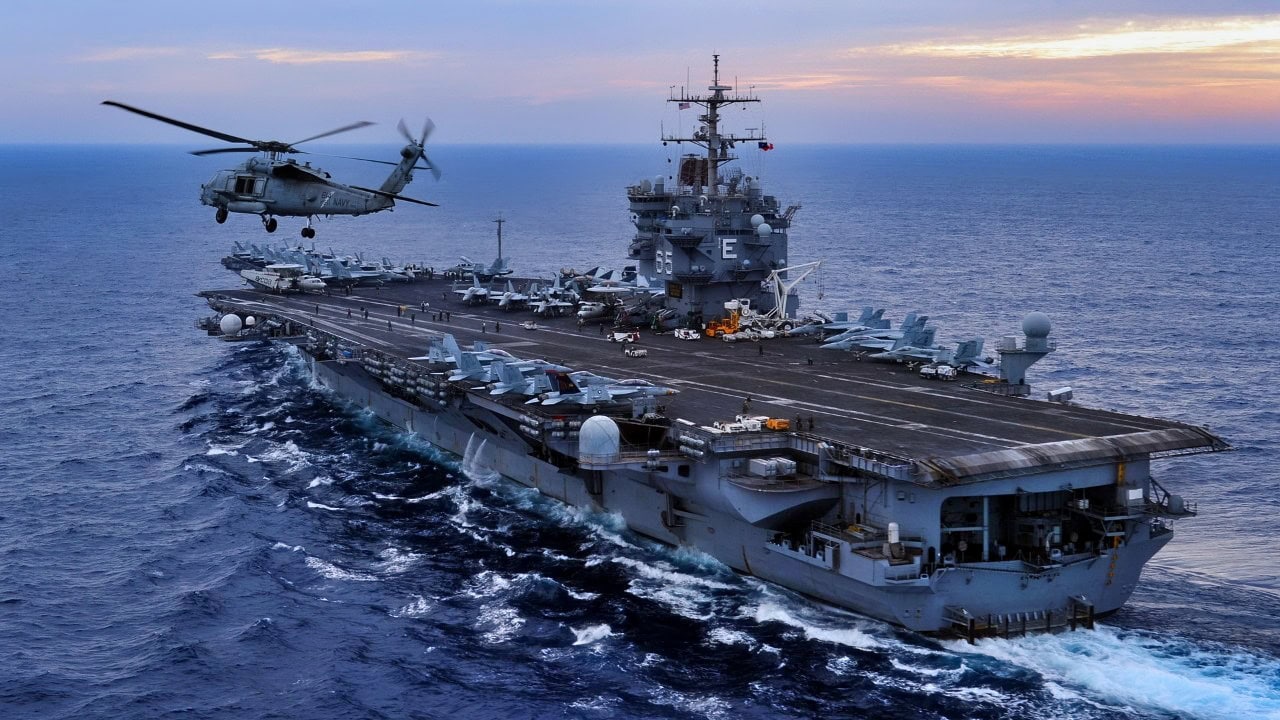
USS Enterprise from 2012. Image Credit: Creative Commons.
There is one further qualification. The first two figures represent costs attributed to work already performed and storage, while $418,497,668 is the face value of a contract running through 2030. The Navy obligated $415,497,668 at award. The $1.4315 billion figure describes disposal-related money spent or contractually committed, not cash already paid in full to NorthStar Maritime Dismantlement Services. The contract launches the first commercial dismantling of a nuclear-powered American surface ship.
The claim that disposal costs more than three times as much as construction is true only in nominal dollars. Enterprise’s commonly recorded construction price was $451.3 million, making the retirement bill 3.17 times larger. That comparison mixes 1961 dollars with spending spread from 2012 through 2030. Using the Bureau of Labor Statistics consumer price index, $451.3 million in 1961 is equivalent to roughly $5.04 billion in July 2026 purchasing power. The $1.4315 billion disposal total is about 28 percent of that inflation-adjusted figure. CPI is not a naval-shipbuilding index, but it overturns the idea that tearing Enterprise apart costs three times what America paid to create her in real terms.
A Court-Ordered Recompetition Cut the Enterprise Contract by $118.3 Million
The $536 million figure reported in 2025 was a real award, not an early planning estimate. On May 30, 2025, the Navy awarded NorthStar a $536,749,731 firm-fixed-price contract to dismantle, recycle, and dispose of Enterprise, with completion expected in November 2029. That contract never became the final deal.
HII ShipCycle challenged the award after technical problems prevented it from uploading a final proposal revision through the government’s electronic procurement portal. HII requested a short extension before the deadline, received no response, and was excluded as late. The U.S. Court of Federal Claims ruled the Navy’s handling was arbitrary and capricious. HII had received the same highest non-price rating as NorthStar, while its initial proposed price was roughly $100 million lower.
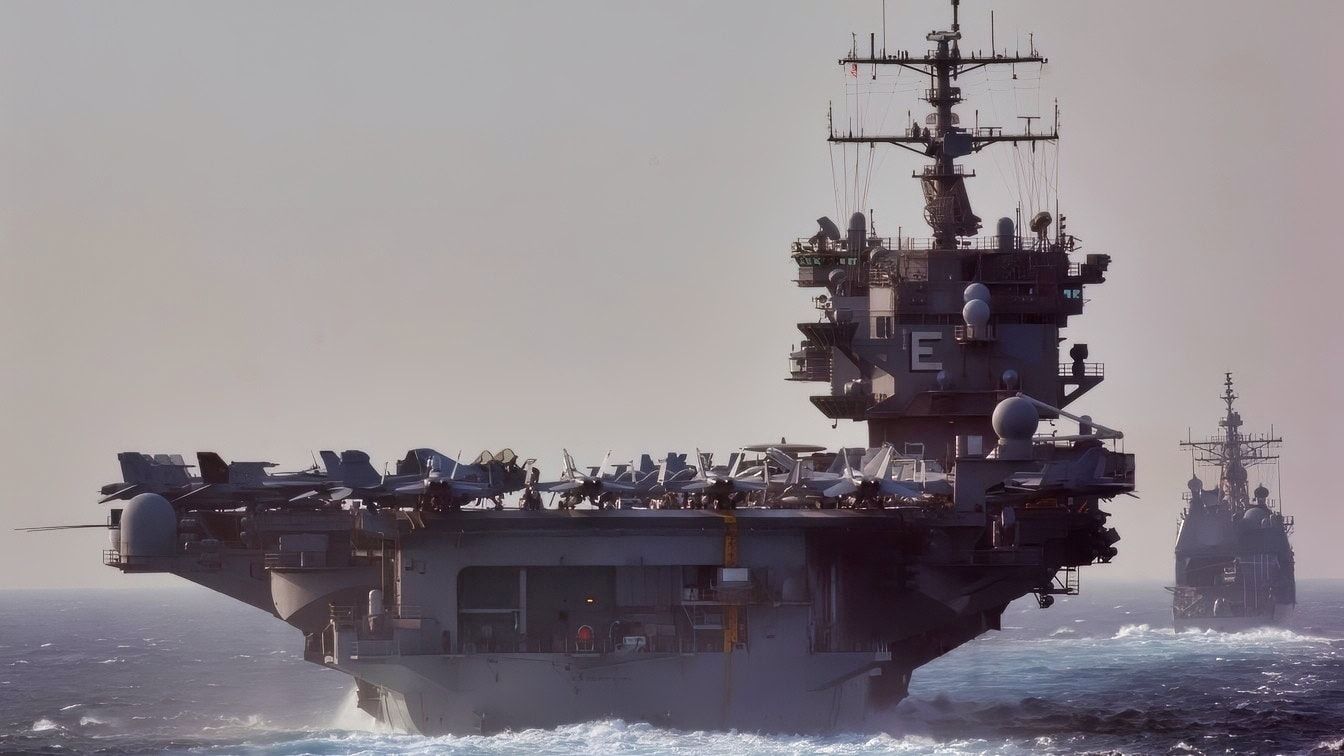
USS Enterprise At Sea US Navy Creative Commons Photo
The court stayed performance and ordered the Navy to allow all three bidders in the competitive range to submit revised final proposals. NorthStar won again on July 15, 2026, under a new contract number, but its price fell to $418,497,668. The difference is $118,252,063, a 22 percent reduction. The completion date moved ten months in the opposite direction, from November 2029 to September 2030.
The Navy has not published a cost-element breakdown explaining every dollar of the reduction. What changed was the competition. The original award was blocked, bidding reopened, and NorthStar had to defend its price against fresh proposals. The work did not lose $118 million of publicly identified scope. Both contract announcements require complete dismantling, recycling, hazardous-material handling, packaging and transportation of low-level radioactive waste.
Eight Reactors Turn USS Enterprise Into a Nuclear Cleanup Project
Enterprise is not a conventional carrier headed to a scrapyard where the value of steel offsets labor. The Navy sold several retired oil-fired carriers for token prices because commercial breakers expected to recover usable material. The contrast with aircraft carriers sold for one cent explains why nuclear disposal starts as a liability rather than an asset.
Before dismantling, the Navy had to remove fuel from eight reactors, drain and deactivate systems, strip reusable and classified equipment, characterize contamination, and prepare a 1,123-foot hull for long-term storage. A 2018 Government Accountability Office investigation placed inactivation at $863 million at that stage. The later $902 million figure is best read as an updated total for the same broad phase, not another separate charge to add on top of it.
The reactors are defueled, but their structures, piping, and surrounding spaces still contain regulated radiological material. A submarine reactor compartment is normally cut from the hull and transported as one large sealed section. Enterprise is too large and internally complex for that established method. NorthStar must dismantle the ship around eight reactor plants, place contaminated material into approved packages and send it to licensed disposal sites.
The Navy spent years deciding where and how to perform that work. GAO found the projected cost of a public-shipyard disposal route rose from between $500 million and $750 million in 2011 to between $1.25 billion and $1.85 billion in 2013 after planners developed a more realistic schedule, workforce requirement and hazardous-material plan. In 2017, the Navy canceled an earlier solicitation while it studied hybrid, full-commercial and storage options. Environmental review, nuclear regulation, first-of-kind engineering and congested public shipyards stretched the decision across years.
The commercial route selected in 2023 was expected to take about five years instead of 15 and cost roughly half as much as using the public nuclear-shipyard system. It also keeps Puget Sound Naval Shipyard focused on active submarines and aircraft carriers. Storage bought time for a cheaper method, but accumulated a reported $111 million bill while Enterprise remained at Newport News awaiting a final path.
Enterprise Sets the Price Model for 10 Nimitz-Class Retirements
The Navy is paying not only to remove one historic carrier but to create a disposal system for the fleet behind it.
Enterprise carried eight reactors. Each Nimitz-class carrier has two. The ten-ship Nimitz class still represents an industrial workload measured in decades, and the Navy has already budgeted $562 million to begin inactivating USS Nimitz.
NorthStar’s firm-fixed-price arrangement shifts much of the dismantling cost risk to the contractor, but it does not erase the $1.013 billion already attributed to inactivation and storage.
The contract calls for work in Mobile, Alabama, and completion in September 2030. If that date holds, the last pieces of the world’s first nuclear-powered aircraft carrier will be disposed of 18 years after she left active service.
About the Author: Harry J. Kazianis
Harry J. Kazianis (@Grecianformula) was the former Senior Director of National Security Affairs at the Center for the National Interest (CFTNI), a foreign policy think tank founded by Richard Nixon based in Washington, DC. Harry has over a decade of experience in think tanks and national security publishing. His ideas have been published in the NY Times, The Washington Post, The Wall Street Journal, CNN, and many other outlets worldwide. He has held positions at CSIS, the Heritage Foundation, the University of Nottingham, and several other institutions related to national security research and studies. He is the former Executive Editor of the National Interest and the Diplomat. He holds a Master’s degree focusing on international affairs from Harvard University.

