
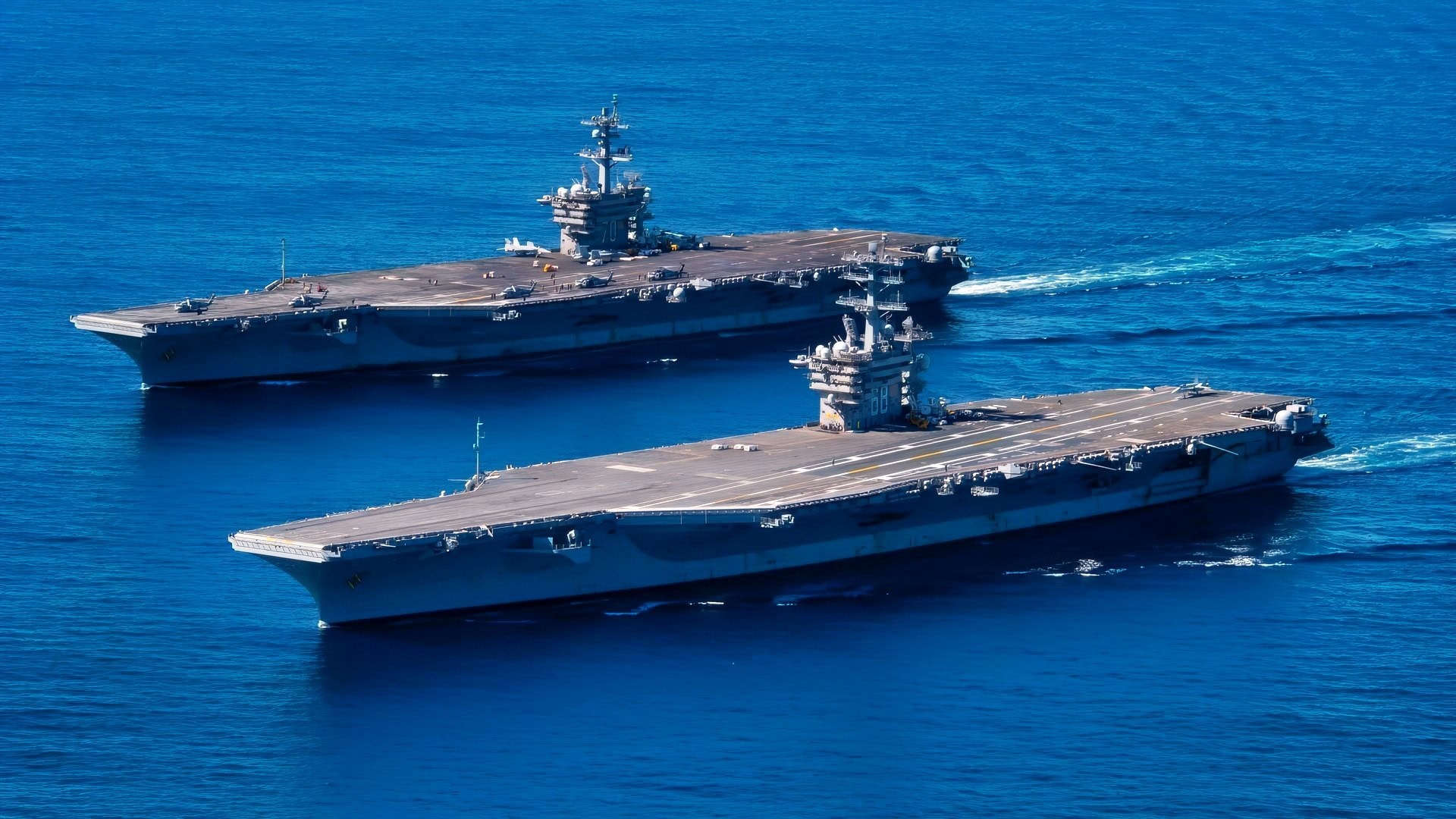
USS Nimitz arrived at Naval Station Norfolk on July 9 after a four-month deployment with nearly 3,000 sailors aboard. The Navy called Norfolk her final homeport, and the carrier is now scheduled to decommission in March 2027.
The Navy’s fiscal 2027 force-structure plan assigns $562 million to Nimitz’s inactivation. That is not an all-in price for dismantling the ship. It funds the opening stage: shutting down systems, removing equipment, draining fluids, demilitarizing sensitive spaces and preparing the propulsion plants for defueling.
Nimitz is 1,092 feet long, displaces about 100,000 tons and carries two nuclear power plants, according to the Navy’s ship history. A conventional carrier can move toward a commercial breaker after fuel, weapons and hazardous materials are removed. Nimitz requires nuclear-qualified workers, secure spent-fuel transportation, radiological controls and an approved reactor-disposal method.
The Navy’s current shipbuilding plan lists Nimitz for fiscal 2027 inactivation at age 52 and gives her disposition as “dismantle.” It does not publish a completion date. The budget still associates 600 uniformed positions with the retirement in fiscal 2030, showing how far the work extends beyond the ceremony.
The Navy Must First Empty and Deactivate USS Nimitz
Before shipbreakers touch the hull, sailors and contractors must remove weapons, aviation equipment, spare parts, electronics, classified material and components worth transferring to other carriers. Systems must be deenergized and drained. Spaces containing asbestos, lead or polychlorinated biphenyls require controlled treatment. The broader carrier transition is already tied to delays involving USS John F. Kennedy.
Inactivation is different from dismantlement. It turns an operating warship into a safe, defueled and administratively retired hull. The crew gradually falls away as shipyard workers take over. Earlier planning estimated that the first phase alone would require several years, long before the final steel is recycled.
USS Nimitz Has Two Nuclear Reactors That Cannot Go to a Scrapyard
The reactor cores must be removed under Naval Reactors control. Since 2016, aircraft-carrier spent fuel has been loaded into M-290 rail containers and transported to the Naval Reactors Facility in Idaho, according to a Government Accountability Office review. Removing the fuel ends the chain reaction, but it does not make the surrounding plant ordinary scrap.
Residual radioactivity remains inside piping, shielding and structural metal. Under the Navy’s established nuclear-ship recycling process, workers cut cables and pipes crossing reactor-compartment boundaries, seal every penetration, drain remaining liquids and build steel containment packages. Lead shielding and tightly bound PCBs must meet federal and Washington state rules.
The Navy has shipped reactor compartments from submarines and nuclear cruisers by barge from Puget Sound, down the Washington coast and up the Columbia River to the Department of Energy’s Hanford Site. A carrier-specific plan for Nimitz has not been released. The USS Enterprise disposal program is establishing the first carrier-scale precedent.
The $562 Million Nimitz Budget Is Only the Opening Bill
The Navy has not published a final, whole-project cost estimate for Nimitz. The $562 million covers inactivation, not every later year of storage, reactor packaging, transportation, dismantlement and recycling.
The best public comparison comes from Enterprise. In 2018, the Government Accountability Office reported preliminary Navy estimates of $750 million to $1.4 billion for a roughly five-year commercial option. A public-shipyard approach was estimated at $1.05 billion to $1.55 billion and 10 years. Those figures are dated and do not transfer directly to Nimitz.
Enterprise had eight reactors arranged through a one-of-a-kind propulsion plant. Nimitz has two reactors, but she is a larger ship and the first member of a 10-carrier class entering retirement. The Navy has spent years establishing a workable commercial path for Enterprise. Lessons from that project will shape the sequence for CVN-68.
Shipyard Capacity Will Set the USS Nimitz Schedule
The Navy created the CVN Inactivation and Disposal Program Office in 2024 to manage Enterprise and the future retirement of all 10 Nimitz-class carriers. NAVSEA described the combined effort as a multibillion-dollar undertaking lasting for decades. It must compete for nuclear-qualified labor, dry docks, engineers and regulators while public shipyards maintain active submarines and carriers.
Commercial yards offer more capacity, but nuclear work brings security, environmental and regulatory requirements absent from ordinary shipbreaking. Conventional carriers have sometimes been transferred to breakers for a token price. Nuclear carriers leave the Navy with a disposal liability, which is why retired flattops follow sharply different paths.
The Navy’s five-year plan places Nimitz in the dismantlement queue, but specific contract dates remain unsettled. If inactivation continues through fiscal 2030, the reactor-compartment and hull-disposal work is likely to extend into the 2030s. The Navy can set a date for taking USS Nimitz out of commission. It cannot yet give the public a date for the moment the last section of CVN-68 leaves the yard.
About the Author: Harry J. Kazianis
Harry J. Kazianis (@Grecianformula) was the former Senior Director of National Security Affairs at the Center for the National Interest (CFTNI), a foreign policy think tank founded by Richard Nixon based in Washington, DC. Harry has over a decade of experience in think tanks and national security publishing. His ideas have been published in the NY Times, The Washington Post, The Wall Street Journal, CNN, and many other outlets worldwide. He has held positions at CSIS, the Heritage Foundation, the University of Nottingham, and several other institutions related to national security research and studies. He is the former Executive Editor of the National Interest and the Diplomat. He holds a Master’s degree focusing on international affairs from Harvard University.

