
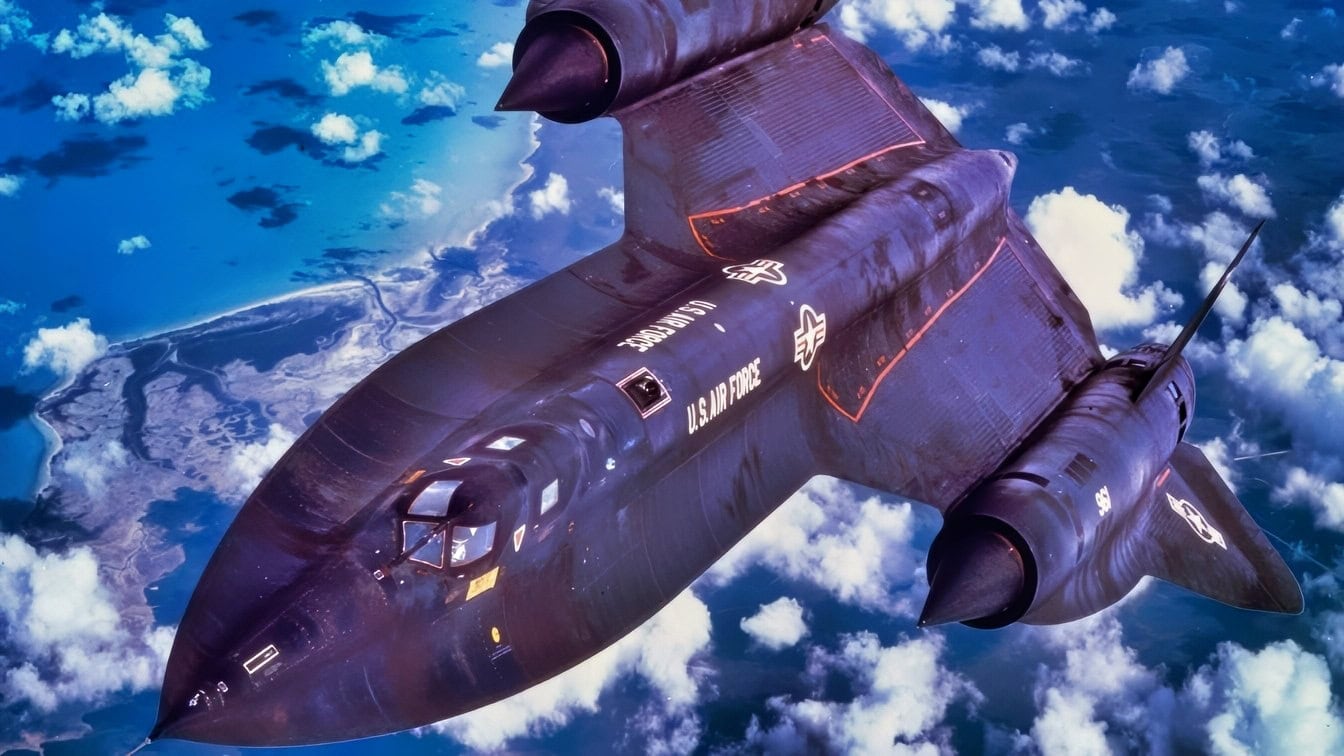
Summary and Key Points: The SR-71 Blackbird is one of the most specialized aircraft ever constructed. With a titanium airframe and Mach 3 performance, the SR-71 operated at altitudes above 80,000 feet to conduct reconnaissance in denied airspace. Accordingly, the engines and inlets had to function precisely across normal changes in speed and temperature, so this was not an aircraft you could assemble from random parts left over from other aircraft. Yet for the SR-71C, serial number 61–7981, that’s exactly what happened. Only one SR-71C ever existed. Nicknamed “the Bastard,” it was built after the USAF unexpectedly lost one of its precious SR-71B trainers.
The result was a hybrid Blackbird assembled from pieces never meant to fly together. Fortunately, the experiment worked, though with some strange problems.
Losing a Trainer
The SR-71 normally had a pilot and a reconnaissance systems officer in the backseat.
Training new Blackbird pilots required specialized SR-71B, two-seat trainers.
But only two SR-71Bs had ever been built.
On January 11, 1968, SR-71B 61-7957 was flying a training mission when it suffered a double generator failure over the Pacific Northwest.
Most of the electrical systems immediately became unavailable. Nevertheless, the crew nursed the crippled Blackbird nearly 1,000 miles back to Beale AFB.
They almost made it home.
Unfortunately, the trouble compounded on the landing approach.
With the aircraft critically low on fuel, the crew raised the nose about 10° as they approached the runway, with electrical power systems unavailable.
The normal fuel boost system couldn’t function properly, and the combination of low fuel, a nose-high attitude, and gravity-fed fuel systems caused fuel-flow problems.
Both J58 engines flamed out with the aircraft only a few miles from the runway.
At that altitude, there was just no opportunity to restart the engines. The crew was forced to eject at 3,000 feet. Both survived.
The Blackbird rolled and crashed about seven miles from the runway.
Hard to Replace
Losing any SR-71 Blackbird was quite expensive.
But losing an SR-71B trainer was even more costly—the fleet now had only one dedicated trainer.
To prevent a training bottleneck, it needed a replacement quickly.
There was a problem, however: the original Blackbird production had already ended, and the specialized tooling used to work the aircraft’s unusual titanium structure had already been destroyed under government orders.
So they couldn’t simply order and build a new SR-71. Instead, engineers needed to get creative.
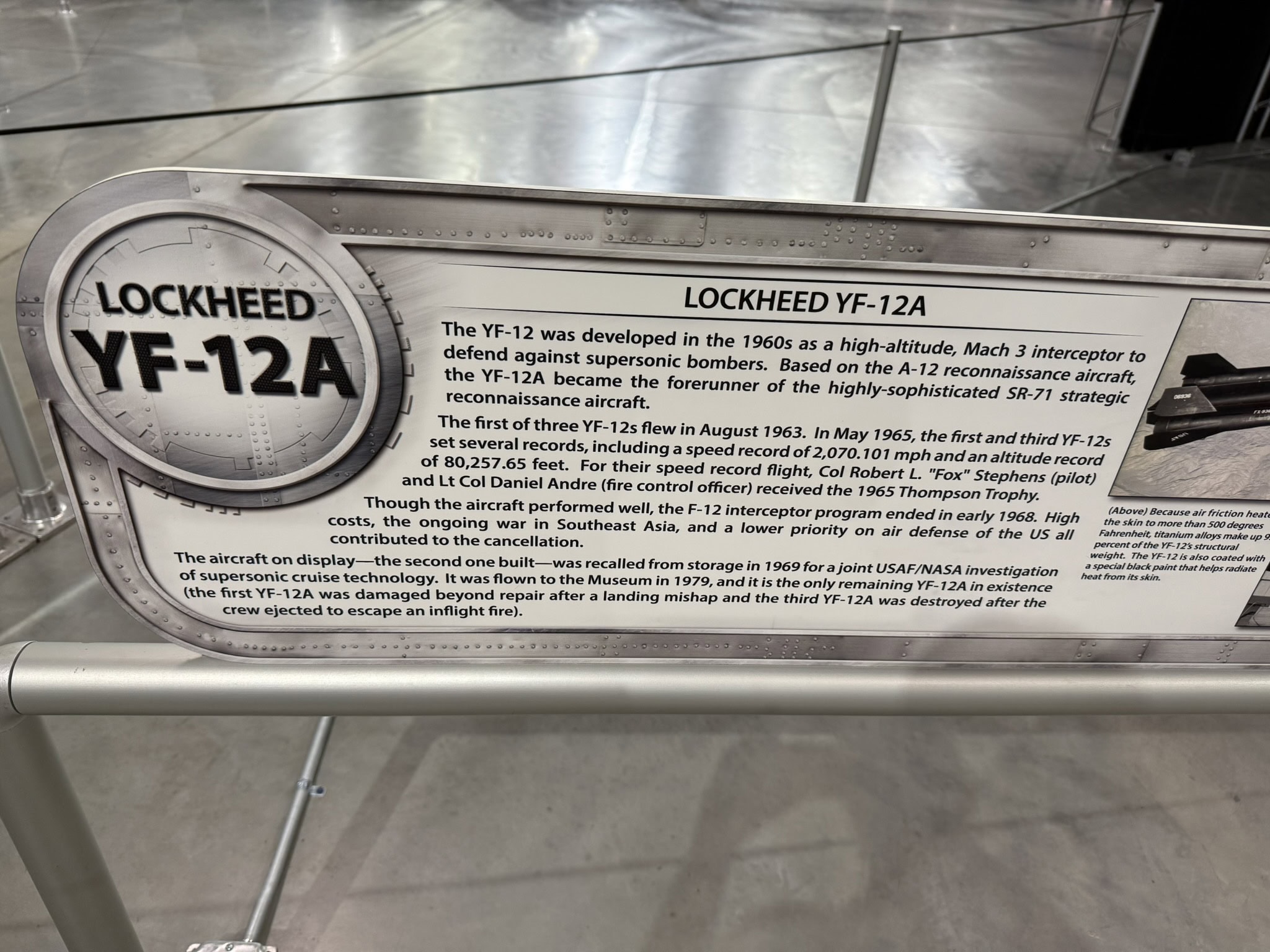
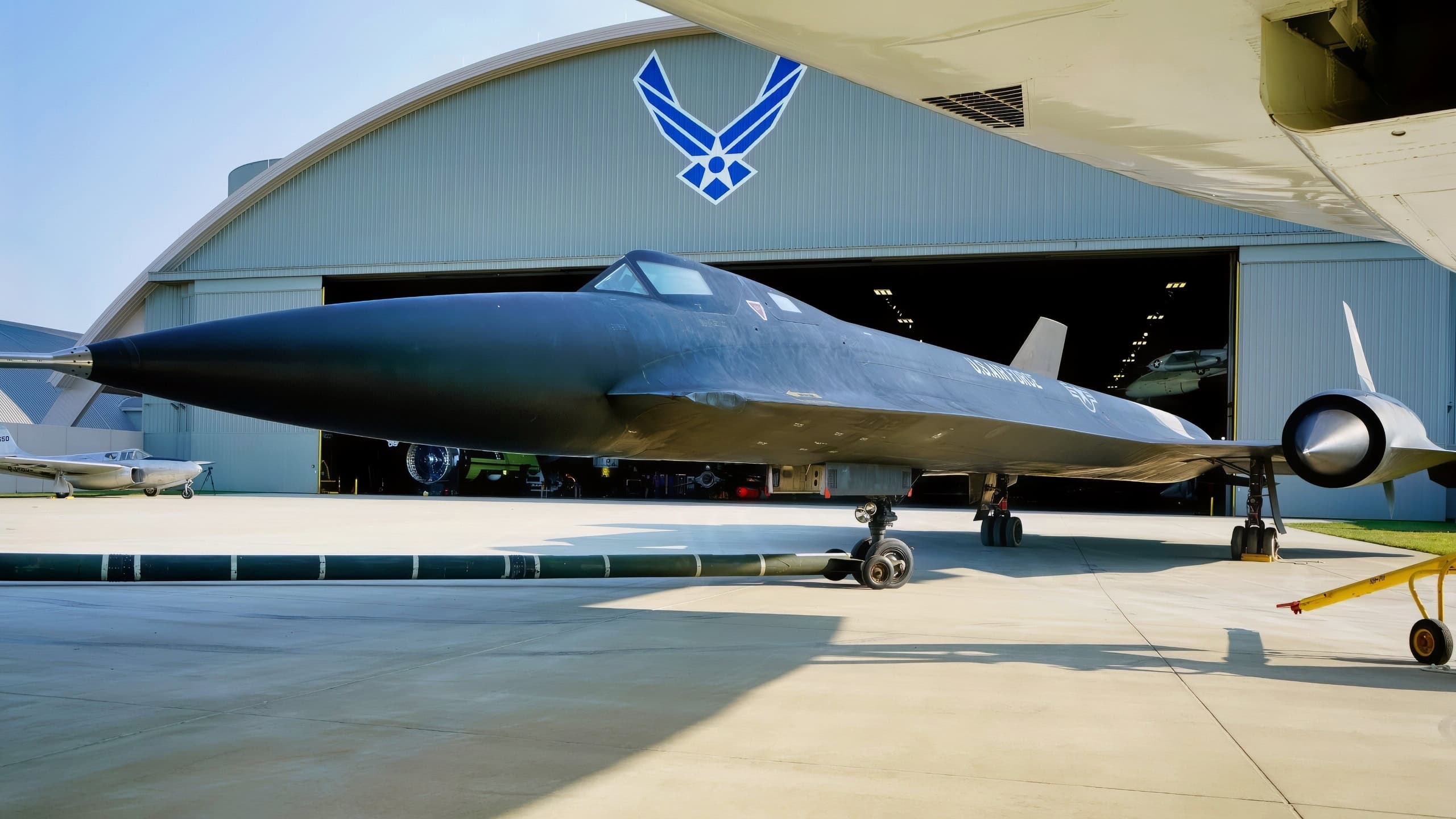
Skunk Works found pieces they could combine—for example, the rear portion of a YF-12A, serial 60-6934, damaged in a 1966 landing accident, combined with a front end from an engineering/static-test structure.
YF-12A. Image taken by Harry J. Kazianis at National Museum of the Air Force for 19FortyFive.com
The YF-12 was developed in the 1960s as a high-altitude, Mach 3 interceptor to defend against supersonic bombers. Based on the A-12 reconnaissance aircraft, the YF-12A became the forerunner of the highly-sophisticated SR-71 strategic reconnaissance aircraft. Image Credit: Creative Commons
Engineers essentially joined these mismatched components into a new two-seat trainer, earning it the unofficial nickname “the Bastard.”
It received the official designation SR-71C and remains the only one ever built.
Flying The Bastard
The first flight was completed on March 14, 1969.
Problems appeared immediately.
The aircraft exhibited severe trim and control anomalies; testing suggested something fundamentally wasn’t aligned correctly.
This was not surprising; the front and back of the aircraft had been manufactured as two separate airplanes, so it made sense that the alignment.
Subsequently, the SR-71C underwent 16 intensive test flights at Edwards AFB, during which time the aircraft exhibited one especially bizarre problem: the instruments showed a persistent four-degree yaw.
Engineers thus needed to determine whether the aircraft was actually flying crooked or whether the instruments were inaccurate.
Engineers settled on a low-tech solution—attaching a Nomex yaw string to the outside of the aircraft.
During flight, the cockpit indicated yaw, yet the string remained centered. So the culprit wasn’t aerodynamic yaw.
Instead, the pitot boom was mounted 4 degrees out of alignment, so engineers physically realigned it and resolved the issue.
But despite the yaw problem (and other problems), the SR-71C got the job done.
Sent to Beale AFB, the Bastard was used primarily for training and accumulated 556 flight hours.
Though it never earned the reputation of a standard SR-71, built as one coherent aircraft from the start, the Bastard fulfilled its purpose: restoring training capacity.
The SR-71C was retired after seven years and is now preserved at Hill Aerospace Museum in Utah.
About the Author: Harrison Kass
Harrison Kass is a writer and attorney focused on national security, technology, and political culture. His work has appeared in Tablet, City Journal, The Hill, The Spectator, and The Cipher Brief. He holds a JD from the University of Oregon and a master’s in Global & Joint Program Studies from NYU. More at harrisonkass.com.