
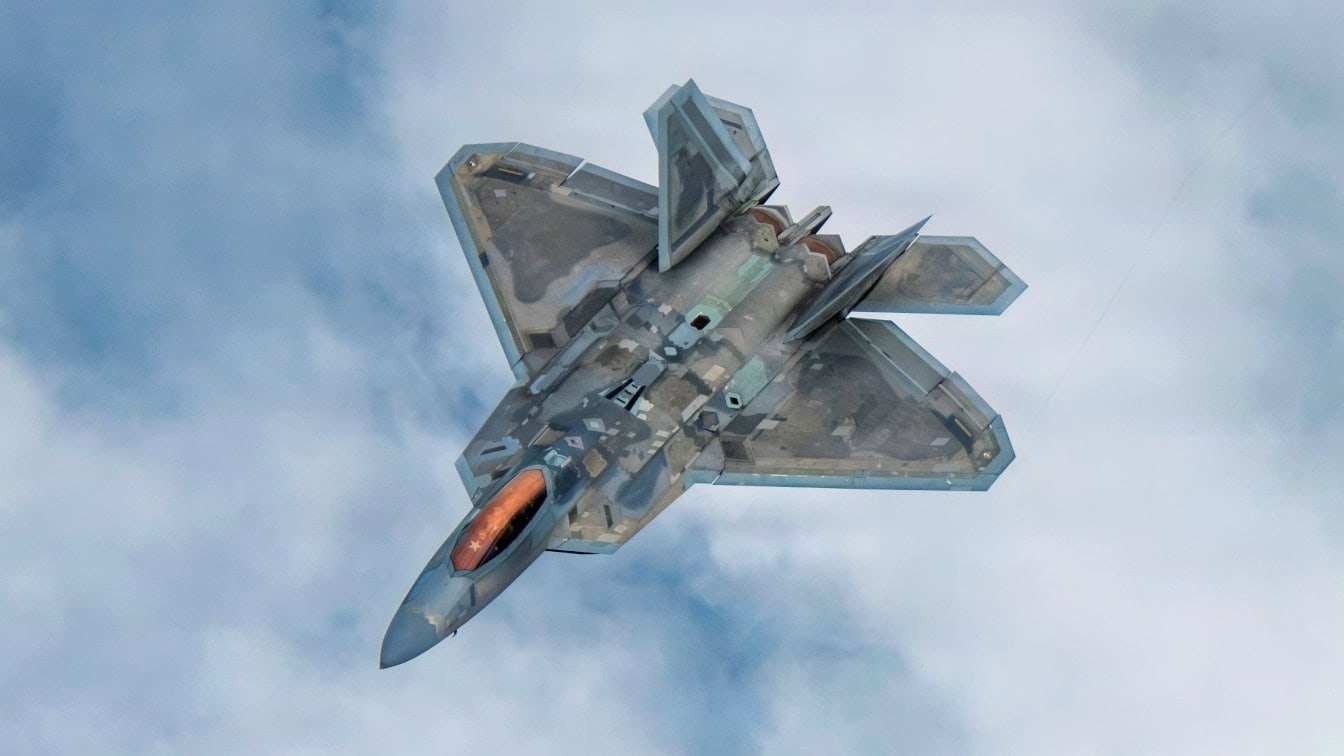
Trump’s Team at War in Iran: Hyper-partisanship, bitter inside-the-beltway jealousies, angst and uncertainty over the course of combat in Iran, shocking mid-term elections that delivered a sharp political defeat for the administration, and a hyperbolic media—all cloud objective efforts to assess Trump and his team at war. In military history, we call that “Tuesday.”
Every commander-in-chief in a protracted conflict gets the Rorschach treatment—inkblot evaluations that often say more about the critic than the criticized. The Massie fiasco—a rash, failed impeachment of the Secretary of War, more intended to grab headlines and cheerleading from leftist columnists than to shed light on the conduct of military operations—adds another chapter to the comic book of those who want to turn the wisdom of the Prussian military theorist Clausewitz on its head. Instead of making “war an extension of politics,” they make “politics an extension of war,” using the crisis of conflict as an excuse to advance a domestic political agenda—trying to weaken Trump.
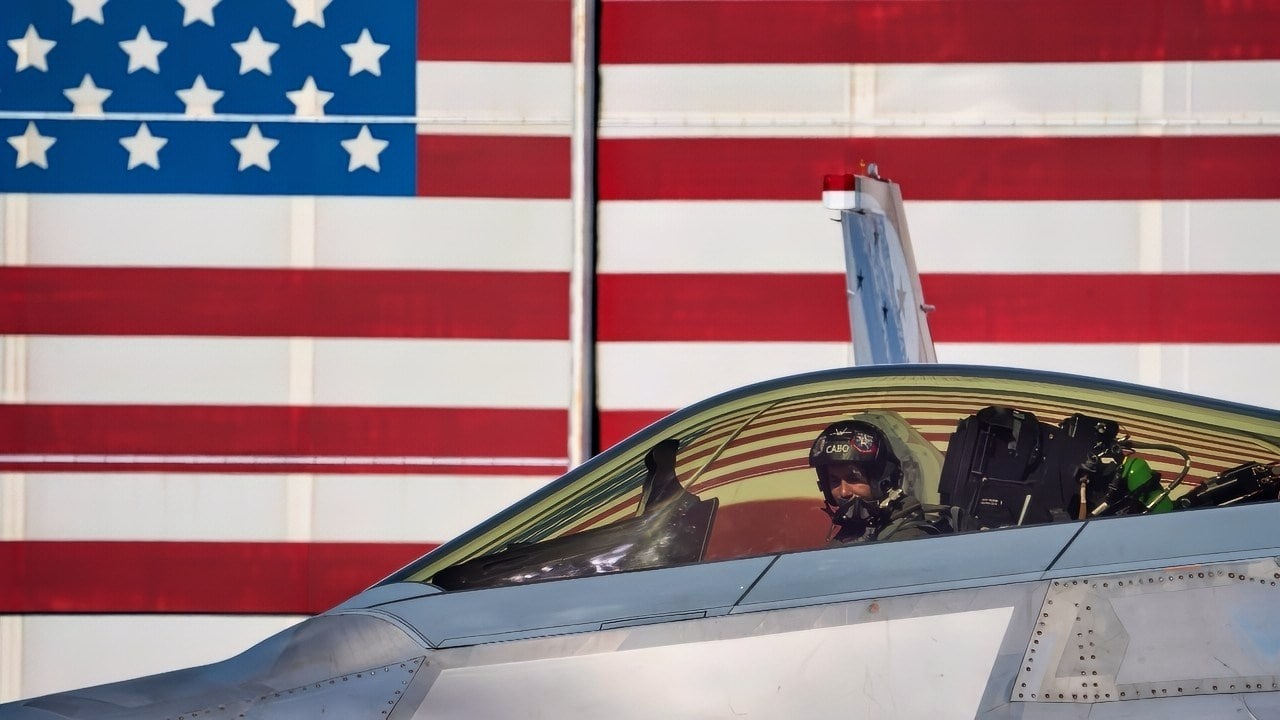
U.S. Air Force Maj. Josh Gunderson, F-22 Demo Team commander, taxis by the Wallops Island Flight Facility NASA hanger June 17, 2021, at Wallops Island, Va. The primary function of the F-22A Raptor is an air dominance and multi-role stealth fighter, and can carry a combination of air-to-air missiles and air-to-ground bombs. (U.S. Air Force photo by Staff Sgt. Don Hudson)
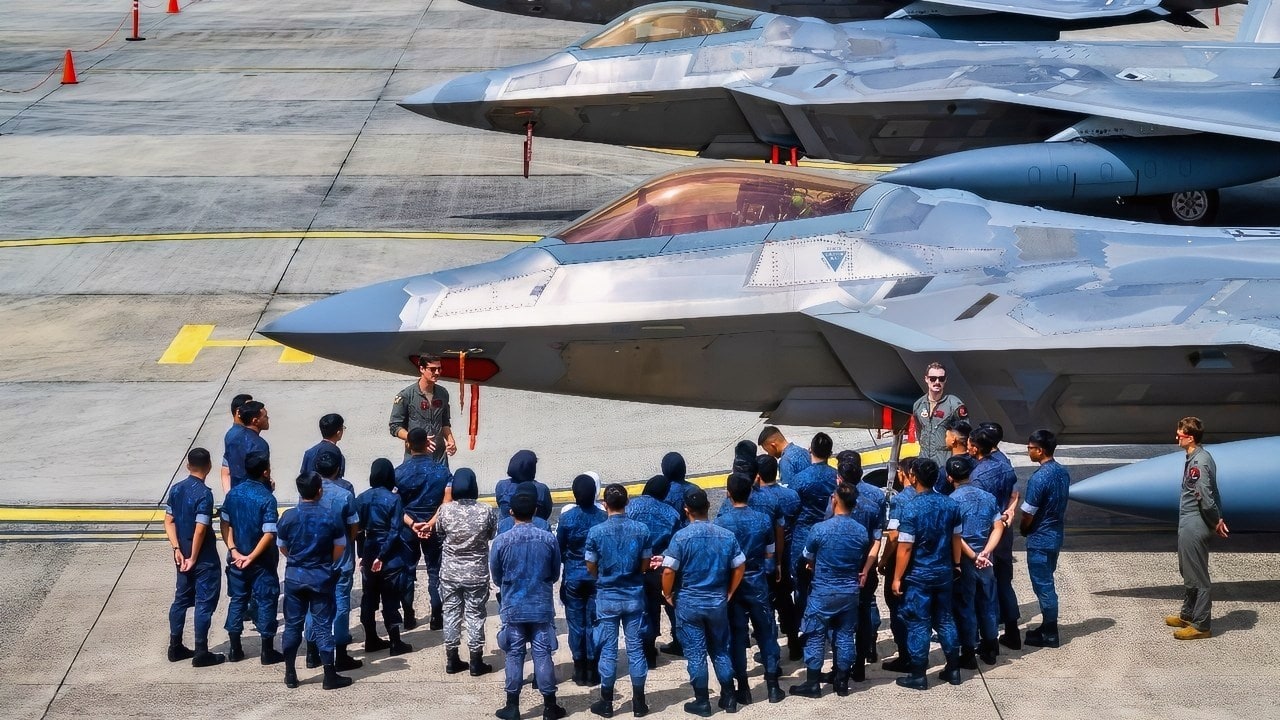
U.S. Air Force F-22 Raptor pilots assigned to 27th Expeditionary Fighter Squadron, Joint Base Langley-Eustis, Virginia, conduct a capabilities brief at Rimba Air Force Base, Brunei Darussalam, on Aug. 7, 2024. This year marks the 40th anniversary since the United States established diplomatic relations with Brunei Darussalam. (U.S. Air Force photo by Senior Airman Mitchell Corley)
Presidents in Angry, Angsty War
Protracted conflict opens plenty of space for critics to predict inevitable disaster. Long wars, however, can also mean it just takes longer to win than folks want or expect.
If all you look at is the calendar, the Iran War could be headed off the rails—or it could be 1863.
The third year of the American Civil War unquestionably started as Lincoln’s worst. Field commanders commanded armies like NFL coaches in New York and Miami mismanage on Sunday. Even Grant struggled to get wins at Vicksburg. At home, critics berated and assailed the president from all sides. “Money you have expended without limit,” a congressman in his own party chastised Lincoln, ranting, “…blood poured out like water. Defeat, debt, taxation, and sepulchers—these are your only trophies.” Meanwhile, Lincoln experienced personal tragedy at home, trying his soul and wearying his spirit. Yet, a year later, he was reelected president, won the war, and freed the slaves (albeit slavery wasn’t formally abolished until after Lincoln was assassinated and the passage of the 13th Amendment to the U.S. Constitution in1865).
Trump’s 2026 could be his Waterloo, but it could also be his 1863 (okay—no analogy is perfect, Trump can’t run for reelection and God-forbid there are any more assassination attempts—but you get the point). In two years, the president could well finish with a flourish. Still, it’s a fair question to ask—how is he doing now?
Teams at War
Why we fight—that’s the preeminent question in war. The president has always been pretty clear-eyed on the goals. For decades, Iran had been the chief destabilizing influence in the region and a threat to U.S. interests. With Iran unquestionably at nuclear-breakout status, and unwilling to walk back its ambitions even after the first American and Israeli strikes on the regime’s main nuclear facilities, the challenge is both acute. Iran was also demonstrably vulnerable. Trump went after the three instruments that had made Iran a real problem—the nuclear program, Iran’s offensive arsenal of long-range weapons, and ability to control and supply regional surrogates. He decimated all three. Even if left unmolested, it will be many years before Iran could pose the threat it was just a year ago.
When the Iranians tried to close the Strait of Hormuz and drive oil to $200 a barrel, Trump kept fighting. Why? By reopening the strait, he saw the opportunity to further humiliate the regime, creating the conditions not just for a military defeat of Iran, but the chance to rally the region to begin the serious work of achieving self-sufficiency—more redundant and resilient supply lines, greater capacity for self-defense, and enhanced political and economic cooperation and integration, including the difficult tasks of reconstruction in Gaza, Lebanon, and Syria, and an enduring collective security regime that precludes the U.S. sending aircraft carriers back every couple of years to keep the peace.
Shifting goals in protracted war is not unusual or wrong if done for the right reasons—adapting to the realities of conditions on the battlefield and doing so at acceptable risk, with prospects for success. After all, Lincoln started out obsessed with saving the Union at all costs. It was only later in the war that he saw the opportunity and the essential importance of ending slavery once and for all as an unshakable goal. Having crushed the rebellion, it made no sense to let the South keep humans in bondage. Likewise, arguably, after hammering the Iranians, the prospects of bringing long-term stability to the region—a less protracted headache for Washington and American interests—seemed a worthy effort, even if it meant a short-term political cost in the midterms. In fact, Trump will remember these as the most Lincolnesque moments of his presidency: his determination to get a result in the war on his terms—ones that safeguard U.S. interests.
How we fight—counts as well. Arguably, Doris Kearns Goodwin’s magisterial book on Lincoln’s war cabinet, Team of Rivals, has a misleading title. In prosecuting the Civil War, Lincoln’s leaders functioned as a cohesive team, particularly Lincoln’s Secretaries of War and State. Here, Trump is actually ahead of the game. He has a trifecta with Scott Bessent on his side, not Lincoln’s backstabbing, ambitious Secretary of the Treasury, Salmon P. Chase.
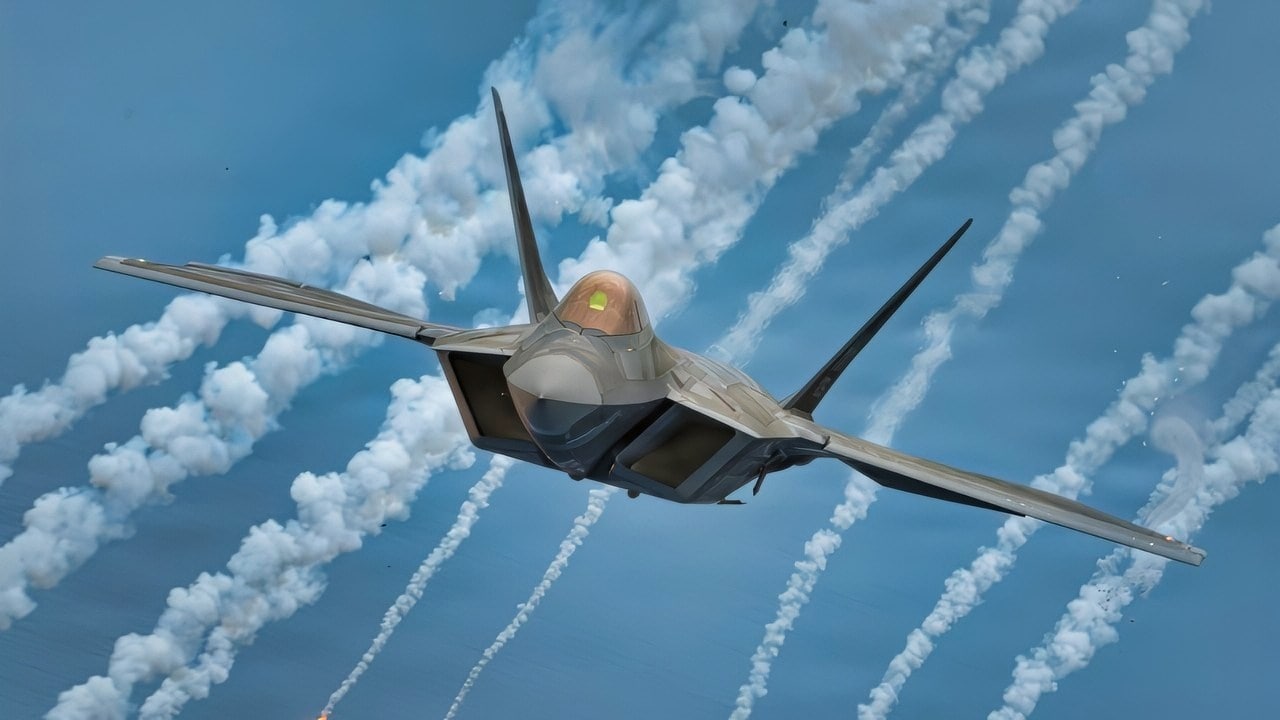
An F-22A Raptor aircraft assigned to the 154th Fighter Wing, Hawaii Air National Guard, completes flight operations during Sentry Aloha 26-1, Jan. 22, 2026. Sentry Aloha 26-1 is a recurring, large-scale training exercise designed to enhance readiness, interoperability and integration across U.S. and partner air forces. (U.S. Air National Guard photo by Senior Airman Michael Swingen)
Predictably, Trump’s enemies, as they did with Lincoln, tried,d when times got tough, to derail the leader by taking the team apart. In 1863, one senator told Secretary of State William Seward that the president’s critics in Congress were “thirsty for a victim.” The intended target turned out to be Seward. Lincoln saved his secretary and his war cabinet with determined resolve. Trump will be no different. There is no question that his cabinet has prosecuted Trump’s war the way Trump wanted. To strip the team would only undermine the president’s effort to finish the conflict his way. Further, if Trump loses a cabinet official, the likelihood of a Democratic Senate confirming a new secretary would be zero. Fighting a war with an acting cabinet secretary is like fighting Mohamad Ali with one hand.
Expect Trump, like Lincoln, to fight this one out—and it will be a fight. The negative news is already mounting, coming after Vice President Vance over the Iran negotiations and whining about Rubio flying to watch his son play football. It will likely be ‘knives out’ all the time up to November 2028.
Leadership of the military also matters. Both Lincoln and Trump’s team fired their fair share of generals. Still, there is one big difference between Lincoln in 1863 and Trump in 2026. Lincoln had an army that couldn’t win battles. Trump has a military that is performing well in the field. Toss whatever barbs you want, Secretary of War Pete Hegseth, but the most important metrics of a military’s confidence in its mission and its leadership are recruiting and retention. At present, the rates in the services are at a 15-year high.
Strategy matters too. One of the most nonsensical criticisms of the campaign’s conduct is that Trump ignored the threat of closing the Hormuz Strait. That’s nonsense. Every regional war plan for decades has included that contingency. It was not the Trump team that forced the issue. The White House intentionally let Iranian commercial traffic flow, giving Tehran the option to avoid escalation and cut a deal. It was the Iranians that chose to roll the dice. They have been worse off for it. Not only that, but every offensive initiative Tehran has tried has been checkmated by Trump’s team, and Iran received more than equal punishment in kind for its effort. Like General Lee and the strategists in Richmond, all the IRGC has shown is that it can fight a long war of attrition—but to no good end.
Trump’s Way of War
The president may not be fighting the war his critics want, but he is successfully prosecuting his war his way. When a delegation of pastors came to complain to Lincoln about the conduct of the war, he told them, “The government is carrying an immense weight….They are doing the very best they can….we’ll get you safely across.” Trump might say something similar. Let Trump be Trump. As for Trump’s political opposition, what will they do? Cheerlead for Iran? In the end, they will likely find that seeing war as an extension of politics trumps politics as an extension of war.
About the Author: Dr. James Jay Carafano
James Jay Carafano is a national security expert and a 25-year Army veteran. His most recent books are Cold Combat: Mountain Warfare in Italy and the Battle of San Pietro, 1943, and Digital Dominance: Winning in a Socially Networked World. He is a 19FortyFive Contributing Editor. Carafano is also a Senior Counselor to the President and E.W. Richardson Fellow at The Heritage Foundation.