
After a steady stream of handwringing, repetitive pearl-clutching, and endless Doubting Thomas tantrums over the course of the Iran War, even from the U.S. President’s own supporters, a sudden spurt of recent news has many feeling—well, maybe Trump got this right after all.
Honestly, that Trump is winning is really old news—the U.S. has had the upper hand for some time. What should be more revelatory, for both enemies and allies, is how the conflict demonstrates America’s growing hard-power dominance in both military and economic spheres.
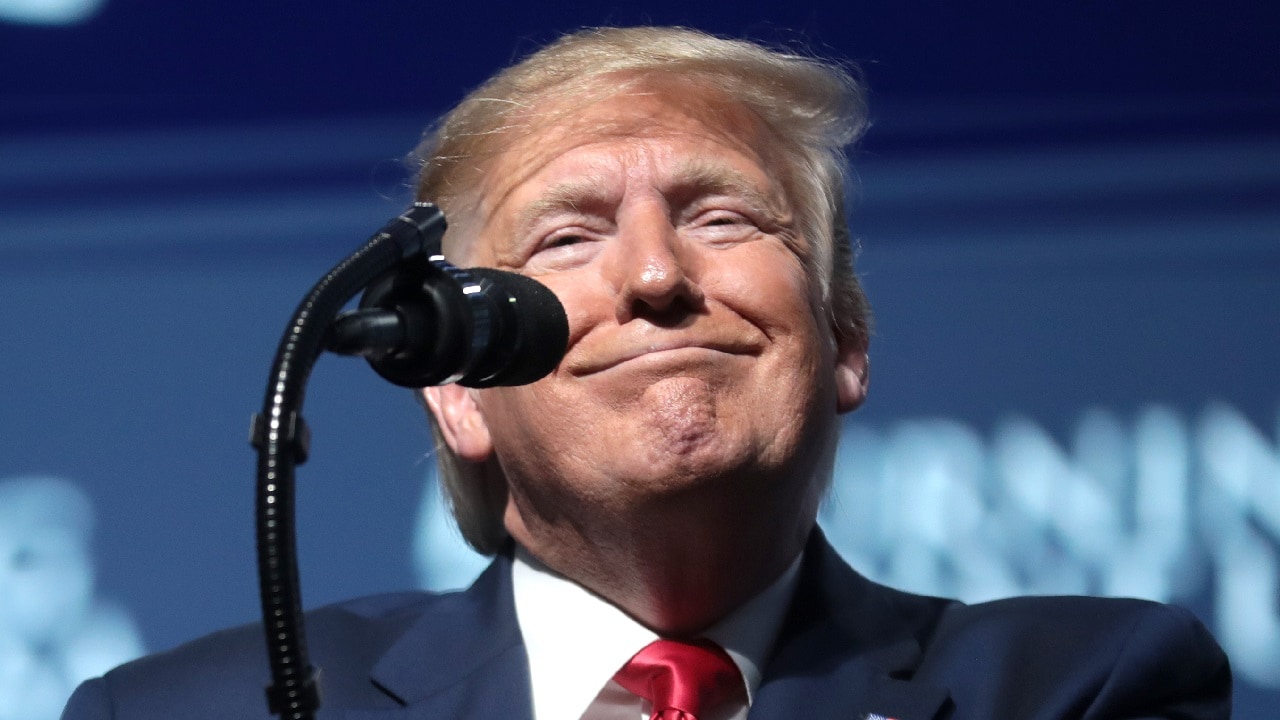
President of the United States Donald Trump speaking with attendees at the 2019 Student Action Summit hosted by Turning Point USA at the Palm Beach County Convention Center in West Palm Beach, Florida.
Critics who don’t think Trump is making America great again need to think again.
Worldwide Wake-Up Call
What a difference a day makes. Only a few weeks ago, the Iranians were not only not running up the white flag, but they were also threatening to widen the war, leaving “no political border safe.” Doubters everywhere saw Iranian intransigence as justification for incessantly denigrating the impact of the U.S. effort. That bluster has not survived the news cycle.
Recently, the U.S. government announced it’s been helping tankers run the strait, moving up to ten million barrels a day. Further, the blockade of Iranian exports and imports through the strait is tighter than a pair of jeans on Sydney Sweeney. This news makes Trump’s claim that he controls the strait look a lot more serious than when the “experts” dismissed American dominance as a near-impossible task.
What’s more, claims of global oil prices rocketing to $200 a barrel have proven completely fatuous. Regional exports, while not at pre-war levels, have rebounded faster than expected. Other parts of the world are pumping like crazy, with the U.S. leading as the top exporter. While global supplies, particularly for jet fuel and diesel, are tight, the Iranian regime utterly failed in its threat to trigger a weapon of mass economic destruction.
The bad news for the bad guys doesn’t end there. Trump announced continuing rounds of increasing economic pressure—an Economic D-Day. The UAE pilled on, declaring an end to all trade with Iran.
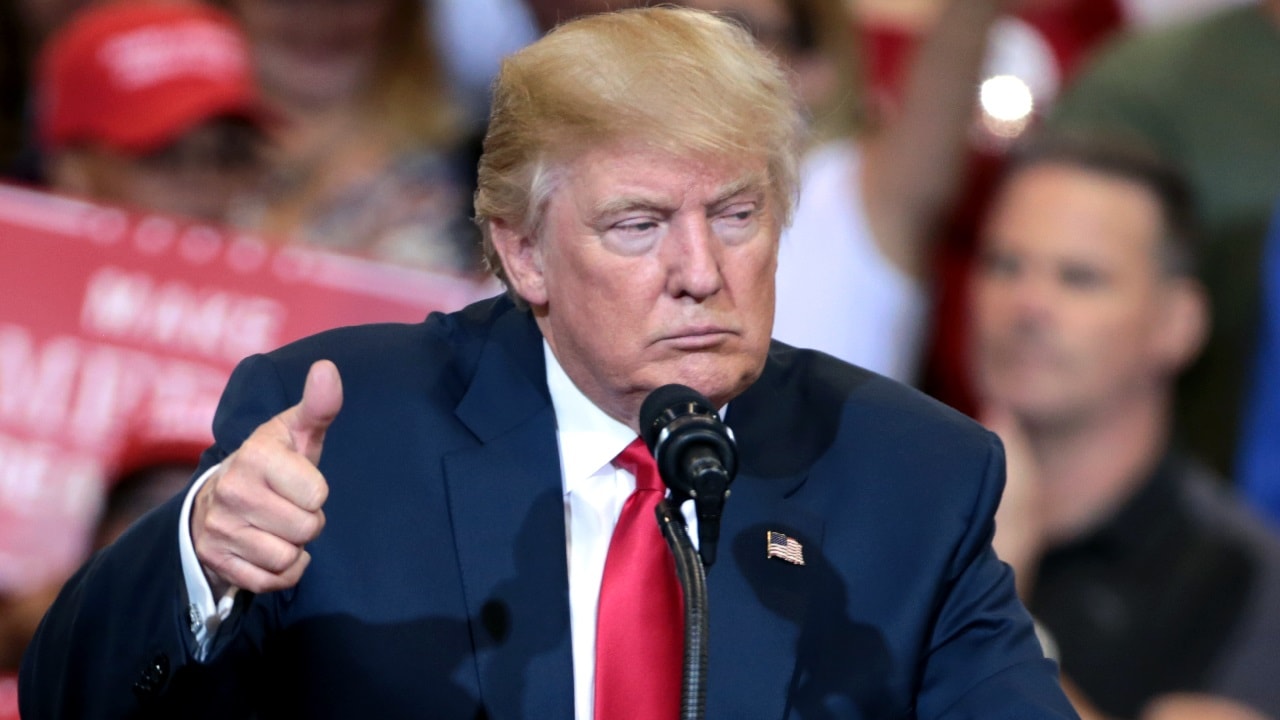
Donald Trump speaking with supporters at a campaign rally at the Phoenix Convention Center in Phoenix, Arizona.
Even voices in Iran are saying the U.S. pressure campaign is biting deep. The head of the Iranian Central Bank recently declared that oil exports are “zero,” a serious dent in more than 50% of the nation’s exports. All this external effort is having an internal impact, as some reports note, with “military pressure abroad and mounting economic strain at home, signs are emerging that the Islamic Republic is increasingly turning its attention to another potential threat: renewed unrest on its own streets.” If this were an MMA fight, what’s left running Iran would be a bloody heap penned up against the cage with America, like Conor McGregor, choking them in a hammerlock.
Sure, the regime may survive all these trials. That’s irrelevant. Trump has won—deal or no deal. When and how, or even if, the war ends, day by day, it becomes just a historical date—not a significant turning point. The history of Iran’s dominance in the region is behind us.
Headlines Hide the Rise of American Power
The real news from this war is the unbelievable resurgence of American might that Trump has delivered, as awe-inspiring as the Reagan resurgence after the doldrums of the Carter years.
Military Might
There has been plenty of critical news, like trolling Trump’s way of war, that picks at the state of American military power. A number of stories fretted about claims of “low morale and poor conditions on the USS Abraham Lincoln,” after a long combat deployment. The U.S. Navy was forced to rebut charges of inadequate women’s hygiene products at sea.
Perhaps the most common complaint concerned shortages of munitions hampering the war effort. All these shortcomings, real or imagined, can be addressed. The U.S., for example, is on a bullet-buying binge to restock its arsenals of bombs and missiles. That is part of the rationale for a bigger defense budget (even before this conflict, military stocks were too low for wartime needs). More important than the bumps on the battleground is the performance and experience the American military is gaining from operations in the Gulf.
Unlike the Russians, whose combat experience is undermined by strategic exhaustion and attrition, Americans are learning lessons in combat that they could never gain in training, experience that will make the U.S. armed forces a more formidable opponent in the future.
Russia has been at war for years, but it’s not much of a veteran force since life expectancy fighting at the front is shorter than the half-life of a horsefly. Americans, on the other hand, today have military operational experience unmatched in the world. No country in recent decades has had this much prolonged combined naval, air, and space combat experience. No country has more practice in all the elements of deep strike, including employing weapons from every one of the armed services, from Navy Tomahawks to Army ATACMS to Air Force strategic bombers. No country has demonstrated as much mastery in suppressing enemy air defenses. The U.S. has also gained invaluable experience in drone warfare and missile defense. Other than a lot of dead Russians, the only other countries with this level of expertise are perhaps Israel and Ukraine, and they are on our side. We are busy learning lessons from then as well, such as the recent exercise where Ukraine and U.S. drone forces took each other on head-to-head.
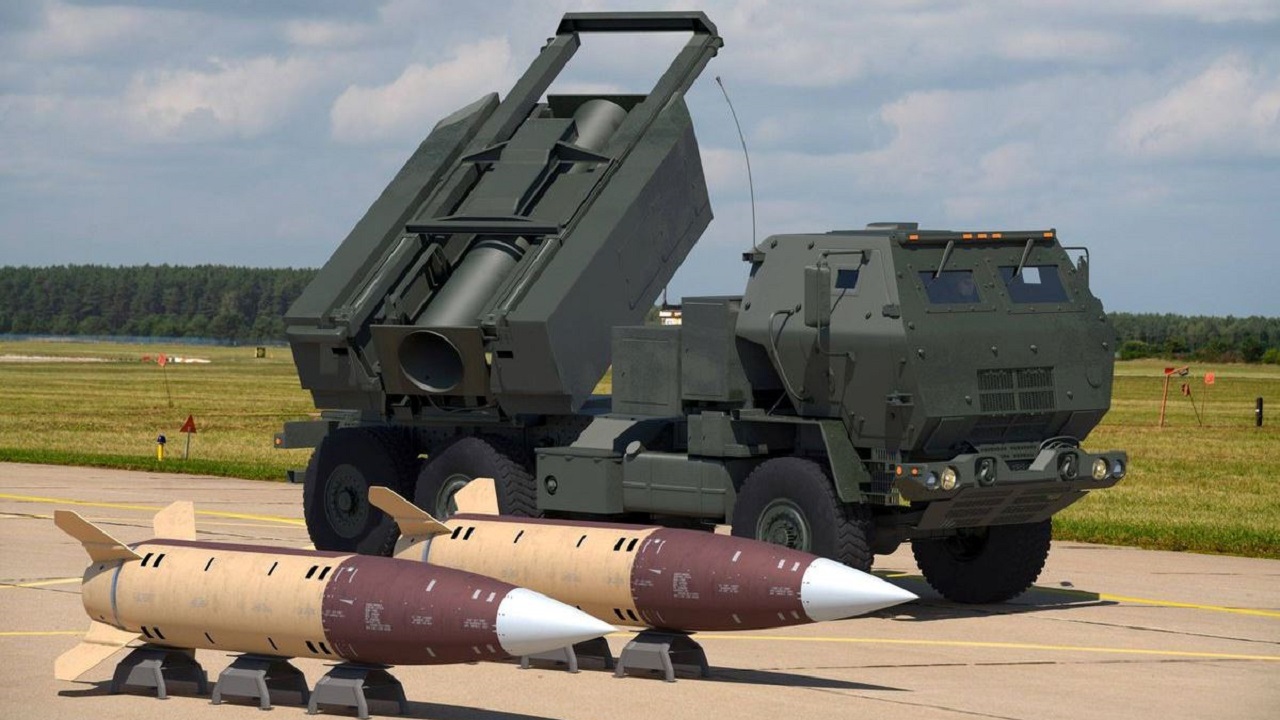
ATACMS missiles Ukraine wants. Image Credit: Creative Commons.
Experience aside, the world can’t help but be impressed by the U.S. sustained capacity to deploy and project combat power, including the ability to generate air sorties and steam ships at sea. No nation on the planet has America’s mix of combat experience, global basing and logistical support, and proven raw operational combat power.
Take note.
If you are European who craves strategic autonomy, it’s time to start thinking about how much it will cost and how long it will take to replace American combat power—or maybe just admit the USA is the indispensable partner.
If you are a Middle East country, it’s time to start thinking about what you can do to ensure the Americans are your long-term ally in the region—so they are there to help mow the grass if Iran gets restless again.
If you are China, maybe start thinking about the idea that any conflict that might draw a fight with the Americans, like attacking Taiwan, the Philippines, Japan, or South Korea, might just be a war not worth fighting.
Economic Giant
There are even voices on the right that argue that Trump’s economy is terrible and war isn’t helping. Still, when it comes to raw economic power its worth looking behind the griping headlines and punditry.
Thirty years ago, America was about 25 percent of the world’s economy. Today it is almost 30 percent. Thirty years ago, the USA was the world’s biggest economic power. Today—correct — the biggest economic power is the U.S. We are the world’s biggest producer of energy. We put more stuff in space. Our stock market is going up the charts faster than Ella Langley. We are neck and neck in the race to lead the world’s most transformative emerging technologies, such as quantum computing and artificial intelligence.
Here is what all that might mean. Any other nation would have struggled to carry the lion’s share of a war like the one in Iran and not stumble. We are fighting a major war and our inflation is under 4 percent (compared to Iran’s rate which is escalating by multiples). U.S. unemployment still lingers around historic lows. Many sectors of the economy are growing at an impressive rate including the manufacturing sector (which is at a four-year high).
By historical standards for a nation at war, the USA would be the envy of the world at any time.
Further, President Trump, through sanctions and pressure, has demonstrated how the economy can be just as powerful an instrument as a weapon in war. In fact, having a strong economy and a powerful military is the epitome of hard power, like Muhammad Ali with a lightning-fast left hand and a devastating right.
If you are America’s friend, you want the American economy on your side.
If you are America’s enemy—rethink who you want as an enemy.
If you are undecided, well, maybe pick the winning side.
Not Boasting—if You’re the Yankees
There is hubris in power. Even powerful nations can overreach and fall. Trump, however, is not overreaching in Iran. The plain fact is he is fighting a war and building and leading a powerful nation.
Like the 1927 Yankees, Trump can claim America is great. It might boastful bravado, but it would also be true.
About the Author: Dr. James Jay Carafano
James Jay Carafano is a national security expert and a 25-year Army veteran. His most recent books are Cold Combat: Mountain Warfare in Italy and the Battle of San Pietro, 1943, and Digital Dominance: Winning in a Socially Networked World. He is a 19FortyFive Contributing Editor. Carafano is also a Senior Counselor to the President and E.W. Richardson Fellow at The Heritage Foundation.