
Iran’s Bleak Future Under Trump’s Thumb: Under the most likely scenario, Iran will look like North Korea without nukes or Cuba without any Cuba Libres. Trump’s threat of economic warfare alone will banish the regime to the world’s strategic skid row for some time. Add to that the president’s promise of future military action, squashing the Iranians if they start something like batting down a spot fire before it can spark another firestorm. There is no outcome in which Tehran goes back to having anything like the heft it had a year ago in the foreseeable future. And that, my friends, is the rosy scenario.
Expect an Iran impoverished, geographically isolated, outmatched by its neighbors; a bit player in the global energy market, and a drag rather than an asset to the Ayatollah’s remaining friends and allies.
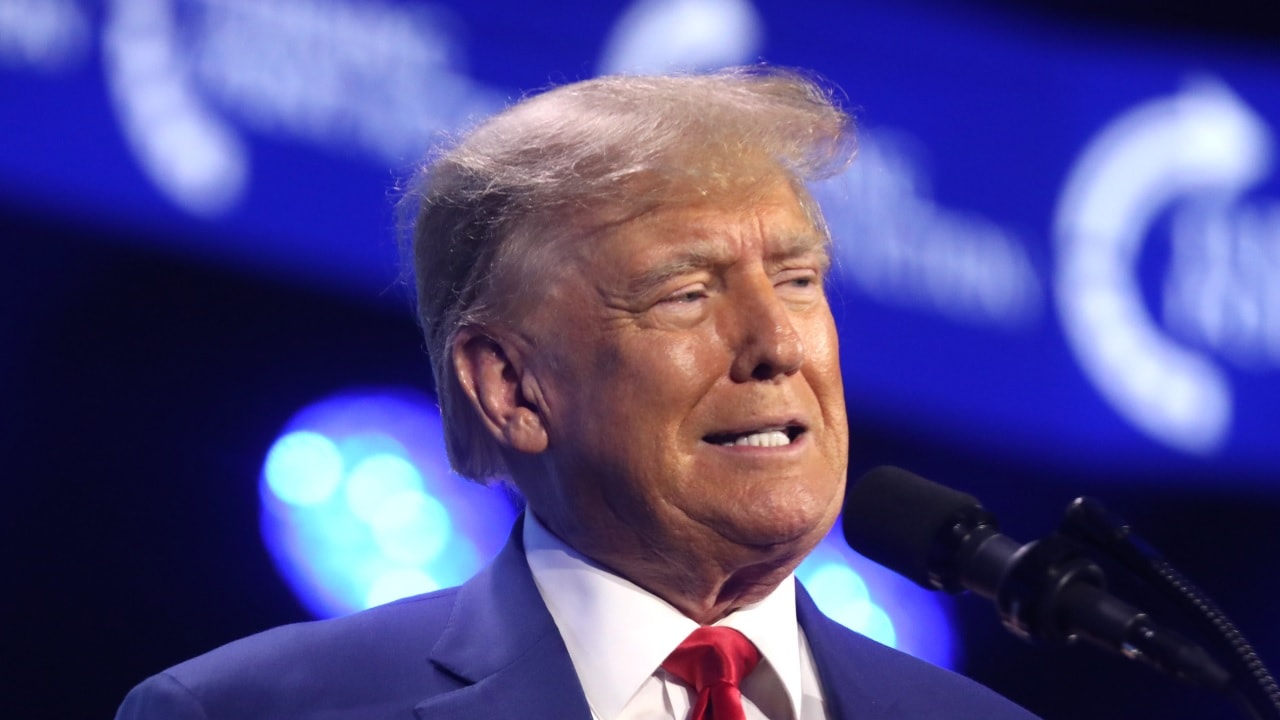
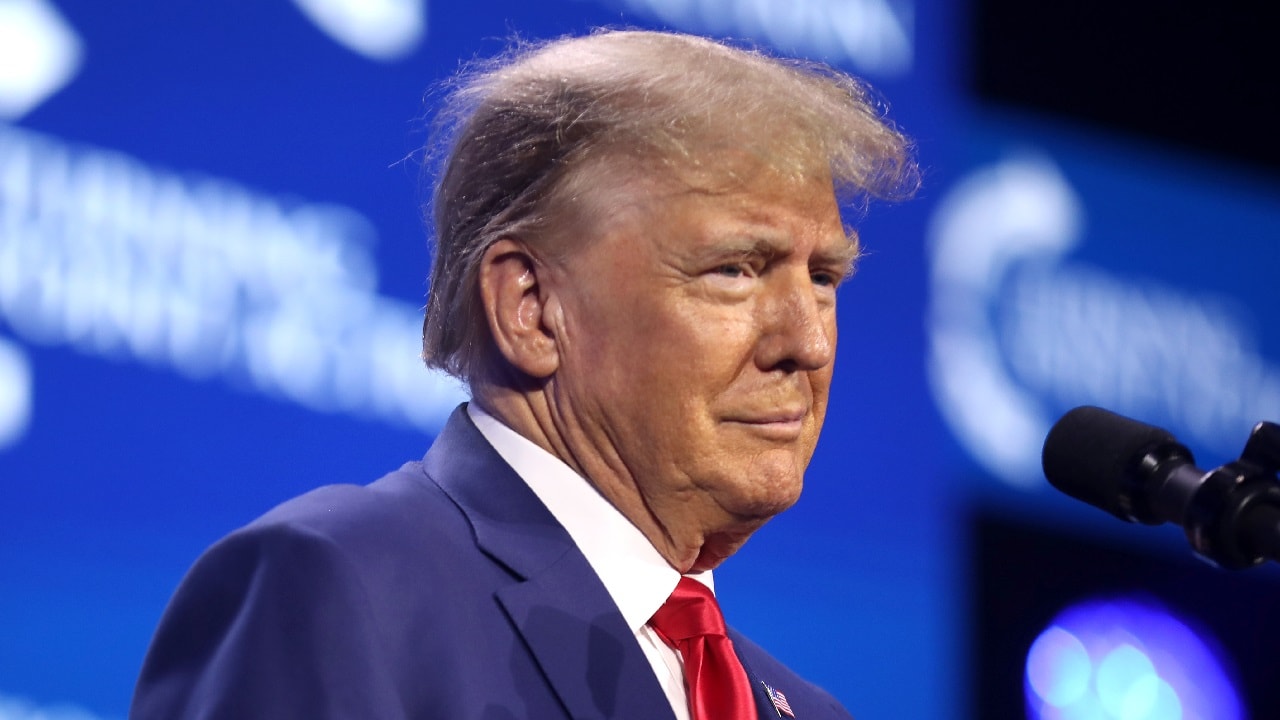
Former President of the United States Donald Trump speaking with attendees at the 2023 Turning Point Action Conference at the Palm Beach County Convention Center in West Palm Beach, Florida.
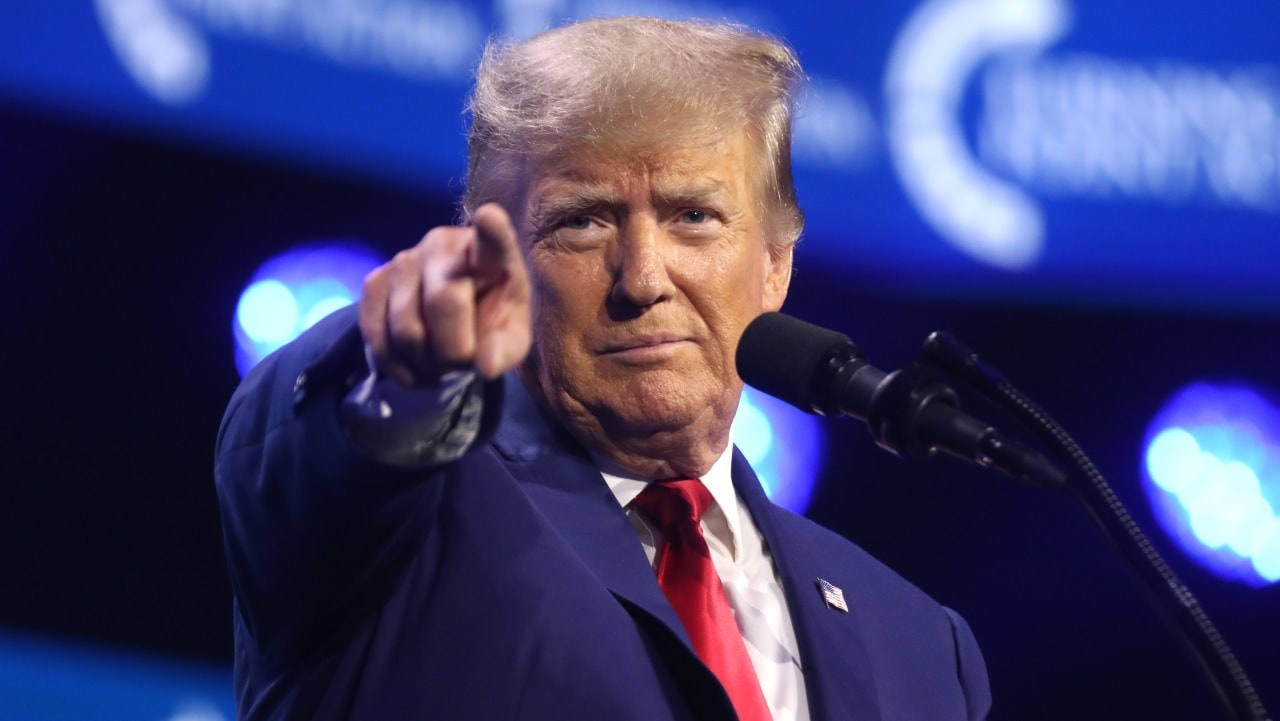
Former President of the United States Donald Trump speaking with attendees at the 2023 Turning Point Action Conference at the Palm Beach County Convention Center in West Palm Beach, Florida. By Gage Skidmore.
Flip a Coin
Deal or no deal, the most likely end state for the United States looks remarkably similar. Iran fails to regain the capabilities that made Tehran a regional power to be feared, with global influence and a virtual veto over any path to a Greater Middle East that includes widespread peace, prosperity, and security. That means—no nukes; no arsenal of long-range weapons to pulverize neighbors at will; and no army of surrogates that can be unleashed on command to sow chaos and mayhem. The U.S. largely achieved these objectives. Now the question is: what does the end state look like for extending the timeline of how low the power of the Iranian regime can go in the future?
Heads We Win
One Option is that Iran makes a deal. The president’s special envoy pretty much just laid out the bottom line. “If Iran is willing to finish the deal that they’ve been discussing with us,” stated Jared Kushner, “to give up their ability to create nuclear weapons, then obviously they are willing to make a deal that can be great for the Iranian people. It’s something he’d be open to.” Translation—Trump won’t compromise on any of the outcomes he has accomplished. He is not going to hand back to the Iranian’s the capacity to bully the region again.
The advantage of Iran taking this option is that the regime escapes abject impoverishment. Trump might be more generous in loosening economic strangulation. That might be “the deal that can be great for the Iranian people,” that Kusher forecast, but at least everyday Iranians wouldn’t have to deal with massive inflation and no meat on the table.
On the other hand, capitulating to Washington’s strategic demands, which would no doubt include all kinds of “trust but verify” caveats, would be completely demeaning. Admitting they lost would make what is left of the regime leadership look weak—the humiliation they crave to avoid.
If they stick to no deal, Trump won’t just say “never mind” and walk away. The regime will have to pay the price. That might well be the turn they take. It is far easier to punish a nation than its dictators.
Holdouts often hold out for a long time. North Korea never made a deal. It’s still around. So is Cuba—which toughed it out through the Bay of Pigs, Cuban Missile Crisis, and decades of sanctions. The Taliban were vanquished and are back making do in their hellhole, formerly known as Afghanistan. The people might be oppressed and impoverished—but that’s no big deal to regimes that argue they are on top as long as they are still standing.
Tails We Win
If Iran does not take a deal, however, it will neither regain its strategic heft nor ever be anything more than a poor backwater of the world.
Since their military capacity is so diminished, pretty much count on Trump’s threat to use force and mow the grass whenever necessary. Nor will the U.S. have to shoulder the burden alone forever. Israel will help overwatch Iran. More likely than not, Tehran’s neighbors will help. We will also likely see international coalitions in the Gulf waterways helping to maintain freedom of navigation. With coalition cooperation and a strategy of selective strikes, the U.S. can sustain a reasonable operational tempo, manage its arsenals, and shift assets back to other theaters.
What Iran Will Look Like
Loss of Leverage. In addition to not regaining its strategic leverage, Iran’s influence in the strait will become increasingly irrelevant to global trade and oil markets as the region turns to other redundant and resilient means to move goods and services. As a recent Bloomberg article noted, “Middle Eastern oil producers are pressing ahead with shuttling large volumes of crude out of the Persian Gulf, helping keep a lid on prices and assuaging fears of an energy-driven inflation spike, even as the Iran war drags on.” When it comes to the strait, Tehran has already shot the hostage—and anyone who saw the movie Fargo knows how much leverage a dead hostage is worth.
Further, there is no scenario where Iran turns the strait into a serious money-making proposition. No “deal” can supplant international law, which guarantees the right of innocent passage through the strait. Further, no nation overseeing a strait has the legal right to charge “tolls.” Even Türkiye, which, under the Montreux Convention, has robust authorities to manage the Bosporus and Dardanelles straits, cannot charge tolls, but can assess fees for the costs incurred for providing navigation aids, safety inspections, and other operations for the maintenance of transit. Iran is never going to get rich or rebuild its infrastructure and military by charging transit fees in the Strait of Hormuz.
No Nukes. Iran might wind up being as isolated and impoverished as North Korea (which by comparison has a GDP about 2% the size of South Korea—and that’s with the continued support of Russia and China). North Korea, however, has a significant and growing nuclear arsenal. That, however, is a lesson learned for the nonproliferation community along with decades of futile effort to stop Iran’s own nuclear ambitions. In the future, it is going to be far less likely that Washington is going to tolerate rogue regimes obtaining a nuclear arsenal—and the lesson learned is that it is better to intervene sooner than later. As a result, an Iran under harsh sanctions and blockades is going to look like North Korea but without the advantage of being in the nuclear club.
No Economy. The lynchpin of the Iranian economy is energy. Over 50 percent of exports are from fuels and related products. Not only will Iran face stiff competition from other suppliers and the challenge of sanctions, but there is likely to be almost zero financing available to repair, rebuild, and modernize the nation’s energy infrastructure. The “one-two punch” of sanctions and blockade the U.S. envisions is truly daunting, including targeting “targeting Chinese banks, shadow fleets and exchange houses.” True, Washington could face blowback from some of these measures, including retaliation from China and negative impacts on the U.S. economy. That said, the White House seems ready to accept some risk and can mitigate and soften measures where needed.
When it comes to severe economic pressure, Washington has massive options between everything and nothing. Something in the middle that hurts Tehran a lot will serve just fine.
The Beginning of a Long End
To be clear, there is a strong argument that economic pressure alone won’t force the overthrow of the regime or make Tehran make a deal. That could well be true—but it’s irrelevant, since neither goal is a necessary condition for Washington to get what it wants.
About the Author: Dr. James Jay Carafano
James Jay Carafano is a national security expert and a 25-year Army veteran. His most recent books are Cold Combat: Mountain Warfare in Italy and the Battle of San Pietro, 1943, and Digital Dominance: Winning in a Socially Networked World. He is a 19FortyFive Contributing Editor. Carafano is also a Senior Counselor to the President and E.W. Richardson Fellow at The Heritage Foundation.