
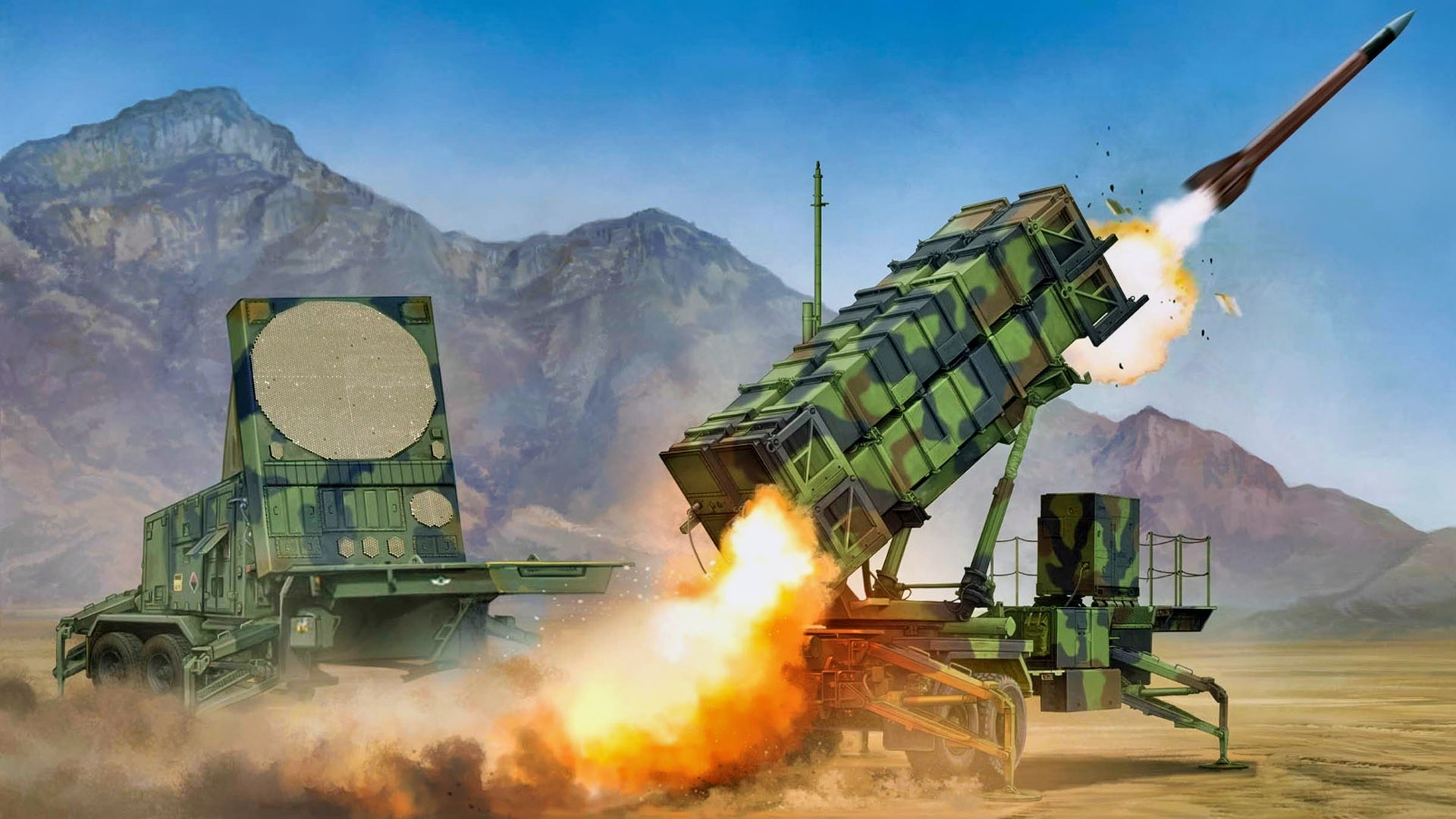
Iran Built a Drone Arsenal Measured in Thousands. The 2026 War Did Not Erase It – Iran entered 2026 with a drone force measured in the thousands, dispersed production, and years of combat feedback from Syria, Iraq, Yemen, and Ukraine. By April 7, Iranian forces and allied groups had launched about 4,400 one-way attack drones during the U.S.-Israeli war, according to a Washington Institute assessment. The number still available on August 12 cannot be verified.
The best-known weapon, the Shahed-136, is estimated to cost between $20,000 and $50,000. Iran has never published an audited production price. More complex reusable aircraft such as the Mohajer-6, Shahed-129, and Mohajer-10 have no reliable public unit costs.
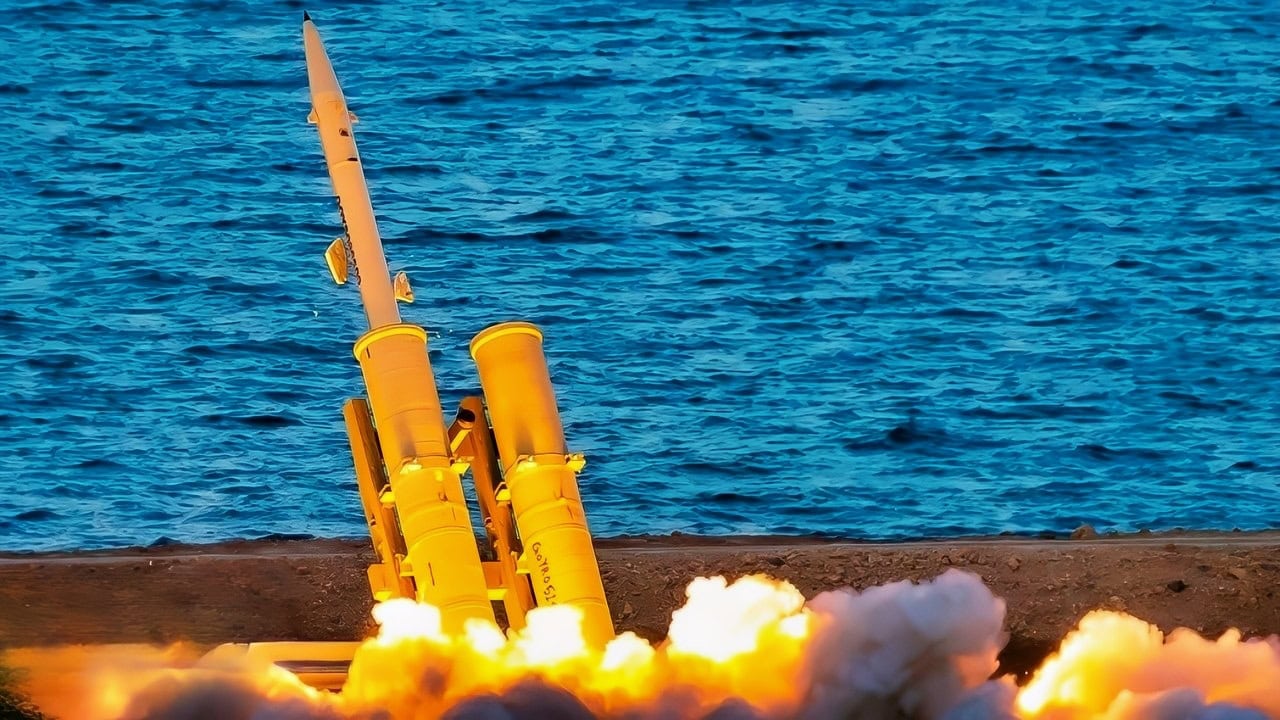
Iran Missiles. Image Credit: Creative Commons.
Iran’s army accepted 1,000 drones in January 2025. A British-backed research group estimated in March 2026 that Iran had industrial capacity for about 10,000 drones per month. That was potential capacity across a broad network, not proof that 10,000 completed combat aircraft left factories every month.
U.S. and Israeli attacks destroyed storage sites, launchers and production facilities. A Pentagon official said by March 27 that attacks had fallen about 90 percent and more than 66 percent of Iranian missile, drone and naval production sites had been damaged or destroyed. U.S. intelligence was certain that only about one-third of Iran’s drone capability had been destroyed.
The Iran-Iraq War Created Iran’s Drone Industry
Iran’s program began during the Iran-Iraq War, when the new Islamic Republic had limited reconnaissance assets and little access to foreign spare parts.
Early Mohajer drones photographed Iraqi positions and helped adjust artillery fire. The Ababil family followed as Iran turned wartime improvisation into a permanent industry.
Qods Aviation Industries developed the Mohajer line. Iran Aircraft Manufacturing Industries and Shahed Aviation Industries produced other airframes, while the Islamic Revolutionary Guard Corps Aerospace Force became the principal operator. The Defense Intelligence Agency later described UAVs as Iran’s most rapidly advancing air capability.
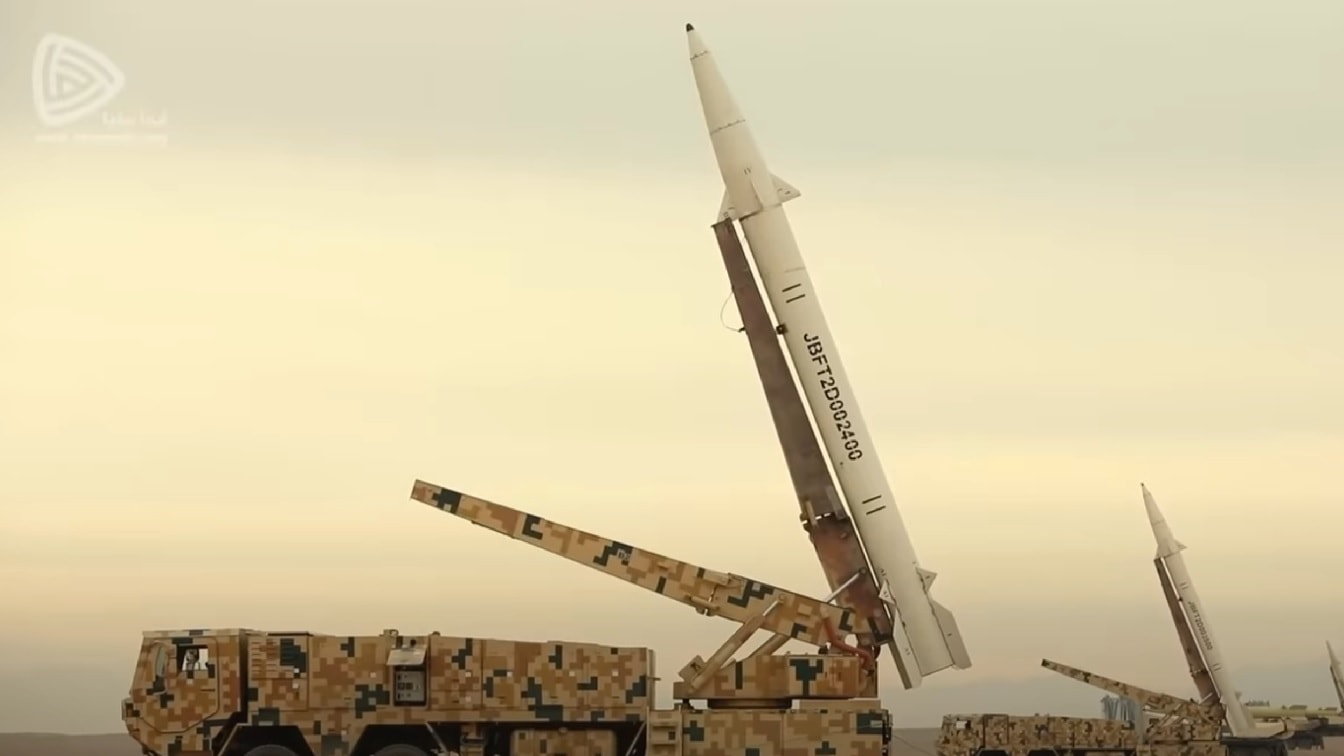
Iran Missiles from Video. Image Credit: YouTube Screenshot.
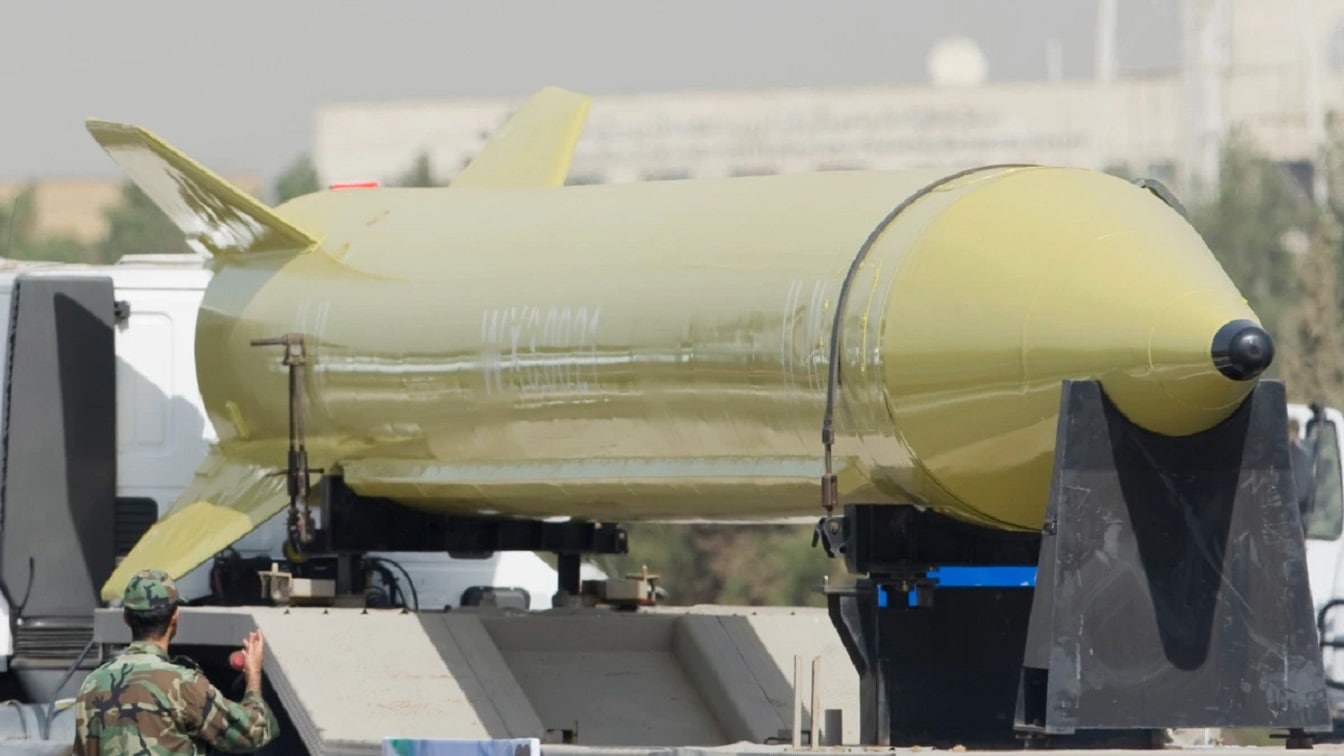
Iranian Ballistic Missile. Image Credit: Creative Commons.
Sanctions shaped the engineering model. Iran built airframes and warheads domestically, then used overseas networks for engines, processors, gyroscopes, and navigation equipment. A joint U.S. government industry advisory said recovered Iranian drones contained many commercial-grade foreign parts. Civilian technology allowed Tehran to expand faster than a fully indigenous aerospace supply chain would have permitted.
Shahed and Mohajer Models Filled Different Missions
The Shahed-129, displayed in 2013, gave the IRGC a larger surveillance and strike aircraft with long endurance and guided weapons. The Mohajer-6 later combined reconnaissance with precision-guided munitions in a smaller exportable aircraft.
The decisive change came from the Shahed-131 and Shahed-136. These delta-wing one-way attack drones exchanged reusable sensors and landing gear for range, a warhead, and low production cost. They launch from simple racks, follow programmed routes, and attack fixed coordinates. Their warheads are smaller than those of cruise missiles, but commanders can fire them in waves that crowd radar screens and consume interceptors.
Iran also unveiled the long-endurance Shahed-149 Gaza in 2021, the jet-powered Shahed-238 in 2023, and the Mohajer-10 that same year. Tehran claimed the Mohajer-10 could fly 2,000 kilometers, remain airborne for 24 hours, and carry 300 kilograms.
Those are Iranian specifications, not independently demonstrated combat figures.
Proxies and Russia Turned Combat Into a Development Cycle
Iran supplied aircraft, components, training, and production knowledge to Hezbollah, the Houthis, and armed groups in Iraq. Houthi Qasef and Sammad designs reflected Iranian technology while giving Tehran distance from strikes on Saudi Arabia, the United Arab Emirates, and Red Sea shipping. Each campaign returned information about navigation, warheads, and air-defense reactions.
Russia created a larger feedback loop after 2022. Tehran transferred hundreds of Shahed- and Mohajer-series drones, then helped Moscow establish local production. A billion-dollar Russian program targeted 6,000 Shahed-derived aircraft by summer 2025. The package included technology and factory assistance, so it cannot be divided into a clean Iranian unit price.
Ukraine exposed its dependence on satellite navigation, imported electronics, and predictable flight profiles. Russia answered with new warheads, coatings, communications links, decoys, and jet-powered variants. The relationship connected the Iranian and Russian drone campaigns while blurring the line between Iranian-built aircraft and Russian descendants.
Iran Showed 100 Drones Underground, Not Its Entire Arsenal
Iranian state television showed 100 drones inside an underground site in the Zagros Mountains in May 2022. The displayed force included Ababil-5 aircraft armed with Qaem-9 missiles. That is the highest public count tied to a single underground drone facility.
The images showed storage and preparation, not proof that all 100 aircraft were manufactured underground. Iran has never disclosed how many drones were built inside tunnels. Later assessments described concealed storage and launch sites, while surface factories, dual-use plants, universities, and private workshops supplied the wider program.
Cumulative production is also unknown. Iran announced one 1,000-drone delivery, supplied hundreds to Russia, armed regional partners, and expended thousands in direct war. Those documented flows prove output in the several-thousand range. They do not establish whether Iran built 10,000, 20,000, or more over the decade because Russian licensed production and proxy assembly are often mixed into broader totals.
The 2025 War Used 1,000 Drones Against Israel
During the 12-day war that began on June 13, 2025, Tehran launched about 1,000 drones and 400 ballistic missiles toward Israel, according to France’s defense minister. Most drones were intercepted before reaching their targets.
Their military value came partly from forcing Israel and supporting forces to maintain radar coverage, fighter patrols, and interceptor expenditure. The campaign confirmed the same mass-attack logic seen in Ukraine, though Israel’s geography and layered defenses produced a higher interception rate. Israeli strikes also hit Iranian production and launch infrastructure, pushing Tehran toward further dispersal.
The 2026 War Made Shaheds Iran’s Main Counterattack Weapon
Iran launched more than 1,000 drones at U.S.-aligned Gulf states during the first days after Operation Epic Fury began on February 28, 2026. The Defense Department later reported that Shahed-136 strikes represented 66 percent of Iranian counterattack operations through March 9. By April 7, Iran and its partners had launched roughly 4,400 one-way attack drones.
Most were destroyed, but some damaged infrastructure, military bases, airports, and commercial sites. The attacks imposed a severe cost-exchange problem for regional air defenses: a $20,000-$50,000 Shahed sometimes drew an interceptor costing millions. Iran did not need every drone to arrive. It needed enough launches to maintain pressure and force expensive defensive reactions.
Once U.S. and Israeli aircraft gained broad access over Iran, launch crews shifted toward smaller waves, dispersed sites, and deeper concealment. The effort behind Iran’s low-cost attrition strategy survived even as fixed factories were bombed. Dual-use plants could be retooled, while completed Shaheds required little specialized storage.
The campaign continued after the first ceasefire. U.S. forces shot down Iranian drones near the Strait of Hormuz in June. Explosive drones appeared over Erbil in July. U.S. intelligence also investigated whether Russia provided targeting or advanced technology for Iranian attacks on CIA facilities in the Gulf.
Iran Still Has Drones, but No Credible Current Count
Prewar estimates ranged from several thousand one-way attack drones to more than 10,000 Shaheds in storage. Those figures cannot be subtracted cleanly from reported launches. Air strikes destroyed some completed aircraft, buried others, damaged factories, and eliminated launch equipment. Iran also continued assembly during the war.
The most defensible cost remains $20,000 to $50,000 for a basic Shahed-136. Lower estimates exist, but Iran has released no accounts. Foreign components leave the program vulnerable to procurement disruption, despite reports that Chinese-origin parts continue reaching Iranian and Russian production networks.
A surviving force of at least hundreds is certain from continued operations; a remaining stock in the low thousands is plausible but cannot be verified publicly. The dispersed drone industry remains easier to rebuild than Iran’s ballistic-missile sector.
About the Author: Harry J. Kazianis
Harry J. Kazianis (@Grecianformula) was the former Senior Director of National Security Affairs at the Center for the National Interest (CFTNI), a foreign policy think tank founded by Richard Nixon based in Washington, DC. Harry has over a decade of experience in think tanks and national security publishing. His ideas have been published in the NY Times, The Washington Post, The Wall Street Journal, CNN, and many other outlets worldwide. He has held positions at CSIS, the Heritage Foundation, the University of Nottingham, and several other institutions related to national security research and studies. He is the former Executive Editor of the National Interest and the Diplomat. He holds a Master’s degree focusing on international affairs from Harvard University.

