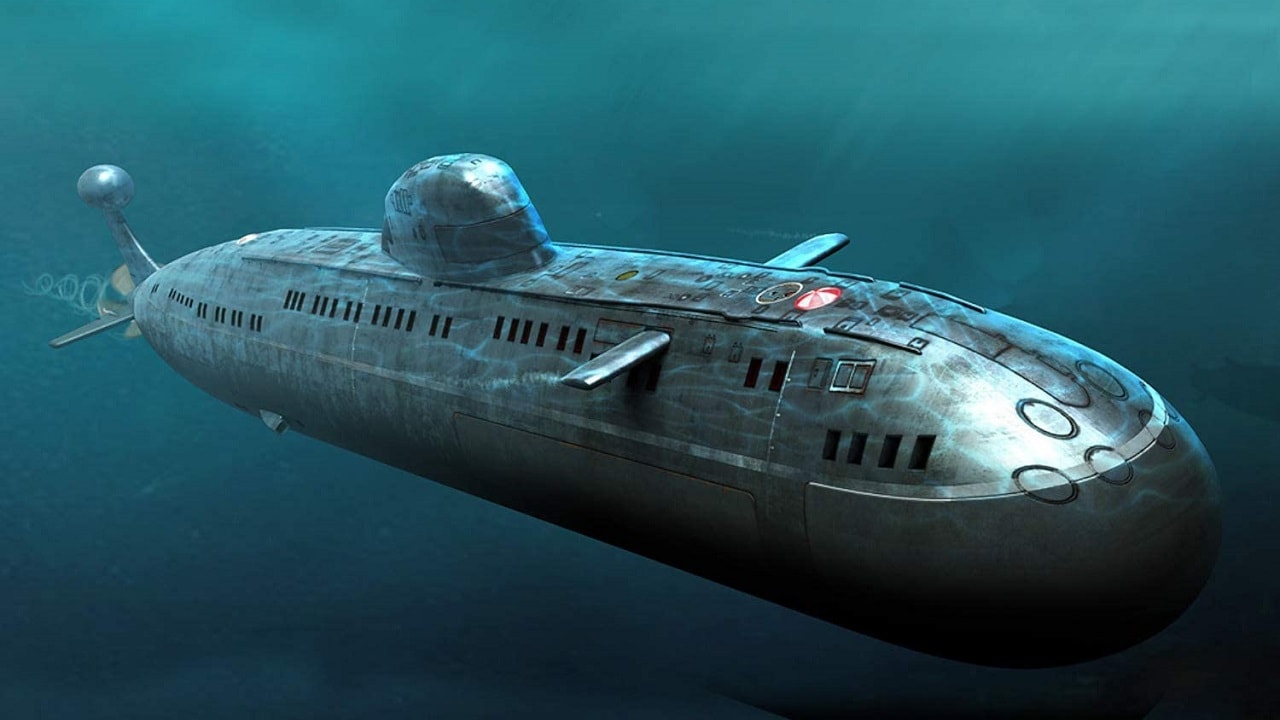
The Soviet Navy’s Sierra I-class of submarines were remarkable and radical.
Hunter-killer submarines, they were never intended to launch world-ending nuclear missile salvoes at the United States or Europe, but instead to locate and torpedo adversary submarines in the NATO alliance.
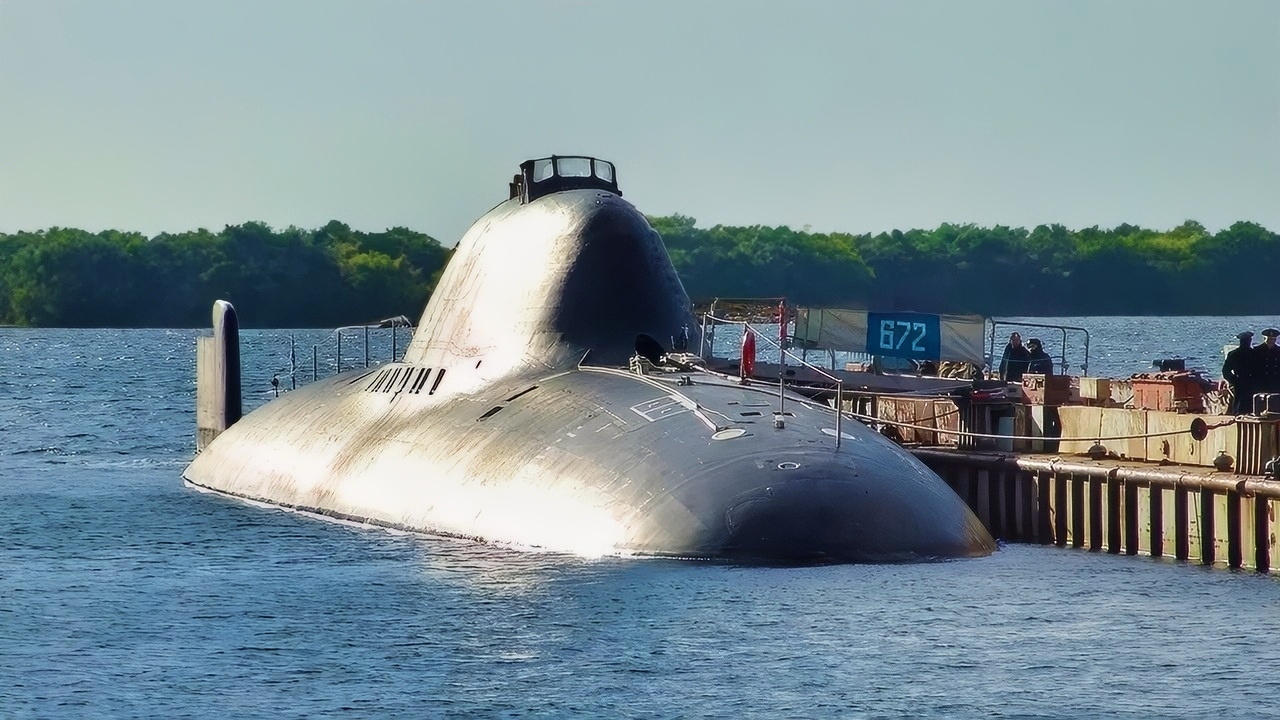
Sierra-Class Submarine Creative Commons Photo
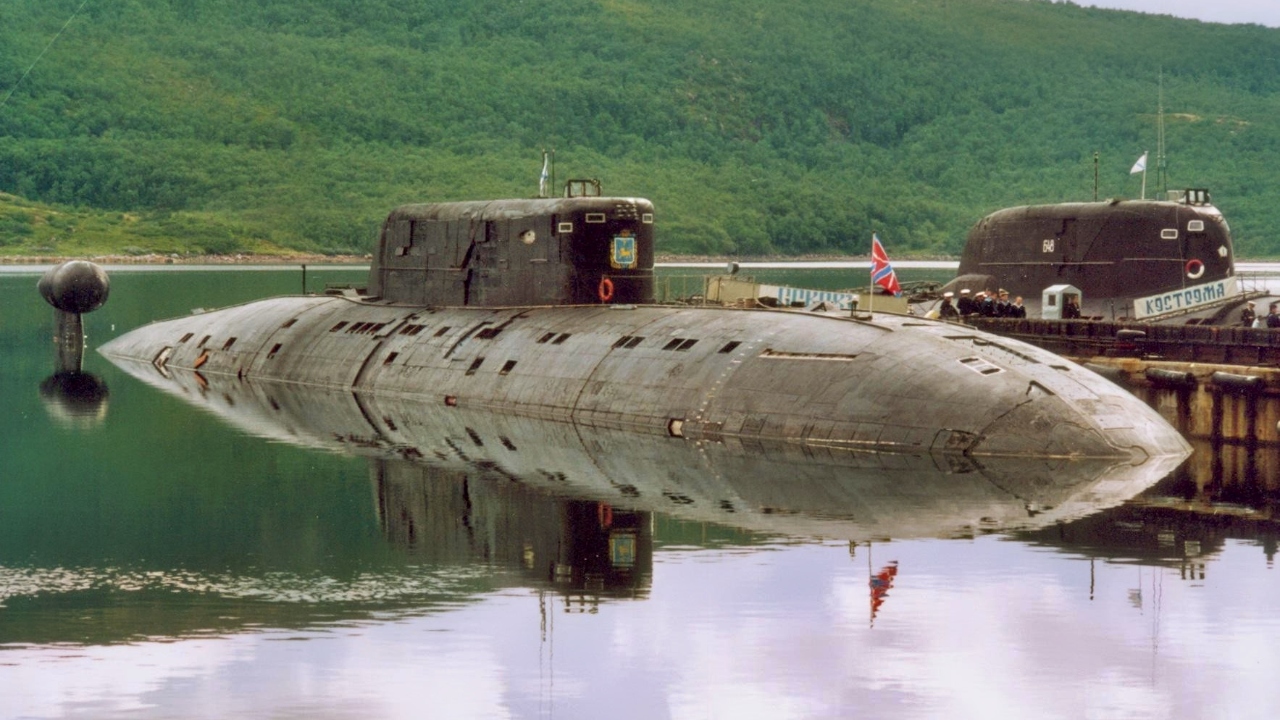
Sierra-Class Submarine. Image Credit: Creative Commons.
To that end, the Sierra I-class submarines were heavily armed, capable of launching torpedoes, anti-ship missiles, mines, and depth charges.
Though they were not particularly large, displacing only about 8,000 tons, they were nuclear-powered and could sail as long as the crew had enough food.
The class incorporated several new and then-exotic materials into its design, materials that necessitated new manufacturing processes.
Titanium was their secret and was used extensively of the hull’s construction.
It afforded the submarines several remarkable properties.
In terms of acoustic signature, the Sierra I-class submarines were markedly superior compared to their predecessors.
The designers paid close attention to hull shaping and other sound-dampening measures, including the sub’s onboard machinery, making the class one of the quietest in the Soviet Navy.
While they were not as difficult to detect and track as some of the submarines in the United States Navy or other NATO navies, they were considerably harder to find.
Titanium Hull — Good and Bad
The Sierra I-class’ titanium hull was a significant departure from the steel typically used in submarines’ hull design of the era.
Compared to steel, titanium has a few distinct pluses.
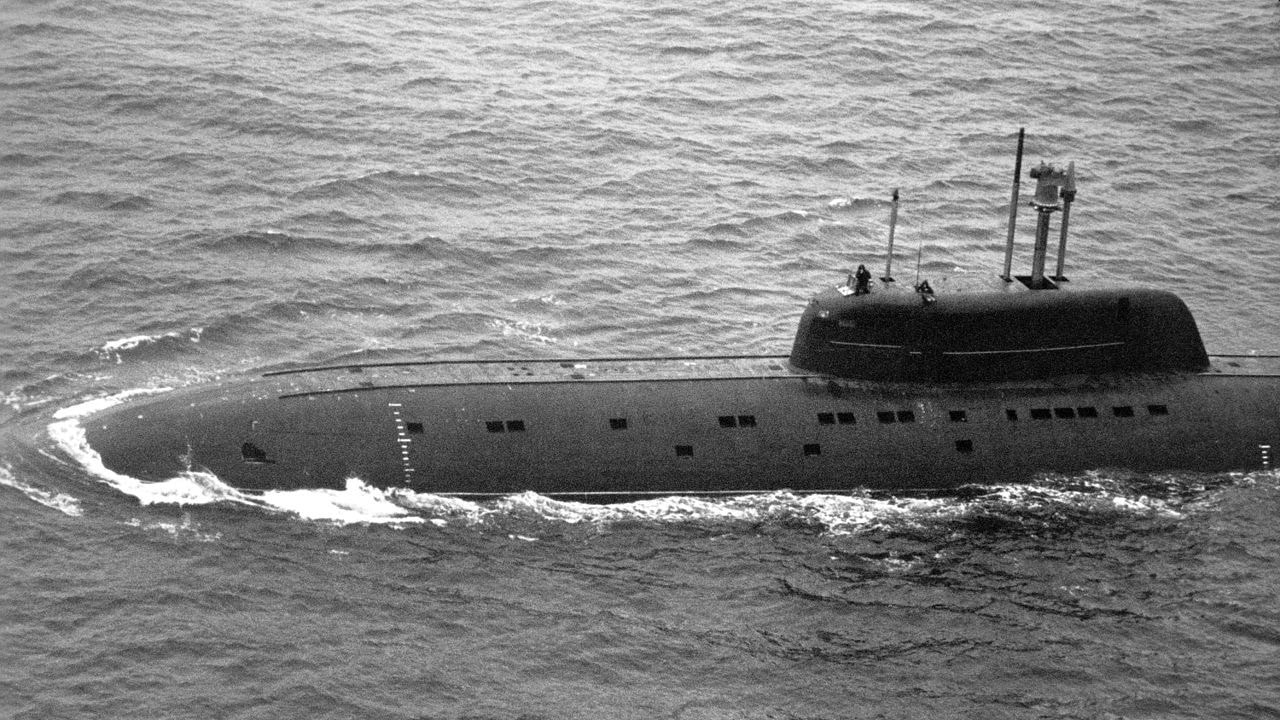
Sierra-Class Submarine. Image Credit: Creative Commons.
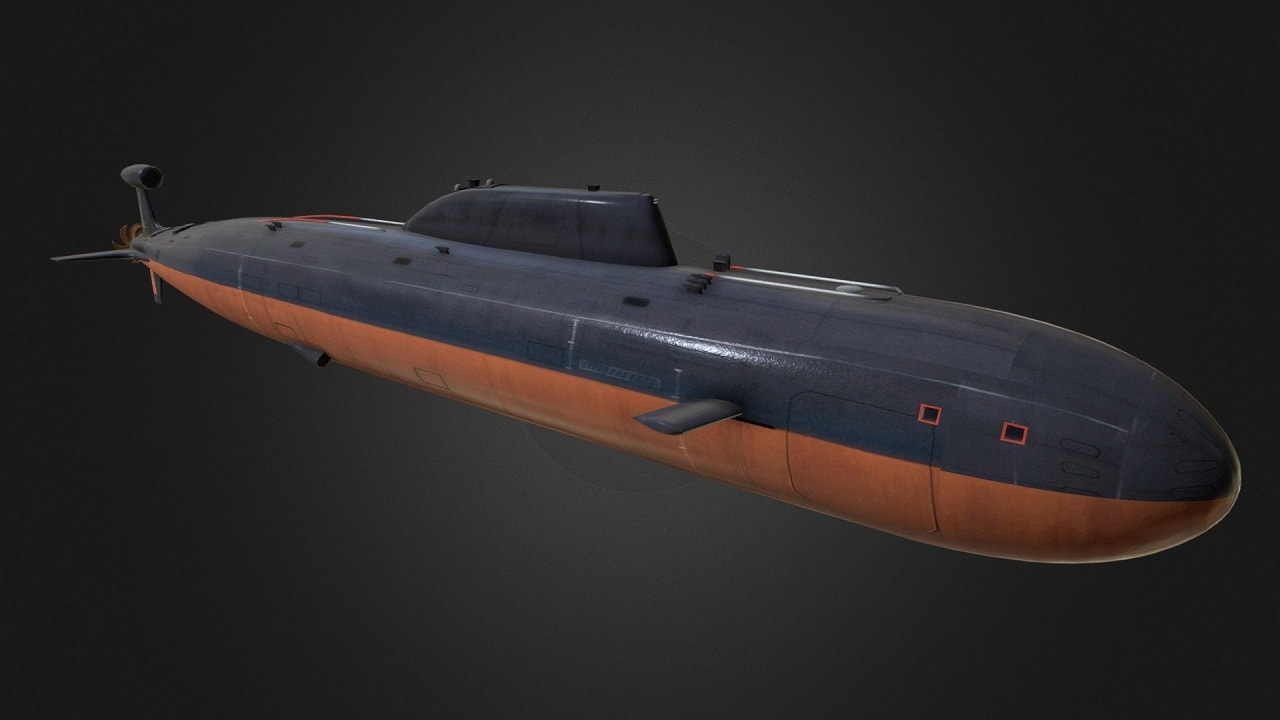
Russian Sierra-class nuclear-powered attack submarine. Artist rendering.
Not only is it very corrosion-resistant, a boon to vessels that would spend their entire lives in corrosive, high-salinity environments, but it is also lighter and stronger than steel.
It is also non-magnetic and therefore has virtually no magnetic signature.
But thanks to its strong hull, it would also be capable, in theory, of diving deeper than its steel-hulled counterparts.
It was not, however, a perfect material nor a perfect design. Titanium is considerably more expensive than steel.
It is also much more difficult to manipulate and manufacture. Welding and refining, in particular, are much more complex than with steel.
Build Costs and Design Drawbacks
One naval expert, HI Sutton, offers insight into the Sierra-class and explains why the submarines were, despite their capabilities, not produced more prolifically and not as widely integrated into the Soviet submarine fleet.
“The SIERRA employed the Titanium hull in a way intended to be both faster and deeper diving,” Sutton writes. “But consequently neither as fast as the ALFA (40 kt+) nor as deep-diving as the MIKE (1,000m+). And the result was a boat with only a marginal performance advantage over the steel-hulled AKULA, if any.”
“In hindsight, the SIERRA class was not as successful as the AKULA, and offered less potential.
The titanium hull was extremely difficult to build,d and all boats had to be constructed at a single yard. And the yard itself restricted the maximum dimensions of the submarine,” Sutton adds. “This meant it had to be much smaller than the AKULA in terms of internal space. This translated into a less stealthy boat, although the SIERRA was still very stealthy compared to previous generations.”
Thanks in large part to the submarine’s complex design features, only a single pair of Sierra I-class submarines was ever built and put into service with the Soviet Navy: submarine K-276 and submarine K-239.
While the submarine’s unique structure offered certain advantages, including structural strength and dive depth, it also had several drawbacks.
“Like most modern SSNs, the [Sierra] class is covered insonar-absorbing anechoicc tiles,” Sutton adds. “These often fall off, creating a pockmarked surface and disheveled appearance.
The SIERRAs suffer from this more than most other classes, possibly due to difficulty attaching the tiles to the titanium hull.”
Summed Up in 1 Word: Expensive
While the Sierra I-class was indeed a highly capable design, the fact that only two of the original designs were ultimately produced for the Soviet Navy attests to their drawbacks, namely cost and complexity.
The Sierra I-class did, however, provide valuable insight and experience for the Soviet Navy in the incorporation of titanium into submarine design and laid the groundwork for the follow-on class of submarines, the more prolific Sierra II-class.
Ultimately, however, the class’ timing in the 1980s, along with the collapse of the Soviet Union and the end of the Cold War, meant they were not produced in significant numbers.
Innovative and capable though the Sierra I-class was, it was too expensive and complex to justify.
About the Author: Caleb Larson
Caleb Larson is an American multiformat journalist based in Berlin, Germany. His work covers the intersection of conflict and society, with a focus on American foreign policy and European security. He has reported from Germany, Russia, and the United States. Most recently, he covered the war in Ukraine, reporting extensively on the war’s shifting battle lines in Donbas and writing about its civilian and humanitarian toll. Previously, he worked as a Defense Reporter for POLITICO Europe. You can follow his latest work on X.