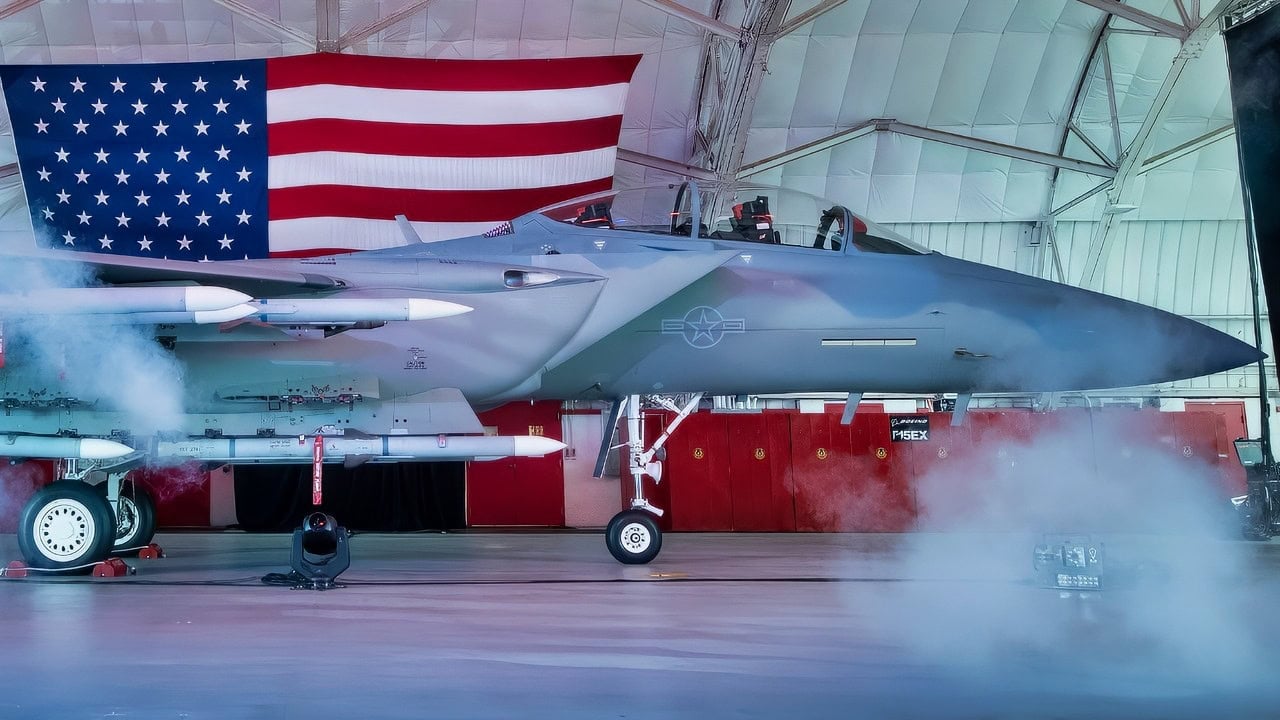
Summary and Key Points: Defense expert Reuben F. Johnson evaluates the strategic “stress test” facing the U.S. military during the third week of Operation Epic Fury in Iran.
-As of March 14, 2026, Iran’s use of low-cost Shahed drones and ballistic missiles has created a dangerous disparity, forcing the U.S. to use $3M–$12M interceptors against $20K targets.
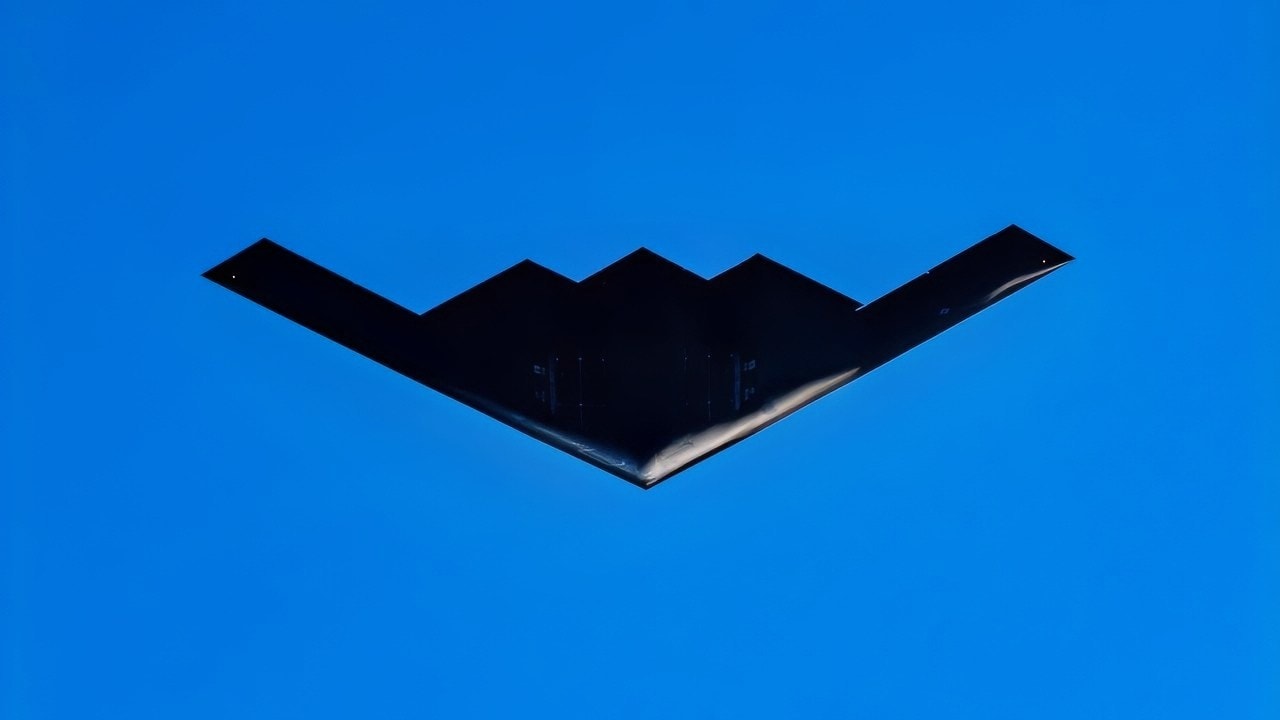
The B-2 Spirit flies over the Rose Parade at Pasadena Ca., Jan. 1, 2024. The Rose Parade is a parade of flower covered floats, marching band, and equestrian units that is produced by the Tournament of Roses. (U.S. Air Force photo by Airman 1st Class Bryce Moore)
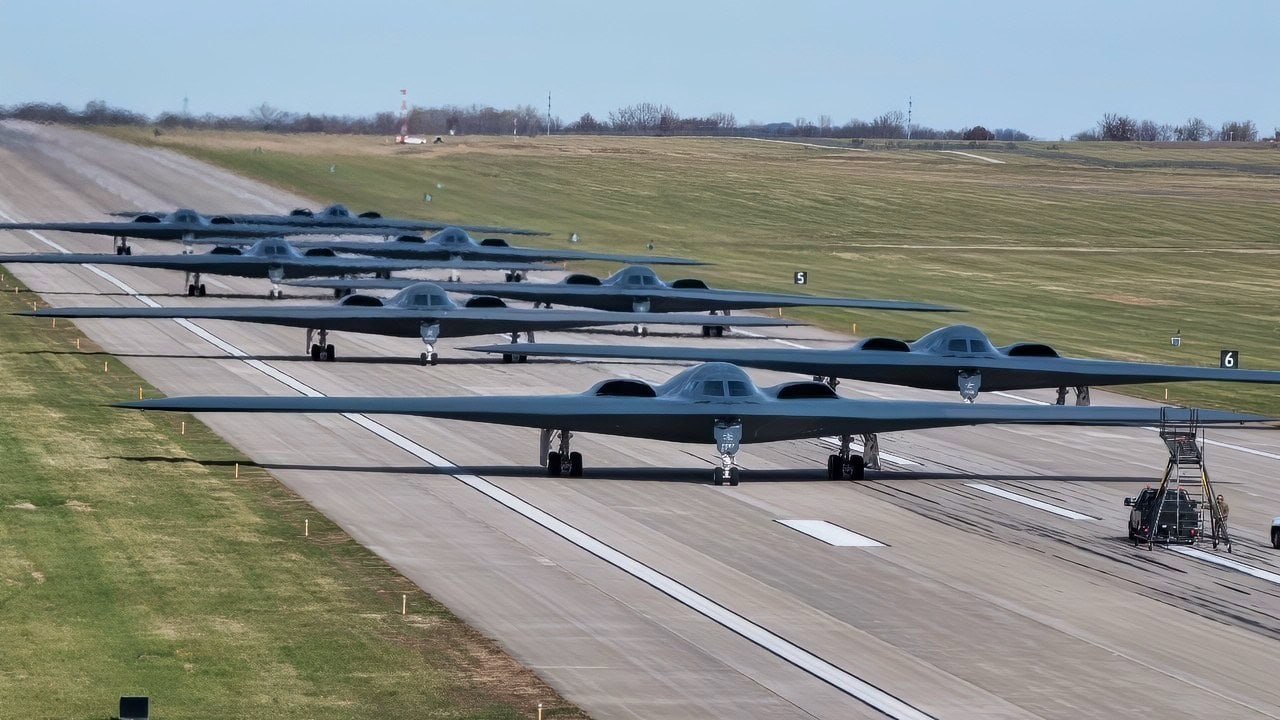
B-2 Spirit stealth bombers assigned to Whiteman Air Force Base taxi and take-off during exercise Spirit Vigilance on Whiteman Air Force Base on November 7th, 2022. Routine exercises like Spirit Vigilance assure our allies and partners that Whiteman Air Force Base is ready to execute nuclear operations and global strike anytime, anywhere. (U.S. Air Force photo by Airman 1st Class Bryson Britt)
-This report analyzes the 80% reduction in Iran’s conventional response alongside its successful strikes on UAE oil refineries and the deployment of mines in the Strait of Hormuz.
-Johnson explores the munitions production lag, concluding that Tehran’s goal is “economic disruption” through $200-per-barrel oil.
The $200 Barrel Threat: Analyzing Tehran’s Strategy to Decouple the West from Global Energy
Iran’s military has failed in almost every way to defend itself against the U.S. and Israel air campaign that began on February 28.
Its air force and air-defense assets have suffered heavy losses and were significantly degraded in two weeks of allied air strikes.
But where Tehran’s military has achieved some success is in selectively striking major U.S. air defense systems and other facilities.
These targeted attacks are described as “a sustained, methodical campaign targeting the infrastructure” of U.S. military air-defense assets and other installations across the region.
But what began as a “pinpricks in the hide of an elephant” strategy is starting to show some success as the conflict enters its third week.
The U.S. military is starting to show what numerous commentators have warned of for almost a year now: a shortage of many advanced munitions, created in part by production levels inadequate to replace what is fired off in combat.
Iran’s war effort is showing an inability to respond in kind. But Iran’s advantage is that it has seemingly limitless numbers of missiles and drones.
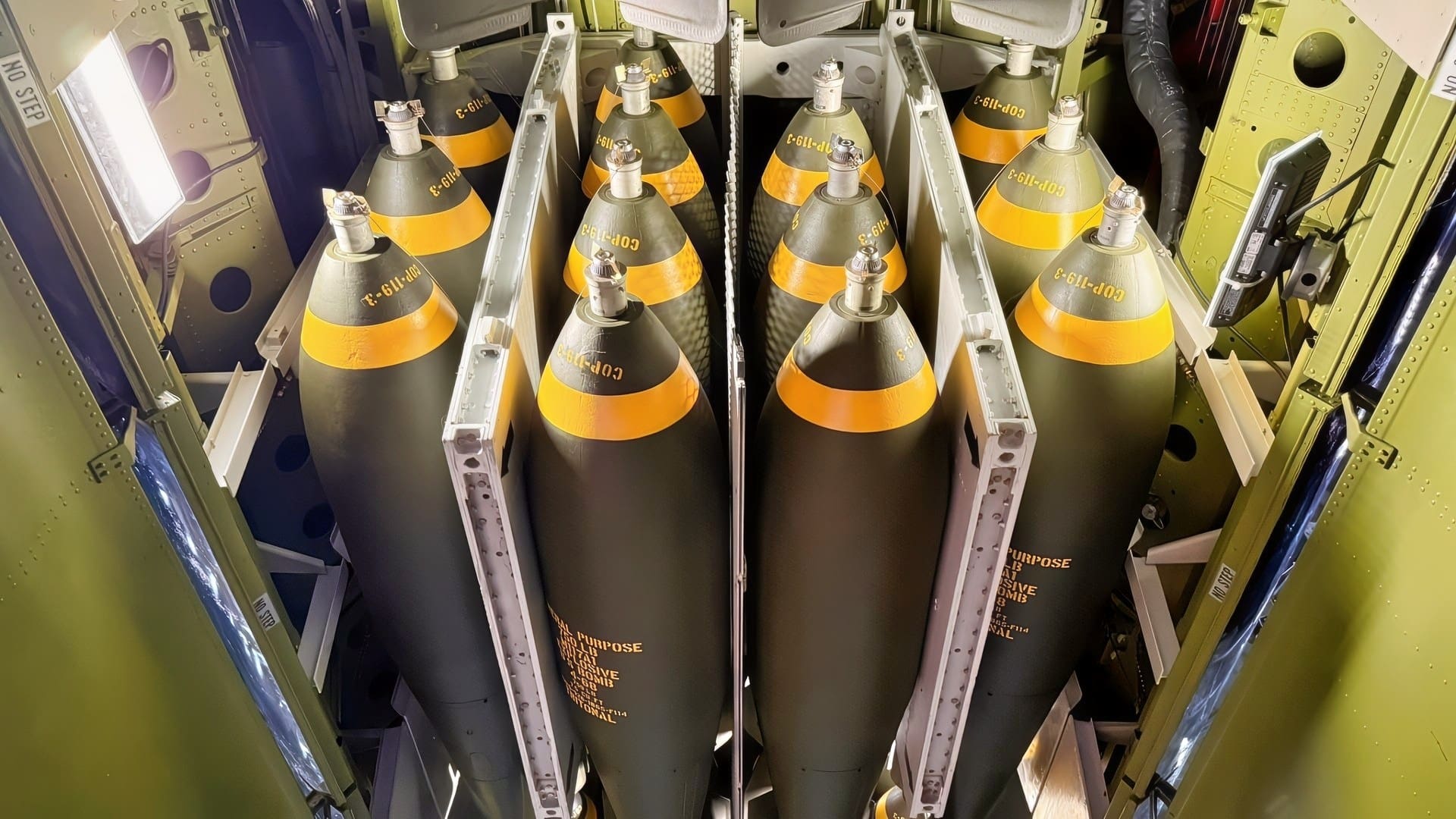
19FortyFive.com B-52 Bomber Bombs. By Harry J. Kazianis in 2025 from the National Museum of the Air Force.
U.S. forces have been forced to spend a number of high-dollar weapons with long production lead times, making them difficult to replace. This is making it difficult to defend against Iranian attacks from weapons that are several orders of magnitude cheaper.
Air and missile strikes on Iran’s military have reduced Iran’s attacks by more than 80 percent since the war began.
But some of the cheap but plentiful Iranian air-defense missiles are still being launched in numbers that are causing the United States and Israel to revise some of their air campaign planning.
Disproportionate Costs
The waves of low-cost weapons that threaten to overwhelm pricey U.S. defenses are becoming more common as the conflict wears on.
Specifically, there is a concern over the relatively low price for building Tehran’s Shahed drones vs. the far more expensive weapons being used to shoot them down.
According to CNBC, the Shahed drones targeting U.S., Israeli, and other Gulf nation installations cost between $20,000 and $50,000 a piece.
The air defense systems employed to shoot down these drones fire interceptor missiles that cost between $3 million and $12 million each.
Other nations have been experimenting with less expensive concepts, but it takes time to establish large-scale production.
One of the most successful countries in this category is Ukraine, which has developed inexpensive drone interceptors in the range of $1000 to $2000 per unit.
This makes them one-twentieth the price of a Shahed drone or less.
Hitting the Oil Industry
“The United States led the long-range precision strike revolution, and this is the first war where we’re seeing the adversary have that kind of capability,” said Kelly Grieco, a senior fellow at the Stimson Center, a not-for-profit, non-partisan think-tank. “It’s putting stress on the system that we haven’t seen before.”
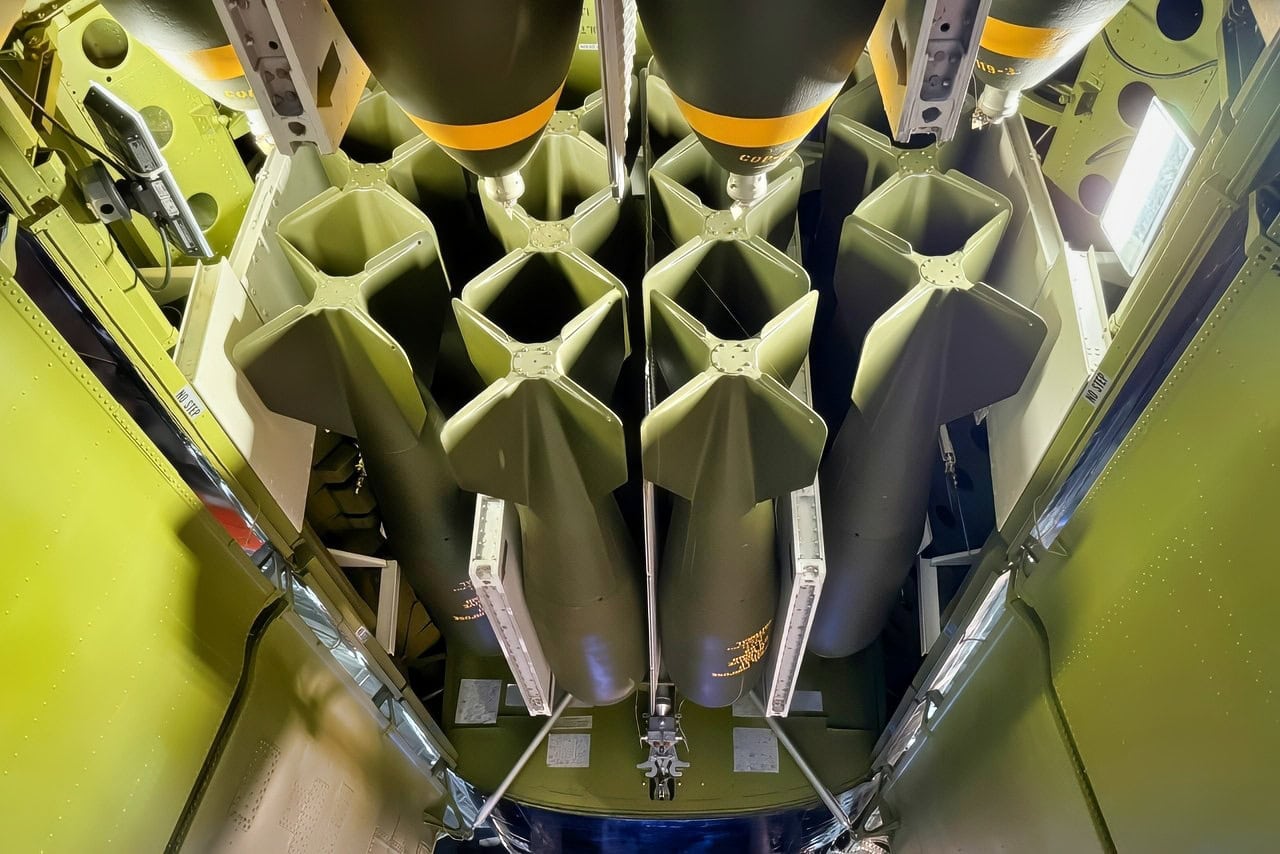
B-52 bombs. Image Credit: 19FortyFive.com Taken at the National Museum of the Air Force.
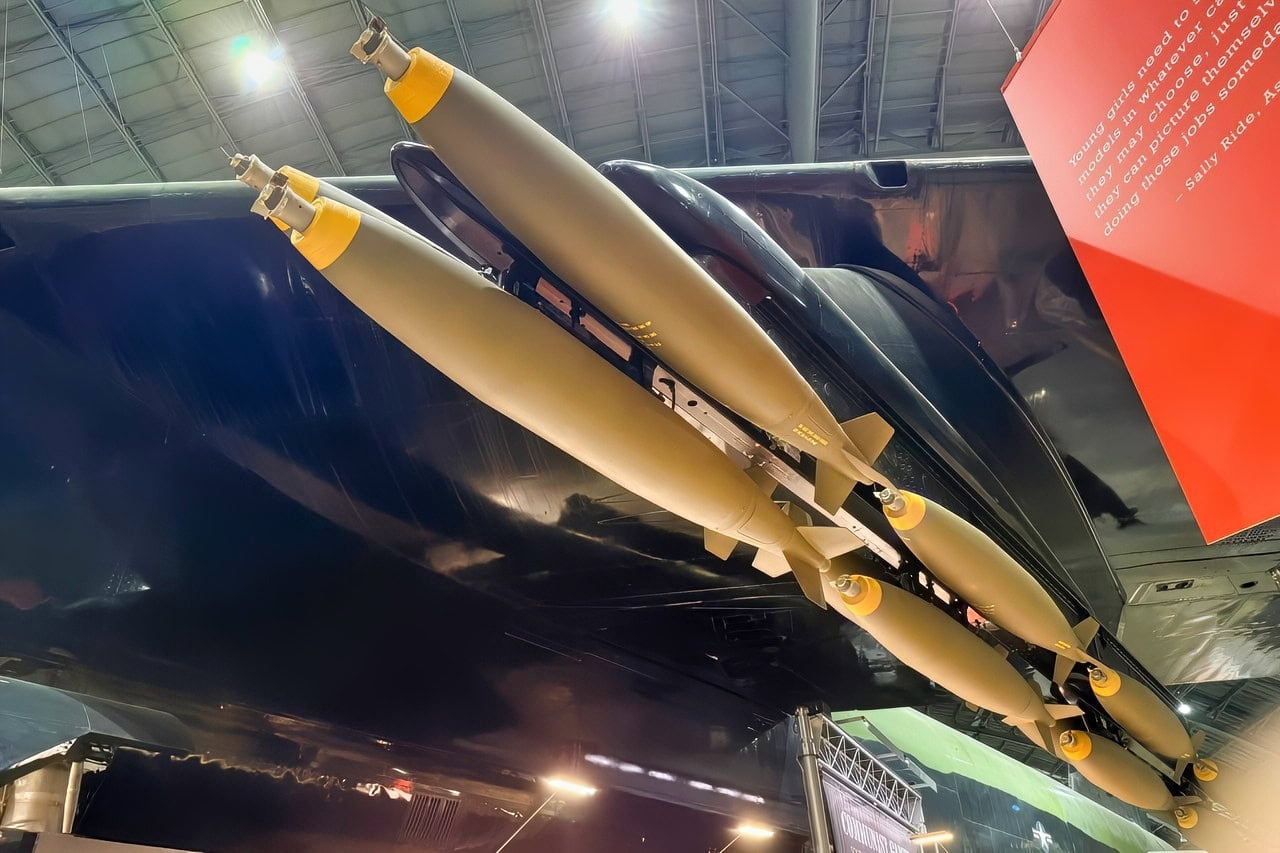
B-52 bombs. Image Credit: 19FortyFive.com Taken at the National Museum of the Air Force.
The consequence is that Iran’s forces are striking valuable military installations and energy infrastructure across the region on a daily basis.
This is central to Tehran’s strategy to raise oil prices to a level that is economically disruptive in the United States and other Western nations.
For example, a strike in the United Arab Emirates near one of the world’s largest oil refineries shut down operations there this past Tuesday.
The following day, the British Royal Navy reported three commercial ships being struck by projectiles fired in the Strait of Hormuz and Persian Gulf.
According to other reports, Iran has deployed about a dozen mines in the Strait of Hormuz, according to sources who spoke to Reuters. One source said the mines were deployed “in the last few days” and that most of their locations are now known. However, there is no concrete plan of action for the United States and its allies to eliminate them. President Donald Trump had previously warned Iran against placing mines in the Strait after reports that it had already done so.
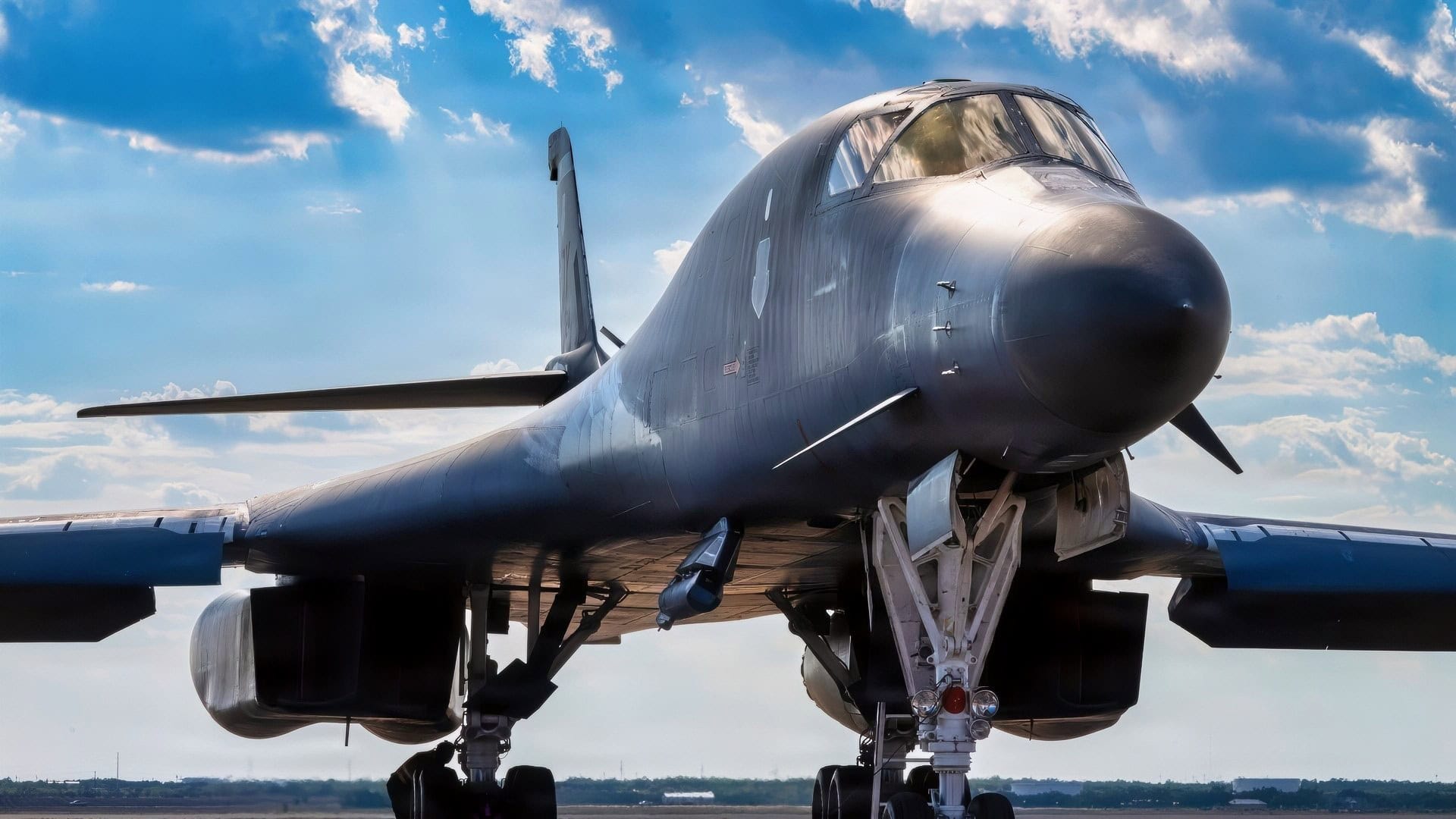
A U.S. Air Force B-1B Lancer assigned to the 9th Bomb Squadron parks on the flightline at Dyess Air Force Base, Texas, Sept. 15, 2025. Carrying the largest conventional payload of both guided and unguided weapons in the Air Force inventory, the multi-mission B-1B is the backbone of America’s long-range bomber force. (U.S. Air Force photo by Senior Airman Jade M. Caldwell)
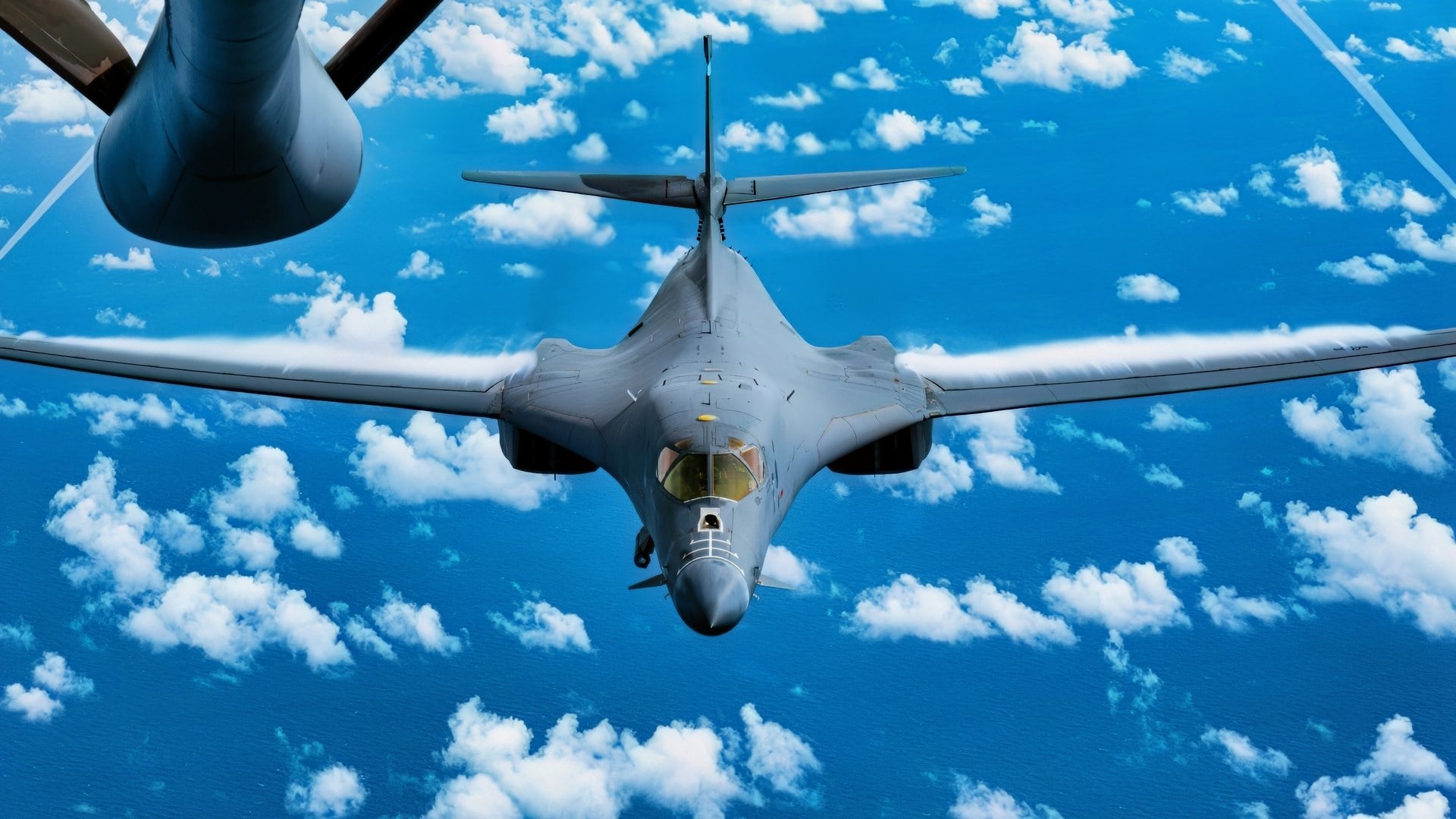
A U.S. Air Force B-1B Lancer prepares to refuel behind a KC-135 Stratotanker during a bomber air demonstration over the U.S. Southern Command area of responsibility Oct. 23, 2025.
The demonstration showcased Southern Command’s ability to quickly mobilize and enable the rapid establishment of credible, combat-ready forces with effective and overwhelming force.(U.S. Air Force photo by Airman 1st Class Daniel Harrell)
The Strait of Hormuz is a vital route for shipping oil and liquefied natural gas (LNG). Shipments through this bottleneck along Iran’s coast have effectively been shut down by the war the United States and Israel launched on February 28.
Disrupting the Strait is a key part of Iran’s strategy to drive up global energy prices.
Iran’s military command said on Wednesday that the world should be prepared for oil prices to rise to $200 per barrel.
About the Author: Reuben F. Johnson
Reuben F. Johnson has thirty-six years of experience analyzing and reporting on foreign weapons systems, defense technologies, and international arms export policy. Johnson is the Director of Research at the Casimir Pulaski Foundation. He is also a survivor of the Russian invasion of Ukraine in February 2022. He worked for years in the American defense industry as a foreign technology analyst and later as a consultant for the U.S. Department of Defense, the Departments of the Navy and Air Force, and the governments of the United Kingdom and Australia. In 2022-2023, he won two awards in a row for his defense reporting. He holds a bachelor’s degree from DePauw University and a master’s degree from Miami University in Ohio, specializing in Soviet and Russian studies. He lives in Warsaw.