
Summary and Key Points: Jack Buckby, a national security researcher and defense analyst, evaluates the “de facto shutdown” of the Strait of Hormuz following IRGC threats to set transit vessels “ablaze.”
-Despite official warnings from UKMTO and JMIC that the closure is not legally binding, commercial traffic has slowed to a trickle as insurers cancel war-risk coverage.

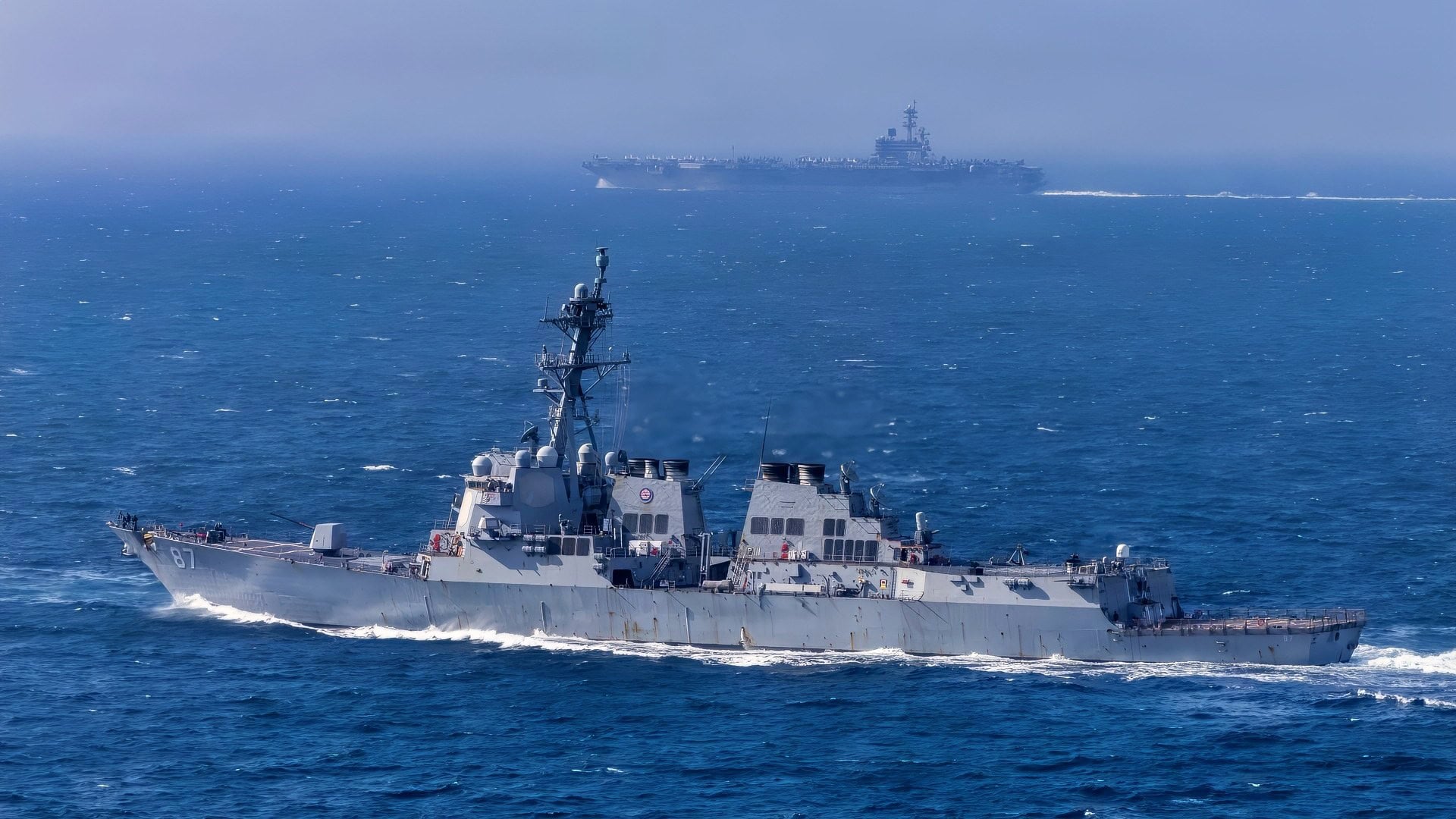
120511-N-WO496-003 STRAIT OF HORMUZ (May 11, 2012) Guided-missile cruiser USS Cape St. George (CG 71) and aircraft carrier USS Abraham Lincoln (CVN 72) transit the Strait of Hormuz. Both ships are deployed to the U.S. 5th Fleet area of responsibility conducting maritime security operations, theater security cooperation efforts and support missions as part of Operation Enduring Freedom. (U.S. Navy Photo by Mass Communication Specialist 3rd Class Alex R. Forster/Released)
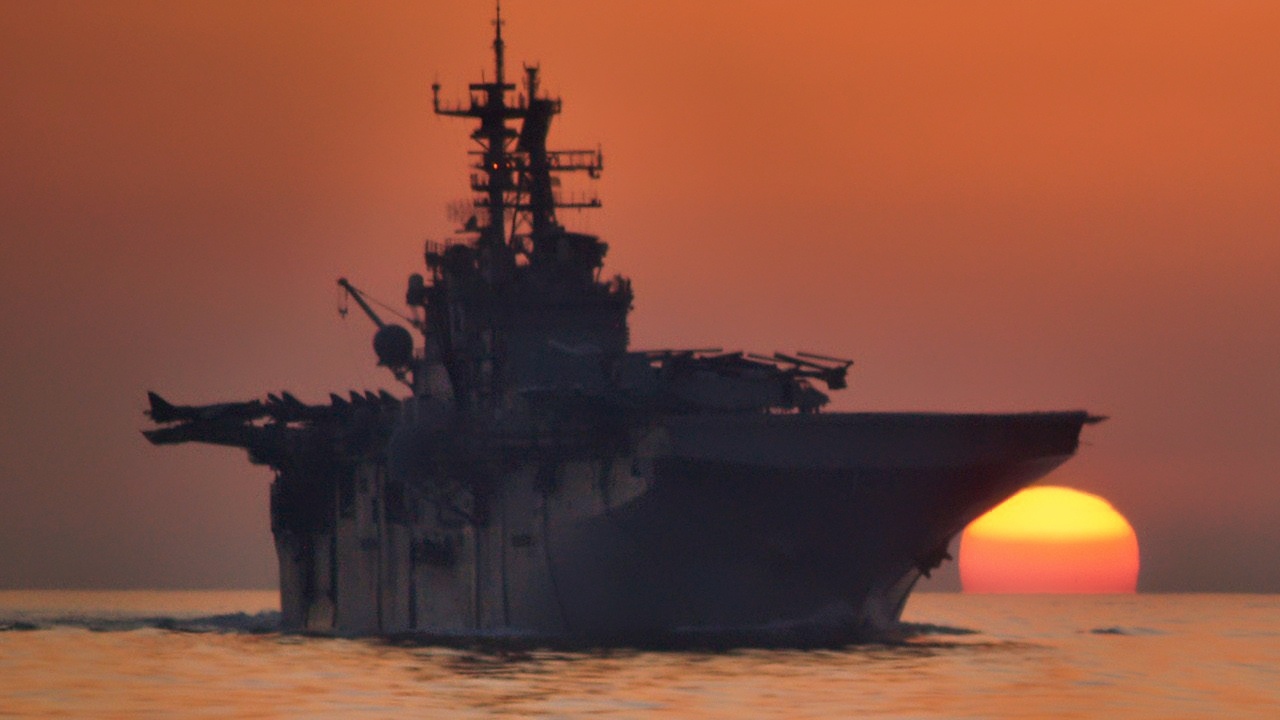
The amphibious assault ship USS Bataan (LHD 5) transits the Strait of Hormuz.
-This 19FortyFive report analyzes President Donald Trump’s March 3rd announcement of a U.S. Development Finance Corporation insurance program and Navy escorts, intended to bypass the de facto blockade.
-Buckby concludes that while Iran’s naval infrastructure is severely degraded, global energy markets remain volatile as ships weigh U.S. guarantees against Iranian kinetic threats.
Trump’s Insurance Gamble: How the U.S. Plans to Restart Oil Traffic Through the Strait of Hormuz
Iran is claiming it has shut down one of the world’s most important energy chokepoints. On March 2, Ebrahim Jabari, a senior adviser to the commander-in-chief of Iran’s Islamic Revolutionary Guard Corps (IRGC), said the Strait of Hormuz is “closed” and warned that any ship attempting to pass would be set “ablaze” by the IRGC and Iran’s regular navy.
But the picture still remains unclear, with the dynamics of the conflict in Iran constantly shifting, and some reports indicating that Iranian naval capabilities have been significantly diminished as a result of U.S. and Israeli strikes.
According to the United Kingdom Maritime Trade Operations (UKMTO) and the Joint Maritime Information Center (JMIC), no recognized authority has formally declared closure through the standard maritime safety channels – specifically, IMO-recognized broadcasts – and that VHF (very high frequency) messages declaring the strait’s “closure” are not legally binding under international law.
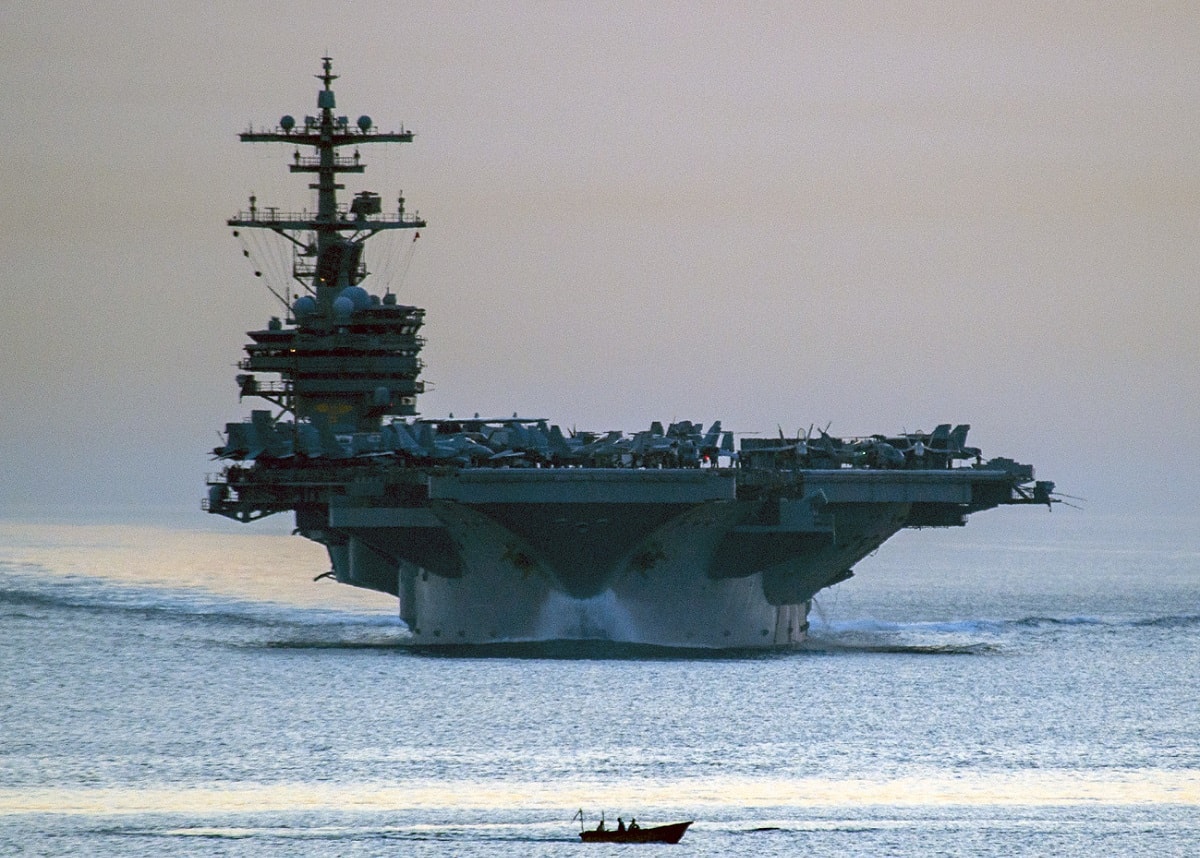
STRAIT OF HORMUZ (April 28, 2014) A small vessel transits in front of the aircraft carrier USS George H.W. Bush (CVN 77) as it transits the Strait of Hormuz as seen from the guided-missile cruiser USS Philippine Sea (CG 58). The George H.W. Bush Carrier Strike Group is supporting maritime security operations and theater security cooperation efforts in the U.S. 5th Fleet area of responsibility. (U.S. Navy photo by Mass Communication Specialist 3rd Class Abe McNatt/Released) 140428-N-PJ969-027
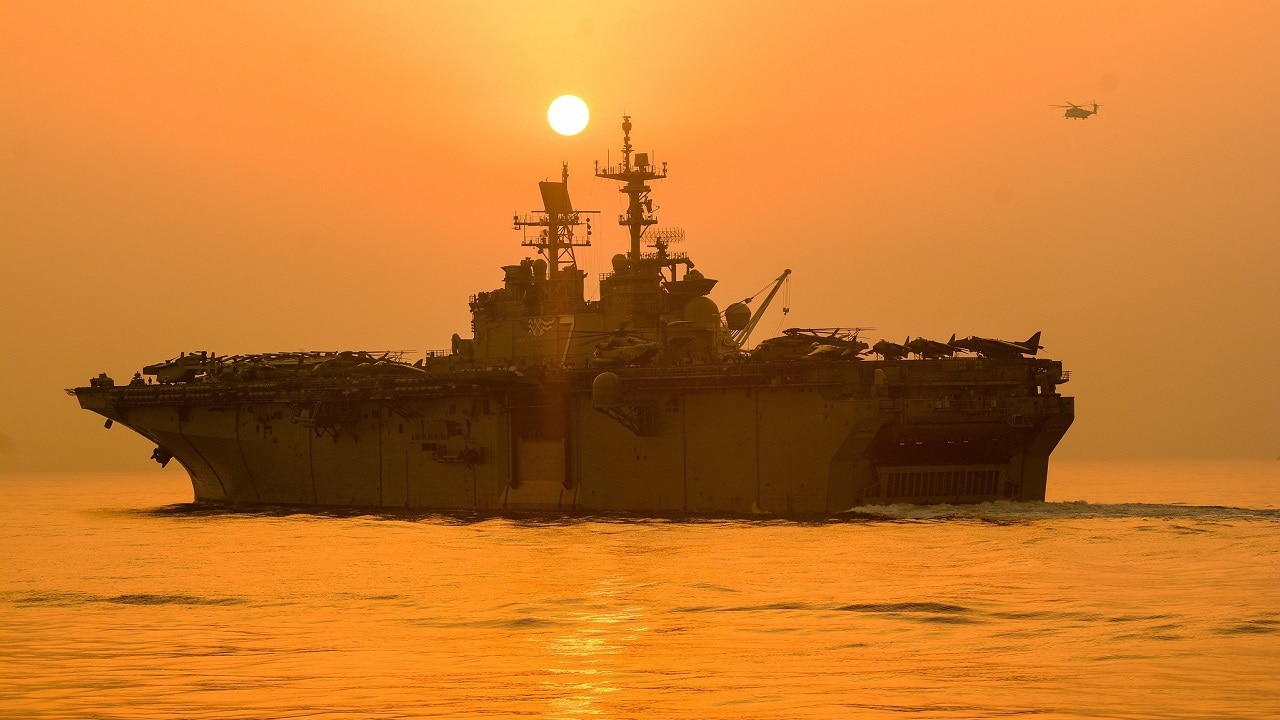
(Aug. 4, 2021) The Wasp-class amphibious assault ship USS Iwo Jima (LHD 7) transits the Strait of Hormuz, Aug. 4, 2021. Iwo Jima is deployed to the U.S. 5th Fleet area of operations to ensure maritime stability and security in the Central Region, connecting the Mediterranean and the Pacific through the western Indian Ocean and three strategic choke points. (U.S. Navy photo by Seaman Logan Kaczmarek)
The reality, based on the most recent advisories and reporting, is that there is a de facto blockade in the sense that Iran is making the threats, but statements from the White House issued on the afternoon of Tuesday, March 3, suggest confidence that Iran no longer has the capabilities to enforce any such blockade.
What’s Happening Now
In the days since the strikes began, the Strait of Hormuz – a narrow passage between Iran and Oman that normally handles roughly one-fifth of global oil shipments – has seen commercial shipping slow to a trickle. Traffic has collapsed by roughly 80 percent according to shipping data and maritime advisory centers, with many vessels anchored outside of the waterway and insurers canceling their war-risk coverage for the region. JMIC, the Joint Maritime Information Center, has raised the threat level to critical after several commercial vessels were damaged by missile and drone strikes around the Gulf of Oman and Musandam.
The de facto shutdown was enforced by a combination of kinetic threat, rising costs, and insurers’ reluctance to underwrite voyages, making passage uneconomic and unsafe.
In addition to direct threats and attacks, electronic interference has sharply degraded navigational systems such as GPS and AIS, according to maritime intelligence analysts; disrupted signals have been widely reported in the Gulf region, compounding operational risk for vessels even before they enter Hormuz.
Why It Matters
The gravity of the disruption stems from the volumes that normally move through the channel. Around 20 per cent of global seaborne crude oil flows, and a similar share of liquefied natural gas, use the Strait of Hormuz under normal conditions. In the current environment, global energy markets are feeling the brunt of the hit. Oil prices have approached $80 per barrel in the face of supply anxiety, while freight cost increases have added to the cost of moving product.
The particular vulnerability of oil and gas markets to disruption in Hormuz is due to the lack of alternatives. While some regional producers can use pipelines that bypass the strait, their capacity is limited relative to the total volume that normally transits by sea. If this effective shutdown were to persist for days more, buyers will likely face a period of elevated prices and pressure on inventories. If it stretches into weeks, physical supply shortfalls and rationing could begin, forcing countries to draw down strategic reserves.
Trump Offers Insurance to Ships
On March 3, President Donald Trump indicated that Tehran’s ability to enforce any effective blockade in the Strait of Hormuz had been sharply degraded by American military operations. Trump told reporters that U.S. and Israeli military strikes had knocked out much of Iran’s military infrastructure, including its naval forces, radar networks, and air defense systems, asserting that Iran had been “knocked out” militarily and that its capacity to project power in the Gulf had been massively eroded.
Trump claimed that the U.S. had sunk nine Iranian warships and was “going after the rest.”
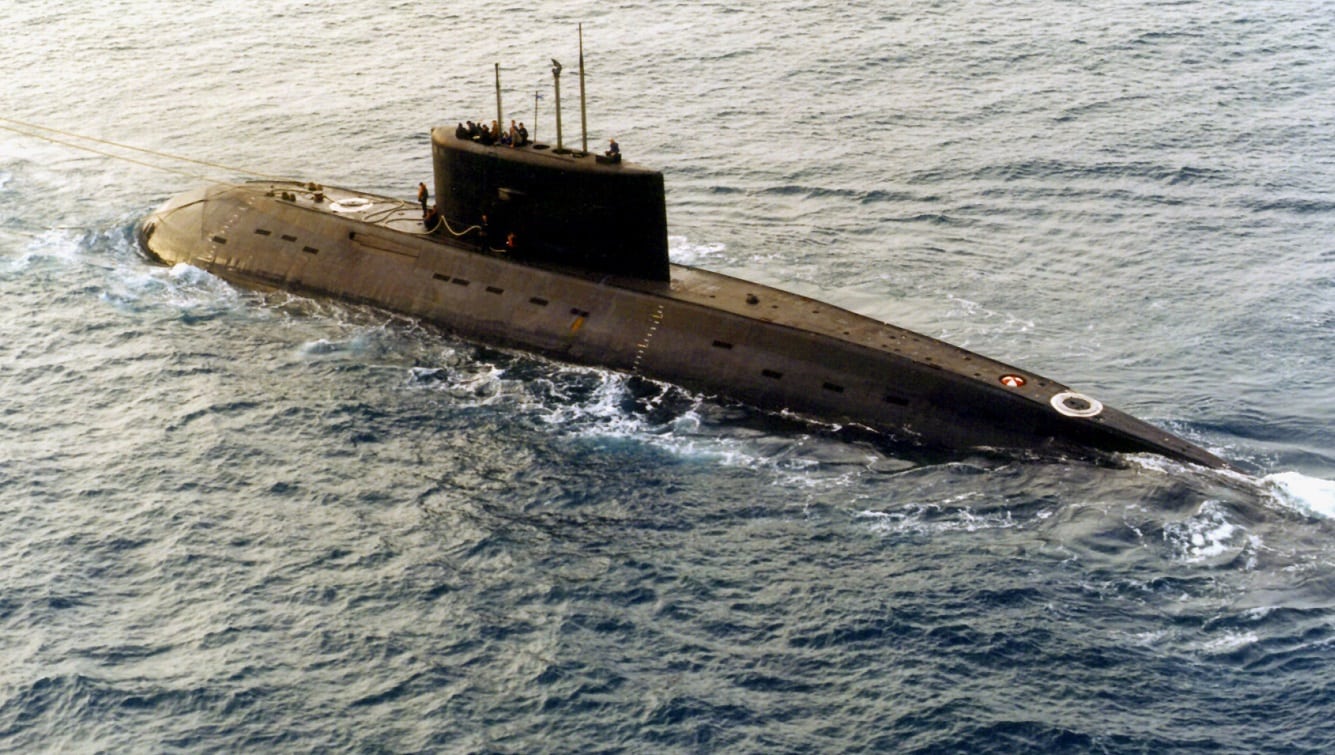
A Russian-built, Kilo-class diesel submarine purchased by Iran, is towed by a support vessel in this photograph taken in the central Mediterranean Sea during the week of December 23. The submarine and the support ship arrived at Port Said, Egypt, on Tuesday and were expected to begin transiting the Suez Canal today, Jan. 2, 1996. Ships and aircraft from the U.S. NavyÕs Sixth Fleet are tracking the submarine, which has been making the transit on the surface. This is the third Kilo-class submarine the Iranians have purchased from Moscow. DoD photo
The president proved his confidence that Iranian capabilities had been sufficiently degraded by announcing a U.S. government-backed insurance program through the U.S. Development Finance Corporation for commercial energy tankers and other vessels willing to transit through Hormuz.
In the same statement, Trump suggested that the U.S. Navy could also provide escorts for tankers if necessary, thereby addressing the potential economic fallout from vessels being prevented from passing for long periods.
However, the messaging is inconsistent between countries. Several governments are now urging their merchant fleets to avoid the strait altogether.
Greece’s shipping ministry and Britain’s maritime security authorities have advised vessels registered in their countries to delay voyages through the Hormuz until the security situation stabilizes.
“The developing situation affects the safety of navigation in the wider Persian Gulf, the Straits of Hormuz, the Gulf of Oman and the North Arabian Sea,” an advisory seen by Reuters reportedly reads.
About the Author: Jack Buckby
Jack Buckby is a British researcher and analyst specialising in defence and national security, based in New York. His work focuses on military capability, procurement, and strategic competition, producing and editing analysis for policy and defence audiences. He brings extensive editorial experience, with a career output spanning over 1,000 articles at 19FortyFive and National Security Journal, and has previously authored books and papers on extremism and deradicalisation.