
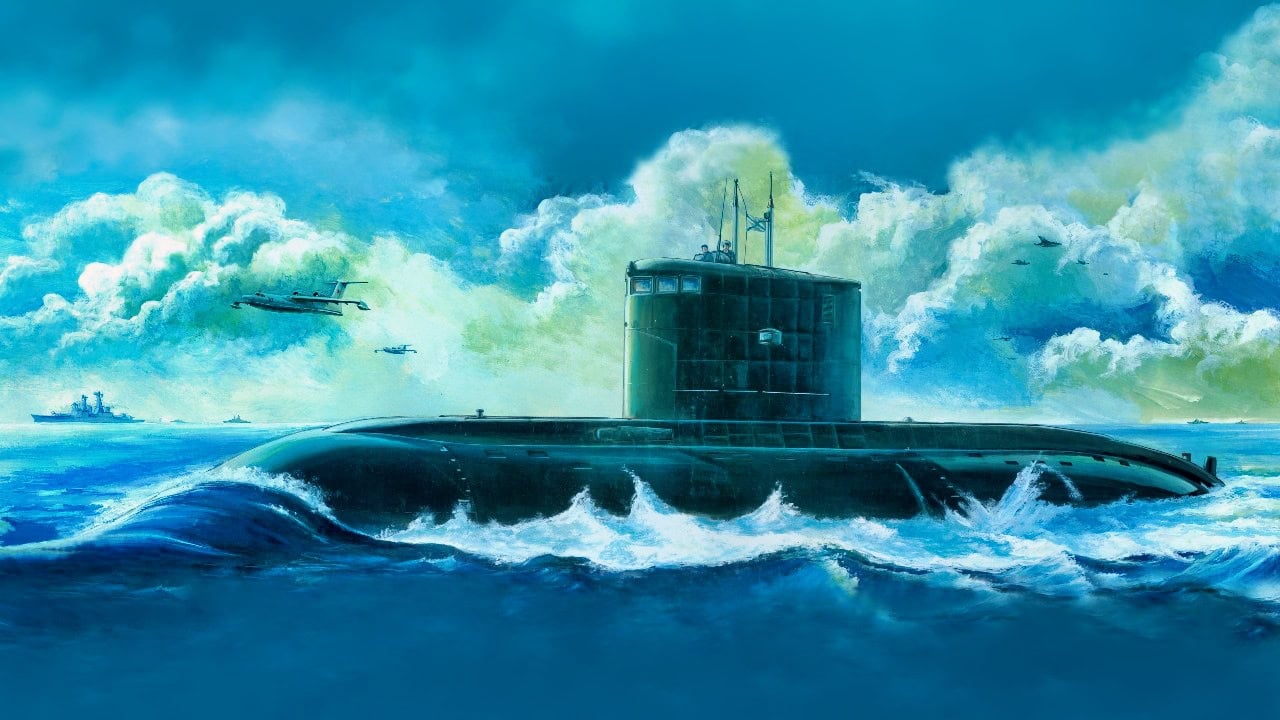
Russia’s “Black Hole” Subs Are Still Lethal—Ukraine Found the Weak Spot
The Kilo-class submarine is one of the most widely produced Soviet/Russian attack submarines.
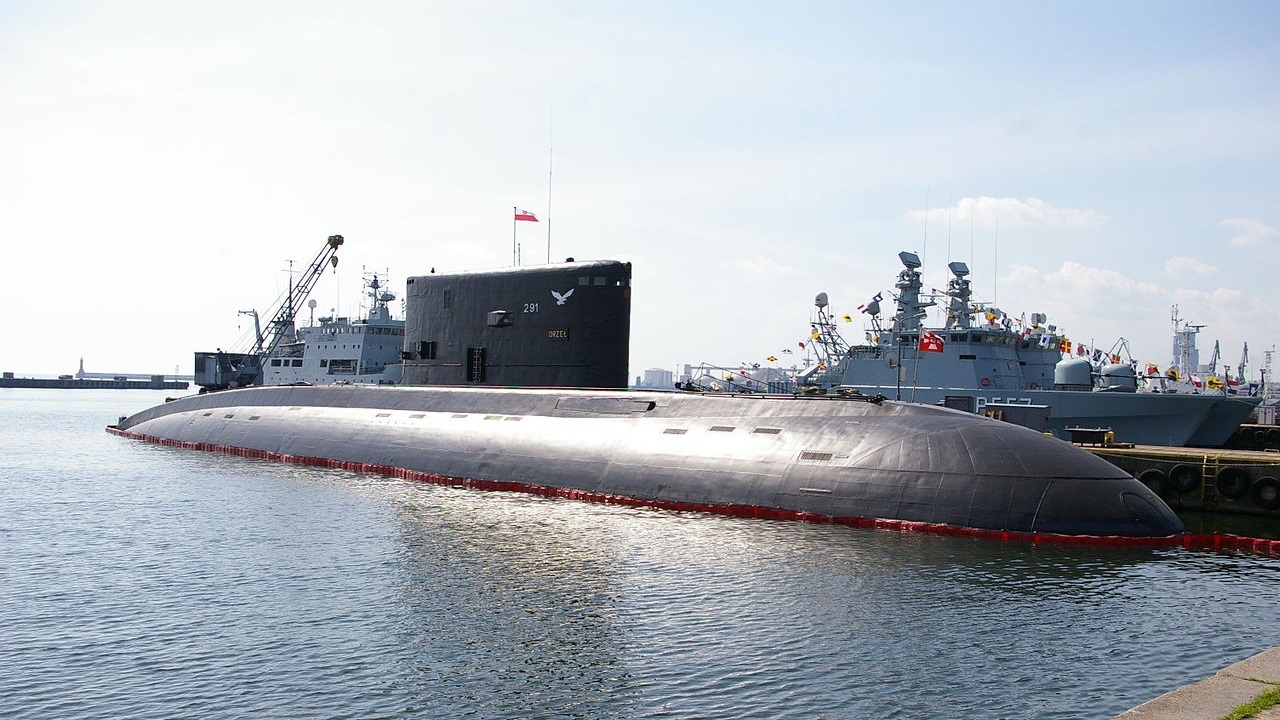
Polish Navy submarine, Kilo-Class.
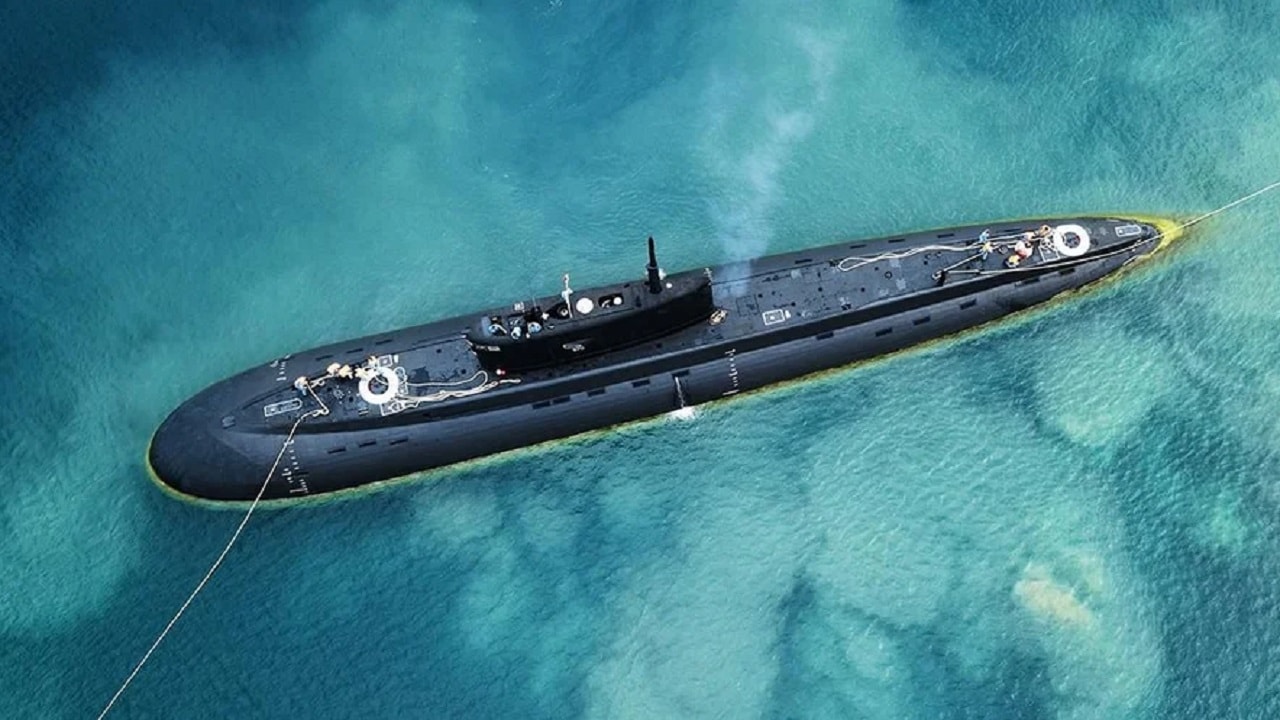
Kilo-Class Submarine. Image Credit: Creative Commons.
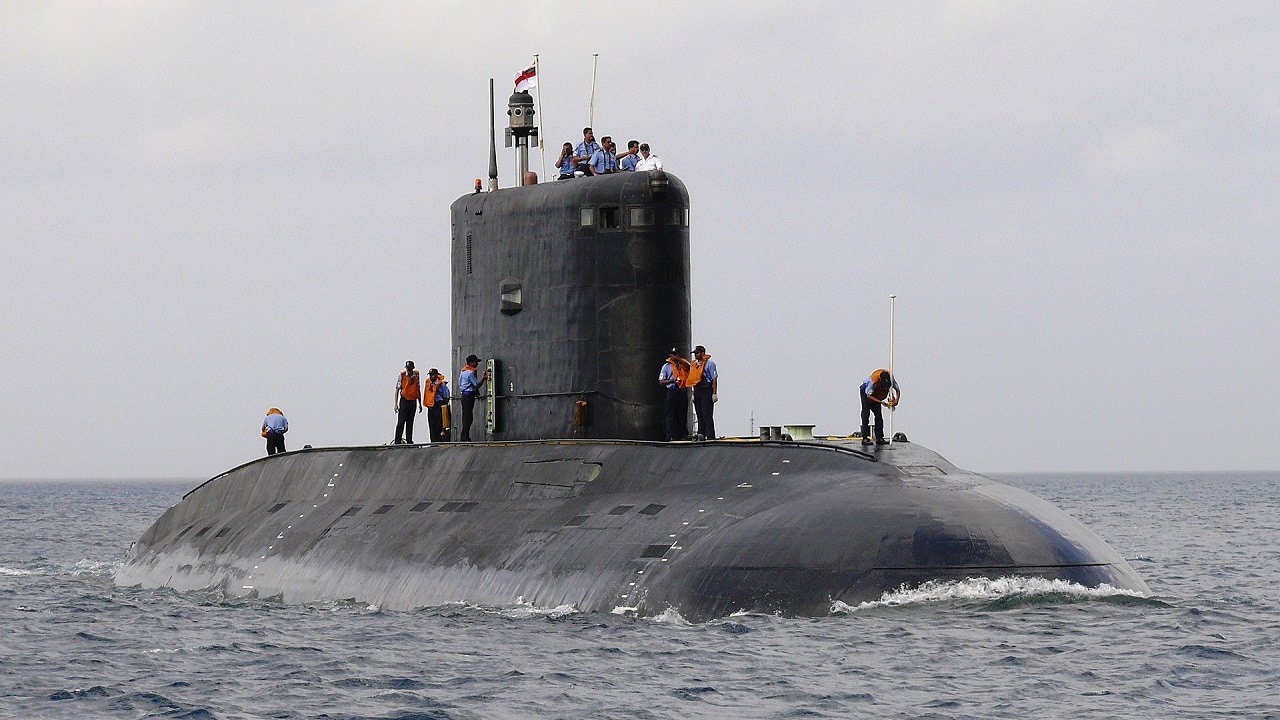
Kilo-Class Submarine.
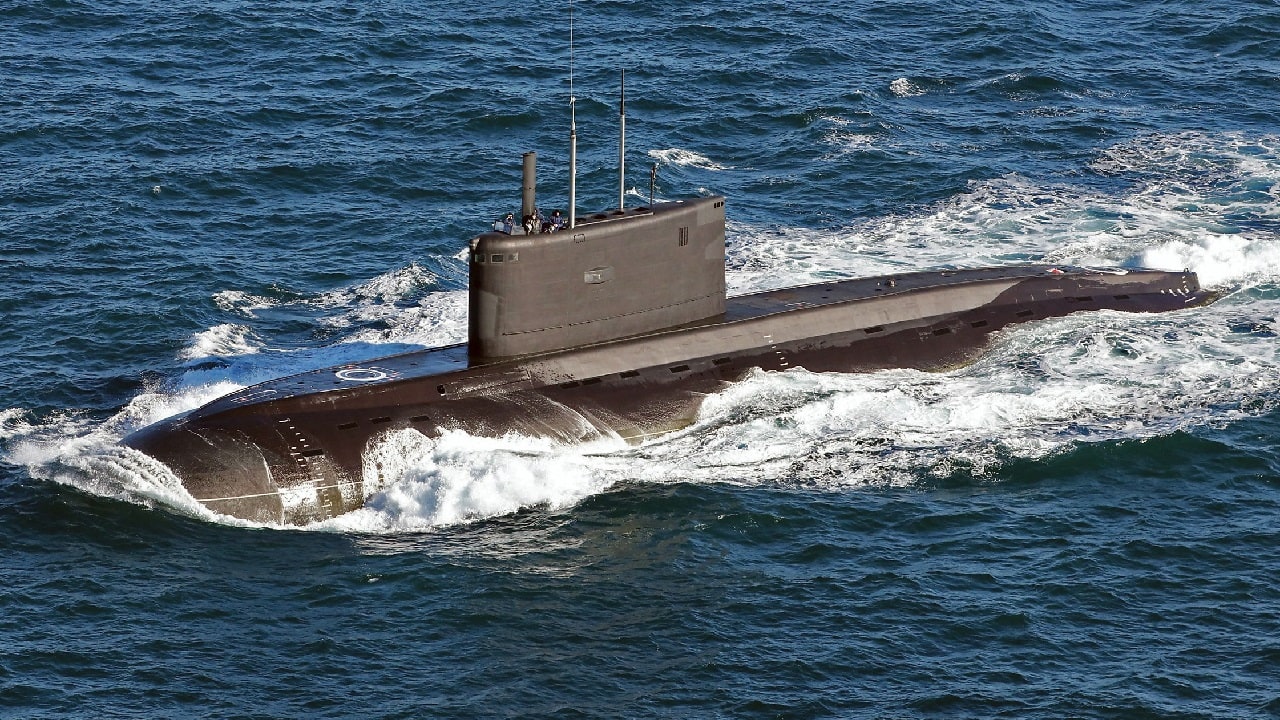
Pictured is a Kilo-Class Russian Submarine in the English Channel. The image was taken from Royal Navy Wildcat HMA2 Helicopter of 815 Naval Air Squadron. Kilo class is the NATO reporting name for the diesel-electric attack submarine.
Widely renowned for their stealth and low acoustic signatures, the Kilo-class remains in service with multiple navies worldwide despite the concept being several decades old.
The Russians currently field around twenty-three subs of various types in the Russian Navy, six of which are stationed in the Black Sea Fleet.
The Kilo-class has been used extensively in Russia’s missile attacks against Ukrainian infrastructure, and they continue to be a significant threat in the Black Sea.
However, Ukrainian asymmetrical attacks have revealed weaknesses in Russia’s naval defenses.
Development and Evolution of the Kilo-Class
From its inception, Project 877 was shaped by a design philosophy centered on silence, reliability, and utility in shallow, crowded littoral waters rather than the deep oceans traditionally dominated by nuclear-powered submarines.
The Soviet Navy needed a diesel-electric platform capable of patrolling the Baltic, Barents, and Black Seas.
To meet this need, engineers wrapped the Kilo’s hull in anechoic tiles that absorbed active sonar pulses and suppressed the vessel’s acoustic signature.
Internal machinery was suspended on shock-absorbing mounts to minimize vibrations, and the propeller was engineered to reduce cavitation when traveling at low speeds. The subs quickly earned the nickname “black hole” submarines from NATO due to their low-frequency acoustic performance and stealth features.
The success of the original Project 877 design led the Russian industry to expand and refine the class. After the dissolution of the Soviet Union, production continued into the mid-1990s, when a more advanced variant, known as Project 636 Varshavyanka, entered the scene.
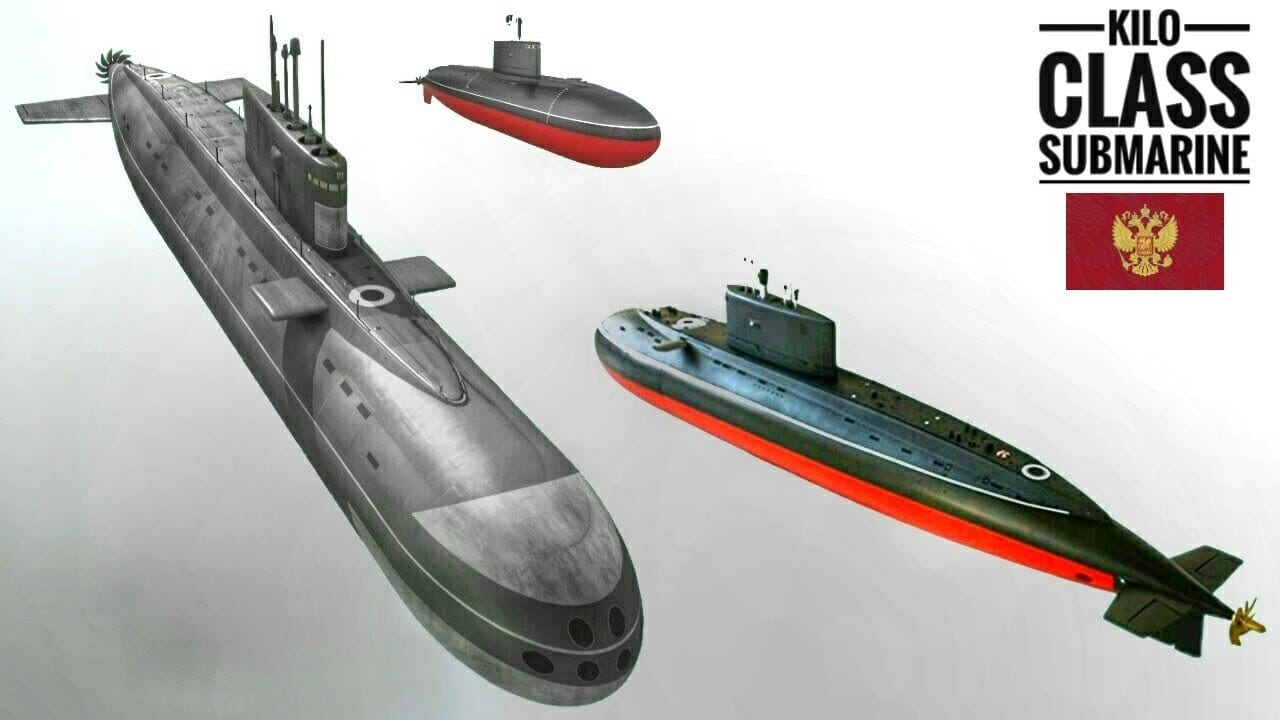
Kilo-class Submarine. Image Credit: Creative Commons.
This improved model offered quieter operation, enhanced navigation and sonar systems, and better reliability.
The evolution continued in the 2010s with the introduction of Project 636.3, often called the Improved Kilo II, which brought further refinements in stealth characteristics, combat systems, and long-range strike capability.
These iterative upgrades enabled the Kilo-class to remain operationally relevant even as global naval technologies advanced dramatically. In fact, persistent delays and technical problems with Russia’s Lada-class boats forced the Russian Navy to continue building and deploying new Kilo-class boats well past their intended due dates.
Specs and Capabilities
Throughout its evolution, the Kilo-class’s physical form remained remarkably consistent. Depending on the variant, the vessels measure between 72.6 and 73.8 meters in length and displace between 2,325 and 2,350 tons when surfaced, rising to 3,950 tons when submerged.
They rely on diesel-electric propulsion systems that combine two 1,000-kilowatt diesel generators with a main propulsion motor capable of producing 5,500-6,800 shaft horsepower. While they are not fast by nuclear-submarine standards, with maximum speeds of seventeen knots on the surface and twenty knots submerged, their range and endurance are well-suited for regional missions.
When fully submerged on battery power, they can travel approximately 400 nautical miles at three knots.
All Kilo variants feature six 533-millimeter torpedo tubes capable of deploying eighteen torpedoes or a combination of torpedoes and up to twenty-four naval mines. This makes the vessel highly capable of disrupting maritime chokepoints, targeting surface combatants, and engaging hostile submarines in coastal environments.
However, the most significant upgrade has been the integration of the Kalibr cruise missile family. Project 636.3 submarines routinely deploy Kalibr missiles in anti-ship, anti-submarine, and land-attack configurations.
These missiles employ a modular “matryoshka” design that allows different seekers and warheads to be interchanged depending on mission requirements. The missiles proved their strategic value through repeated use in Russia’s campaigns in Ukraine, where Kalibr strikes from Kilo-class submarines in the Black Sea targeted cities and infrastructure with significant effect.
The Kilo-Class in Action: Assessing Their Effectiveness
The Russian use the Kilo-class submarines mainly for routine patrols in international waters around the world, but they have taken part in a few combat operations. In 2015, five Kilo-class submarines were deployed to the naval facility in Tartus, Syria.
At least two of these submarines launched Kalibr cruise missiles at land targets in Syria. Since the full-scale invasion of Ukraine, the submarines stationed in the black sea have launched cruise missiles against land targets across Ukraine.
Kilo-class submarines still routinely partake in missile attacks against Ukraine, the last of which was reported on January 8th, 2026.
While not the most expensive targets, Kilo-class submarines based in the Black Sea are still highly valuable strategic targets for Ukraine, and multiple efforts have been made to sink them.
In 2023, the Submarine B-237 Rostov-on-Don was struck by a Storm Shadow cruise missile while it was undergoing maintenance in dry dock. The submarine was moved to another dry dock to undergo repairs when it was hit in another attack, where Ukraine claimed to have sunk it (how one sinks a ship that is in a dry dock remains a mystery). Satellite imagery showed damage to the camouflage cover put over the dry dock; the true extent of the damage was never revealed.
In December 2025, the Security Service of Ukraine (SBU) reported that it had struck and sunk a Kilo-class submarine while it was docked in Novorossiysk with an unmanned underwater vehicle (UUV).
Satellite imagery revealed that the drone had struck the dock, missing the submarine by about 20 meters. The ship likely suffered damage from the explosion, the extent of which is unknown. Of the six Kilo-class submarines stationed in the Black Sea, two have sustained damage of varying degrees thanks to Ukrainian attacks.
While the Russians downplay these attacks, Ukraine has constantly managed to bypass Russia’s Black Sea defenses and inflict significant (though admittedly non-lethal) damage on significant assets.
About the Author: Isaac Seitz
Isaac Seitz, a Defense Columnist, graduated from Patrick Henry College’s Strategic Intelligence and National Security program. He has also studied Russian at Middlebury Language Schools and has worked as an intelligence Analyst in the private sector.