
Can Iran Really Close The Strait Of Hormuz? Here’s How It Would Try: Summary and Article Key Points
-Iran can disrupt the Strait of Hormuz—but fully closing it is a different story.
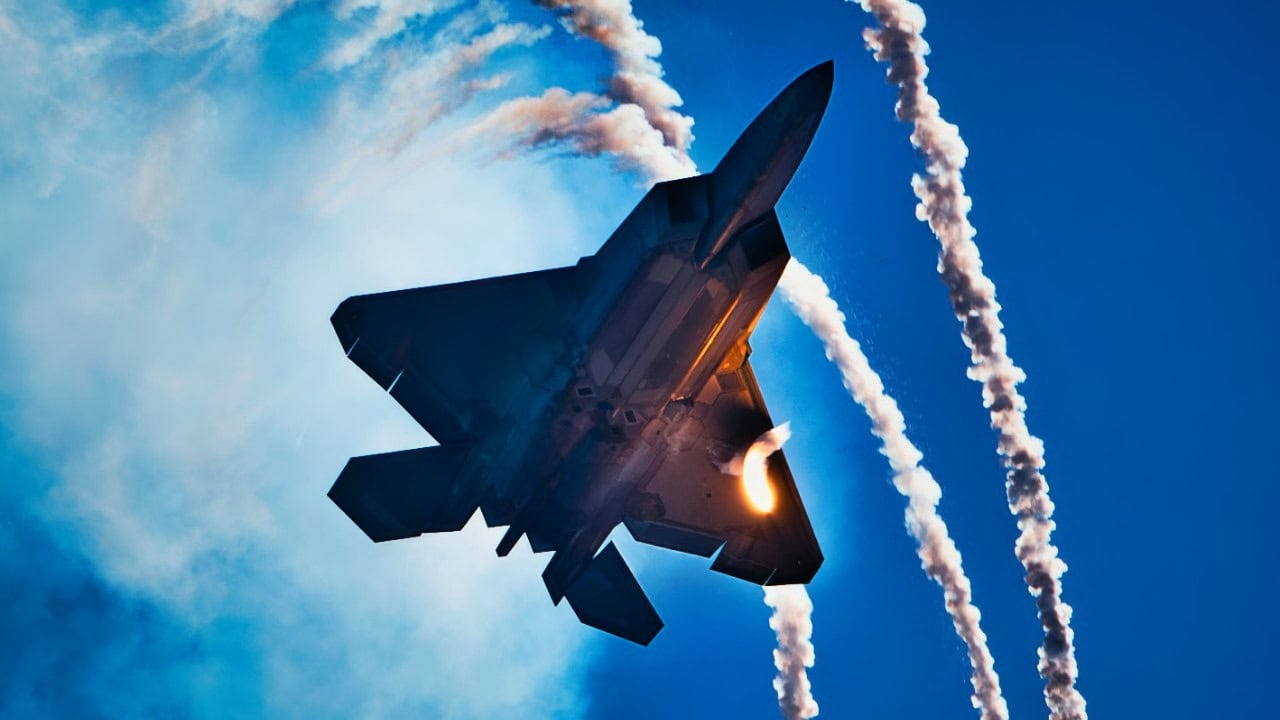
A U.S. Air Force F-22 Raptor, flown by Capt. Samuel “Razz” Larson, F-22 Raptor Demonstration Team pilot, deploys flares over the Gulf of Mexico during the 2024 Gulf Coast Salute Air Show at Panama City Beach, Florida, May 4. The F-22’s unique combination of stealth, speed, agility and situational awareness, combined with lethal long-range air-to-air and air-to-ground weaponry, makes it one of the most advanced fighters in the world. (U.S. Air Force photo by Staff Sgt. Stefan Alvarez)
-The most dangerous option is sea mines, supported by fast attack craft, submarines, and shore-based missiles that can harass tankers and increase insurance and risk to the point that shipping slows or reroutes. Even short disruptions could jolt energy markets because the usable tanker lanes are narrow, despite the strait’s overall width.
-The tradeoff is steep: a sustained shutdown would also choke Iran’s own exports and invite a rapid U.S.-led effort to reopen the route.
-China, the biggest buyer of Iranian oil, would feel the pain immediately—making Tehran’s leverage inherently self-limiting.
Can Iran Close The Strait Of Hormuz? And What Would Happen?
The Islamic Republic of Iran has the capability to temporarily disrupt or partially close the narrow Strait of Hormuz using naval mines, fast attack boats, and missiles, as seen in, for example, military exercises on Tuesday.
Iran is again rattling its saber with the backdrop of US-Iranian talks ongoing in Geneva. While Oman’s Foreign Minister Badr Albusaidi said there had been “good progress towards identifying common goals and relevant technical issues,” most analysts believe Iran is simply stalling for time.
However, a full or permanent closure is unlikely, as it would severely harm Iran’s economy and provoke a significant, likely swift, military response from Western navies to reopen the vital, 21-mile-wide waterway.
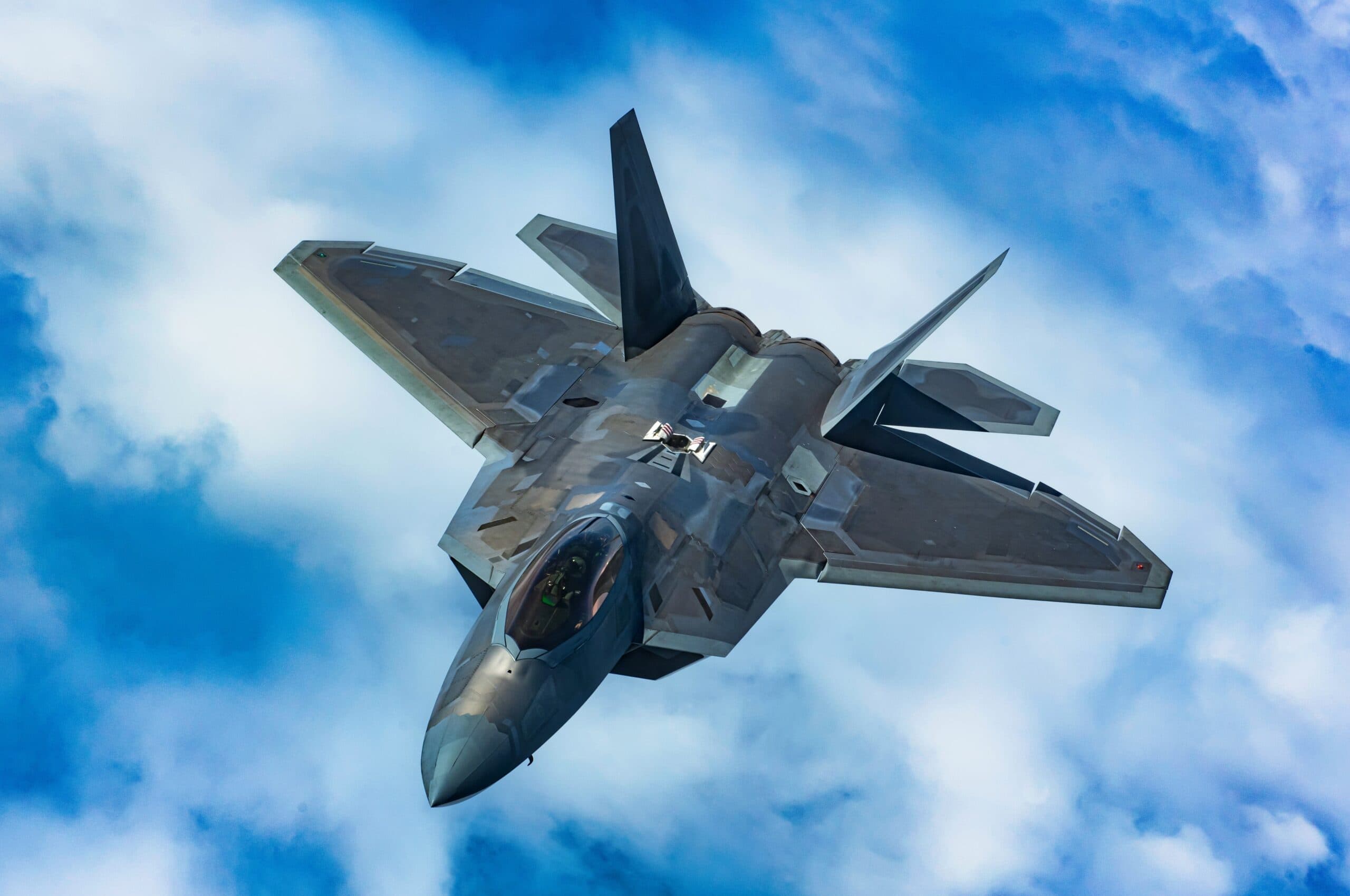
A Hawaii Air National Guard F-22 Raptor pulls away from a KC-135 Stratotanker after receiving fuel April 21, 2021, near Oahu, Hawaii. The fifth-generation aircraft, operated by Airmen from the 199th and 19th Fighter Squadrons, integrated with a Royal Australian Air Force command-and-control aircraft during exercise Pacific Edge 21. The exercise was held to enhance air-combat proficiencies through the integration of allied units and further the interoperability between the two countries’ aircraft. (U.S. Air National Guard photo by Staff Sgt. John Linzmeier)
However, despite this width, the shipping lanes for inbound and outbound tanker traffic are only 2 miles wide in each direction, separated by a 2-mile buffer zone.
The US has an aircraft carrier strike group, the USS Abraham Lincoln (CVN-72), in the region and another, the USS Gerald Ford (CVN-78), on the way.
Iran Partially Closes The Strait For Military Drills
Citing “security precautions,” the Iranians partially closed the Strait of Hormuz on Tuesday, state media reported, as Iran’s Islamic Revolutionary Guard Corps (IRGC) conducted military exercises, ostensibly aimed at ensuring shipping safety as part of the Revolutionary Guard’s “Smart Control of the Strait of Hormuz” drill.
“The exercise establishes a live firing exercise area overlapping the inbound part of the Strait of Hormuz’s Traffic Separation Scheme, and requests that shipping keep clear of the area for the duration of a few hours,” Jakob Larsen, the chief safety and security officer at BIMCO, representing global shipowners, said.
“Given the level of tension in the area, it is expected that commercial shipping will comply with the Iranian request to keep clear of the exercise area,” he added.
About 13 million barrels per day of crude oil transited the Strait of Hormuz in 2025, accounting for roughly 31 percent of global seaborne crude flows, according to data from market intelligence firm Kpler, and reported by CNBC.

MQ-25 Boeing Drone U.S. Navy Aircraft Carriers. Image Credit: Boeing.
How Iran Could Close the Strait
The Strait of Hormuz is one of the world’s most important shipping routes and its most vital oil transit chokepoint. It is bordered to the north by Iran and to the south by Oman and the United Arab Emirates (UAE).
Iran’s closing the Strait, even for a short time, would hurt the global oil market, driving prices up. However, Iran exports about 1.7 million barrels per day, according to the International Energy Agency. And 90 percent of Iran’s oil goes to China.
Beijing wouldn’t look too kindly on having its oil supply cut off. But how would Iran close the Strait?
US Secretary of State Marco Rubio has stated that Iran’s closure of the Strait of Hormuz would amount to “economic *******” and called on China to intervene.
“I encourage the Chinese government in Beijing to call them [Iran] about that, because they heavily depend on the Strait of Hormuz for their oil,” Rubio said in an interview with Fox News last June.
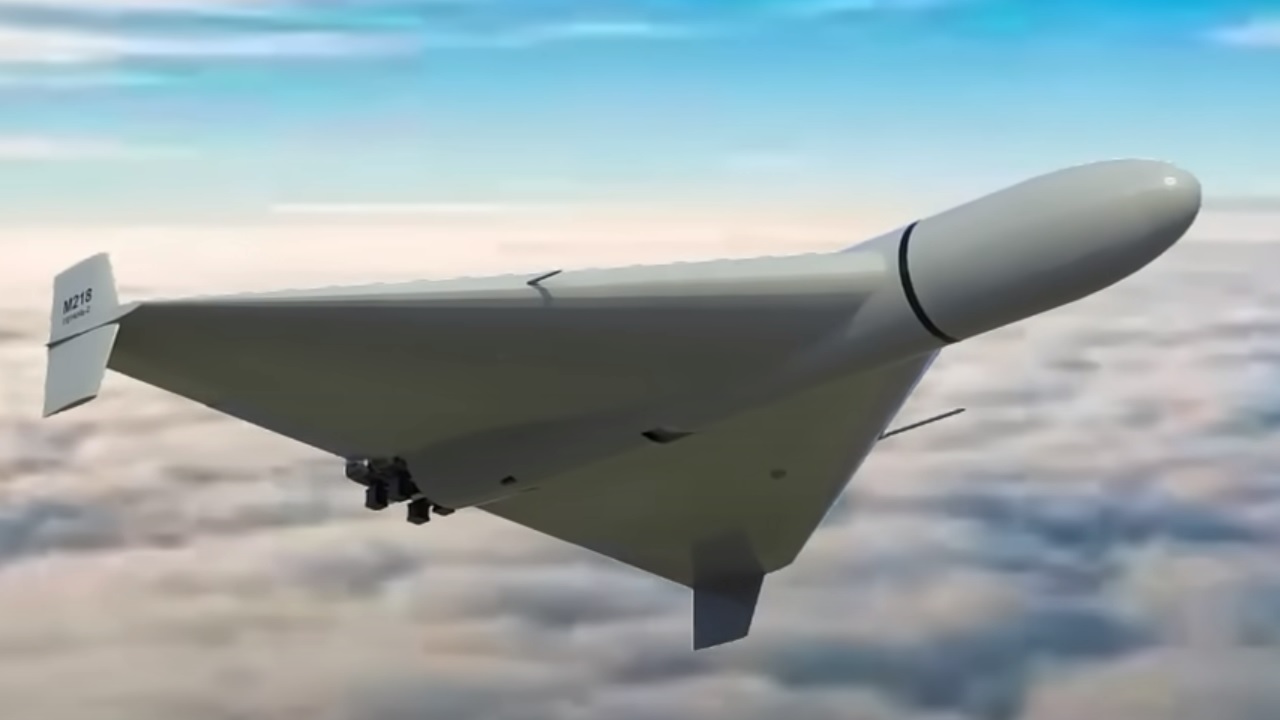
Shahed-136 Drone. Image Credit: YouTube Screenshot.
“We retain options to deal with that, but other countries should be looking at that as well. It would hurt other countries’ economies a lot worse than ours.”
Iran’s Navy and Islamic Revolutionary Guard Corps (IRGC) could utilize small fast-attack craft, submarines, and anti-ship missiles.
However, the most effective method would be to lay sea mines, making the route too dangerous for commercial oil tanker traffic.
The IRGC has regularly harassed ships and forced them into Iranian-controlled territorial waters, as reported in June 2025. And potentially launch attacks on foreign warships and commercial vessels.
Global Impact and Constraints
Global consequences and strategic risks for Iran would immediately ensue. A prolonged closure could threaten the Iranian regime itself by triggering a large-scale response with the U.S. and allies, and it would also hinder Iran’s own oil exports.
While Iran frequently threatens to close the Strait as leverage in geopolitical disputes, a full closure is considered a high-risk move that has not been executed in modern times, with most disruptions being temporary.
Iran Fires Missiles Into The Strait
The semi-official Tasnim news agency, which is close to the paramilitary Revolutionary Guard, said missiles launched inside Iran and along its coast had struck their targets in the Strait of Hormuz.
Iran announced that the IRGC began missile drills early Monday morning in the Strait of Hormuz, the Persian Gulf, and the Gulf of Oman, which are crucial international shipping routes.
It is the second time in recent weeks that Iran has held a live-fire drill in the Strait of Hormuz.
Iranian state television broadcast images from the exercise, and showed military ships launching missiles aimed at “destroying enemy aerial targets,” the reporter said.
The launches include the Sayyad 3F surface-to-air missile, which has a range of 150km, he added.
Upgrades to missile warheads mean that the “intensity of destruction and damage to enemy [naval] destroyers is greater than before. New guidance systems mean these missiles can attack their targets from any direction and location,” the reporter added.
The commander of the IRGC Navy was quoted as saying, “The weapon that reaches the battlefield on the day of war is different from what is shown in the exercise.”
About the Author: Steve Balestrieri
Steve Balestrieri is a National Security Columnist. He served as a US Army Special Forces NCO and Warrant Officer. In addition to writing on defense, he covers the NFL for PatsFans.com and is a member of the Pro Football Writers of America (PFWA). His work was regularly featured in many military publications.