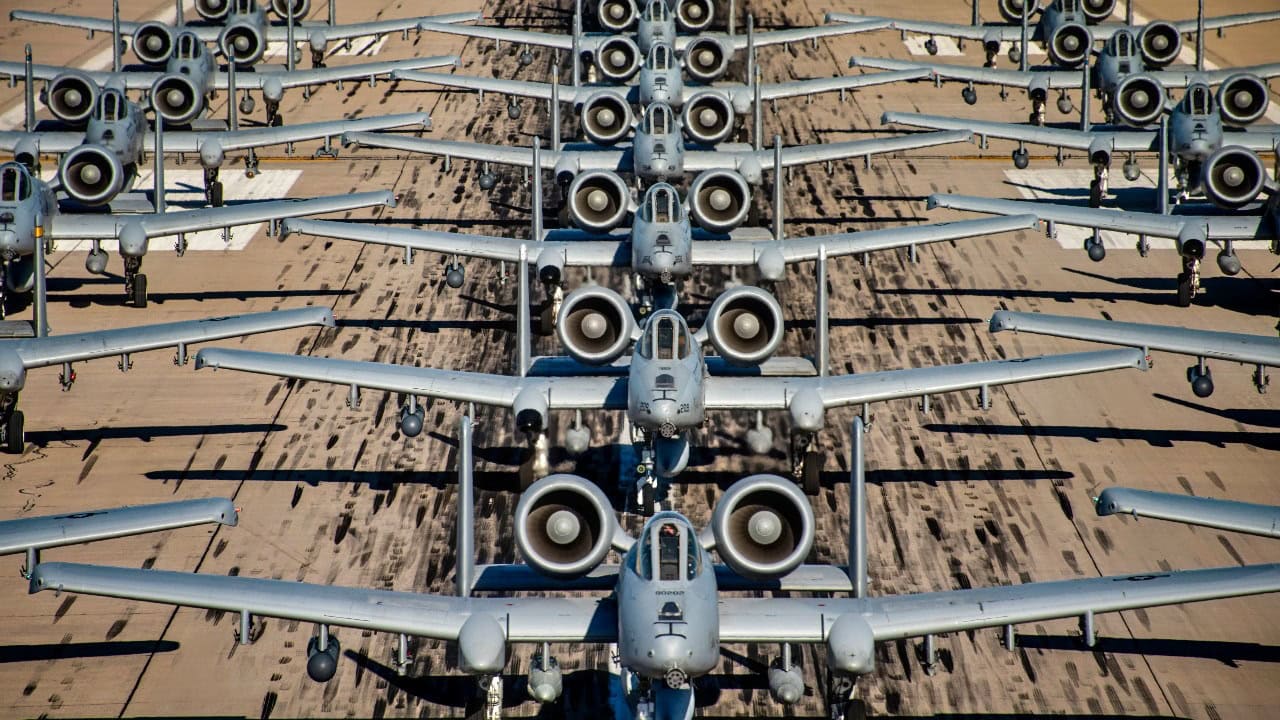
Summary and Key Points: The A-10 Warthog, a Cold War-era legend, has found a second life as a critical naval asset in the Persian Gulf.
-Tasked with hunting Iranian IRGC minefields and defending against fast-attack “swarm boats,” the A-10 provides a low-cost, high-impact counter to asymmetrical threats.
-Operating alongside Littoral Combat Ships like the USS Santa Barbara, the Warthog’s GAU-8 Avenger cannon and scouting capabilities offer a unique shield for more expensive surface vessels.
-Despite its vital role in preventing the mining of the Strait of Hormuz, the Air Force remains committed to retiring the fleet by 2029.
Why the U.S. Navy is Using the A-10 Warthog to Hunt Iranian Mines
One of the oldest jet fighter aircraft still in service with the U.S. Air Force performs a vital function, but for the U.S. Navy. Its role may be a key to the success of what is widely anticipated to be a large-scale, multinational series of decapitating strikes against the Iranian security services and the Islamic Revolutionary Guard Corps (IRGC).
That aircraft is the A-10, and its participation supports more modern and stealthy combat aircraft—plus surface vessels—that would be involved in dropping or launching ordnance on the Islamic Republic.
The main concern is that Iran could mine the Strait of Hormuz, as well as areas of the Persian Gulf and the North Arabian Sea. Navy ships that would operate there also would face the threat of attack by swarms of fast boats belonging to the IRGC, some of which also carry missiles.
The A-10 may now hunt these mines and potentially defend against these boat swarms.
No other aircraft can perform this mission. And in terms of operational cost, the A-10 is the cheapest aircraft per flight hour in the Air Force inventory. So why does the Air Force senior leadership never stop trying to retire this aircraft? The plan now is for the A-10 to be gone by 2029. But, as one A-10 pilot said recently, “If the higher-ups can find a way to do it sooner, they will retire it sooner.”
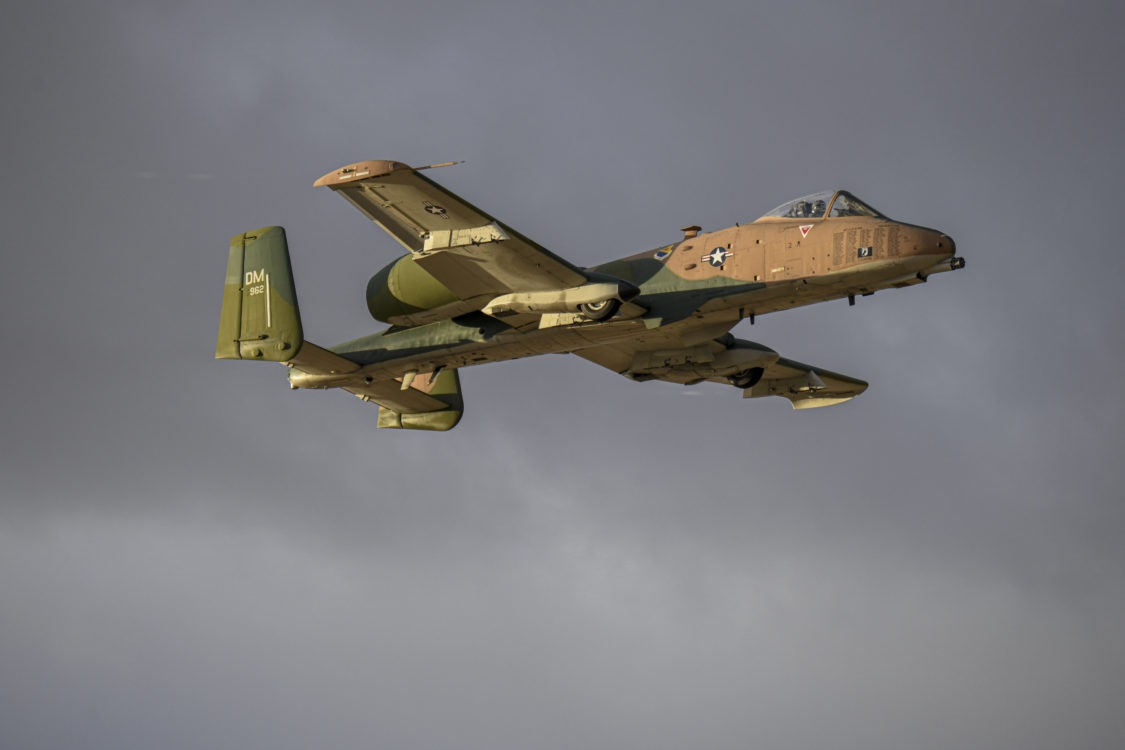
A U.S. Air Force A-10 Thunderbolt II flies over Davis-Monthan Air Force Base, Arizona, Feb. 17, 2022. The A-10 Demonstration Team’s jet has a heritage paint job to pay tribute to the 355th Tactical Fighter Wing’s contributions in the Vietnam War, including special dedication to personnel who were killed in action or became prisoners of war. (U.S. Air Force photo by Senior Airman Jacob T. Stephens)
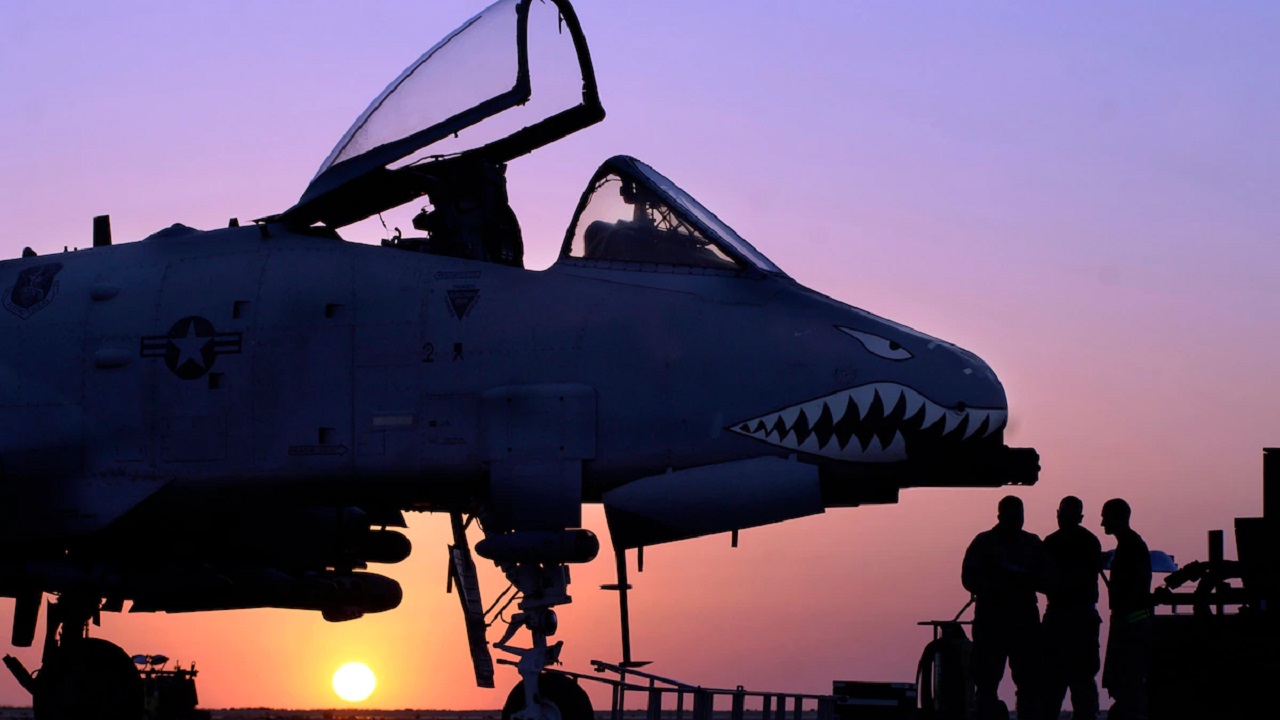
A-10 Warthog Sunset. Image Credit: Creative Commons.
Like Getting Paid for Breaking Windows
The A-10 is one of the most loved aircraft by pilots in the history of modern jet-powered combat. Its users describe it as a “gun built around a plane.”
The overall sentiment is that the missions and capabilities of the aircraft are what many combat pilots can only dream about.
And others besides pilots also think the world of the A-10. Almost four years ago, Popular Mechanics published a feature on the aircraft, prompting this response from one of its readers:
“As a former Army ground pounder, I can tell you there are few better sights than some A10’s streaking over, hitting some ground targets with that big gun, then banking hard…. little dots leaving them and heading down… the aircraft still leaving hard and roaring… and then the ground just exploding from all the cluster bombs. Wow! Right up there with the drama of overhead heavy artillery going over, then down in front of you. The shock waves go right through you.”
The Gulf Mission
The aircraft has two basic naval support missions.
One is to scout for the small, swarming boats that can threaten naval vessels in the gulf. In 2017, a Houthi drone boat successfully attacked a Saudi frigate in the Red Sea, demonstrating how much damage a small, cheap boat can do to a big, expensive one.
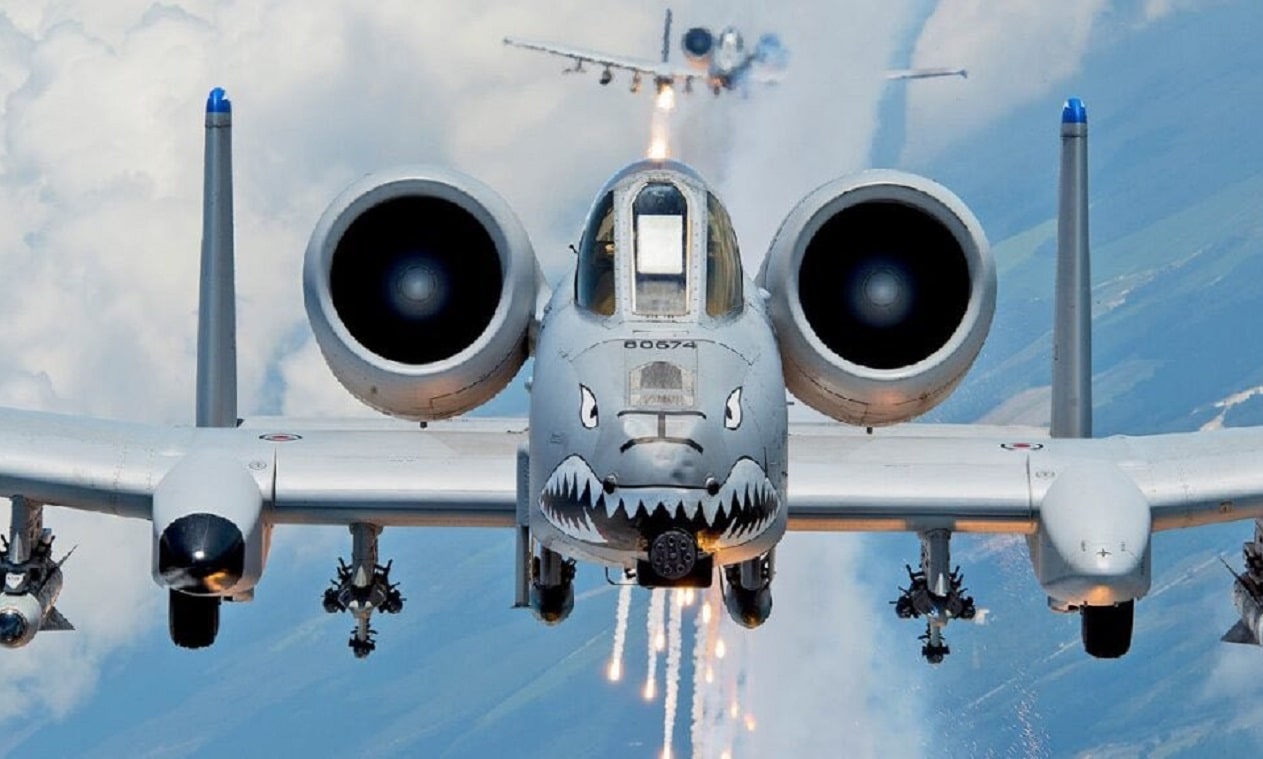
A-10 Warthog. Image Credit: Creative Commons.
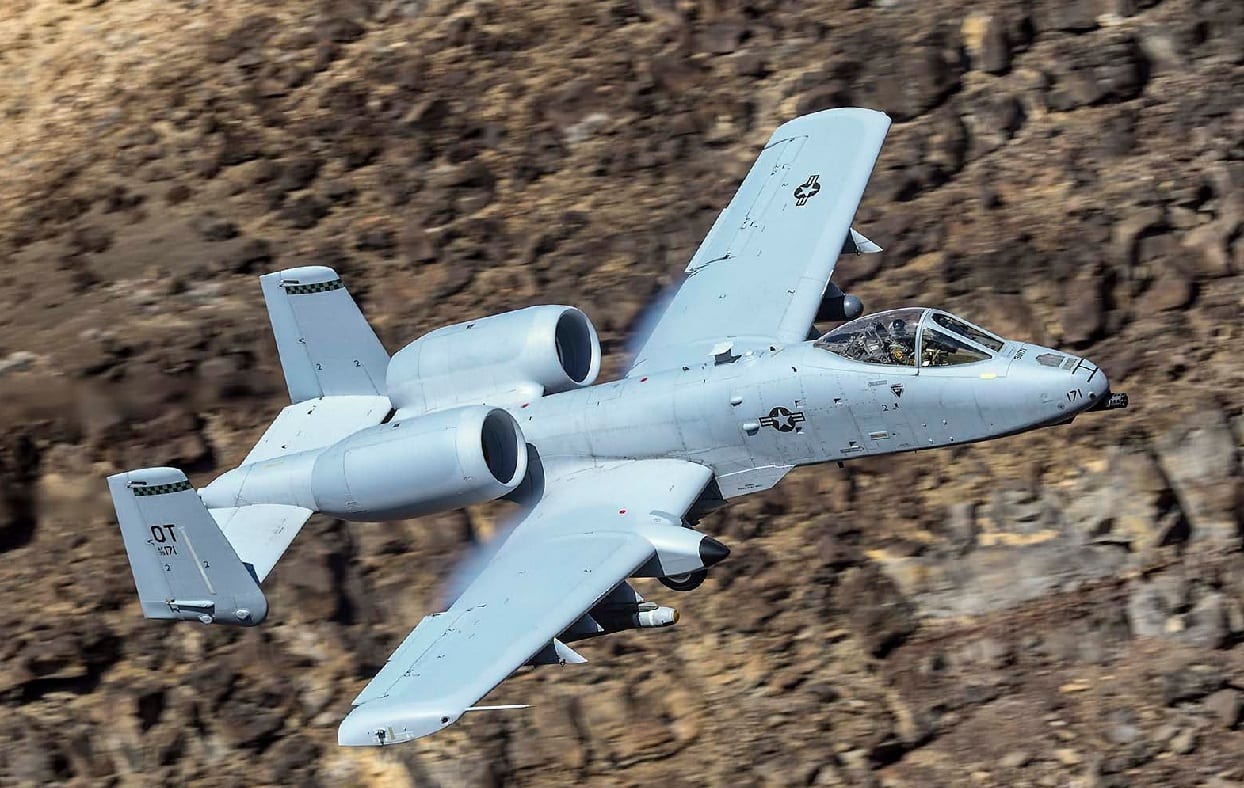
A-10 Warthog. Image: Creative Commons.
The other mission is aiding the mine-hunting U.S. Navy ships. Recent photos released by U.S. Central Command show one A-10 attack jet on mine-hunting maneuvers and exercising with the USS Santa Barbara (LCS-32), an Independence-class littoral combat ship.
Mine hunting is critical, but the A-10 can also prevent mines from being dropped into the water in the first place. This is a very high-priority mission: interdicting IRGC boats before they can sow minefields.
The Air Force is in a hurry to divest the A-10, while the Navy may want to retain the aircraft for as long as possible.
About the Author: Reuben F. Johnson
Reuben F. Johnson has thirty-six years of experience analyzing and reporting on foreign weapons systems, defense technologies, and international arms export policy. Johnson is the Director of Research at the Casimir Pulaski Foundation. He is also a survivor of the Russian invasion of Ukraine in February 2022. He worked for years in the American defense industry as a foreign technology analyst and later as a consultant for the U.S. Department of Defense, the Departments of the Navy and Air Force, and the governments of the United Kingdom and Australia. In 2022-2023, he won two awards in a row for his defense reporting. He holds a bachelor’s degree from DePauw University and a master’s degree from Miami University in Ohio, specializing in Soviet and Russian studies. He lives in Warsaw.