
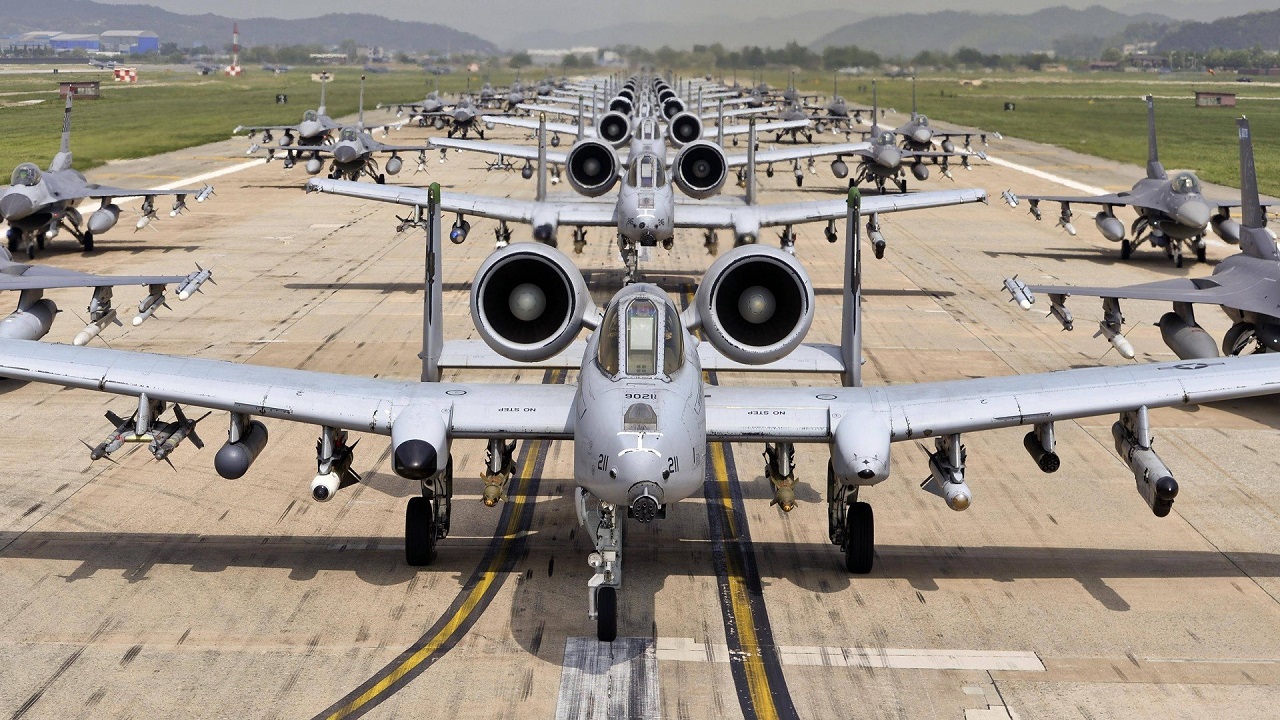
Key Points and Summary – The A-10 Warthog endures because it does one job exceptionally well: close air support. It can loiter, fly low enough to visually confirm targets, work tightly with JTACs, and deliver precise firepower—especially with the iconic GAU-8 cannon.
-Its rugged design and redundant systems helped it survive in Iraq and Afghanistan, and its operating costs are lower than fifth-generation fighters for permissive CAS.

A-10 Warthog. Image Credit: Creative Commons.
-But the retirement push isn’t about nostalgia—it’s about modern realities.
-Dense air defenses, ubiquitous MANPADS, drones, and networked sensors make “low and slow” increasingly dangerous. The Army-transfer idea sounds neat, but the Army has shown little appetite for owning a fixed-wing CAS fleet.
The A-10 Warthog Is Still Loved—But Can It Survive Modern Air Defenses?
The A-10 Thunderbolt II, or A-10 Warthog, is a beloved and iconic strike aircraft from the Late Cold War period. Originally designed in the 1970s, the A-10 was intended to provide close air support for ground forces against a wide variety of threats, including heavily armored tanks. The aircraft first made a name for itself in the Gulf War and the following wars in Iraq and Afghanistan, where it was used in counterterrorism operations. Currently, the A-10 is slated for retirement, but many of its advocates argue that this is a mistake and should be reconsidered.
Why the Warthog is so Beloved
The debate around the A-10 has been ongoing for decades, but there are compelling arguments for keeping and maintaining the Warthog. Unlike multirole fighters such as the F-35 or F-16, which prioritize air superiority and strike missions, the A-10 excels at loitering over the battlefield and engaging targets near friendly troops.
Its GAU-8/A Avenger cannon remains unparalleled for destroying armored vehicles and fortified positions.
The aircraft’s ability to fly slowly and at low altitudes allows pilots to visually identify targets and minimize collateral damage, especially in urban or complex terrain. Decades of operational experience have made A-10 pilots experts at working with Joint Terminal Attack Controllers (JTACs), enabling rapid, accurate strikes that save lives on the ground.
Another significant advantage of the A-10 is its survivability. The aircraft was engineered to withstand damage in high-threat environments, a feature that remains relevant even today. Its titanium “bathtub” protects the pilot, and redundant flight systems keep it operational even after heavy damage.
Historical combat data from Iraq and Afghanistan shows that A-10s often returned to base after absorbing hits that would down other aircraft. This resilience is invaluable in contested environments where surface-to-air threats are present.
While advanced air defenses pose challenges, the A-10’s ability to operate from austere airfields and withstand damage makes it suitable for scenarios where forward operating bases are critical.
Is the A-10 Still Relevant?
The Warthog is also significantly easier and cheaper to maintain than many other fighters. Modern aircraft like the F-35 are technologically advanced, but they come with enormous procurement and operating costs. The A-10 offers a far more economical solution for CAS missions. It costs significantly less per flight hour than fifth-generation fighters, and for missions that do not require stealth or supersonic speed, deploying an F-35 is inefficient.
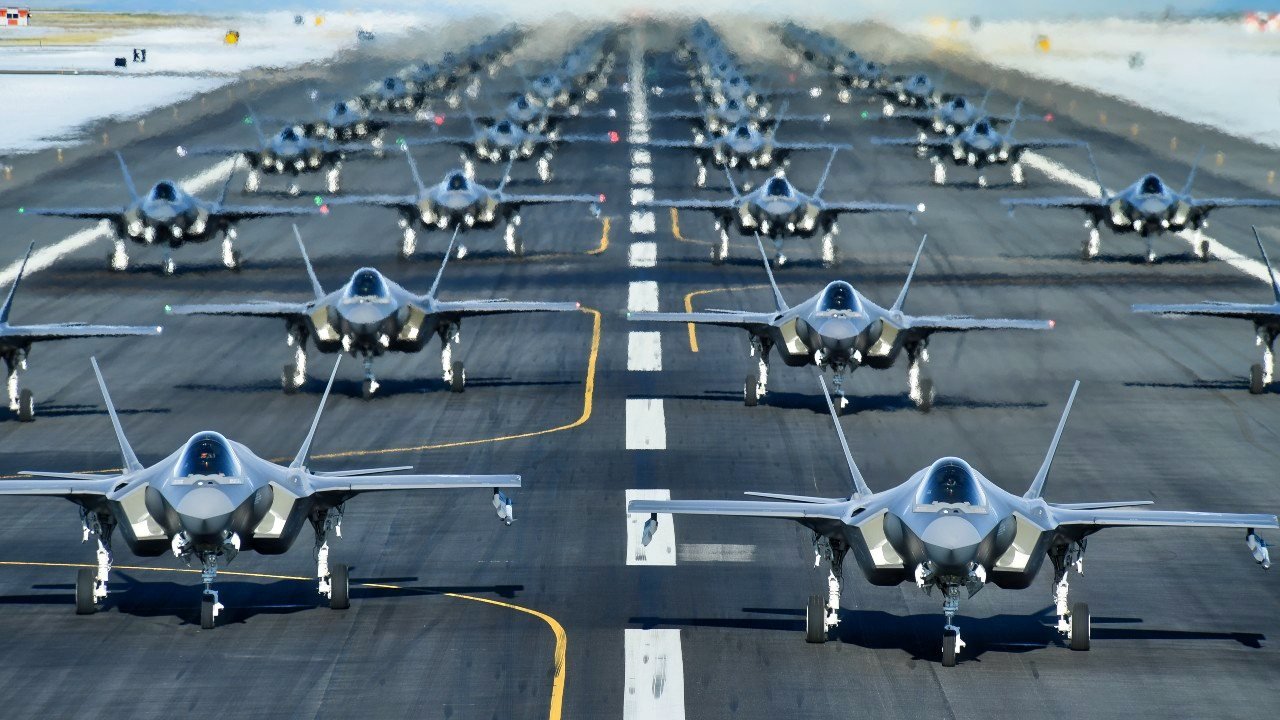
F-35 Elephant Walk. Image Credit: Creative Commons.
The A-10 fleet is already paid for, and modernization programs such as wing replacements and avionics upgrades can extend its life at a fraction of the cost of new aircraft. Retaining the A-10 allows the Air Force to allocate resources to other modernization priorities without sacrificing CAS capability.
Additionally, the A-10 has a long service history during which it has proved itself again and again. During Operation Desert Storm, A-10s destroyed thousands of Iraqi vehicles and artillery pieces, demonstrating their value in large-scale conventional warfare.
In Afghanistan and Iraq, A-10s provided persistent CAS in rugged terrain, supporting troops in firefights where precision and endurance were essential. The psychological impact of the A-10 should not be underestimated either; its distinctive sound and presence overhead boost troop morale and deter enemy forces.
Operational flexibility is another key advantage. The A-10 can operate from short, unimproved runways and has a long loiter time, making it ideal for expeditionary operations. In conflicts where infrastructure is degraded or contested, the A-10 can operate closer to the front lines than most jets. Its ability to carry a wide range of munitions, including precision-guided bombs, rockets, and missiles, makes it versatile for different mission profiles.
Can the Army Save the A-10 Warthog?
Some advocates of the A-10 argued that the aircraft should be transferred to the Army, since its primary role is close air support, which aligns more closely with the Army’s priorities. The US Army does operate a small inventory of aircraft, though it primarily consists of helicopters and transport aircraft. This would keep the A-10 around for a while longer, especially when the threat of a great power war is looming around the corner.
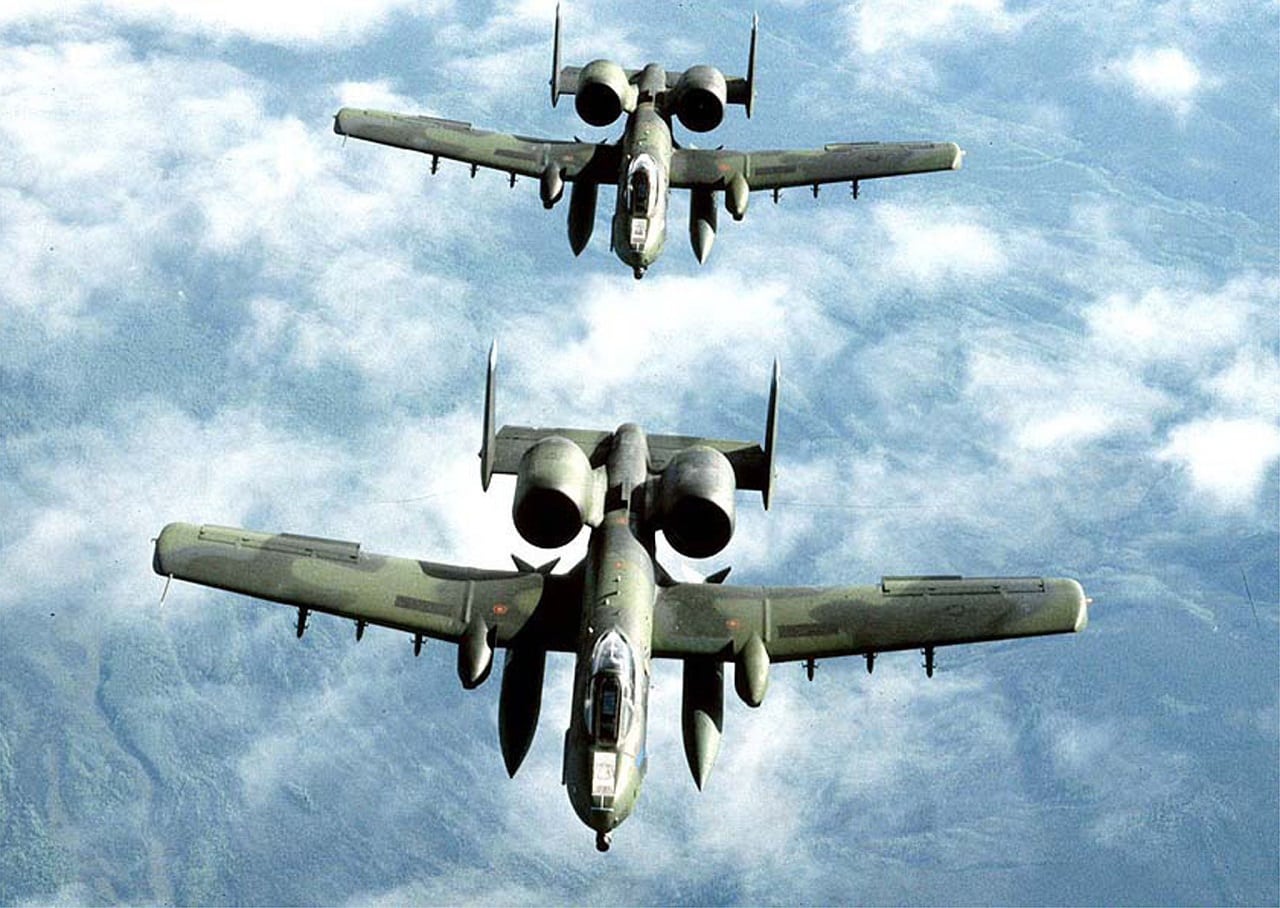
A-10 Warthog.
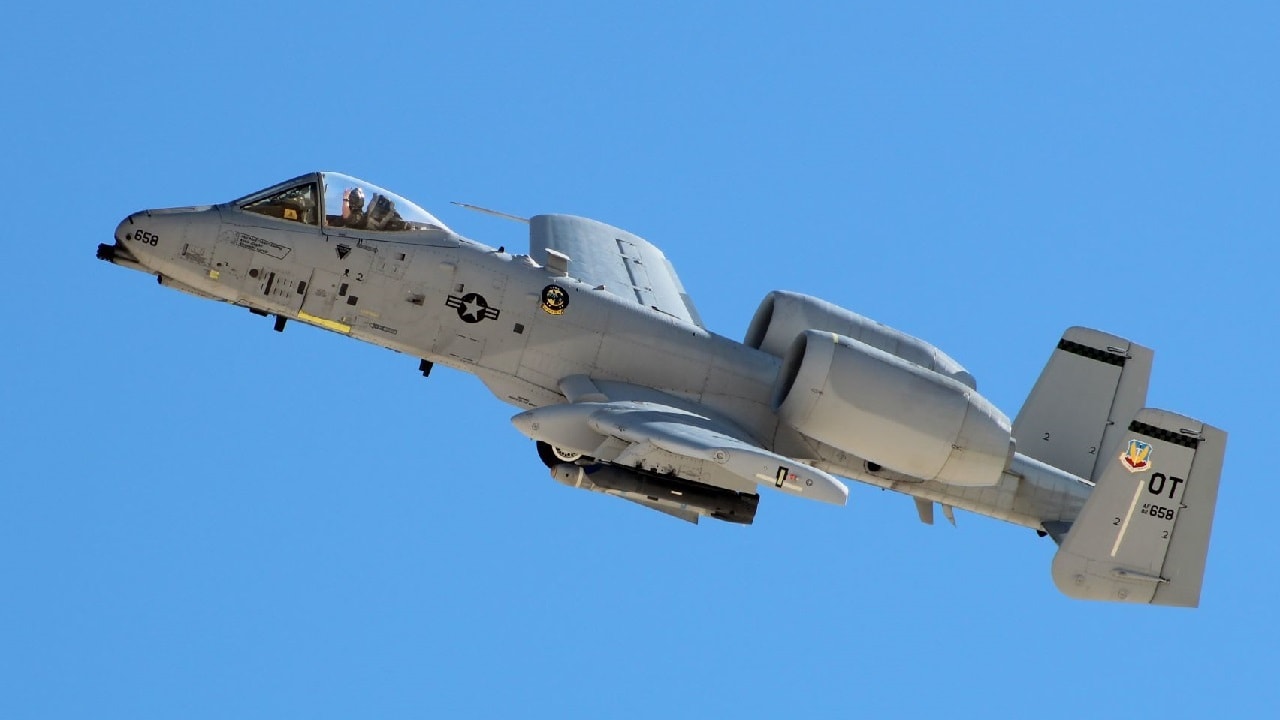
A-10 Warthog munitions render Explosive Reactive Armored tanks inoperative during test
The A-10’s CAS capabilities and reinforced armor make it ideal for ground support operations, even against enemy air defenses.
However, the Army is not particularly enthusiastic about taking on the A-10. The Army has always been stringent about its fleet of fixed-wing aircraft, with only a small number used for transportation.
In 2015, then-Army Secretary John McHugh straight up rejected the prospect of receiving hand-me-down Warthogs from the Air Force. “With our own aircraft fleet, we’re taking some pretty dramatic steps to reconfigure and become more affordable, and the A-10 mission is not something we considered. That’s an Air Force mission as it should be, and I’m sure the Air Force feels the same way,” McHugh said.
Since then, the Army has shown no signs of changing this stance, meaning that any prospects of the Army saving the Warthog are slim.
About the Author: Isaac Seitz
Isaac Seitz, a Defense Columnist, graduated from Patrick Henry College’s Strategic Intelligence and National Security program. He has also studied Russian at Middlebury Language Schools and has worked as an intelligence Analyst in the private sector.