
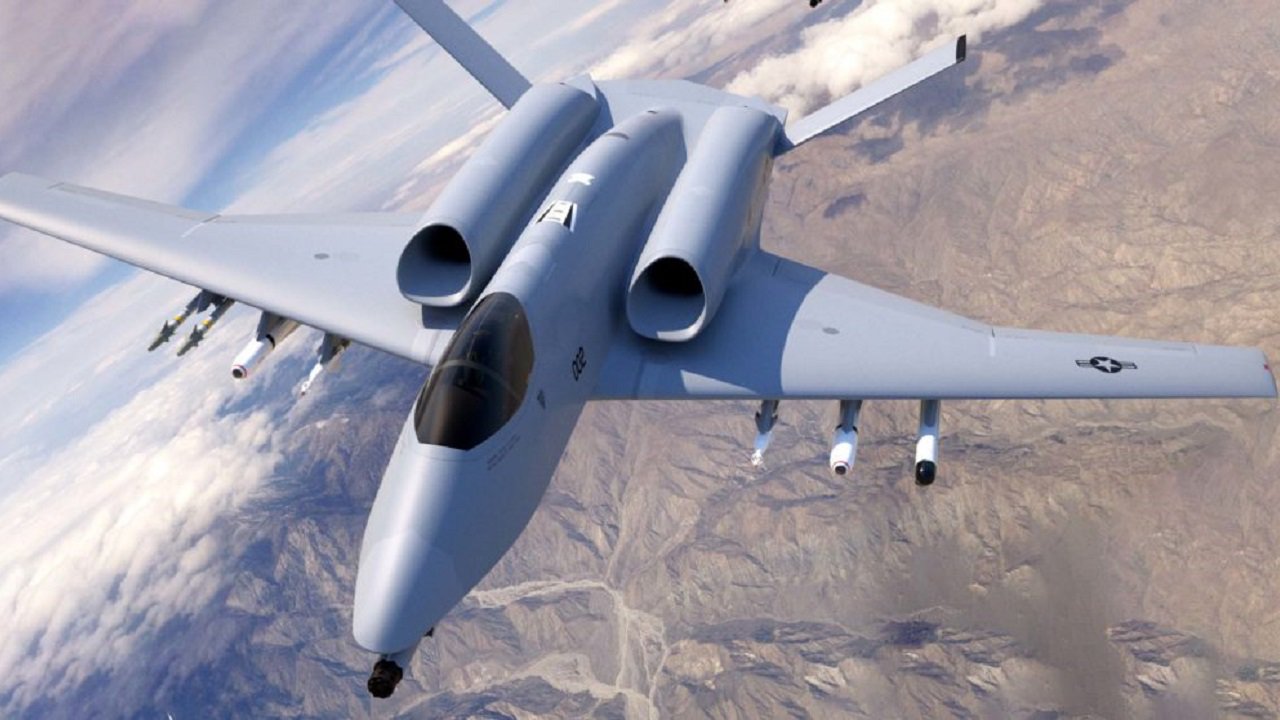
A Stealth A-10 Warthog Misses the Point
The Fairchild Republic A-10 Thunderbolt II, affectionately known as the “Warthog,” has been one of the most distinctive (and enduring) warplanes in the U.S. Air Force for almost half a century.
Designed in the 1970s specifically to provide close air support (CAS) to ground troops – delivering heavy firepower against enemy forces operating in close proximity to friendly units – the A-10 has long stood out for its rugged construction, its brutal and heavy armament, and its ability to persist on the battlefield.
Its primary role has always been to loiter near the front lines, identify hostile actors and positions visually, and deliver precise firepower in support of soldiers and Marines on the ground.
Those mission requirements shaped the aircraft’s design in a way that makes it uniquely effective for CAS but fundamentally incompatible with the missions assigned to, for example, modern stealth aircraft. The Thunderbolt II was designed for a particular role.
Despite modern aerial warfare placing different demands on today’s aircraft, the A-10 remains an iconic piece of aviation history and a platform that many would like to see recreated in some form.
The A-10’s History
The A-10 was born out of the U.S. Air Force’s recognition during the Cold War that future European battlefields, particularly those facing Soviet armored formations, would need a dedicated aircraft capable of surviving (and continuing to fight) under heavy ground fire.
Its defining features included the GAU-8/A Avenger 30 mm rotary cannon, which alone accounts for a significant portion of the aircraft’s weight and was specifically designed for the A-10 program to defeat armored vehicles.
The aircraft is very well armored indeed, featuring a titanium “bathtub” that surrounds the pilot and the aircraft’s vital systems. It is engineered to absorb more damage than most aircraft, allowing it to sustain the kind of hits that would immediately ground any other aircraft.
Its broad wings and robust landing gear will also enable it to operate from forward or rough runways, and its large weapons load and long loiter time mean it can maintain a persistent presence over contested territory.
And for decades, the A-10 has served in major conflicts and proven itself a competent platform. It has served in the 1991 Gulf War, where the aircraft helped destroy Iraqi armor formations, and in the wars in Iraq and Afghanistan in the 2000s, where ground commanders repeatedly requested it for their precise firepower.
Despite their contributions, however, the A-10’s continued service has been contested. The Air Force has been moving to retire the platform for some time, sending dozens of A-10s into storage as part of a broad force restructuring – even as the aircraft continues to fly missions and receives upgrades aimed at extending its lifespan into the next decade.
Proposals do periodically emerge online suggesting that the A-10 could still be modernized further – or perhaps reinvented entirely – as a form of “stealth” aircraft capable of surviving in high-threat environments dominated by today’s advanced air defenses.
And while at first glance the idea may seem attractive – reducing the A-10’s detectability and letting it penetrate contested airspace while delivering intense firepower – it’s not really all that feasible. In fact, such a suggestion misunderstands both the nature of the A-10’s mission and the realities of stealth technology.
Is A Stealthy A-10 Possible?
Stealth design does not come easily. Low-observable aircraft depend on a combination of shaping and materials that minimize an aircraft’s radar cross-section to reduce detection by enemy sensors.
In terms of shaping, it means an aircraft usually requires an internal weapons carriage, the careful alignment of edges, and hidden engine inlets – all wrapped up in stealthy, radar-absorbent materials.
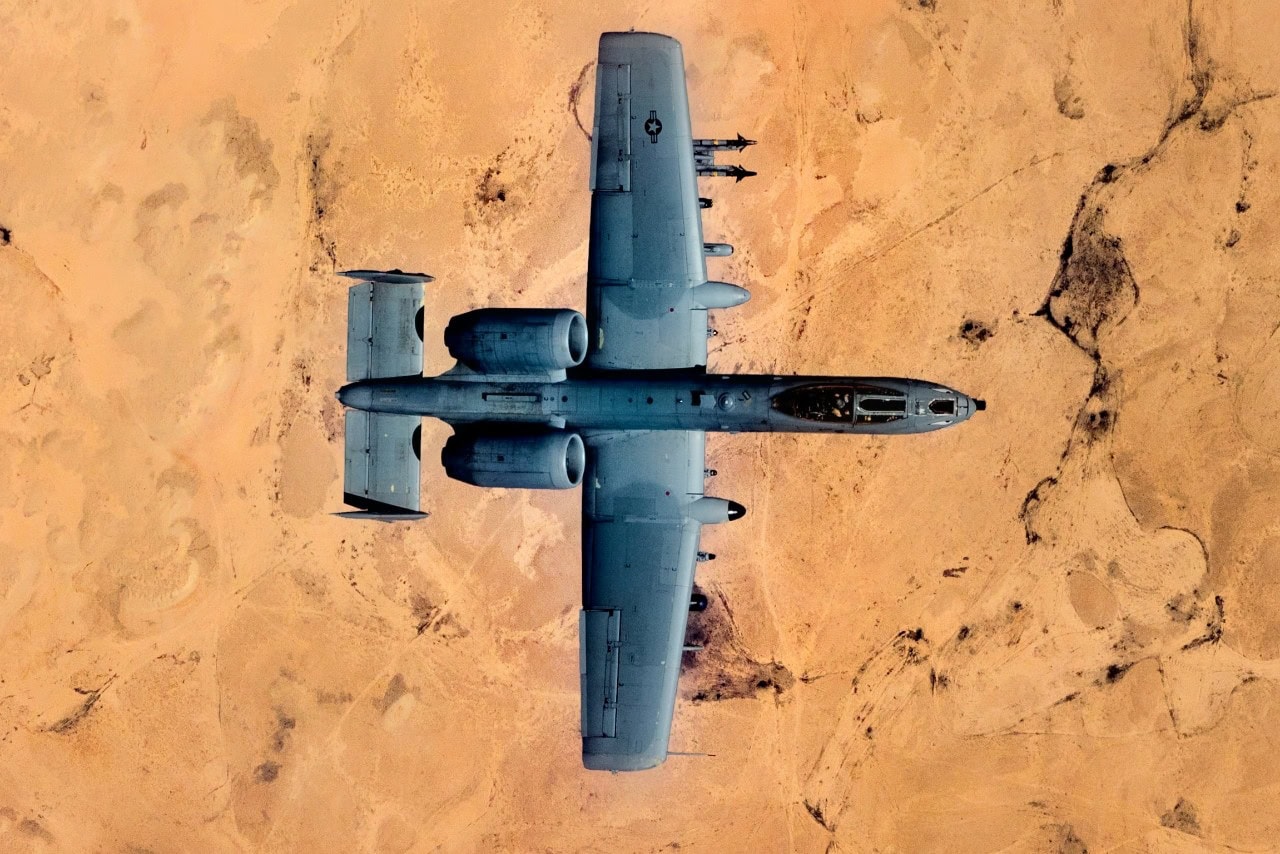
A U.S. Air Force A-10 Thunderbolt II flies a presence patrol over the U.S. Central Command area of responsibility, Feb. 26, 2025. The A-10 aircraft is employed throughout the region to bolster regional security and counter the growing threats of adversarial unmanned aircraft systems and other emerging threats. (U.S. Air Force photo by Staff Sgt. Jackson Manske)
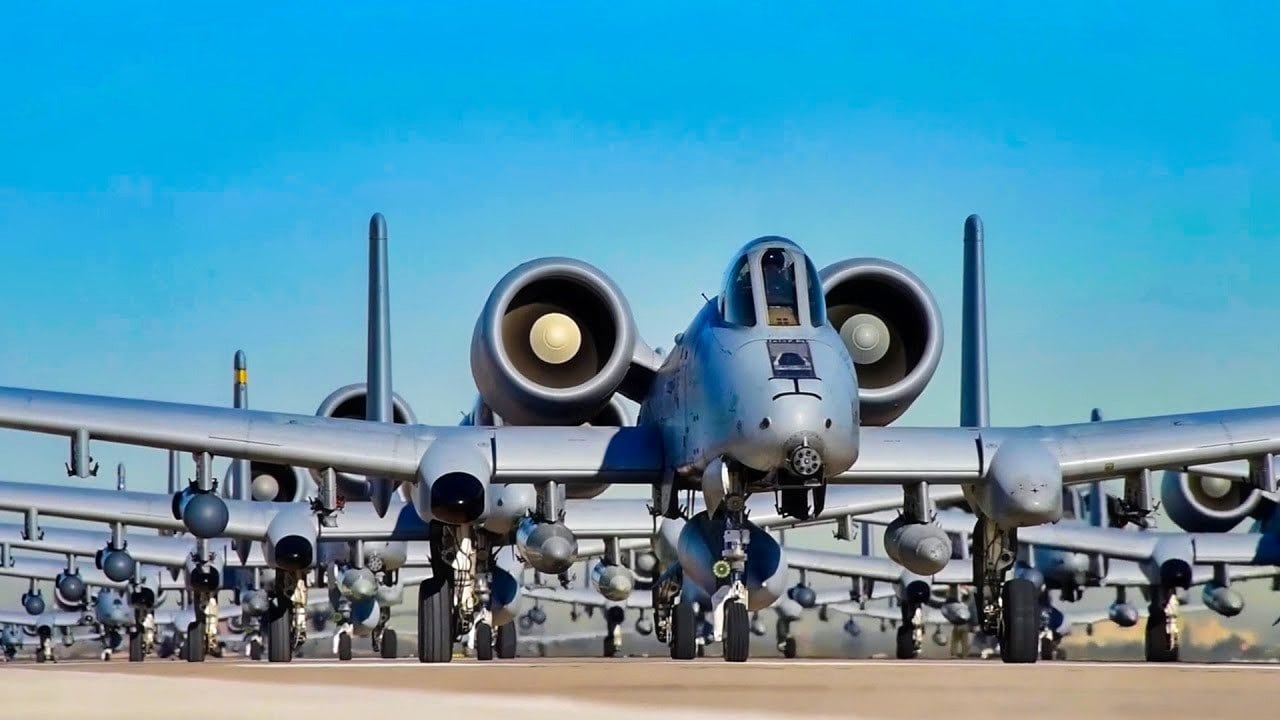
A-10 Warthog Elephant Walk.

A U.S. Air Force A-10 Thunderbolt II flies a routine mission over the U.S. Central Command area of responsibility Dec. 23, 2024. A-10 Thunderbolt II pilots train and operate under night vision, allowing them to conduct presence patrols critical to regional security at any time and under any conditions. (U.S. Air Force photo)
The aircraft must have been designed from the beginning with stealth in mind – and the A-10 certainly was not.
The A-10’s defining traits – its external weapons pylons, large fuselage, and massive forward-mounted cannon – all fly in the face of basic stealth requirements.
External ordnance alone makes the A-10 a poor candidate for stealth, with protruding gun barrels dramatically increasing radar return.
The aircraft’s broad wings and engine placement also make it impossible to achieve the shaping required for meaningful stealth. Any attempt to retrofit stealth features into the airframe would essentially require redesigning the aircraft from the ground-up – making it a different platform entirely.
But beyond the engineering challenges, the operational assumptions behind a “stealth A-10” also miss the point of both CAS and stealth being separate missions entirely.
The A-10 was and is so effective because of its ability to fly low, maintain visual contact with ground targets and friendly forces, and absorb damage as it attacks targets.
Stealth, by contrast, is optimized for high-speed and high-altitude penetration to avoid detection in the first place.
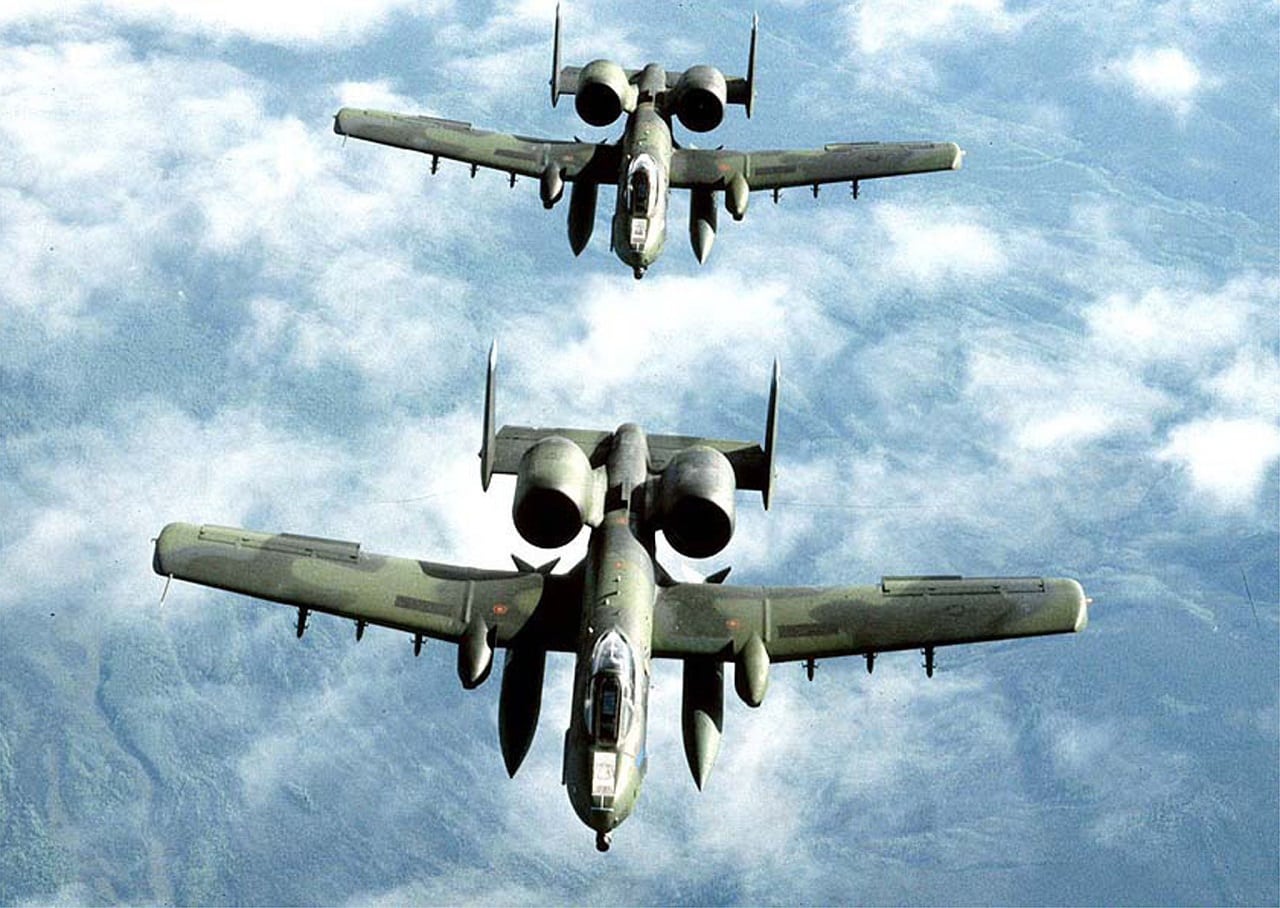
A-10 Warthog.
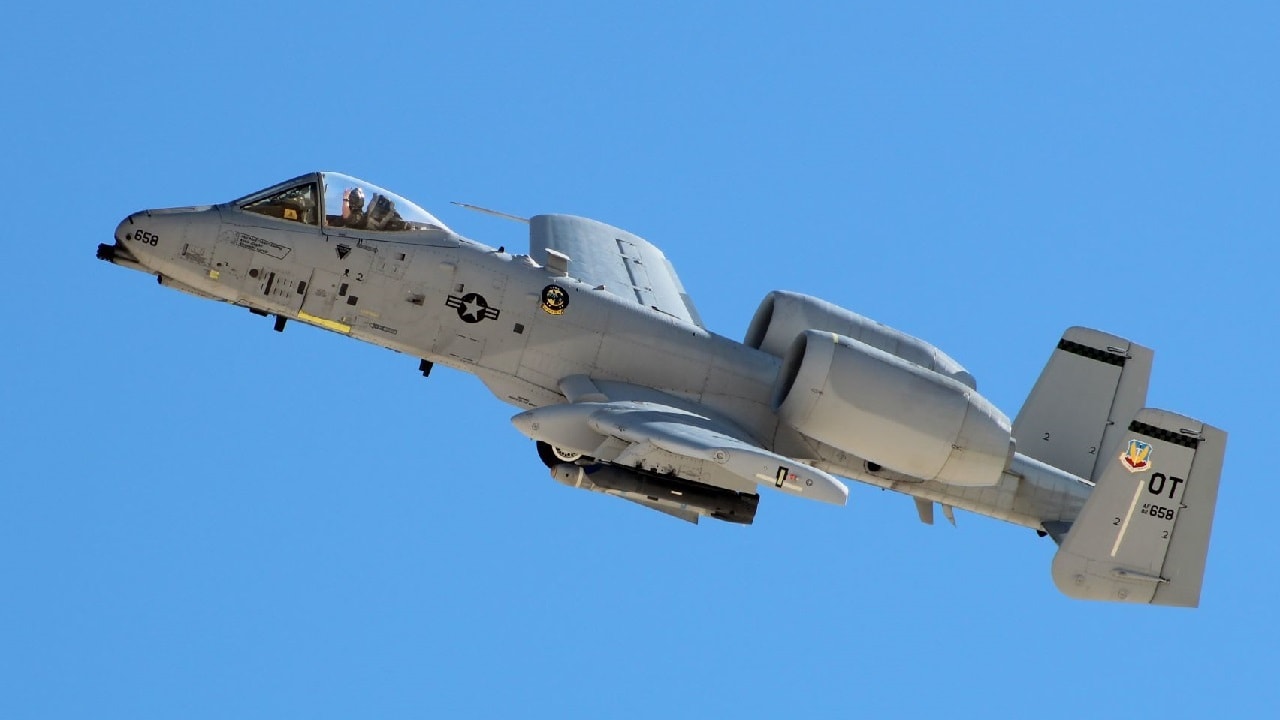
A-10 Warthog munitions render Explosive Reactive Armored tanks inoperative during test

A-10 Warthog. Image Credit: Creative Commons.
Once an aircraft operating at low altitude reveals itself – whether by visual sighting, infrared signature, or engagement with ground targets – its reduced radar signature then offers limited protection against modern infrared-guided weapons or other systems that track targets visually.
If the Air Force believes the A-10’s mission still matters, the answer is not a stealthy Warthog but a new aircraft that modernizes its core strengths – precision, persistence, and survivability – for today’s battlefield.
About the Author:
Jack Buckby is a British author, counter-extremism researcher, and journalist based in New York who writes frequently for National Security Journal and 19FortyFive. Reporting on the U.K., Europe, and the U.S., he works to analyze and understand left-wing and right-wing radicalization, and reports on Western governments’ approaches to the pressing issues of today. His books and research papers explore these themes and propose pragmatic solutions to our increasingly polarized society. His latest book is The Truth Teller: RFK Jr. and the Case for a Post-Partisan Presidency.