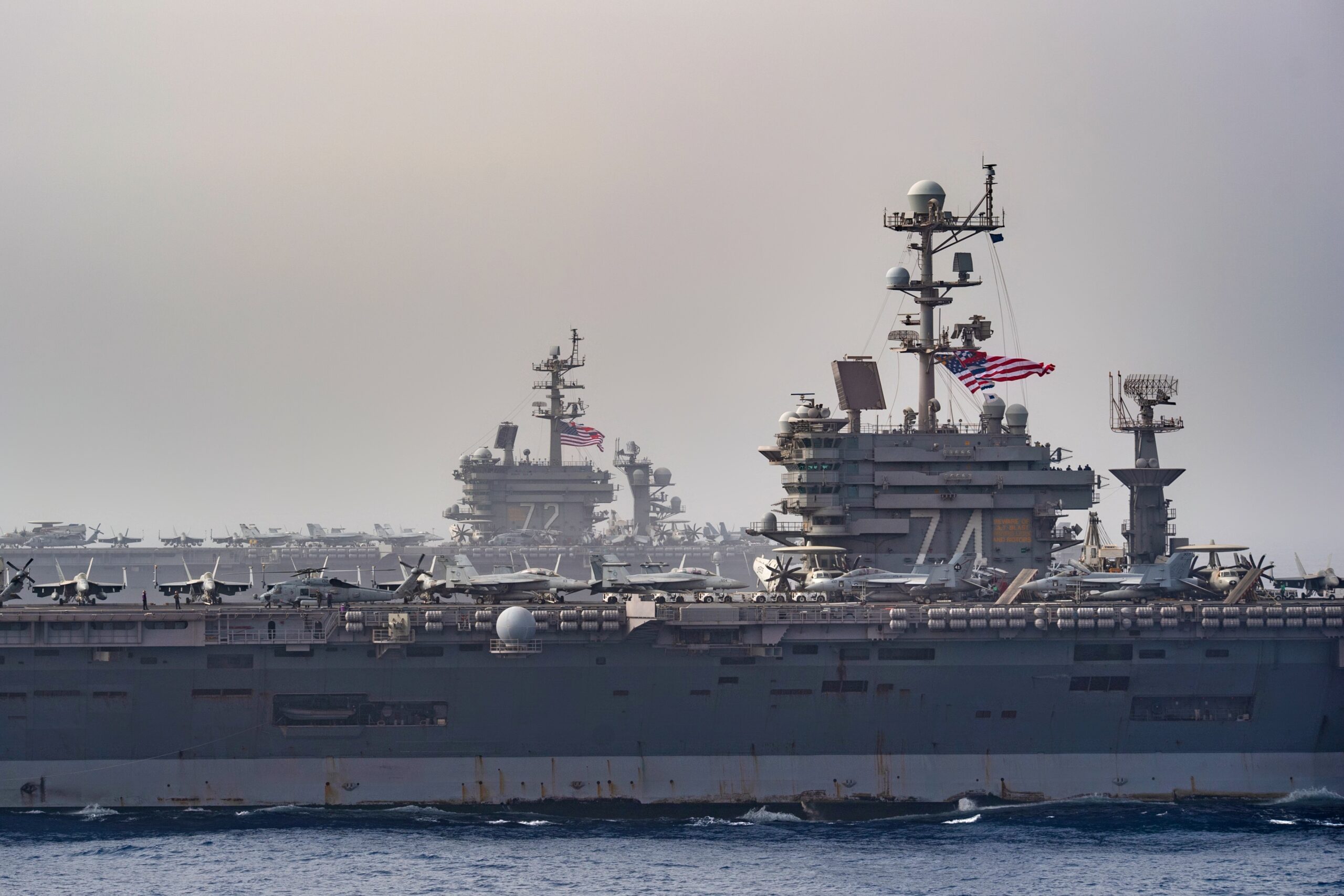
Summary and Key Points – Iran Crisis Deepens: President Donald Trump confirmed that a U.S. naval “armada,” led by the USS Abraham Lincoln carrier strike group, is en route to the Middle East in response to the Iranian regime’s brutal crackdown on protesters.
-With estimated death tolls reaching as high as 20,000, the UN Human Rights Council has called for an urgent inquiry.
-Trump claimed his threats of military force successfully halted the execution of over 800 detainees, warning Tehran that further violence would cross a “red line.”
-As the U.S. and UK bolster military assets in the region, the standoff has reached a critical point, with the Iranian regime facing an existential crisis and the U.S. weighing options for intervention.
Fort Lauderdale, Florida, USA – As he was returning to the US from the World Economic Forum in Davos, Switzerland, US President Donald Trump told the press aboard Air Force One that an American “armada” is heading toward Iran. That armada is a US carrier strike group led by the USS Abraham Lincoln, which was reported on January 20 as having departed its previously assigned patrol area and was steaming towards the Middle East.
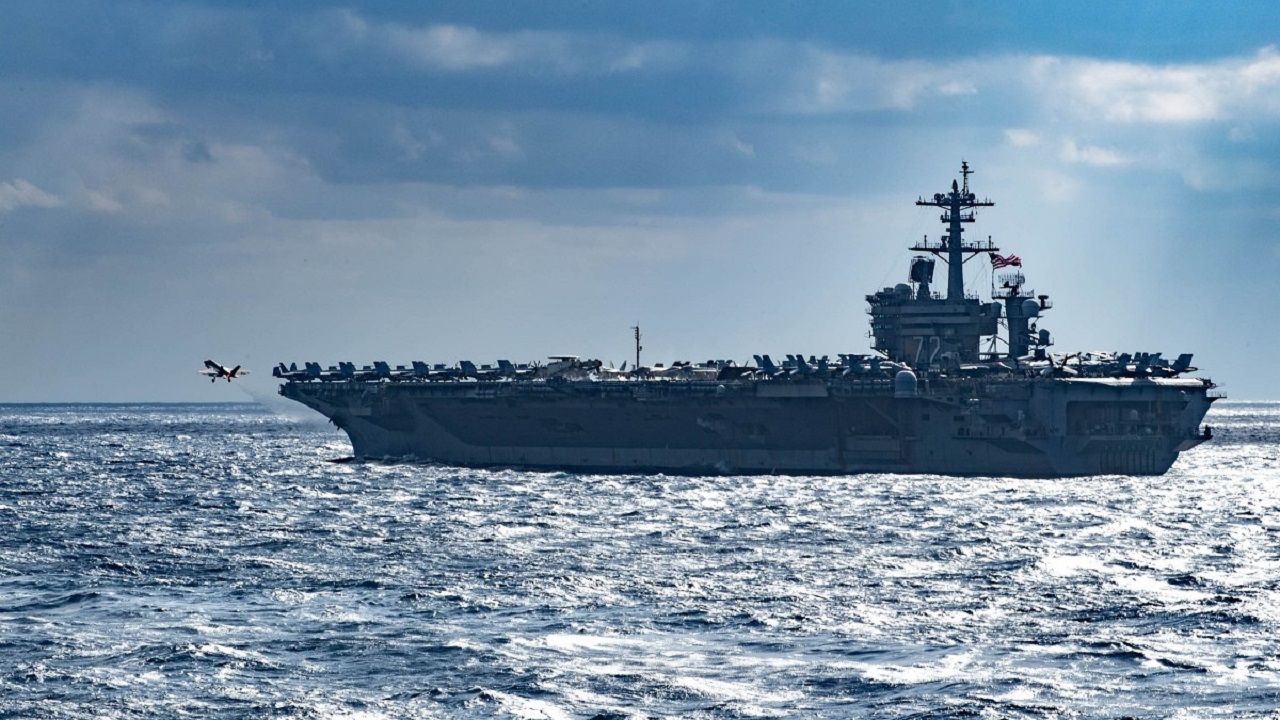
USS Abraham Lincoln. Image Credit: Creative Commons.
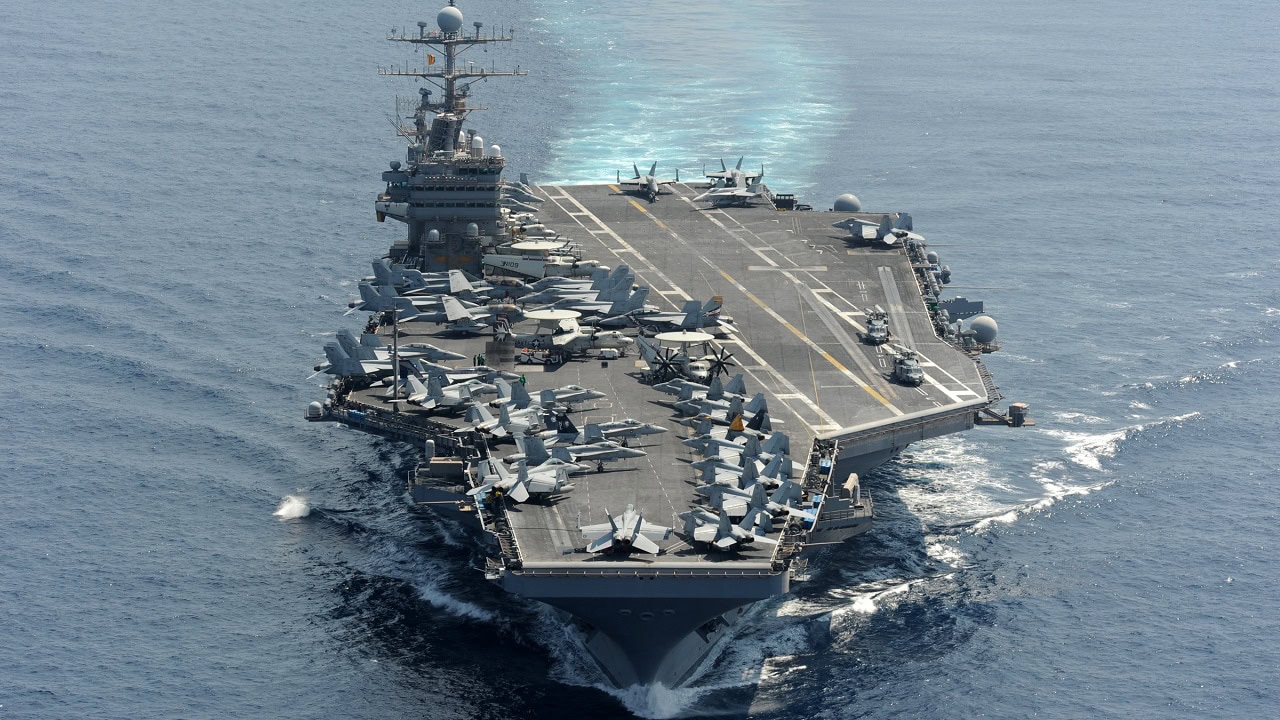
INDIAN OCEAN, (Jan 18, 2012) The Nimitz-class aircraft carrier USS Abraham Lincoln (CVN 72) transits the Indian Ocean. Abraham Lincoln is in the U.S. 7th Fleet area of responsibility as part of a deployment to the western Pacific and Indian Oceans to support coalition efforts. (U.S. Navy photo by Chief Mass Communication Specialist Eric S. Powell/ Released)
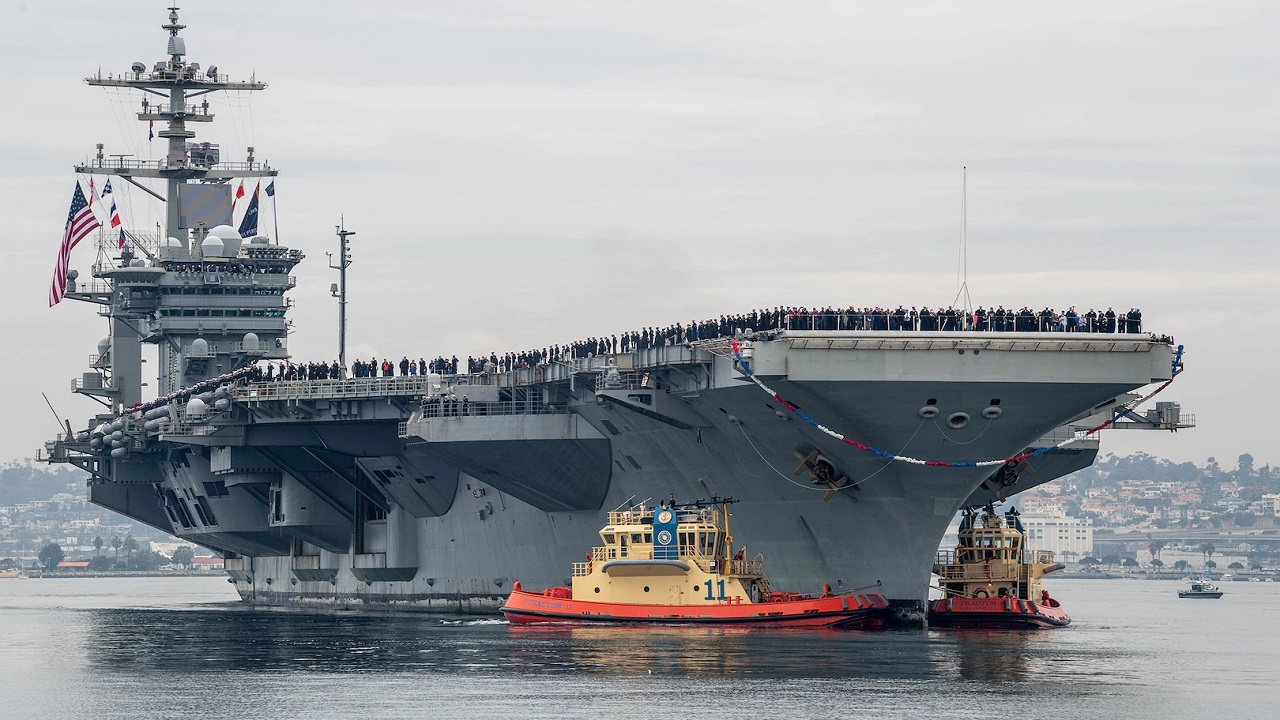
USS Abraham Lincoln back in 2015.
Deploying the carrier has come as a reaction to the rising death toll from the Iranian clerical regime’s crackdown on a nationwide wave of demonstrations. The death toll from that revolt has, according to official government admissions by the government in Tehran, risen to at least 5,000 unarmed protestors having been killed by the security forces, activists said.
However, the actual number of those killed is now suspected of being as high as 20,000 or more. Internal sources in Iran have cited previous estimates in that range. Still, they have usually been aggregate totals extrapolated from information provided by hospitals and medical workers in major cities, then passed on by activists leading the demonstrations.
Other groups have provided equally high estimates, but some of these same activists fear the true toll is much higher. A weeks-long internet blackout has made verifying this manner of information from inside the country complicated.
But now this number is being put forth by the UN Special Rapporteur on Human Rights in Iran, Bloomberg has reported. Today, the UN Human Rights Council passed a motion extending an independent probe into human rights abuses in Iran and calling for an urgent inquiry into the killings by the security forces. Twenty-five of the council’s member states voted in favor, with seven, including the “usual suspects” Cuba, Pakistan, Egypt, and China, voting against.
We Have A Lot of Ships Going That Direction
On Friday, Tehran dismissed as “completely false” Trump’s assertion that his threats of using military force had halted the mullahs’ planned executions of more than 800 protesters that had previously been arrested. Trump had stated that any such killings would be a red line that would force him to launch military action.
“I said, ‘If you hang those people, you’re going to be hit harder than you’ve ever been hit,'” the US president told reporters in the Air Force One press contingent as he returned from the Davos forum. “And an hour before this horrible event, they canceled the hangings, he said. “That was a good sign.”
“I stopped 837 hangings on Thursday, would have been dead, every one of them, mostly young men,” he said on Air Force One.
Referring to the carrier strike group scheduled to be on station today, Trump added, “Maybe we won’t have to use it.” The United States has “a big force going to Iran. I’d rather not see anything happen,” he added, but “we have a lot of ships going that direction just in case.”
In addition to the carrier and its flotilla of support vessels, the US has also dispatched additional aircraft and land-based air defense systems, per statements from Pentagon officials. For its part, the UK said it would send RAF Eurofighter Typhoon jets from 12 Squadron to Qatar, at Doha’s request.
Back From the Brink
The big question now is what is the next move in this set of US actions designed to intimidate the mullahs? Earlier, Trump appeared to pull back from the brink of a military confrontation despite making statements to the Iranian people that “help is on its way”.
Reports from Washington said the threat was not followed through on because the US president did not like the scenarios presented to him by his military chiefs. Some of the neighboring Gulf states also pressured Trump to refrain from launching strikes on the Islamic Republic – at least for now.
Trump’s decision to delay implementing any military action reportedly came about largely because he felt he had been given no military option that would secure a collapse of the regime in Tehran. The clerics and the IRGC have responded by calling his bluff and doing exactly what he warned them not to do – persisting in widespread and indiscriminate massacres of innocent protestors on a massive scale.
In the meantime, the internal upheaval remains an existential crisis for the Islamic Republic. They cannot back down without endangering their own survival.
Trump cannot back off from his threat to attack them without some significant loss of face. Which one of the two will ultimately “blink” may become known in the coming days.
About the Author: Reuben F. Johnson
Reuben F. Johnson has thirty-six years of experience analyzing and reporting on foreign weapons systems, defense technologies, and international arms export policy. Johnson is the Director of Research at the Casimir Pulaski Foundation. He is also a survivor of the Russian invasion of Ukraine in February 2022. He worked for years in the American defense industry as a foreign technology analyst and later as a consultant for the U.S. Department of Defense, the Departments of the Navy and Air Force, and the governments of the United Kingdom and Australia. In 2022-2023, he won two awards in a row for his defense reporting. He holds a bachelor’s degree from DePauw University and a master’s degree from Miami University in Ohio, specializing in Soviet and Russian studies. He lives in Warsaw.