Summary and Key Points: Protests over economic hardship and corruption are spreading across Iran, with demonstrations reported in more than 100 cities.
-Witnesses say IRGC units opened fire during a nationwide internet shutdown, with casualty estimates ranging from an official 2,000 to far higher figures cited by opposition-linked sources.
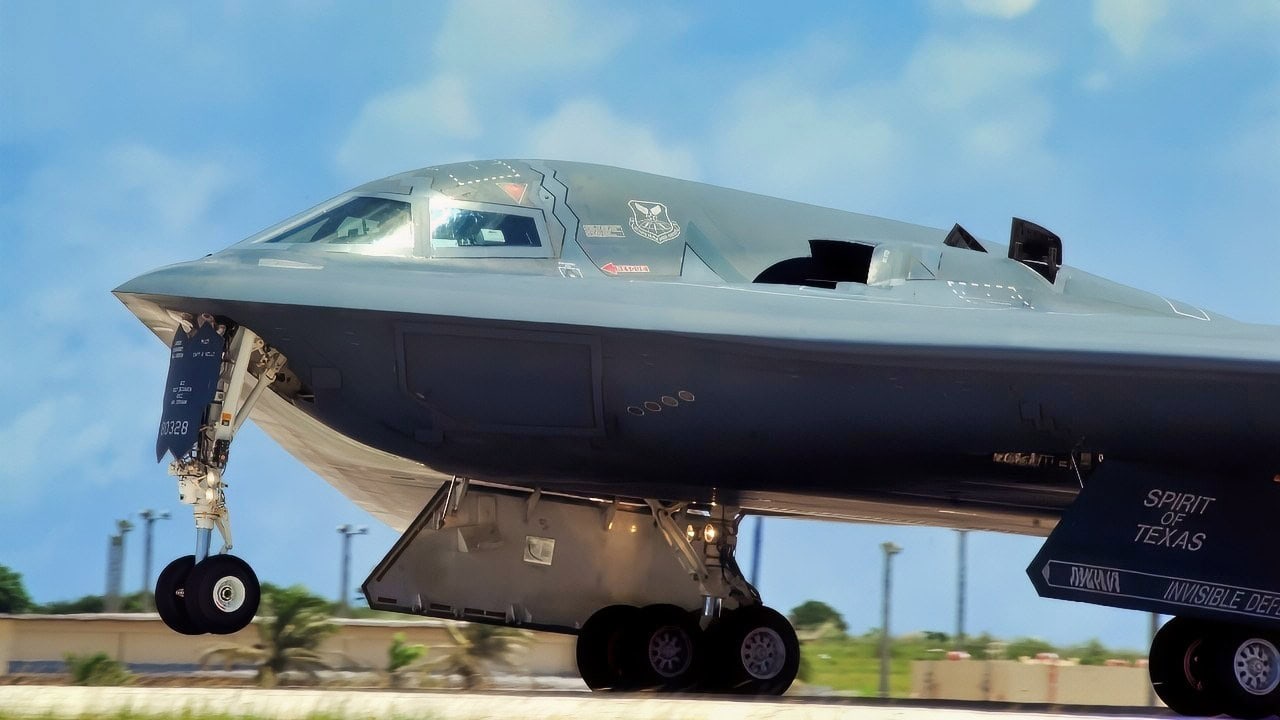
A U.S. Air Force B -2 Spirit aircraft deployed from Whiteman Air Force Base, Mo., launches from the runway at Andersen Air Force Base, Guam, Aug. 12, 2016. With its subsonic speeds and its nearly 7,000 mile unrefueled range, the B-2 Spirit is capable of bringing massive firepower, in a short time, anywhere on the globe through the most challenging defenses. (U.S. Air force photo by Senior Airman Jovan Banks)
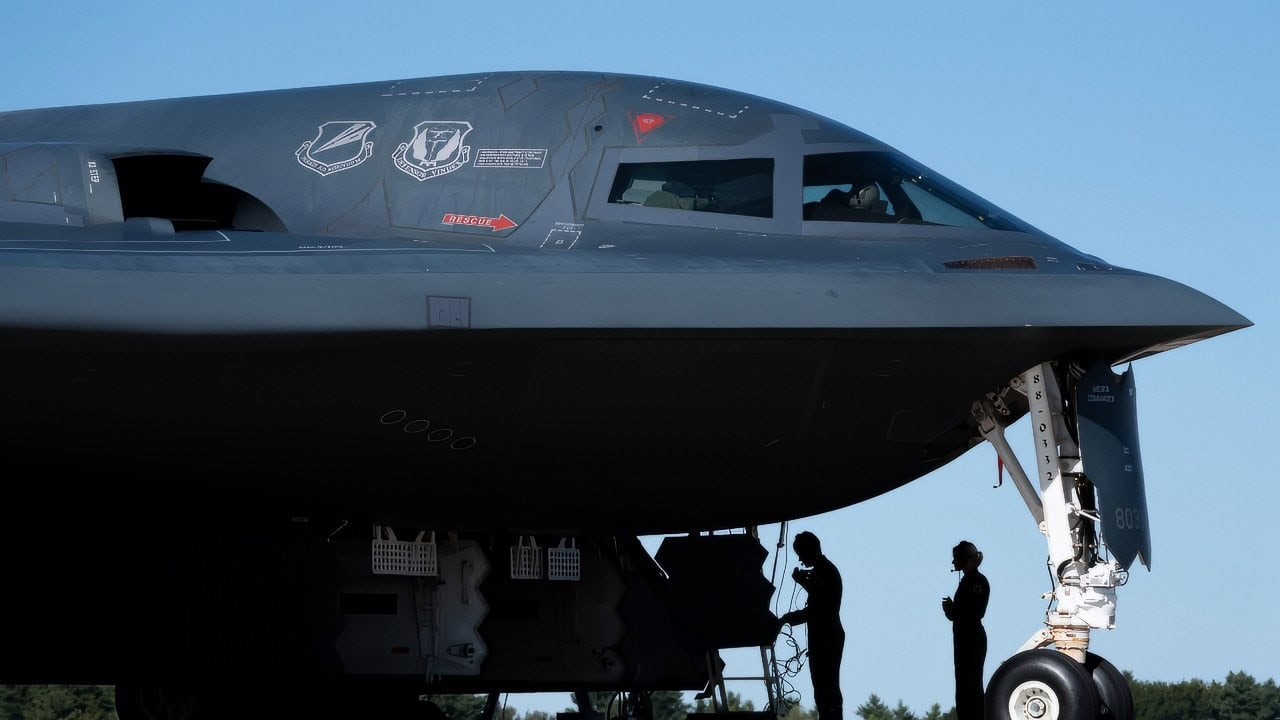
A U.S. Air Force pilots assigned to the 393rd Bomb Squadron prepare a B-2 Spirit aircraft for hot-pit refueling at Pease Air National Guard Base, New Hampshire, Sept. 20, 2025. The aircraft is the first operated by the 509th Bomb Wing to land at Pease ANGB, formerly Pease Air Force Base, since the 509 BW, formerly 509th Bombardment Wing, was stationed at Pease AFB and the active-duty base closed nearly 35 years ago. The lineage of the 509th BW traces back to the World War II Era when the 509th Composite Group dropped the atomic bombs on Japan. (U.S. Air Force photo by Staff Sgt. Joshua Hastings)
-Accounts from Tehran and smaller southern towns describe a one-sided street fight against unarmed crowds.
-In the United States, President Donald Trump says he has halted talks with Iranian officials, urges protesters to keep pushing, and warns the regime will pay a price, insisting that “help is on the way”—though what that means remains unclear.
2,000 Dead or 12,000? Iran Protest Death Toll Reports Drive U.S. Threats
-“They just kept killing … we are fighting a brutal regime with empty hands,” said Omid, speaking to the BBC Persian News Service. “I saw it with my own eyes—they fired directly into lines of protesters, and people fell where they stood.”
Omid, which means “hope” in Farsi, the language spoken in Iran, is not actually his real name. He is an Iranian described as being in his early 40s whose name the BBC changed for his own safety.
He is one of the many who have been protesting on the streets of a small city in southern Iran over the past few days. In the past 18 days, demonstrations against worsening economic hardship in the Islamic Republic and growing anger over the corruption of the regime and the brutality of the Pasdaran (پاسداران) or the Islamic Revolutionary Guard Corps (IRGC) have spread from what was once 50 cities and towns in Iran to more than 100.
It is the IRGC that has been responsible for the suppression of what has become a nationwide movement against the rule of the Supreme Leader Ali Khamenei. These demonstrations saw a massive uptick in activity when the exiled Crown Prince and son of the last Shah of Iran, Reza Pahlavi, issued statements last Thursday and Friday encouraging the people of his nation to take back their country.
Day Of Judgement
Omid is like many who live in smaller cities outside the capital, Tehran, and the next-largest metropolitan areas, Mashhad and Isfahan. Even inhabitants of those smaller localities are out on the streets.
He said security forces had opened fire at unarmed protesters in his city with Iranian-produced, Chinese-design copies of the famous Soviet-era AK-47 Kalashnikov assault rifle.
A woman who spoke to the Washington Post told the US daily that she ran from the security forces into a dark alley, but was wearing neither her glasses nor contact lenses and could not see properly.
“I saw many bags on the ground and thought they were rubbish,” the woman said. “I was running in that alley to get to a main road when I hit one of the bags.” They were not bags, she recounted, but “bodies, dead bodies. I can’t know how many.”
Another Iranian who spoke to the BBC was a young woman from Tehran who described the number of those who participated in protests as being so enormous that last Thursday felt like “the day of judgement.” Despite the clerical regime pulling the plug on the internet in Iran, the demonstrators have nonetheless passed the word and awakened a wide swath of the population.
“Even remote neighbourhoods of Tehran were packed with protesters—places you wouldn’t believe,” she told the UK state broadcaster. “But on Friday, security forces only killed and killed and killed. Seeing it with my own eyes made me so unwell that I completely lost morale. Friday was a bloody day.”
She continued by saying that after mass killings last Friday in Tehran, inhabitants were afraid to go outdoors and that many were chanting anti-regime slogans from alleys and inside their homes. She described Tehran as a battlefield in which protesters and security forces were moving from covered and safe positions on the streets.
But there was one significant difference: “In war, both sides have weapons. Here, people only chant and get killed. It is a one-sided war.” As of today, the IRGC continues to implement shoot-to-kill orders, and hospitals in Tehran report being overwhelmed with casualties.
Death Toll at 12,000? “Help is On the Way”
While “official” reports are that more than 2,000 unarmed protestors have been killed by the security forces, other estimates that have come out of Iran in the past 12 hours are that the real figure could be six times greater. If accurate, this would be the largest killing of the civilian population in recent Iranian history.
The majority of the bloodshed appears to have taken place on January 8 and January 9 during a nationwide internet shutdown, according to senior government and security sources who were speaking to the news site Iran International.
One eyewitness told a UK-based news organization that they saw security forces shoot a teenager who looked “no more than 15 years old” on a road near the city of Azna’s main police station, where protesters had assembled back on January 1.
“I saw them with my own eyes. Security forces shot the boy, and he fell into a roadside drainage ditch,” he said. A group of protesters rushed to the boy’s aid, he said. “But he was not moving anymore.”
Today, US President Donald Trump was supposedly still working off the only 2,000 shot dead in protests figure and declared to the Iranian people that “help is on the way.” The security forces in Iran will ultimately pay a “big price” for their crimes, said Trump.
“To all Iranian patriots, keep protesting,” he said today in remarks to the Detroit Economic Club during a trip to Michigan. “Take over your institutions if possible and save the name of the killers and the abusers that are abusing you,” he said.
“I’ve canceled all meetings with the Iranian officials until the senseless killing of protesters stops. And all I say to them is help is on its way,” he continued.
U.S.-Iran War Coming?
What “help is on the way” actually means, operationally, is anyone’s guess at this point, said one Iranian exile based here in the US. But he and others state the obvious: The Iranian regime is not likely to give in and stop the killing without some intervention by the US on the level of what Trump has carried out in Venezuela.
About the Author: Reuben F. Johnson
Reuben F. Johnson has thirty-six years of experience analyzing and reporting on foreign weapons systems, defense technologies, and international arms export policy. Johnson is the Director of Research at the Casimir Pulaski Foundation. He is also a survivor of the Russian invasion of Ukraine in February 2022. He worked for years in the American defense industry as a foreign technology analyst and later as a consultant for the U.S. Department of Defense, the Departments of the Navy and Air Force, and the governments of the United Kingdom and Australia. In 2022-2023, he won two awards in a row for his defense reporting. He holds a bachelor’s degree from DePauw University and a master’s degree from Miami University in Ohio, specializing in Soviet and Russian studies. He lives in Warsaw.