
What You Need to Know: The U.S. intervention in Venezuela and the arrest of Nicolás Maduro establishes a dangerous “might makes right” precedent that could encourage other powers to intervene in their own regions.
-For Russia, this validates imperialist ambitions, drastically increasing the threat of invasion for neighbors like Moldova, Georgia, and the Baltic states.
-However, the author argues Ukraine might ironically benefit if Russia diverts forces to new conflicts or if Washington’s focus shifts to Latin America, leaving European allies to lead security negotiations.
-Ultimately, while the U.S. can withstand such adventurism, a similar move by a weakened Russia could prove fatal to its stability.
The U.S. intervention in Venezuela could have two important consequences for Russia and its neighbors. Ukraine comes out as a marginal winner, even as other states come out as definite losers.
The U.S. arrest of Venezuela’s illegitimate president, Nicolas Maduro, may or may not be legal. But U.S. President Donald Trump’s decision to invade a country—and, purportedly, to “run” it—is a geopolitical power play and an assertion of the principle that might makes right.
As many analysts have pointed out, if the United States may intervene and take control of a country in its backyard, then so may any other global or regional power, including nations such as China, India, Brazil, Nigeria, and Russia.
Interventions, invasions, and wars could become the norm, given that many states consider themselves to be great powers in their own regions. After all, who is to forbid Israel from imposing its will on its neighbors? What is to stop Pakistan, Indonesia, or Mexico from claiming to have the same right with respect to the smaller nations near their borders?
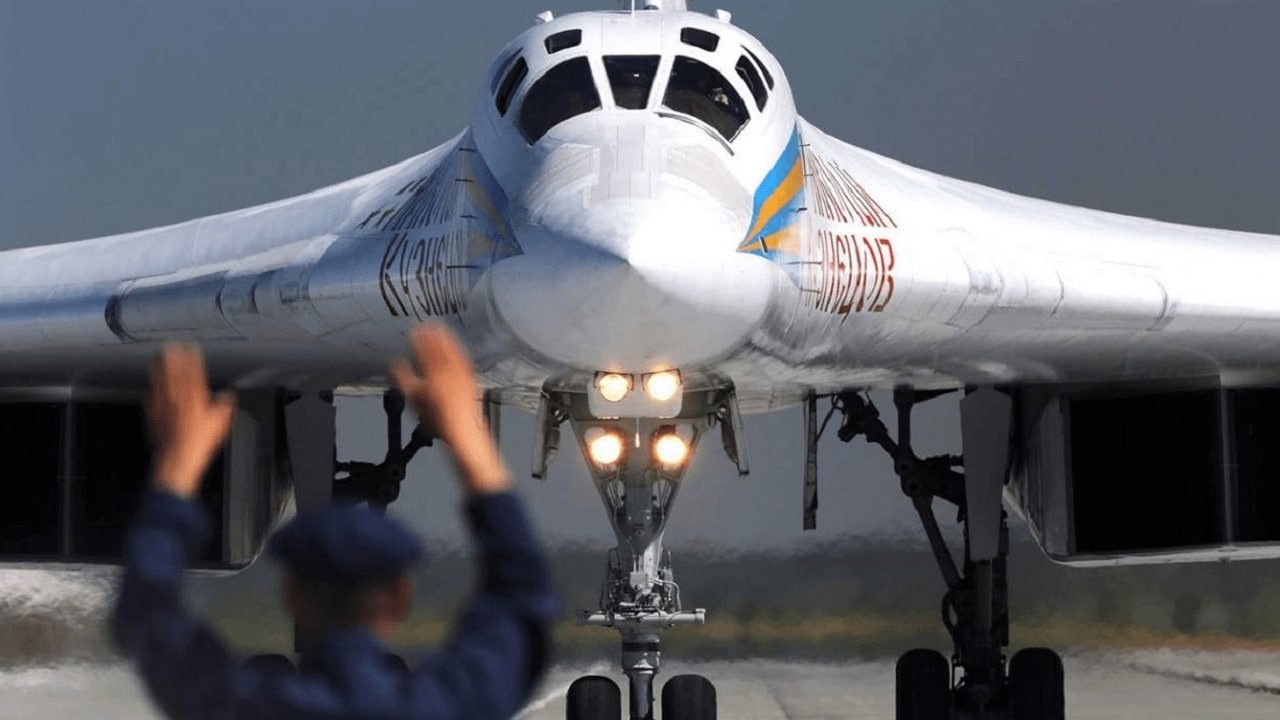
Russia is a case in point. The regime of President Vladimir Putin believed invading Ukraine in 2022 would be a piece of cake. Russia’s gross miscalculation might prove fatal to it. The invaders have lost thousands of tanks, hundreds of planes, and more than 1 million dead and wounded. Had Russia been as powerful as it imagined itself to be, the war would have ended in weeks or months. But because it believed it was still a great power, Moscow launched a disastrous war that has revealed it to be weak. Such miscalculations also may become more ordinary in the coming years.
While the consequences of this mindset are likely to be uniformly disastrous for what remains of the international order, they will differ for Russia’s neighbors. Ukraine has already been invaded, so there is zero probability of a Russian invasion spurred by U.S. action in Venezuela.
True, Russia might again in the future assert its right to invade Ukraine, but having already invaded in 2014 and 2022—as well as numerous times in the last few centuries—it would be breaking no new ground. Ukraine knows that Russia is its enemy and desires to exterminate it. Venezuela changes nothing for Ukraine.
But it does change everything for the Baltic states, Finland, Moldova, Armenia, Azerbaijan, Georgia, and the Central Asian states. They, too, have lived with the threat and reality of Russian invasion since 1991. But except for Georgia, that threat has been hypothetical. Venezuela makes it real.
Ironically, a Russian invasion of any of its neighboring states would benefit Ukraine—at least in the short run. Russian soldiers and equipment would need to be diverted from Ukraine, and it is not inconceivable that Russia might even be willing to diminish its commitment to the Ukraine war while it invades elsewhere. Russian interventions in neighboring states could also stretch its armed forces past their limit and undermine the stability of the Russian state.
Ukraine also benefits from Washington’s need to focus its nation-building and peacemaking efforts on Venezuela and the possible spillover of instability into other Latin American states.
One year of Trump’s pursuit of peace in the Russia-Ukraine war has amply demonstrated that the United States is no honest broker committed to forging a compromise. The last twelve months may indeed show that the Trump administration has sided with Russia against Ukraine—as military historian Phillips O’Brien forcefully argues.
Small wonder that negotiations have led nowhere. Negotiations may go nowhere as long as Trump’s America is involved. What else would one expect from a dishonest broker or a Putin ally?
The U.S. intervention in Venezuela could therefore have the salutary consequence of diverting Washington from the war and enabling—or compelling—the Europeans to take hold of negotiations and increase their commitment to Ukraine’s security.
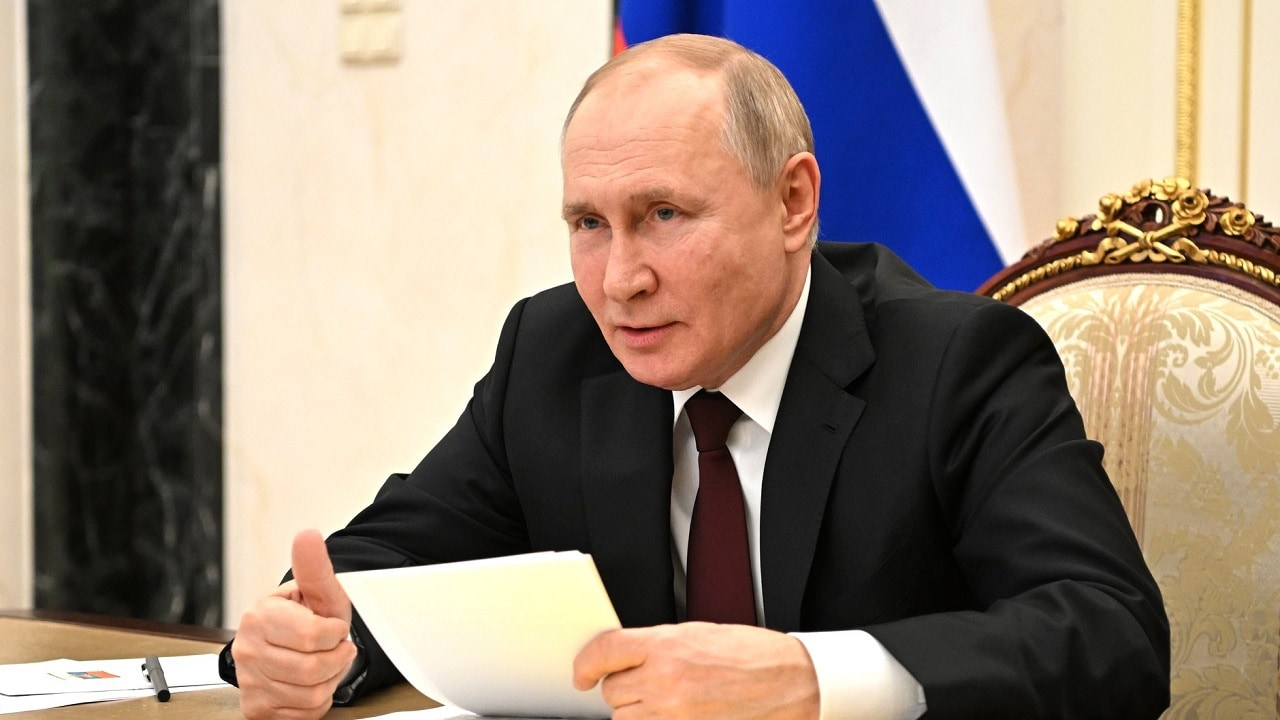
Russian President Putin. Image Credit: Russian Government.
Naturally, these outcomes may not take place. Putin may decide that one losing war is the most he can handle. Trump may decide that winning the Nobel Prize requires continued attention on Ukraine. But the logic of might-makes-right interventions could just as easily prove to be irresistible to both men.
America’s actions in Venezuela legitimize invasions of pesky neighbors by great powers and by would-be great powers. Putin is committed to reestablishing a Russian empire. He has even come up with dubious rationalizations for his imperialism in Ukraine: the supposed specter of Ukraine’s membership in NATO (which never expressed an interest in Ukraine’s membership), the supposed desire of the West to destroy Russia, and the supposed persecution of Russian minorities in non-Russian states.
America’s use of force in Venezuela allows Putin to dispense with these unpersuasive arguments and simply invade. But there is a great difference between the United States, which remains a superpower, and Russia, which has long since stopped being one.
Indeed, Russia’s disastrous war against Ukraine has shown that it may no longer even be a regional great power.
America will survive Venezuela. Given Russia’s parlous condition, any Putinist pursuit of Trumpian adventurism is sure to weaken and possibly destabilize it. Venezuela could mean the end of Russia.
About the Author: Dr. Alexander Motyl
Dr. Alexander Motyl is a professor of political science at Rutgers-Newark. A specialist on Ukraine, Russia, and the USSR, and on nationalism, revolutions, empires, and theory, he is the author of 10 books of nonfiction, including Pidsumky imperii (2009); Puti imperii (2004); Imperial Ends: The Decay, Collapse, and Revival of Empires (2001); Revolutions, Nations, Empires: Conceptual Limits and Theoretical Possibilities (1999); Dilemmas of Independence: Ukraine after Totalitarianism (1993); and The Turn to the Right: The Ideological Origins and Development of Ukrainian Nationalism, 1919–1929 (1980); the editor of 15 volumes, including The Encyclopedia of Nationalism (2000) and The Holodomor Reader (2012); and a contributor of dozens of articles to academic and policy journals, newspaper op-ed pages, and magazines. He also has a weekly blog, “Ukraine’s Orange Blues.”