
Synopsis: This piece argues that a U.S. raid capturing Nicolás Maduro—paired with a broader strike campaign—may resemble Russia’s failed decapitation attempt in Ukraine in method, but not in meaning.
-The author says Putin invaded Ukraine to crush a democratic, sovereign choice and to reassert imperial claims.
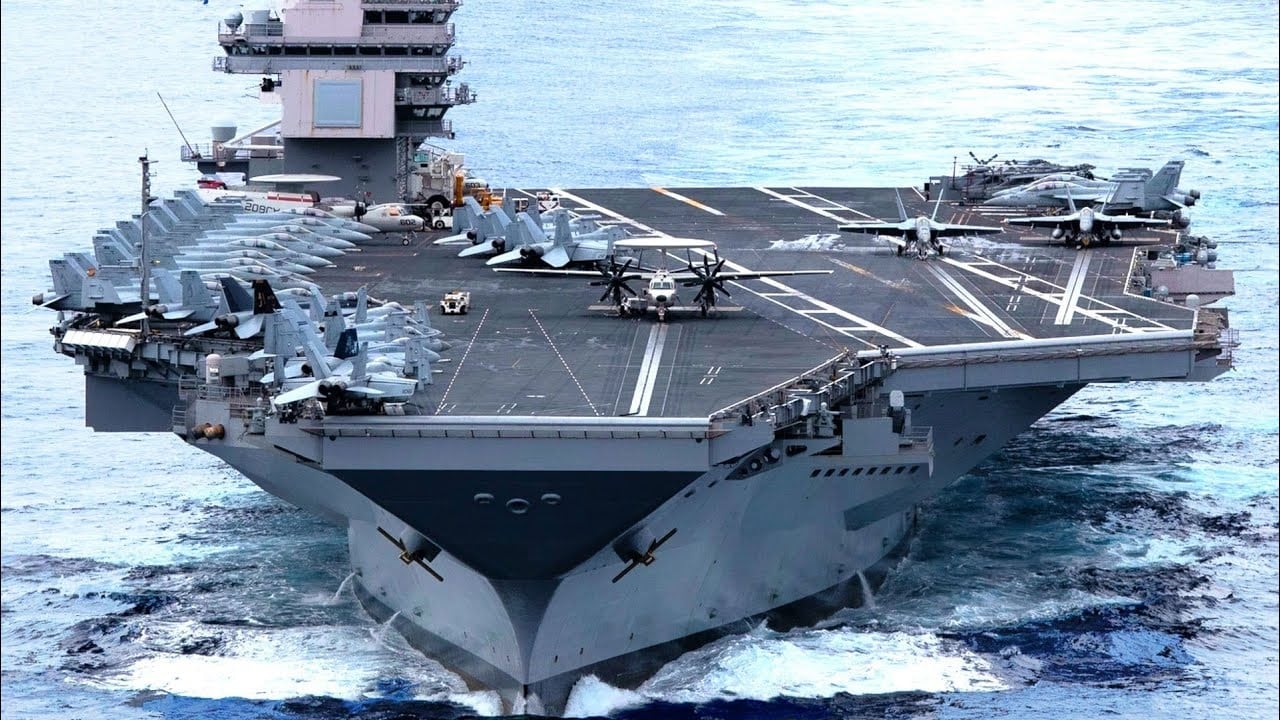
USS Gerald R. Ford. Image Credit: Creative Commons.
-At the same time, the U.S. objective in Venezuela is framed as reversing authoritarian consolidation and restoring political liberty—closer to Grenada or Panama than Kyiv.
-The essay leans on the “one person, one vote, one time” warning to portray Venezuela’s slide from democratic legitimacy into durable autocracy.
-It concludes that critics risk blurring moral distinctions for partisan reasons.
U.S. Intervention in Venezuela is Not Analogous to Russia in Ukraine
In the early morning hours of January 3, 2026, U.S. Special Forces captured Venezuelan President Nicolás Maduro and his wife against the backdrop of a broader bombing campaign that, in hindsight, appears more like a diversion or a tactic to prevent Venezuelan forces from responding effectively.
From start to finish, the operation appears to be a successful example of what Russian President Vladimir Putin tried to do in Ukraine.
Russia launched its full-scale invasion of Ukraine on February 24, 2022. Its plan was simple: Decapitate the Ukrainian government by capturing or killing President Volodymyr Zelensky.
Putin hoped to accomplish his goal within three days and expected Ukraine to fold quickly. Nearly four years later, Ukraine has turned into Russia’s bloodiest conflict since World War II.
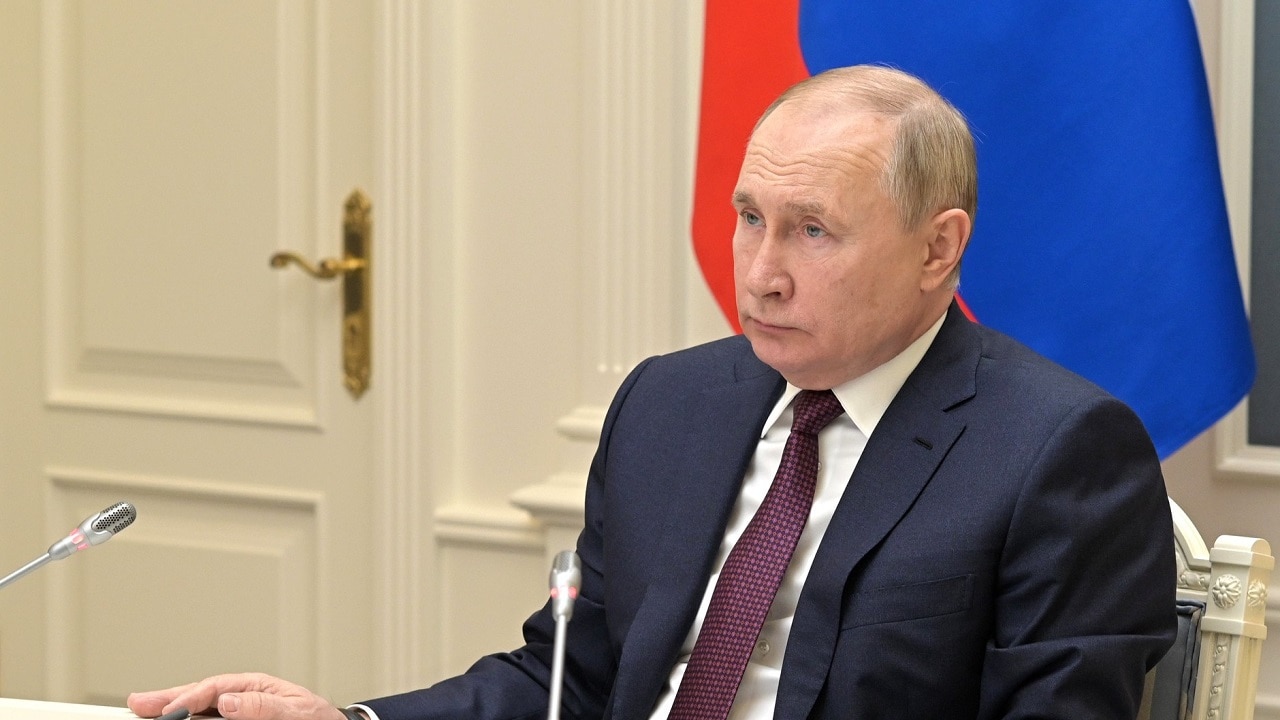
Vladimir Putin observes strategic deterrence forces exercise in the Kremlin’s situation room.
Both Putin and President Donald Trump may also justify their invasions in long-held beliefs about spheres of influence. Putin openly views the former Soviet Union, if not Eastern Europe, as his near abroad and approaches the region as a zone of influence in which Russia demands priority over competing powers.
On December 1, 2025, meanwhile, Trump reaffirmed the Monroe Doctrine of 1823, in which the United States asserted paramount influence in the Western hemisphere.
The similarities end there, however. Trump’s intervention in Venezuela is neither factually nor morally equivalent to Putin’s intervention in Ukraine.
Putin invaded Ukraine to punish democracy after that nation shed off decades of pro-Kremlin kleptocrats who betrayed Ukraine’s aspirations and prosperity at every opportunity. His goal was not to free Ukraine, but to deny its people the freedom to choose their destiny. Russia also sought to reassert its imperialist past and seize territory.
On July 12, 2021, Putin published an article in a Kremlin journal entitled “On the Historical Unity of Russians and Ukrainians.” His argument was simple: Ukraine was illegitimate as a nation and culture; he argued that any difference between Russians and Ukrainians was illusory, and more the product of foreigners’ imagination than reality.
Why Go After Venezuela Now?
Trump’s capture of Maduro was not motivated by a quest for territory nor a desire to erase a nation; rather, as with President Ronald Reagan’s 1983 invasion of Grenada and George H.W. Bush’s 1989 invasion and arrest of Manuel Noriega in Panama, the U.S. goal is to prevent and reverse a backslide away from liberty and consolidation of one-party rule.
Rather than castigate the United States for an invasion that killed approximately 500 Panamanians, ordinary Panamanians today express relief that the United States freed them from Noriega’s junta before he could transform a relatively wealthy country into what Venezuela became, even as they remain nervous about Trump’s rhetoric threatening to re-seize the Panama Canal.
On June 2, 1992, former Assistant Secretary of State Edward Djerejian delivered a speech at Meridian House in Washington, DC, in which he sought to explain Clinton administration opposition to Algeria’s Islamist regime, despite its earlier election victory. “We are suspect of those who would use the democratic process to come to power, only to destroy that very process in order to retain power and political dominance,” he explained, adding, “While we believe in the principle of `one person, one vote,’ we do not support `one person, one vote, one time.’”
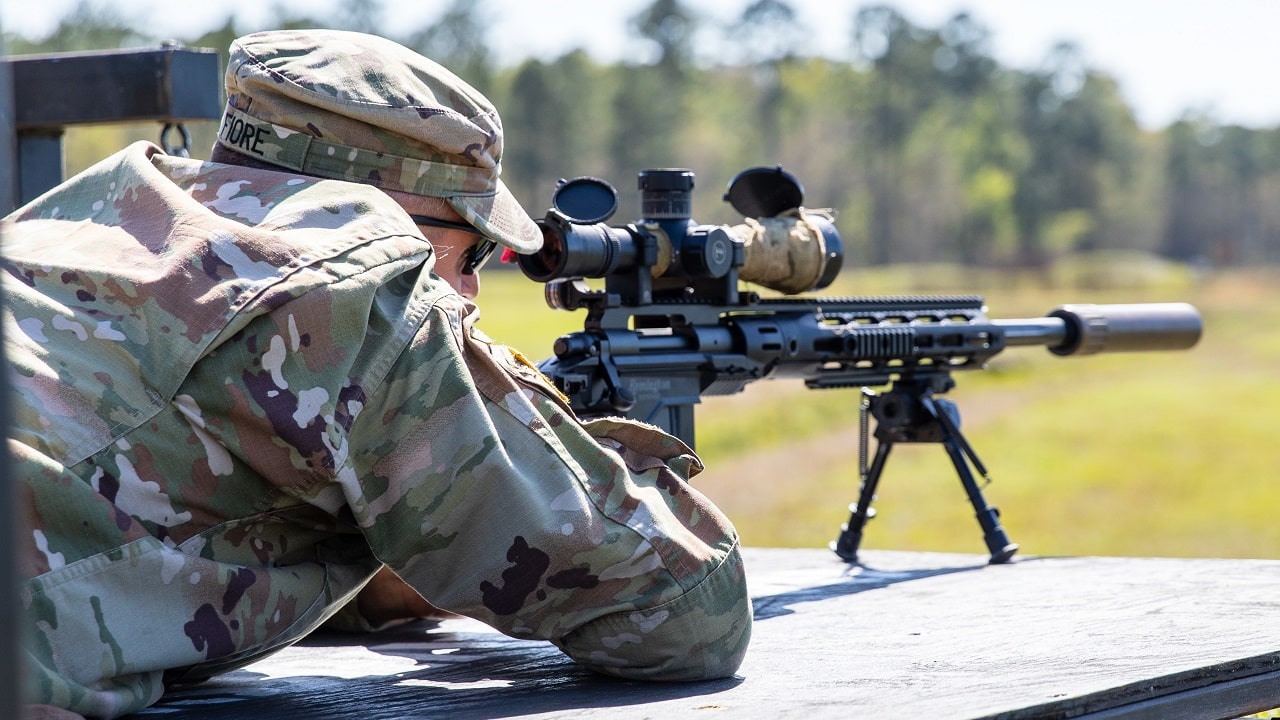
U.S Army Sgt. Matthew Fiore, a UH-60 Black Hawk crew chief representing the Marietta-based 78th Aviation Troop Command, Georgia National Guard, engages targets with the M2010 Enhanced Sniper Rifle at the sniper event during the 2022 Georgia National Guard Best Warrior Competition at Fort Stewart, Ga., March 21, 2022. The Best Warrior Competition tests the readiness and adaptiveness of our forces, preparing our Georgia Guardsmen to meet today’s unpredictable challenges. (U.S. Army photo by Sgt. 1st Class R.J. Lannom Jr.)
His standard applies to Venezuela today. Former coup leader and populist military officer Hugo Chávez’s victory in Venezuela’s 1998 presidential election was legitimate. Still, Chávez prioritized his ideological ambition to reorient Venezuela above any acknowledgement that he remained accountable to the Venezuelan people in elections.
He transformed Venezuela from the wealthiest South American country to one of its poorest, and one of the freest societies on the continent to the second most autocratic after Cuba. Today, Freedom House ranks Venezuela lower in its annual democracy scores than dictatorial Egypt, Russia-puppet Transnistria, and gang-controlled Haiti. Cancer claimed Chávez in 2013, and his vice president, Maduro, took over.
But while Chávez had charisma, Maduro had none. Even Chávez’s most ardent supporters on the left grew quiet as they could not abide Maduro personally. Most Venezuelans kept their heads down as they sold belongings to stay afloat, hoping that they could outlast Maduro and then recover.
Congress may debate the legality of Trump’s action, though precedent matters. His critics may argue that his military intervention is Putinesque and may even empower or justify Putin’s actions after the fact. The opposite, however, is true.
The best analogy to Trump’s move would not be Putin marching into Kyiv, but Zelensky sending Special Forces into the Kremlin to capture Putin.
Trump may polarize Americans, but Trump derangement syndrome should not lead his detractors to downplay Venezuela’s freedom for the sake of yet one more opportunity to criticize the president.
About the Author: Dr. Michael Rubin
Michael Rubin is a senior fellow at the American Enterprise Institute and director of policy analysis at the Middle East Forum. The opinions and views expressed are his own. A former Pentagon official, Dr. Rubin has lived in post-revolution Iran, Yemen, and both pre- and postwar Iraq. He also spent time with the Taliban before 9/11. For more than a decade, he taught classes at sea on the Horn of Africa and the Middle East, covering conflicts, culture, and terrorism to deployed US Navy and Marine units. The views expressed are the author’s own.