Key Points and Summary – The latest Trump–Zelensky meeting produced more optics than outcomes, but for Kyiv, that may be the point.
-With Trump repeatedly hinting he could walk away, simply keeping him engaged is framed as a victory.
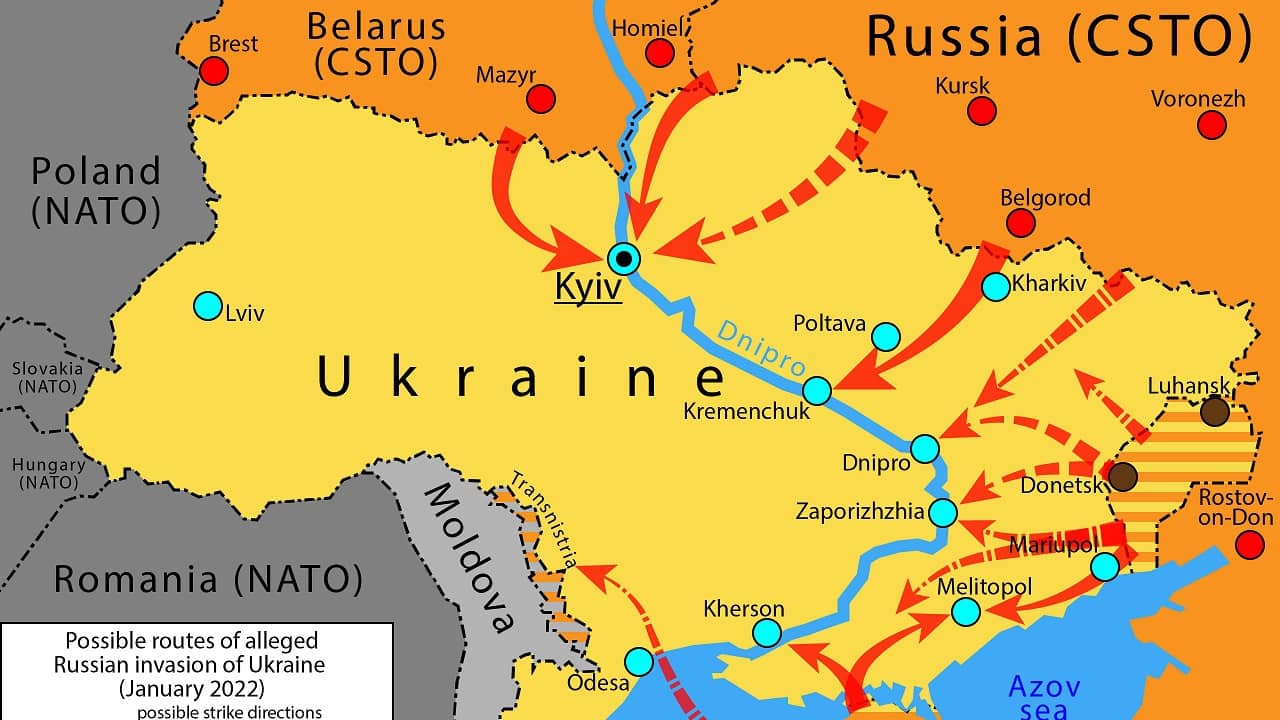
Possible routes of alleged Russian invasion of Ukraine (January 2022). Map depicts two slightly different plans published by German Bild ([1]) and US-based CSIS ([2])

Map of Military Forces In and Around Ukraine. Image Courtesy of Dr. Karber.
-The biggest gap remains security guarantees: the U.S. floated a 15-year guarantee, while Ukraine wants at least 30 to deter a future Russian return.
-The Donbas is still the central political tripwire—Russia wants full control, Trump urges concessions, and Ukrainian public opinion strongly resists.
-A “free economic zone” concept and even a referendum remain on the table, but nothing is close to settled.
Trump’s Ukraine Plan Hits a Wall: The 15-Year Security Guarantee Problem
If the phrase “they say we live in a time of diminished expectations” had not already been invented, someone would have coined it after observing this past weekend’s talks between Ukrainian President Volodymyr Zelenskiy and United States President Donald J. Trump.
The discussions between the two produced little in terms of substance, and there is still significant ambiguity as to the length of time and the level of commitment by Trump to stay actively involved in resolving Ukraine’s almost four-year-long war with Russia.
Headlines about the discussion’s outcome telegraphed the lack of progress in resolving the unresolved peace plan that the US and Ukraine have jointly proposed to Russian President Vladimir Putin. “For Zelensky, Just Keeping Trump Talking Counts as a Win,” reads today’s headline in the NY Times.
“The fact that they’re talking is a victory in and of itself,” echoed Harry Nedelcu, senior director at the Rasmussen Global research organization, told the Times.
After their discussions on Sunday, Trump signalled that, for now, he would remain engaged in the peace negotiations, which is also a win of sorts for Ukraine. In recent months, Trump has repeatedly raised the possibility that he would walk away from the process, exasperated over the lack of any substantive progress.
The American president also stopped short of setting another deadline by which the two nations had to reach some manner of peace agreement. This restraint follows Trump’s attempts to force a settlement twice, first declaring that Ukraine and Russia had until Thanksgiving—later changed to Christmas—neither of which produced a final agreement.
“I don’t have deadlines,” Trump told the press as he met Mr. Zelensky upon the latter’s arrival at the American president’s Mar-a-Lago residence in Florida. “You know what my deadline is? Getting the war ended,” he said.
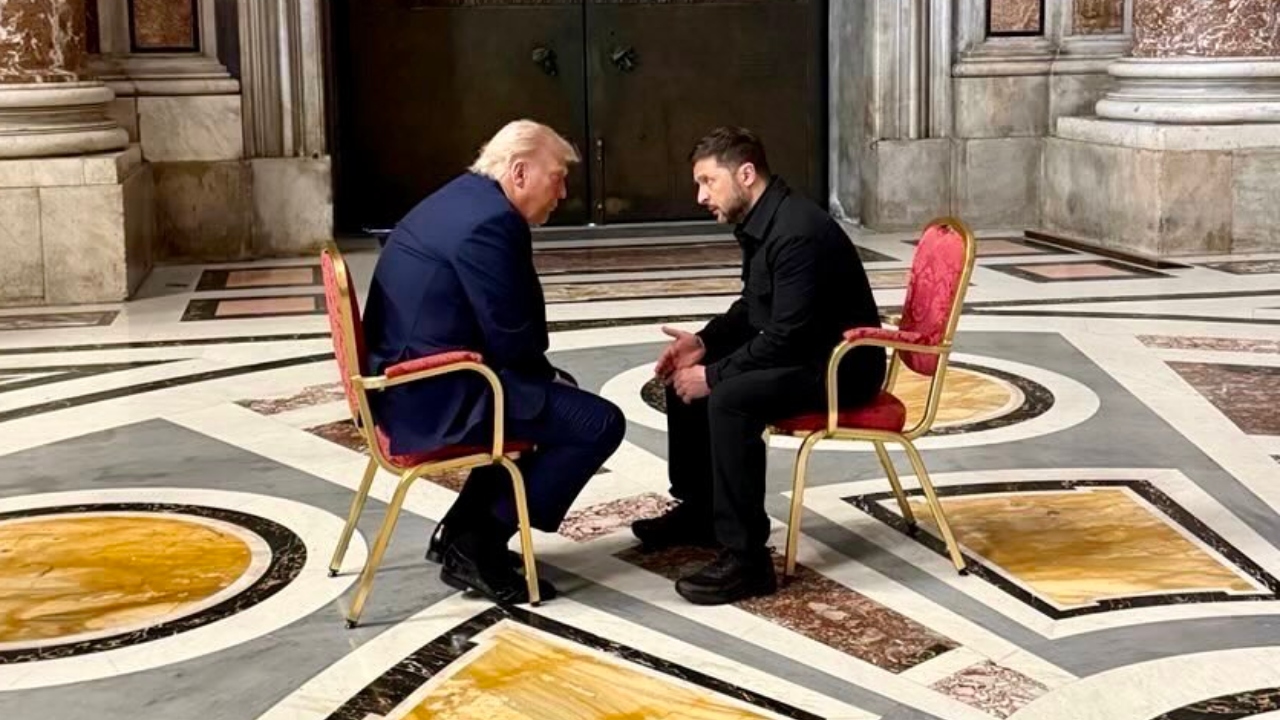
Trump Meeting in the Vatican with Ukraine. Image Credit: White House.
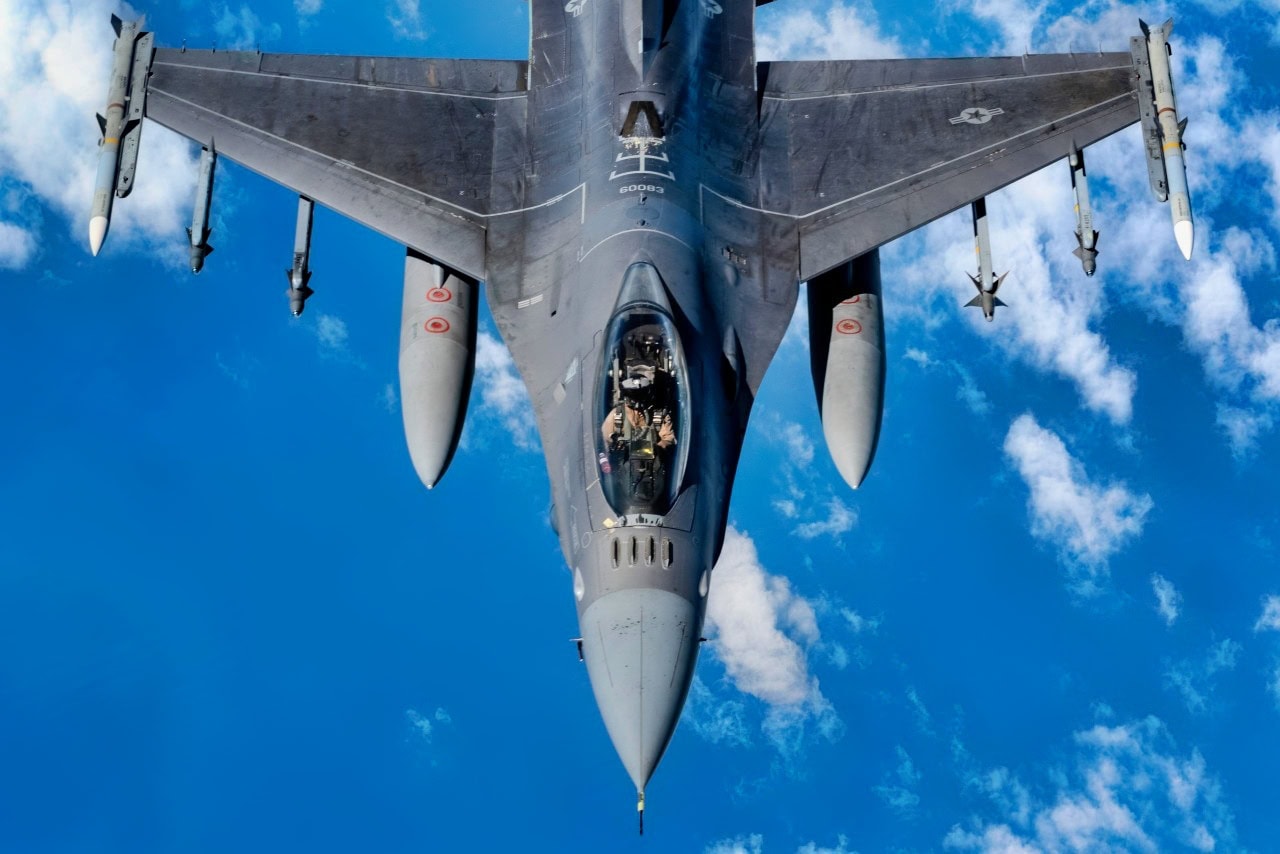
A U.S. Air Force F-16 Fighting Falcon flies a presence patrol over the U.S. Central Command area of responsibility, Feb. 23, 2025. Fighting Falcons fly routine patrols over the AOR to deter aggression and bolster the regional defensive posture. (U.S. Air Force photo by Staff Sgt. Jackson Manske)
Not Enough of a Guarantee for Ukraine
Trump declared the results of the high-stakes peace talks between the US and Ukraine “terrific.” But he also admitted that there remained “thorny issues” before an agreement could be reached to end the war with Russia.
For his part, Zelensky said that there were still points on which the two sides were some distance apart. One of the less-than-stellar offers made during these negotiations was a security guarantee for Ukraine that would be valid for only 15 years.
The Ukrainian president said Kyiv wanted the duration of the security codicil to be at least twice that number of years, as a necessary deterrent to future Russian aggression.
In response to Zelenskiy’s request for a 30-year or more agreement on a security guarantee, Trump said he “would think about it,” the Ukrainian President told the press on Monday.
“The challenge for Zelensky is to demonstrate to Trump that he’s doing his best to deal with Trump’s version of the peace plan while making it digestible for the Ukrainian society,” Mr. Nedelcu said.
Trump said on Sunday that, irrespective of any US security guarantees, he expected Kyiv’s European allies to make considerable contributions to any such agreement, in concert with the US backing the agreement.
“There will be a security agreement, it’ll be a strong agreement, and the European nations are very much involved,” Trump stated.
Still Points of Disagreement
At the heart of Mr. Zelensky’s challenge are major sticking points, not least of which is the final disposition of territory still held by Ukraine in the eastern Donetsk region of the Donbas.
Russia wants Ukraine to cede the entire region, a move that Trump has encouraged Kyiv to take. Still, opinion polls in Ukraine show that a vast majority of the population opposes any territorial concessions.
Zelenskiy maintains he does not have the moral right to give up territory. Additionally, under Ukraine’s constitution, no territory may be handed over to another nation unless the electorate approves it in a popular referendum.
Washington has been exploring the possibility of a compromise by creating a “free economic zone” in the unoccupied Donbas. Kyiv said this option would only be considered if Russian forces were required to withdraw farther to the east.
Zelensky also said the US would continue to explore the possibility of including the referendum in Ukraine as part of the 20-point peace plan that currently serves as the basis for negotiations. “Everyone understands that this is the strongest historical signature of the strength of this document,” he said.
About the Author: Reuben F. Johnson
Reuben F. Johnson has thirty-six years of experience analyzing and reporting on foreign weapons systems, defense technologies, and international arms export policy. Johnson is the Director of Research at the Casimir Pulaski Foundation. He is also a survivor of the Russian invasion of Ukraine in February 2022. He worked for years in the American defense industry as a foreign technology analyst and later as a consultant for the U.S. Department of Defense, the Departments of the Navy and Air Force, and the governments of the United Kingdom and Australia. In 2022-2023, he won two awards in a row for his defense reporting. He holds a bachelor’s degree from DePauw University and a master’s degree from Miami University in Ohio, specializing in Soviet and Russian studies. He lives in Warsaw.