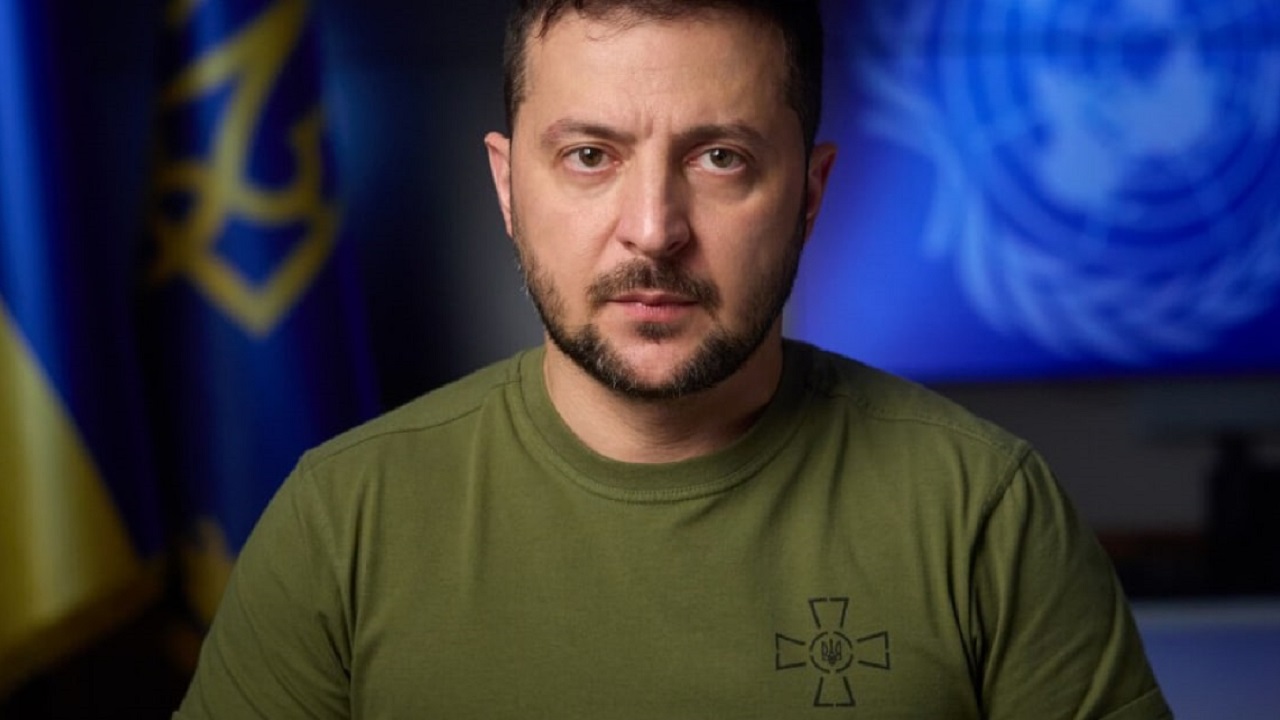
Synopsis: The piece revisits Volodymyr Zelensky’s defining response as Kyiv faced imminent attack in February 2022: he didn’t want evacuation help, he wanted the means to fight.
-That refusal became a strategic signal—bolstering morale at home, denying Russia an instant propaganda win, and reframing Western aid as support for Ukraine’s own defense rather than a rescue mission.
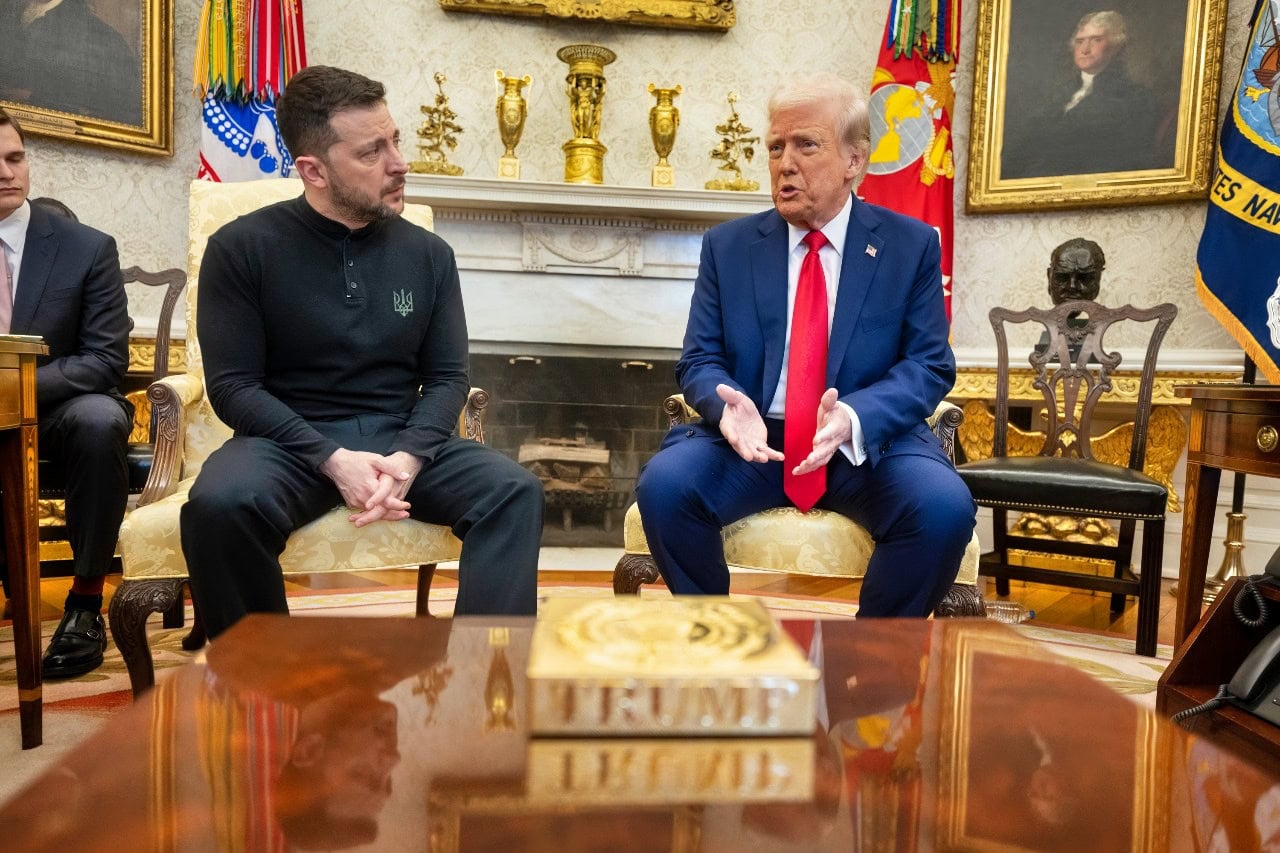
President Donald Trump greets President Volodymyr Zelenskyy of Ukraine, Friday, February 28, 2025, in the West Wing Lobby. (Official White House Photo by Daniel Torok).
-The article argues the quote matters again in late 2025 as Zelensky meets President Trump amid upbeat claims of progress on a peace framework, while core disputes—territory and the Zaporizhzhia plant—remain unresolved.
Zelensky’s Most Famous Line Has a Warning for Trump’s “Peace Plan”
Military Quote of the Day by Ukrainian President Volodymyr Zelensky: “I need ammunition, not a ride.”
Some famous lines are polished after the fact.
Some were not even said by the person they are later attributed to.
This is not the case for one biting line offered by Ukrainian President Volodymyr Zelensky back when Russia launched its full-scale invasion.
As Russia’s forces seemed to be closing in on Kyiv in February 2022, the United States offered to facilitate Zelensky’s evacuation.
His reported reply was a blunt one: “The fight is here; I need ammunition, not a ride.”
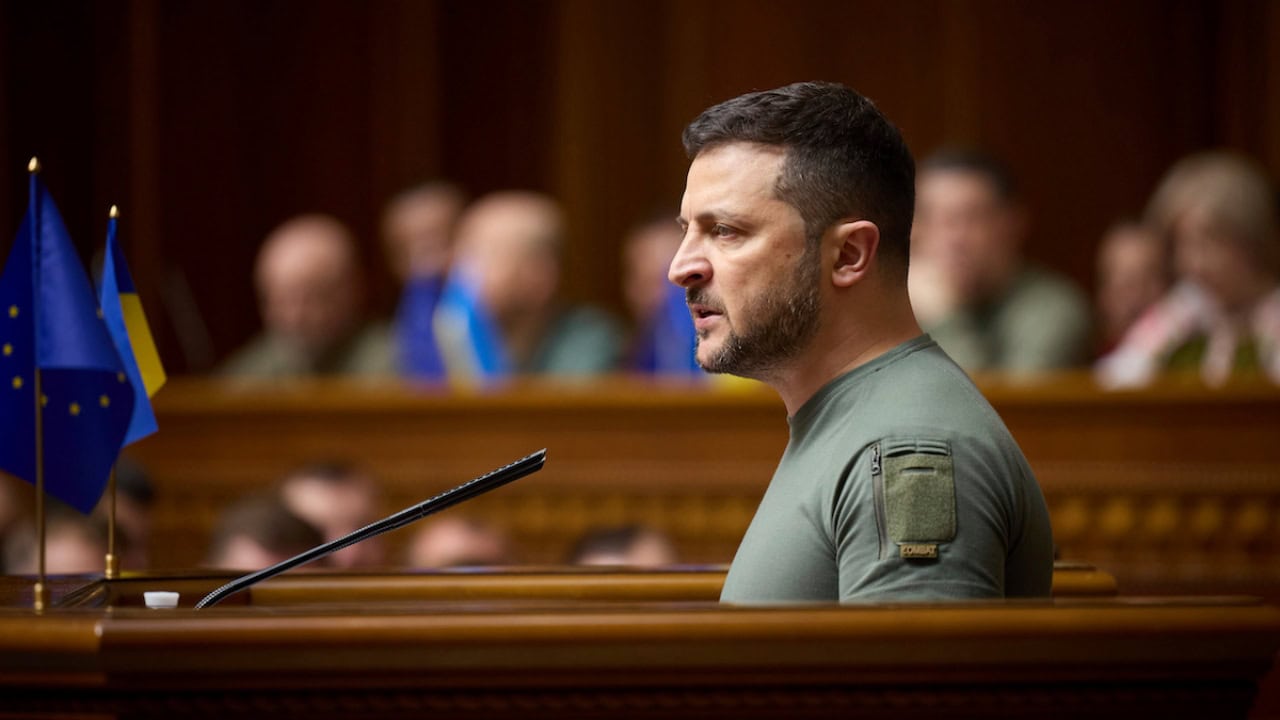
President Zelensky of Ukraine. Image Credit: Creative Commons.
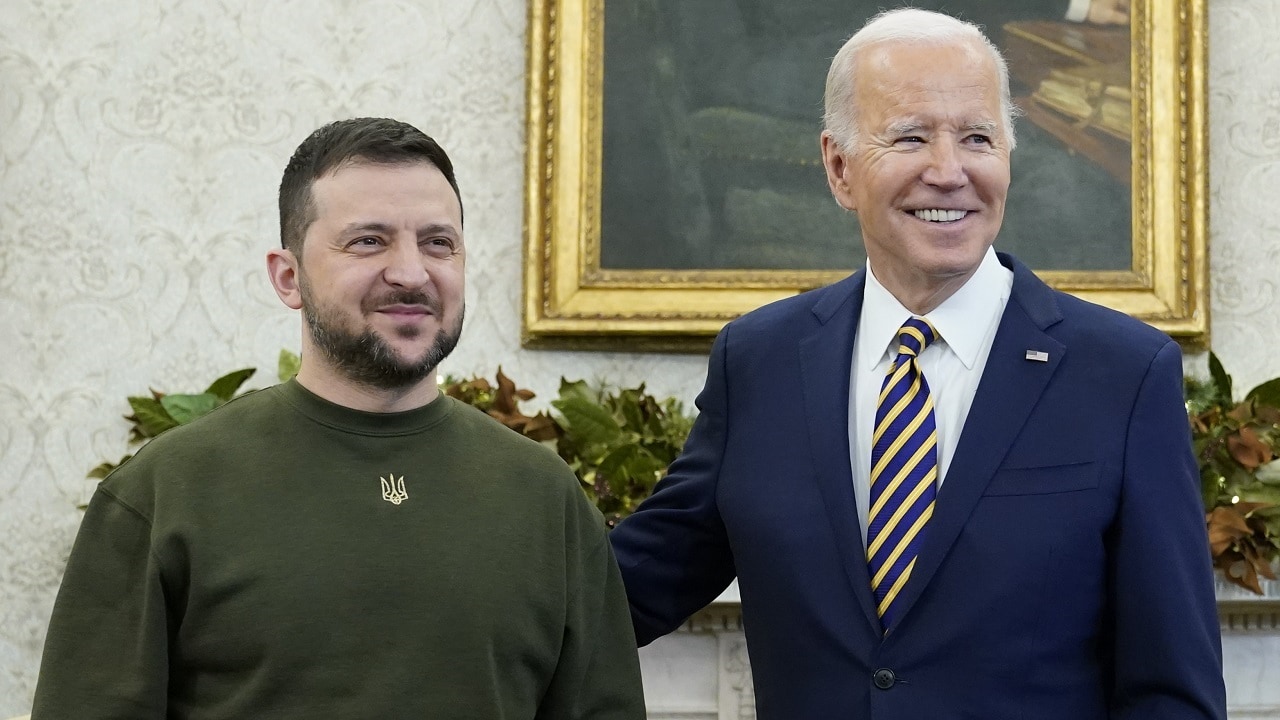
Volodymyr Zelensky and Biden. White House Handout.
Kyiv was expected to fall, as was its government. It would not have been the first time within living memory that Ukraine fell under an aggressive foreign power. But Zelensky refused to flee, a move which would have surely increased the chances of Russian military propaganda and military victory.
What followed made the line famous: the street videos, the sleepless addresses, the insistence that Ukraine was still there.
In a conflict where artillery and drones decide the future, morale still decides whether a state functions at all.
A president who stays in the capital, visibly, tells civil servants to keep showing up and soldiers to keep holding. A president who runs away, even for justifiable reasons, invites panic and offers the invader a morale boost.
The quote also subtly reframed Ukraine’s ask as a request for support rather than rescue.
That distinction mattered for Western publics and parliaments, especially in countries where foreign wars are routinely sold as bottomless commitments.
Zelensky’s line suggested that his country was willing to do the legwork if its allies would simply offer them the means to achieve their stated goals. Of course, the huge funding offered to Ukraine by NATO and its allies remains a source of controversy, especially as living costs soar – although polling suggests general support for Ukraine’s defence in Western Europe and the U.S.
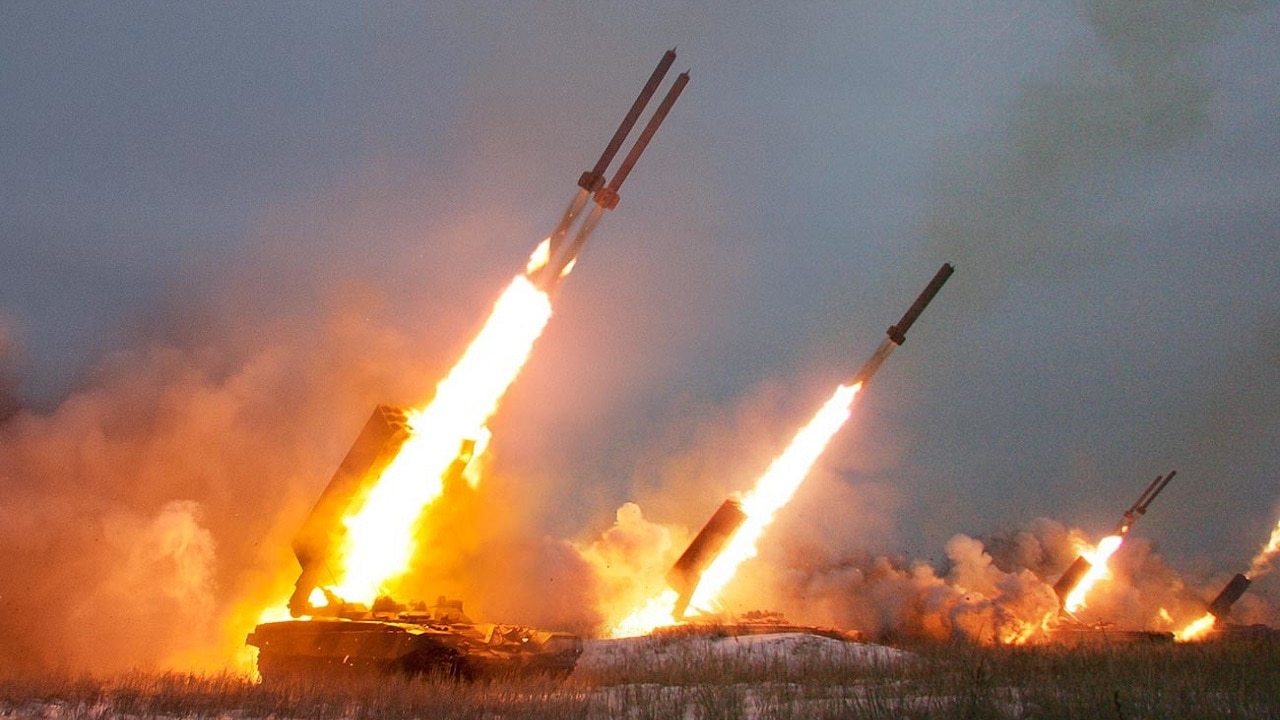
Cluster Bombs from TOS-2 MLRS launcher. Image Credit: Russian Armed Forces.
Fast-forward to late December 2025, and you can see why the quote is resurfacing in coverage again. Zelensky just met U.S. President Donald Trump at Mar-a-Lago, with both sides talking up progress on a proposed 20-point peace plan, which Zelensky has described as “90% agreed,” while Trump said security guarantees were “close to 95%” done.
A Ukraine Peace Deal?
Yet the same briefings acknowledge what everyone already knows, that no one is willing to compromise over land.
The Donbas remains the thorniest political question. The Russian-occupied Zaporizhzhia nuclear plant also remains a sticking point. Trump has also been publicly optimistic about Russia’s intentions in a way that many Ukrainians find difficult to stomach, particularly with winter strikes still battering power infrastructure.
This is where the quote becomes particularly interesting today.
If the negotiations drift toward “a ride” in new clothing, pressure for premature territorial concessions or a settlement that relies on trusting Moscow, then Zelensky’s most famous line becomes an uncomfortable reminder of Ukraine’s core demand for help in its defensive fight.
About the Author: Georgia Gilholy
Georgia Gilholy is a journalist based in the United Kingdom who has been published in Newsweek, The Times of Israel, and the Spectator. Gilholy writes about international politics, culture, and education.