
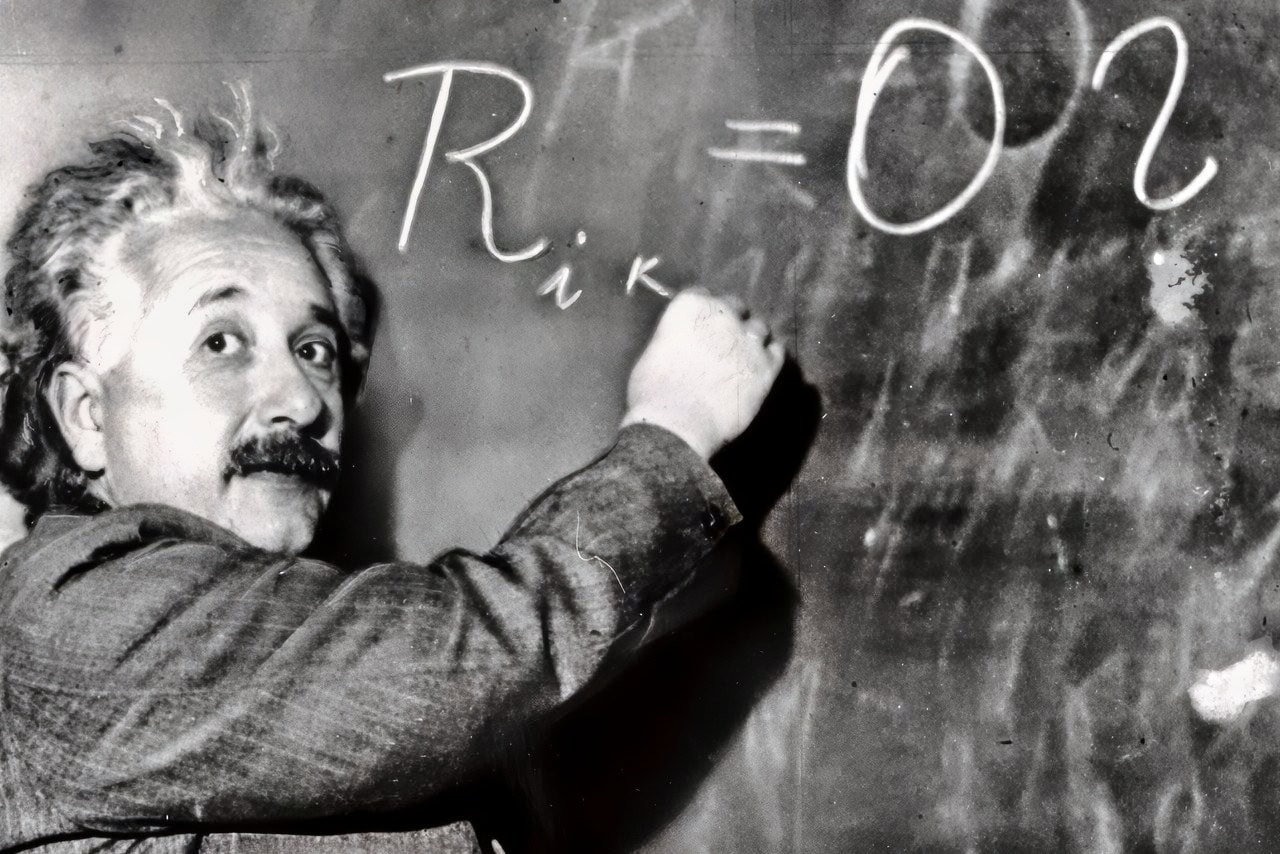
Synopsis: Albert Einstein warned that the unleashed power of the atom had changed everything—except humanity’s thinking—leaving the world drifting toward catastrophe.
-Though he was not a nuclear physicist and never worked on the Manhattan Project, his scientific ideas helped frame how enormous energy could be released from matter.
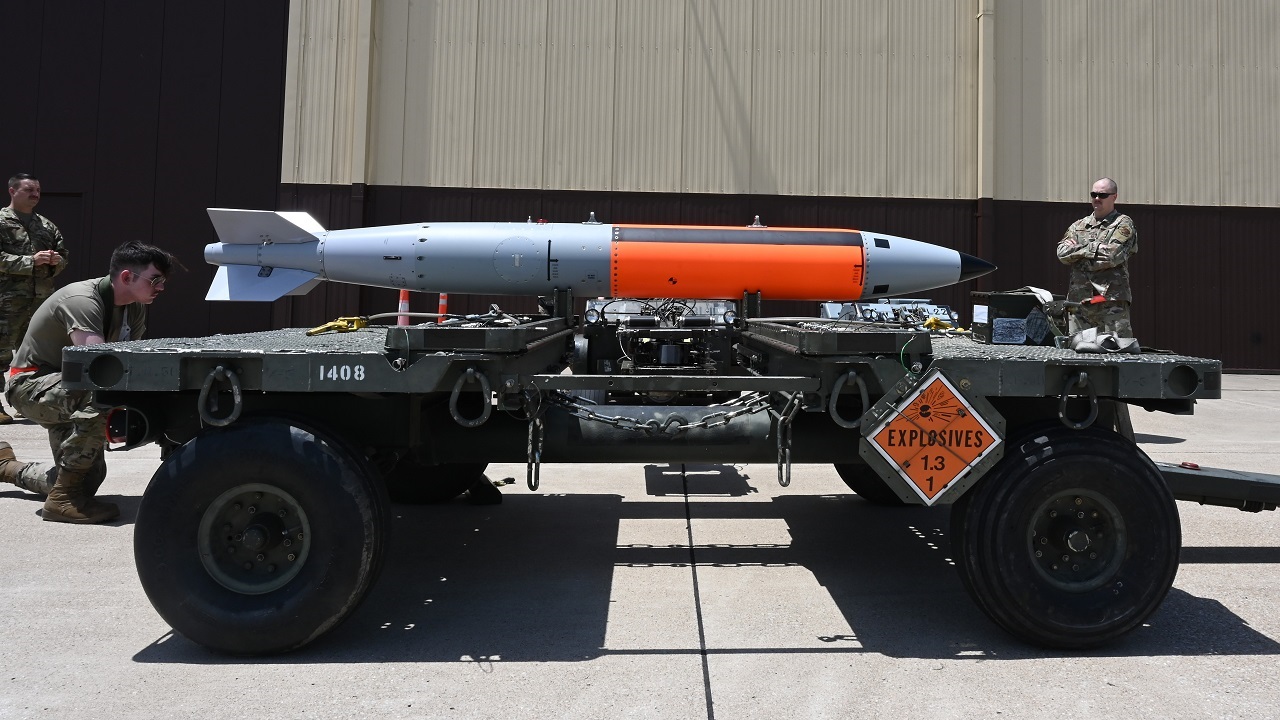
The 72nd Test and Evaluation Squadron test loads a new nuclear-capable weapons delivery system for the B-2 Spirit bomber on June 13, 2022 at Whiteman Air Force Base, Missouri. The 72nd TES conducts testing and evaluation of new equipment, software and weapons systems for the B-2 Spirit Stealth Bomber. (U.S. Air Force photo by Airman 1st Class Devan Halstead)
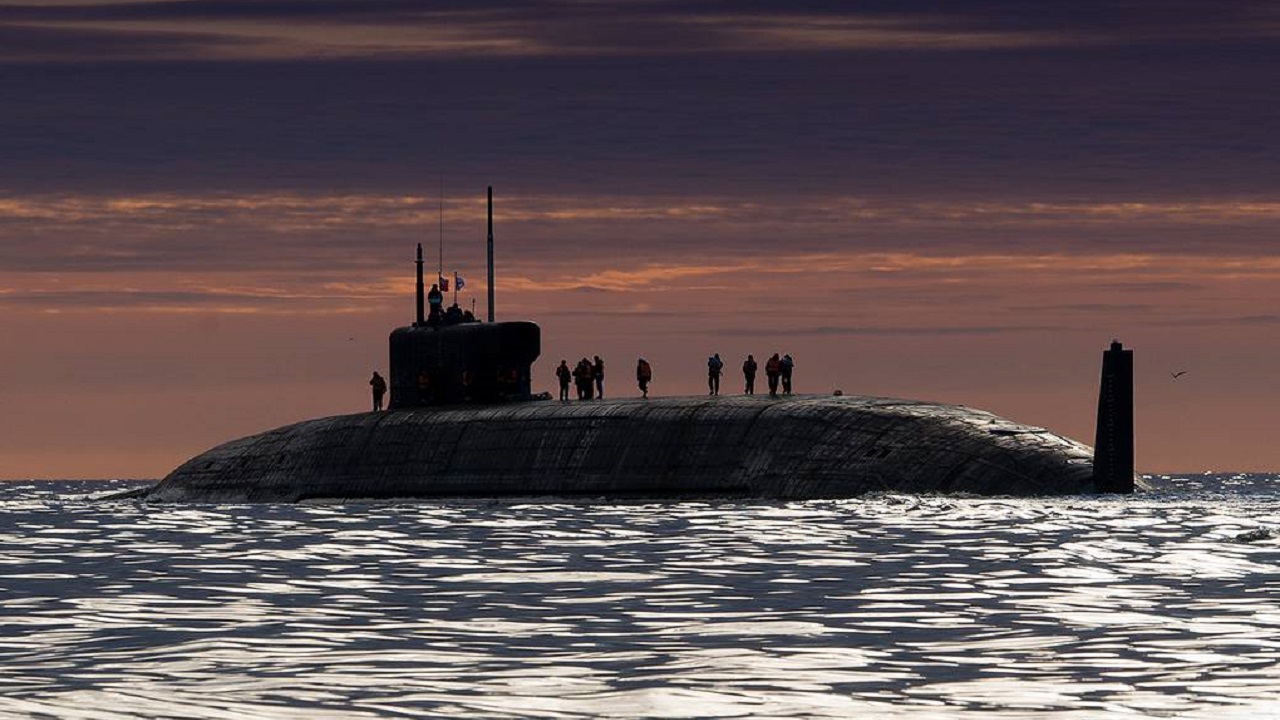
MAY 30, 2021: The Project 955A (Borei A) nuclear-powered ballistic missile submarine Knyaz Oleg sets off on its first sea trial in the White Sea. Oleg Kuleshov/TASS/Russian State Media.
-His bigger impact was political: in 1939, Einstein and Leo Szilard urged President Roosevelt to take Nazi atomic research seriously, helping catalyze U.S. nuclear efforts.
-After the war, Einstein regretted that role and spent his final years warning about nuclear danger, deterrence, and the risk of annihilation.
Einstein’s Nuclear Warning Has a Message for the World
“The unleashed power of the atom has changed everything save our modes of thinking, and we thus drift toward unparalleled catastrophe.”
It is said that Albert Einstein wrote these words to The New York Times in May 1946 in an attempt to warn the public about the dangers of the new nuclear weapons that had just been used on Hiroshima and Nagasaki the prior year.
Einstein was a committed pacifist throughout his entire life and was entirely opposed to WWII.
Ironically, Einstein indirectly contributed to the splitting of the atom, and his attempts to raise awareness about Nazi nuclear programs led the Allies to speed up the Manhattan Project.
Einstein’s Modest Contributions Toward Nuclear Fission
Albert Einstein was not a nuclear physicist, nor did he ever work on the Manhattan Project.
His scientific contributions to the Manhattan Project were indirect at most, but some of his scientific work did enable research on nuclear energy and the atomic bomb.
His famous equation, E = mc², was applied to quantify the energies released during radioactive decay. Scientists Lise Meitner and Otto Robert used Einstein’s equations to prove that the basic nuclear fission process was theoretically possible.
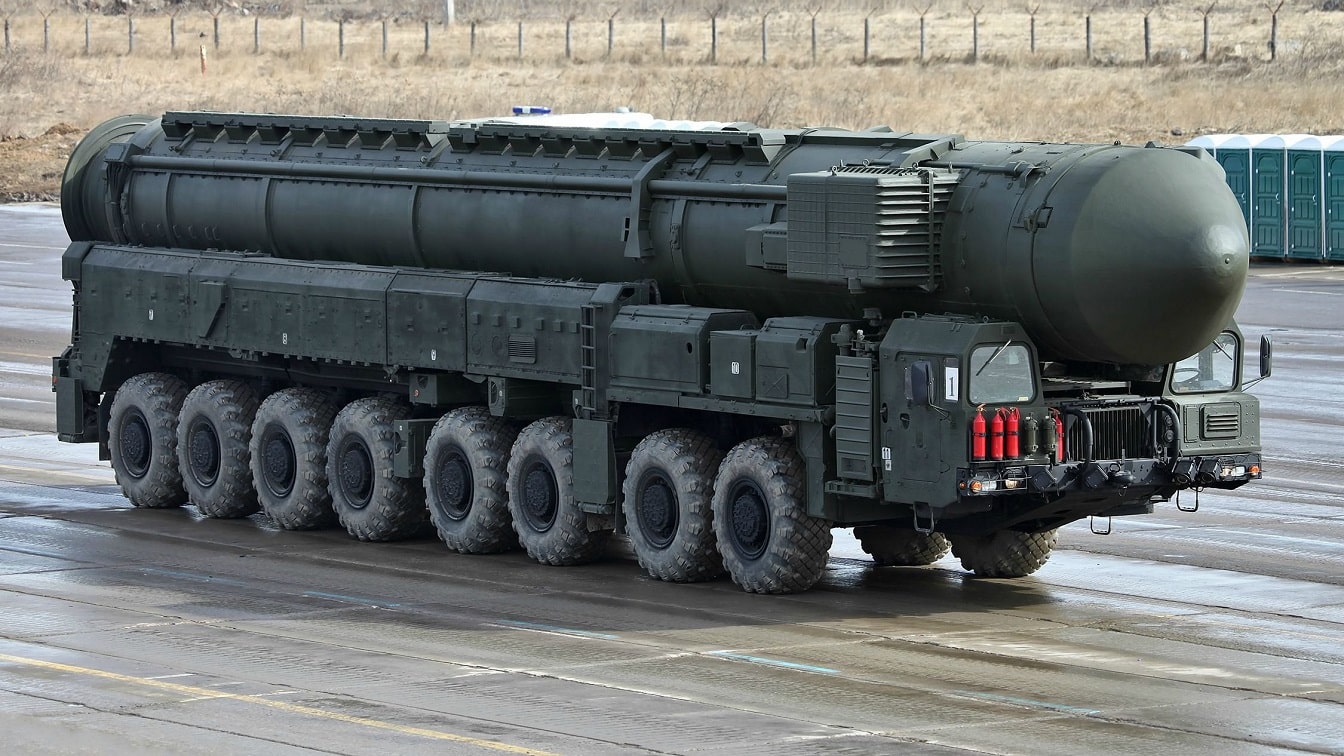
Russian Mobile ICBM. Image Credit: Creative Commons.
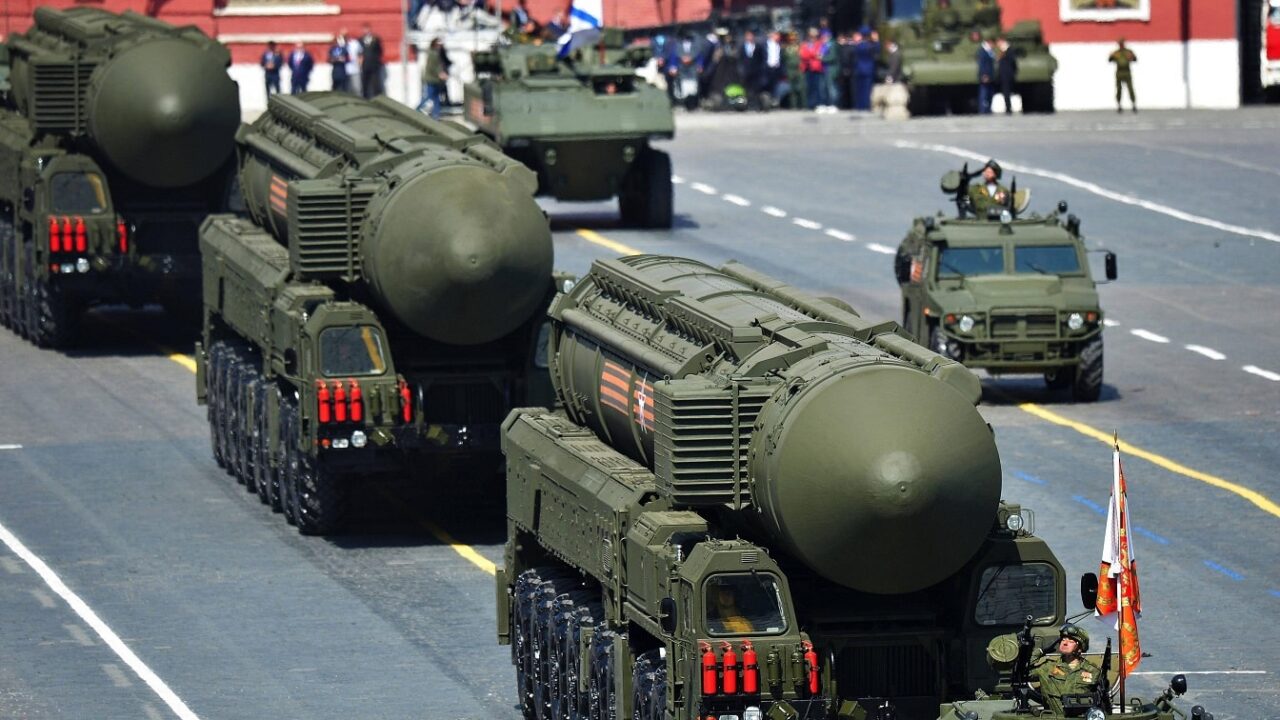
Russia’s Mobile Nuclear Weapons. Image Credit: Russian Federation.
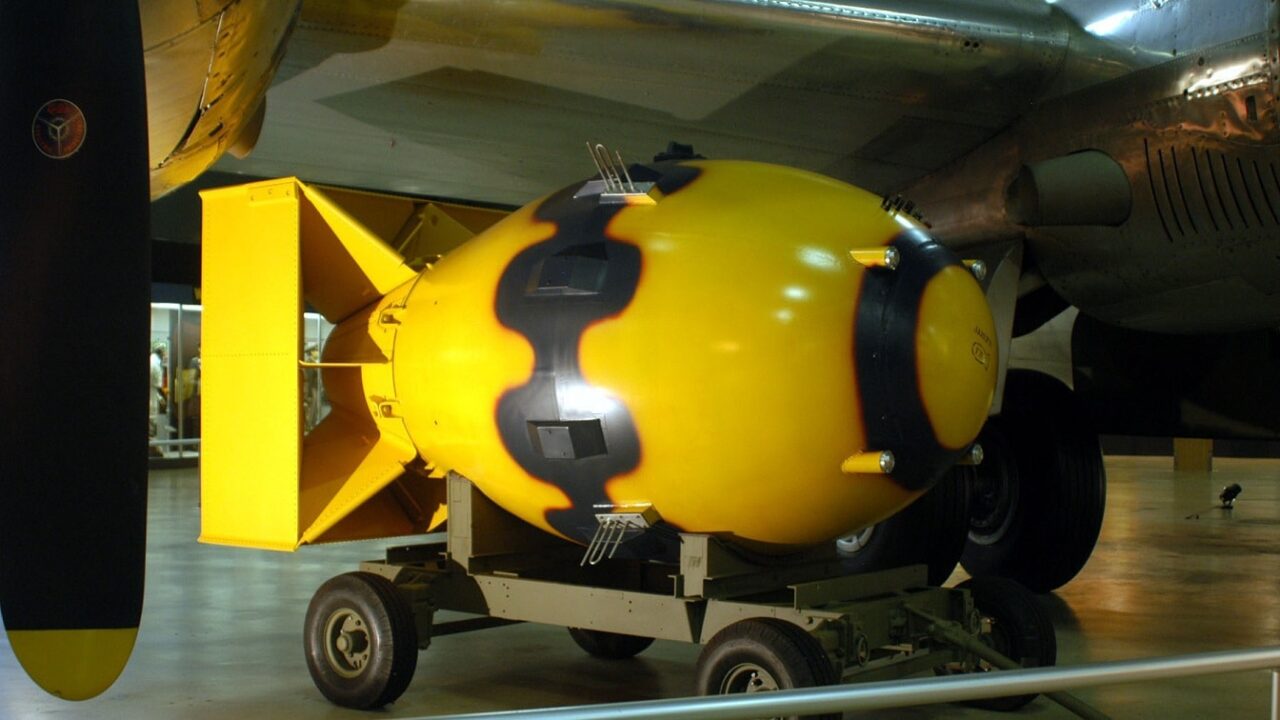
DAYTON, Ohio — “Fat Man” atomic bomb at the National Museum of the United States Air Force. (U.S. Air Force photo)
However, the equation, along with Einstein’s other works, only helped quantify the potential energy of an atomic bomb and played a minimal role in the actual Manhattan Project.
The myth that Einstein had a large role in the Manhattan Project came after the bombing of Hiroshima and Nagasaki, when the Smyth Report—the official government report on the development of the atomic bomb—featured E = mc² on the second page.
This report bolstered the public perception that Albert Einstein had a large part to play in the Manhattan Project, leading Time magazine to publish an issue with his face on the cover next to a mushroom cloud with his famous equation on it.
As Robert Serber, a physicist and researcher for the Manhattan Project, later recounted: “[Einstein’s] theory of relativity is not required in discussing fission. The theory of fission is what physicists call a non-relativistic theory, meaning that relativistic effects are too small to affect the dynamics of the fission process significantly.”
Albert Einstein and the Manhattan Project
But what did Einstein actually contribute to the development of the nuclear bomb?
Aside from his famous equation, not much scientifically speaking, but he was a key figure in launching the Manhattan Project.
In 1939, a group of Hungarian scientists tried to warn Washington about Nazi Germany’s ongoing efforts to construct an atomic bomb.
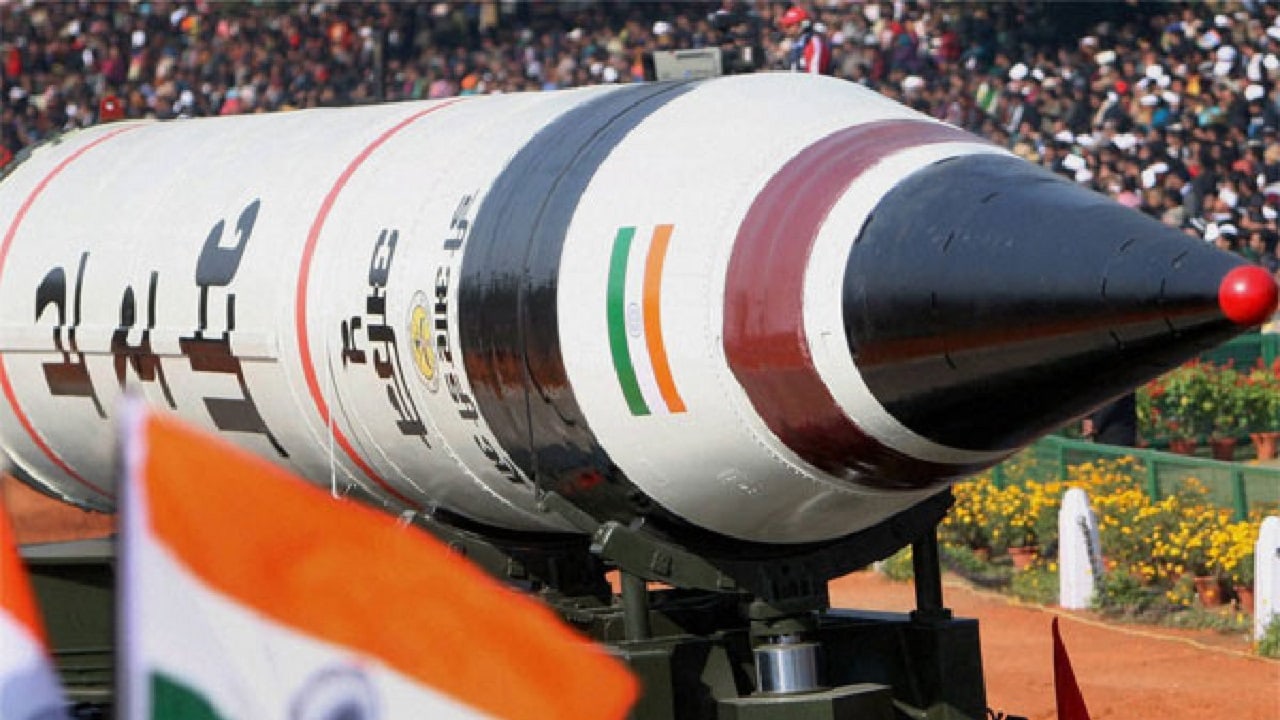
India’s nuclear weapons program is one of the world’s most advanced.
After these initial warnings were dismissed, Einstein and other prominent scientific figures at the time joined together to raise awareness of the issue in the U.S.
He, along with scientist Leo Szilard, drafted a letter to President Franklin D. Roosevelt, warning the administration of Germany’s efforts and recommending that the U.S. pursue a nuclear weapon of its own.
Albert Einstein was a committed pacifist, but he regarded it as absolutely vital to make sure that Germany under Hitler would never receive a nuclear bomb.
He used his personal connections with the Belgian royal family to gain access to the Oval Office and meet with Roosevelt personally. Einstein’s letters, along with his meetings with the President, are considered by many to be one of the key reasons why the U.S. launched investigations into nuclear weapons, ultimately leading to the Manhattan Project.
Despite his hatred of war, he considered it in the interest of humanity for the U.S. to beat Nazi Germany in the nuclear arms race.
Destruction or Deterrence: The Nuclear Dilemma
In the years after the war, he later regretted his small but significant contributions to the U.S. nuclear weapons program.
He described his letter to Roosevelt as “one great mistake in my life,” saying: “Had I known that the Germans would not succeed in developing an atomic bomb, I would have done nothing.”
This is a statement made by someone with the benefit of hindsight, but at the time, what else was he supposed to do?
The alternative was to allow Germany to continue its own nuclear weapons program, which might have been far more devastating than Hiroshima and Nagasaki if successful.
Today, we now know how and why the German nuclear program failed, but such luxuries were not available to anyone at the time.
The Legacy of Nuclear Weapons and Place in History
The legacy of nuclear weapons is a complicated topic to discuss.
On one hand, nuclear weapons (especially today) represent the most destructive capabilities that mankind is capable of creating. Just two atomic bombs were able to flatten the cities of Hiroshima and Nagasaki, resulting in hundreds of thousands of civilian deaths and forcing the strong-willed Japanese Army to surrender without a fight.
At the same time, nuclear deterrence has stopped many conflicts, thus saving an untold number of lives (I would argue WWIII would have assuredly happened between NATO and the USSR had it not been for nuclear deterrence).
War is a natural part of the human condition; nuclear weapons can curtail it, but they cannot fully contain it. While nuclear weapons have stopped numerous conflicts, they carry with them the threat of nuclear annihilation.
To end with one final quote from Albert Einstein: “I know not with what weapons World War III will be fought, but World War IV will be fought with sticks and stones.”
About the Author: Isaac Seitz
Isaac Seitz, a Defense Columnist, graduated from Patrick Henry College’s Strategic Intelligence and National Security program. He has also studied Russian at Middlebury Language Schools and has worked as an intelligence Analyst in the private sector.