
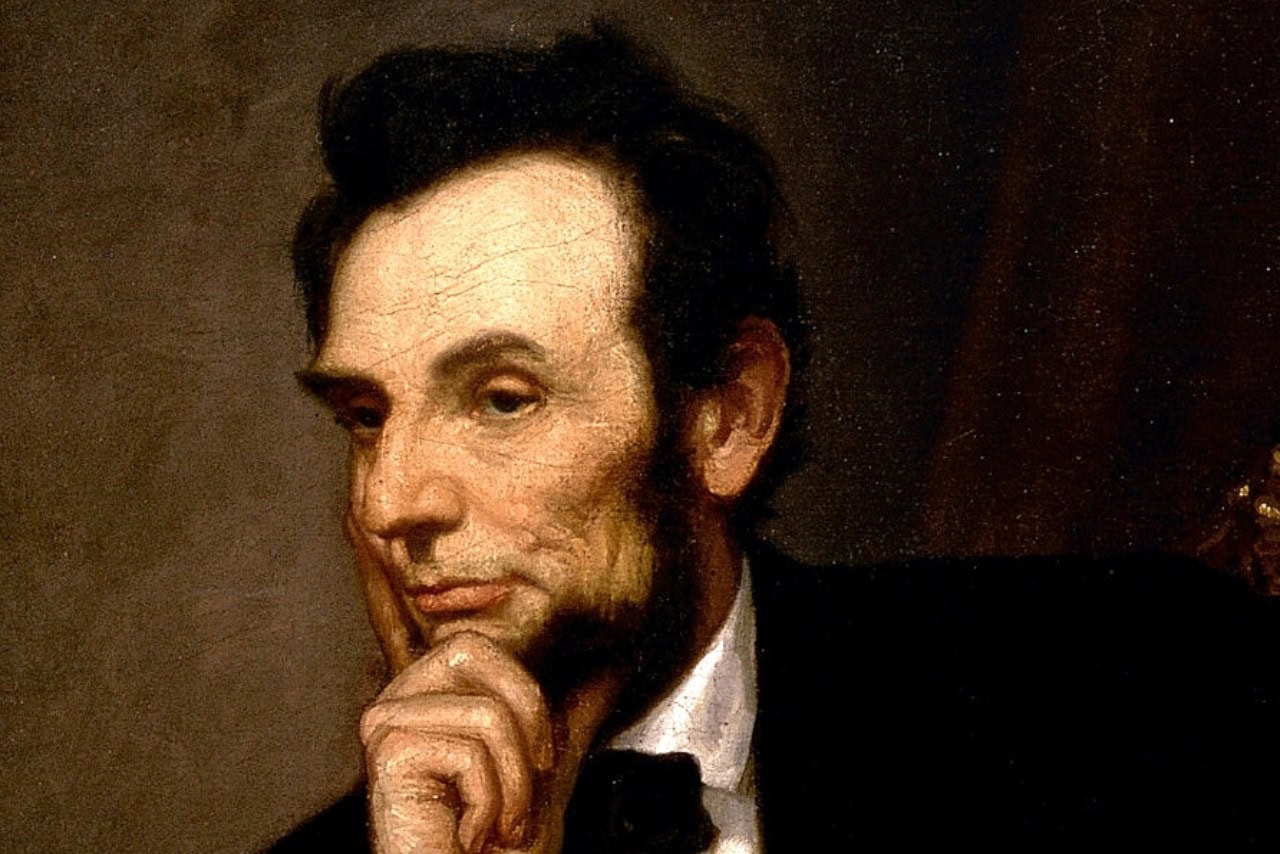
Synopsis: A widely shared quote—“There’s no honorable way to kill, no gentle way to destroy. There is nothing good in war, except its ending”—is often attributed to Abraham Lincoln, but it didn’t originate with the 16th president.
-The line comes from a pop-culture portrayal: a scripted version of Lincoln featured in a 1969 episode of Star Trek (“The Savage Curtain”).
Cannon Firing. Image Credit: Creative Commons.
-The quote’s tone makes it feel Lincoln-like, which helps explain why it gets reposted in anti-war discussions and quote collections.
-But the historical Lincoln never delivered those words, despite the enduring appeal of the sentiment.
Star Trek vs. Lincoln: Where the Famous Quote Actually Came From
Did Abraham Lincoln Quote: “There’s No Honorable Way to Kill, No Gentle Way to Destroy. There Is Nothing Good in War, Except Its Ending?”
The quote, often attributed to President Abraham Lincoln, was a strong anti-war statement, but was never actually said by the real President Lincoln.
The quote, “There’s no honorable way to kill, no gentle way to destroy. There is nothing good in war, except its ending,” was not actually spoken by Abraham Lincoln. It is a line from the script of a 1969 episode of the TV series Star Trek.
The quote was delivered by actor Lee Burger, portraying an iconic, mythologized version of Lincoln in the episode titled “The Savage Curtain.” The line has frequently, and wrongly, been attributed to the actual historical President Lincoln, often appearing in anti-war discussions or motivational quote collections.
Regardless, it is a quote that you would expect coming from President Lincoln.

Civil War. Image: Creative Commons.
Abraham Lincoln Biography
Abraham Lincoln was born February 12, 1809, near Hodgenville, Kentucky, US. He was elected the 16th president of the United States (1861–65), who preserved the Union during the American Civil War and brought about the emancipation of enslaved people in the United States.
Lincoln was born to Nancy and Thomas Lincoln in a one-room log cabin in Hardin County, Kentucky. His family moved to southern Indiana in 1816. Lincoln’s formal schooling was limited to three short periods in local schools, as he had to work constantly to help support his family.
In 1830, his family moved to southern Illinois, and Lincoln got a job working on a river flatboat hauling freight down the Mississippi River to New Orleans. After settling in the town of New Salem, Illinois, where he worked as a shopkeeper and a postmaster, Lincoln became involved in local politics as a supporter of the Whig Party, winning election to the Illinois state legislature in 1834.
Like his Whig heroes, Henry Clay and Daniel Webster, Lincoln opposed the spread of slavery into the territories. He envisioned expanding the United States, focusing on commerce and cities rather than agriculture.
Self-Taught Lawyer And Politician
Lincoln, despite lacking a formal education, taught himself the law and passed the bar examination in 1836. The following year, he moved to the newly named state capital of Springfield. For the next few years, he worked there as a lawyer and served clients ranging from individual residents of small towns to national railroad lines.
He met Mary Todd, a well-to-do Kentucky belle with many suitors, and they married in 1842. The Lincolns went on to have four children together, though only one would live into adulthood, Robert Todd Lincoln (1843–1926). The others, Edward Baker Lincoln (1846–1850), William Wallace Lincoln (1850–1862), and Thomas “Tad” Lincoln (1853-1871) died at young ages.
Early Political Career
In 1834, Lincoln ran for the state legislature and won. His strategy was based on selling himself rather than on partisan issues. He issued no platform statement, made no promises, and gave few speeches. Instead, he shook hands, told jokes, and visited nearly every family in the county. He was re-elected three times in 1836, 1838, and 1840.
In 1838, he responded to the death of the Illinois abolitionist and newspaper editor Elijah Parish Lovejoy, who was killed while defending his printing presses from an angry mob of pro-slavery citizens in Alton, Illinois.
Lincoln spoke at the Springfield Young Men’s Lyceum, emphasizing the dangers to democracy and the rule of law when citizens resort to violence rather than votes and reason to have their way.
In 1840, Lincoln campaigned for the populist war hero and Whig candidate William Henry Harrison.
In contrast to later views, he denounced Democratic candidate Martin Van Buren for having once voted to give free blacks the vote in New York. Lincoln, at this stage of his life, did not favor citizenship rights for blacks.
He opposed the Mexican-American War and joined the new Republican Party when the Whig Party disbanded and followed their anti-slavery views.
Lincoln lost a bid for the US Senate in 1854 and ran again in 1858 against Stephen Douglas, a powerful Senate Democrat.
The Lincoln-Douglas debates of 1858 were significant for launching Lincoln to national fame, sharpening the national divide over slavery, and shaping the political landscape leading to the Civil War, as they showcased contrasting views on popular sovereignty and the moral dimension of slavery, solidified Lincoln’s status as a Republican leader, and foreshadowed the 1860 election.
Presidential Election of 1860
In 1860, the United States was close to fracturing over the issue of slavery. The Democratic Party was split, and infighting among its ranks created an opening for Lincoln to be elected president, despite winning only 40 percent of the popular vote.
It was the highest turnout of registered voters in US history, at the time, with 81.2 percent of voters having their voices heard.
Lincoln, representing the Republican Party, dominated the Electoral College by garnering 180 votes to just 72 for John C. Breckinridge, 39 for John Bell, and just 12 (from Missouri and New Jersey) for Douglas.
Douglas toured the country, encouraging citizens to accept Lincoln’s coming presidency and appealing to them to keep the country united. Meanwhile, Southern states took steps toward secession, with South Carolina declaring its secession from the Union on December 20, 1860. The Secession Winter began, and six more southern states would leave and then form the Confederate States of America. Conventions and attempts to keep the country together and remain peaceful were held, but had no significant effects.
When Lincoln took the oath of office on March 4, 1861, his inaugural speech emphasized that he would support and defend the U.S. Constitution and asked Americans not to see themselves as divided or enemies. Just weeks later, Confederates fired on Fort Sumter in the harbor of Charleston, South Carolina, and the American Civil War began.
Civil War Years
Lincoln viewed secession as illegal, and his duty was to defend federal law and the nation’s unity, not initially to abolish slavery, though he morally opposed it.
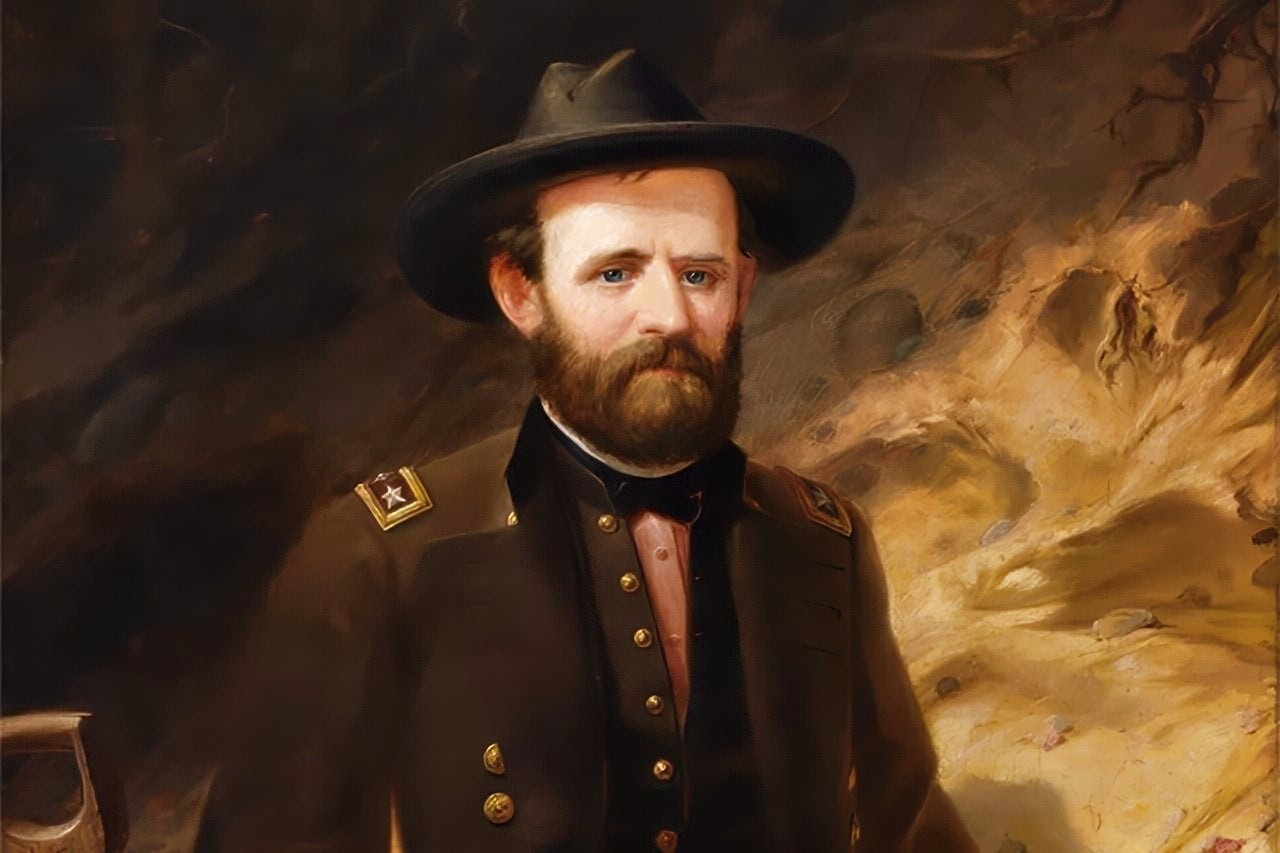
General Grant U.S. Army. Image Credit: Creative Commons.
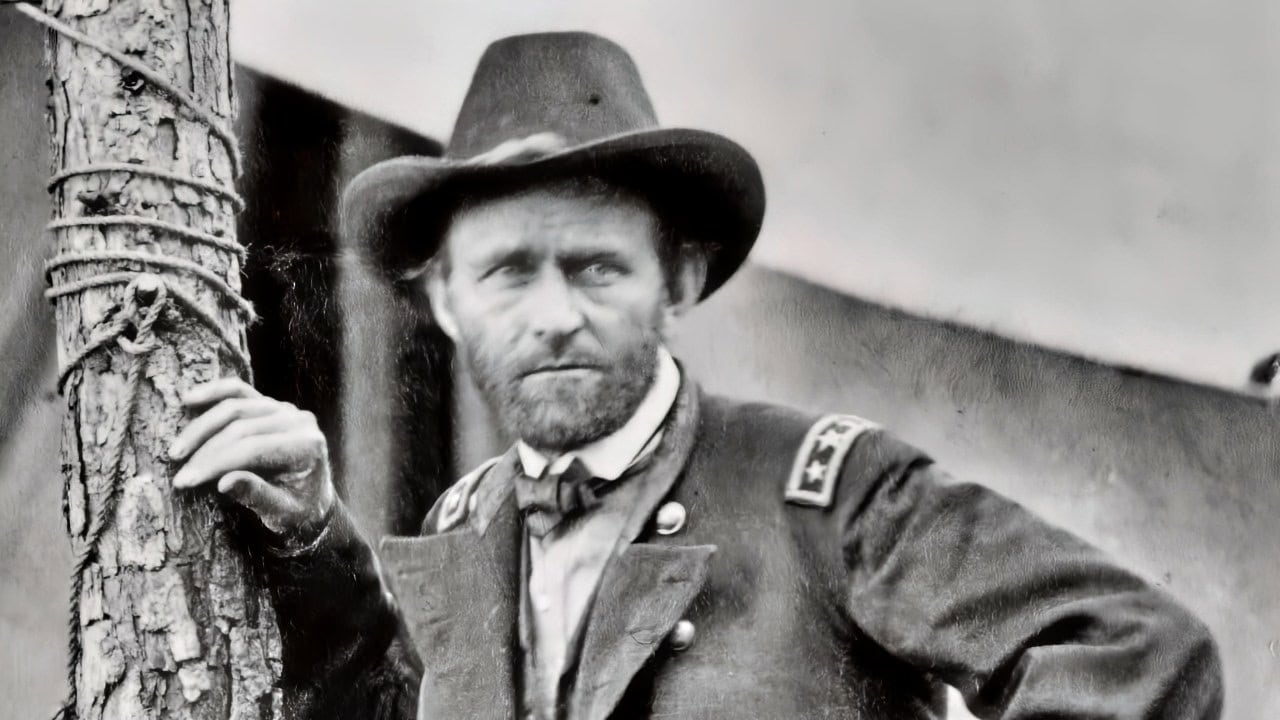
General Ulysses S. Grant at Cold Harbor. Image Credit: Creative Commons.
As the Commander-in-Chief, he took charge of the war effort, learning military strategy and seeking diverse counsel to unite his government and country.
The Emancipation Proclamation in 1863 was a pivotal act that declared enslaved people in Confederate states free, transforming the war into a fight for human freedom.
His Gettysburg Address in late 1863 is generally considered one of the greatest speeches of American history.
In just 272 words, Lincoln honored the fallen soldiers, redefined the purpose of the war as a struggle for liberty and equality, and called for a “new birth of freedom” to ensure that “government of the people, by the people, for the people, shall not perish from the earth.”
He oversaw the Union war effort, culminating in the Confederate surrender in April 1865, just days before his assassination by John Wilkes Booth. Lincoln was buried in Springfield, Illinois.
About the Author: Steve Balestrieri
Steve Balestrieri is a National Security Columnist. He served as a US Army Special Forces NCO and Warrant Officer. In addition to writing on defense, he covers the NFL for PatsFans.com and is a member of the Pro Football Writers of America (PFWA). His work was regularly featured in many military publications.