
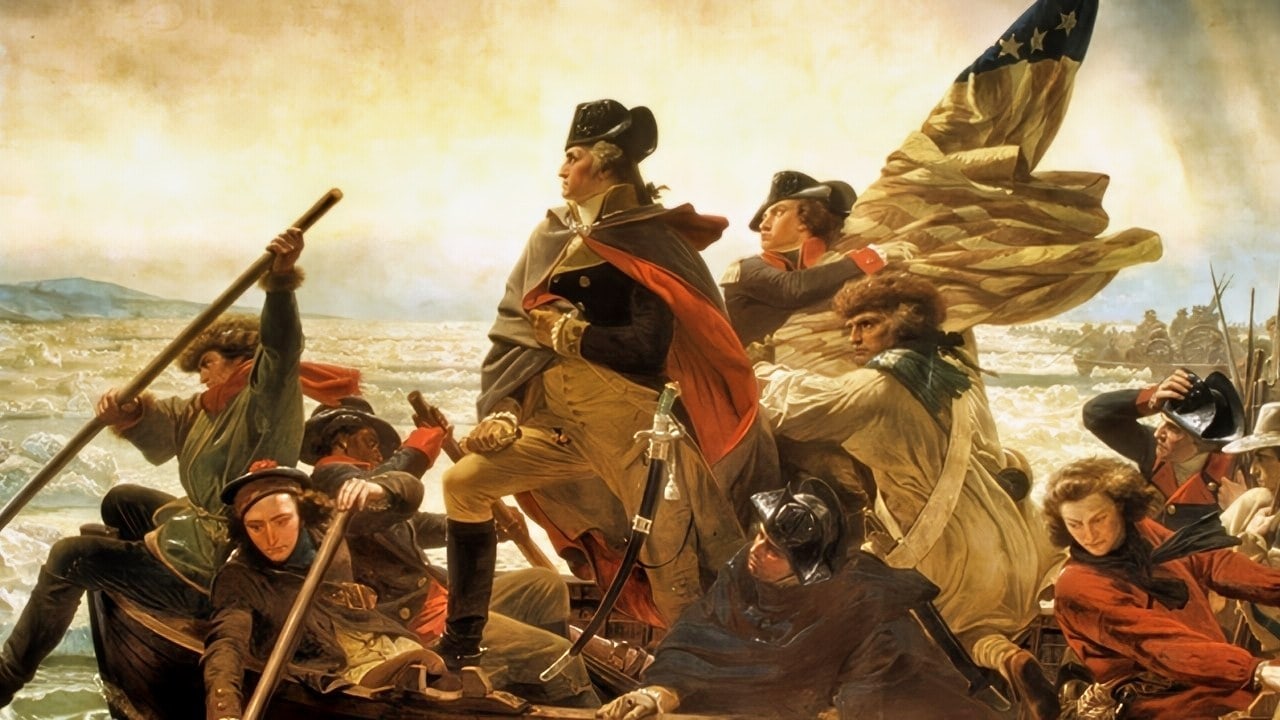
Synopsis: George Washington’s famous line—“Discipline is the soul of an army”—captures the organizing principle he carried into the Continental Army as the Revolution began.
-Facing a professional British force with greater manpower, ships, and firepower, Washington struggled early, suffering major defeats and retreating through New Jersey.
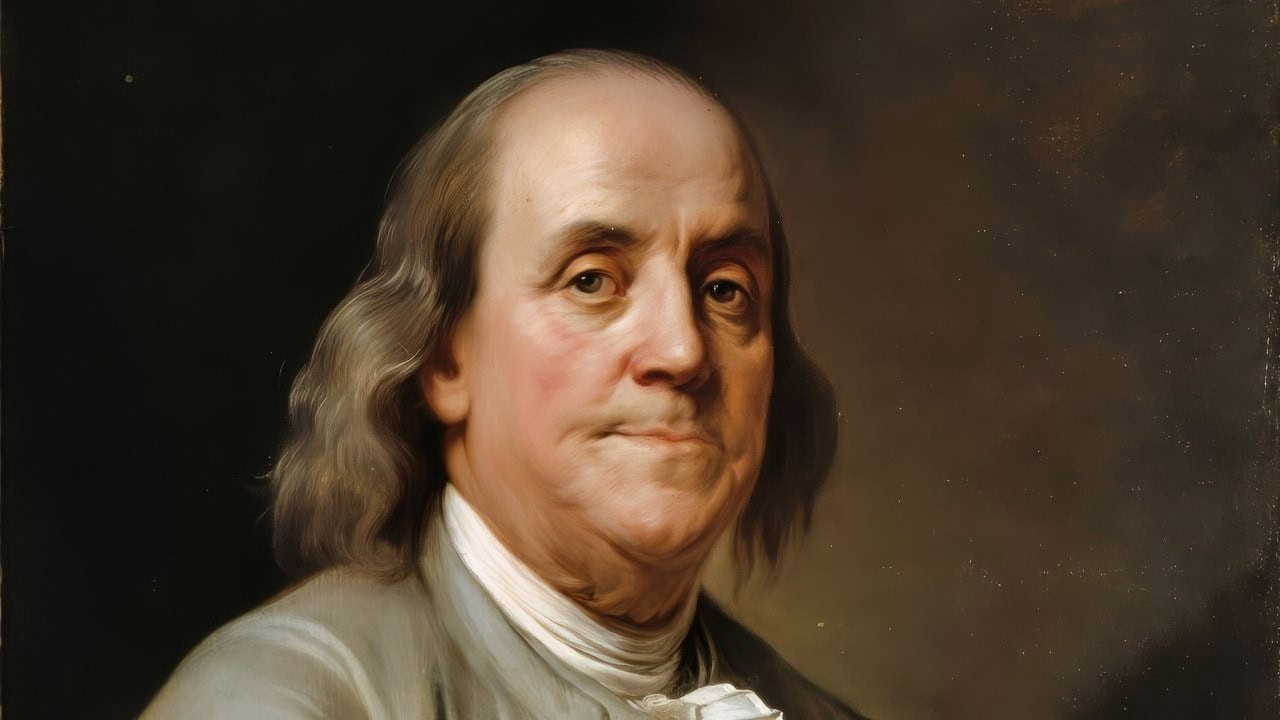
Benjamin Franklin. Image Credit: Creative Commons.
-Yet he kept the army intact, sparked morale with a surprise victory at Trenton, and steadily pushed discipline into the ranks.
-As the war evolved, France’s entry, stronger organization, and improved coordination helped shift momentum.
-By Yorktown, the Continental Army had become a credible fighting force, and Washington’s leadership and discipline helped carry America to independence.
George Washington’s Discipline Quote That Built The Continental Army
“Discipline is the soul of an army. It makes small numbers formidable, procures success for the weak, and esteem for all.”
George Washington, the first President of the United States, is said to have written these words after witnessing British and French regular troops during the French and Indian Wars. When forming the Continental Army, Washington took discipline to heart when organizing the predecessor to the modern U.S. Army.
Discipline was a topic that Washington took very seriously, especially during the Revolutionary War, when the Americans were vastly outmanned and outgunned. Thanks to Washington’s efforts (among a wide variety of other factors), the Continental Army was able to survive, even after facing many defeats against the British.
The American Militia vs the Strongest Army in the World
During the 1700s, when revolution was fermenting in the American colonies, England had near-complete control over the seas and most of the known world. The British Army had firmly established itself as a world-class fighting force, much like the American Army of today.
Washington himself had fought alongside the British during the French and Indian Wars and saw their strength firsthand. However, what really stood out to Washington was the discipline that both the French and British armies possessed. Years later, in 1775, when America was forming its first army, Washington sought to implement such discipline into his own ranks.
However, Washington was well aware of the shortcomings in the new Continental Army, especially compared to the British. Washington had never fought in large-scale European wars as many of his British counterparts had.
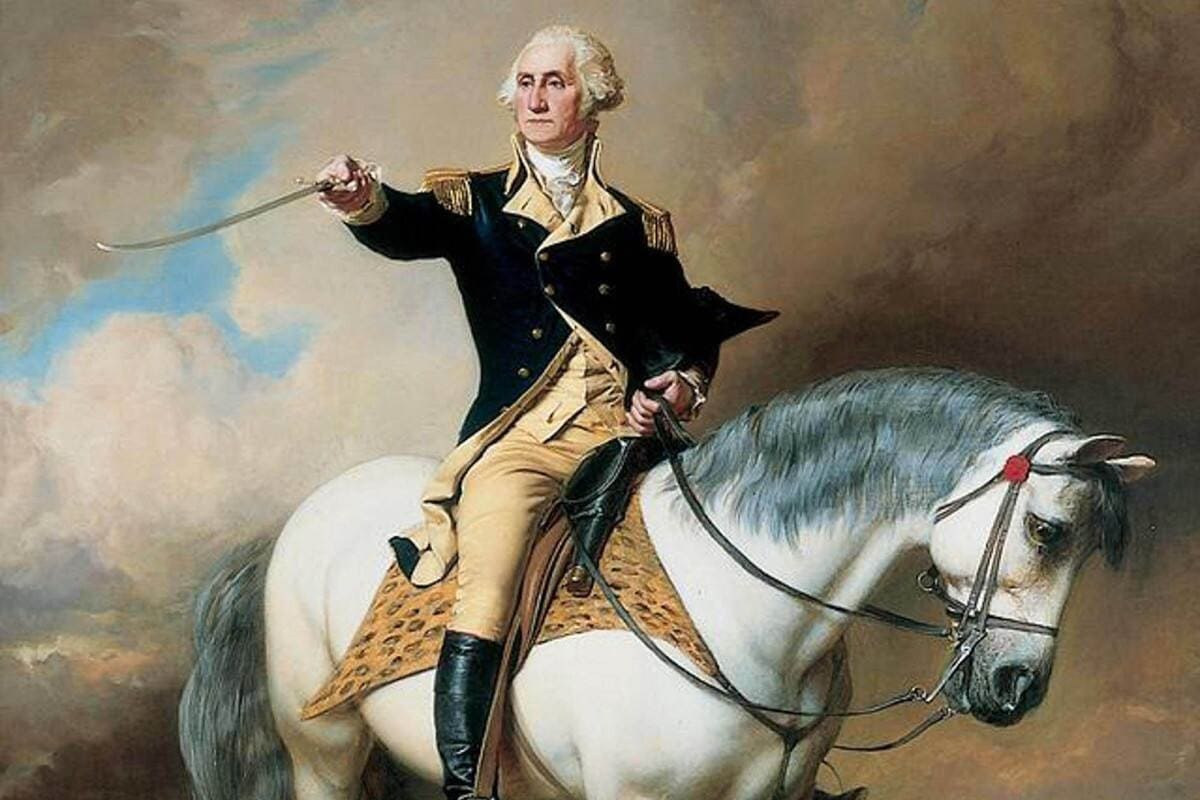
George Washington. Image: Creative Commons.
Furthermore, the Continental Army was only a fraction of the size of the globe-spanning British Army. The British also possessed more weapons, warships, and cannons than the Americans could ever muster. With a war between the soon-to-be independent U.S. and Britain looming, the prospects of actually winning a war against England were undeniably slim.
How America Almost Lost the Revolutionary War
At the outset of the Revolutionary War, Washington was able to retake Boston and was hailed as a hero. The celebrations did not last long, as British troops landed at Long Island in New York and set up a significant presence there. Still fighting with untrained and undisciplined militiamen, U.S. forces were soon forced to retreat through New Jersey. This loss at New York and the harsh winter conditions nearly eliminated the Continental Army.
However, a surprise attack on Trenton forced the British to retreat back to New York City, which provided the Army with a much-needed morale boost.
The situation for Washington continued to deteriorate as he suffered defeat after defeat. British General John Burgoyne led his troops from Quebec and threatened to cut New England in half. At the same time, General William Howe took his army to Philadelphia, threatening to take the capital of the U.S. Washington was outmaneuvered and driven back. The British marched unopposed into Philadelphia and took the city.
This critical defeat and General Horatio Gates’ victory in upstate New York drained confidence in Washington’s abilities as a military commander.
The Siege of Yorktown and the End of the War for Independence
The tide of the war began to change in 1778, when France formally entered into a military alliance with the U.S. via the Treaty of Alliance.
By this time, Washington’s fighting force had transformed from a ragtag group of militiamen into a well-equipped and well-disciplined fighting force. The British were forced to retreat back to New York from Philadelphia. Between the disciplinary measures in the Army, the arrival of seasoned French troops, and the sophisticated spy network that Washington set up, the initiative was slowly but surely shifting in the Americans’ favor. Once on the verge of defeat, the Continental Army emerged as a competent and well-organized fighting force.
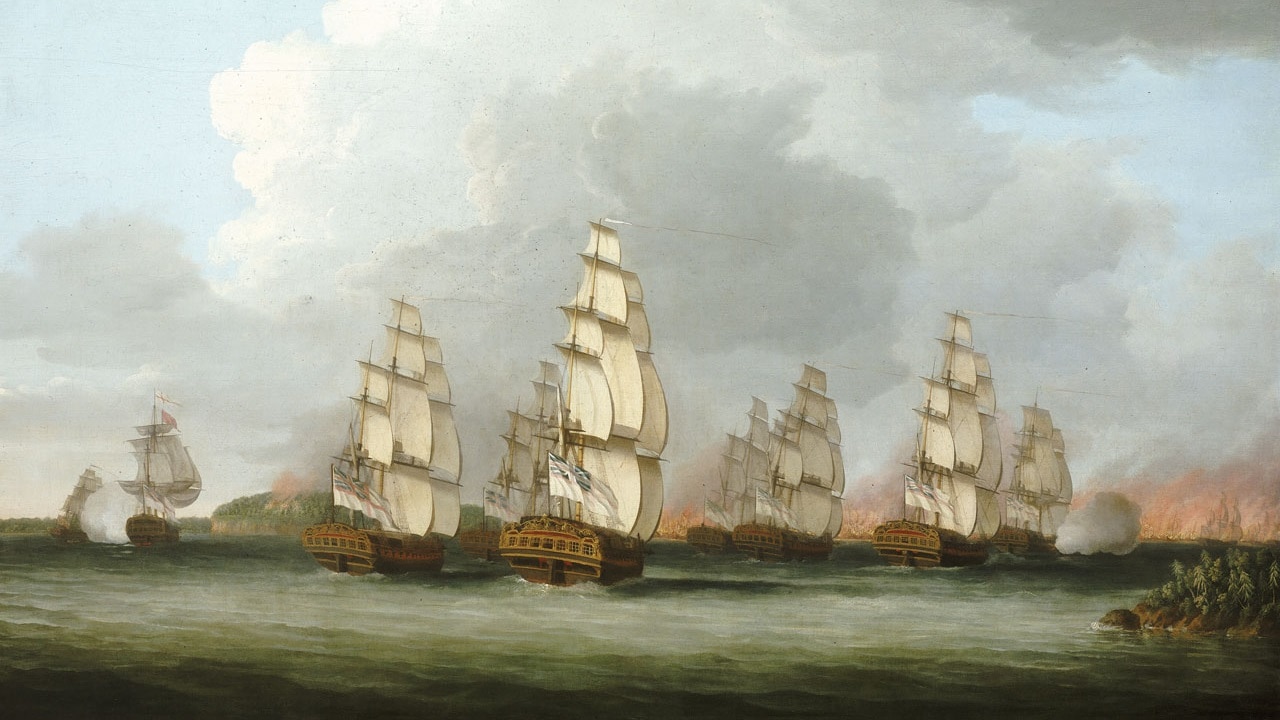
This is a depiction of naval action in the American Revolutionary War’s 1779 Penobscot Expedition. Painting shows the bay viewed from the south. In the left background is the ‘Raisonable’ with a white ensign and broad pendant and firing into the ‘Hunter’.
The penultimate battle came in the Siege of Yorktown. British General Clinton had sent a dispatch of troops to Virginia to capture the city of Portsmouth and raid American positions. Washington, in command of an army of almost 20,000, marched to Yorktown, Virginia.
By September of 1780, the British Army was trapped in Yorktown with no way out. The French Navy had successfully defeated the British Navy during the Battle of the Chesapeake, ensuring no escape for the trapped British. Despite having no experience in siege warfare, Washington eventually forced the British to surrender thanks to advice from Marshal Rochambeau. With Yorktown retaken, the last significant battle of the American Revolution ended in a resounding victory for the Americans and their French allies.
George Washington: Military Genius?
How did Washington manage to pull the Continental Army from the brink of defeat?
It was not his tactical prowess or his military experience; indeed, Washington was quite lacking in those areas.
What Washington did have was strong leadership and an upstanding moral character that made him loved by his troops, even in the face of defeat. Washington was the glue that held together the Army until the French arrived, his disciplinary measures transforming the militiamen into genuine soldiers who could stand on equal footing with the British.
Washington’s example resonated well beyond his time, and his model of discipline and professionalism is still in practice with the U.S. Military to this day.
About the Author: Isaac Seitz
Isaac Seitz, a Defense Columnist, graduated from Patrick Henry College’s Strategic Intelligence and National Security program. He has also studied Russian at Middlebury Language Schools and has worked as an intelligence Analyst in the private sector.