
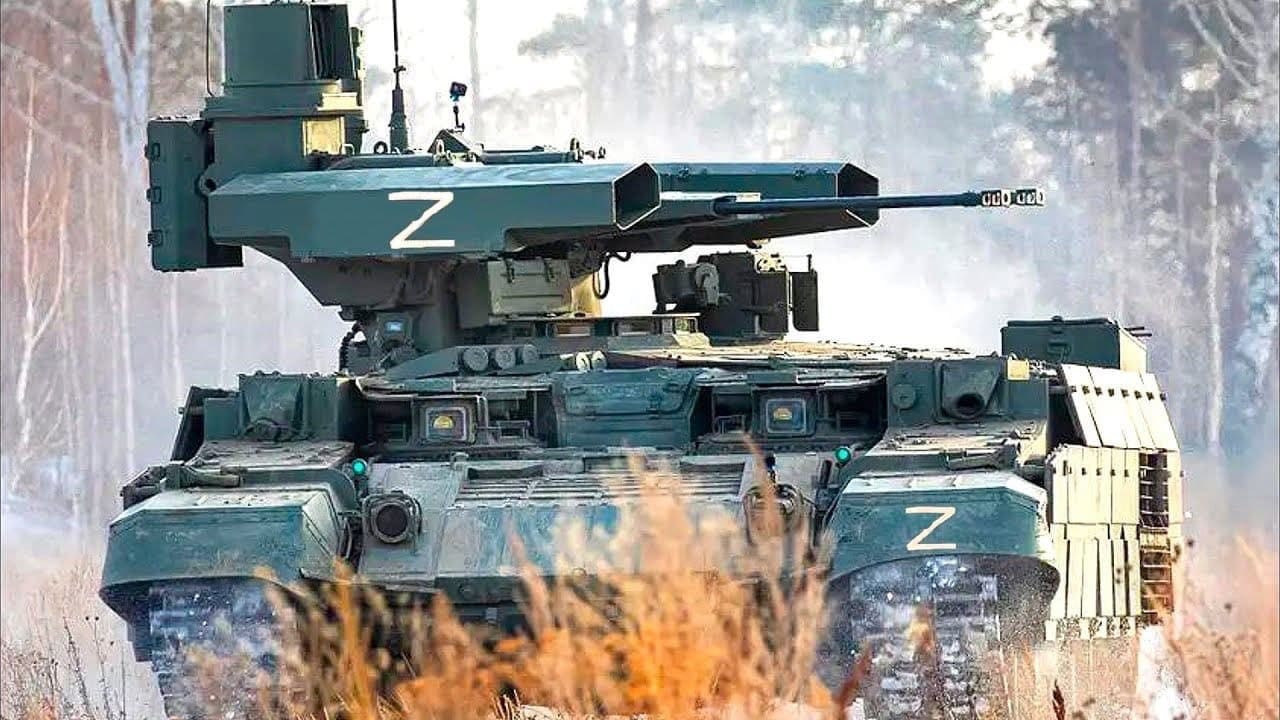
Key Points and Summary – Russia’s BMPT “Terminator” was conceived as a tank-based escort vehicle that could protect armored columns in cities, forests, and mountains.
-The idea dates to Soviet-era experiments, but post-Chechnya redesigns stripped out dismount infantry and produced a heavily armed, five-man platform with twin 30mm cannons, Ataka missiles, and grenade launchers on a T-90 chassis.
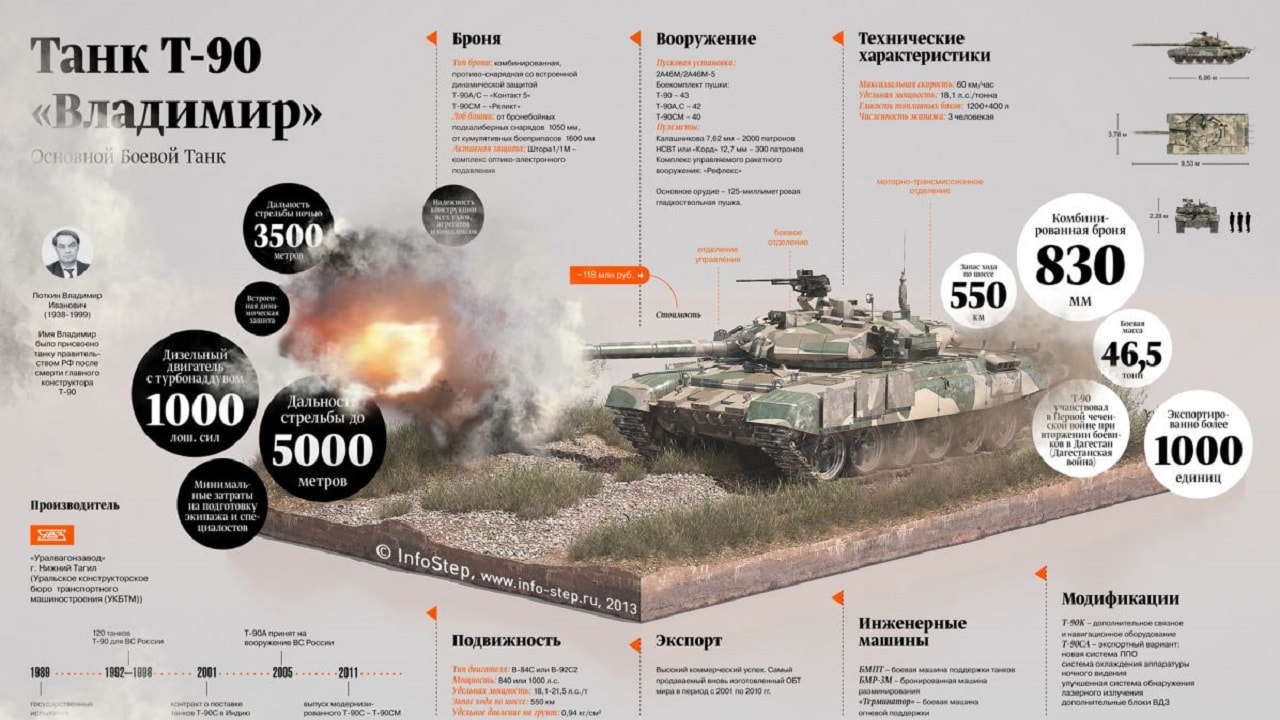
T-90 tank diagram. Image Credit: Creative Commons.
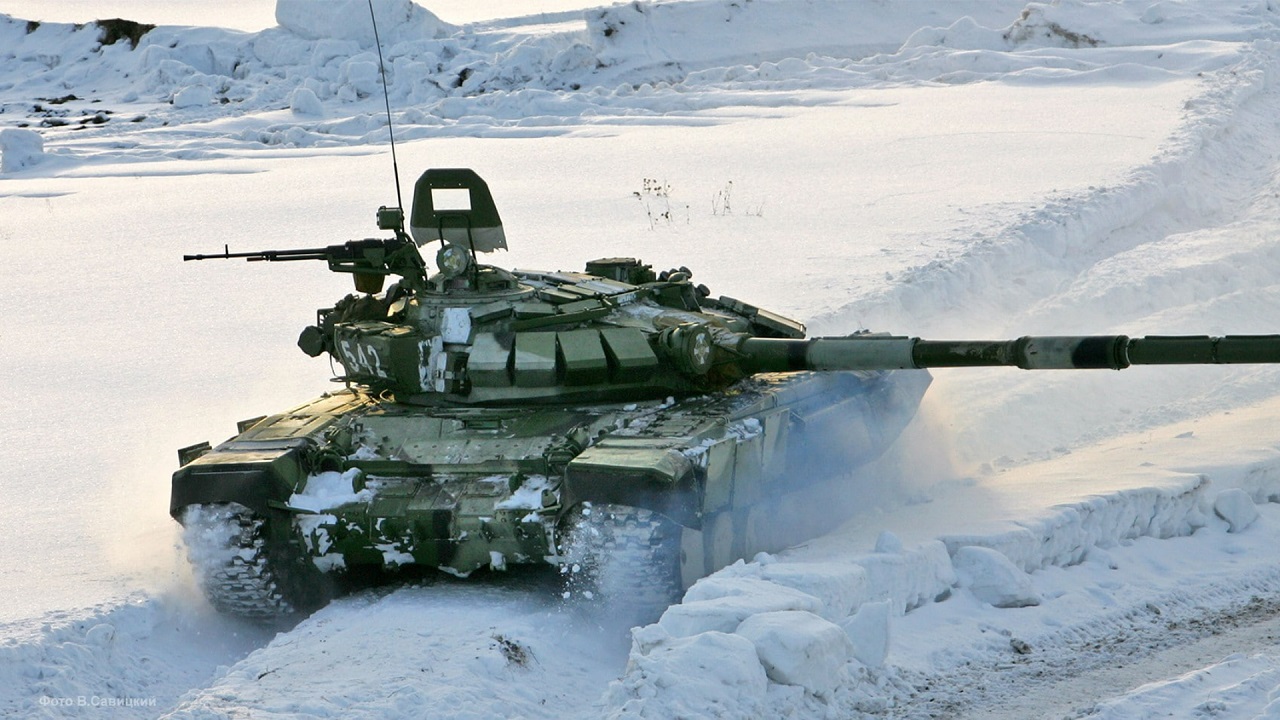
T-90 tank in the snow. Image Credit: Creative Commons.
-Despite hype, only small numbers were built. Limited combat use in Syria remains opaque, while Ukraine offered the first real test—showing strong survivability, but also issues like gun stabilization and vulnerability to FPV drones.
-In 2025 Russia resumed deliveries, adding anti-drone cages as it searches for relevance.
Russia’s BMPT “Terminator” Was Built to Protect Tanks—Here’s What Happened
The BMPT “Terminator” is one of the most unique vehicles in the Russian Army. Designed as an infantry fighting vehicle (IFV) like the BMP, the Terminator was built on a tank platform for extra survivability.
The idea was to make an IFV capable of supporting armored columns in unfavorable terrain such as mountains, cities, and forests, and engaging multiple targets at the same time.
However, as time went on, the project transformed. Some requirements for the vehicle were changed or simply ignored. The result is a Frankenstein’s monster of a vehicle that was built with a good concept in mind but left much to be desired in its execution.
Development of the BMPT Concept
Contrary to what many believe, the development of the BMPT did not start after the Chechen Wars; the concept dates as far back as the 1960s, when the Soviets first considered the idea of merging an IFV with a tank.
Fast forward to the 1980s, and the term “BMPT” was already being thrown around. Originally, the vehicle was meant to carry small numbers of infantry as dismounts. Combat experience in Afghanistan changed the emphasis toward a new, highly survivable IFV that could protect tanks in areas with rugged elevation. This seems simple in concept but proved much harder to develop than expected.
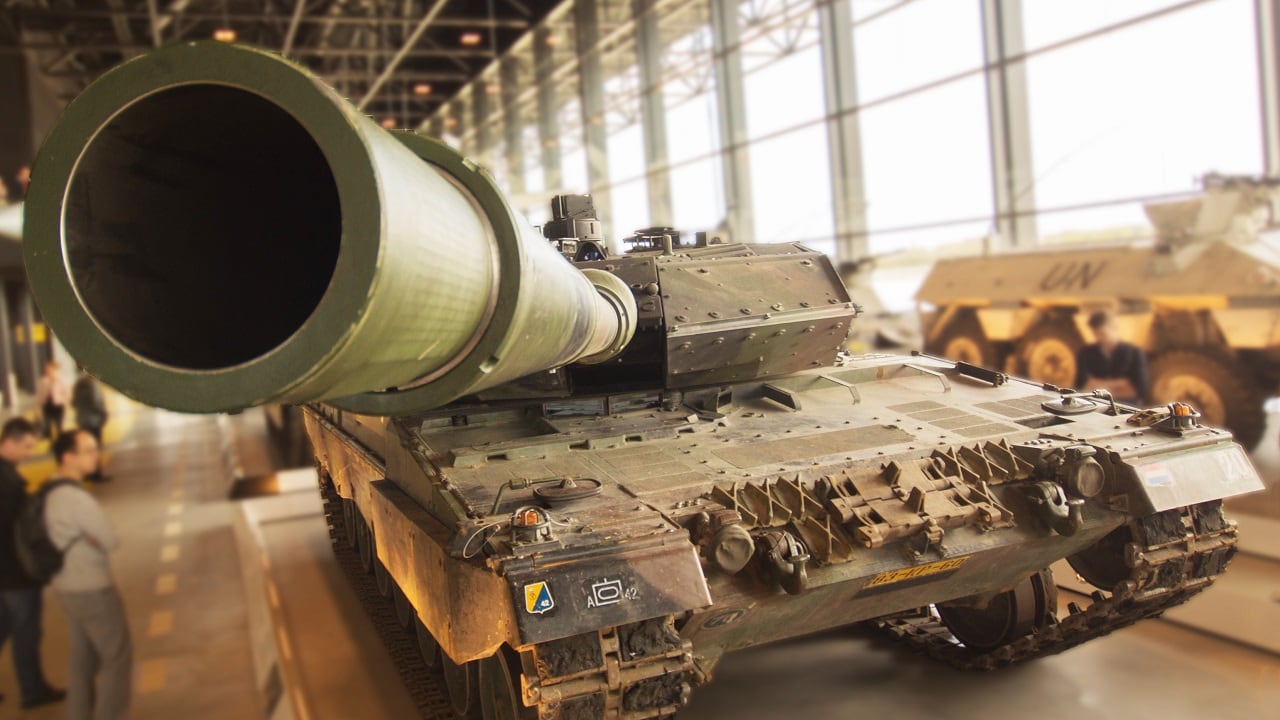
Russian T-90 Tank.
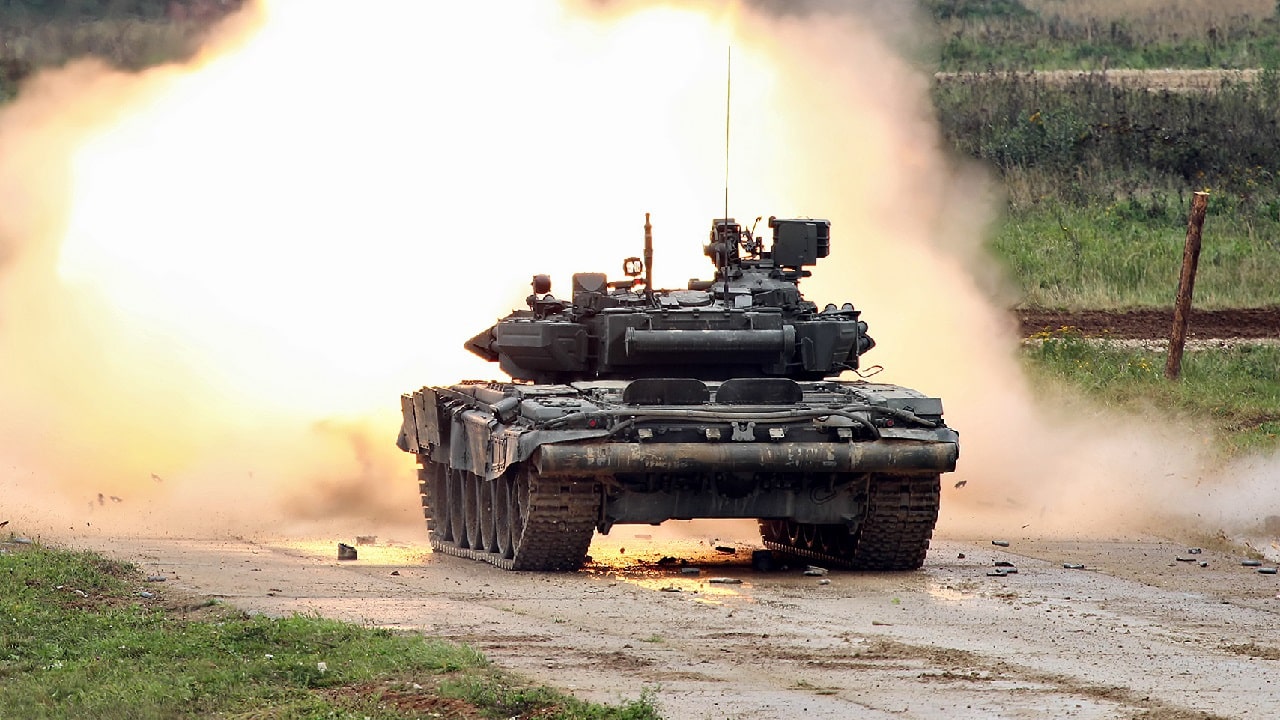
Russian T-90 tank firing. Image Credit: Creative Commons.
The original designs of the vehicle, Object 781 and 782, were completed in 1987. Both featured radically modified T-72 chassis but had very different approaches. Object 782 basically stuck a BMP-3 turret on a T-72, while Object 781 utilized two 2A72 autocannons on two independent turrets. Object 781 was selected after initial tests, but the project was canceled after the collapse of the Soviet Union.
After the war in Chechnya, work on a BMPT began again. The renewed effort resulted in Object 787, which was basically a T-72AV but with two high-elevation 30-mm autocannons along with six unguided S8 rocket tubes on both sides—the dismount infantry was notably absent.
The project was later canceled due to controversies at the Chelyabinsk Tractor Plant where it was developed.
Birth of the Terminator
The next iteration of the BMPT, and the subject of today’s article, was Object 199 “Ramka,” which eventually transformed into the BMPT Terminator. This model used two 2A42 cannons mounted side by side—which, in my opinion, is one of the greatest design flaws of the vehicle—along with four ATAKA-T anti-tank guided missiles and two front-facing AG-17D grenade launchers.
The chassis featured composite armor and Kontakt-5 Explosive Reactive Armor (ERA), which gave the vehicle excellent survivability. The vehicle has a crew of five—a commander, gunner, driver, and two crew members to operate the grenade launchers. The vehicle selected for further development was sometimes referred to as a counterterrorism vehicle. Given the name “Terminator” by its creators, it garnered something of a cult following.
The BMPT received more advanced combat systems than other IFVs in service with Russia at the time. The gunner received the Sosna multi-channel sight, including a thermal imager for night use and laser guidance for the missile launchers. Control of the armaments could be seamlessly transferred to the commander in cases of emergency, allowing the commander to operate the entire weapons platform. The commander received the B07K1 panoramic sight, which included a laser rangefinder. The gunner’s view allows access to thermal imagery. Sights do not include thermal vision.
The Monster that Stayed Silent: The BMPT in Combat
Interestingly, the BMPT was not mounted on a T-72 chassis but on a T-90. The Terminator retained the T-90S’s V-92S2 1,000-horsepower, 12-cylinder diesel engine with liquid cooling. This gave the vehicle a top speed of around 60–65 kilometers per hour on roads and a range of about 550 km.
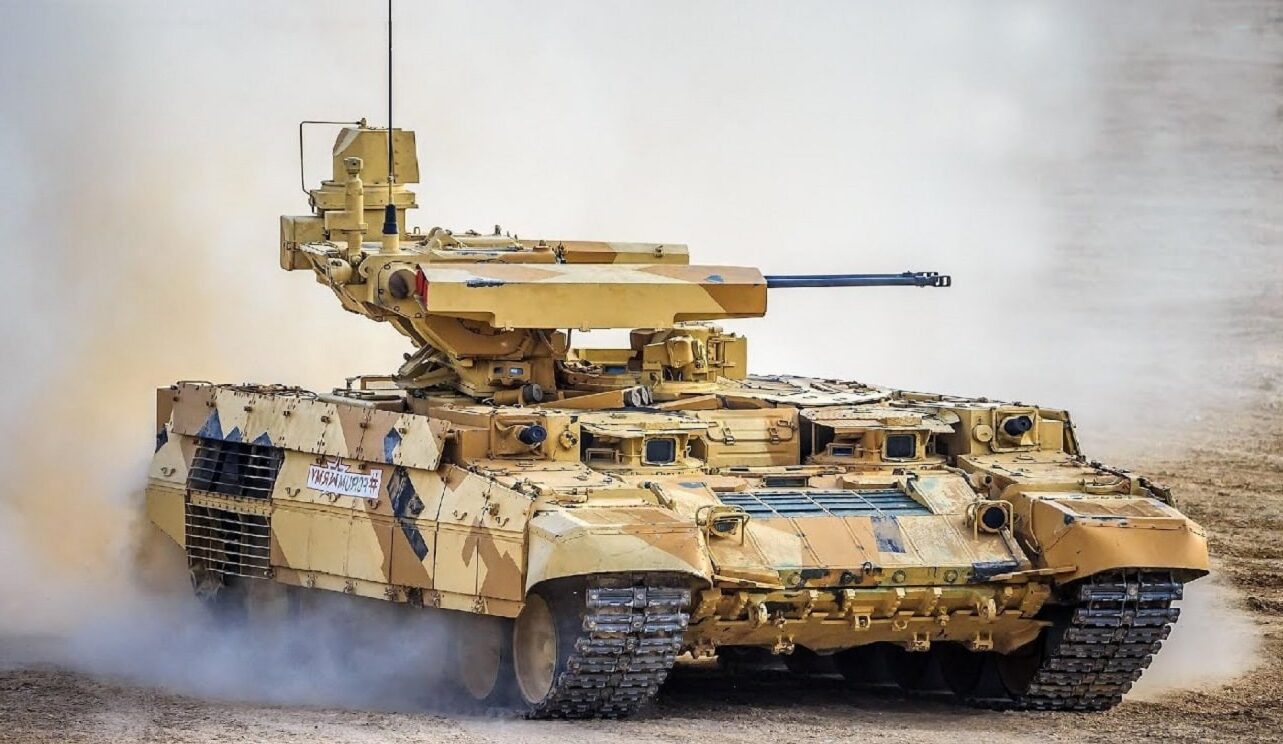
Terminator Tank from Russia. Image Credit: Creative Commons.
Later attempts to up-armor the vehicle led to the creation of “softbag” ERA, which was later mounted on T-72B3s and T-90Ms. When it was first introduced, the BMPT generated a lot of buzz—most likely due to its name, “Terminator.” This led to a lot of hype, but only 10–20 vehicles were actually produced for Russia from 2001–2020.
The BMPT reportedly first received combat tests in Syria and performed well, though little documentation of its performance is publicly available. Its first real combat experience came in Ukraine, and the vehicle proved itself for the first time.
The Terminator was so successful that Forbes posted a glowing piece on the BMPT, praising the vehicle for its versatility and reliability. It would not be until 2023 that Ukraine would score its first kill against a Terminator using First Person View (FPV) drones. However, the BMPT proved to be more survivable than many other Russian tanks against FPVs, surviving multiple hits from drones before finally being disabled. The vehicle disappeared from the front lines after suffering 2–3 casualties (probably because those were the only vehicles in Ukraine), and the BMPT dropped off from international attention.
In Russia, however, official news sources continued to praise the vehicle for its performance in Ukraine. Although some of the vehicle’s flaws were revealed—notably the stabilization of the 2A42s—Russia’s Ministry of Defense still ordered more vehicles. In October of 2025, the Russian Army received its first delivery of BMPT Terminators in years.
Newer variants of the vehicle are now equipped with anti-drone nets and cages (referred to as “cope cages” on the internet) for enhanced protection and survivability.
About the Author: Isaac Seitz
Isaac Seitz, a Defense Columnist, graduated from Patrick Henry College’s Strategic Intelligence and National Security program. He has also studied Russian at Middlebury Language Schools and has worked as an intelligence Analyst in the private sector.