
Summary and Key Points: As reports emerge of a massive crackdown on Iranian protesters that rivals the Tiananmen Square massacre, President Trump faces a critical test of his “locked and loaded” warning to the regime.
-Dr. Michael Rubin argues that rather than a full-scale invasion, Trump should look to a 1979 plan by Admiral James “Ace” Lyons: seizing the Kharg Oil Terminal.
-Responsible for 90% of Iran’s oil exports, taking Kharg would effectively bankrupt the regime without destroying the infrastructure, preserving it for a future, free Iran, while crippling the current leadership’s ability to pay its security forces.
America Should Seize the Kharg Oil Terminal—Not Bomb Iran
When protests erupted in Tehran’s bazaar, President Donald Trump warned Iran on TruthSocial, “If Iran shots [sic] and violently kills peaceful protesters, which is their custom, the United States of America will come to their rescue. We are locked and loaded and ready to go.”
Supreme Leader Ali Khamenei has now called Trump’s bluff.
Reports filtering out of Iran suggest Iranian security forces have conducted a massacre of protestors far larger than what the Chinese Communists did at Tiananmen Square.
Either Trump stands down, at which point he essentially mirrors President Barack Obama, voiding his own red lines in the wake of Syrian President Bashar al-Assad’s chemical weapons use, or he attacks Iran.
Bomb Iran?
Bombing Iran in response to the regime’s abuse of human rights is easier said than done.
After all, Trump does not want to repeat the experience of Secretary of State Hillary Clinton, who cited a “Responsibility to Protect” doctrine to entangle the U.S. military in Libya as Libyan dictator Muammar Qadhafi turned his guns on his fellow Libyans.
The Kharg Island Play
Fortunately, Trump has a way out if he only looks at past plans. In 1979, after radical students loyal to Ayatollah Ruhollah Khomeini took 52 American diplomats hostage, President Jimmy Carter tasked Adm. James “Ace” Lyons to come up with a plan to compel their release.
Lyons proposed blockading Iranian ports and seizing Kharg Island. His logic was simple: The Revolutionary regime could not afford a cessation of its oil exports.
Carter’s aides ultimately rejected the plan; they feared a blockade sliding into direct conflict, something Carter himself had ruled out in the emergency National Security Council meeting that occurred just after the hostage seizure. Carter’s fear and self-deterrence kneecapped his administration and empowered Khomeini to extort the United States.
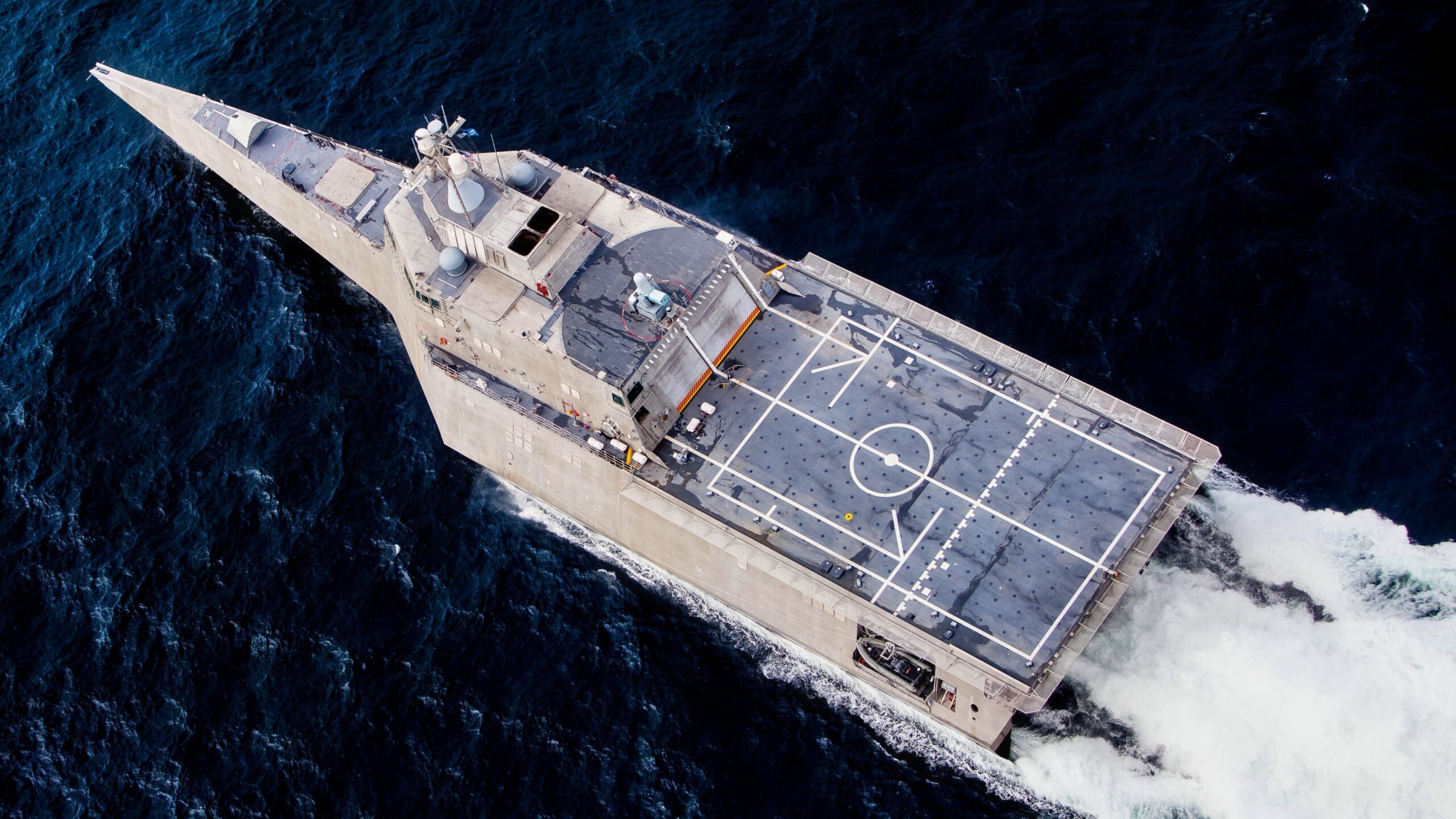
US Navy Littoral Combat Ship. Image Credit: Creative Commons.
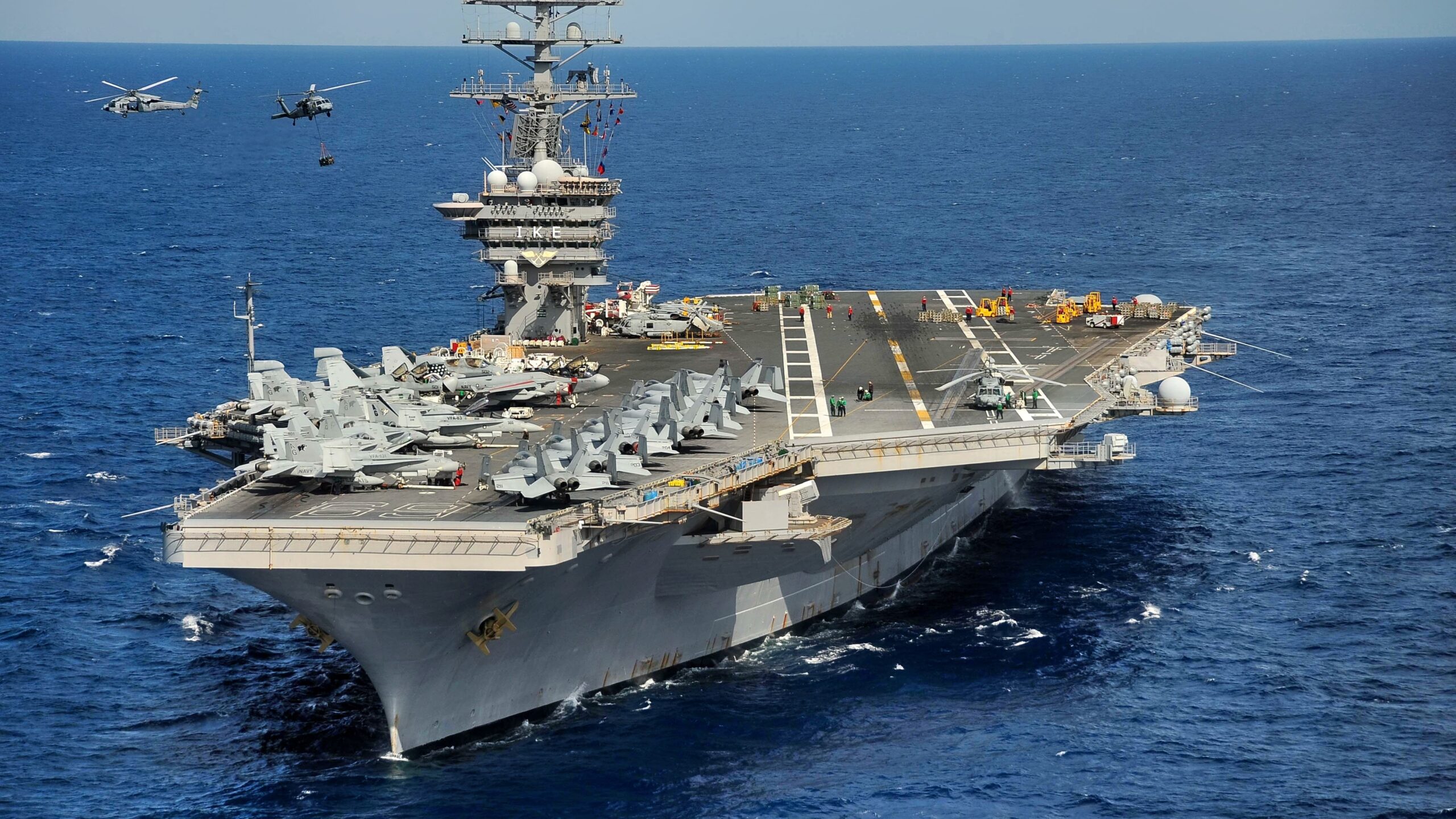
USS Dwight D. Eisenhower. Image Credit: Creative Commons.
Only when Ronald Reagan took office did Khomeini release the hostages, fearing what might come next.
Iran’s Geography Problem
Lyons died in 2018, but his plan remains as relevant 46 years later. Iran’s vulnerability is its geography. The Persian Gulf is extremely narrow and shallow. At its deepest point, it is only 298 feet deep. In comparison, Lake Michigan’s deepest point is almost 1,000 feet deep.
The Persian Gulf’s average depth is even less—just 160 feet deep, but much shallower as it slopes up to Iran’s rocky shore. In practice, this means that ordinary tankers, let alone the supertankers that today carry most crude, cannot get anywhere near the Iranian coast. To resolve this problem, the Iranians pipe most oil they produce to the Kharg Oil Terminal, built during the Shah’s time, on Kharg Island, about 15 miles off the coast of Iran. Today, Kharg is responsible for about 90 percent of Iran’s oil exports.
Here, there is precedent, albeit not against Kharg. After an Islamic Revolutionary Guard Corps mine damaged the USS Samuel B. Roberts in April 1988, Reagan launched Operation Praying Mantis, destroying two smaller oil platforms used by Iranian speedboats. Consider it proof of concept.
Kharg is a more significant target, but it is tailor-made for Trump. After all, Trump always says he will take adversaries’ oil to benefit American companies and local allies.
Should he take Kharg, rather than destroy it, he can not only ensure the regime can never again pay the salaries of its bureaucrats and soldiers, but also that, in the future after regime change, he can ensure that the new Iranian regime can finance its own rebuilding.
What Will Iran Do In Response?
Will Khamenei take the loss of Kharg sitting down?
First, there is a limit to what Khamenei can do when he’s hiding in an underground bunker isolated from even his top aides. Second, any Iranian military attempt to confront U.S. forces will not only divert forces from attacking Iranians in the streets but will also end with those Revolutionary Guardsmen losing in epic fashion.
After Operation Praying Mantis, regional Arabs told a joke: “Why does the Iranian Navy have glass-bottom boats?” The answer: “So they can see their air force.” The Islamic Revolutionary Guard Corps, of course, could target Kharg with ballistic missiles, but that would sign their death warrant. Not only would Trump respond in kind, but such action would end Iranian oil exports for months to come, again leaving salaries unpaid.
Khamenei’s arrogance and his misreading of Trump already led to the loss of the Islamic Republic’s nuclear program, raising questions even among supporters about what their multibillion-dollar sacrifice was for.
To cap that off with a loss of Iran’s oil revenue would likely be too much for even Khamenei’s most ardent supporters to survive.
Ace Lyons will be laughing from his grave.
About the Author: Dr. Michael Rubin
Michael Rubin is a senior fellow at the American Enterprise Institute and director of policy analysis at the Middle East Forum. The opinions and views expressed are his own. A former Pentagon official, Dr. Rubin has lived in post-revolution Iran, Yemen, and both pre- and postwar Iraq. He also spent time with the Taliban before 9/11. For more than a decade, he taught classes at sea on the Horn of Africa and the Middle East, covering conflicts, culture, and terrorism to deployed US Navy and Marine units. The views expressed are the author’s own.