
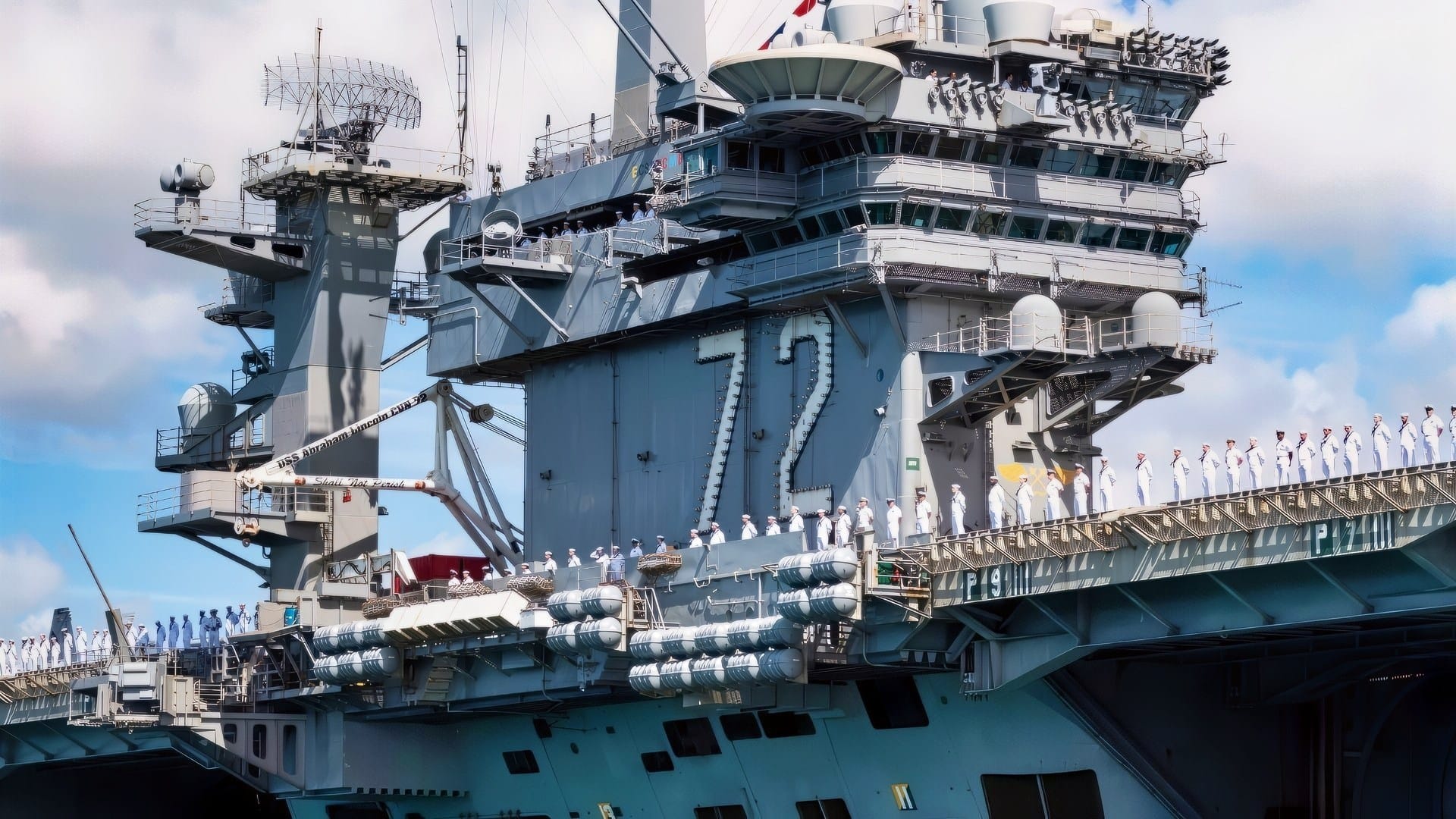
USS Abraham Lincoln Heads to the Red Sea With F-35s, Super Hornets, and a Full Carrier Strike Group
While US President Donald Trump appears to have pulled back his threats surrounding potential American military intervention in Iran, the White House has dispatched one of its supercarriers to the Red Sea.
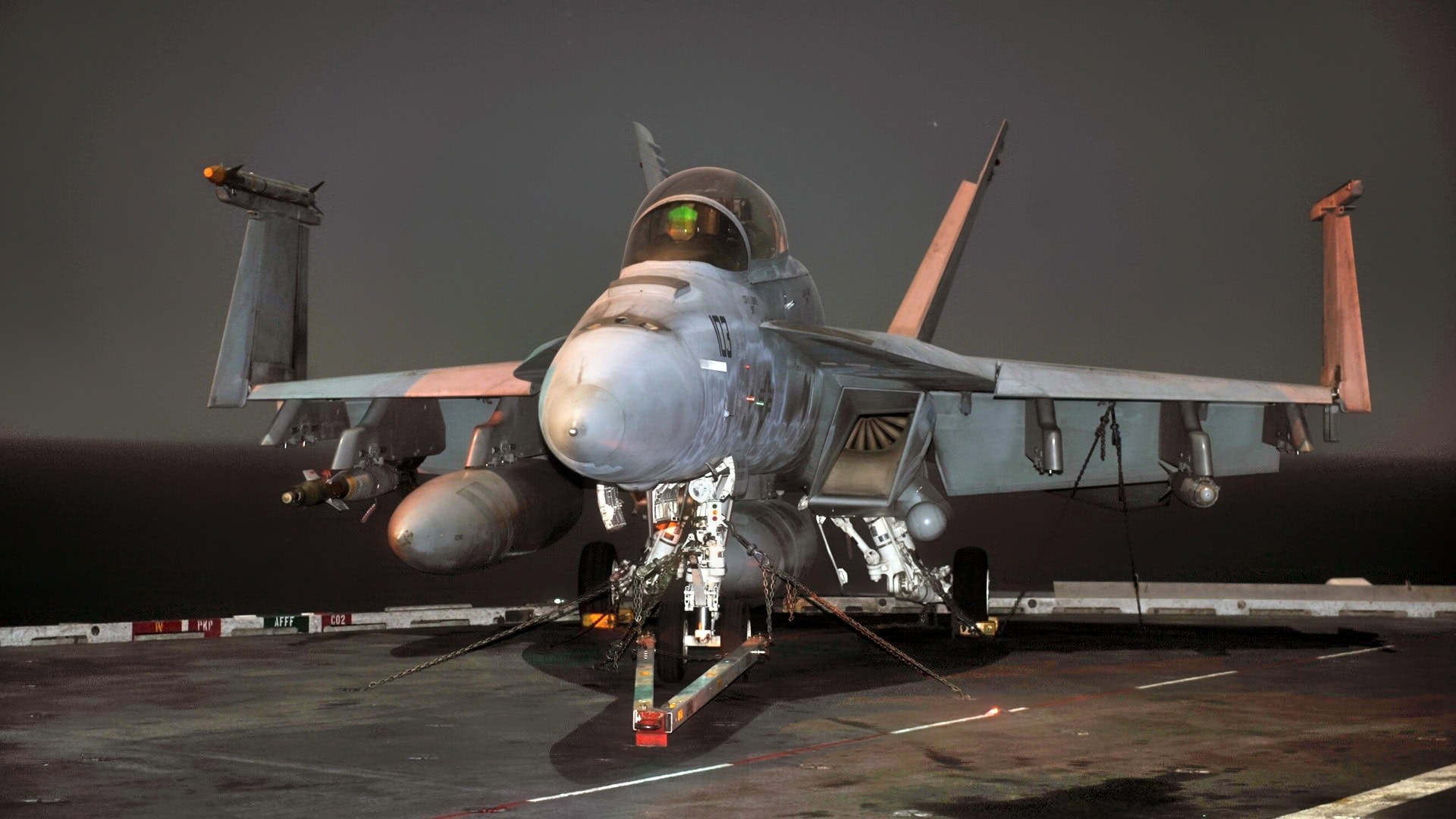
FA-18 Super Hornet. Image Credit: Creative Commons.
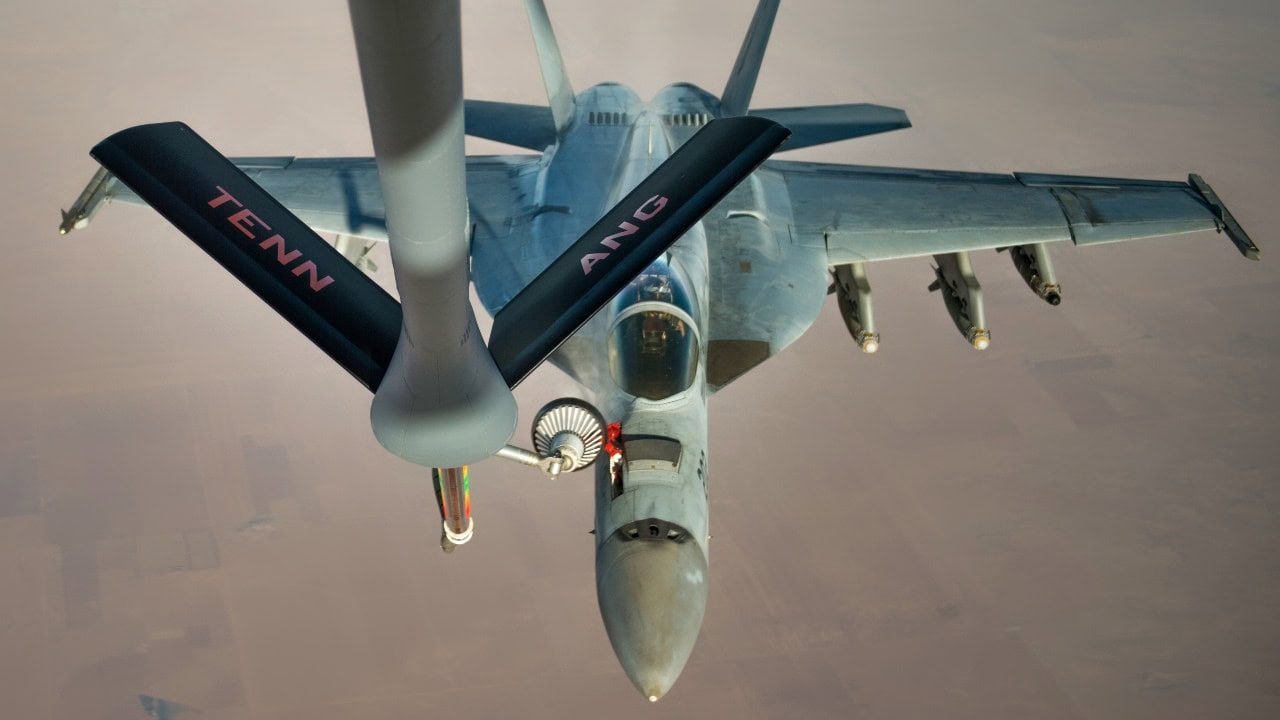
A U.S. Navy F/A-18 Super Hornet receives fuel from a KC-135 Stratotanker over Iraq in support of Operation Inherent Resolve Oct 17, 2016. The KC-135 provides the core aerial refueling capability for the U.S. Air Force and has excelled in this role for more than 50 years. (U.S. Air Force photo by Staff Sgt. Douglas Ellis/Released)
The redeployment of the Nimitz-class USS Abraham Lincoln Carrier Strike Group to the Middle East from the South China Sea represents a strong show of force from the US amidst the internal unrest that continues to play out in Iran.
The massive carrier is accompanied by its Carrier Strike Group, including destroyers and missile ships equipped with hundreds of launchers capable of targeting Iran with lethal force.
Following Hamas’s October 7, 2023, invasion of Israel, the US has maintained a steady presence in the Middle East via its aircraft carriers since last fall. With no other aircraft carrier currently active in the Indo-Pacific, the redeployment of Abraham Lincoln to the Middle East was likely not an easy decision.
What’s happening in Iran?
Reports find that the death toll totals at least 5,000. The tally includes 500 security personnel. Estimates state an enormous number of protesters have been killed by the Islamic Republic’s orders over the last couple of weeks throughout the Middle Eastern country. This staggering death toll notably exceeds that of any other round of demonstrations that have swept across the isolated country in decades.
President Trump initially warned that the US would intervene in Iran if the regime were to continue to “violently kill peaceful protestors.” Later on, the US President publicly commended the Iranian government for not following through on planned executions of arrested protesters. “Iran canceled the hanging of over 800 people,” adding, “and I greatly respect the fact that they canceled.”
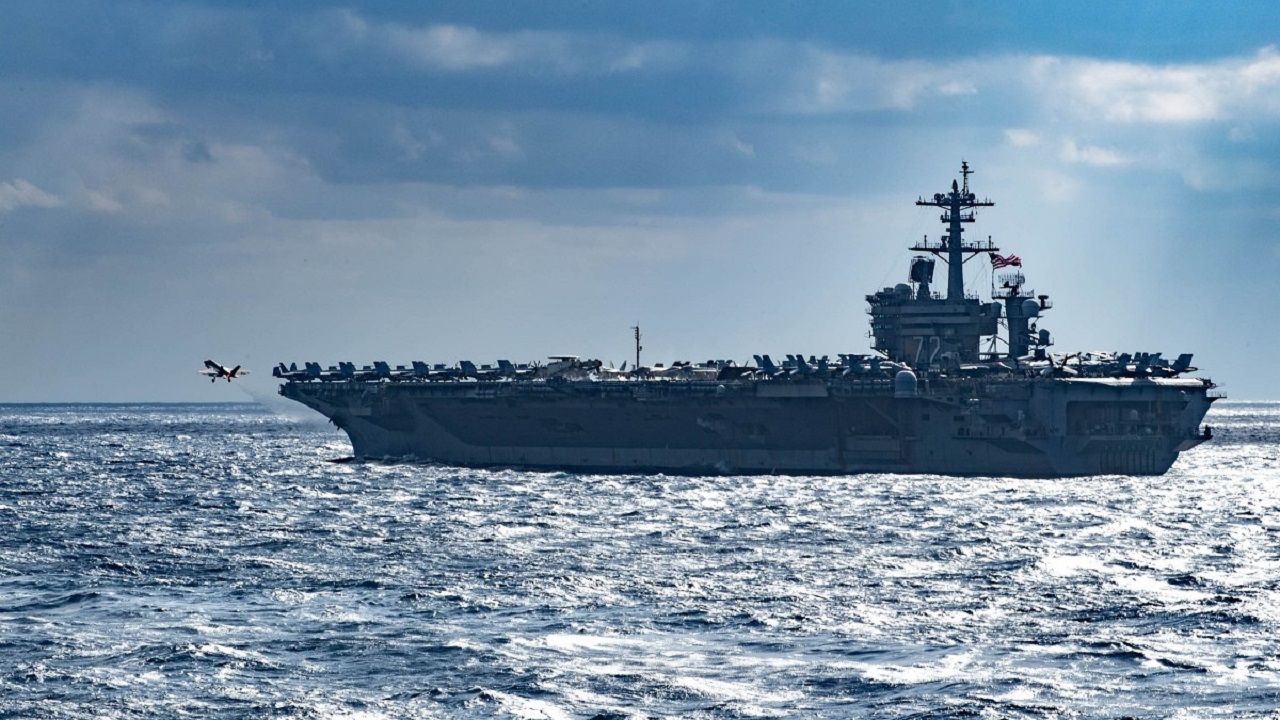
USS Abraham Lincoln. Image Credit: Creative Commons.
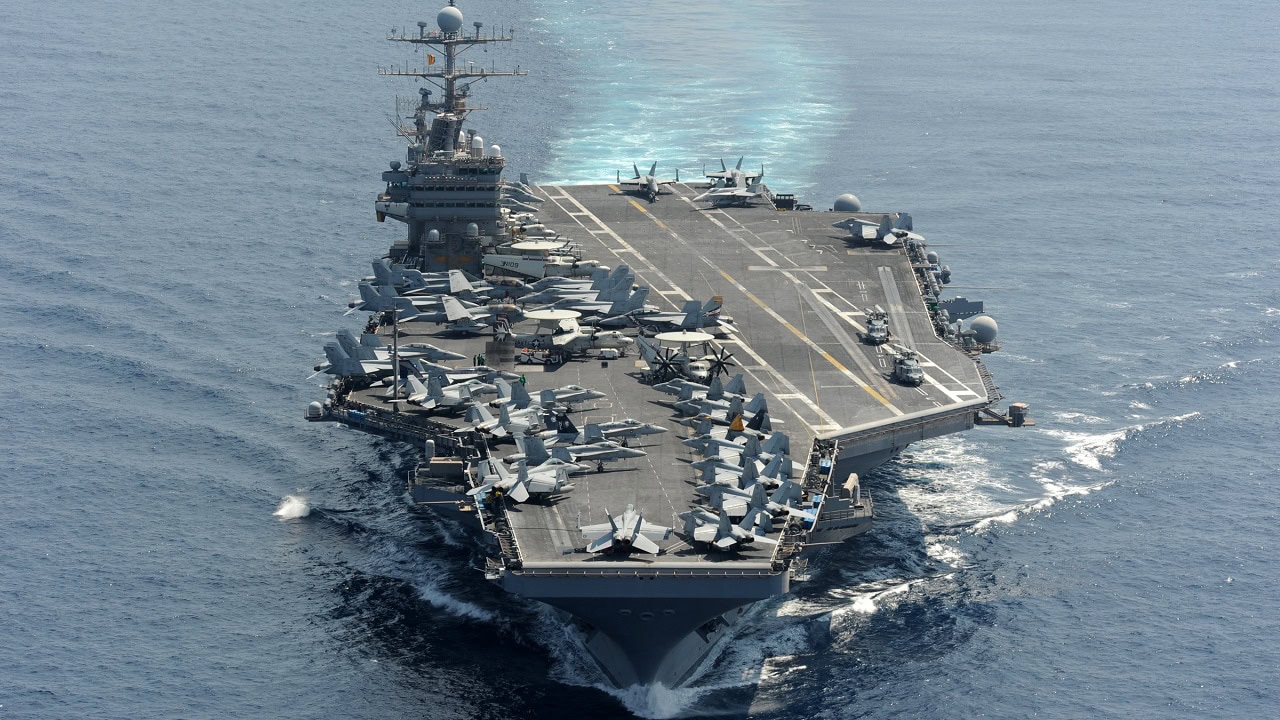
INDIAN OCEAN, (Jan 18, 2012) The Nimitz-class aircraft carrier USS Abraham Lincoln (CVN 72) transits the Indian Ocean. Abraham Lincoln is in the U.S. 7th Fleet area of responsibility as part of a deployment to the western Pacific and Indian Oceans to support coalition efforts. (U.S. Navy photo by Chief Mass Communication Specialist Eric S. Powell/ Released)
In reference to the back-and-forth surrounding how Trump could respond to these events, White House Press Secretary Karoline Leavitt said, “Over the past week, there has been a flurry of reports fueled by anonymous sources speculating about President Trump’s thinking on Iran. The truth is, nobody knows what President Trump will do with respect to Iran beside the President himself.”
Although the regime’s bloody crackdown on protesters, coupled with a wide-scale internet block in the country, appears to have slowed down the force of protests for now, the current standing of Iran’s leadership seems shaky at best.
Enter the Supercarrier USS Abraham Lincoln
CVN-72 is the flagship of Carrier Strike Group 3 and host to Carrier Air Wing Nine. As a Nimitz-class supercarrier, Abraham Lincoln features top-tier capabilities, armament, and air power. The US Navy’s 10 Nimitz-class ships have, for years, represented the largest warships ever to set sail.
Although the service’s newest Ford-class ships are even bigger and technically superior, the Nimitz boats have indeed not been written off as “second best.”
Each Nimitz-class carrier carries two reactors, which take up less space than the eight reactors needed on the Navy’s previous Enterprise-class ships. Two Westinghouse A4W nuclear reactors power the Nimitz, allowing the ship to reach speeds in excess of 30 knots.
Additionally, Nimitz-class carriers can carry 90 percent more aviation fuel and 50 percent more ordnance than the Forrestal-class ships. When it comes to air power, Abraham Lincoln and her sister ships are particularly dominant. Some of the most advanced aircraft in service worldwide can land and take off from these carriers, including the F-35 Lightning II, F/A-18 Super Hornet, and MH-60R Helicopter.
To successfully launch these notorious platforms, the carrier is equipped with a steam catapult. This incredible take-off and landing mechanism allows these platforms to circumvent the need for longer runways.
As explained by Popular Mechanics, “Steam is diverted from the ship’s boilers—steam boilers powered by the ship’s nuclear reactors—and piped up to just under the flight deck, where it is held and pressurized in special tanks. In the meantime, the front landing gear of a carrier aircraft is loaded onto a small shuttle plate. When the aircraft is ready for launch, the steam is suddenly released and, in a burst of power, accelerates the shuttle—and attached aircraft—down the flight deck to takeoff speeds.”
In addition to its air power, the Abraham Lincoln also sports conventional armament.
Some of the weapons incorporated on board the carrier include two Mk 57 Mod3 Sea Sparrow surface-to-air missile launchers, three Phalanx Close-In Weapon Systems (CIWS), and two RIM-116 Rolling Airframe Missile short-range surface-to-air missile launchers.
About the Author: Maya Carlin
Maya Carlin, national security writer with 19FortyFive, is an analyst with the Center for Security Policy and a former Anna Sobol Levy Fellow at IDC Herzliya in Israel. She has over 1,000 articles published over the last several years on various defense issues. Carlin has bylines in many publications, including The National Interest, Jerusalem Post, and Times of Israel. You can follow her on Twitter: @MayaCarlin.