
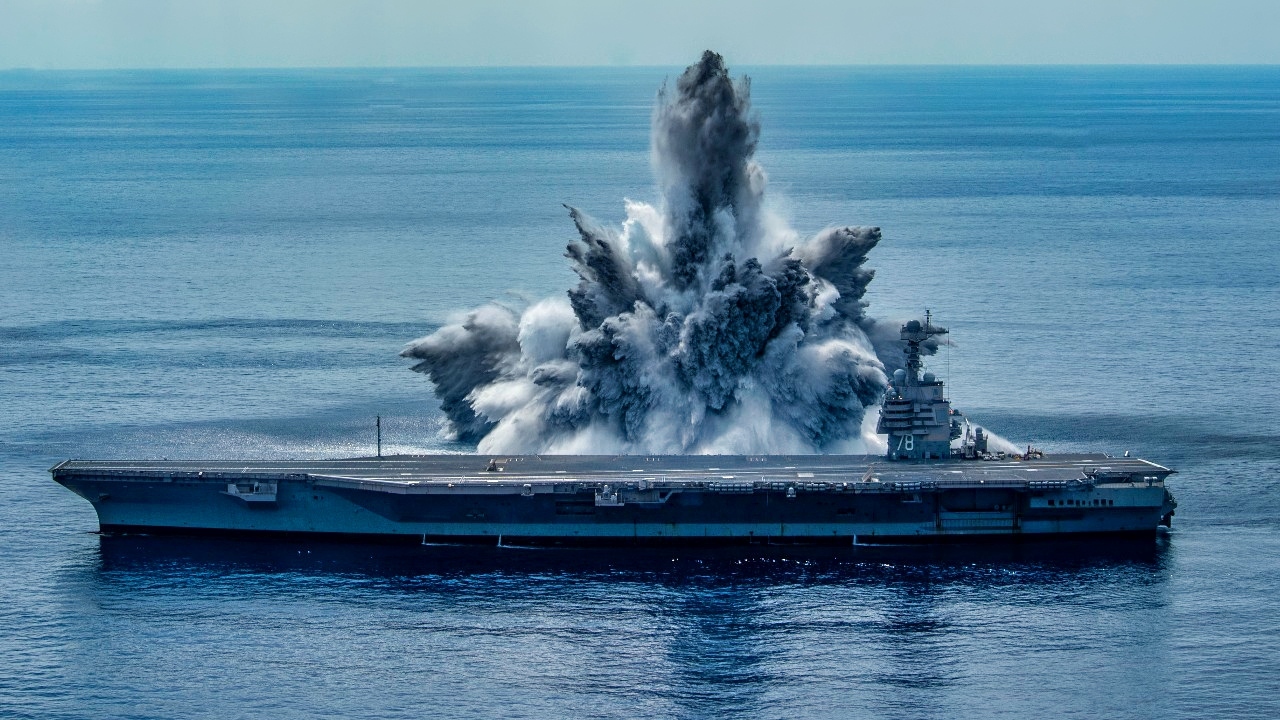
Navy Aircraft Carrier USS Gerald R. Ford Heads To The Middle East: Trump’s “Big Stick” Message To Iran
Summary and Key Points: The Trump administration has ordered the USS Gerald R. Ford from the Caribbean to the Mediterranean amid rising tensions with Iran and ongoing nuclear talks.
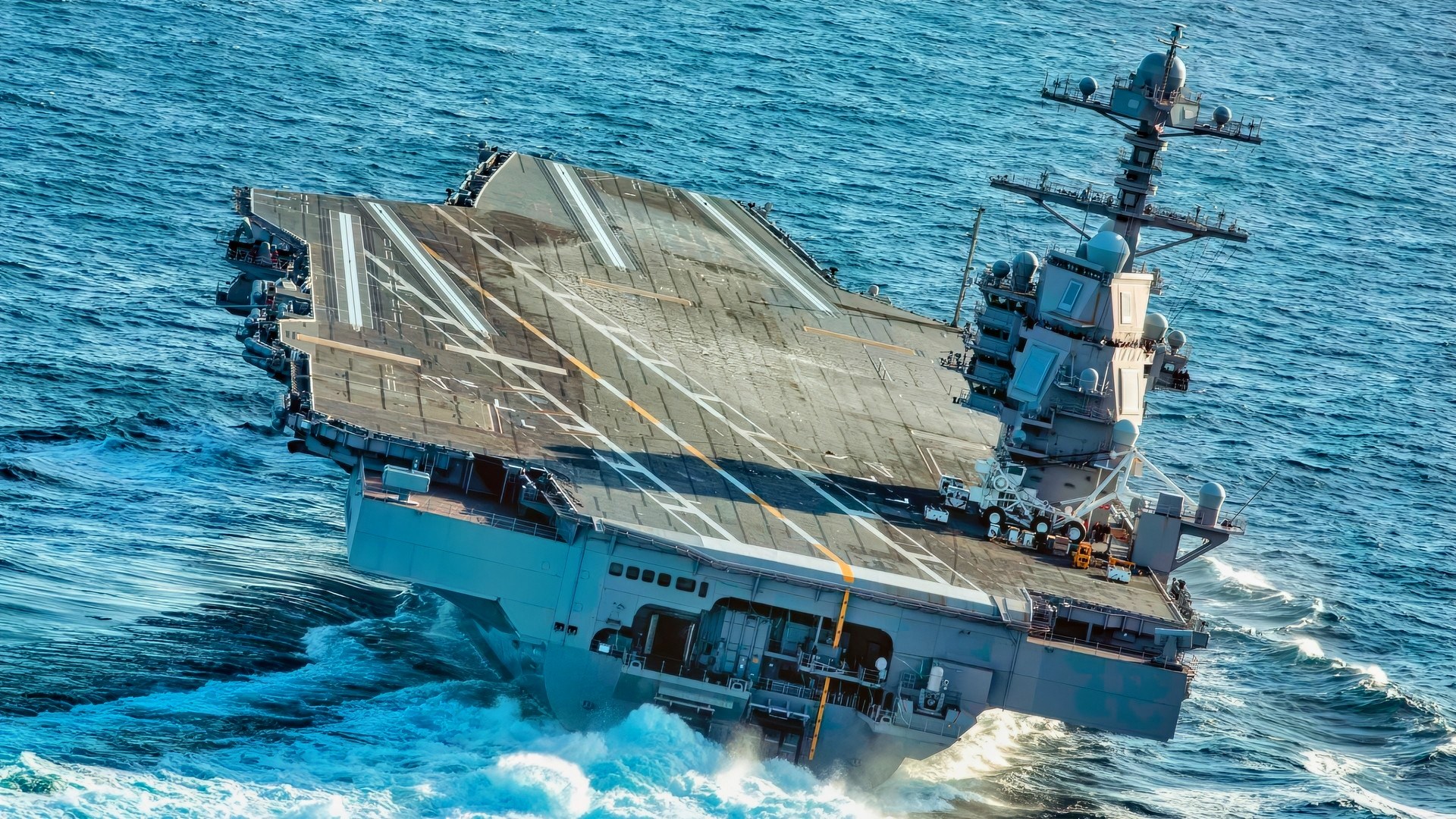
USS Gerald R. Ford (CVN 78) conducts high-speed turns in the Atlantic Ocean. Ford is at sea conducting sea trials following the in port portion of its 15 month post-shakedown availability. (U.S. Navy photo by Mass Communication Specialist 3rd Class Connor Loessin)
-With the USS Abraham Lincoln already in the region, Washington is positioning two carrier strike groups to increase leverage and reinforce deterrence if negotiations stall.
-The Ford’s air wing—F-35C stealth fighters, F/A-18E/F Super Hornets, and EA-18G Growlers—adds surveillance, strike, and electronic warfare depth for rapid escalation options.
-The move is framed as pressure to keep Tehran at the table, while still prioritizing diplomacy over a wider regional conflict.
Two U.S. Carriers Versus Iran: Why The Ford Deployment Changes The Pressure Campaign
U.S. President Donald Trump and Secretary of Defense Pete Hegseth have ordered the USS Gerald R. Ford (CVN-79) closer to the Middle East from its current location in the Caribbean Sea. The Ford will steam to the Mediterranean over the next week.
This is the U.S. Navy’s largest, most technologically advanced, and most powerful aircraft carrier. The new deployment comes as tensions with Iran run high amid negotiations over Tehran’s nuclear program, support for terrorists, and its ballistic missiles.
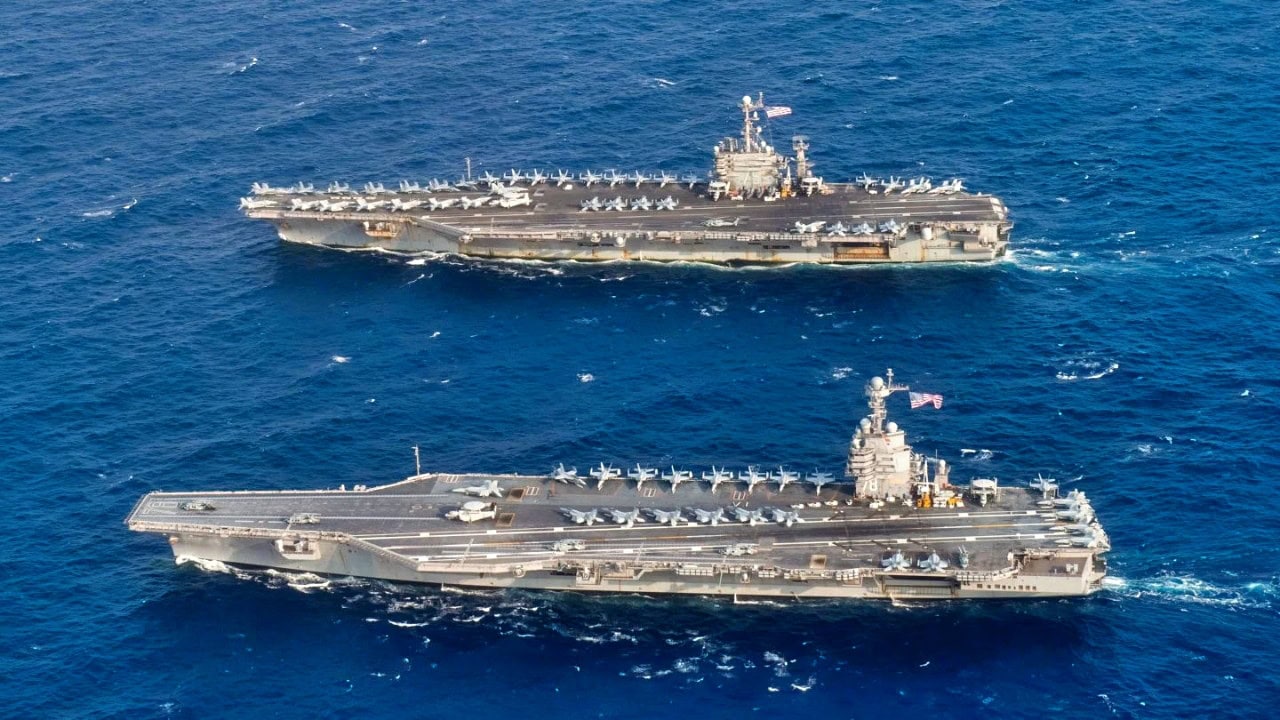
Ford-Class Aircraft Carrier U.S. Navy. Image Credit: Creative Commons.
Carrying a Big Stick
The Trump national security team is looking at military options against Iran if talks fail or not enough progress is made for a potential arms-limitation deal. The Navy move will deploy two carrier strike groups in the region. The USS Abraham Lincoln (CVN-72) carrier and its escort ships are in the Middle East now.
The Ford has been out to sea since June 2025, and its crew and pilots have been busy patrolling for U.S. Southern Command during Operation Southern Spear. The Ford has been in the Caribbean since last autumn, and its aircraft participated in the raid to snatch Venezuelan President Nicolas Maduro and bring him to the United States to face charges in early January.
Trump Wants the Iranians to Stay at the Negotiation Table
Iran and the United States held indirect talks in Oman and Qatar last week, and Trump is optimistic about a potential nuclear deal. “It should happen quickly. They should agree very quickly,” he told journalists.
On February 11, Trump met with Israeli Prime Minister Benjamin Netanyahu, who wondered if Trump would still hold negotiations with Iran. Trump reportedly told Netanyahu that talks will continue.
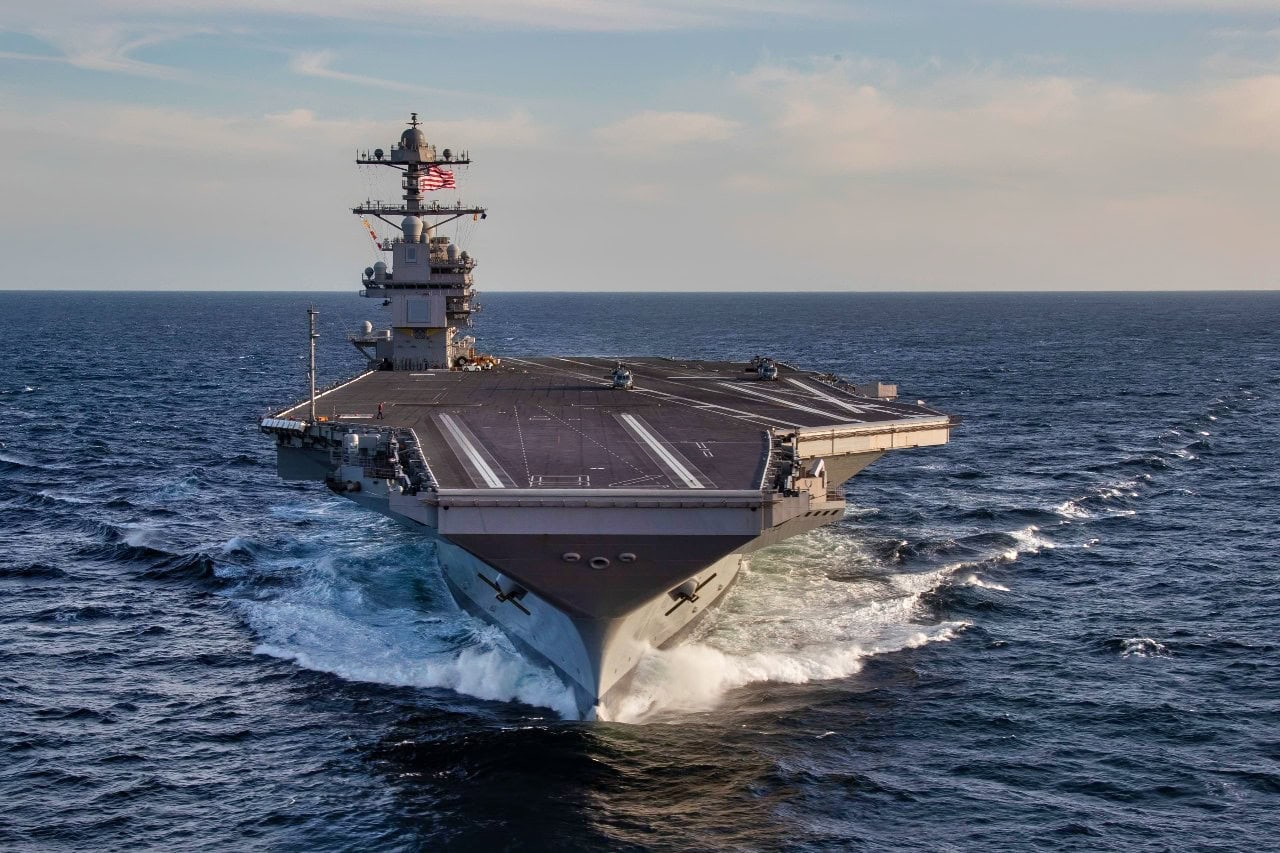
The Ford-class aircraft carrier USS Gerald R. Ford (CVN 78) and the Italian aircraft carrier ITS Cavour (CVH 550) transit the Atlantic Ocean March 20, 2021, marking the first time a Ford-class and Italian carrier have operated together underway. As part of the Italian Navy’s Ready for Operations (RFO) campaign for its flagship, Cavour is conducting sea trials in coordination with the F-35 Lightning II Joint Program Office’s Patuxent River Integrated Test Force to obtain official certification to safely operate the F-35B. Gerald R. Ford is conducting integrated carrier strike group operations during independent steaming event 17 as part of her post-delivery test and trials phase of operations.
Keep Iran from Acting as a Rogue State
Israel wants Iran to agree to stop sponsoring terror groups such as Hamas and Hezbollah. The Israelis also would like Tehran to greatly scale back its ballistic-missile program. If Iran ever acquired a nuclear warhead, they could possibly mate it to a long-range missile that could reach Israel.
Some of the U.S. allies in the Gulf region want the Americans to hold off on military strikes against Iran, for fear that military action could spark a wider war in the Middle East.
The Iranian Regime Is on the Brink
This comes as thousands of Iranian protesters were killed last month. Sensing weakness in the Iranian regime, Trump wants to keep the military option on the table for leverage. This explains the desire for two carrier strike groups in the Middle East.
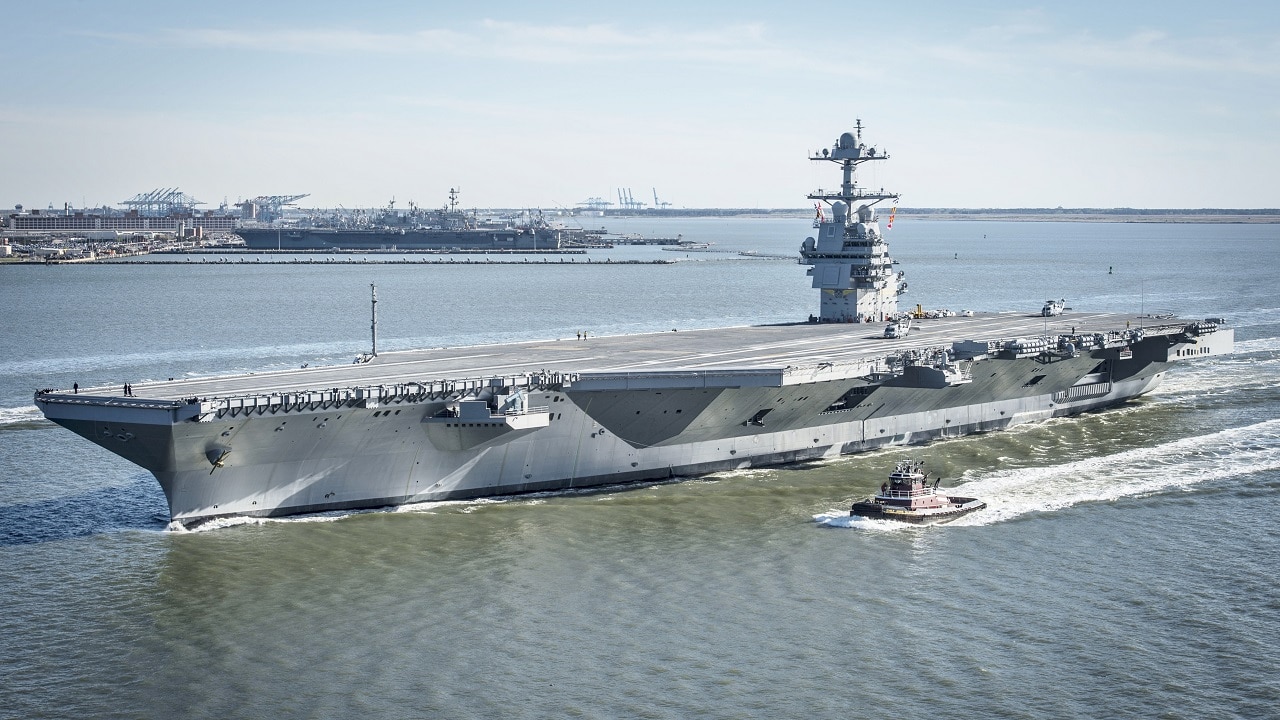
The U.S. Navy aircraft carrier USS Gerald R. Ford (CVN-78) underway under her own power for the first time while leaving Newport News Shipbuilding, Newport News, Virginia (USA), on 8 April 2017. The first-of-class ship – the first new U.S. aircraft carrier design in 40 years – spent several days conducting builder’s sea trials, a comprehensive test of many of the ship’s key systems and technologies. USS George Washington (CVN-73) and the amphibious assault ship USS Kearsarge (LHD-3) are visible in the background.
The crew on the Gerald R. Ford could be getting tired from the quick turnaround, but Trump and Hegseth saw they have mostly accomplished the mission in the Western Hemisphere and would be the perfect naval asset to reach the Central Command area of operations.
Ford Aircraft Carrier Aviation Wing Is Top-notch
The Ford could use its F-35C Lighting II stealth fighters, F/A-18 E/F Super Hornets, and the EA-18G Growler electronic warfare airplane.
No one doubts the ability of the Ford’s pilots. There could be an element of fatigue after busy operations in the Caribbean, but these missions are what naval aviators sign up for.
Trump Warns the Regime
Trump has said that if Iran and the United States fail to reach an agreement, the resulting military strikes would be “very traumatic.”
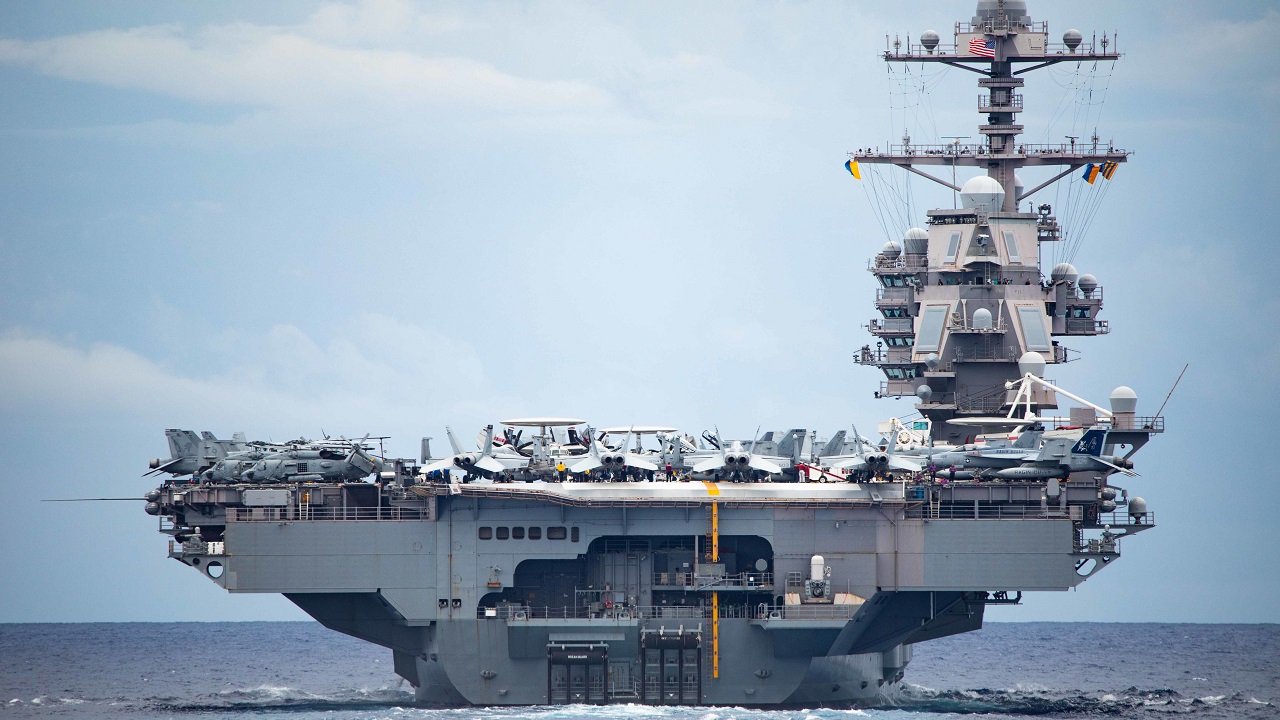
A view of the first-in-class aircraft carrier USS Gerald R. Ford (CVN 78) from aboard the Ticonderoga-class guided-missile cruiser USS Normandy (CG 60) as Normandy participates in a Tactical Force Exercise as part of the Gerald R. Ford Carrier Strike Group, Oct. 13, 2022. Ford is on its inaugural deployment conducting training and operations alongside NATO Allies and partners to enhance integration for future operations and demonstrate the U.S. Navy’s commitment to a peaceful, stable and conflict-free Atlantic region. (U.S. Navy photo by Mass Communication Specialist 2nd Class Malachi Lakey)
The Americans conducted a successful mission to attack Iranian nuclear infrastructure with Massive Ordnance Penetrator bunker busting bombs last summer. Operation Midnight Hammer may have set the Iranians back significantly in their nuclear program, but Supreme Leader Ali Khamenei has no plans to stop trying to pursue a weapon of mass destruction.
The Ford Deployment Is the Right Choice
Meanwhile, for sailors on the Ford, this is the eighth month continuously at sea. The supercarrier is the right ship at the right time and will be able to deter the Iranians from making some sort of military response at aircraft attacking Tehran nuclear sites and other targets.
I support diplomacy over military strikes though. The Trump administration has been successful at mitigating defense showdowns before, and I have confidence that talks will eventually bear fruit.
Operation Midnight Hammer 2.0
Nevertheless, an attack could move forward. The United States would likely use B-2 Spirit stealth bombers again. Operation Midnight Hammer could be replicated, and more F-35C fighters could suppress enemy air defenses while Growlers jam and spoof Iranian radar.
However, a military strike would likely only give Iran a “bloody nose” and not decapitate the regime. There is no chance of boots on the ground in Iran, and more bombing may not be enough to win decisively against Khamenei.
More Leverage and Deterrence
Sending the extra aircraft carrier to the region is a solid military move that reinforces deterrence and provides leverage. The Ford may have to remain in-theater for at least another month as talks continue. Its aircraft are invaluable and allow stealth bombers to work their magic if they are called upon.
About the Author: Brent M. Eastwood
Author of now over 3,000 articles on defense issues, Brent M. Eastwood, PhD is the author of Don’t Turn Your Back On the World: a Conservative Foreign Policy and Humans, Machines, and Data: Future Trends in Warfare plus two other books. Brent was the founder and CEO of a tech firm that predicted world events using artificial intelligence. He served as a legislative fellow for US Senator Tim Scott and advised the senator on defense and foreign policy issues. He has taught at American University, George Washington University, and George Mason University. Brent is a former US Army Infantry officer. He can be followed on X @BMEastwood.