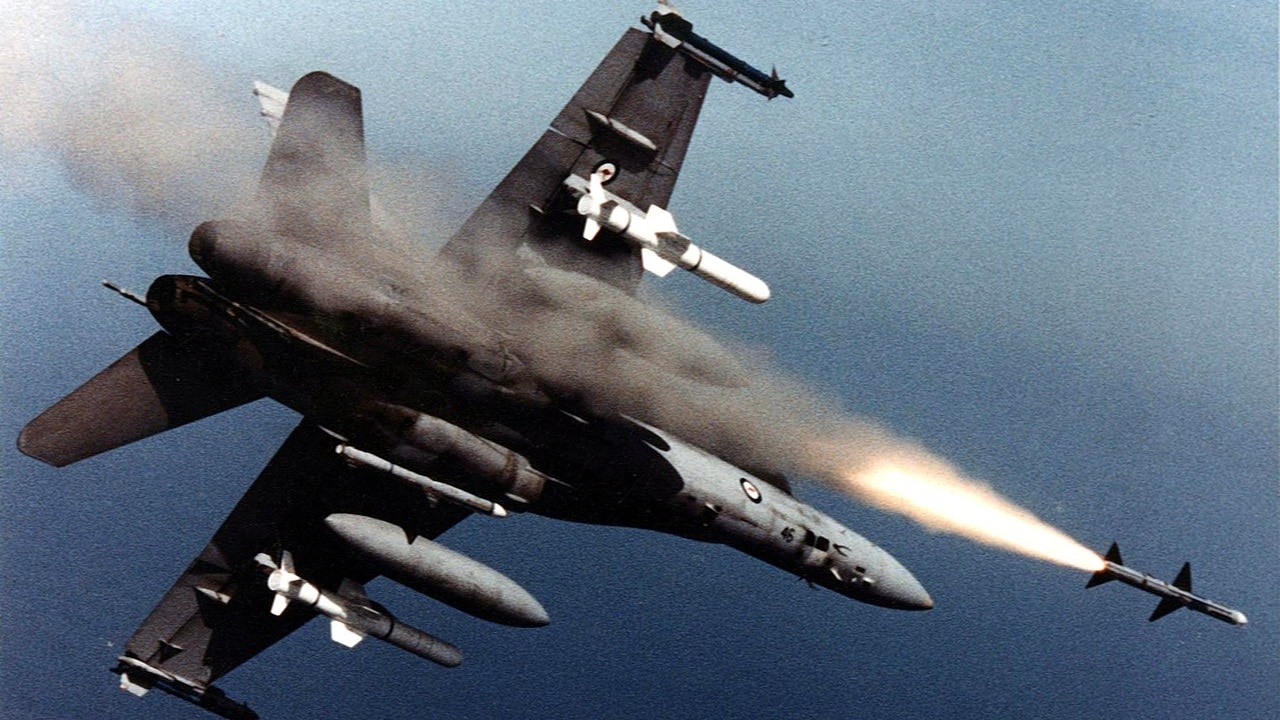
Can Iran Really Shut Hormuz? The Small-Boat And Missile Threat Facing U.S. Warships
Iran’s threat to disrupt the Strait of Hormuz is resurfacing as the USS Abraham Lincoln and its carrier strike group arrive in the Middle East.
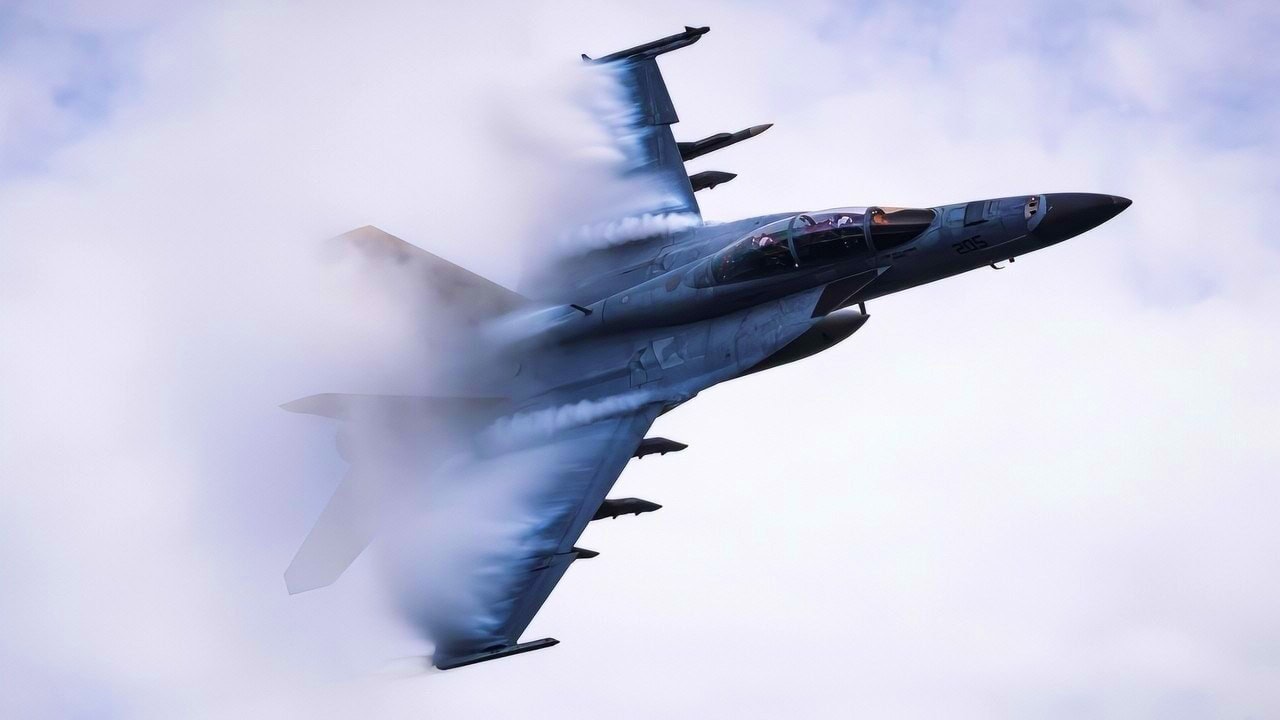
USS George Washington Aircraft Carrier Super Hornet. Image Credit: Creative Commons.
The narrow choke point has long been vulnerable to “gray zone” pressure, including small-boat swarms, mines, and missile coverage from Iran’s coastline.
With shipping lanes only a few miles wide and a large share of global oil transiting the strait, even temporary disruption could shake markets and regional security.
The piece argues that Iran could attempt a short-term closure to signal leverage, but sustained blockage would be difficult against U.S. naval air power, submarines, surface combatants, and countermine forces already positioned to keep the route open.
Iranian small-boat swarms in the Strait of Hormuz are a longstanding security threat to Western assets there. The strait is a narrow choke point of the ocean within range of Iranian missiles; mines and attack watercraft can hold military and commercial ships in the strait at risk.
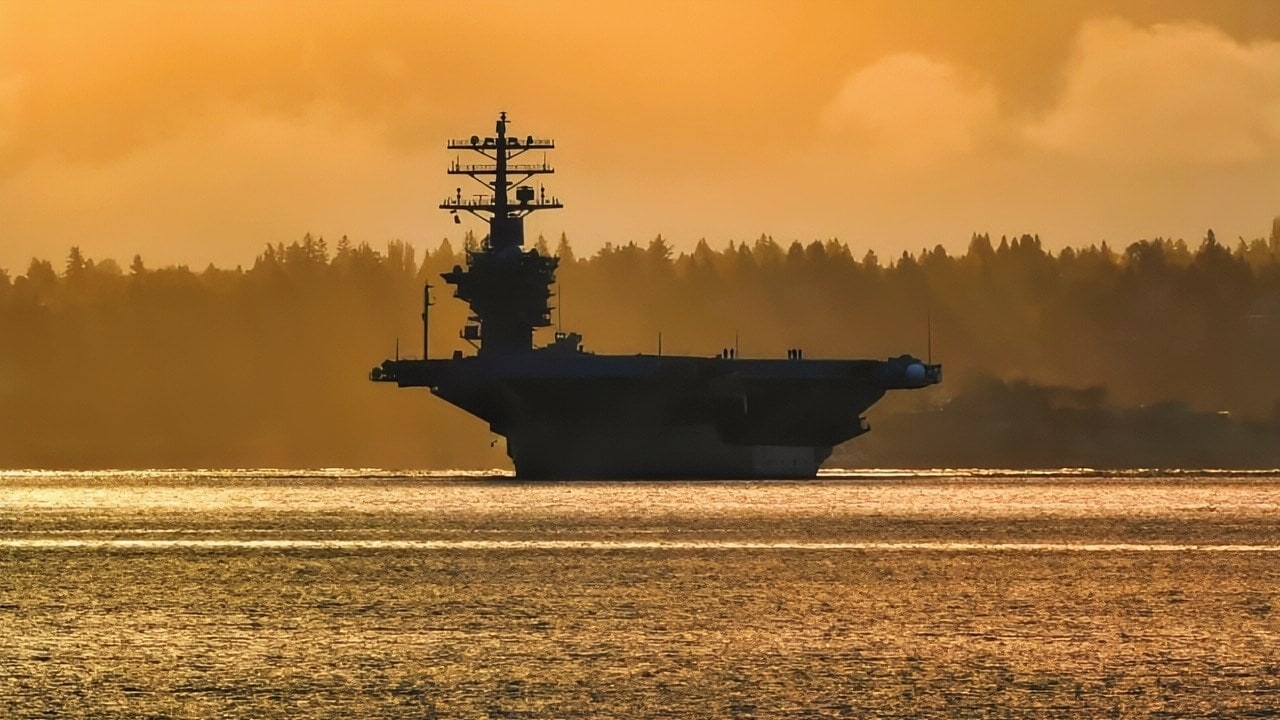
MANCHESTER, Wash. (April 28, 2017) USS Nimitz (CVN 68) transits Puget Sound, past the Seattle skyline enroute to its homeport, Naval Base Kitsap-Bremerton. The return to homeport marks the end of an underway along with its Carrier Strike Group 11, having successfully completed its final pre-deployment assessment, Composite Training Unit Exercise, April 21, and is now fully certified to deploy later this year. (U.S. Navy photo by Mass Communication Specialist 2nd Class Vaughan Dill/Released
As the USS Abraham Lincoln (CVN-72) and its carrier strike group (CSG) arrive in the Middle East, Iranian officials say they are willing to close the choke point to shipping.
Iran has a documented history of using swarms of small boats to intimidate or harass international commercial vessels as well as U.S. Navy platforms. That is one reason the Navy in recent years significantly upgraded close-in ship defenses, including its deck-mounted guns as well as interceptor weapons such as SeaRAM and the close-in weapon system.
21-Mile Strait of Hormuz
Iran has always sought to maximize whatever leverage it has to exert pressure on those needing safe passage through the strait, which suffers a long history of small-boat attacks. A large percentage of the world’s oil, including some U.S. oil, must pass through the Strait of Hormuz—a passageway that spans only 21 miles at its narrowest point.
In general the strait runs about 35 to 60 miles wide and connects the Persian Gulf to the Gulf of Oman. To facilitate safe and efficient passage, shipping lanes about two miles wide are separated by a buffer. Roughly 20 percent of the world’s oil—approximately 21 million barrels per day—passes through the Strait of Hormuz.
Iranian Missile Threat
Research by Iran Watch shows Tehran does possess a considerable arsenal of ballistic missiles, at least five of which can reportedly travel distances of more than 1,000 kilometers. The Shahab-3, for instance, is listed by Iran Watch as capable of traveling 1,300 km with a 1,000 kilogram warhead. The liquid fuel, single-stage Shahab-3 rocket is now deployed in large numbers.
The longest-range ballistic missile listed by Iran Watch is the Khorramshahr 4, which may be able to travel as far as 2,000 to 3,000 km.
This means the missile, launched from Tehran, or from most places throughout Central and Western Iran, could hit any location in Israel. Other projectiles capable of traveling 1,600 km or more include the Ghadr, Emad and Paveh cruise missiles, according to Iran Watch.
If Iran seeks to close the strait for military reasons, the world’s economy would be severely impacted.
The task might not be too difficult, given the passageways in the strait are only two miles wide. Iranian boats would merely need to occupy the area with boats, barriers, or mines to close shipping lanes. Closing the strait would be a move to exert leverage short of a direct act of war. It could thus be seen as a kind of “gray zone” maneuver.
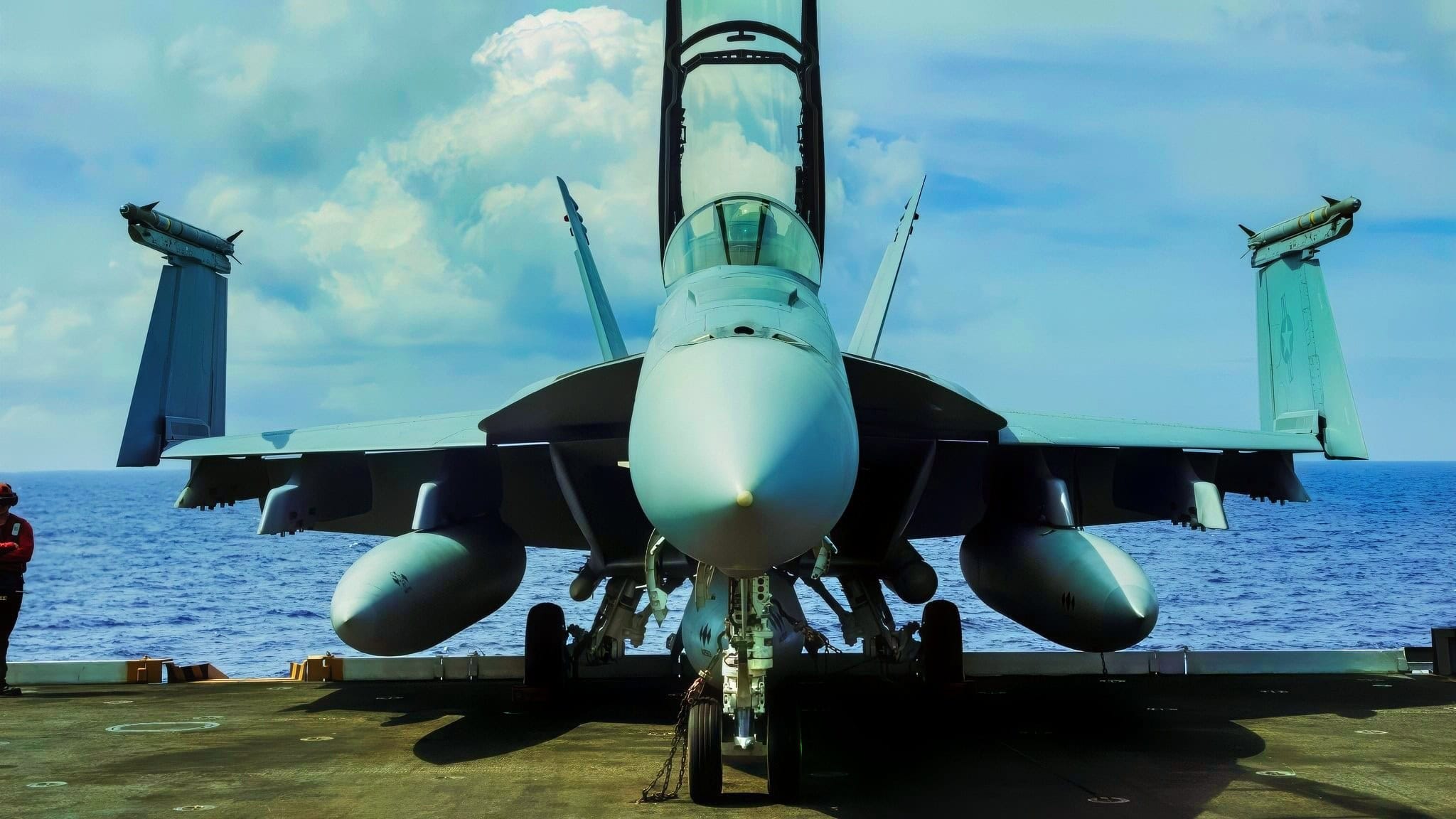
Capt. Tim Waits, commanding officer of Nimitz-class aircraft carrier USS George Washington (CVN 73), climbs into an F/A-18F Super Hornet, attached to Strike Fighter Squadron (VFA) 102, while underway in the South China Sea, Nov. 24, 2025. George Washington is the U.S. Navy’s premier forward-deployed aircraft carrier, a long-standing symbol of the United States’ commitment to maintaining a free and open Indo-Pacific region, while operating alongside allies and partners across the U.S. Navy’s largest numbered fleet. (U.S. Navy photo by Mass Communication Specialist 2nd Class Geoffrey L. Ottinger)
What if Iran Closes the Strait of Hormuz?
Closing the Strait of Hormuz could also be a way to block the Abraham Lincoln CSG from entering the Persian Gulf if U.S. President Donald Trump decides to strike Iran. Such an Iranian initiative, however, would likely be short-lived—it could be easily countered by U.S. Navy forces in the region.
Iran might be able to quickly close the strait, but would not keep it closed for long, given the many U.S. surface, undersea, and air-attack capabilities in the region.
U.S. Navy Attack
U.S. Navy warships, aircraft, submarines, and countermine vessels could simply engage the area to ensure it remains open. Further, a CSG is capable of striking Iran and conducting air operations over the country without needing to transit through the strait. Therefore, any pre-emptive Iranian move to close would make little strategic or tactical sense—and it certainly would make no political sense, given the number of countries that depend on oil passing through the area.
About the Author: Kris Osborn
Kris Osborn is the President of Warrior Maven – Center for Military Modernization. Osborn previously served at the Pentagon as a highly qualified expert in the Office of the Assistant Secretary of the Army—Acquisition, Logistics & Technology. Osborn has also worked as an anchor and on-air military specialist at national TV networks. He has appeared as a guest military expert on Fox News, MSNBC, The Military Channel, and The HistoryChannel. He also has a Master’s Degree in Comparative Literature from Columbia