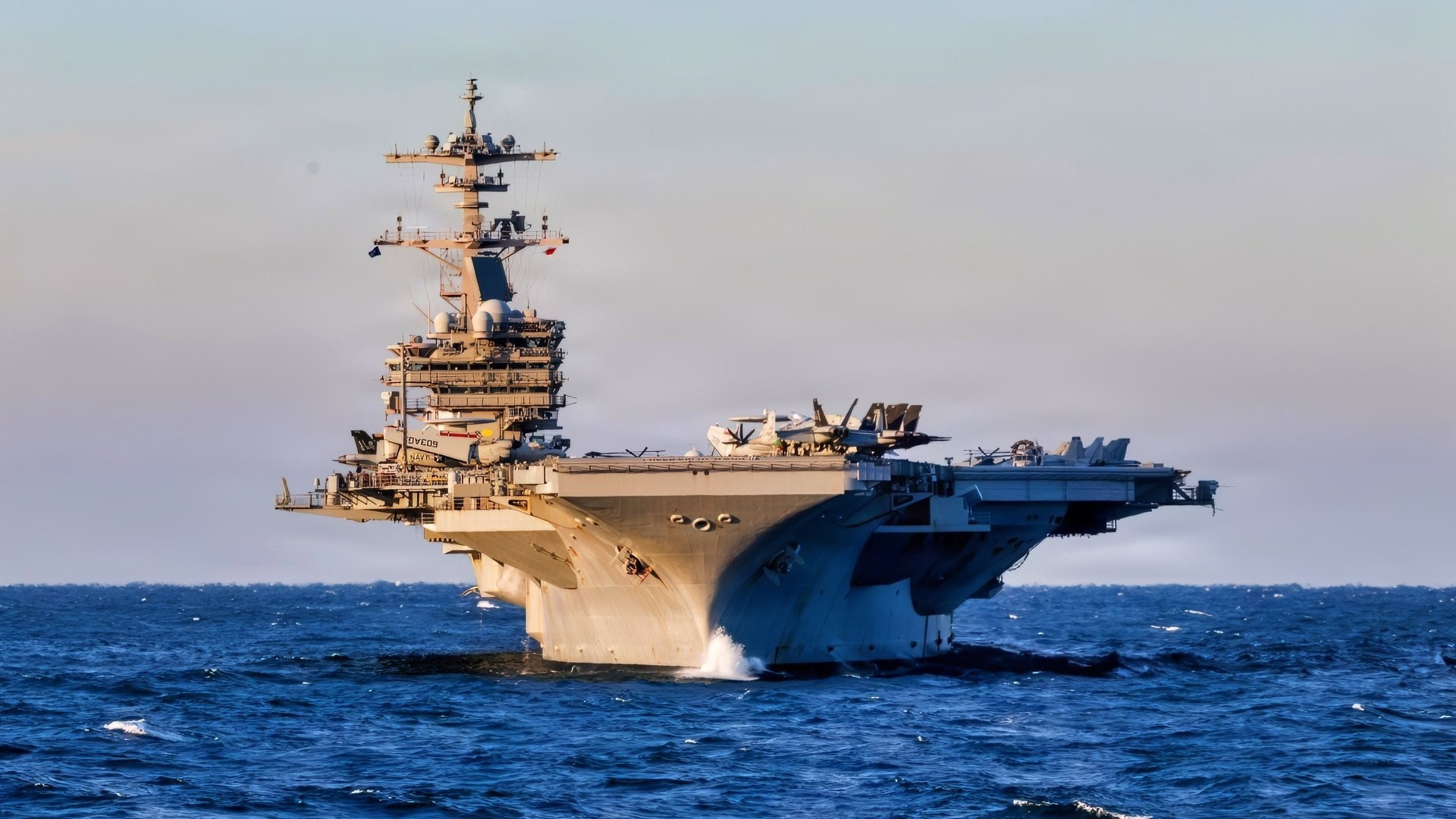
Summary and Key Points: Defense analyst Reuben F. Johnson evaluates the ongoing energy trade through the Strait of Hormuz despite the escalation of Operation Epic Fury against Iran.
-Since the February 28 strikes, approximately 12 million barrels of crude have transited the waterway, with the majority officially destined for the PRC.
-This report analyzes the use of the Jask terminal to bypass the embattled Kharg Island, and the IRGC‘s “selective” targeting of vessels.
-Johnson concludes that while ten ships have been attacked, China’s primary role as a buyer provides a critical economic shield that prevents Tehran from fully closing the global chokepoint.
Strait of Hormuz Immunity: Why China’s Oil Tankers are Evading Iran’s Maritime Threats
A war being waged on its regime and its military, plus air attacks on its major oil facilities, has not stopped Iran from continuing to ship large amounts of crude to the People’s Republic of China (PRC) through the strategically vital Strait of Hormuz. This trade has continued well past the day that strikes on Tehran and other Iranian major installations began on February 28.
But the hostilities have made the overall oil trade throughout the region problematic for other customers of Iranian crude. In the past two weeks, Iran has sent at least 11.7 million barrels through the Strait of Hormuz. However, all those shipments were officially listed with the PRC as their destination, according to Samir Madani, co-founder of Tanker Trackers.
Iran’s leadership has threatened to choke off all maritime traffic through the Strait of Hormuz in retaliation for US-Israeli attacks. But analysts who have been following events over the past 14 days say they are highly sceptical that Iran would risk the collateral damage from a long-term blockade of the famous shipping lane.
“Around 70 percent of Iran’s non-oil trade passes through ports that depend on access via the Strait of Hormuz,” said gas and economic analyst Dalga Khatinoglu, who is on the staff of Iran International, a news outlet based in London that covers events in-country through its own networks.
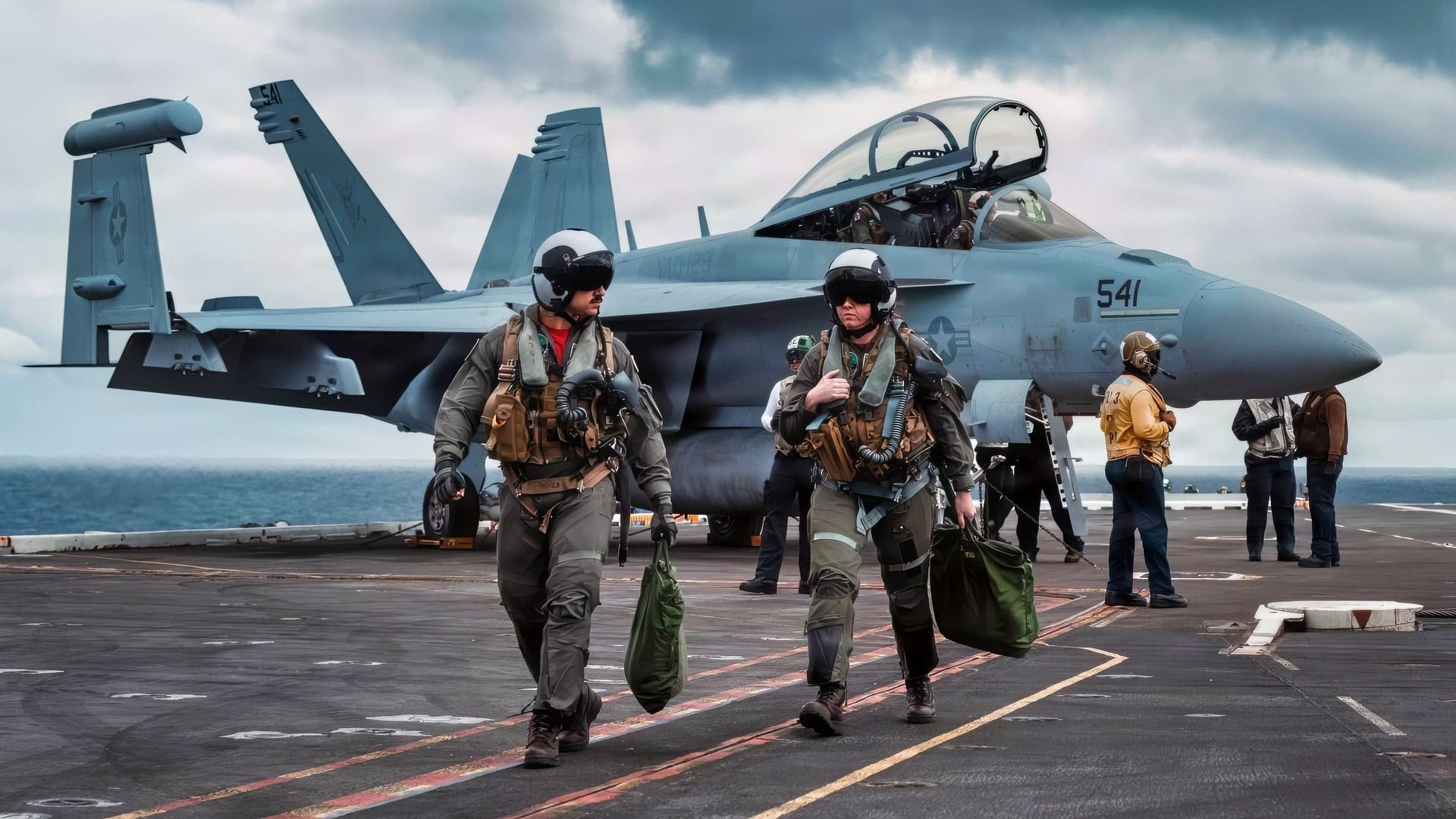
PACIFIC OCEAN (Jan. 24, 2026) – U.S. Navy Lt. Patrick Urrutia, left, and U.S. Navy Lt. Jg. Gabriela Patrick depart a U.S. Navy EA-18G Growler attached to Electronic Attack Squadron (VAQ) 129 on the flight deck of the Nimitz-class aircraft carrier USS Theodore Roosevelt (CVN 71), Jan. 24, 2026. Theodore Roosevelt, flagship of Carrier Strike Group (CSG) 9, is underway conducting exercises to bolster strike group readiness and capability in the U.S. 3rd Fleet area of operations. (U.S. Navy photo by Mass Communication Specialist Seaman Apprentice Cesar Nungaray)
Others point out that long-term blockading of the strait would hurt Iran’s own interests.
“It doesn’t feel rational for Iran to close the Strait of Hormuz, because they have the imports of the crucial goods like crucial food, for example, but also the majority of their exports go to China and India, so that would turn against the country,” the energy expert Sara Vakhshouri of SVB Energy International recently told Bloomberg TV.
The Dark Fleet
One of Tanker Tracker’s specialities is monitoring movements of commercial shipping by analyzing satellite imagery. Using these photos is often the only way to determine the location and course of shipping vessels, as many ships will turn off their tracking system transponders to avoid detection.
Numerous ships in this waterway have reportedly “gone dark” after Iran’s Islamic Revolutionary Guard Corps (IRGC) threatened to attack any vessel attempting to pass through the strait.
Nevertheless, the shipping intelligence firm Kpler estimates that around 12 million barrels of crude oil have passed through the strait since the war started.
“Given that China has been the primary buyer of Iranian crude in recent years, a significant share of these barrels could ultimately head there,” said Nhway Khin Soe, who is a crude analyst at Kpler.
But he also added that confirming the final destination of these vessels has become increasingly challenging.
In Beijing, the National Energy Administration has not commented officially on these reports. But the question many are asking is why ships that are transporting crude to the PRC appear to have some sort of immunity from these threatened attacks.
Around one-fifth of the world’s oil and gas normally passes through the Strait of Hormuz. Still, since February 28, that traffic has slowed by several orders of magnitude, and many tankers have been purposely avoiding the waterway due to the risks involved.
Hazardous to Ship Cargo
Ten vessels in or near the Strait of Hormuz have already been attacked, less than two weeks into the war. At least seven crew members on board were killed in the process, according to the International Maritime Organization.
Oil tankers transiting through the Strait “must be very careful,” said a spokesman for Iran’s Ministry of Foreign Affairs in an interview with US media. But somewhat predictably, three of the six tankers that were seen on satellite imagery that had departed Iran since February 28 were Iranian-flagged, according to Tanker Trackers’ Madani.

120511-N-WO496-003 STRAIT OF HORMUZ (May 11, 2012) Guided-missile cruiser USS Cape St. George (CG 71) and aircraft carrier USS Abraham Lincoln (CVN 72) transit the Strait of Hormuz. Both ships are deployed to the U.S. 5th Fleet area of responsibility conducting maritime security operations, theater security cooperation efforts and support missions as part of Operation Enduring Freedom. (U.S. Navy Photo by Mass Communication Specialist 3rd Class Alex R. Forster/Released)
Tankers are also now using alternative facilities to load oil as long as these hostilities remain at such a high level. Kharg Island terminal, 15 miles off the coast of mainland Iran, has been the country’s primary oil export facility for many years and has handled around 90% of its crude exports, which are loaded onto tankers before they travel through the Strait of Hormuz.
Iran has now resumed loading tankers at the Jask oil and gas terminal on the Gulf of Oman, south of the Strait of Hormuz, which could add additional capacity to crude shipments. An Iranian vessel recently used this facility to load 2 million barrels of crude.
This was only the fifth such oil loading of this size at this facility in the past five years, according to Tanker Trackers.
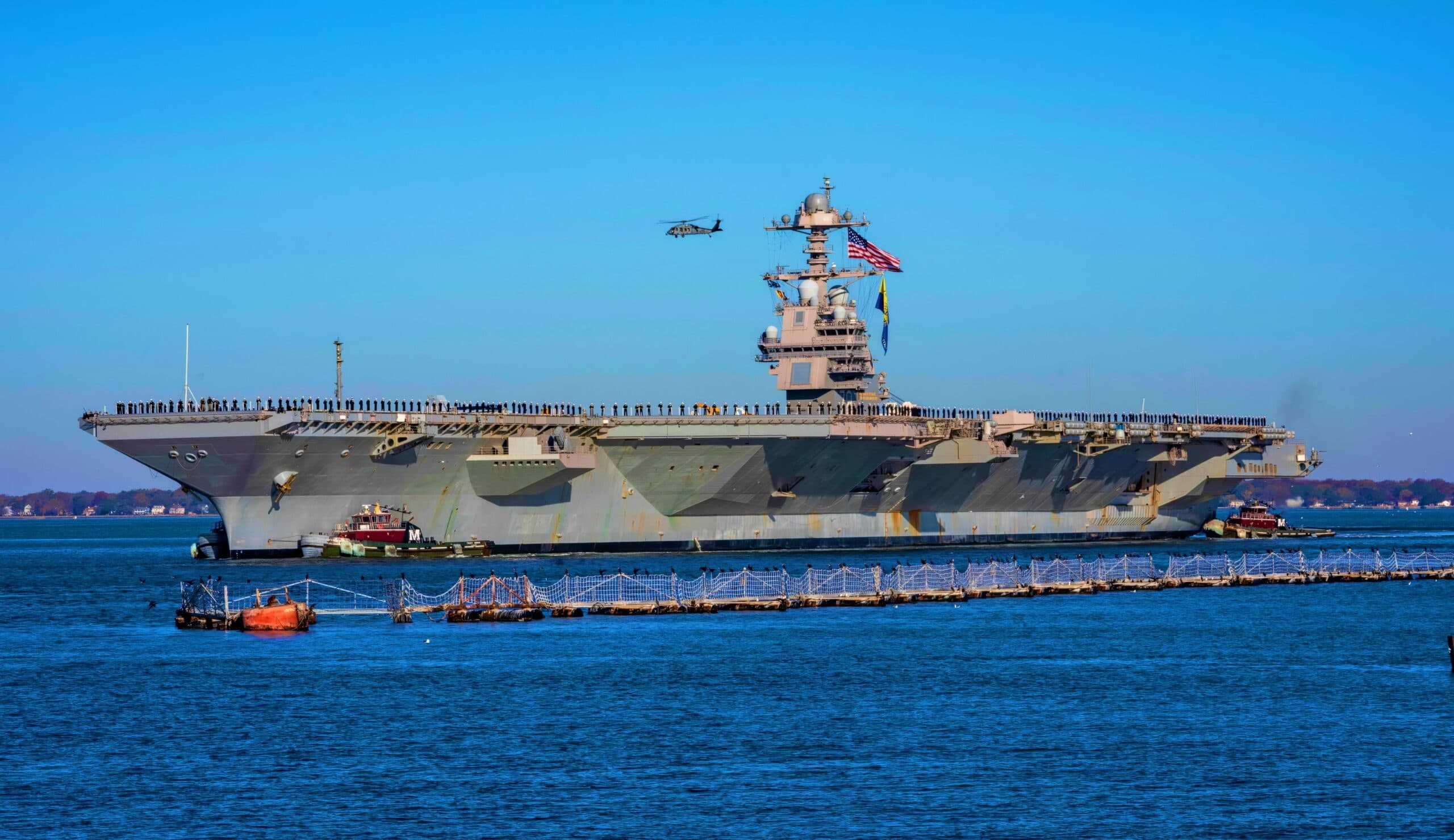
NORFOLK (Nov. 26, 2022) The USS Gerald R. Ford (CVN 78) returns to Naval Station Norfolk after completing their inaugural deployment to the Atlantic Ocean with the Gerald R. Ford Carrier Strike Group (GRFCSG), Nov. 26. The GRFCSG, returned to Naval Station Norfolk following a scheduled deployment with Allies and partners in an effort to build strategic relationships and contribute to a stable and conflict-free Atlantic region, while also showcasing the U.S. Navy’s most advanced class of aircraft carrier. (U.S. Navy Photo/Video by Mass Communication Specialist First Class Nathan T. Beard)
What the Experts Told 19FortyFive
“Keeping this oil lifeline intact appears to be the major priority for Beijing at present,” said a former PRC-watcher who has several tours in intelligence worth of experience.
“Xi Jinping is not going to do anything that can jeopardize his nation’s oil supply until he can see how long this conflict will last and how it will turn out in the end.”
About the Author: Reuben F. Johnson
Reuben F. Johnson has thirty-six years of experience analyzing and reporting on foreign weapons systems, defense technologies, and international arms export policy. Johnson is the Director of Research at the Casimir Pulaski Foundation. He is also a survivor of the Russian invasion of Ukraine in February 2022. He worked for years in the American defense industry as a foreign technology analyst and later as a consultant for the U.S. Department of Defense, the Departments of the Navy and Air Force, and the governments of the United Kingdom and Australia. In 2022-2023, he won two awards in a row for his defense reporting. He holds a bachelor’s degree from DePauw University and a master’s degree from Miami University in Ohio, specializing in Soviet and Russian studies. He lives in Warsaw.