
Summary and Key Points: National security expert Dr. Brent M. Eastwood evaluates the March 13, 2026, proposal for U.S. naval escorts in the Strait of Hormuz. With oil prices exceeding $100 per barrel, the Trump administration is weighing “hitting Iran very hard” to ensure safe passage for global energy supplies. This report analyzes the threat posed by IRGC sea mines and the proximity of drone launchers to transit lanes. Eastwood explores the possibility of SEAL Team Six or Delta Force conducting “shoot and scoot” neutralization missions, concluding that while Secretary Pete Hegseth remains confident, the mission remains fraught with risk.
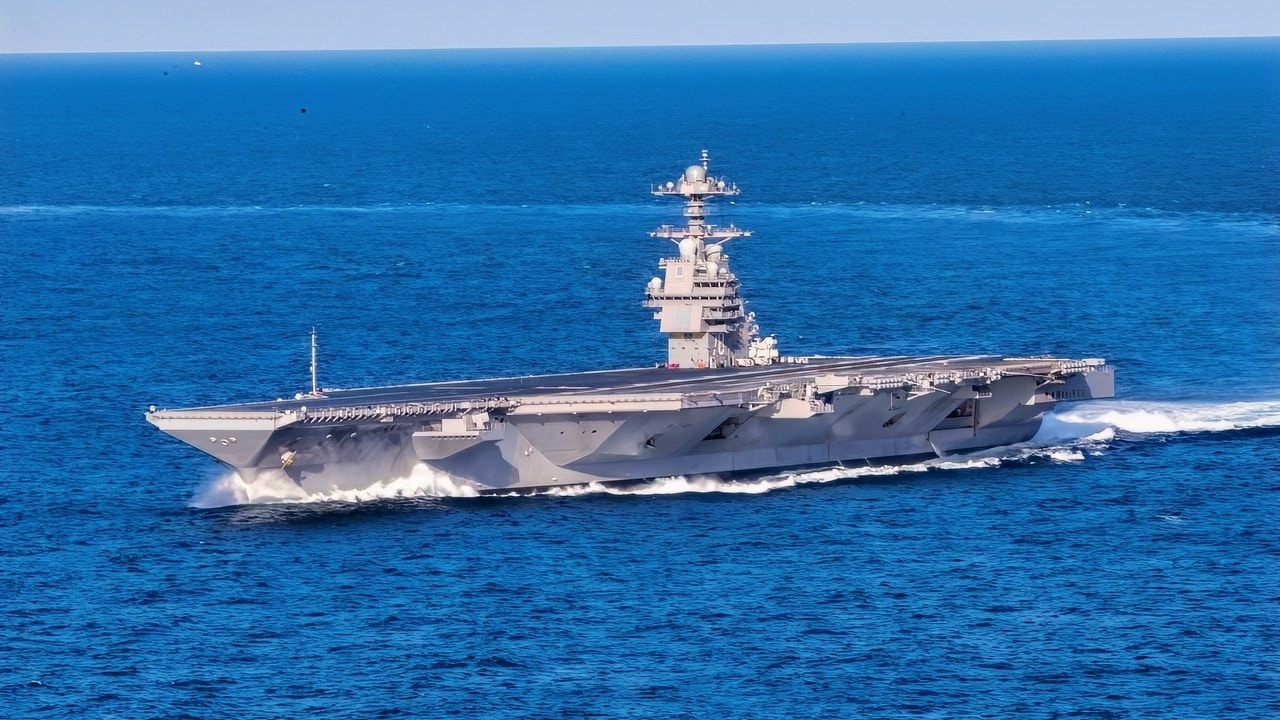
ATLANTIC OCEAN (Oct. 29, 2019) USS Gerald R. Ford (CVN 78) conducts high-speed turns in the Atlantic Ocean. Ford is at sea conducting sea trials following the in port portion of its 15 month post-shakedown availability. (U.S. Navy photo by Mass Communication Specialist 3rd Class Connor Loessin)
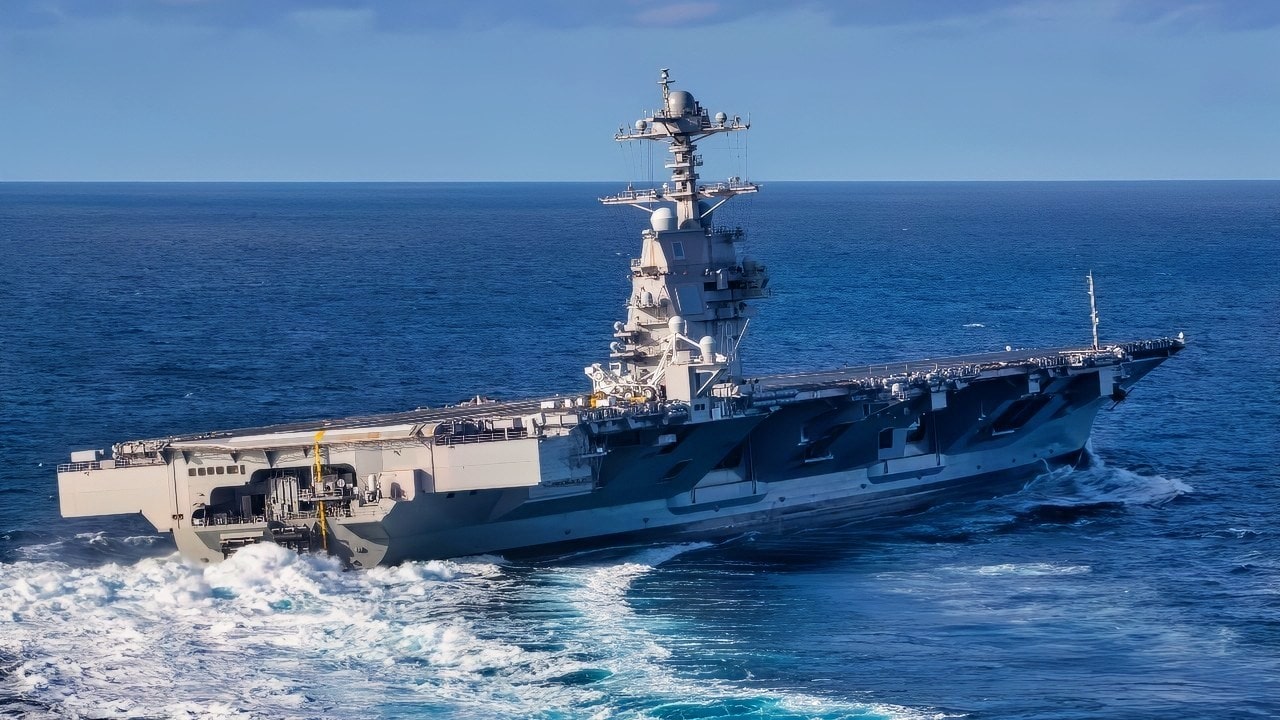
ATLANTIC OCEAN (Oct. 29, 2019) USS Gerald R. Ford (CVN 78) conducts high-speed turns in the Atlantic Ocean. Ford is at sea conducting sea trials following the in port portion of its 15 month post-shakedown availability. (U.S. Navy photo by Mass Communication Specialist 3rd Class Connor Loessin)
The Escort Option: Why Trump is Considering Naval Convoys to Break the Strait of Hormuz Blockade
President Donald Trump has one solution for the crisis in the Strait of Hormuz. He said in an interview with Fox News on March 13 that the United States may have to escort ships through the strategic choke point.
When queried about helping oil tankers pass through the key shipping area, Trump said, “We would do it if we needed to. But, you know, hopefully things are going to go very well. We’re going to see what happens.”
Trump Wants to Continue the Pressure on Iran
But he explained that the military operation could punish the Iranians to maintain an open strait. “We’re going to be hitting them very hard over the next week,” Trump said.
Watch Out for Spiking Oil Prices
Oil prices were around $93 a barrel on March 13, but they have surpassed the key $100 threshold this week, creating pain at the pump for many Americans.
Hegseth Said Not to Worry
During a briefing on Friday, Secretary of Defense Pete Hegseth explained that he did not think a complete closure of the Strait of Hormuz would happen. “We have been dealing with it, and don’t need to worry about it,” Hegseth told reporters at the Defense Department.
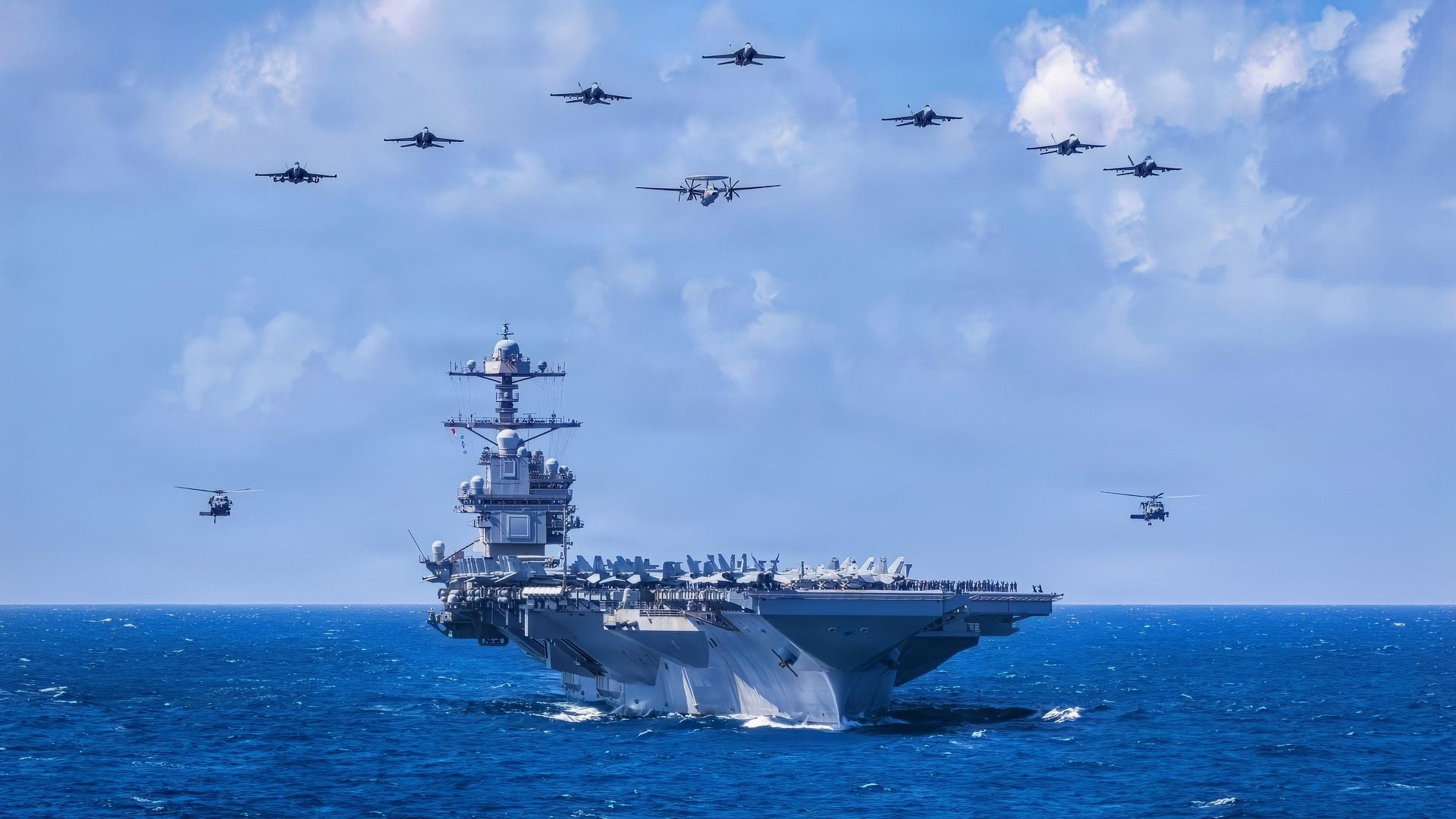
USS Ford Supercarrier U.S. Navy. Image Credit: U.S. Navy.
The Americans Have a Solution
Hegseth seemed frustrated that some have claimed the United States does not have a plan to keep the Strait open and to protect shipping that could be in danger from the Iranian military. Hegseth told reporters that there were contingencies to maintain freedom of navigation in the strait.
The Sea Mines Are Dangerous
Escorting ships through the Strait of Hormuz could be fraught with risk. The U.S. military is concerned that sea mines could be deployed in the waterway and has struck and destroyed at least 16 Iranian vessels that lay mines.
The Strait of Hormuz lies between Oman and Iran and connects the Persian Gulf with the Gulf of Oman and the Arabian Sea.
Damages So Far Inflicted By Iran
“Three cargo ships were struck by unknown projectiles in the Gulf on Wednesday, with another three other ships hit on Thursday — one of which was claimed by the Islamic Revolutionary Guard Corps (IRGC). That brings the number of reported attacks against vessels operating near the Iranian coast to at least 19,” the Hill reported.
Secretary of the Treasury Scott Bessent said that using escorts could come later, but offered no definite timeline. He said that it could happen as soon as it was militarily feasible. “It is a prospect as soon as … it is possible to ensure safe passage,” Bessent told Sky News.
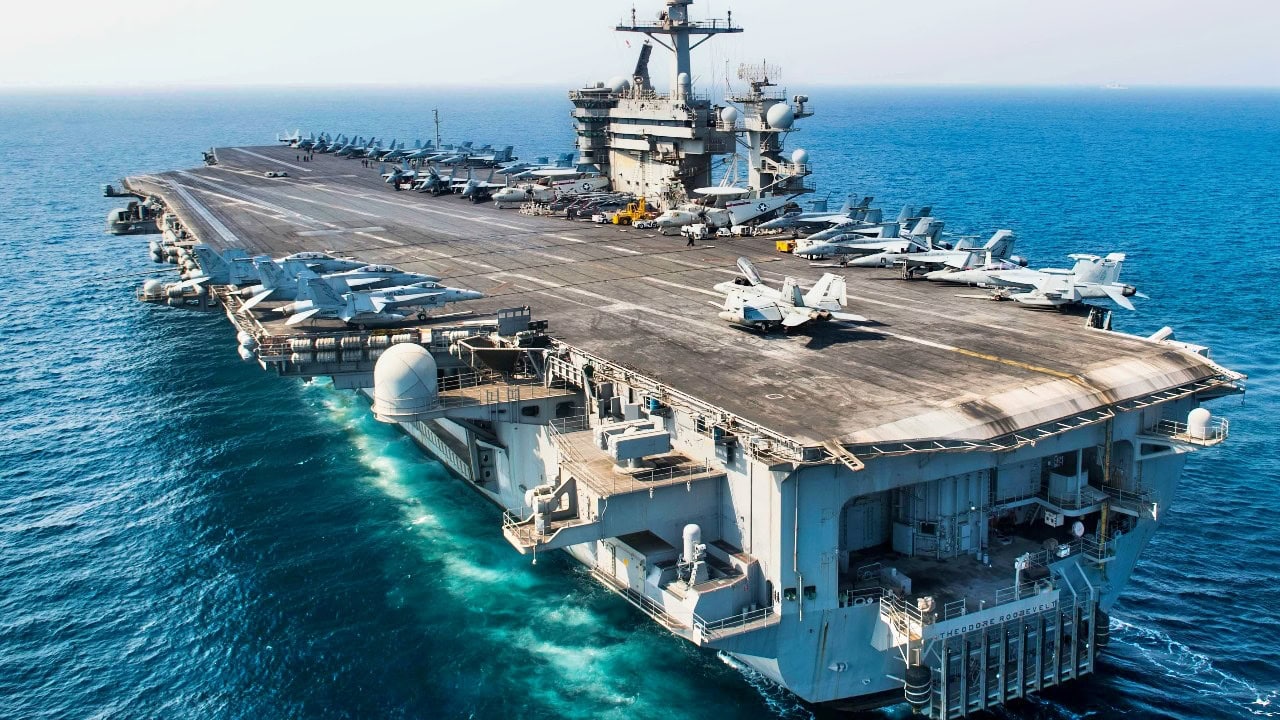
(Oct. 10, 2015) The aircraft carrier USS Theodore Roosevelt (CVN 71) transits the Arabian Gulf. Theodore Roosevelt is deployed in the U.S. 5th Fleet area of operations supporting Operation Inherent Resolve, strike operations in Iraq and Syria as directed, maritime security operations and theater security cooperation efforts in the region.
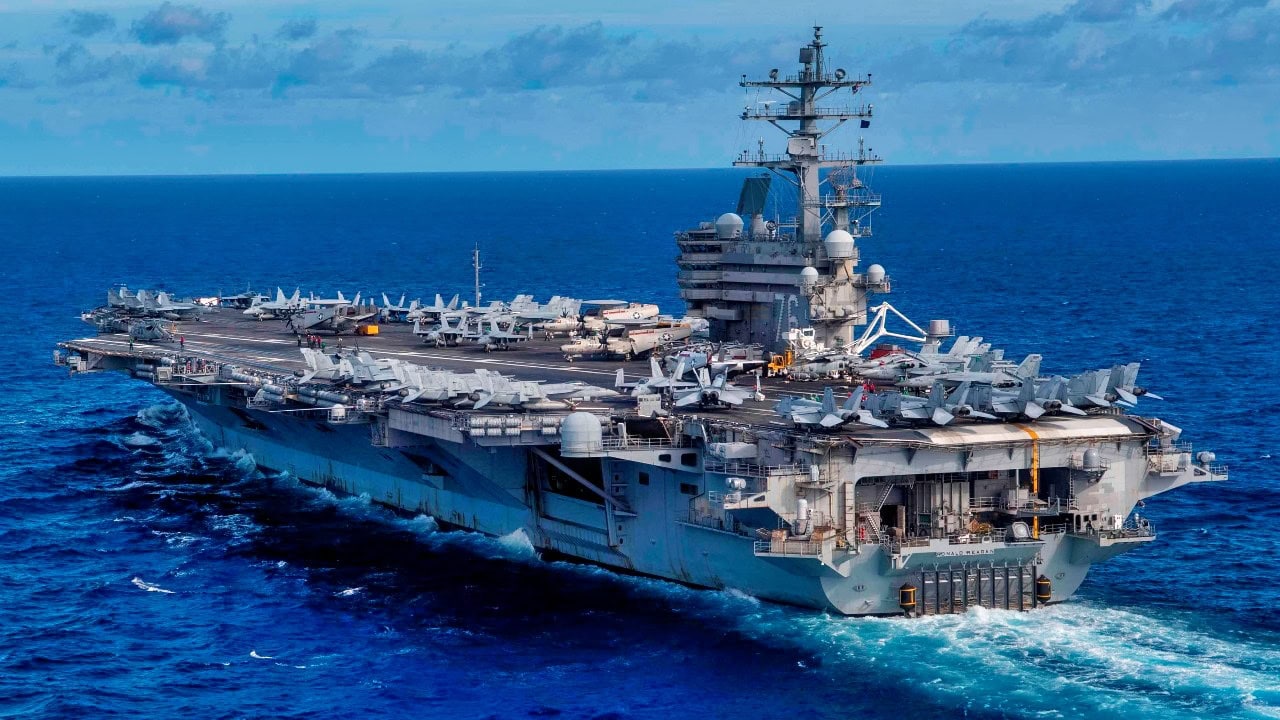
SOUTH CHINA SEA (June 16, 2021) The Navy’s only forward-deployed aircraft carrier USS Ronald Reagan (CVN 76) transits the South China Sea. Reagan is part of Task Force 70/Carrier Strike Group 5, conducting underway operations in support of a free and open Indo-Pacific. (U.S. Navy Photo by Mass Communication Specialist 1st Class Rawad Madanat)
Don’t Forget that U.S. Warships Would Be at Risk
Drones and anti-ship ballistic missiles could endanger vessels in the waters off Iran. They could even damage or sink U.S. Naval warships that would be targets of the Iranian forces, choking off the critical passage.
“The challenge is going to be dealing with the proximity of the drone launchers and the missile launchers that are going to be along the Iranian coast,” Bryan Clark, an expert in naval operations with the Hudson Institute, told The Hill.
“The issue is that you only have a couple of minutes once the launcher comes out before the missiles are going to get on top of you, because you’re only talking about 3 or 4 miles from the shoreline to the transit lane.”
Would Special Operations Forces Need to Be Deployed?
Keeping the Strait of Hormuz could even include ground troops to maintain safety in the chokepoint. This would be a low-probability scenario, but it is one option for the Americans. The Pentagon could order special operations forces to patrol the coastline and blow up any missile or drone launchers. However, these targets are mobile and can often “shoot and scoot.” They could be hard to find.
Ground Attack Is Not In the Cards Yet
So far, it does not look like Trump and Hegseth would order such a move. However, if a U.S. warship were damaged during an escort operation, then that could be fuel for the fire.
Cut and Dried Mission
It would not be difficult to infiltrate Joint Special Operations Command personnel in the area. Operators from SEAL Team Six or Delta Force, accompanied by a security force of U.S. Army Rangers, could take and hold some territory and then venture along the coastline to eliminate launchers and the drone and missile supply.
Crude Prices Could Rise Even More
These clashes could push oil prices even higher. The Trump administration wants to avoid boots on the ground and prefers to use air assets to achieve its objectives during Operation Epic Fury. But dangers in the Strait of Hormuz and the need to keep it open may provide a military necessity for sending American service members into Iran.
No Reason For Histrionics
We will watch the coming days closely. So far, the Trump national security team is not panicking and is preferring to use air and sea power to keep the strait open. But if more civilian ships are damaged or destroyed, it could mean that an infiltration mission by special operations forces could be executed. That would be a significant development in the war and a lengthy, open-ended mission. Plus, the operators would need to be replenished with food and ammunition, and aircraft from carriers would be required for combat search and rescue to treat casualties.
The use of ground personnel is one option that Trump and Hegseth are likely being presented with. It is the Joint Special Operations Command’s responsibility to present the National Command Authority with options across the spectrum of kinetic military activity. Let’s hope such a mission will not be necessary to keep the war from entering a more dangerous phase.
About the Author: Dr. Brent M. Eastwood
Author of now over 3,000 articles on defense issues, Brent M. Eastwood, PhD is the author of Don’t Turn Your Back On the World: a Conservative Foreign Policy and Humans, Machines, and Data: Future Trends in Warfare plus two other books. Brent was the founder and CEO of a tech firm that predicted world events using artificial intelligence. He served as a legislative fellow for US Senator Tim Scott and advised the senator on defense and foreign policy issues. He has taught at American University, George Washington University, and George Mason University. Brent is a former US Army Infantry officer. He can be followed on X @BMEastwood.