

Summary and Key Points: Steve Balestrieri, a national security columnist and former US Army Special Forces officer, evaluates the B-2 Spirit’s tactical dominance during Operation Epic Fury.
-Flying from Whiteman Air Force Base, the B-2 Spirit stealth bomber utilized its 10,000nm range (with one refueling) to drop 2,000-pound GBU-31 munitions on Iranian missile facilities.
-This 19FortyFive report analyzes the “Spirit Realm” software factory’s role in integrating the GBU-72/B and the Massive Ordnance Penetrator (MOP), exploring how the 19-ship fleet serves as a bridge to the B-21 Raider while holding at risk heavily defended targets in Iran, Russia, and China.
Operation Epic Fury: The B-2 Spirit Stealth Bomber;s Role in Dismantling Iran’s Hardened Missile Sites
On March 1, 2026, U.S. Central Command (CENTCOM) confirmed that B-2 Spirit stealth bombers, flying from Whiteman Air Force Base, Missouri, executed strikes against hardened Iranian ballistic missile facilities. This operation, dubbed “Operation Epic Fury,” involved four B-2s dropping GBU-31 2,000-pound bombs on Iranian targets.
The strikes targeted “hardened” underground Iranian ballistic missile sites. The mission was part of a larger U.S.-Israeli campaign that occurred on February 28, 2026, targeting Iranian infrastructure.
This activity follows a previous, large-scale strike in June 2025, when B-2s dropped 14 massive 30,000-pound GBU-57 “bunker-buster” bombs on Iranian nuclear facilities, including Fordow and Natanz.
The B-2 Spirit Remains A Cutting-Edge Stealth Bomber
The B-2 Spirit is the U.S. Air Force’s outstanding stealth bomber. It has been in the inventory for more than 35 years, which speaks to its effectiveness.
The B-2 Spirit remains relevant through continuous modernization, including upgraded avionics, enhanced stealth coatings, and the “Spirit Realm” software factory, which accelerates mission-critical updates.
It maintains its strategic edge as the only U.S. long-range, penetrating stealth bomber capable of delivering both nuclear and conventional payloads.
However, the U.S. Air Force currently has only 19 B-2 stealth bombers, a number it likely regrets. The shortsightedness of high-ranking service and government officials has left the Air Force with a deficit in its bomber fleet.

B-2 Spirit Stealth Bomber 19FortyFive Photo. Taken by Harry J. Kazianis back in July 2025.
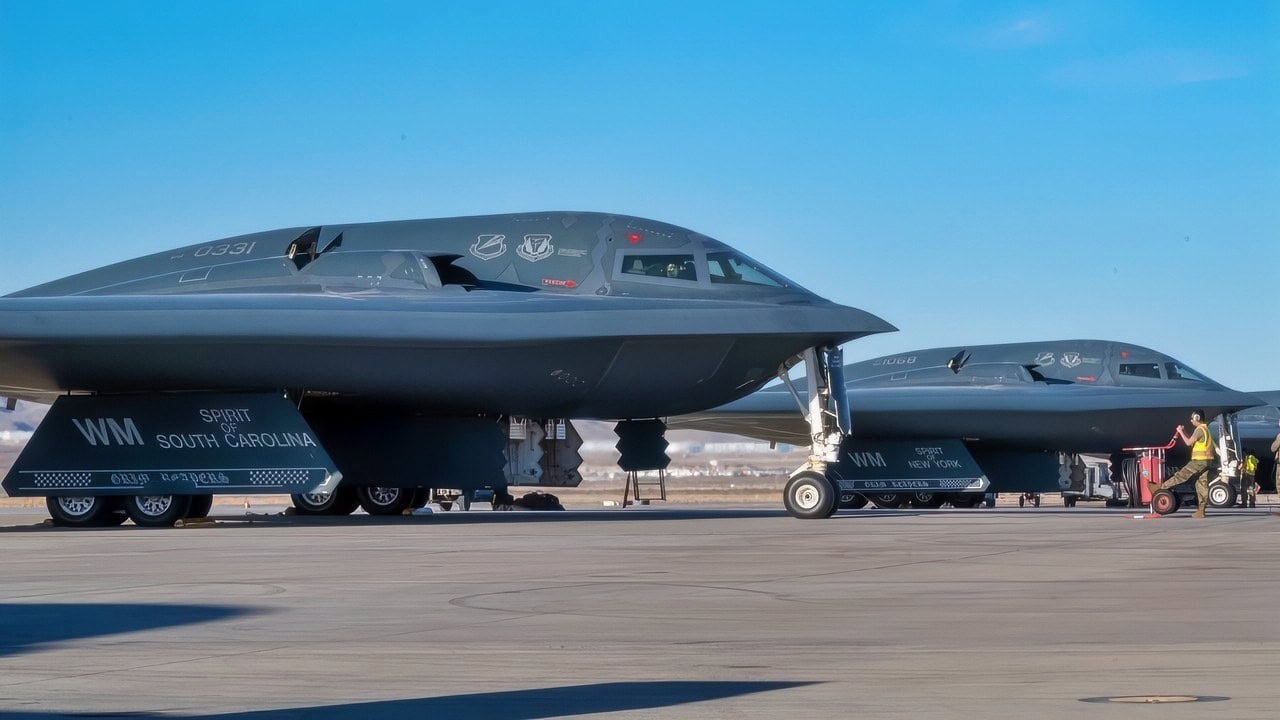
Three B-2 Spirit stealth bombers prepare for departure during Exercise Bamboo Eagle at Nellis Air Force Base, Nevada, Feb. 10, 2025. Bamboo Eagle incorporates multiple mission scenarios, preparing aircrews for complex operational challenges. (U.S. Air Force photo by Senior Airman Bryson Sherard.)
Initially, the plan was to build 132 B-2s; that number was later reduced to 75, and after the end of the Cold War, to 21. Since then, the number has been reduced further, with two aircraft lost in accidents.
With bellicose actions by China, Russia, and last June, with the Israeli bombing of Iran, the demand for the B-2 is going up, especially with Israel lacking the ability to penetrate the deep bunkers where Iran hid its nuclear enrichment facilities.
While the B-21 Raider will soon be taking its place in the Air Force’s bomber fleet, the B-2 is still a more than capable stealth bomber, as seen by the recent long-range bombing of Iran’s nuclear facilities.
Key features of the B-2’s evolution and continued relevance include:
Strategic Role With The Range To Hit Anywhere In the World
The B-2 remains a cornerstone of the U.S. nuclear triad and a premier conventional strike weapon, capable of attacking any target in the world.
The B-2 Spirit could fly to Iran from its home base in Missouri, as it has a 7,000-mile range before refueling. With one just in-flight refueling, the B-2 has a range of 10,000 nautical miles.
This intercontinental range enables it to project air power worldwide and respond to crises quickly.
The B-2 holds the record for the longest air combat mission in history. In 2001, the Spirit of America and five other B-2s were the first to enter Afghan airspace for a record-setting 44-hour mission.
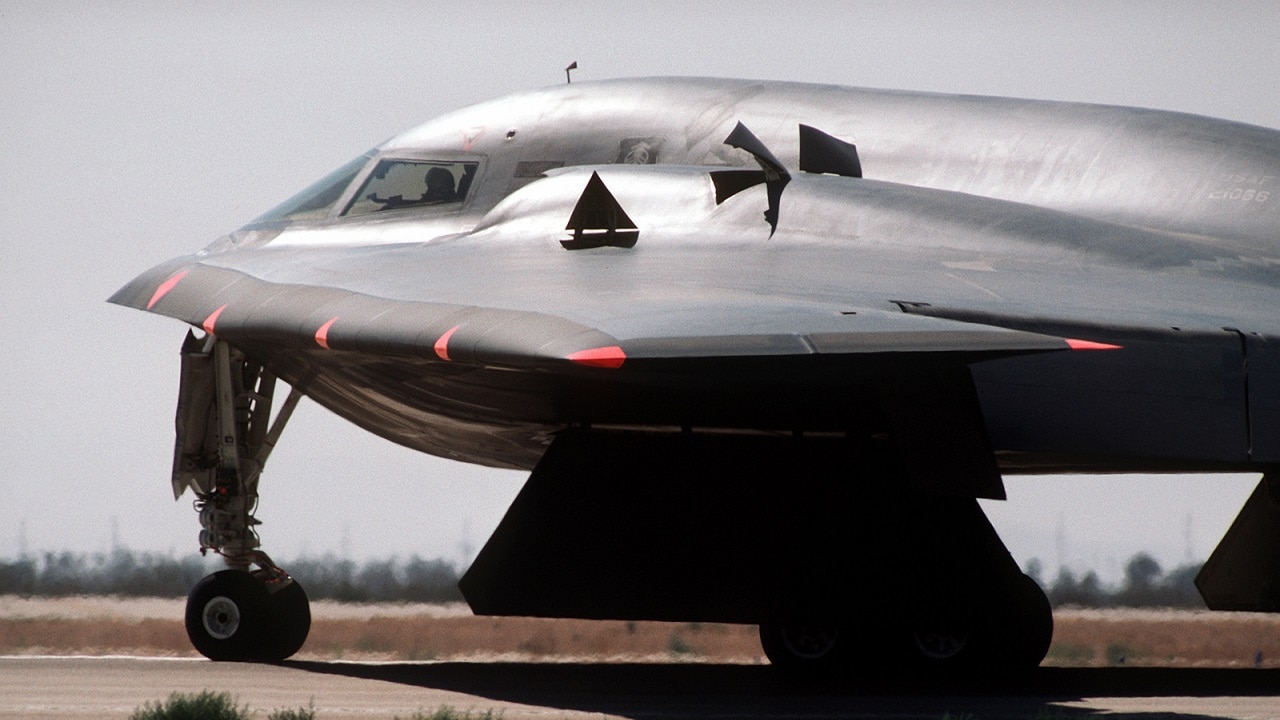
A left side view of the front of a B-2 advanced technology bomber aircraft as it prepares for its first flight, at the Air Force Flight Test Center.
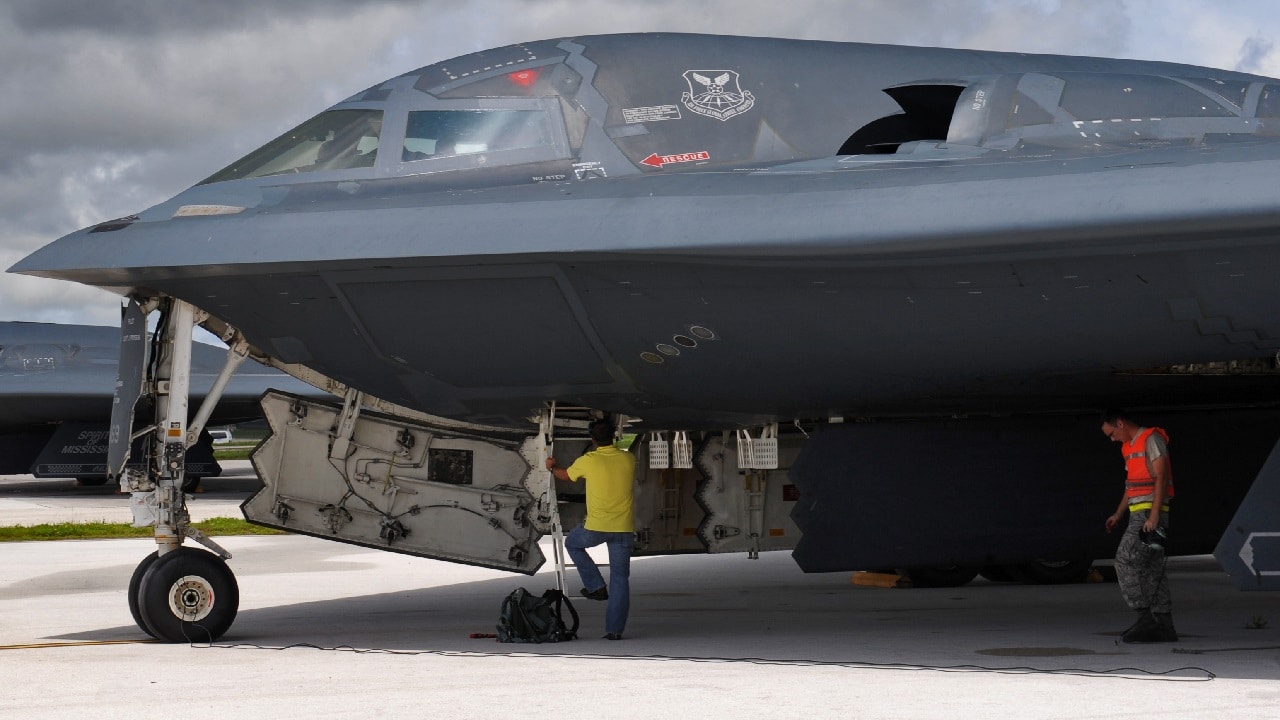
U.S. Air Force B-2 Spirit aircraft undergo pre-flight inspections prior to take off at Andersen Air Force Base, Guam, Aug. 11, 2016. More than 200 Airmen and three B-2s deployed from Whiteman Air Force Base, Mo., to conduct local sorties and regional training and integrate with regional allies in support of Bomber Assurance and Deterrence missions. (U.S. Air Force photo by Tech. Sgt. Miguel Lara III)
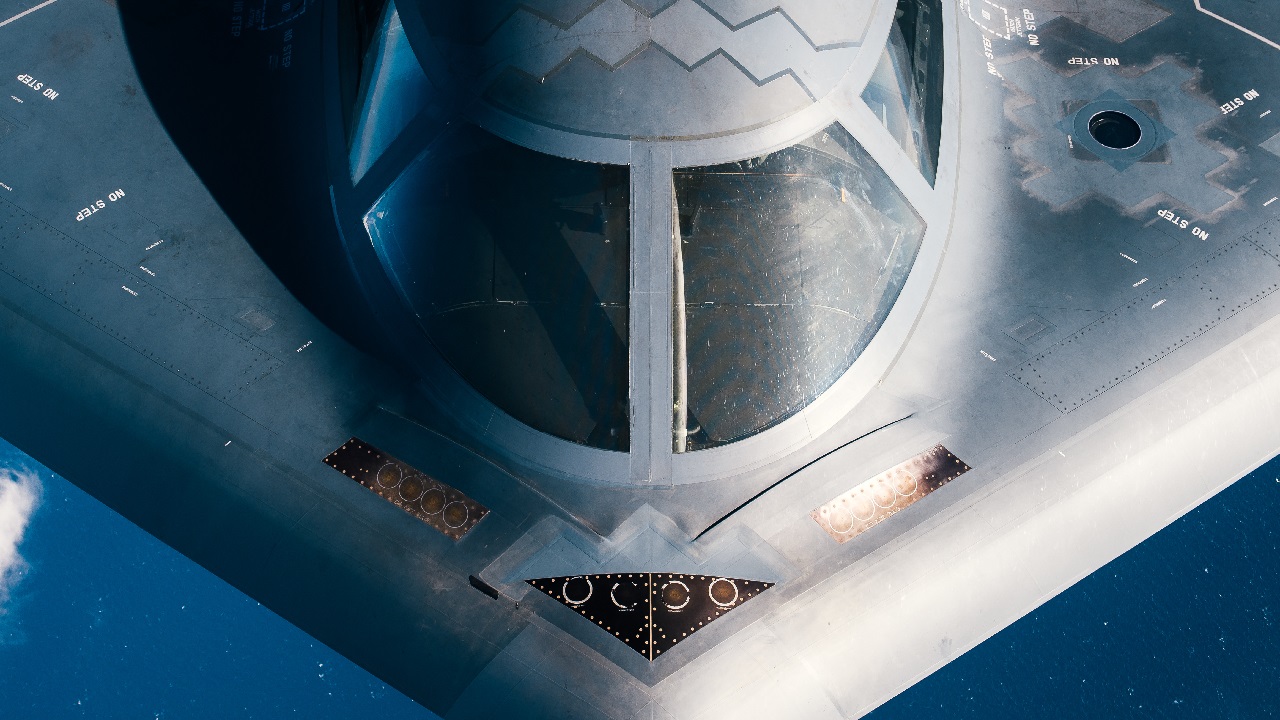
A U.S. Air Force 509th Bomb Wing B-2 Spirit refuels from a 351st Aerial Refueling Squadron KC-135 Stratotanker during the Bomber Task Force training exercise over England, Aug. 29, 2019. The B-2 aircraft will operate out of RAF Fairford, England, and will exercise there at U.S. Air Forces in Europe’s forward operating location for bombers. (U.S. Air Force photo by Staff Sgt. Jordan Castelan)
The aircraft’s performance is even more impressive, as the B-2 made a quick “hot pit stop” for a 45-minute crew and service change while the engines were still running. It then flew back to Missouri for another 30-hour flight, bringing the total to more than 70 consecutive hours.
This technique is used to keep the bomber mission-ready, significantly reducing turnaround times.
To support these long missions, the B-2 Spirit bomber has a small chemical toilet, a microwave, and a small cot (bed) for crews.
It is located behind the cockpit seats. The toilet is quite rudimentary, and crews often rely on “piddle packs” for urine.
The Spirit Realm Software and Avionics Upgrades
Implementing the Spirit Realm software factory enables rapid, agile software updates to enhance mission capability. Upgrades include improved beyond-line-of-sight satellite communications for better data sharing.
The B-2 Spirit Spirit Realm (SR) software factory upgrade is a massive modernization effort, centered on the Spirit Realm 1 (SR1) release, which updates the 35-year-old bomber’s avionics, communications, and weapons capabilities.
It utilizes a “software factory” model to implement open mission systems, enabling faster updates, integration of advanced weapons such as the GBU-72/B bunker-buster, and improved, modern displays.
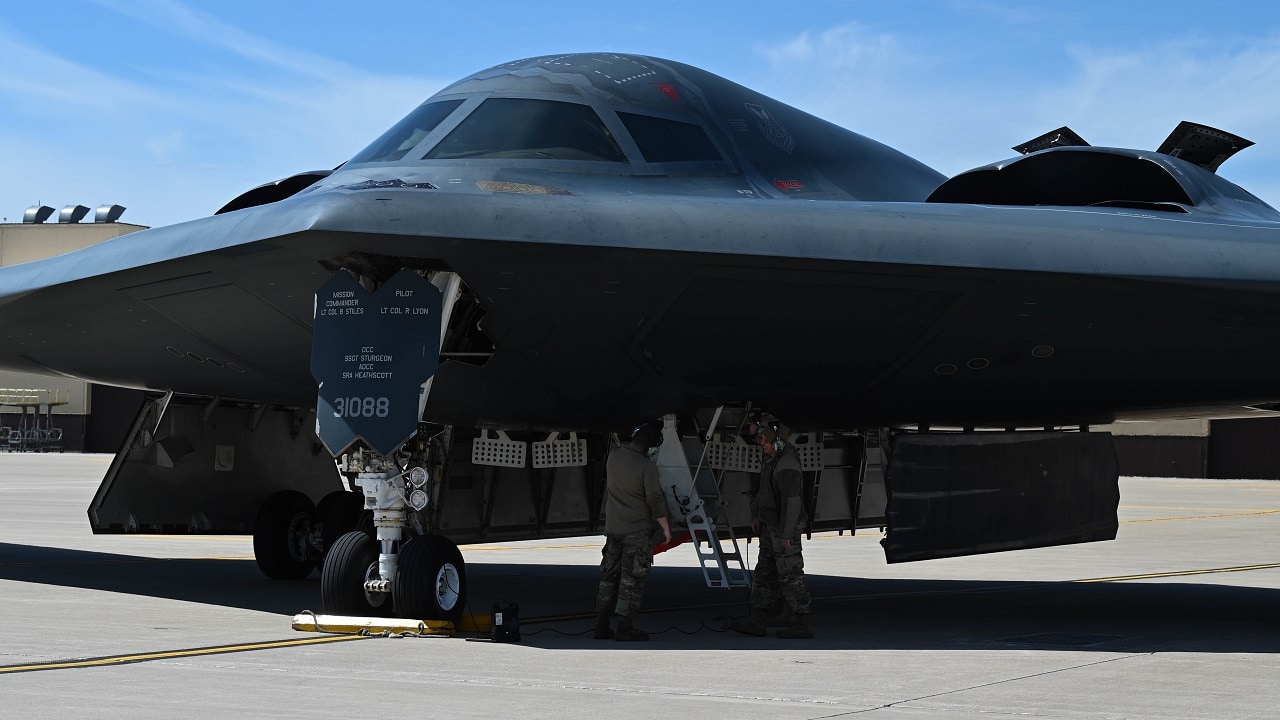
Crew chiefs assigned to the 509th Aircraft Maintenance Squadron prep a B-2 Spirit stealth bomber for a hot-pit refuel, at Whiteman Air Force Base, Missouri, April 4, 2022. Exercise Agile Tiger promotes resilience, innovation, competitiveness and process improvement, all talents required to address today’s complex challenges. (U.S Air Force Photo by Senior Airman Christina Carter)
The aircraft is equipped with advanced avionics, including a multi-mode radar and terrain-following radar.
The stealth-optimized bomber relies on advanced automation to enable its two-man crew not only to complete extended missions but also to fly at all. The 172-foot wingspan bomber remains one of the most exotic aircraft ever built and cannot be flown without computer assistance.
It can deliver both GPS-guided and laser-guided bombs with high precision, allowing for accurate strikes against high-value targets.
Stealth Technology Improvements
The aircraft continues to receive upgrades to its radar-absorbent materials, further reducing its already minimal radar cross-section to counter advanced, modern air defenses.
The B-2 Spirit’s stealth characteristics, or low-observable technologies, are designed to make the aircraft harder to detect.
Coupling the B-2 Spirit’s ability to reduce acoustic, infrared, electromagnetic, visual, and radar signatures with a high-aerodynamic flying-wing design, special coatings, and composite materials presents a potent, unique capability able to penetrate the most sophisticated enemy defenses and hold at risk high-value, heavily defended targets.
The B-2 features Gen-1 stealth technology, which dates from the 1980s and 90s.
This technology is still effective, as seen during the B-2’s June airstrikes inside Iranian airspace. The B-2 was built with stealth optimization merely from the front, whereas it was much more detectable from the rear.
This stealth profile allows it to penetrate the most sophisticated air defenses unnoticed.
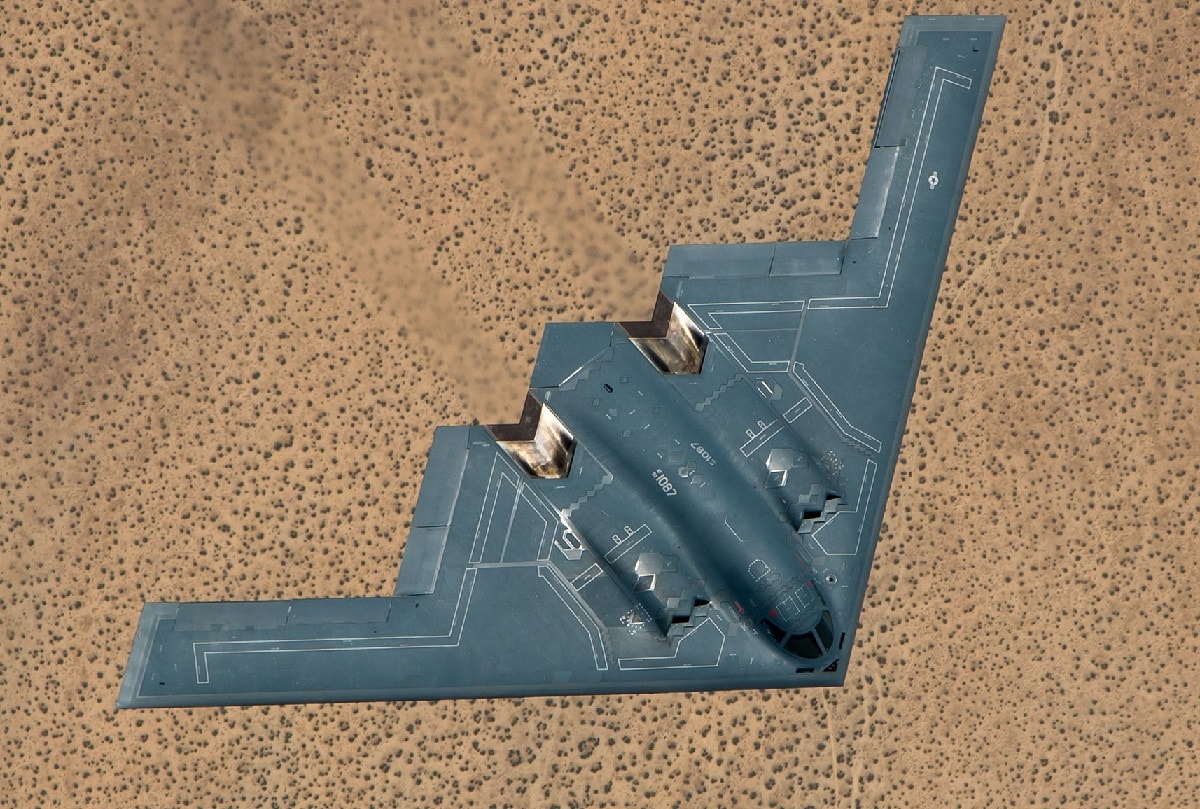
B-2 Spirit. Image Credit: Creative Commons.
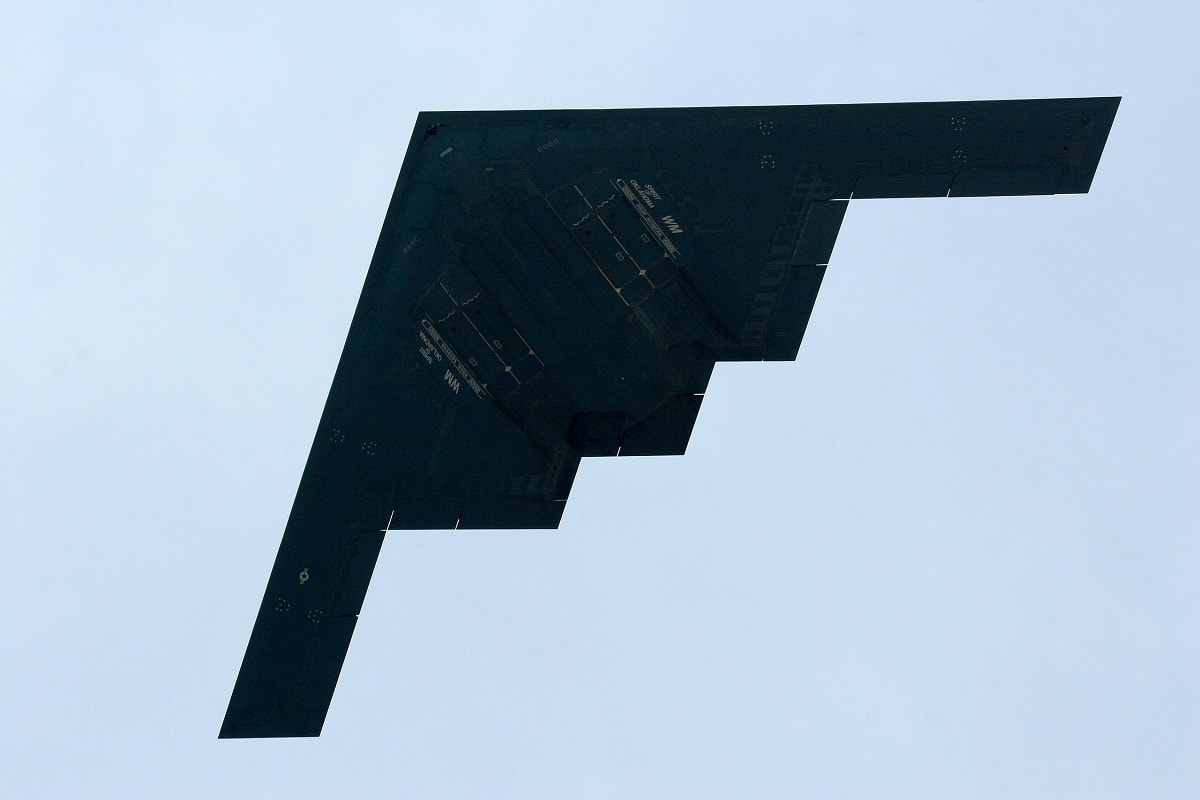
The B-2 Spirit, Spirit of Oklahoma, is silhouetted against the sky during the Thunder Over The Boardwalk Air Show, Atlantic City, N.J., Aug. 23, 2006. (U.S. Air National Guard photo by Tech. Sgt. Mark C. Olsen/Released) (This image was cropped to focus on the subject of the image)
High Payload Capacity
The B-2 Spirit can carry a maximum of 40,000 pounds (20 tons) of weapons, including smart bombs, bunker busters, and nuclear weapons.
This significant payload capacity allows it to carry a heavy and diverse mix of ordnance on a single mission, including up to 80 500-pound-class Mk 82 JDAM GPS-guided bombs or 16 2,400-pound B83 nuclear bombs.
The B-2 Spirit can also carry the Air Force’s 30,000-pound GBU-57 Massive Ordnance Penetrator (MOP), a GPS-guided “bunker buster” bomb designed to destroy deeply buried, reinforced concrete targets.
Developed by Boeing for the US Air Force, this 20-foot-long conventional weapon is carried exclusively by the B-2 Spirit stealth bomber and can penetrate up to 200 feet underground.
Mission Versatility
The B-2 bomber’s versatility stems from its stealth technology, allowing it to penetrate heavily defended airspace, and its multi-role capability to deliver a wide range of both conventional and nuclear weapons.
It has a long-range, high-payload capacity, enabling it to strike targets anywhere in the world. Its versatility is further supported by its ability to carry a mix of precision-guided bombs and larger munitions, as well as its endurance for all-altitude missions.
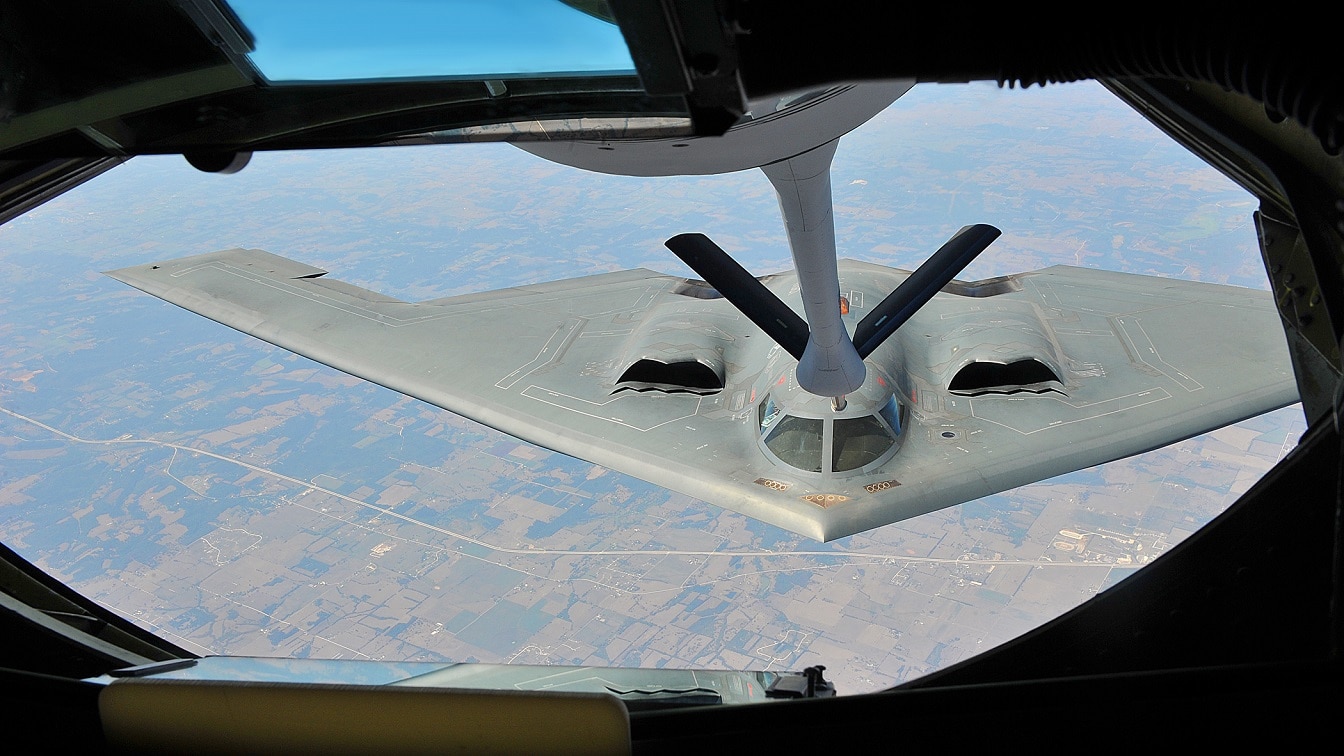
A KC-135 Stratotanker from the 22nd Air Refueling Wing refuels a B-2 Spirit from the 509th Bomb Wing, Aug. 29, 2012. A B-2 Spirit is designed to be very difficult to detect so it can better engage enemies during war efforts. (U.S. Air Force photo/ Airman 1st Class Maurice A. Hodges)
The B-2 can be armed with both conventional and nuclear weapons, making it a flexible asset for different types of missions.
It can perform deep-strike, precision strike, and intelligence-gathering missions, or even act as a deterrent.
B-2s Are Still Outstanding Bombers, There Just Aren’t Enough
The B-2 is still one of, if not the, stealthiest bombers in the world (not counting the B-21 Raider, its replacement). However, the Air Force only has 19, which isn’t nearly enough, especially if the US is going to war with China.
This reduction, stemming from budget cuts and the end of the Cold War, leaves the Air Force with fewer stealth bombers than initially envisioned, which impacts its ability to conduct large-scale, long-range strikes against potential adversaries such as China and Russia.
A significant air attack campaign against an advanced near-peer adversary would require a large number of attacking bombers spread across a wide combat envelope to achieve the desired effect. Russia and China are vast countries with extensive air defenses dispersed across their territories, protecting vital assets.
An initial high-altitude bombing strike would need to cover a wide area to disable a dispersed yet increasingly interconnected network of air defenses, thereby ensuring the establishment of air superiority.
The B-2’s role is further complicated by the impending introduction of the B-21 Raider, which will eventually replace the B-2 but is not yet fully operational.
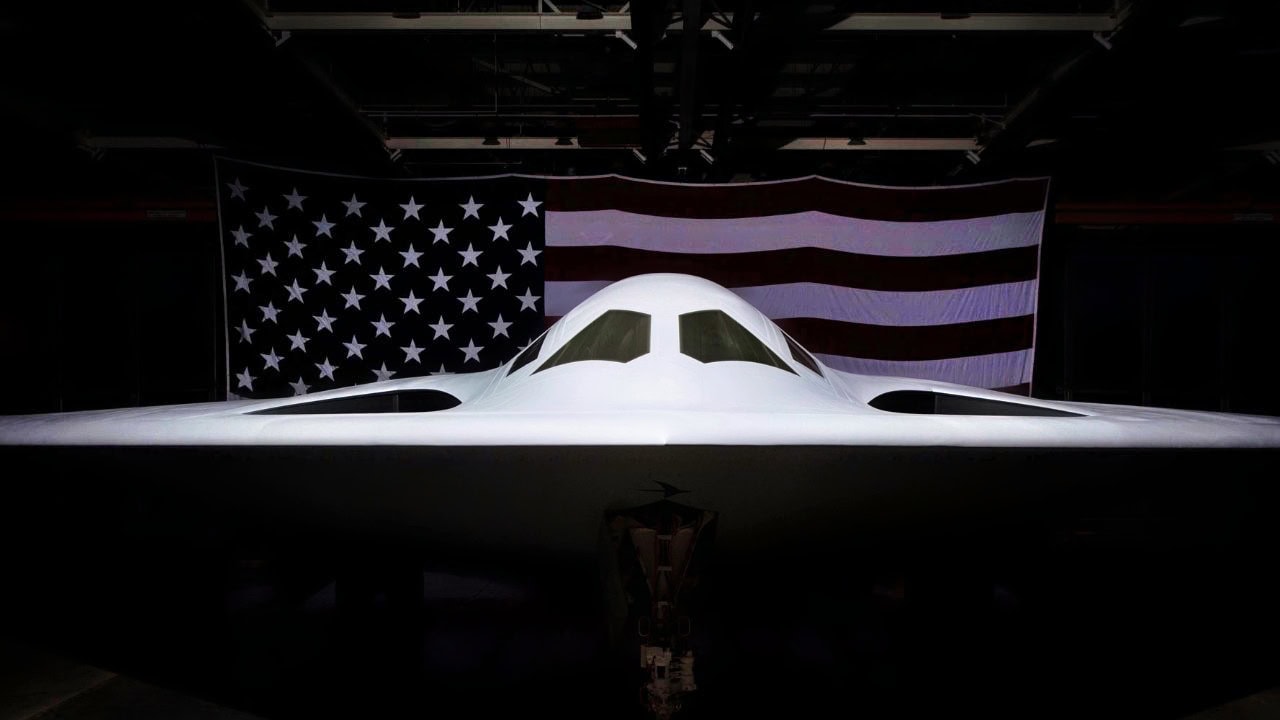
B-21 Raider Bomber. Image Credit: Creative Commons.
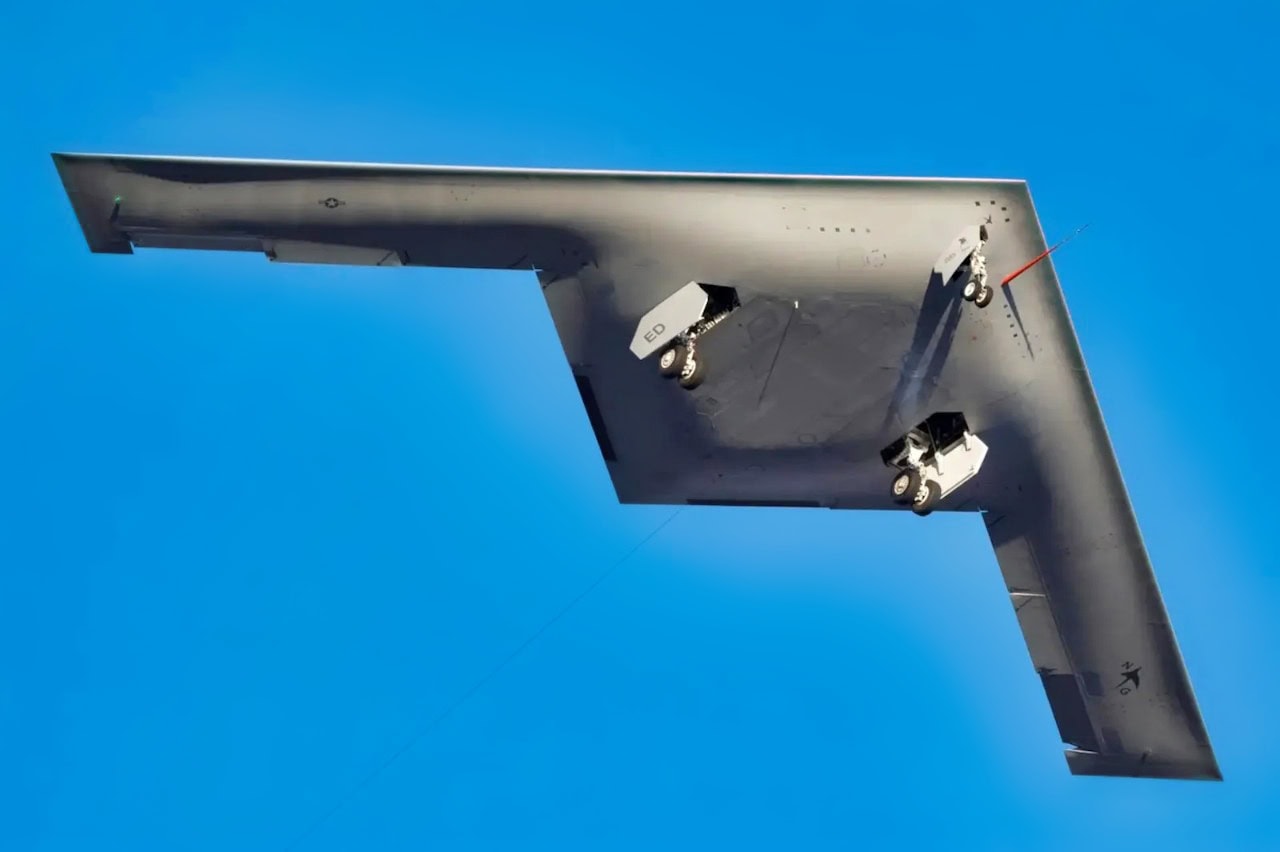
B-21 Raider. Image Credit: Creative Commons.
The B-2 Spirit is powered by four General Electric F118-GE-100 engines, each with over 17,000 pounds of thrust. Its ceiling is 50,000 feet, and it can carry conventional or nuclear weapons.
The B-2 also serves as a testbed for technology used in the upcoming B-21 Raider, ensuring the technological base remains ahead of adversaries. The B-2 is aging, and where it was designed to beat radar defenses, the B-21 is intended to beat sensor ecosystems. It is also designed to be much easier to update, so it can better keep pace with emerging threats.
About the Author: Steve Balestrieri
Steve Balestrieri is a National Security Columnist. He served as a US Army Special Forces NCO and Warrant Officer. In addition to writing on defense, he covers the NFL for PatsFans.com and is a member of the Pro Football Writers of America (PFWA). His work was regularly featured in many military publications.