
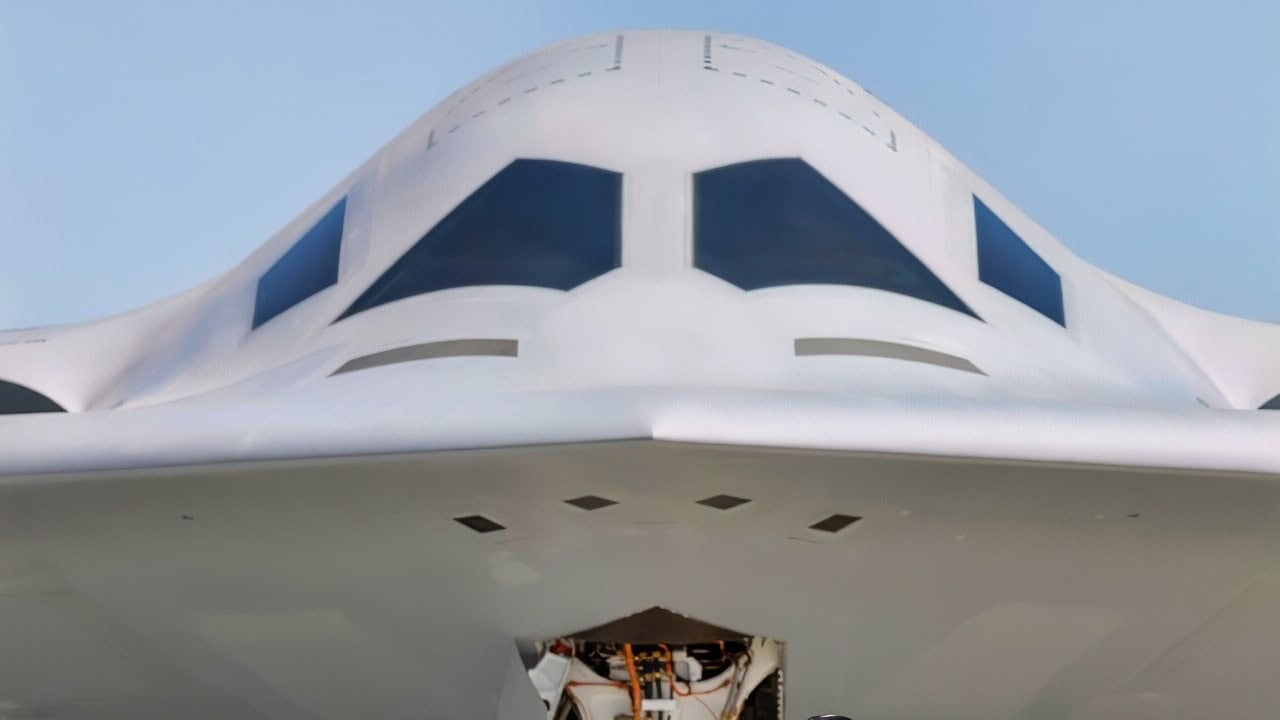
Summary and Key Points: A new Mitchell Institute report argues current Air Force procurement plans risk leaving China with operational “sanctuaries” during a Taiwan conflict. With the B-21 buy set at “at least 100” and the F-47 at roughly 185, the authors contend the force lacks enough stand-in, penetrating capacity to repeatedly strike mainland airbases, missile complexes, logistics hubs, and command nodes at scale.
-The report critiques heavy reliance on stand-off weapons, warning that sensor-and-missile networks can be disrupted and that expensive hypersonic rounds could burn through budgets quickly.
-A larger B-21 fleet—potentially 200—would deliver reusable, high-volume strike needed for “sanctuary denial.”
Why 100 B-21 Bombers May Not Be Enough to Stop China
A new report joins a growing chorus of voices expressing concern about the planned procurement figures for the upcoming B-21 Raider stealth bomber, arguing that a minimum of 200 would be necessary to prevent China from gaining a tactical advantage over the West.
According to analysts at the AFA’s Mitchell Institute for Aerospace Studies, a smaller B-21 fleet could allow China to create “sanctuaries” from which its forces would be able to launch missiles during a potential invasion of Taiwan.
According to the authors of the report, titled “Strategic Attack: Maintaining the Air Force’s Capacity to Deny Enemy Sanctuaries,” a sufficient number of the sixth-generation stealth bombers would be able to collectively (and quickly) penetrate adversary airspace and fight their way back out of it by delivering precise strikes on critical infrastructure throughout the defended zone.
The authors, retired Col. Mark A. Gunzinger and Heather Penny, will release their full findings in an event hosted digitally by the Mitchell Institute for Aerospace Studies on February 9 at 10am Eastern.
The Current Procurement Strategy

The B-21 Raider was unveiled to the public at a ceremony December 2, 2022 in
Palmdale, Calif. Designed to operate in tomorrow’s high-end threat environment, the B-21 will play a critical role in ensuring America’s enduring airpower capability. (U.S. Air Force photo)
The U.S. Air Force currently plans to buy “at least 100” B-21 Raider stealth bombers and approximately 185 F-47 Next Generation Air Dominance fighters – figures it says will replace aging platforms and maintain combat capability in future conflicts.
Yet defense analysts and experts have argued for some time, even before the latest report, that the current baseline procurement figures fail to account for the realities of high-end conflict against a capable peer adversary.
While the Air Force’s planning documents outline how the B-21 and next-generation F-47 fighter jet will serve as replacements for aging bombers and fighters in the inventory, the numbers arguably do little to increase the total penetrating capacity of the force in a sustained campaign against China’s integrated air defenses and rapidly growing fleets of military aircraft.
According to the Mitchell Institute’s recent report, under the status quo force structure, “legacy force would have to close thousands of long-range kill chains in hundreds of hours in a peer conflict, a feat that is beyond the Air Force’s current and projected capacity.”
Penney and Gunzinger also note that the service’s current combat force mix is weighted toward earlier-generation, non-stealth bombers and fighters.
The authors also note that the disconnect results from the Air Force’s procurement goals being shaped largely by budgetary pressures rather than by a strategic assessment of its actual required capacity. Senior USAF planners have already publicly acknowledged fiscal constraints shaping force design, and analysts – including from this outlet – have long argued that a force structured around replacement levels, rather than expansion, will struggle to generate the number of sorties required to counter and impose costs on a peer competitor over the duration of a campaign.
Are Stand-off Weapons the Right Choice?
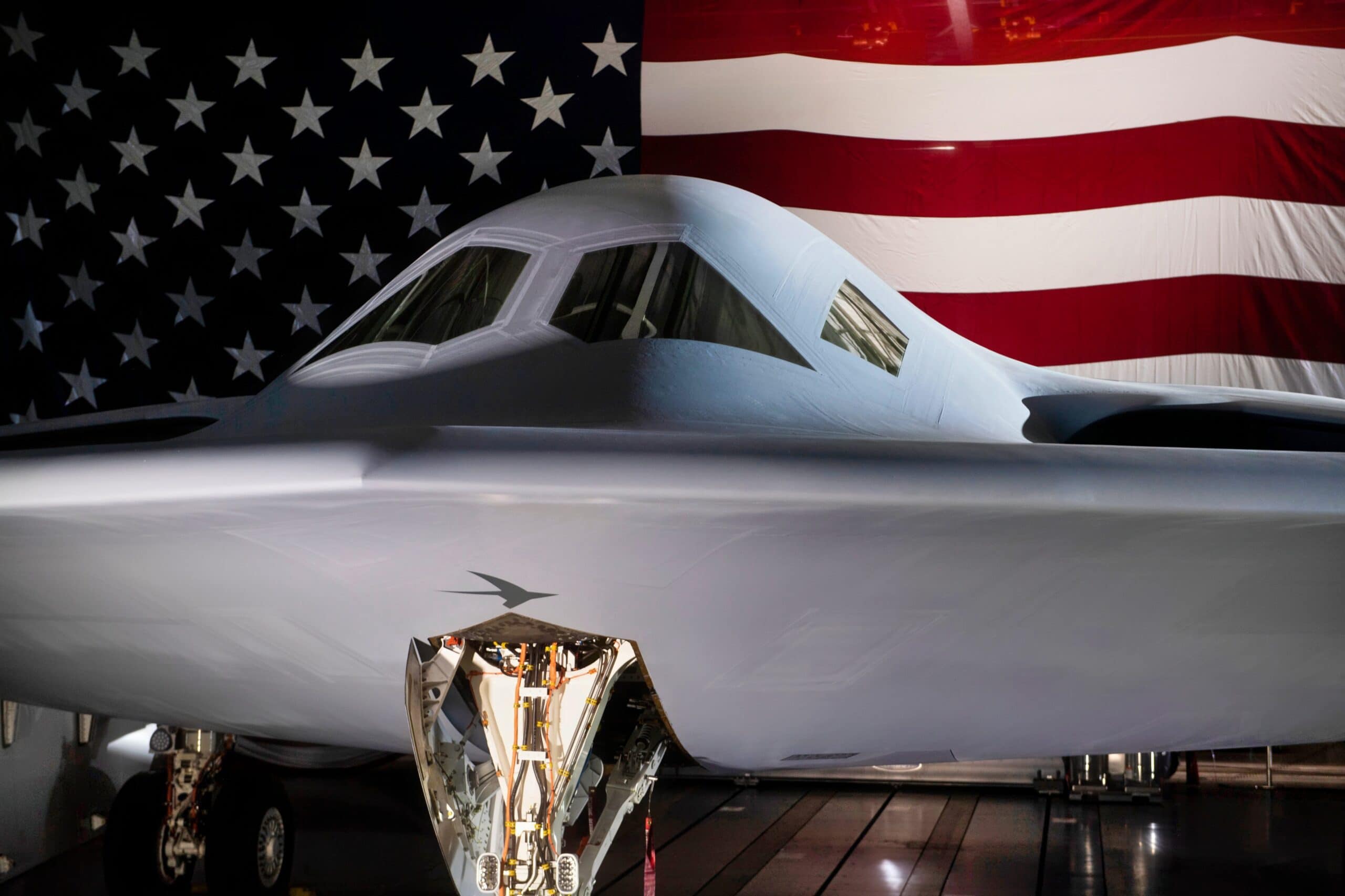
B-21 Raider. Image Credit: Creative Commons.
At the heart of the new report’s recommendations is a critique of the Air Force’s current emphasis on stand-off systems rather than stand-in penetrating platforms.
Stand-off weapons – including long-range hypersonic missiles and precision munitions delivered from standoff ranges – have been promoted by some in the defense space for their ability to strike deep targets without exposing aircraft to dense defenses.
However, the authors warn that stand-off capabilities have limits, noting that missile and sensor networks that enable such strikes create ample opportunities for adversaries to disrupt or destroy them.
Additionally, the authors argue that stand-off weapons cannot compete with the intercontinental range of a stealth bomber.
The report also acknowledges the economic problems inherent with leaning too heavily on stand-off warfare. Noting that the Army’s Dark Eagle Long-Range Hypersonic Weapons – a component of the Pentagon’s long-range kill-chain portfolio – has an estimated unit cost of $40 million or more.
Those numbers mean that even targeting a small number of targets could quickly cost hundreds of millions of dollars.
And while ordering as many as 100 more B-21s won’t be cheap, a large fleet will amplify the benefits of the B-21 platform: namely, its ability to deliver multiple tons of munitions in a single sortie and return for reuse.
The “Sanctuary Denial” Problem
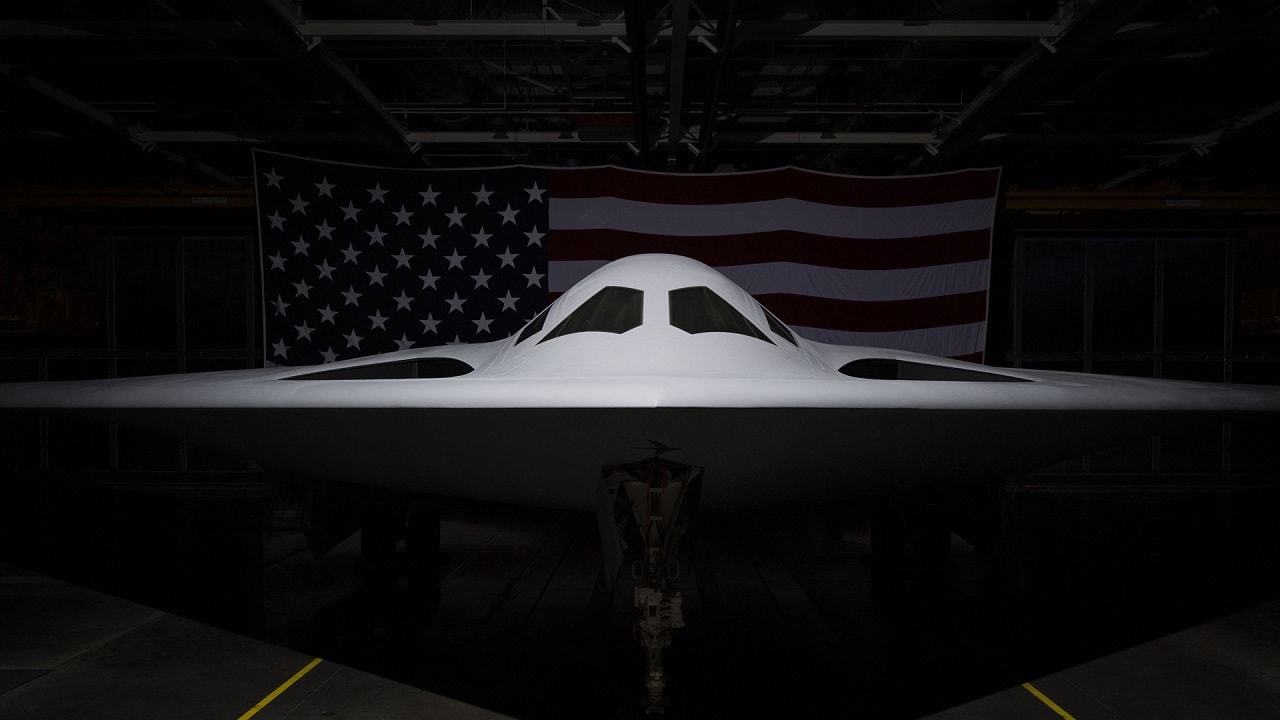
B-21 Raider. Image Credit: U.S. Air Force.
The report also notes that a large fleet of next-generation bombers and fighters could become the Pentagon’s “sanctuary denial force,” eroding an adversary’s sense of operational immunity within its own territory.
A sanctuary exists when an enemy can base aircraft, store munitions, move logistics, train forces, and command operations from locations it believes are effectively outside of the risk of sustained attack.
In a Taiwan invasion scenario, this would include mainland airbases, missile launch complexes, logistics hubs, and command-and-control nodes supporting Chinese operations.
Normally, these hubs would be shielded by both defense systems and distance – but the report argues that if these areas cannot be struck repeatedly and at scale – utilizing a large fleet of stealth bombers – China retains the ability to regenerate its combat power faster than forward U.S. and allied forces can respond.
About the Author:
Jack Buckby is a British researcher and analyst specialising in defence and national security, based in New York. His work focuses on military capability, procurement, and strategic competition, producing and editing analysis for policy and defence audiences. He brings extensive editorial experience, with a career output spanning over 1,000 articles at 19FortyFive and National Security Journal, and has previously authored books and papers on extremism and deradicalisation.

