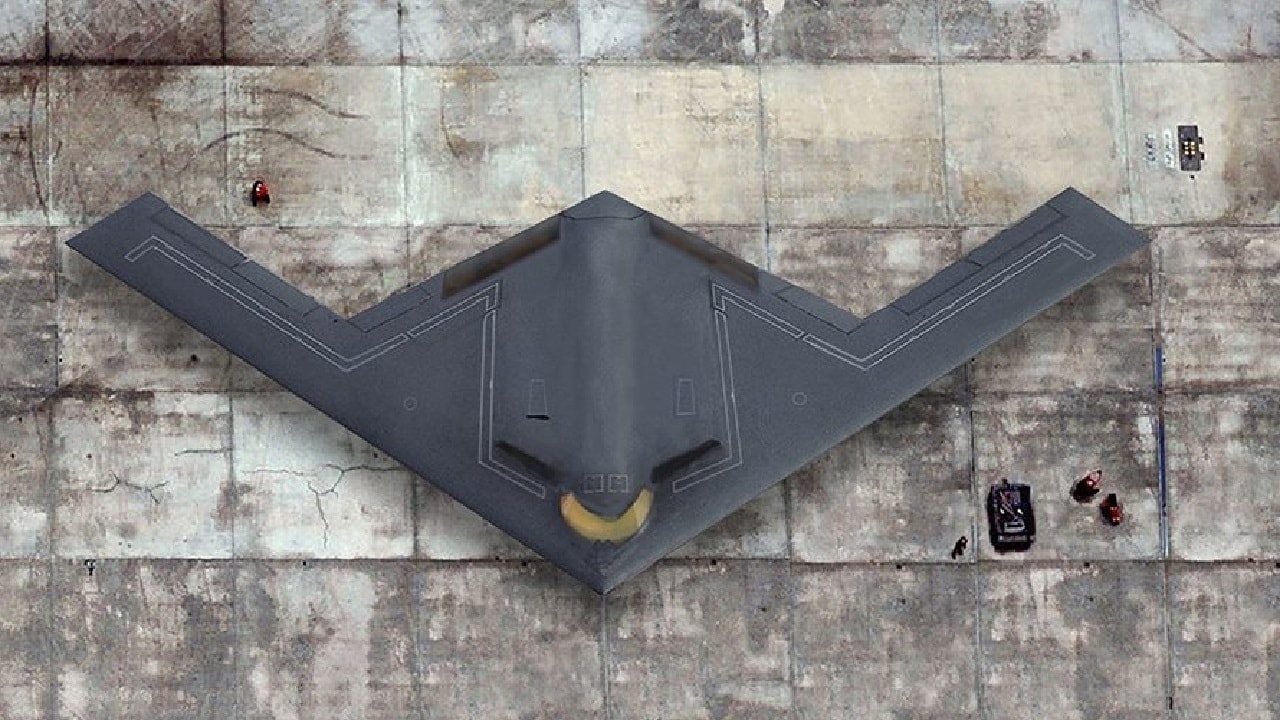
Can the B-21 Survive Russia’s S-500? Why the Pentagon Says Yes
The XB-70 Valkyrie strategic bomber is a well-known platform—yet it never advanced beyond the initial prototype phase. The Valkyrie may have stalled out because of rapid technological capabilities that were being built into Russian and Chinese air-defense systems.
Indeed, Russian S-400 and S-500 air-defense systems in recent years have been massively upgraded. Increasingly modernized ground-based surface-to-air-missile systems can detect aircraft at much farther ranges and on a greater number of frequencies. They are networked to track targets as they move between digitally connected “nodes,” and they can even detect some stealth platforms.
Russian air defenses vs stealth
State-backed Russian media claims that its S-500 air-defense system can track, detect, and destroy stealth aircraft such as the F-35, F-22, or B-2 bomber. This claim has yet to be verified, but the Pentagon has in recent years upgraded its stealth platforms with new sensors, radar-absorbent coating materials, and new methods of thermal management to outpace threats directed at these aircraft.
The increasing reach and sophistication of adversary air defenses indeed likely inspired some of the next-generation stealth characteristics now being built into the B-21 Raider. The Air Force developed the B-21 with a measure of confidence that the platform could hold any target at risk, anywhere in the world, at any time.
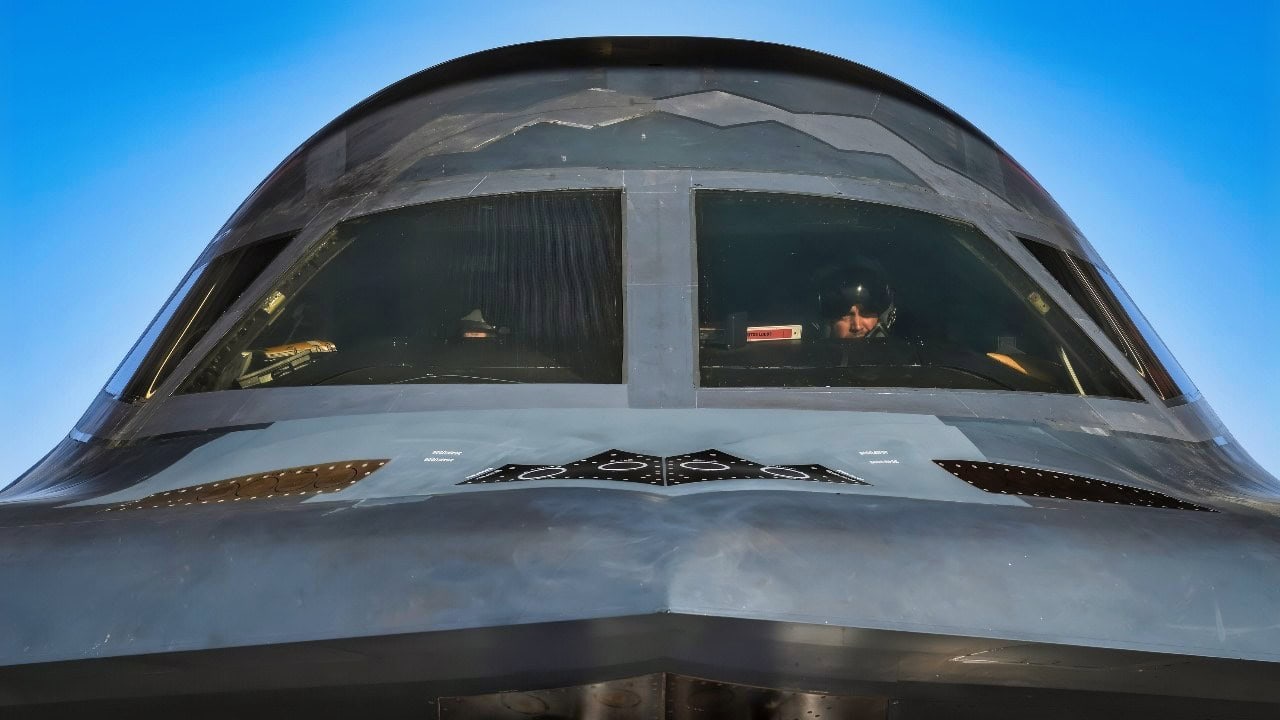
A U.S. Air Force B-2 Spirit aircrew performs pre-flight checks in the cockpit of their aircraft at Whiteman Air Force Base, Missouri, March 8, 2020. The B-2 took off from Whiteman AFB to support U.S. Strategic Command Bomber Task Force operations in Europe. The 131st Bomb Wing is the total-force partner unit to the 509th Bomb Wing. (U.S. Air Force photo by Tech. Sgt. Alexander W. Riedel)

B-2 Spirit Stealth Bomber 19FortyFive Image. Taken By Harry J. Kazianis at U.S. Air Force Museum in 2025.
More than ten years ago, when early conceptual and sub-component work was being done on the B-21, and sweeping upgrades of the B-2 were also underway, former Commander of Air Force Materiel Command Gen. Ellen Pawlikowski told me that stealth was merely “one arrow in the quiver” of overall survivability.
Air survivability depends on numerous variables including speed, heat signature, aerial agility, sensing, and manned-unmanned teaming.
Therefore, not only have stealth characteristics evolved to pit the B-21 against the future air defenses, but tactics and concepts of operation have been reconsidered to enable stealth bombers to elude or destroy advanced enemy air defenses.
And indeed, the B-21 is emerging as a multi-role, multi-domain bomber as well as a flying command-and-control node.
B-21 “node” in Sky
The B-21 will not only carry a new generation of long-range sensors, AI-enabled computing, and unprecedented stealth properties, but it will also operate with an ability to control unmanned systems from safer stand-off ranges, securely share information across air, land, surface, and space domains and jam ground-based radar.
Forward-operating unmanned systems controlled by a B-21 functioning as an airborne command-and-control center can blanket enemy air defenses with surveillance, jam signals from the air, or attack and destroy ground targets without human pilots being placed at risk.
High-fidelity long range sensors operating on the B-21 and its wingman drones, fortified by AI-enabled target verification, will increasingly be able to help the B-21 spot ground-based air defenses. Once their location is identified, and their ranges, networking, and targeting dynamics are understood, B-21s could elude them and achieve their tactical aims.
B-21 is built to upgrade
Further, the B-21 is being engineered with open architecture—a series of common IP protocols, standards and interfaces designed to ensure the platform can quickly accommodate new technologies as they emerge. This means new software, weapons, fire control, sensing, and computing can easily be added with no need to reconfigure hardware.

The B-21 Raider was unveiled to the public at a ceremony December 2, 2022 in
Palmdale, Calif. Designed to operate in tomorrow’s high-end threat environment, the B-21 will play a critical role in ensuring America’s enduring airpower capability. (U.S. Air Force photo)
Ultimately, the aim of stealth is to penetrate enemy airspace, conduct clandestine, high-altitude attack missions, and exit hostile areas without even being spotted by an enemy. It certainly seems plausible the B-21 may achieve this tactical objective despite the continued modernization of Russian and Chinese air defenses.
About the Author: Kris Osborn
Kris Osborn is the President of Warrior Maven – Center for Military Modernization. Osborn previously served at the Pentagon as a highly qualified expert in the Office of the Assistant Secretary of the Army—Acquisition, Logistics & Technology. Osborn has also worked as an anchor and on-air military specialist at national TV networks. He has appeared as a guest military expert on Fox News, MSNBC, The Military Channel, and The History Channel. He also has a Masters Degree in Comparative Literature from Columbia University.