
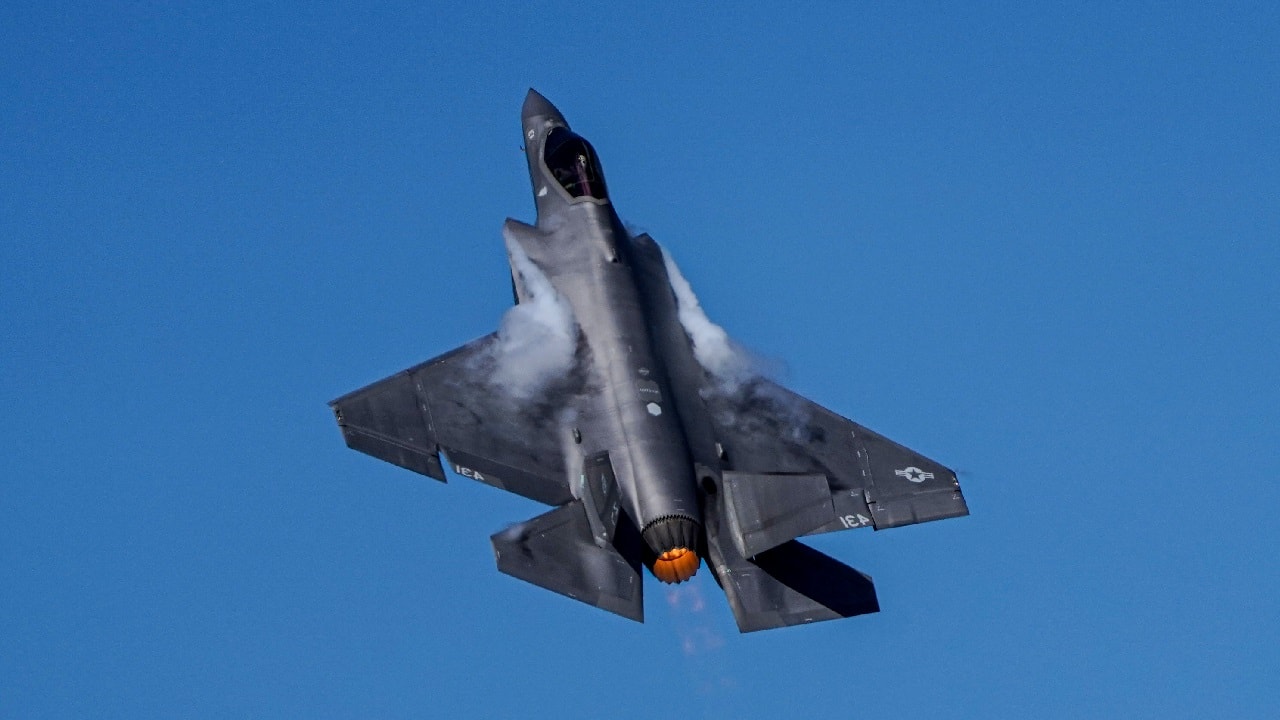
Summary and Key Points – Lockheed Martin closed 2025 with a record 191 F-35 deliveries, signaling that global demand remains strong even as questions persist about sustainment costs, availability, software dependence, and data sovereignty.
-The program’s scale continues to expand, with the worldwide fleet nearing 1,300 aircraft across 12 countries and passing one million flight hours.
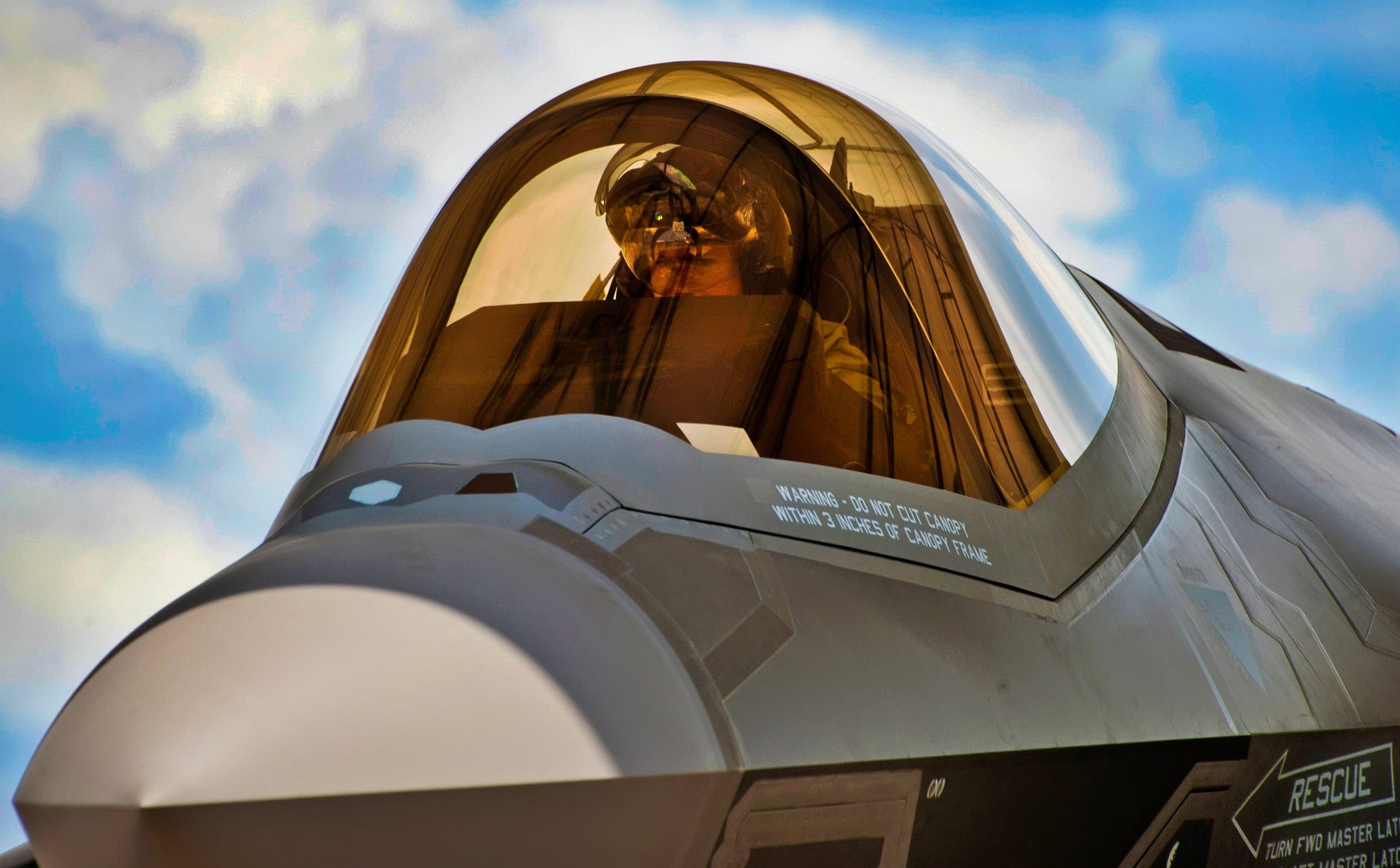
Marine Maj. Joseph Bachmann, of the 33rd Operations Group, executes aircraft shutdown procedures of the second F-35 Lightning II joint strike fighter to arrive at Eglin Air Force Base, Fla., July 20. Bachmann is the first Marine pilot to be JSF certified. Aircraft AF-8 is the flagship for the 58th Fighter Squadron. (U.S. Air Force photo/Samuel King Jr.)
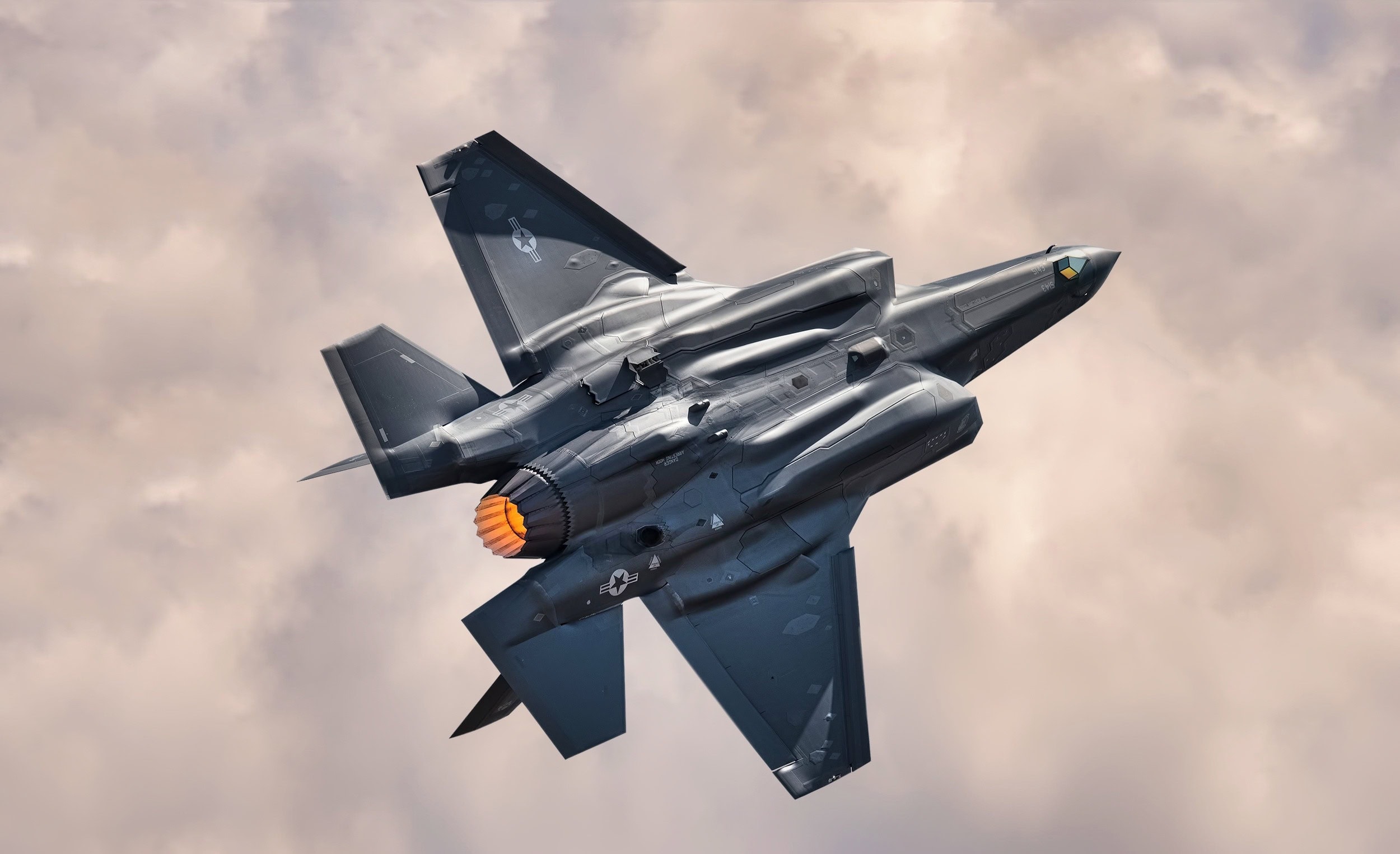
F-35 Fighter. Image Credit: Creative Commons.
-The year also brought completion of TR-3, billed as the most advanced software upgrade so far, while allies added orders and European operators hit new milestones.
-In the U.S., planned FY2026 purchases fell, yet Lots 18 and 19 production landed a $24 billion deal covering up to 296 jets.
F-35 Sets Procurement Record Despite Controversies
Lockheed Martin’s F-35 Lightning II program concluded 2025 with its highest annual delivery total ever, a milestone that proves the platform’s demand remains high despite growing international concerns over data sovereignty and availability rates.
For the F-35 program, 2025 was a year of international orders, expanded operational use, and production line optimization – and the Fort Worth, Texas assembly plant has been at the center of it all.
F-35 Reaches Production Milestone
In a January 7, 2026 release, Lockheed Martin reported delivering 191 F-35 aircraft in 2025, surpassing the previous annual record of 142 jets. That total makes 2025 the strongest year on record for the multi-role stealth fighter, built for the U.S. and partner nations.
In its statement, Lockheed said that annual F-35 production is running at a pace “five times faster than any other allied fighter currently in production” – a product of the program’s massive industrial scale and the maturity of the program. It also comes as the global fleet approaches almost 1,300 operational aircraft across 12 countries, meaning that despite recent controversies, the aircraft remains central to allied airpower for now and will do well into the 2030s and beyond.
“The milestone comes on the heels of the program reaching one million flight hours earlier in the year. In 2025, the program team also delivered the most advanced software to date with the completion of TR-3, as they sustained the global fleet of almost 1,300 aircraft and growing,” the statement continued.
The release also described how the F-35 had continued to prove its performance in real-world combat operations, including “playing a key role in suppressing Iran’s air defenses during Operation Midnight Hammer,” “recording nearly 5,000 mishap-free flight hours during a U.S. Marine Corps F-35B deployment,” and “eliminating Russian drones over Poland.”
2025 also saw the completion of TR-3, the most advanced software upgrade in the aircraft’s history, enhancing digital and mission systems across the global fleet. Those upgrades are essential for maintaining the aircraft’s edge as older fighter models age out.

U.S Air Force Captain Kristin “BEO” Wolfe, F-35A Lightning II Demonstration Team Commander, flies during a demonstration at the Oregon International Airshow in McMinnville, Ore., Aug. 20, 2022. The F-35 Demo team travels around the United States and around the world, showcasing the world’s most technologically advanced fifth-generation fighter jet. (U.S. Air National Guard photo by Master Sgt. John Winn)
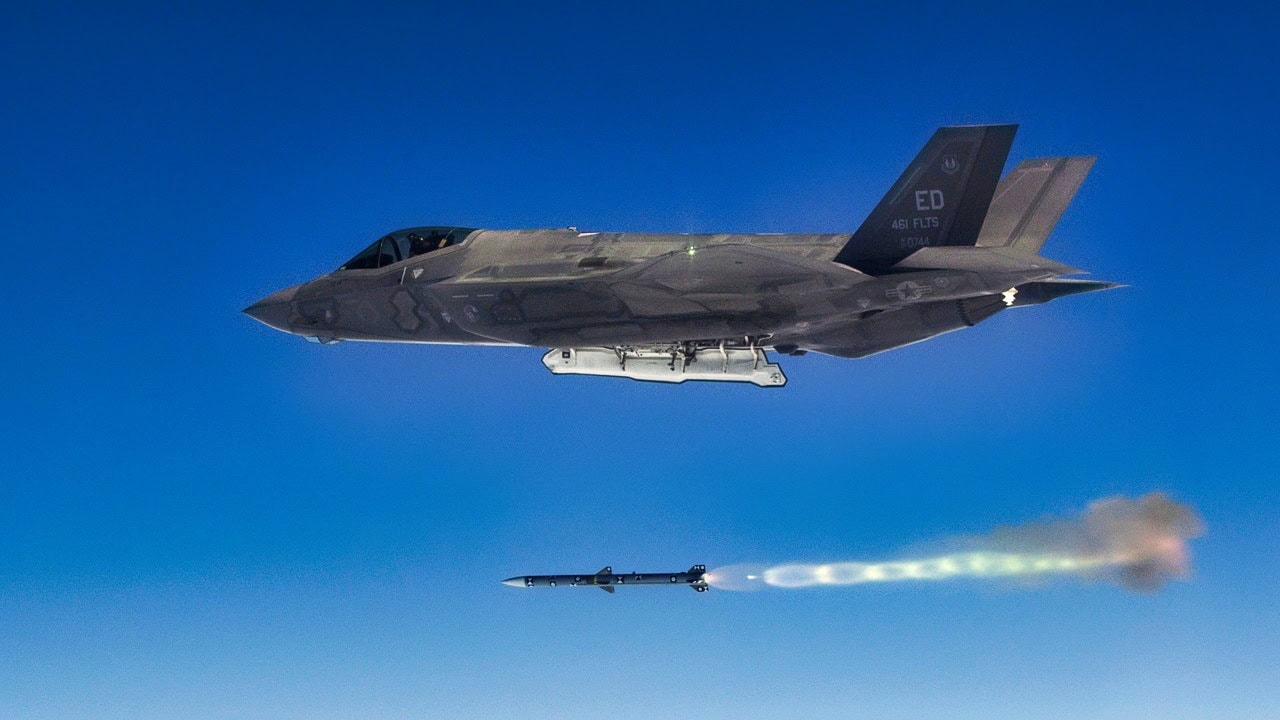
An Edwards AFB F-35A Lightning II fires an AIM-120 Advanced Medium-Range Air-to-Air Missile as part of Weapons Delivery Accuracy testing. The 461st Flight Test Squadron and F-35 Integrated Test Force completed WDA testing in early December, which concludes a large and important part of F-35 developmental test and evaluation. (Courtesy photo by Chad Bellay/Lockheed Martin)
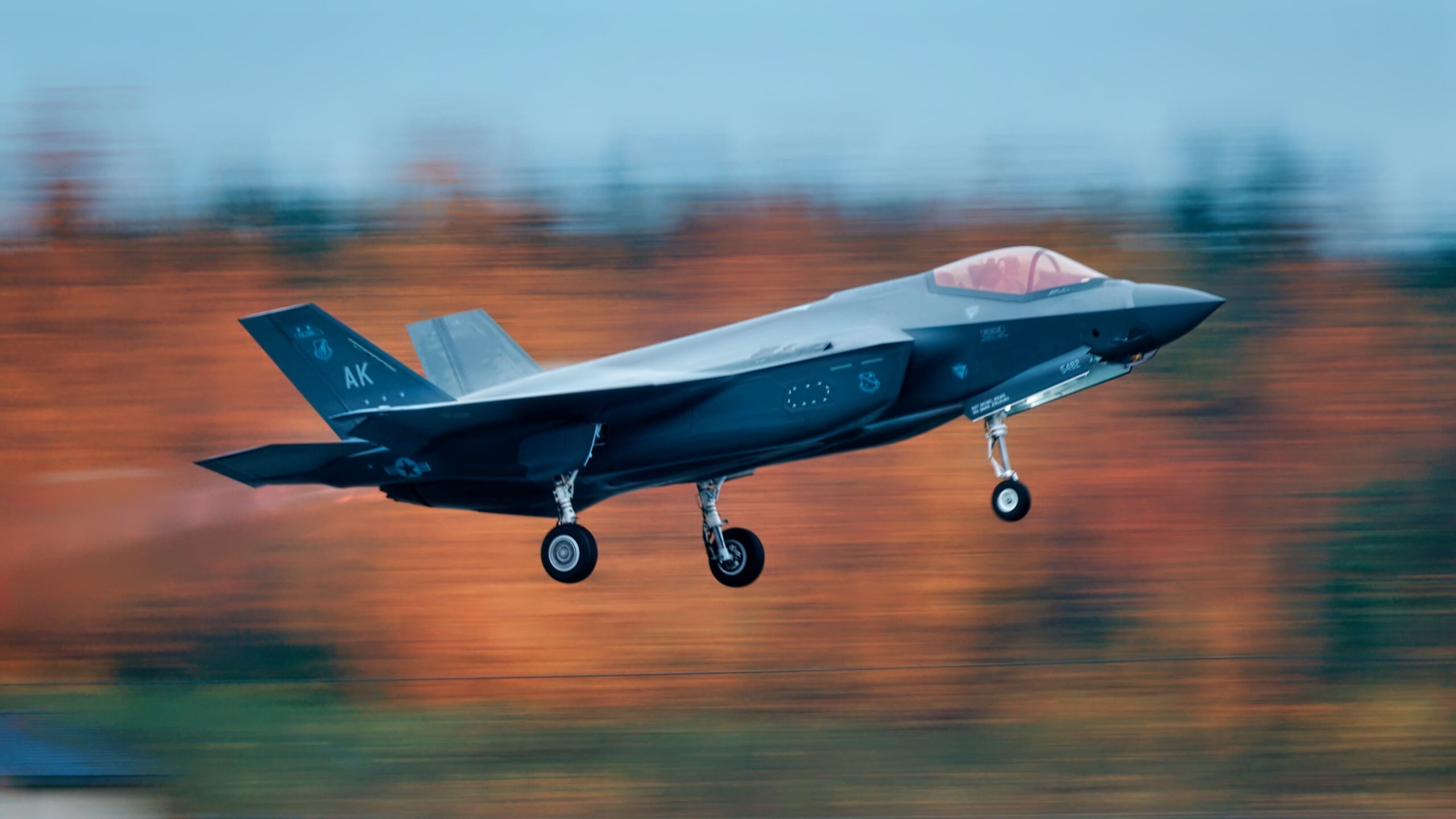
A F-35 Lightning lll assigned to the 354th Fighter Wing takes off from Eielson Air Force Base, Alaska September 19, 2024. The F-35 was participating in a multiple aircraft exercise for the 354th FW. (U.S. Air Force Photo by Senior Sean Lamb)
The year was also marked by robust demand for the F-35. Italy expanded its fleet with 25 additional aircraft and Denmark added 16 more, indicating continued confidence among allies in the platform’s capabilities and maturity. Across Europe and NATO, major milestones also included the rollout of Finland’s first F-35, Belgium receiving its first aircraft on domestic soil, and Norway completing its deliveries.
Those developments mean that the program is continuing its export momentum, even as geopolitical tensions and competing national fighter programs – from South Korea’s KF-21 development and Canada’s potential decision to replace F-35 purchases with Saab’s Gripen – continue to reshape global fighter jet procurement.
But despite the production record, the program has faced some headwinds in Washington. In mid-2025, the Pentagon reduced its planned F-35 orders for the FY2026 budget from 74 to 47 aircraft – a cut that congressional appropriators then left intact.
The decision attracted scrutiny from some analysts and legislators, given the role of F-35 production in maintaining U.S. aerospace industrial base capacity.
But in contrast to that cut in domestic purchases, Lockheed Martin and the F-35 Joint Program Office finalized a $24-billion agreement covering Lots 18 and 19 production of up to 296 jets – the largest production contract in the program’s history.
Why Fort Worth Matters
Air Force Plant 4 in Fort Worth, Texas, has been crucial to the success of the program – especially over the last year.
That was acknowledged by the Trump administration when, during a January 12 visit, U.S. Secretary of Defense Pete Hegseth praised the thousands-strong workforce and reiterated the facility’s importance to the national defense industrial base.
Addressing hundreds of employees during his tour of the facility, Hegseth thanked workers for their efforts.
“I’m looking out into an incredible audience of Americans here who are committed to an incredible company that’s building incredible platforms,” Hegseth said. “Thank you for accepting and grasping the challenge of President Trump as well as our department. Thank you all so much for what you do, for why you’re doing it. We are shoulder to shoulder with you because we can’t deter the next conflict without the skills and capabilities you have.”
The global F-35 fleet now deploys across multiple theaters – from U.S. carrier decks to European NATO bases – and is a testament to the platform’s adaptability and interoperability. However, the F-35’s problems have not gone away: the program continues to face criticism over sustainment costs, software dependence, mission availability rates, and concerns among NATO and European partners about U.S. control over upgrades and data access.
In Canada, those issues – combined with cost pressures and diplomatic trouble over President Donald Trump’s tariff policies – have reopened debate over whether long-term reliance on the F-35 is prudent.
About the Author: Jack Buckby
Jack Buckby is a British researcher and analyst specialising in defence and national security, based in New York. His work focuses on military capability, procurement, and strategic competition, producing and editing analysis for policy and defence audiences. He brings extensive editorial experience, with a career output spanning over 1,000 articles at 19FortyFive and National Security Journal, and has previously authored books and papers on extremism and deradicalisation.