
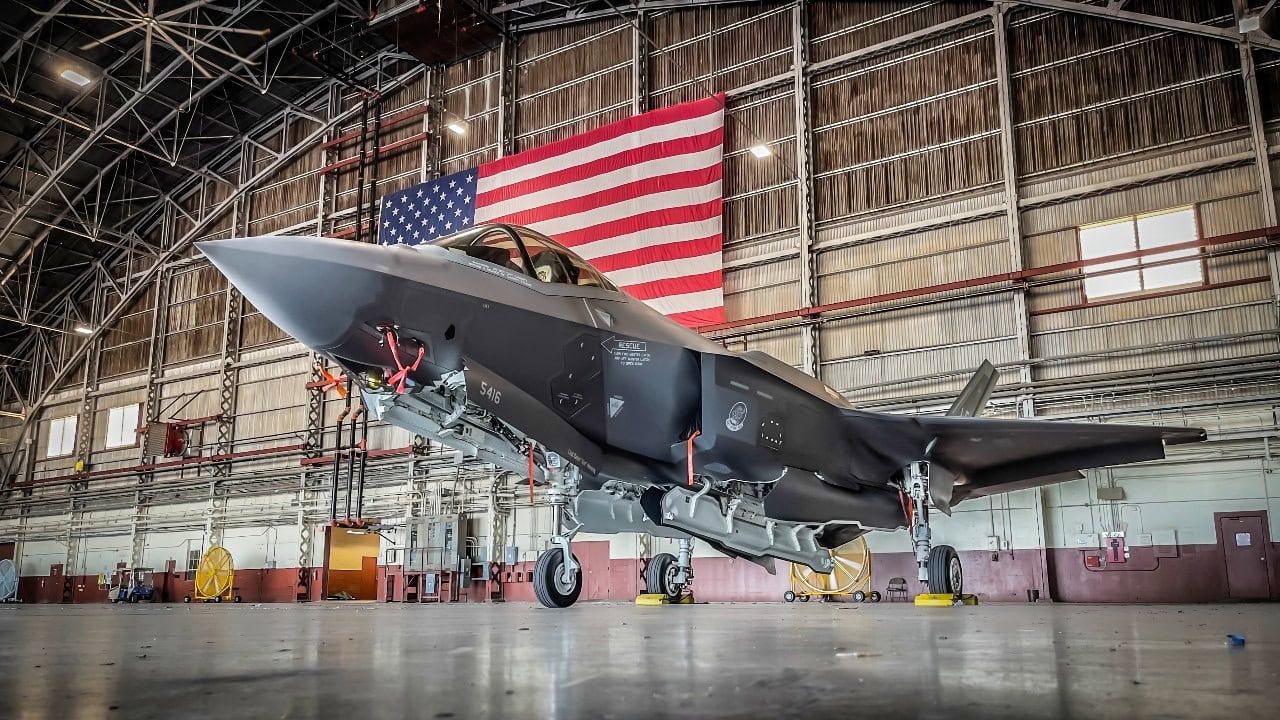
Synopsis: Canadian Industry Minister Mélanie Joly plans to meet with Lockheed Martin executives in early 2026 to demand greater economic benefits for the F-35 deal, leveraging a competing offer from Sweden’s Saab.
-Prime Minister Mark Carney’s administration, elected on a platform to reduce reliance on the U.S. amid tensions with President Donald Trump, is reviewing the acquisition of 72 remaining jets.
-While Canada is committed to the first 16 F-35s, Saab has offered 12,600 jobs and local manufacturing for its Gripen E fighter, sparking a debate over the feasibility and cost of a mixed fleet versus the F-35’s stealth dominance.
Canada Can’t Make Up Its Mind on the F-35
Canadian Industry Minister Mélanie Joly plans to meet with Lockheed Martin executives soon to press for more Canadian jobs in the F-35 stealth fighter deal.
In an interview, Joly said that one of her main goals for 2026 is to extract greater economic benefits from the government’s move to increase defense spending.
Prime Minister Mark Carney’s administration is planning to spend tens of billions, including the planned purchase of fighter jets and submarines, and to expand Canadian production of armored vehicles, satellites, and other military equipment.
Joly is playing Lockheed Martin and Sweden’s Saab against one another in the bid to field Canada’s next jet fighter.
“We cannot control the White House, nobody can,” Joly said. “But we can control the levers of our economy, and that’s why the defence industrial strategy is so important.”
She pushed for Saab, claiming Lockheed didn’t offer enough incentives.
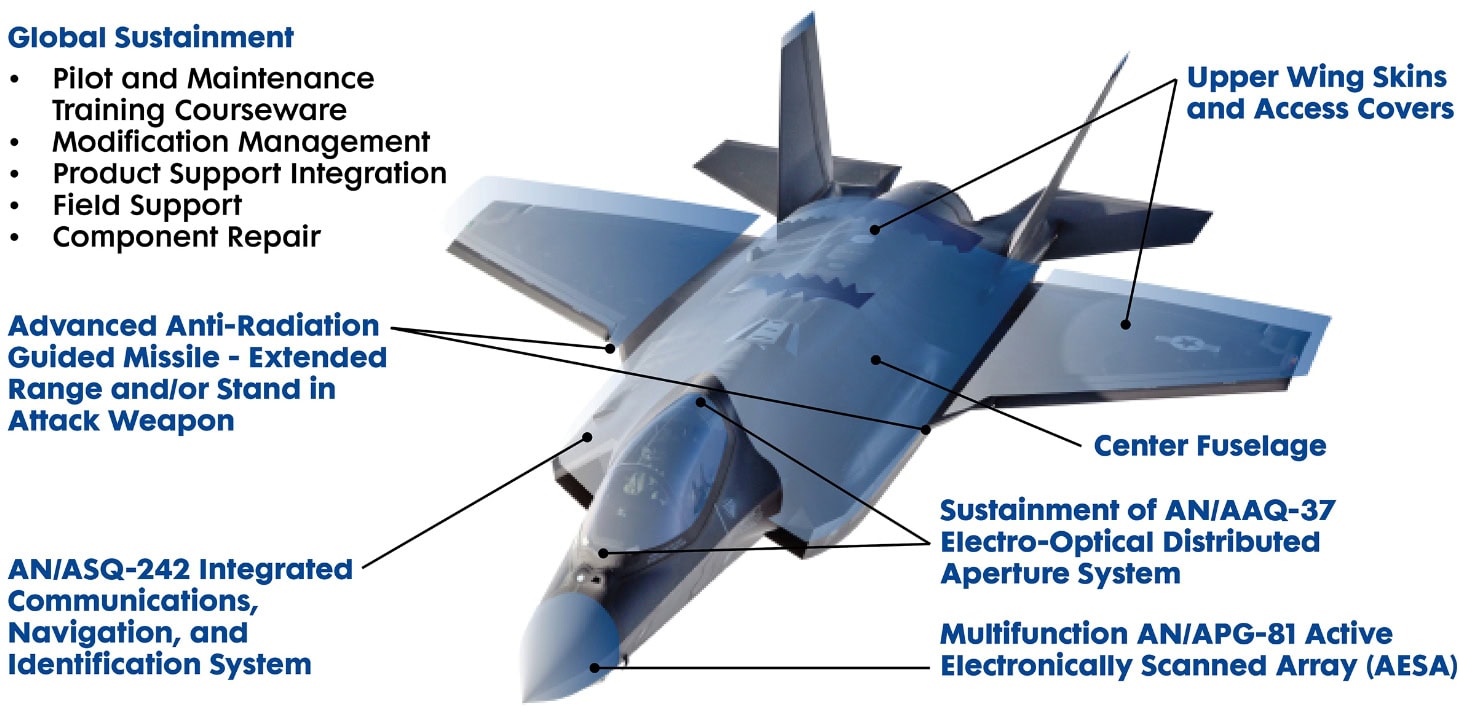
F-35 Fighter. Image Credit: Industry Handout.
“We believe that we didn’t get enough when it comes to the F-35,” Joly said to the news media late last year.
“The industrial benefits are not enough. There needs to be more jobs created out of the F-35 contract. That’s clear to me and clear to this government,” she added.
Saab offered 12,600 jobs in a last-minute full-court press for Ottawa to ditch the F-35 for the Saab JAS-39 Gripen fighter jet. Saab is offering to build the Canadian Gripen in Canada.
Ottawa has signed on and waffled on the F-35 since 2002. In 2023, Canada signed a deal with Lockheed Martin to buy F-35 stealth fighters to replace the Air Force’s aging CF-18 jets.
The agreement, which will see the first tranche of 16 fighters delivered between 2026 and 2030, was the result of an open competition in which Saab’s Gripen E placed second.
Joly acknowledged publicly that the Carney government was in talks with Saab, which has promised to bring 12,600 aerospace manufacturing jobs to the country to assemble its Gripen E fighter jet.
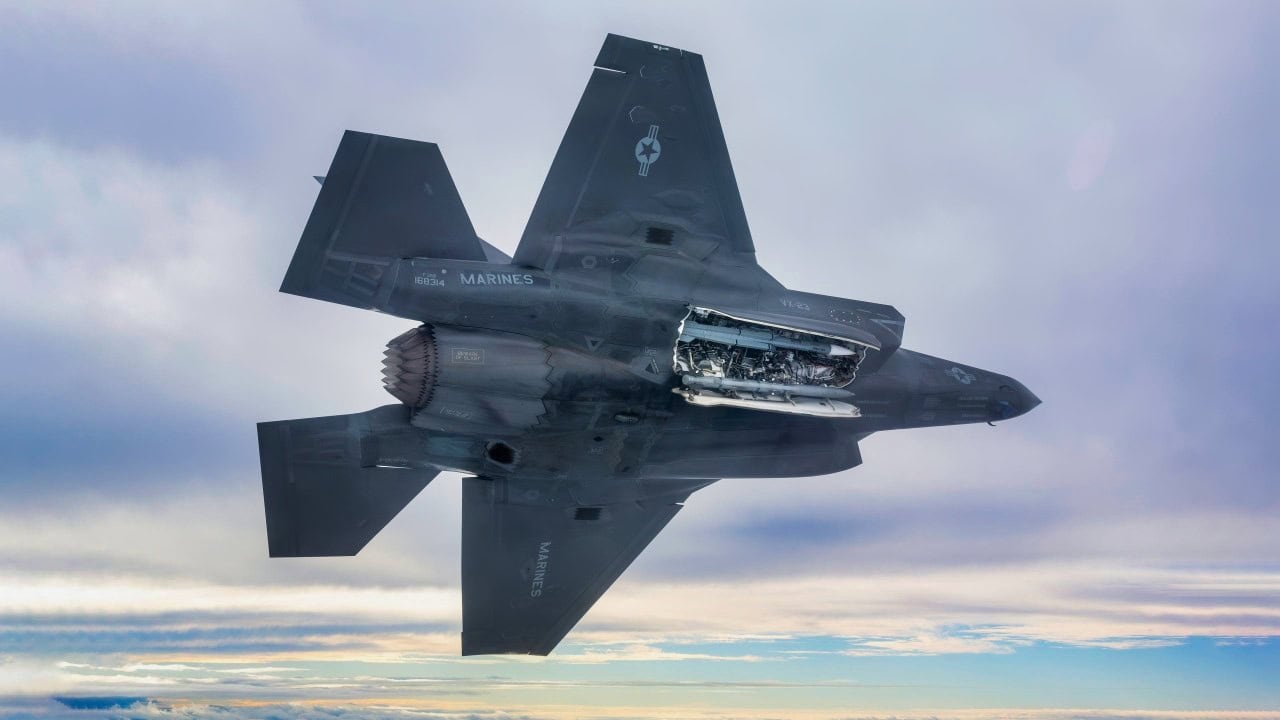
F-35B Armed with Meteor Missile. Image Credit: UK Government.
“We think that we can use military procurement to get more,” Joly said to reporters. “That is why we’re looking, indeed, at the Gripen.”
But that stunt is all about politics, not the aircraft.
Carney Wins Election On Anti-Trump Platform
Shortly after being elected this past spring, Prime Minister Mark Carney ordered a review of the $27.7 billion purchase from Lockheed Martin for the F-35.
Carney, who won the April election on a promise to stand up to U.S. President Donald Trump, had requested the review by military officials in March because Canada was over-reliant on the U.S. defense industry. But in reality, the issue had more to do with Trump’s stance on tariffs and his calls for Canada to become the 51st state.
“We have alternatives to the F-35, so we will explore those, as the ministers of defense and procurement will explore how the F-35 program could be adjusted, including greater investment here in Canada, greater production here in Canada,” Carney said at a press conference.
Ottawa has made a legal commitment to fund the first 16 F-35 aircraft. Although Carney made clear in March that Canada could seriously consider buying the remaining 72 planes from non-U.S. companies, the Defense Ministry review concluded that there was no military sense in splitting the order.
Saab, manufacturer of the superb JAS-39 Gripen fighter, has offered to build factories in Canada for spare parts and possibly an aircraft manufacturing plant to produce the Gripen, bringing jobs and industry to the country.
F-35 Jobs Are Already In Canada
Canada already has 35 companies that are making parts for the F-35. Joly neglected to mention that, nor how many people are employed in the making of F-35 parts. If Ottawa decides to renege on its agreement, Lockheed Martin could relocate the manufacturing of those parts elsewhere.
“(The figures) have potential to grow as Canada further defines sovereign sustainment requirements,” said Chauncey McIntosh, F-35 vice president and general manager at Lockheed.
“Economic benefits are commensurate with a country’s program of record, and they will shrink if Canada ultimately purchases fewer than 88 aircraft.”
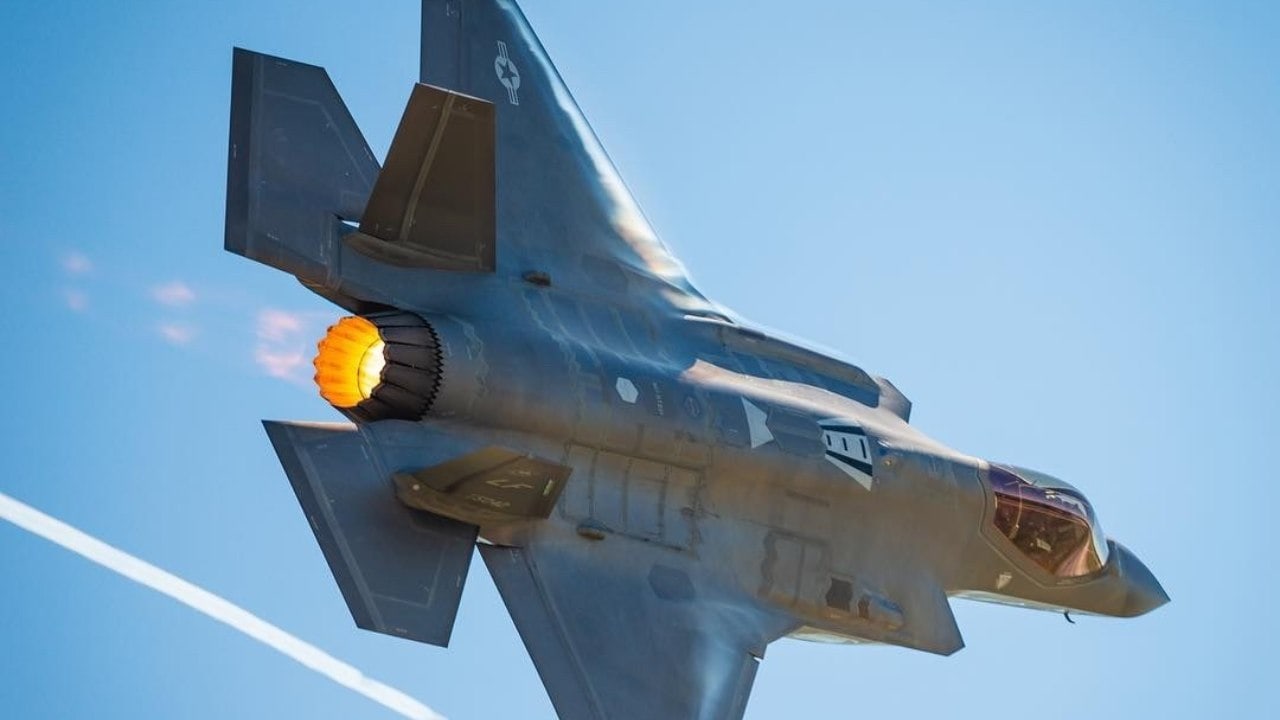
Capt. Andrew “Dojo” Olson, F-35 Demonstration Team commander and pilot performs a dedication pass in an F-35A Lightning II during the 2019 Wings Over Wayne Airshow April 27, 2019, at Seymour Johnson Air Force Base, North Carolina. The WOW Airshow marks the third public performance of the F-35 Demo Team’s new aerial demonstration during 2019 airshow season.
Canada’s specific job count for the F-35 program is unclear, but an analysis estimated that over 150,000 jobs would be created over the program’s life, adding $16.9 billion to GDP.
The total economic impact of the F-35 program is also estimated at around $72 billion, including more than 214,000 advanced manufacturing jobs, according to www.f35.com.
According to the economic impact study conducted by Offset Market Exchange (OMX), a Toronto-based firm that helps OEMs develop their Canadian supply chains and provides analytics to ensure compliance with ITB obligations, the full impact of the program between production (2007 and 2046) and sustainment (2026 and 2058) could result in $16.9 billion to Canada’s GDP.
Steve Callaghan, Lockheed Martin’s former vice-president of F-35 development, said in 2020 that the Canadian government was the first nation to sign on to the U.S. partnership and to date “more than 110 Canadian companies have contributed to the development and the production of the F-35,” he said, resulting in about US $2 billion in contracts.
Now, Joly said Canada could have a bigger role in the supply chain: “I think also they can definitely do more research and development in the country, and we should be able to have access to much more IP control.”
Mixing Its Air Fleet is Expensive
Due to the 16-aircraft commitment to the F-35, changing the remaining 72 aircraft to non-US manufacturers would be very expensive, requiring additional supplies, maintenance, and training facilities.
Lt.-Gen. Jamie Speiser-Blanchet, the new commander of the Royal Canadian Air Force, was put on the spot regarding her support for a mixed fleet of fighters.
She effectively dodged the questions by stating that the Air Force will be required to manage two fleets during the introduction of the F-35, as the current CF-18s are expected to continue flying until the early 2030s.
Speiser-Blanchet, however, stated that operating two separate fleets would be more costly and complicated. “It would duplicate a certain amount of infrastructure and training,” she said.
However, Carney had promised to release the findings of the F-35 review by the end of the calendar summer, which was supposed to be September 20. That review still hasn’t been released, and Carney has been, thus far, silent on the subject.
Lockheed Martin told Newsweek in a statement that it values its partnership with the Royal Canadian Air Force but that the U.S. and Canadian governments should best address questions about its procurement of F-35s.
The F-35 Is The Right Aircraft For Canada
The F-35 is much more than a fighter; it’s an intelligence-gathering, stealth-enabled, data-fusing node designed to operate as part of a larger, digitally integrated force. That’s exactly what Canada needs for the Arctic, for NORAD, and for the kinds of coalition operations it claims to want to support.
Four F-35s can cover the same territory as several dozen fourth-generation fighters like the Gripen or Rafale.
Killing the F-35 contract then raises the question: what do they do with just 16 F-35s and then 72 European aircraft? Maintaining two distinct planes will be costly in terms of maintenance and spare parts.
Military officials have warned that maintaining two separate fighter fleets would be logistically and operationally inefficient, requiring two distinct training pipelines and supply chains.
A divided training regime would further strain the Canadian Armed Forces’ existing pilot shortage.
However, Minister of Industry Joly dismissed that view, arguing that “all G7 countries have mixed fleets” and that Canada should pursue a similar model.
“My objective is to obtain more industrial value from Lockheed Martin while continuing discussions with Saab,” Joly stated.
Splitting the air fleet is not a good idea, especially for a cash-strapped government like Canada’s. Each aircraft requires its own logistical supply chain. Aircraft inevitably suffer from wear and tear, even in benign conditions, and their components are not interchangeable between fleets.
Carney’s administration was supposed to decide on the F-35-JAS-39 competition last fall, but now they are leaving the decision open-ended.
“We are one of the four big aerospace producers in the world. We have the capability, and we will defend our sector. Period,” Joly said, adding that the decision will be made sometime in 2026.
About the Author: Defense Expert Steve Balestrieri
Steve Balestrieri is a National Security Columnist. He served as a US Army Special Forces NCO and Warrant Officer. In addition to writing on defense, he covers the NFL for PatsFans.com and is a member of the Pro Football Writers of America (PFWA). His work was regularly featured in many military publications.