
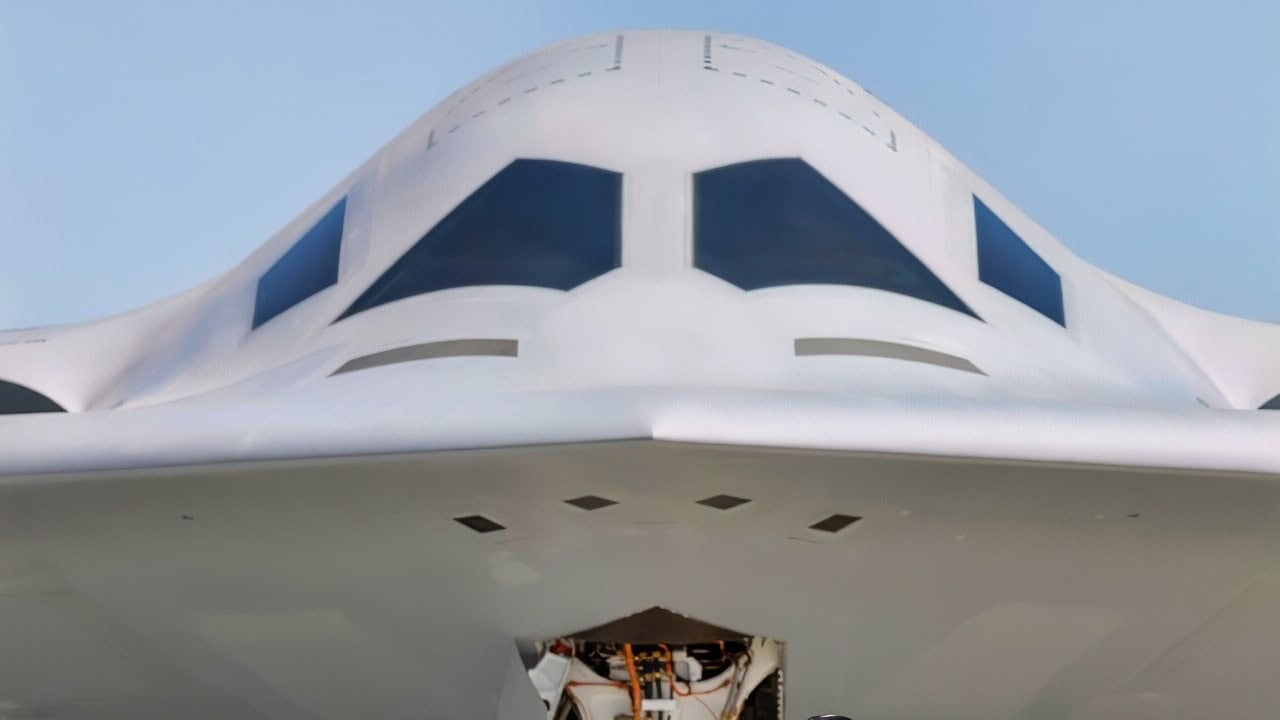
Summary and Key Points: The B-21 Raider is positioned to replace aging B-2s and B-1Bs, but the planned buy of 100 bombers may be too small for sustained, high-end conflict.
-Several assessments argue for a larger fleet—often in the 200–250 range—so the force can maintain deterrence, absorb attrition risk, suppress advanced air defenses, and sustain tempo across vast theaters.
-The argument leans on the Raider’s intended strengths: a smaller, more flexible stealth design; open-system architecture for rapid upgrades; potential to operate from more austere bases; and tighter integration with drones and multi-domain networks—while acknowledging the budget and tanker-capacity pressures that come with scale.
The B-21 Numbers Problem: 100 Bombers Won’t Cover A Two-Theater War Scenario
The Northrop Grumman B-21 Raider is set to replace the aging B-2 Spirit and B-1B Lancer as the backbone of the U.S. Air Force’s strategic bomber fleet.
While China and Russia pursue advanced bomber designs of their own, the B-21 Raider’s technology is expected to keep the Air Force a step ahead of its opponents.
But the Air Force does have a limit: not the bomber itself, but the number of B-21s the United States plans to purchase: currently, just 100. This is not enough to win a protracted war with China or Russia in the near future.
The United States may need up to 200–250 B-21s.
War Is Coming, And It Probably Isn’t Going To Be “Cold”
China has told its soldiers to be ready for war by 2027, and it may not be mere saber-rattling. Beijing has made its intentions clear on Taiwan and the South China Sea: they claim nearly all of it.
If war broke out between the United States and China, it wouldn’t be shocking if the Russians joined in, too. Russia and China have long tried to weaken the U.S. on the world stage.
Russia is in no shape to engage the U.S. in a conventional conflict. Its failures in Ukraine have been costly in personnel, arms, and equipment. However, Moscow would attempt to take advantage of a war between China and the U.S. to reacquire some of the Baltic states that were once part of the Soviet Union. China has been on a major military construction and modernization swing, and it may feel that a stretched-thin United States would not be able to stop the People’s Liberation Army Navy (PLAN) from owning the seas in the Indo-Pacific.
Even 100 B-21 stealth bombers won’t be enough if this scenario unfolds.
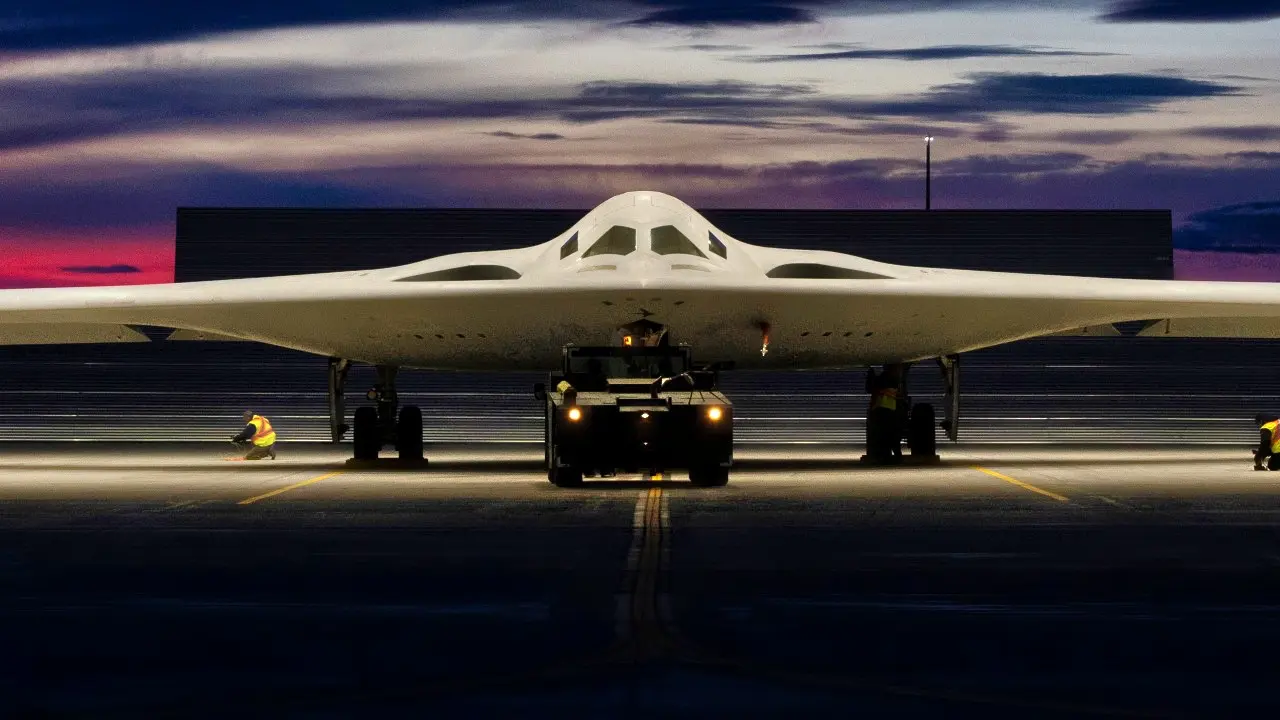
B-21 Raider Stealth Bomber.
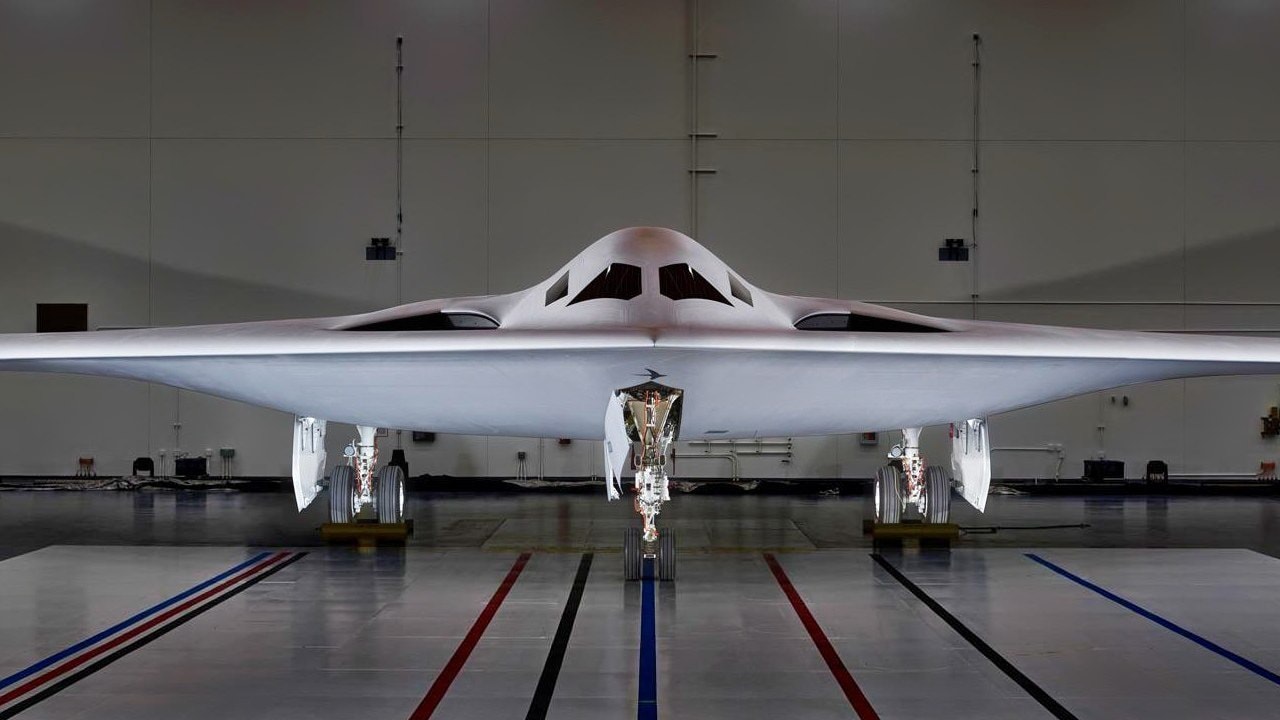
B-21 Raider Bomber U.S. Air Force.
US Rethinking Its B-21 Acquisition of 100:
The Center for Strategic and Budgetary Assessments recommends 288 B-21s, suggesting a significantly larger fleet is necessary than the one that is planned. A larger fleet would ensure deterrence, allow for suppression of advanced air defenses, support continuous operations, and hedge against potential attrition.
Northrop Grumman CEO Kathy Warden recently stated she believed expanded orders are “exactly what the Air Force is looking at,” with Secretary of the Air Force Frank Kendall having “been open about looking at the various options they have for increasing their force size, and has talked specifically about NGAD, and we know that B-21 is in the mix, as well.”
The B-21 is set to be the first intercontinental range stealth bomber to be widely fielded. Its development comes as China works to develop a competing next-generation bomber under the H-20 program.
Would 200 B-21s Be Enough?
The Mitchell Institute For Aerospace Studies published a paper strongly advising the U.S. Air Force not to cut costs at the expense of quantity on its B-21 stealth bomber program.
The report, authored by former U.S. bomber pilot Mark Gunzinger, stressed that the U.S. would need to neutralize a large number of targets deep in the interiors of Chinese and Russian airspace in the event of war.
He said the bomber would provide the most reliable means of doing so and was more cost-effective and dependable than standoff strikes using cruise missiles. Gunzinger believes the Air Force needs at least 225 B-21 Raiders to take on China and Russia in a potential conflict.
The B-21, Smaller, More Flexible, Survivable
The B-21’s compact design is meant to allow it to penetrate China’s anti-access/area denial (A2/AD) defenses, ensuring it can deliver precision strikes or gather intelligence in high-threat environments where the larger B-2 might face greater risks.
The B-21’s smaller size also translates into greater operational flexibility. The B-2 Spirit, with its great wingspan and heavy payload capacity, was designed for long-range, high-payload missions, often carrying large nuclear or conventional munitions over intercontinental distances.
The B-21 could also play a key role in multi-domain operations, by integrating with space, cyber, and ground-based assets to coordinate a response to threats—including by linking with Collaborative Combat Aircraft “loyal wingman” drones.
The B-21’s open-system architecture will allow frequent updates to its onboard systems, not only affecting the types of weapons it can carry, but also making it easier to upgrade the bomber’s avionics.
It has been reported that the B-21 is capable of taking off and landing on smaller, more austere airfields. The aircraft also will not require the B-2’s climate-controlled hangars.
The Costs Will Be High
Gen. Thomas A. Bussiere, the commander of the Air Force Global Strike Command, testified before Congress that a fleet of 220 bombers would likely be needed to meet the Air Force’s requirements. Taking into account the current plan to retain 75 upgraded B-52Js, that would require a fleet of at least 145 B-21s.
“It’s a force mix discussion within the Department of the Air Force, and it’s a resource and priority question within the Department of Defense and the nation,” Bussiere added.
The budget will be challenging, but the Air Force needs between 200 and 250 B-21 Raider stealth bombers to protect friendly forces during a potential war with China. I recently wrote about the issue with refueling tankers for the B-21; building more Raiders will also require building more of the tankers.
The B-21 Raider is a weapon of peace: The deterrence enforced by a next-generation stealth bomber is invaluable. Having many B-21s able to penetrate any enemy’s A2/AD defenses will give those enemies pause.
The cost of building too few would be much higher for the country in the long run. The United States learned that lesson the hard way after the Cold War.
About the Author: Steve Balestrieri
Steve Balestrieri is a National Security Columnist. He served as a US Army Special Forces NCO and Warrant Officer. In addition to writing on defense, he covers the NFL for PatsFans.com and is a member of the Pro Football Writers of America (PFWA). His work was regularly featured in many military publications.