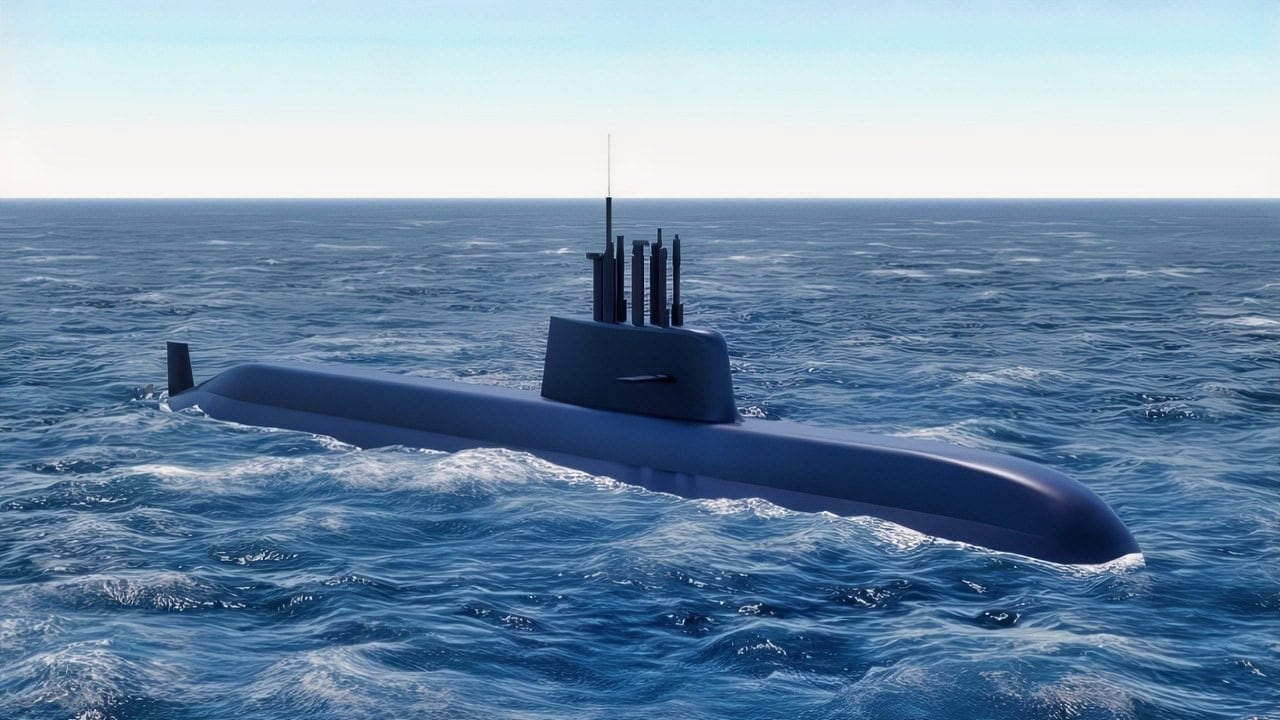
Earlier this year, Korea’s Ministry of National Defense issued a significant announcement and publicly revealed a legal push to provide the legal framework for acquiring nuclear-powered submarines. It would be a significant shift for the country. But the announcement was not the first sign that the South would like to acquire nuclear-powered submarines — that has been clear for some time.
Early Indicators for South Korea’s Nuclear Submarines
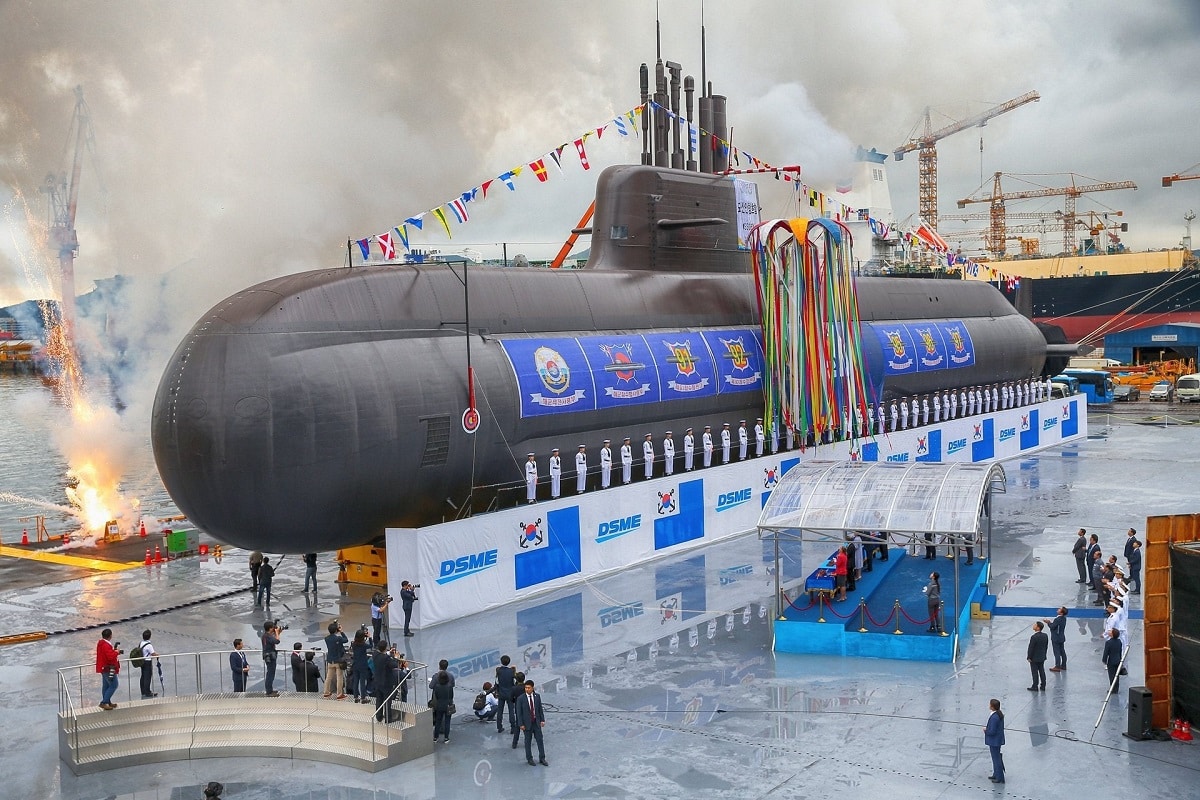
South Korea Submarine-Launched Ballistic Missile. Image: DSME Handout.
In 2021, South Korea announced it would begin construction of a new nuclear reactor. Though not explicitly planned for maritime applications, observers drew the logical conclusion that, in a few words, the reactor would ultimately be intended for submarines and for the South Korean Navy (ROKN). It was not exactly a tightly-held secret.
The idea of a nuclear-powered submarine had ping-ponged around South Korean defense circles for years. And with the advent of AUKUS, the awkwardly named tripartite nuclear submarine-sharing agreement between the United States, the United Kingdom, and Australia, nuclear submarines in Asia came to the forefront of South Korean discussions.
The Threat from North Korea
It was not just the announcement of AUKUS that catalyzed the KSS-N program (importantly, KSS-N is still a provisional designation), however. Another powerful motivator is Seoul’s northern neighbor.
While Pyongyang’s naval forces do not count a nuclear-powered submarine among their own naval forces, North Korea does possess a limited stock of nuclear weapons and has obvious incentives to place those weapons onto submarines.
On a one-for-one basis, South Korean submarines are significantly more capable and sophisticated than the North’s. But nuclear-powered submarines would greatly aid in tackling the threat of mobile, underwater North Korean weapons.

The Virginia-class submarine USS Vermont (SSN 792) makes her way up the Thames River and past Fort Trumble and the Coast Guard Cutter Borque Eagle as she returns home to Submarine Base New London on Thursday, December 24, 2020. The nineteenth and newest Virginia-class submarine she is the third U.S. Navy ship to be named for the Green Mountain State. (U.S. Navy Photo by John Narewski/Released)
Late last year, North Korea published photos of what it claimed was the country’s first nuclear-powered submarine. Speculation about that submarine has run in both directions, with some commentators maintaining that the Hermit Kingdom lacks the technical know-how to build a viable nuclear-powered platform on its own. Others have noted that Pyongyang could well have received nuclear propulsion technology from Russia in return for its assistance in Russia’s ongoing war in Ukraine.
Ship-building Prowess
South Korea’s domestic shipbuilding industry is a global leader. The country’s big three — HD Hyundai, Hanwha Ocean, and Samsung Heavy Industries — specialize in container ships and Liquified Natural Gas (LNG) tankers, cementing South Korea’s position as the world’s second-largest shipbuilding country behind only China. But South Korea builds not only commercial vessels but warships too, both above and below the waves.
The South Korean KSS-III program, an indigenous class of non-nuclear air-independent propulsion (AIP) submarines, is highly regarded. Built in three tranches, or subclasses within the greater KSS-III umbrella, the submarines are Seoul’s most technologically sophisticated.
Powered by diesel-electric with air-independent propulsion fuel cells, the submarines can remain submerged for a long stretch of time. Nuclear-powered submarines would, naturally, offer the South Korean Navy greatly extended underwater endurance limited only by crew food requirements.
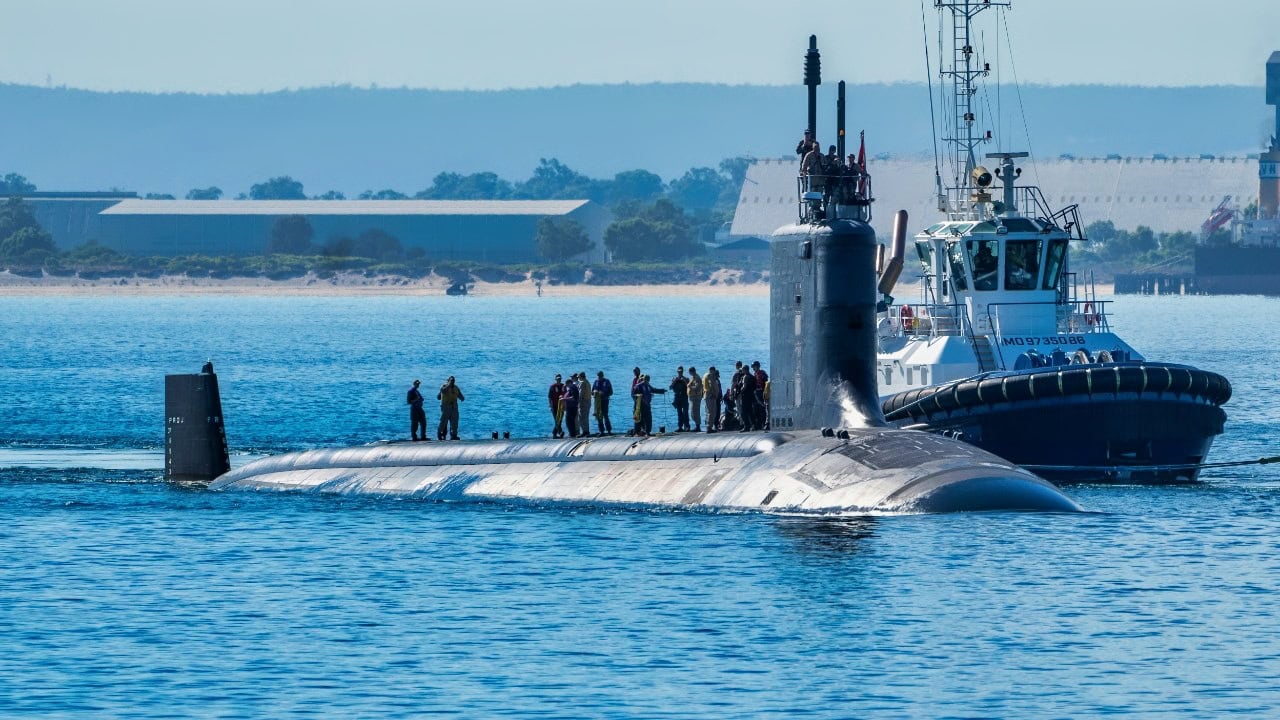
Western Australia, Australia (Feb. 25, 2025) The Virginia-class fast-attack submarine USS Minnesota (SSN 783) prepares to moor at HMAS Stirling, Western Australia, Australia, Feb. 25, 2025. Minnesota arrived in Western Australia kicking off the first of two planned U.S. fast-attack submarine visits to HMAS Stirling in 2025. Minnesota is currently on deployment supporting the U.S. 7th Fleet, the U.S. Navy’s largest forward-deployed numbered fleet, operating with allies and partners in preserving a free and open Indo-Pacific region. (U.S. Navy photo by Lt. James Caliva)
A version of the KSS-III class, the KSS-CPS, has been offered to Canada to meet its underwater needs.
The first KSS-III batch, known domestically as the Dosan Ahn Changho class, is outfitted with a Vertical Launch System, or VLS, and can launch Hyunmoo 4-4 non-nuclear SLBMs with a range estimated at 270 miles.
The KSS-III submarines have the unique distinction of being the first AIP-capable submarines equipped with a Vertical Launch System.
An Exclusive Club
Once operations are underway, Seoul will join one of the world’s most exclusive clubs: the countries that operate nuclear-powered submarines.
Currently, just six countries count themselves members: the United States, Russia, France, the United Kingdom, India, and China.
Australia will soon count itself as an insider thanks to the aforementioned AUKUS agreement, and Brazil has had a nuclear-powered submarine program in development for some time, but crucially, it cannot yet count itself in that group of nations.
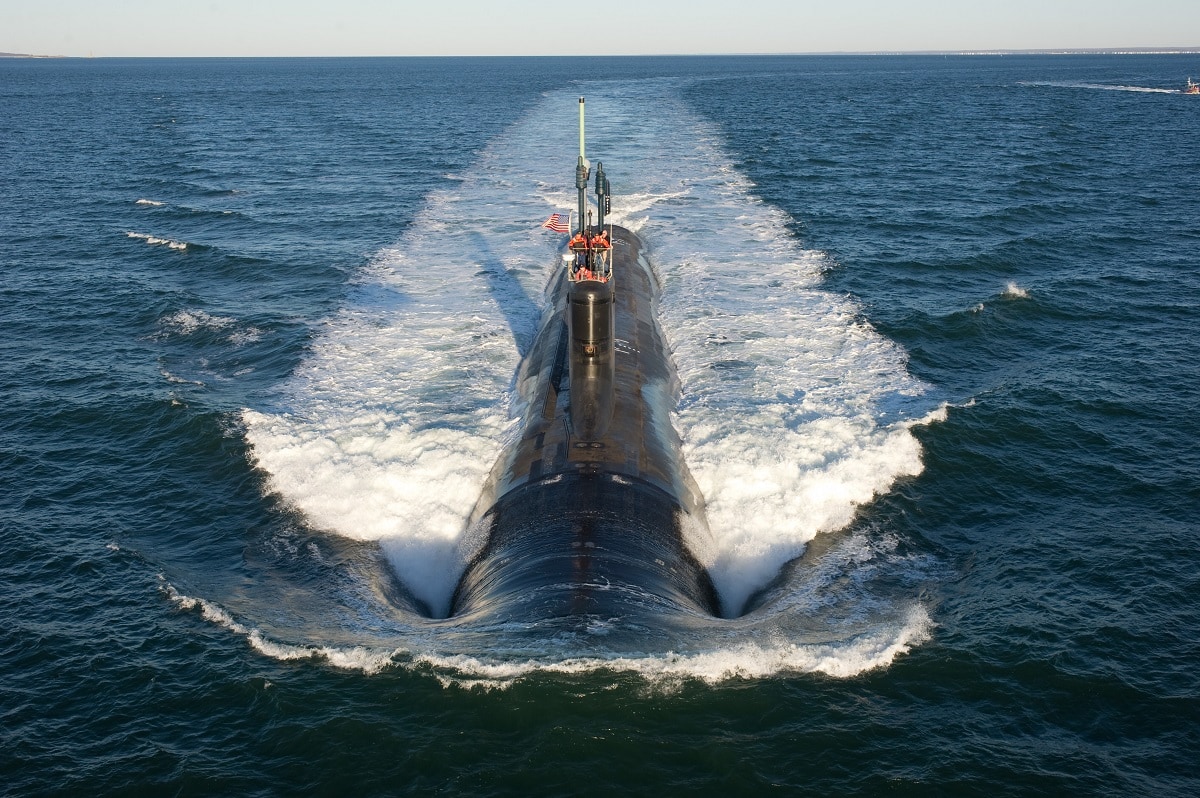
The Virginia-class attack submarine Pre-Commissioning Unit Mississippi (SSN 782) conducts alpha trials in the Atlantic Ocean. (U.S. Navy photo courtesy of General Dynamics Electric Boat)
South Korean Intentions
The legal pathway forward for South Korean nuclear submarines follows an agreement struck between Seoul and Washington last year for perhaps the most crucial component for the South of nuclear wartime propulsion: nuclear fuel.
In the agreement, struck amid last year’s volatile trade disputes between the United States and seemingly every country in the world, the White House affirmed that it would provide the enriched uranium needed to fuel the reactors on South Korean attack submarines.
While South Korea had a nuclear weapons program during the 1970s, the country abandoned that program following pressure from the United States, as well as assurances that the South would be covered by Washington’s nuclear umbrella.
“I have given them approval to build a Nuclear Powered Submarine, rather than the old fashioned, and far less nimble, diesel powered Submarines that they have now,” President Trump wrote on Truth Social, his social media platform.
South Korea would be responsible for processing the uranium needed to fuel the nuclear reactors, for which the United States provided permission.
The American Angle
A fleet of South Korean nuclear-propelled submarines — though crucially, conventionally-armed — would be a boon to the United States, and would put pressure on both China and North Korea.
It is not immediately clear where the submarines will be built, with President Trump maintaining that a South Korean nuclear-powered submarine would be built in an American shipyard in Philadelphia.
South Korean officials, on the other hand, have said that a South Korean nuclear-powered submarine would have to be built domestically, inside South Korea. But should South Korea have the capacity for a project of this complexity, that may well be preferable to the United States in the long term.
Waves of the Future
America’s shipbuilders, Huntington Ingalls Industries and General Dynamics Electric Boat, currently have their hands full with several projects.
The upcoming Columbia-class submarines, slated to replace the older Ohio-class ballistic missile submarines, will be a significant undertaking, as will the SSN(X) or Next-Generation Attack Submarine, which will replace both the Virginia and Seawolf attack submarine classes. Meanwhile, Virginia-class submarines are still being built, albeit at a slower pace than the U.S. Navy had originally anticipated.
Show Me the Money
Though the United States out-produced all allies and belligerents during the Second World War, American manufacturing capacity has slipped significantly since then, so much so that the Pentagon is exploring the possibility of foreign ship designs built in foreign shipyards to meet the Navy’s needs.
A $1.85 billion study allocated for Fiscal Year 2027 will “be used to investigate a full spectrum of procurement options to attract more shipbuilding capacity into domestic shipyards and bring additional ships into the fleet – including studies of the ability of allied shipbuilding companies to build ships or components,” reads the budget language. “This funding will be split into two separate study and procurement efforts targeting the fleet’s future [cruiser/destroyer] and frigate inventories.” The Pentagon has instructed the Navy to leverage the speed and capacity of foreign shipyards — in particular those of Japan and South Korea.
AUKUS
There has been no inconsiderable consternation down under about the impact a production squeeze on America’s shipyards would have on the United States’ ability to make good on its part of the AUKUS agreement.
Under the terms of that pact, the upcoming, provisionally-named AUKUS-class of nuclear-powered submarines would be built in the United States. But Pentagon policy Czar Elbridge Colby, long critical of allocating production capacity to foreign navies, cast some doubt on the United States following through with the AUKUS agreement.
Australia has injected several billion dollars into building out the production capacity of American shipyards in a bid to ensure their own submarines are delivered on time and at budget — and the Pentagon just delivered on its own part of that bargain recently, awarding $197 million for initial engineering and design work.
Current American submarine production hovers around 1 submarine per year, a pace that will need to more than double if shipyards in the United States are to meet their production commitments.
Modeling the Future
Hanwha Ocean, South Korea’s leading builder of warships, modeled what the upcoming class of nuclear-powered submarines could look like last year during MADEX 2025, an international naval exhibition held in Busan, South Korea last year. Though the final design will certainly shift from what that smooth, scaled-down model previewed, what is clear is that whatever South Korea’s nuclear-powered submarine ultimately looks like, it will be one of the most advanced nuclear-powered submarines in Asia.
About the Author: Caleb Larson
Caleb Larson is an American multiformat journalist based in Berlin, Germany. His work covers the intersection of conflict and society, focusing on American foreign policy and European security. He has reported from Germany, Russia, and the United States. Most recently, he covered the war in Ukraine, reporting extensively on the war’s shifting battle lines from Donbas and writing on the war’s civilian and humanitarian toll. Previously, he worked as a Defense Reporter for POLITICO Europe. You can follow his latest work on X.