
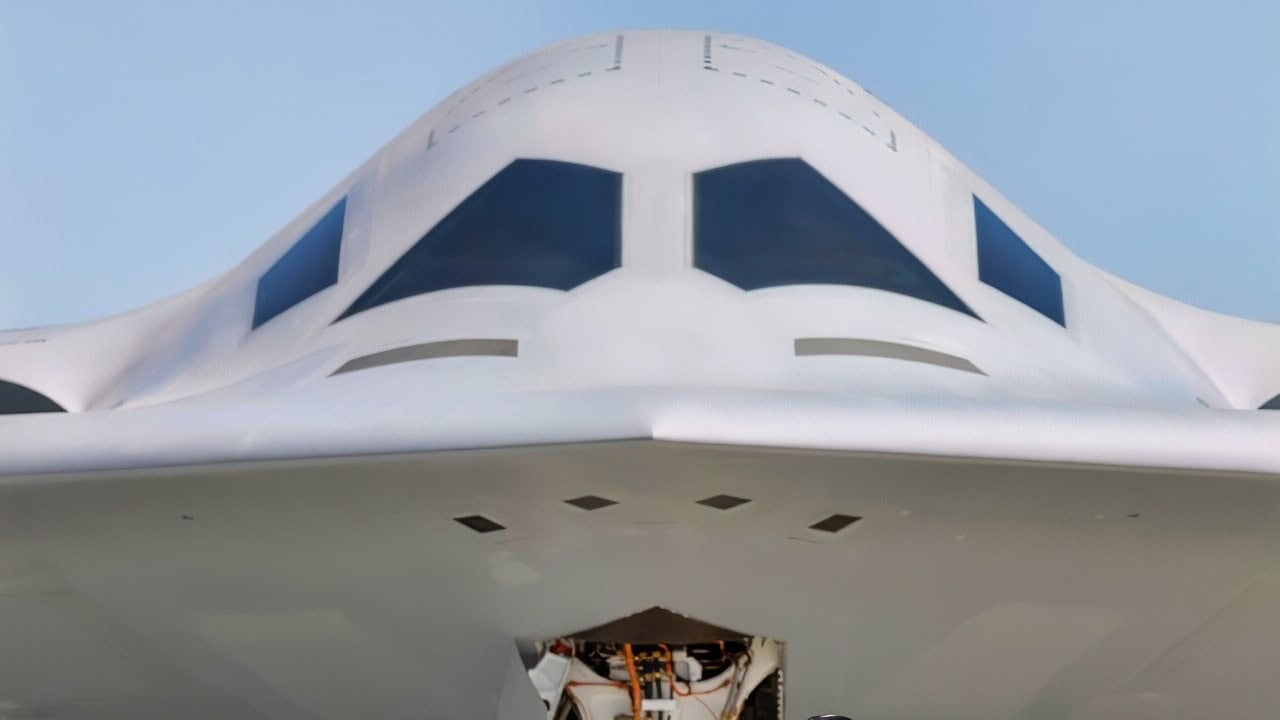
Synopsis and Key Points: China’s long-rumored H-20 stealth bomber appears to be moving closer to reality, promising China’s first dedicated strategic bomber and a longer strike reach into the Pacific.
-U.S. intelligence estimates often cite ranges exceeding 10,000 kilometers, potentially putting Guam and even Hawaii within reach without refueling—if the platform arrives as expected.
-Yet the H-20 remains largely unseen and, at best, years from operational service. By contrast, the United States has three decades of B-2 experience and a mature training-and-doctrine ecosystem, reinforced by large exercises such as Bamboo Eagle.
-The coming B-21 Raider force—planned at 100 aircraft or more—could widen the advantage through scale and upgradeability.
The H-20 “Phantom Bomber” Meets a Real Force: B-2 Experience and the B-21 Buildout
As competition with China intensifies, Western analysts and U.S. defense officials are increasingly acknowledging the reality that China’s long-rumored H-20 stealth bomber is on its way and could soon complicate Western planning.
The People’s Liberation Army Air Force (PLAAF) is pursuing a flying-wing design that, if fielded, will represent Beijing’s first-ever dedicated strategic bomber – and it will mean China can significantly extend its power-projection reach towards U.S. allies and bases across the Pacific.
Yet even as Chinese state media and Western analysts confirm progress is being made on the program after almost a decade of development, it remains largely unseen, has not been officially revealed, and is still several years from operational service at best.
While the U.S. cannot afford to be complacent, it’s still true that the B-2A Spirit is already in service and a mature, globally deployed stealth bomber.
Additionally, significant progress has been made with the next-generation B-21 Raider, supported by decades of combat experience, extensive training infrastructure, and integrated doctrines and chains of command that China cannot yet match.
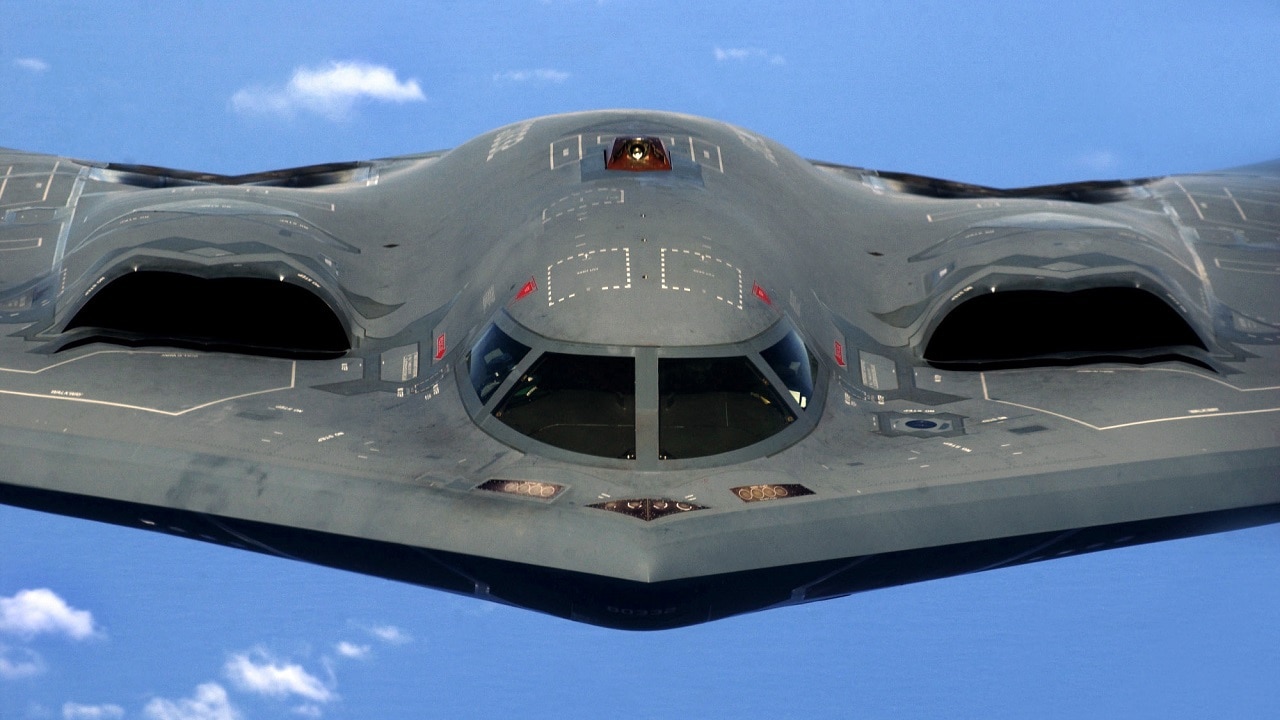
A U.S. Air Force B-2 Spirit “Stealth” bomber, 393rd Expeditionary Bomb Squadron, 509th Bomb Wing, Whiteman Air Force Base, Mo., flies over the Pacific Ocean after a recent aerial refueling mission, May 2, 2005. The Bombers are deployed to Anderson Air Force Base, Guam, as part of a rotation that has provided the U.S. Pacific Command a continous bomber presence in the Asian Pacific region since February 2004, enhancing regional security and the U.S. commitment to the Western Pacific. (U.S. Air Force photo by Tech Sgt. Cecilio Ricardo) (Released)
While Beijing is well on its way to advancing its capabilities and reach, the United States still maintains a decisive advantage rooted not just in technology but in operational readiness and doctrinal maturity.
China’s Ongoing Stealth Bomber Efforts
For years, the H-20 program has served as a focal point for concerns about China’s future strategic capabilities.
The aircraft is understood to mirror the basic mission set of American strategic bombers – deep penetration strikes using both conventional and nuclear loads – and, according to U.S. intelligence estimates, could someday reach targets at ranges exceeding 10,000 kilometers.
If those estimates are accurate, China – once the H-20 is fielded – could reach U.S. bases on Guam and in Hawaii without refueling.
A capability like that would significantly extend China’s traditional regional strike footprint, enable its air force to move beyond its existing A2/AD strategy, and complicate allied defense planning across the Indo-Pacific.
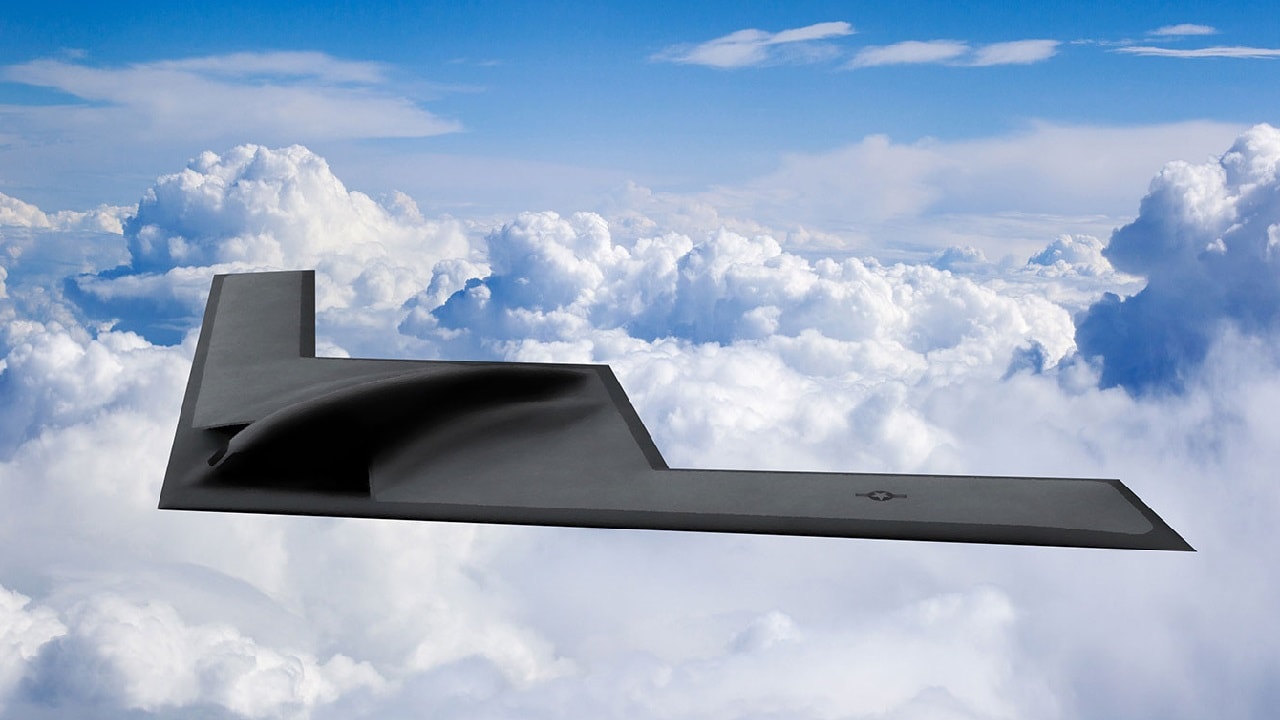
B-21 Raider. Image Credit: US Air Force.
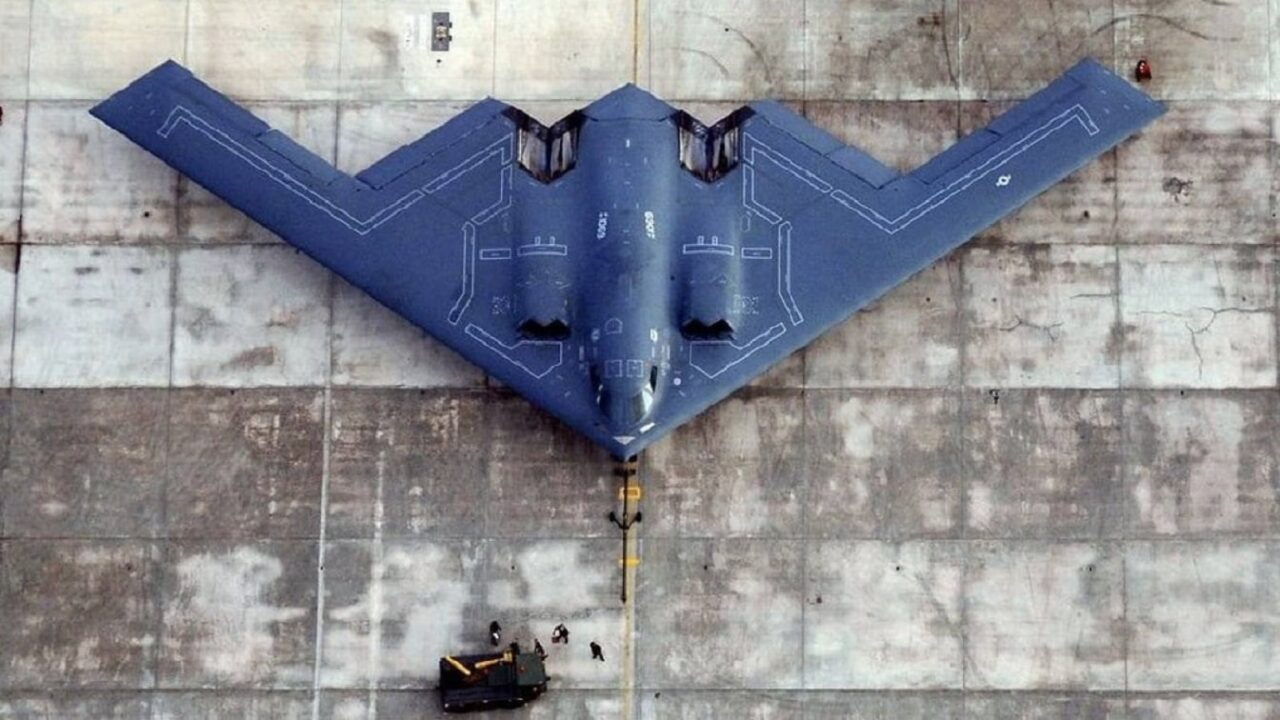
B-2 Bomber U.S. Air Force.
U.S. government officials have widely discussed the bomber’s projected range and payload, as well as analysts’ commentary, and current estimates suggest that the platform would be sufficiently capable of bolstering deterrence and providing additional power beyond the first- and second-island chain defenses.
That, however, is as much as we know: there has been no verified flight test, no information about production rollout released, and no operational deployment of the H-20.
Some argue that the H-20 is more of a “phantom bomber” than anything, but that argument only holds until the day Beijing officially confirms the platform is ready. It enters operational deployment – if, that is, Beijing officially confirms it at all.
The U.S., however, is far more prepared – and while the arrival of the H-20 will complicate planning, it will not be a technological leapfrog over current or upcoming American capability.
Stealth Bomber Race: America Is Still Ahead – In More Ways Than One
The Northrop Grumman B-2 Spirit, America’s most advanced operational stealth bomber, has operated for more than three decades as a central pillar of U.S. strategic deterrence and power projection, penetrating contested airspace and integrating with complex joint force operations worldwide.
Designed from the outside to fly straight through sophisticated air defenses with low-observable technology, the B-2 has participated in multiple historic and high-profile combat missions alongside conventional forces.
The B-2 is tried and tested, and the U.S. has developed a strategy that does not treat its stealth bombers as isolated platforms, but as part of a broader family of assets and even as a tool for doctrinal advancement.
For example, in recent years, large-scale exercises like Bamboo Eagle have brought the B-2 together with tens of thousands of U.S. and allied forces across the Pacific theater in scenarios that represented contested logistics, base defenses, and long-distance operations.
Throughout these exercises, the B-2 has been put to the test to refine operational concepts, sustainment practices, and ensure allied interoperability under a range of challenging conditions.
In this sense, the U.S. is not only ahead of China by having already fielded a dedicated stealth bomber for decades, but decades ahead in terms of operational planning.
That gap is set to dramatically widen, too, once the B-21 Raider enters service. The U.S. Air Force plans to field at least 100 B-21s, with senior officials repeatedly signaling that the final number could be significantly higher as the bomber becomes the backbone of America’s future strike force.
Unlike the B-2, the B-21 is designed for sustained high-tempo operations, rapid integration with joint and allied forces, and adaptability to evolving air-defense threats, thanks to its new software architecture and upgradeability.
As those Raiders are fielded in meaningful numbers through the late 2020s and early 2030s, the United States will not merely retain its lead over China’s bomber force but extend it significantly, combining scale with a doctrine that China cannot match and technology it cannot field.
About the Author:
Jack Buckby is a British author, counter-extremism researcher, and journalist based in New York who writes frequently for National Security Journal. Reporting on the U.K., Europe, and the U.S., he works to analyze and understand left-wing and right-wing radicalization, and reports on Western governments’ approaches to the pressing issues of today. His books and research papers explore these themes and propose pragmatic solutions to our increasingly polarized society. His latest book is The Truth Teller: RFK Jr. and the Case for a Post-Partisan Presidency.