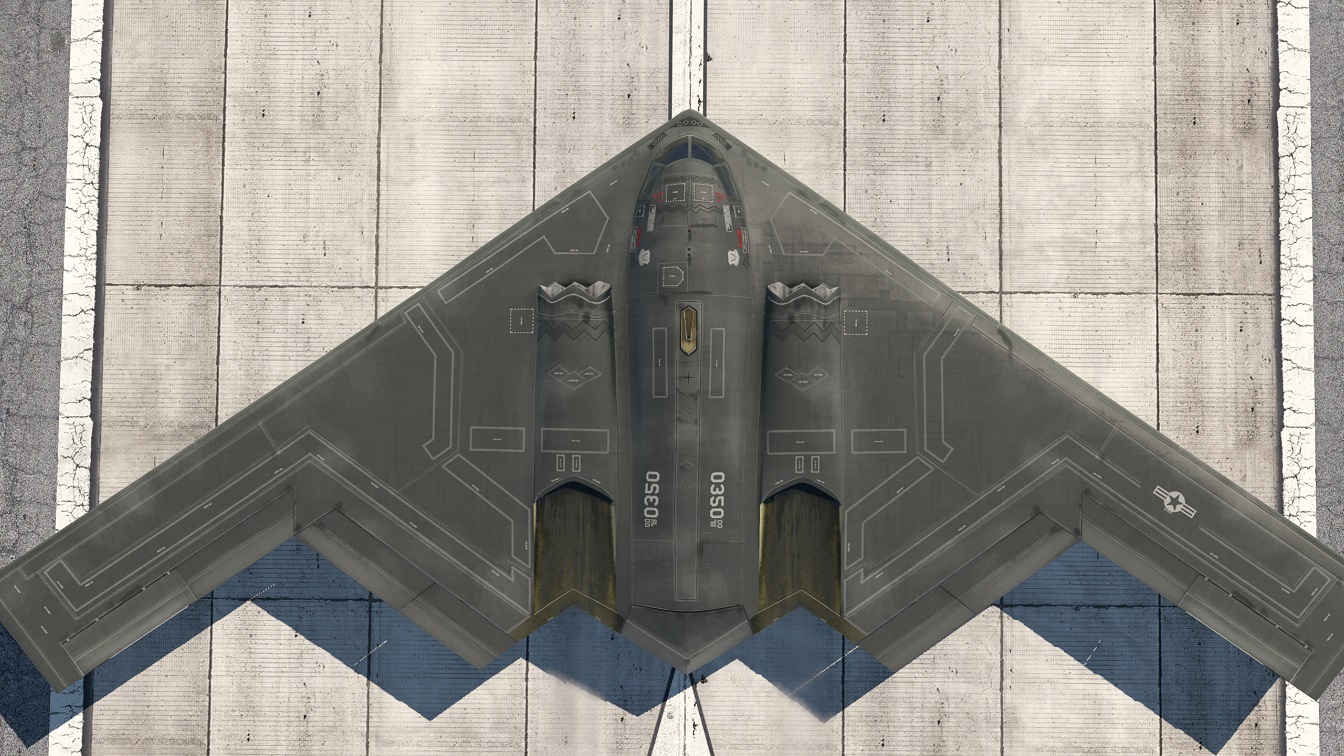
Key Points and Summary – China’s coming H-20 stealth bomber isn’t just a technology story—it’s a mass story.
-Drawing on production experience from the H-6 and even civil programs like the C-919, Beijing could field at least 50 H-20s by 2035, each capable of carrying up to 16 weapons and striking targets out to, and beyond, the Second Island Chain.
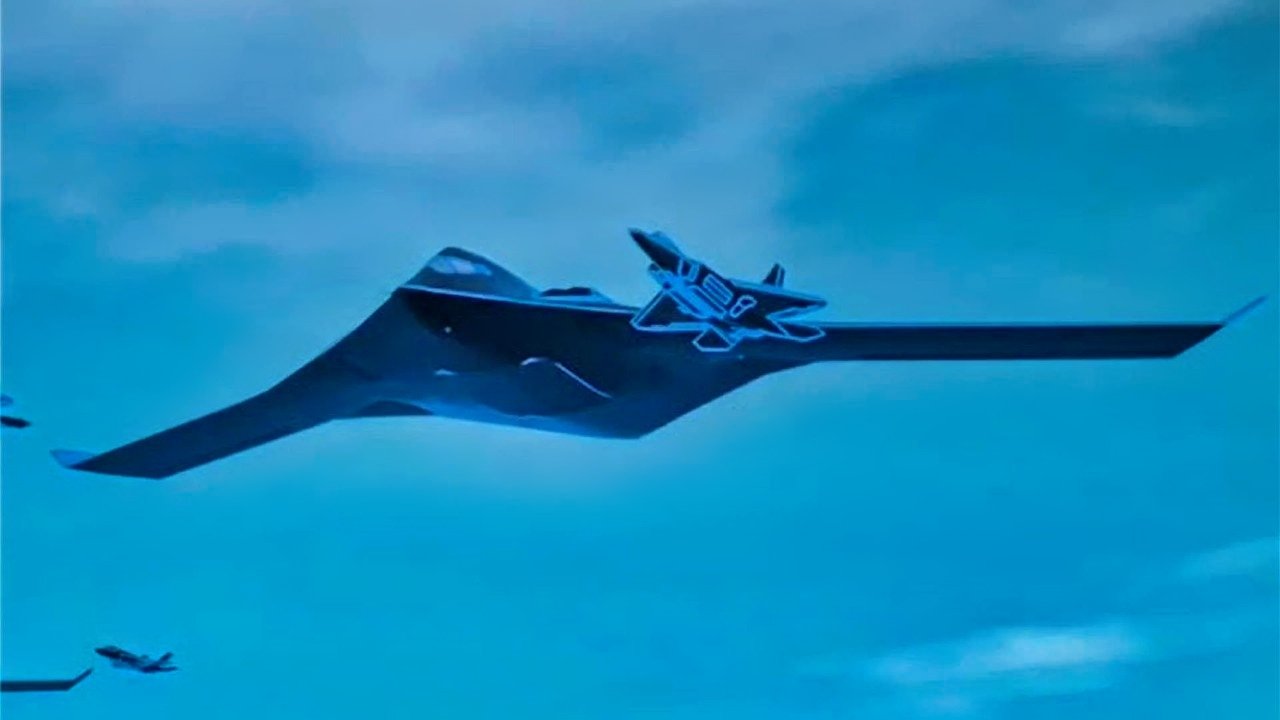
H-20 Bomber Image. Image Credit X Screeenshot.
-With an 8,500 km combat radius and long-range cruise missiles, Guam, Hawaii, and parts of the U.S. mainland could fall within range.
-That industrial potential is driving U.S. plans to build 7–10 B-21 Raiders per year just to keep pace.
China Could Have 50 H-20 Stealth Bombers
China could operate at least 50 H-20 bombers by 2035, capable of conventional, nuclear, and hypersonic attacks across a wide combat formation, due to its ability to mass-produce aircraft such as bombers.
Apart from the key question of performance parameters and the extent to which the H-20 may or may not rival the US Air Force B-21, the People’s Liberation Army Air Force’s H-20 could pose a significant mass threat.
One of the Pentagon’s former top weapons researchers and threat assessment experts published findings that “there is little reason China could not have 50 or more H-20 bombers by 2035.” The research, published in a text titled “China/Russia Strategic/Theater Nuclear Weapons 2044 Forecast and Potential US Responses,” states that China built 20 to 30 H-6 bombers per year and is currently positioned to meet or exceed this production capacity with its H-20.
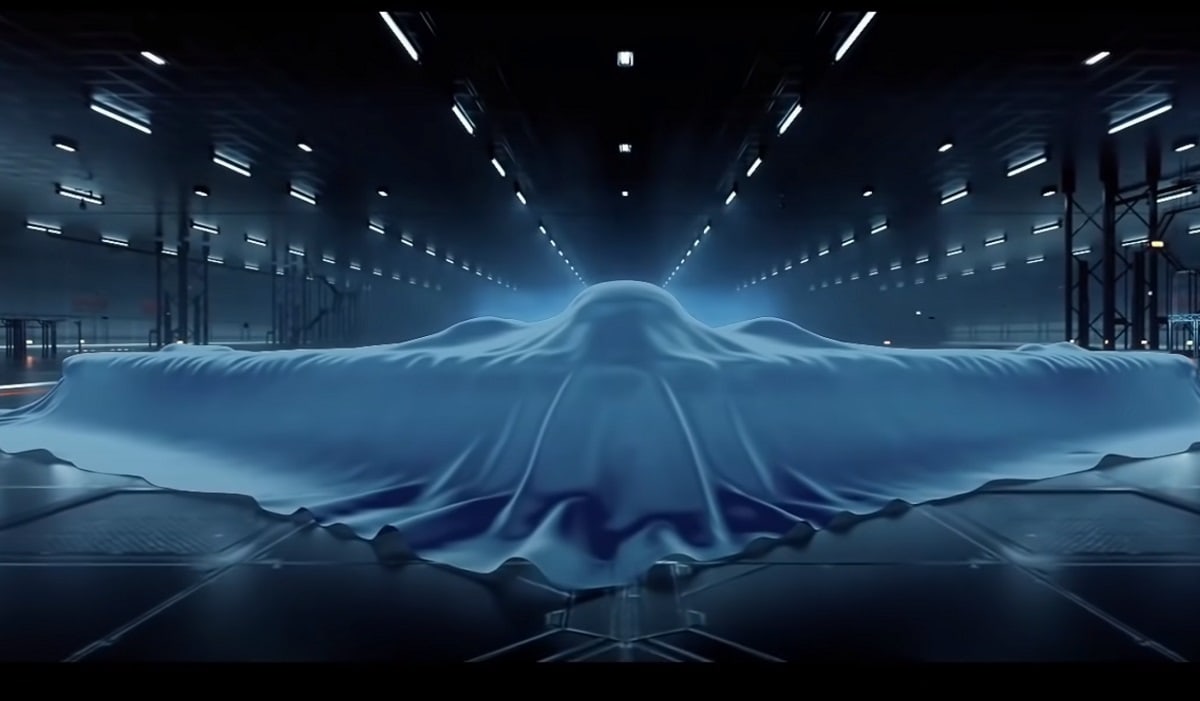
What could be China’s H-20 Stealth Bomber. Image: YouTube Screenshot.
“We actually built approximately 25 B-1s a year. So given China’s manufacturing capabilities, I see no reason why they shouldn’t have at least 50 H-20s by 2035 and the associated weapons,” research author James Howe, President of Strategic Concepts and Analysis and former Director, Threats, Technologies and Future Requirements for Boeing Missile Defense Division, told Warrior Maven in an interview earlier this year. Mr. Howe has performed numerous studies for OSD, “The H-20 is supposed to be able to carry 16 weapons. By 2035, there’s no reason why they couldn’t have at least 50 of those because its IOC is supposed to be sometime in the next few years.”
Very little is known about China’s stealth bomber, and there have been few publicly available renderings.
While the platform appears quite stealthy to the observer’s eye, top Pentagon weapons experts are concerned about the People’s Liberation Army Air Force’s production capacity and anticipated fleet size as they pertain to the stealth bomber.
The Pentagon’s annual military report on China has consistently cited an H-20 threat, stating as far back as 2018 that the H-20’s 8,500km range armed with 2,000 km range CJ-20 ALCMs can “expand long-range offensive bomber capability beyond the second island chain,” placing areas such as Guam, Hawaii, and the US at risk.
Citing previous production capacity benchmarks, Howe projected that China’s well-known civil-military fusion would indeed be positioned to produce large numbers of H-20s at a concerning pace.
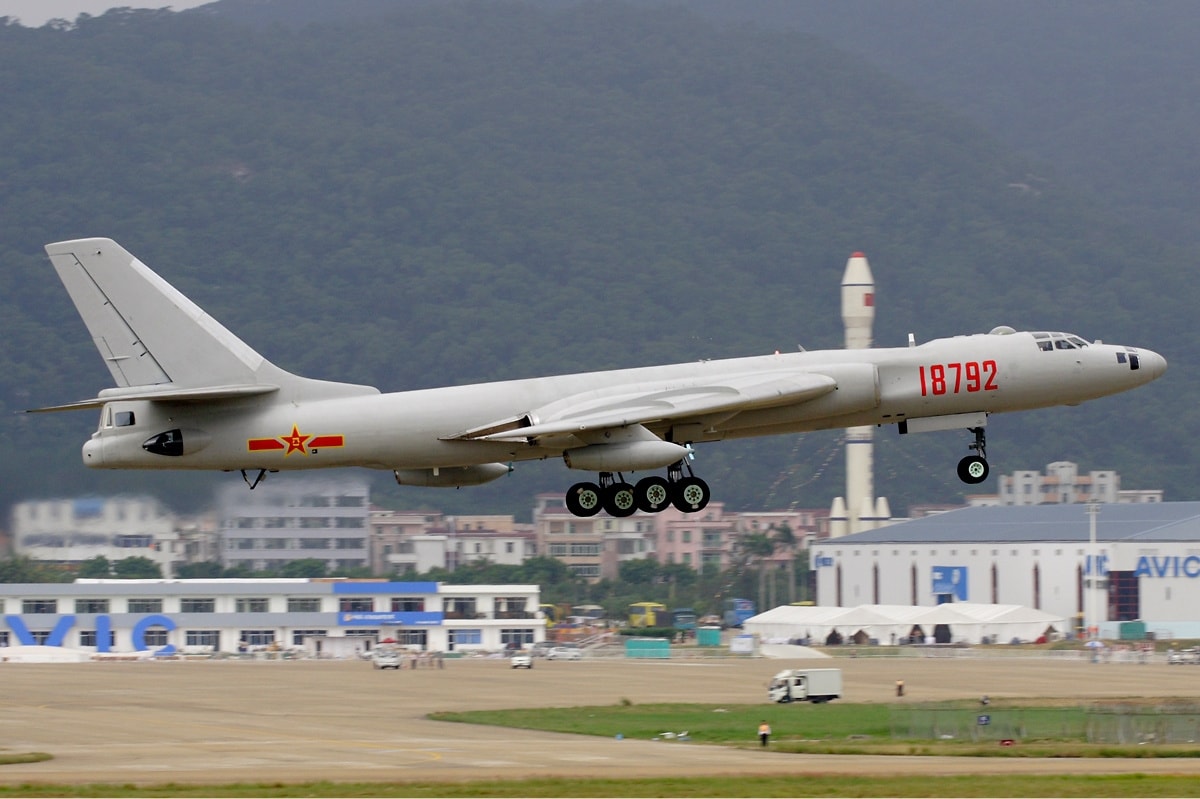
PLANAF HY-6U with aerial refuelling pods (2008) “The most distinct difference between HY-6U and HY-6D is that HY-6U has a metal nose cone, while HY-6D still has the transparent glass nose”.
“China built 20-30 H-6 bombers/year and plans to build 150 C-919 passenger planes/year.
With an expected 2025 H-20 first flight there is little reason China could not have 50 or more H-20 bombers by 2035,” Howe added. “The H-20 reportedly has a 10-to-40-ton payload. For comparison purposes, the B-2 reportedly has a 20-ton (40,000 lb.) payload.”
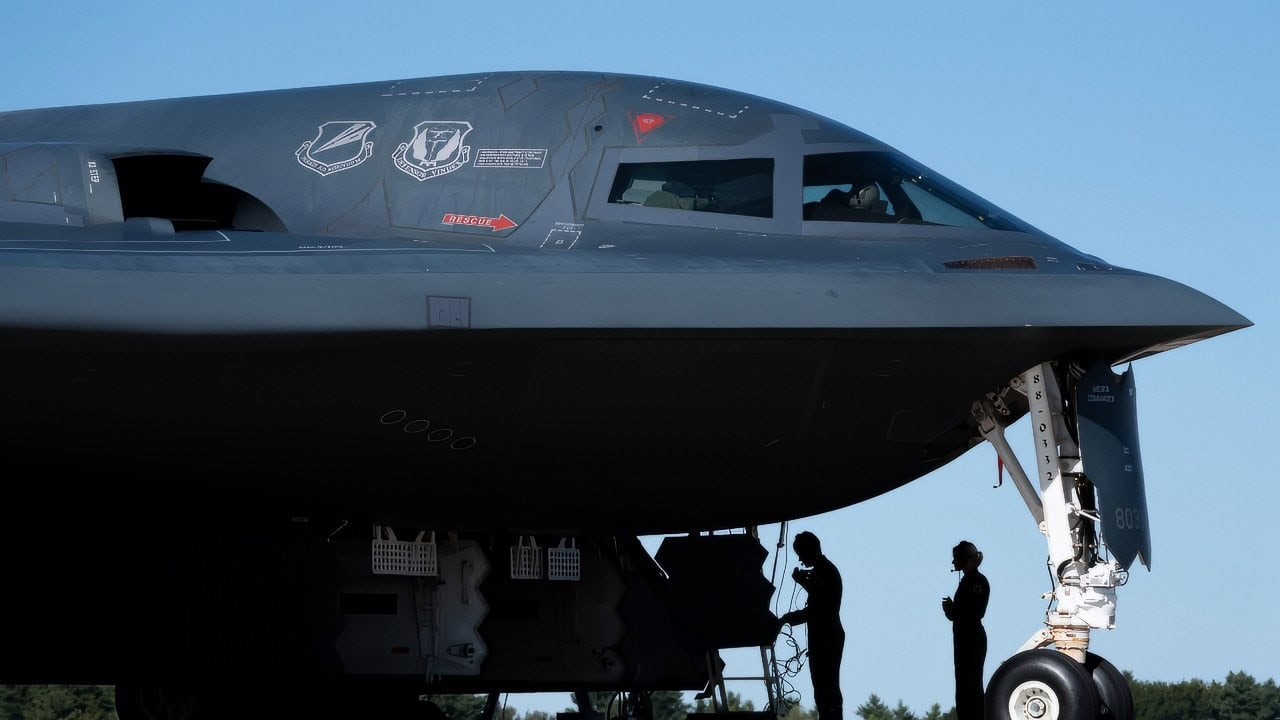
A U.S. Air Force pilots assigned to the 393rd Bomb Squadron prepare a B-2 Spirit aircraft for hot-pit refueling at Pease Air National Guard Base, New Hampshire, Sept. 20, 2025. The aircraft is the first operated by the 509th Bomb Wing to land at Pease ANGB, formerly Pease Air Force Base, since the 509 BW, formerly 509th Bombardment Wing, was stationed at Pease AFB and the active-duty base closed nearly 35 years ago. The lineage of the 509th BW traces back to the World War II Era when the 509th Composite Group dropped the atomic bombs on Japan. (U.S. Air Force photo by Staff Sgt. Joshua Hastings)
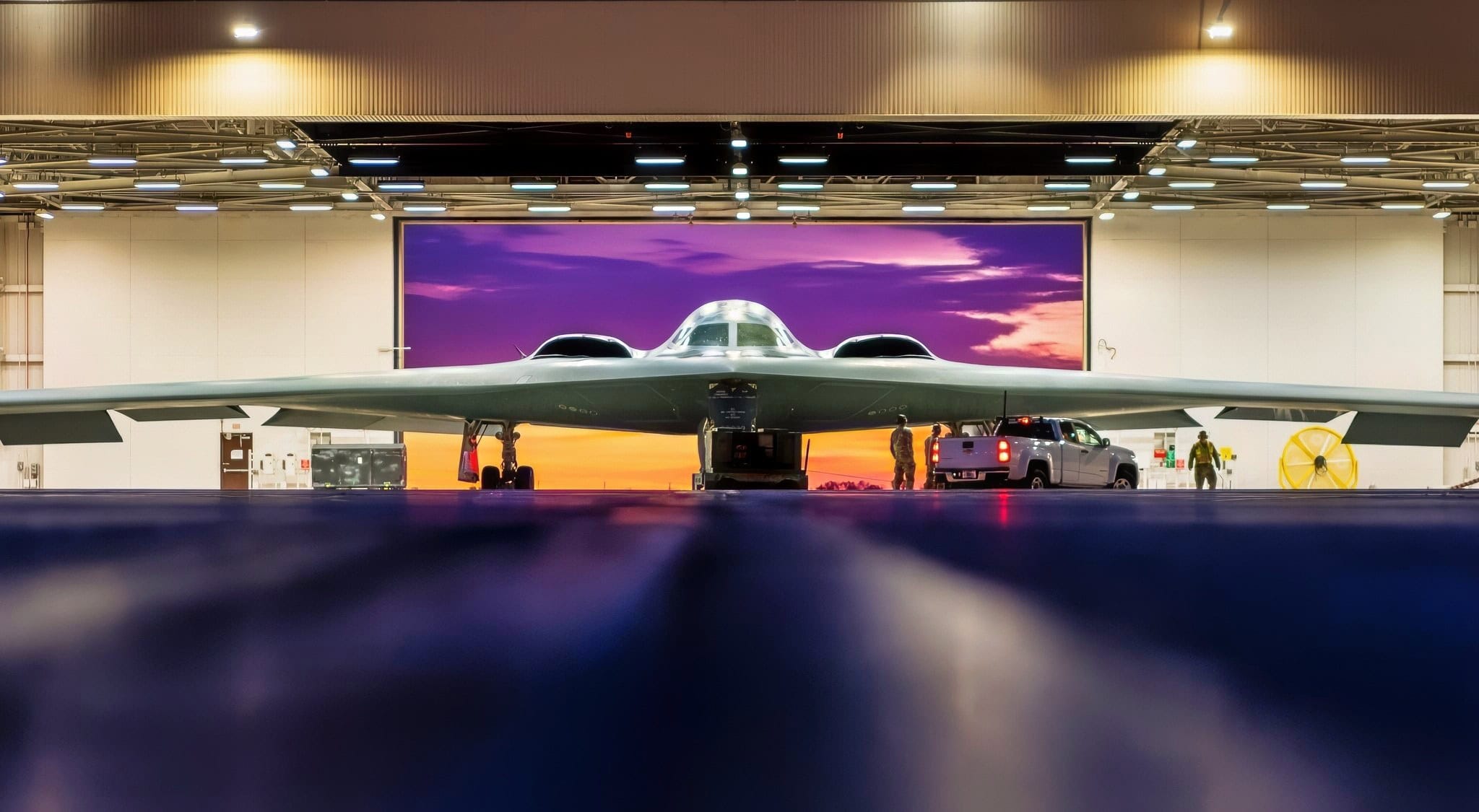
U.S. Airmen assigned to the 393rd Bomber Generation Squadron prepare a B-2 Spirit aircraft for flight during Exercise Global Thunder 26 at Whiteman Air Force Base, Missouri, Oct. 24, 2025. Global Thunder is an annual command and control exercise designed to train U.S. Strategic Command forces and assess joint operational readiness. (U.S. Air Force photo by Staff Sgt. Joshua Hastings)
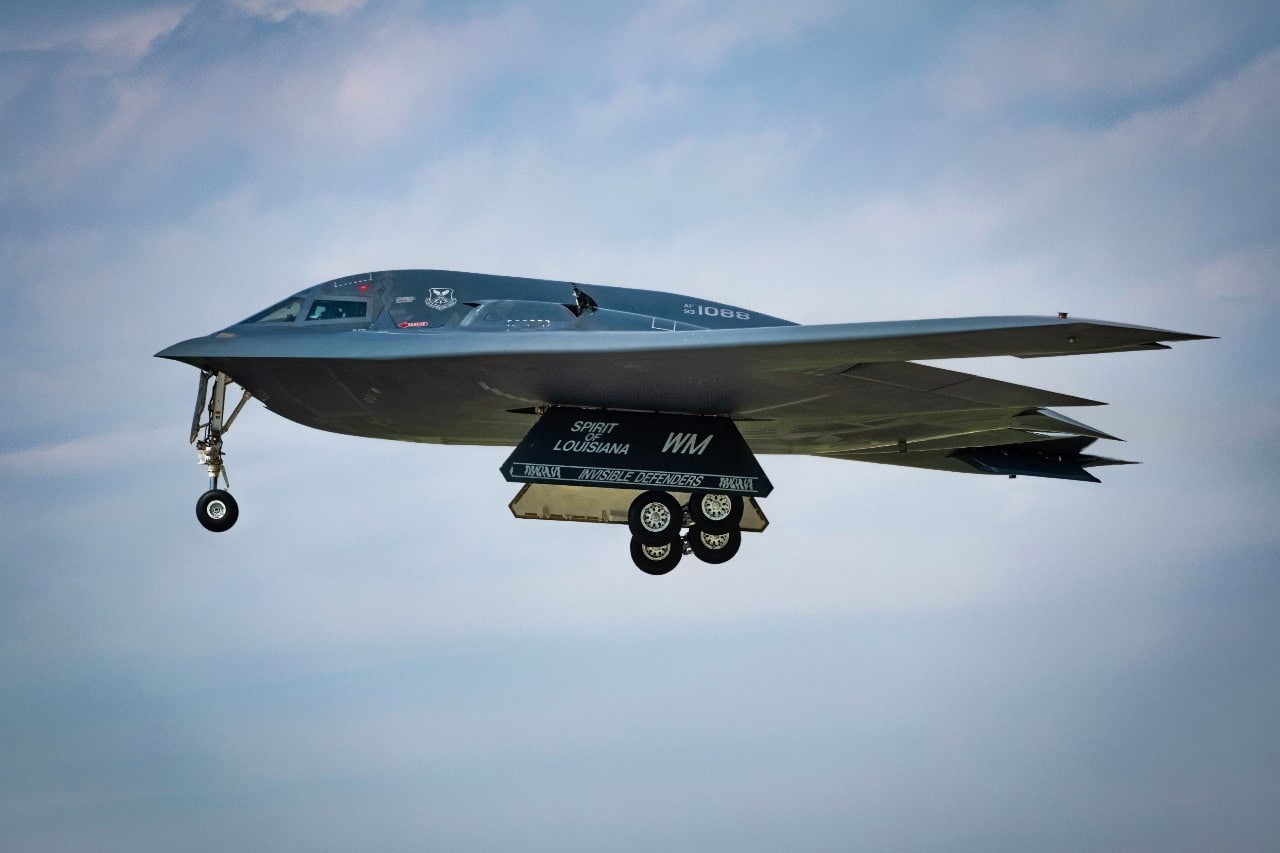
A B-2 Spirit stealth bomber departs from Whiteman Air Force Base, Missouri, April 16, 2025. The B-2 is capable of penetrating heavily defended air spaces and delivering conventional and nuclear munitions anywhere on the globe. (U.S. Air Force photo by Senior Airman Joshua Hastings)
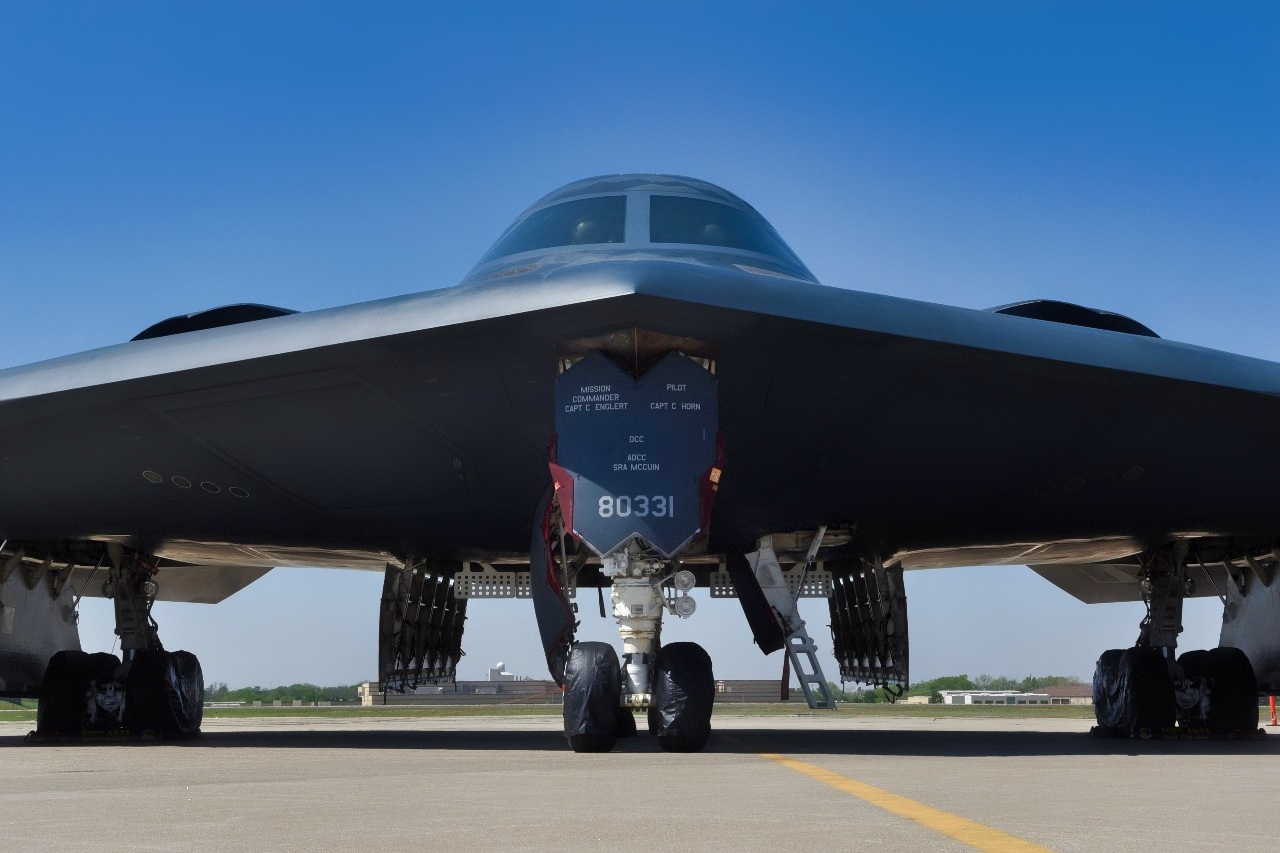
B-2A, serial #88-0331, ‘Spirit of South Carolina’ of the 509th Bomb Wing, Air Force Global Strike Command, on the parking ramp at Tinker Air Force Base, Oklahoma, during a visit April 11, 2017. The B-2A ‘stealth bomber’ visited the base to allow hundreds of personnel who work in direct support of the aircraft program through continuous software upgrades to see it in person and better understand the aircrafts’ role in the nation’s defense. (U.S. Air Force photo/Greg L. Davis)
100 H-20 Stealth Bombers from China?
Howe’s estimate of more than 50 bombers by 2035 could be the low end of a potential fleet-size projection, given his comment that China built 20- to 30 H-6 bombers per year.
Should the pace of H-20 construction be even half or one-third of this, China could well have over 100 stealth bombers by 2035.
This is likely why most public reports say that the Air Force/Pentagon/Northrop alliance may build as many as 7 to 10 B-21s per year, as it could keep the US Air Force on pace with China’s soon-to-grow H-20 bomber fleet.
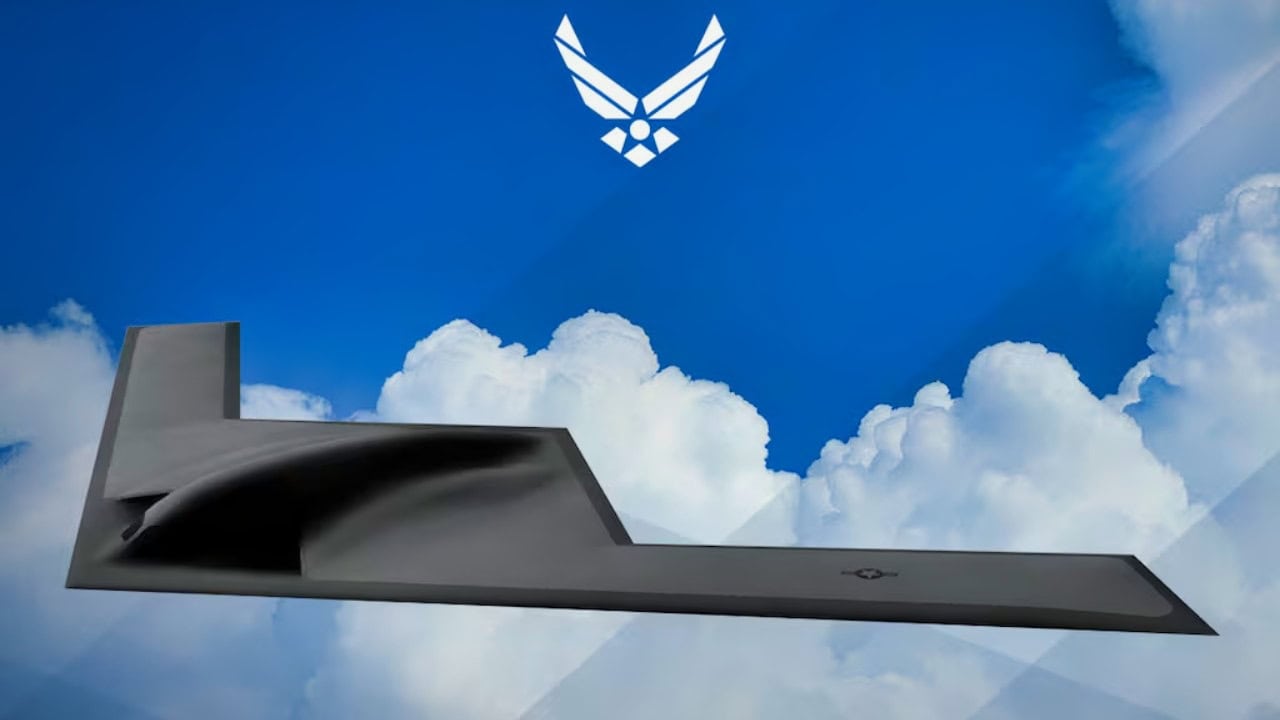
B-21 Raider Bomber.
About the Author: Kris Osborn
Kris Osborn is the President of Warrior Maven – Center for Military Modernization. Osborn previously served at the Pentagon as a highly qualified expert in the Office of the Assistant Secretary of the Army—Acquisition, Logistics & Technology. Osborn has also worked as an anchor and on-air military specialist at national TV networks. He has appeared as a guest military expert on Fox News, MSNBC, The Military Channel, and The History Channel. He also has a Masters Degree in Comparative Literature from Columbia University.