
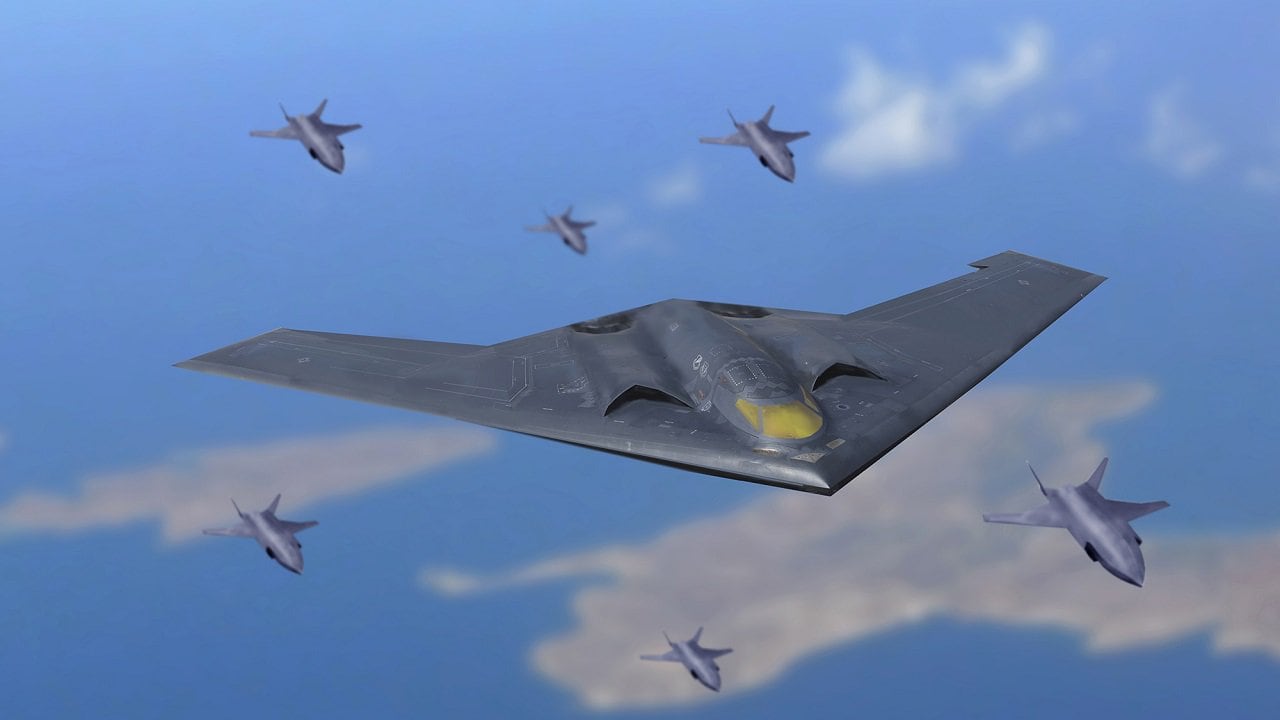
Summary and Key Points: The U.S. Air Force’s B-21 Raider program achieved a significant milestone in September 2025 with the addition of a second test aircraft to the flight test campaign at Edwards Air Force Base.
-This expansion allows for parallel testing—verifying flight envelopes and mission systems simultaneously—to accelerate the bomber’s path to operational service.
-Designed to replace the aging B-1B and B-2 fleets, the B-21 features an open-systems digital architecture and advanced stealth capabilities specifically engineered to penetrate modern air defense systems, such as those fielded by China.
-By addressing the high maintenance costs of its predecessors and restoring long-range penetration capabilities, the program aims to re-establish a credible strategic deterrent in contested environments.
The Air Force Just Doubled Its B-21 Test Fleet: Here’s Why It Matters
The U.S. Air Force’s B-21 Raider program made new progress in September 2025 when the service confirmed that a second B-21 test aircraft had joined the flight test program at Edwards Air Force Base, California. The Air Force described the additional aircraft as necessary to expand test capacity and accelerate both sustainment preparation and developmental testing. The news was a clear signal that the program is moving rapidly toward entering operational service.
“With the arrival of the second B-21 Raider, our flight test campaign gains substantial momentum,” Secretary of the Air Force Troy Meink said. “We can now expedite critical evaluations of mission systems and weapons capabilities, directly supporting the strategic deterrence and combat effectiveness envisioned for this aircraft.
The second aircraft’s arrival followed the B-21’s first flight on November 10, 2023, which marked the transition from years of classified ground testing into openly-acknowledged flight operations. That first flight was conducted from Air force Plant 42 in Palmdale, California, with Edwards AFB serving at the primary test hub.
The B-21 program is gaining momentum, despite the fact that there is still no publicly confirmed public date for Initial Operational Capability (IOC).
We do, however, know that at this stage there is no turning back; the program is well on its way to becoming a reality, America’s adversaries know that the Raider is coming, and the next-generation bomber will soon replace the Air Force’s aging fleet of iconic bombers.
Why A Second Test Aircraft Matters
In aircraft development, a flight-test program is a process in which engineers and pilots verify how an aircraft performs across its safe operating limits, known as the “flight envelope.” The process includes the testing of speed, altitude, handling, and systems behavior before moving on to combat-relevant functions such as sensors, communications, and weapons integration.
When a program has only one flying test aircraft, all testing must be sequenced through that single airframe. Adding a second aircraft allows parallel testing, meaning different aspects of performance and sustainment can be evaluated simultaneously, reducing bottlenecks. That’s why the Air Force explicitly linked the second B-21’s arrival to faster progress toward fielding.
What the B-21 Was Conceived To Do
The B-21 Raider was conceived as the next-generation penetrating bomber for the U.S. Air Force, designed specifically to operate against advanced air defense systems and to replace portions of the aging B-1B Lancer and B-2 Spirit fleets over time.
The aircraft is being developed and produced by Northrop Grumman, which was awarded the Long Range Strike Bomber contract in October 2015 after a competitive acquisition process overseen by the Department of Defense.
From the outset, the B-21 was designed around three core requirements: long range, survivability in contested airspace, and the ability to carry both nuclear and conventional weapons.
According to the Air Force, the Raider is intended to penetrate modern integrated air defense systems using a combination of low-observable stealth shaping, advanced materials, and electronic warfare systems, allowing it to strike targets that legacy bombers cannot safely reach.
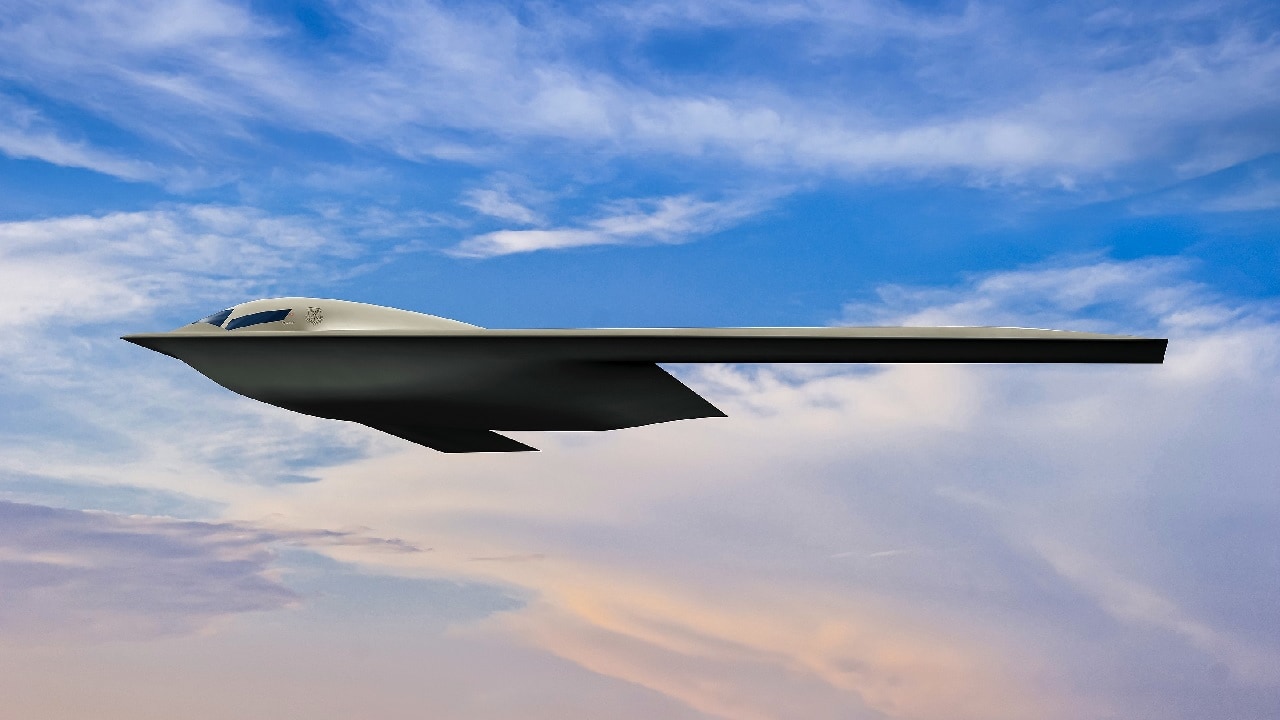
Shown is a B-21 Raider artist rendering graphic. The rendering highlights the future stealth bomber with Edwards Air Force Base, Calif., as the backdrop. Designed to perform long range conventional and nuclear missions and to operate in tomorrow’s high end threat environment, the B-21 will be a visible and flexible component of the nuclear triad. (U.S. Air Force graphic). This is the third USAF rendering of the B-21 Raider. Note changes in the windshield from previous official renderings.
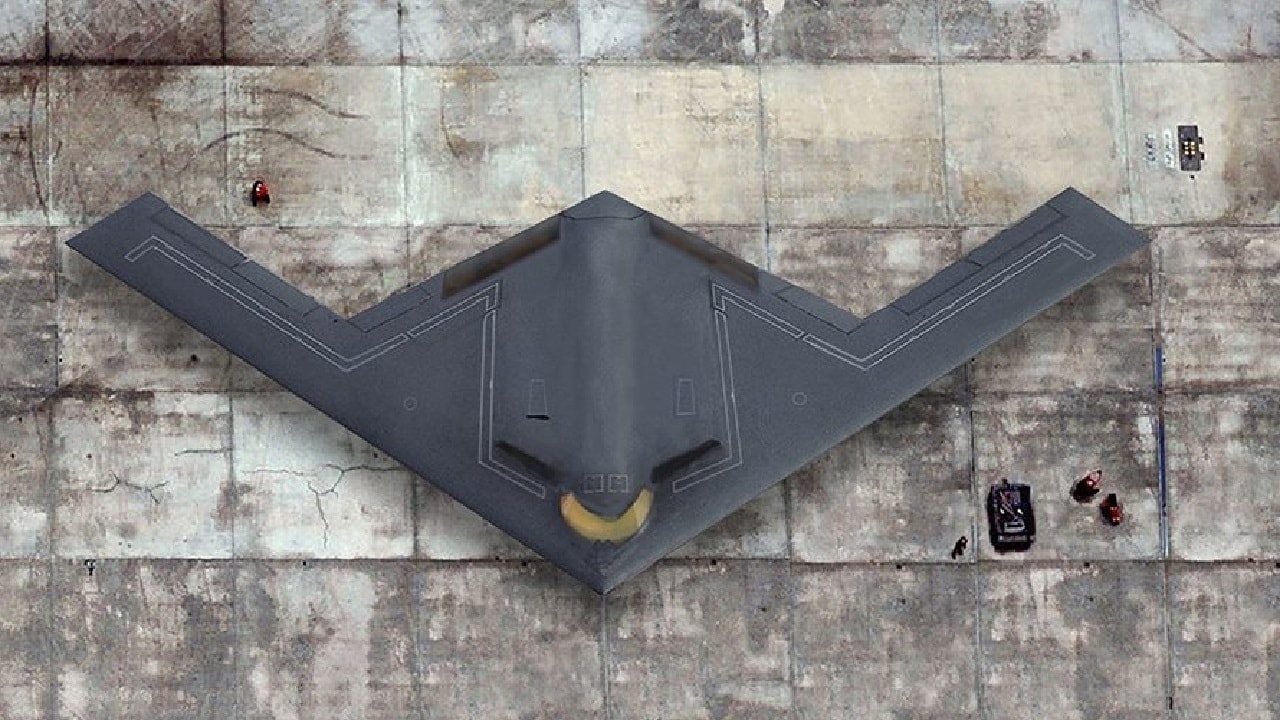
B-21 Raider artist rendering. Image Credit: Creative Commons.
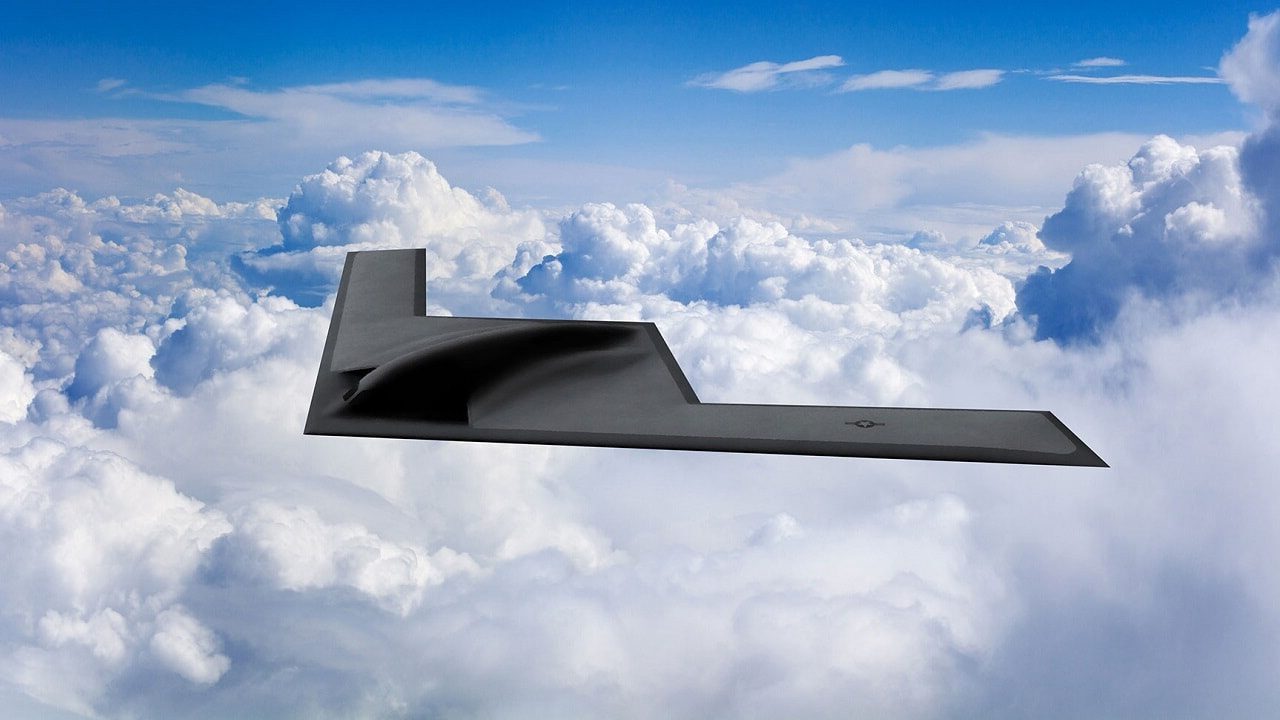
B-21 Raider Stealth Bomber. Image Credit: Creative Commons.
The B-21 is also being designed with a digital engineering and open-systems architecture, meaning software, sensors, and weapons can be updated more rapidly over the aircraft’s service life than on older bombers.
The B-21’s design builds directly on lessons learned from the B-2 Spirit, which entered service in the 1990s as the world’s first operational stealth bomber.
The B-2 proved the value of low-observable aircraft for penetrating defended airspace, but it was extremely expensive to procure and sustain, with only 21 aircraft built. The aircraft’s older stealth coating technology also comes with burdensome maintenance requirements – something the B-21 is expected to fix.
The B-21 was not only designed to be more affordable and easier to maintain, though: it’s also going to be much easier to upgrade.
The Raider incorporates improved stealth materials, a simplified airframe, and a new architecture that makes upgrading simpler in the future and which accommodates improved networking technologies.
Specifically, the B-21’s open-systems digital architecture marks a major departure from its predecessor’s design, allowing new sensors and software – and even weapons – to be integrated without extensive redesigns. That should keep the B-21 flying for longer.
What the B-21 Raider Means for Everyone Else
What the B-21’s impending deployment means is not an immediate surge in U.S. power – after all, it will take time for all B-21s (however many are made in the end) to be manufactured and entered into service.
It will, however, mean that the U.S. is gradually restoring its long-range penetration capability that has not been scaled since the B-2 entered service.
The Air Force has been quite explicit about the fact that the raider is also intended to operate inside advanced air defense environments – a requirement driven by the development of Chinese integrated air defenses and long-range strike systems.
Even a small number of operational B-21s forces adversaries to begin planning for uncertain and survivable U.S. strike options that cannot be easily neutralized early in a conflict.
That uncertainty is part of what makes the B-21 special, and is arguably the core deterrent effect that the Air Force is now working to re-establish.
About the Author:
Jack Buckby is a British researcher and analyst specialising in defence and national security, based in New York. His work focuses on military capability, procurement, and strategic competition, producing and editing analysis for policy and defence audiences. He brings extensive editorial experience, with a career output spanning over 1,000 articles at 19FortyFive and National Security Journal, and has previously authored books and papers on extremism and deradicalisation.

