
Synopsis: The U.S. Air Force is equipping the aging B-1B Lancer fleet with external pylons, a modification designed to transform the Cold War-era supersonic bomber into a standoff platform capable of launching bulky hypersonic weapons that do not fit in its internal bays.
-While this upgrade increases drag and radar signature on an already “battered” airframe suffering from structural fatigue, it provides essential mass firepower and flexibility.
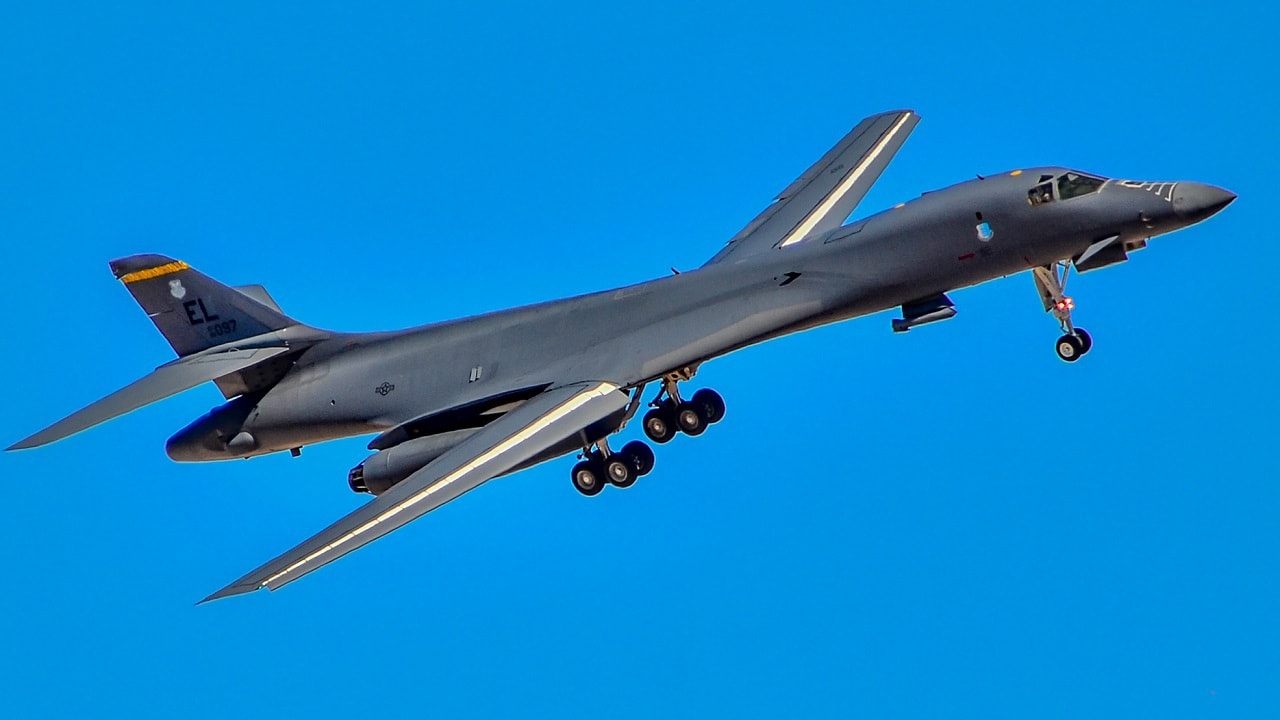
Air Force Rockwell B-1B Lancer 28th Bomb Wing (28 BW) 37th Bomb Squadron Ellsworth Air Force Base – Rapid City, South Dakota
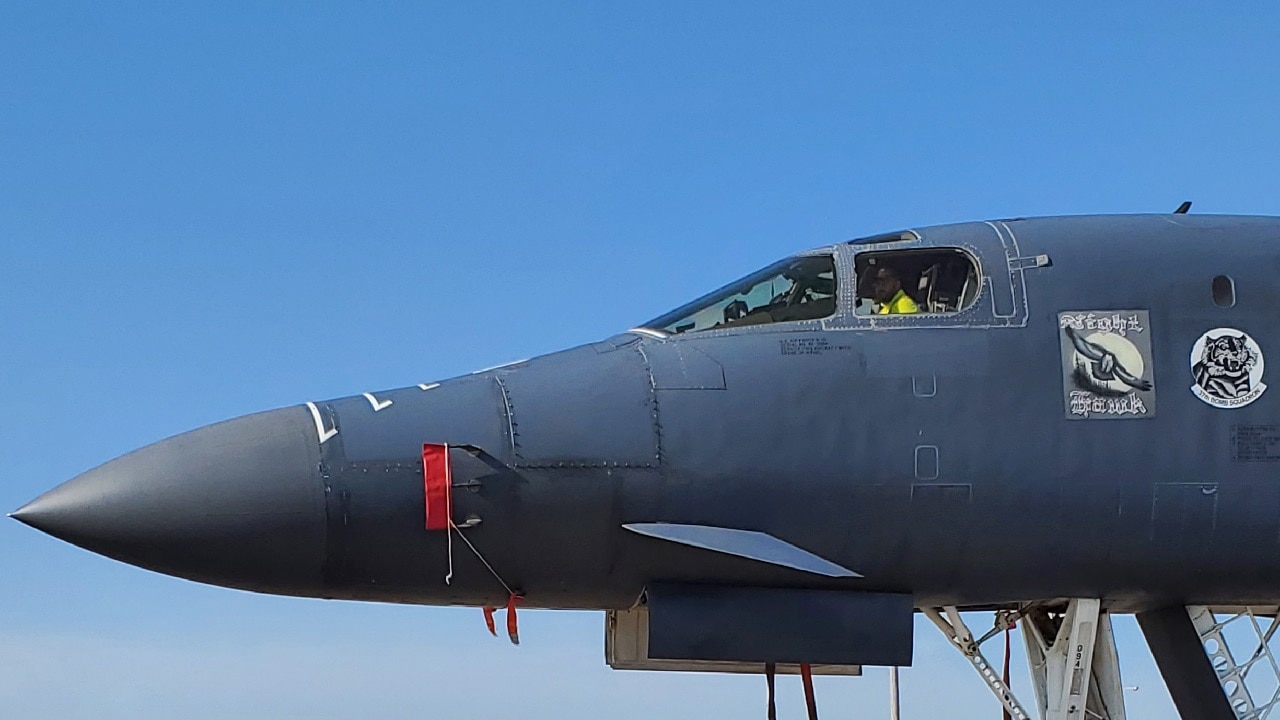
A B-1B Lancer, tail number 86-0094, is moved across Douglas Blvd. to the Maintenance Repair and Overhaul Technology Center (MROTC) to receive an initial portion of Gate 1 of programmed depot maintenance April 21. 567th AMXS personnel will perform three days of maintenance which include single system checks on 40 individual actuators validating voltage outputs as
well as interrogating each actuator for hydraulic leaks. After single systems are completed, the horizontal stabilizers will be removed from the aircraft. This is the first time that horizontal stabilizers have ever been removed at the MROTC. Once complete, the aircraft and horizontal stabilizers will be brought back across Douglas to the 569th AMXS strip facility for plastic media blasting. Once stripped, the horizontal stabilizers will be routed to the 76th Commodities Maintenance Group for overhaul and repairs. (U.S. Air Force photo/Kelly White)
-Ultimately, this move is a strategic stopgap to maintain capacity until the B-21 Raider enters service in sufficient numbers.
The “Battered” Bomber: Why the Air Force Is Overhauling the B-1B
News that the B-1B Lancer is getting external pylons has sparked claims that the bomber is being converted to extend its service life and to carry hypersonic weapons.
But the real question, whether the B-1B carries hypersonic weapons or not, is how long the B-1B really keep flying, and is it worth upgrading on the way out?
Building the B-1B
Designed in the late Cold War as a high-speed, low-altitude nuclear penetrator, the B-1B was built with an emphasis on speed and payload, terrain-following penetration, and survivability through tactics rather than stealth.
In the 1990s, following arms control treaties and strategic changes, the B-1B transitioned from nuclear to conventional missions.
Through the 21st century, the B-1B has been used extensively, conducting conventional missions in the post-9/11 era, operating as a bomb truck for close air support and strike, with long loiter times and high payload for JDAM-class weapons.
With external pylons now available, the B-1B is increasing its payload and may enable the use of hypersonic weapons.
But wear-and-tear accumulated from decades of high operational tempos—at high speeds and low altitudes—has left the fleet battered. Do upgrades make sense for such a worn fleet?

A 28th Bomb Wing B-1 Lancer sits on a ramp waiting to taxi in the early morning at Ellsworth Air Force Base, South Dakota, August 30, 2006.The B-1 Lancer will be taking off to conduct its first Joint Air-to-Surface Standoff Missile (JASSM) operational fire from a B-1 Lancer. (US Air Force Photo By: Airman Angela Ruiz) (Released)
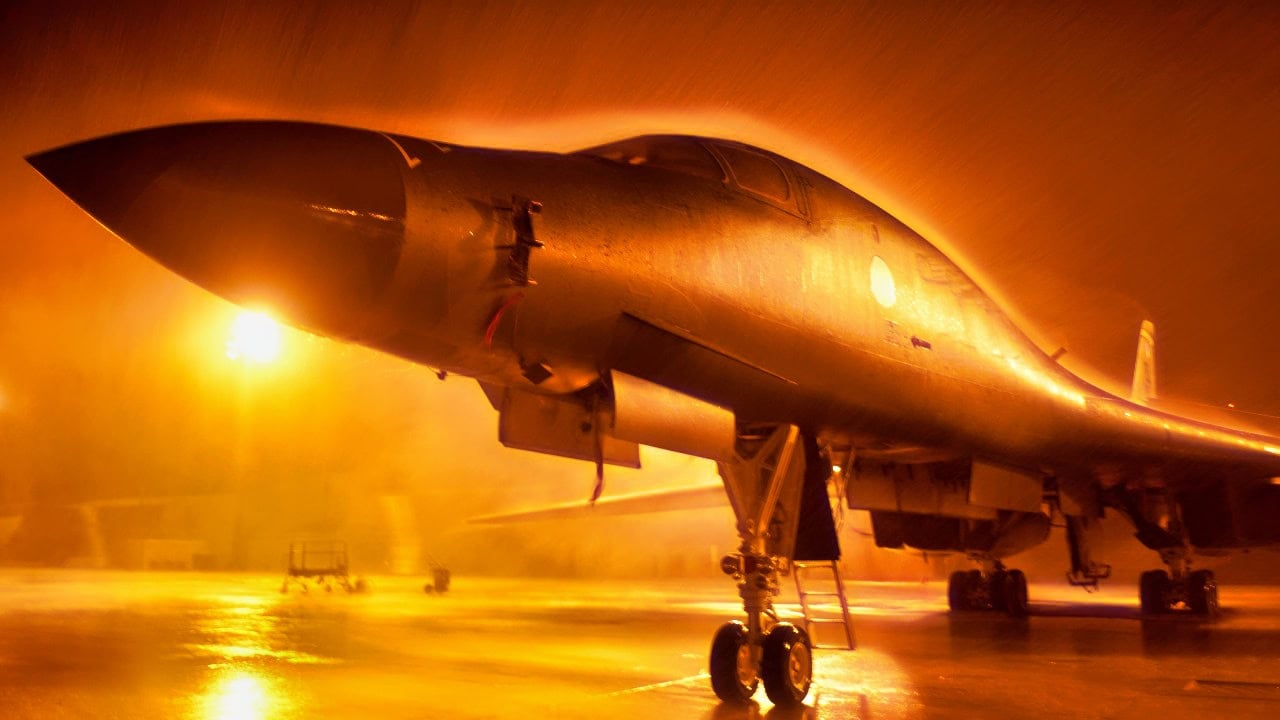
Lights in the aircraft parking area cast an eerie glow around a B-1 bomber standing at the ready during a summer rainstorm at Ellsworth Air Force Base, S.D., July 24, 2012. Ellsworth is home to 28 B-1 bombers and two of the Air Force’s three B-1 combat squadrons.
Internal Bays vs. External Carriage
The upgrade in question is the addition of external pylons. Historically, the B-1B has used three large internal weapon bays to carry its payload.
The internal bays are not intended for stealth performance but rather to improve aerodynamics and range.
External hardpoints are present in the design lineage, but operational use has been limited relative to internal bays.
Adding the external pylons won’t radically change the B-1B into something new, but the pylons promise multiple advantages, i.e., payload growth, flexibility, standoff employment, and rapid surge capabilities.
Why Now?
The emergence of newer, larger weapons has likely inspired the addition of external pylons. Hypersonic and very-large standoff weapons are physically bulky—too large for the B-1B’s internal bays.
External pylons, however, can support the larger weapons, different weapon shapes, and a greater total weapon count in some configurations.
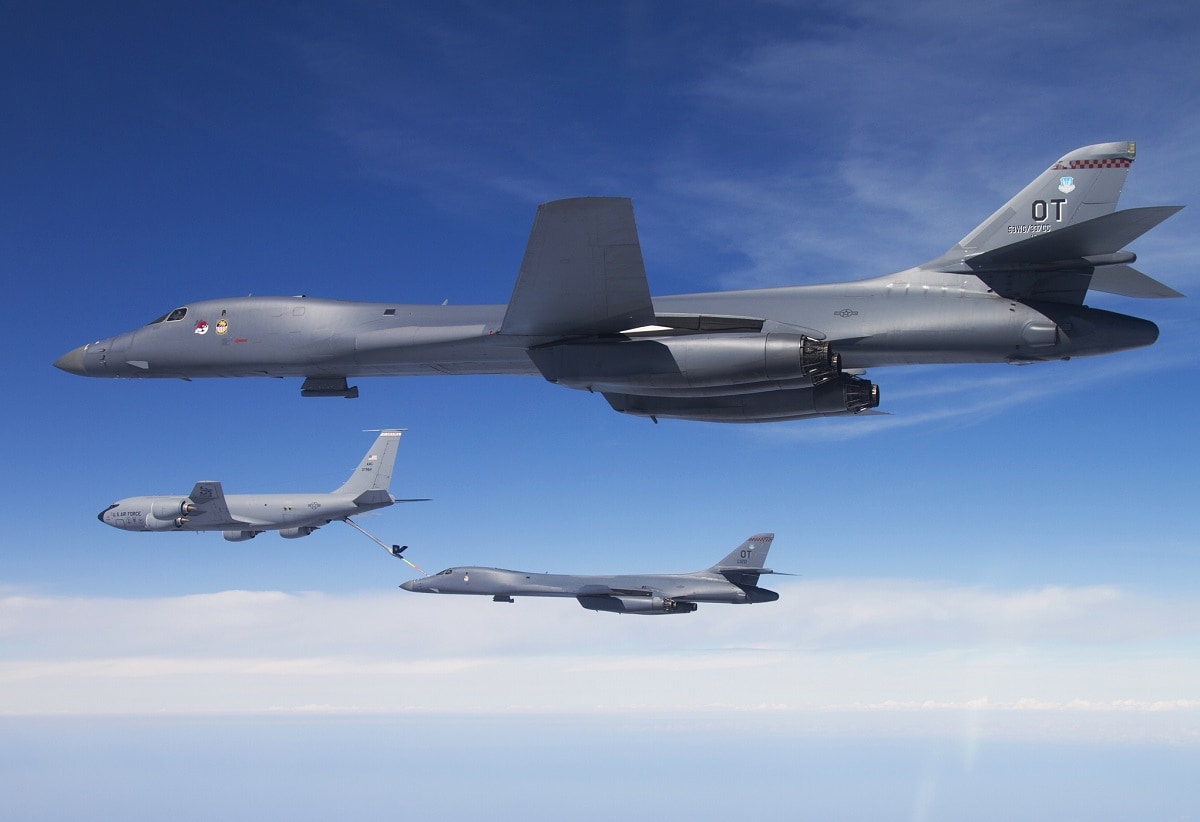
B-1B Lancer from the 337th Test and Evaluation Squadron stands by as another Lancer connects with a KC-135 Stratotanker for inflight refueling during a mission over the Gulf of Mexico near Eglin Air Force Base, Fla., Feb. 23, 2012. The 337th TES is a geographically separated unit of the 53rd Wing, which is headquartered at Eglin AFB. The 337th TES is responsible for operational testing of all B-1B defensive and offensive systems and weapons upgrades. (Courtesy photo/Jake Melampy)
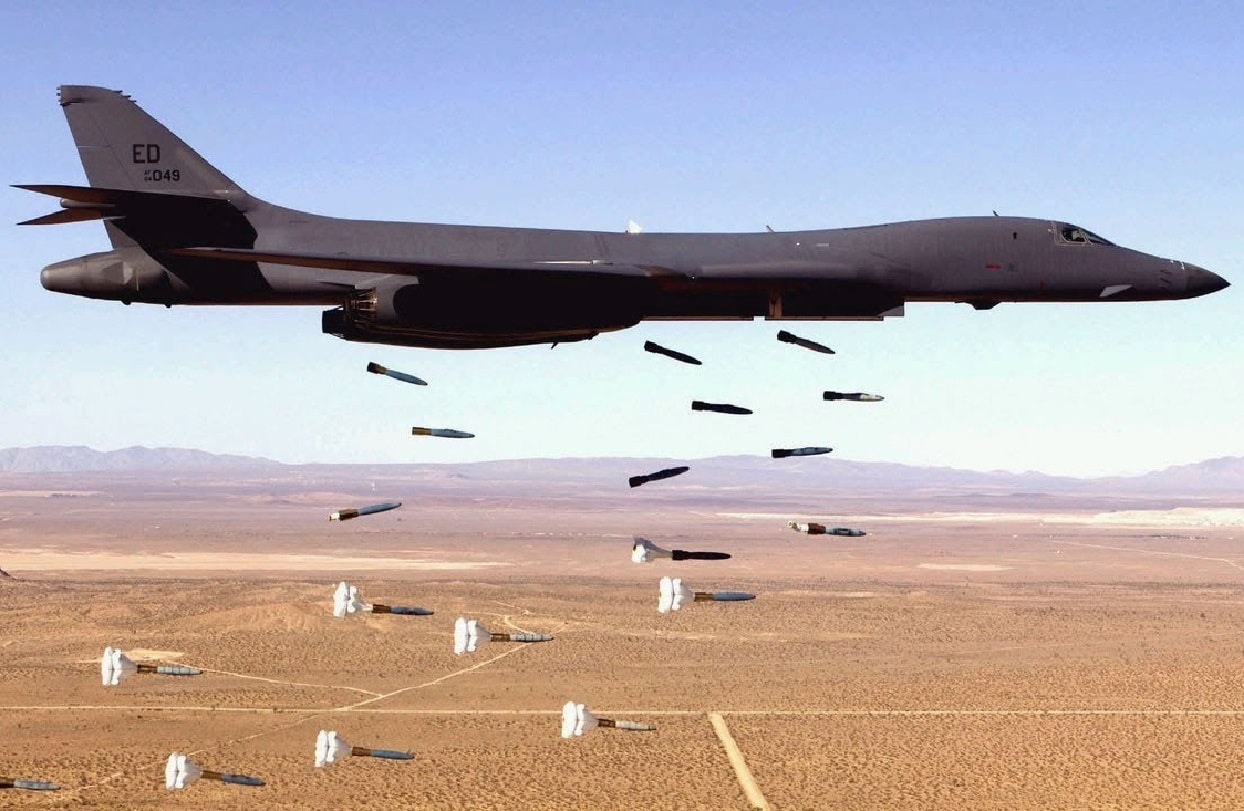
B-1B Lancer. Image: Creative Commons.
External pylons enable the B-1B to serve as a truck for standoff missiles, launching weapons from outside the densest air defenses, which a non-stealth platform would have difficulty penetrating.
The addition of hypersonic weapons to the payload inventory is an intriguing prospect that external pylons potentially enable.
If the B-1B were to become a hypersonic-capable strike aircraft, it would add a new dimension to its capabilities, enhancing value in high-end conflicts.
The Downsides of External Carriage
External carriage entails drawbacks.
The pylons increase drag, which reduces range, endurance, and dash performance.
The B-1B’s already large radar signature would be made larger still through the addition of external pylons.
The added structural and fatigue loads would accelerate the aging of an already aged platform.
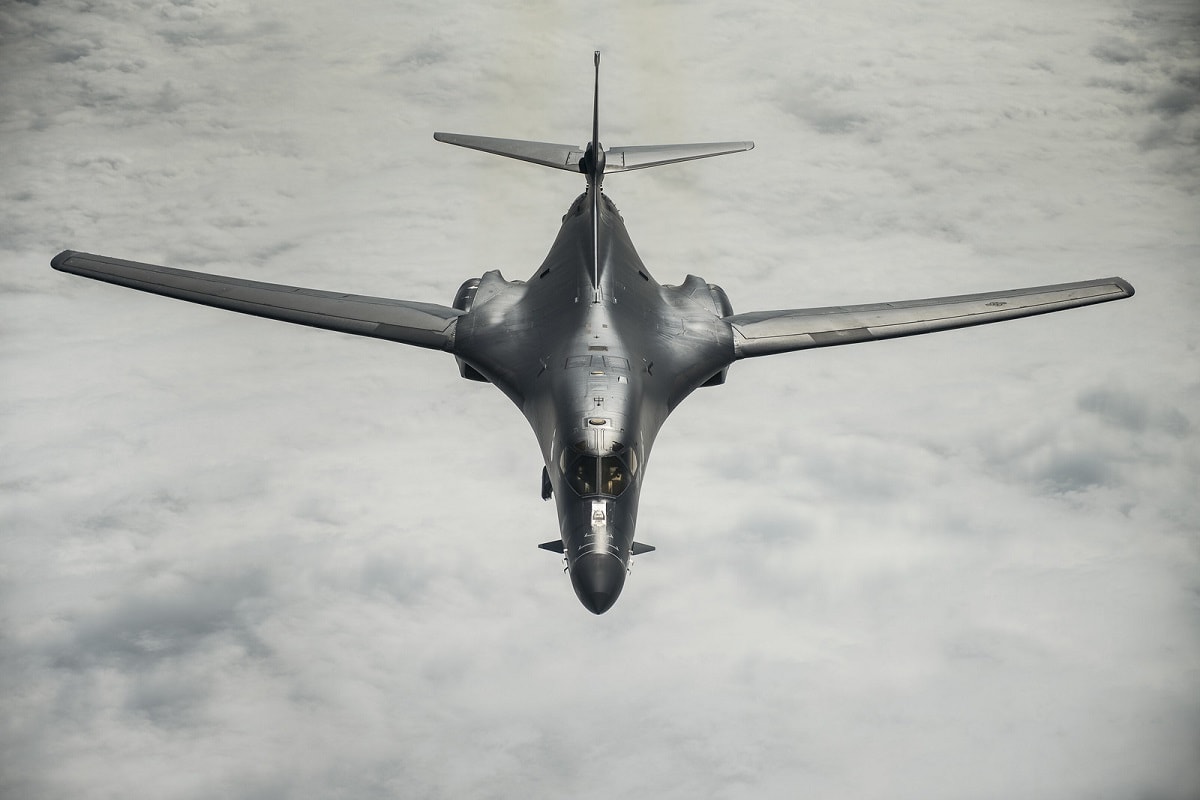
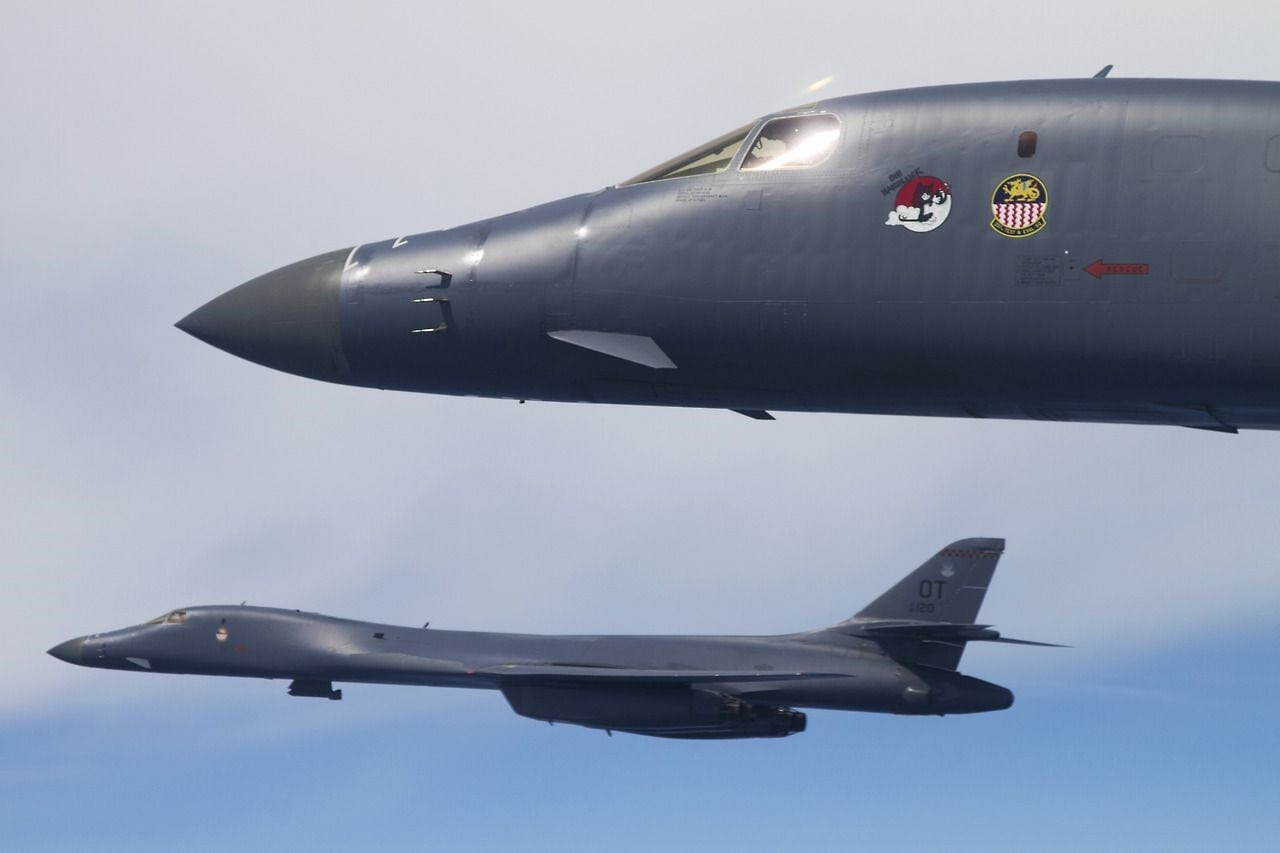
A U.S. Air Force B-1B Lancer, assigned to the 37th Expeditionary Bomb Squadron, Ellsworth Air Force Base, S.D., flies over the East China Sea, Jan. 9, 2018. The Lancer serves as the premier platform for America’s long-range bomber force, carrying the largest conventional payload of guided and unguided weapons in the Air Force inventory. (U.S. Air Force photo by Staff Sgt. Peter Reft)
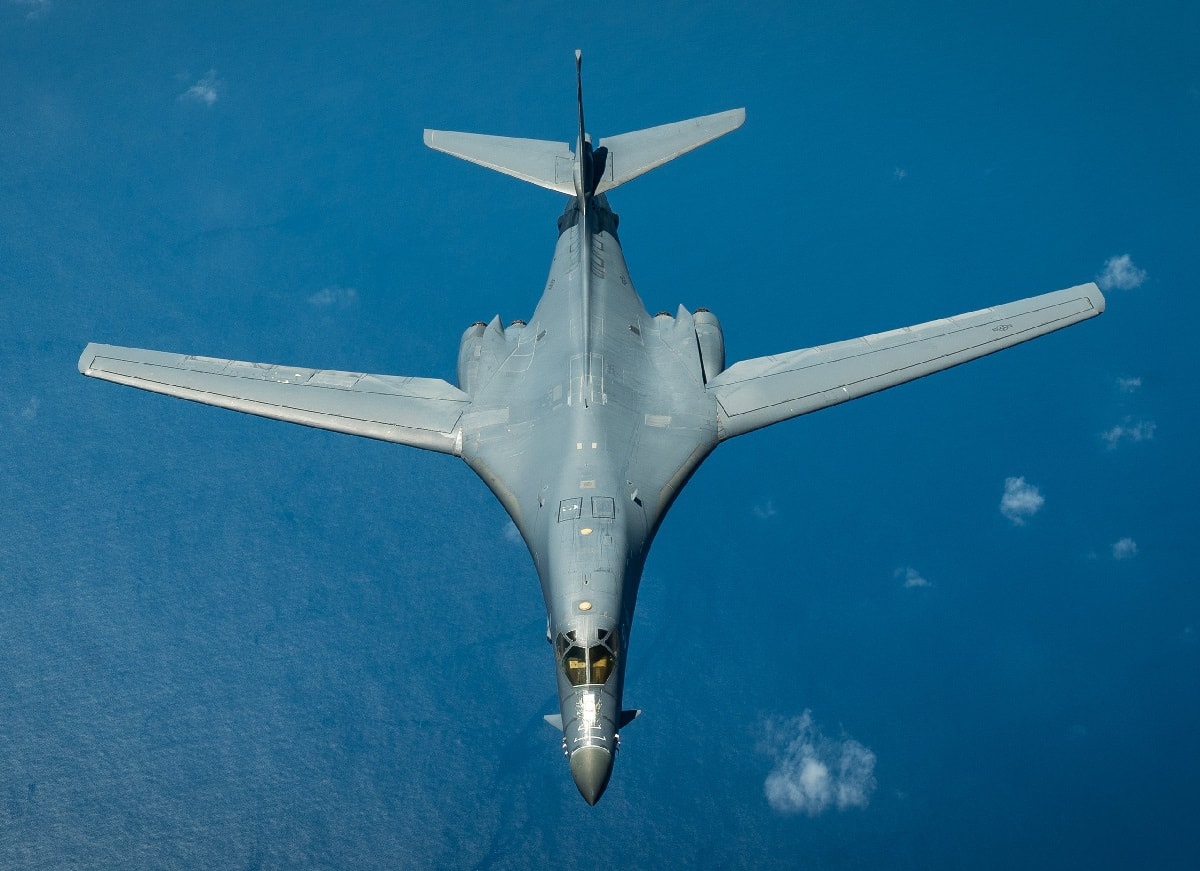
A U.S. Air Force B-1B Lancer assigned to the 37th Expeditionary Bomb Squadron, deployed from Ellsworth Air Force Base, S.D. to Andersen AFB, Guam, flies a training mission over the Pacific Ocean Aug. 16, 2017. During the mission two B-1s were joined by Japan Air Self-Defense Force F-15s in the vicinity of the Sankaku Islands. These training flights with Japan demonstrate the solidarity and resolve we share with our allies to preserve peace and security in the Indo-Asia-Pacific. (U.S. Air Force photo/Staff Sgt. Joshua Smoot)
In contested environments, where the B-1B already struggles, external pylons would further push it toward a standoff-only role. Are the trade-offs worth the benefits?
Given the increased weapons options and compatibility with modern standoff doctrine, is the B-1B worth upgrading?
Perhaps, but the benefits are modest in the face of peer IADS; the external pylons do not make the B-1B a new bomber but rather an improved version of a Cold War concept, now with greater firepower that can be launched from a greater distance.
The Future of the Program
The B-1B fleet has been driven hard. The airframes are aging. Availability has already become a chronic issue.
Structural fatigue of the wings, fuselage, and attach points is affecting readiness. Parts availability has declined, while the maintenance burden has increased. The engine and various systems are incurring higher sustainment costs.
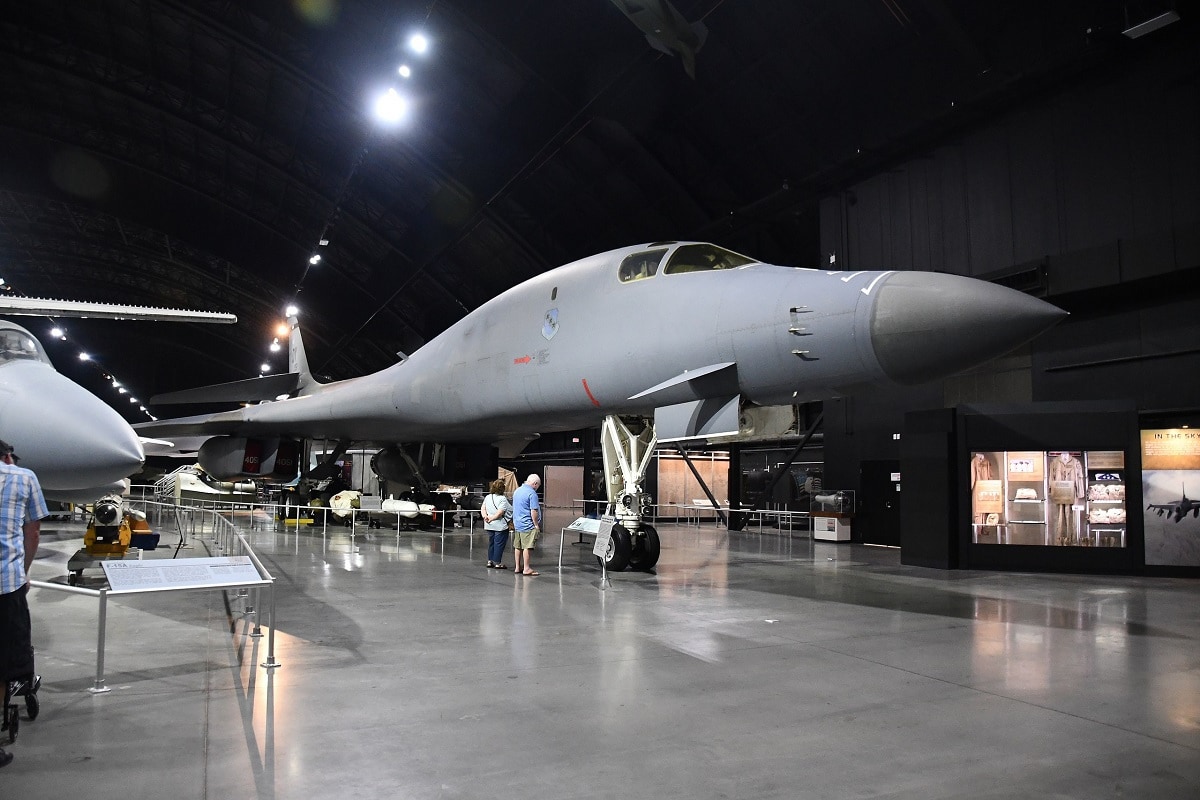
B-1B at the National Museum of the USAF, Dayton, OH.
In sum, the fleet has become difficult to maintain; keeping it around further will require very careful and intentional sustainment efforts—but it won’t change the fact that the B-1B is already on a glide path towards retirement; the fleet’s retirement is inevitable, with or without external pylons.
But for the time being, the Air Force needs capacity. Standoff missiles can make payload-heavy platforms, like the B-1B, valuable.
However, the standoff-enhanced B-1B remains only a bridge, delivering large salvos and complicating adversary defense planning in the interim until the B-21 Raider program arrives.
As B-21 numbers grow, the B-1B will become less essential, and will eventually be retired.
About the Author: Harrison Kass
Harrison Kass is an attorney and journalist covering national security, technology, and politics. Previously, he was a political staffer and candidate, and a US Air Force pilot selectee. He holds a JD from the University of Oregon and a master’s in global journalism and international relations from NYU.
More From 19FortyFive
USS Nimitz Could Become a Drone Supercarrier